Cover Crops Have Big Benefits

Data Being Gathered to Measure Benefits of Cover Crops

By Tim Hammerich with the Ag Information Network of the West

Cover crops are touted in many areas for the benefits they bring to soil health, but they are not widely used in annual production in California. There are likely many reasons for this, but a big one is water retention. Allocations for irrigation are so tight that watering a crop to cover soil is perceived as not a great use of the precious resource.

But research from Extension Vegetable Crops Specialist Jeff Mitchell and others indicate there are some tradeoffs to consider.

“The aspect of adding organic matter, living roots and biology into the soil in the form of earthworms and other organisms that are burrowing and creating channels and pores; that can offset some of the water use elements there because you’re actually enabling the soil to more readily intake or infiltrate water,” said Mitchell.

Our research has also shown with some colleagues at UC Merced that over time if you’re increasing the organic matter through the practice of cover crop in the soil, you can actually affect the water-holding or storage capacity of the soil there. So it’s a subtle thing. I’m not at all saying that there’s no water use involved with cover crops because there certainly is. But the tradeoffs tend to be, on balance, less than most people think and relatively modest,” noted Mitchell.

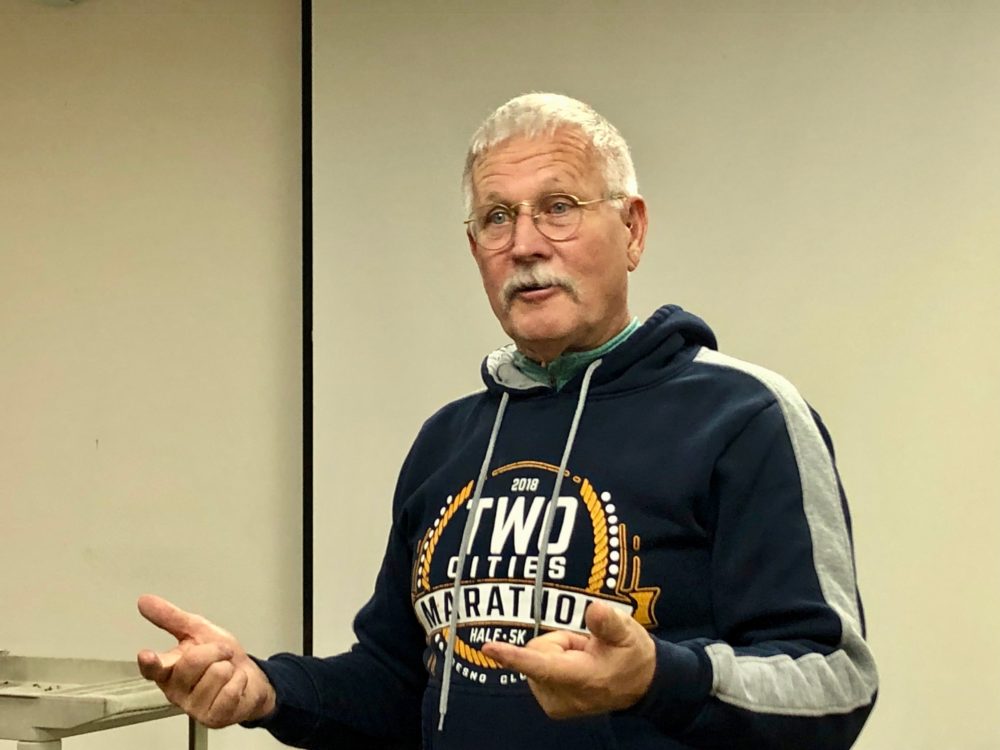
Dr. Mitchell is collecting data on farms throughout the state to analyze the impact of practices like cover crops.

AgInfo.net is the largest Radio Network in the West with 140 Affiliate Radio Stations.

2020-05-29T13:49:39-07:00May 28th, 2020|

California’s Organic Agriculture Institute Names New Director

Houston Wilson Named Presidential Director for the Clif Bar Endowed Organic Agriculture Institute


Houston Wilson has been named the Presidential Director for the University of California’s Organic Agriculture Institute, which was established in January 2020 with a $500,000 endowment by Clif Bar and a matching $500,000 endowment from UC President Janet Napolitano.

Wilson, a UC Riverside agricultural entomologist based at the Kearney Agricultural Research and Extension Center, joined UC ANR as assistant Cooperative Extension specialist in 2017. He will launch the institute and chart a path for future growth while also focusing on immediate priorities such as a survey of organic production in California, multiple outreach and training opportunities for growers, publication of organic production guidelines, and developing research programs. Wilson’s long-term goal is to continue to grow the endowment and position the organization to successfully support the state’s growing organic farming economy.

“Organic growers in California face an array of interconnected agronomic, economic and regulatory challenges,” said Wilson. “Tackling these issues simultaneously requires a multidisciplinary approach to develop solutions that work in all scales of production. The economic opportunities are there, and we want to help position California growers to reap these benefits, and in doing so increase the supply of affordable organic food for consumers.”

Since 2007, Wilson has conducted research and extension in orchard and vineyard systems with a focus on integrated pest management strategies, many of which are readily applicable to organic agriculture. Key studies have included evaluating the use of mating disruption to control navel orangeworm in fig production, cover crops to increase biological control of vineyard leafhoppers, pheromone lures to improve monitoring of leaffooted bug in almonds, and more.

“We are excited about Houston’s vision for establishing and growing California’s first organic institute,” said Glenda Humiston, UC vice president for agriculture and natural resources (UC ANR). “Continued research advancements will be critical to the future of organic farming in our state as well as the health of our environment.”

“Clif Bar is thrilled to see Houston’s appointment. We’ve heard from orchardists in our supply chain who have worked with him in the past and are excited that he’ll have more resources to help serve the needs of organic producers,” said Matthew Dillon, senior director of agriculture for Clif Bar. “We look forward to working with Houston, UC ANR, and the organic agriculture community to continue to improve the sustainability and economic resiliency of California farmers.”

Wilson earned his doctoral degree in environmental science, policy and management and also holds a bachelor’s degree in international area studies, both from UC Berkeley.

About UC ANR

2020-05-27T20:32:40-07:00May 27th, 2020|

Food Safety on Strawberries

Enhanced Safety Practices on California Strawberry Farms

By Tim Hammerich, with the AgInformation Network of the West

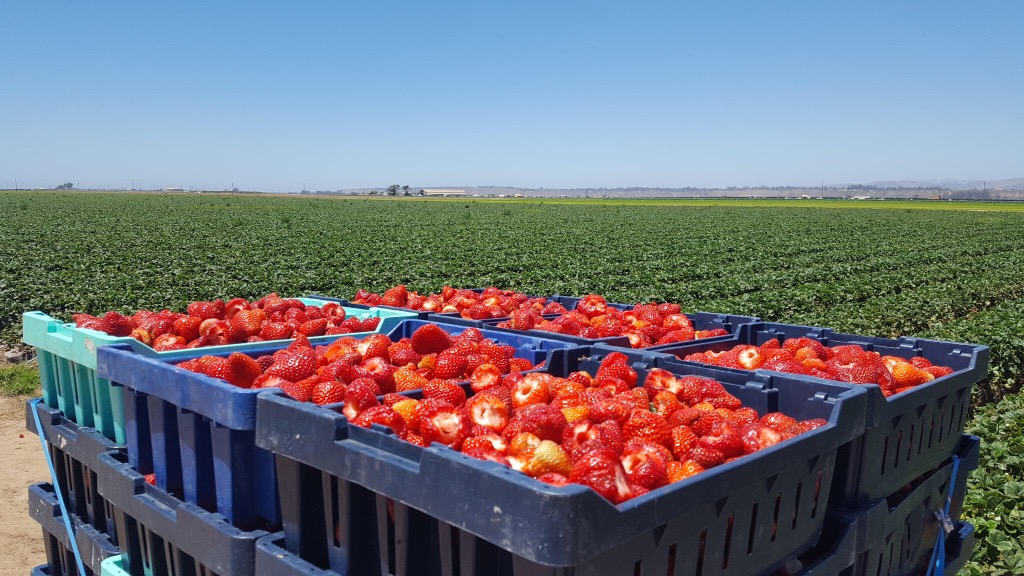
Strawberries are grown year round in the state, so when COVID-19 hit, harvest was in full swing in Southern California. Luckily the industry has developed a strong food safety training program over the past 15 years including print and video materials as well as in-person training.

This allowed them to respond quickly, says California Strawberry Commission Communications Director Carolyn O’Donnell.

“So starting with that baseline of food safety, we were able to build off of two specific pillars that are in that food safety program. And that includes coming to work when you’re well and not coming to work when you’re sick. And the other one is about adequate hand-washing,” said O’Donnell

The commission has leveraged the strong established food safety training program to get the word out about emphasizing these pillars. O’Donnell says they have also been communicating directly with employees.

“We’ve been running on public service announcements on Spanish language radio throughout the central coast of California where strawberries are being grown,” O’Donnell said. And then we’ve been also doing a Saturday morning hosted program for about an hour on our radio station that definitely caters to that farm worker audience. And we’ve brought in a health person every time to talk about the ways to stay healthy, not only on the ranch, but when you’re at home.”

The program, called the “I Pick Safety” program, allows employees to work safely, and consumer to know that their delicious California strawberries are safe to eat.

AgInfo.net is the largest Radio Network in the West with 140 Affiliate Radio Stations.
2020-05-27T22:10:32-07:00May 26th, 2020|

COVID Virus Shut Down Food Service Supply Chain

Some Crops for Supply Chain Could Not Find Home

By Tim Hammerich with the Ag Information Network of the West

Farmers of many crops have been left with nowhere to go with harvests, even as grocery stores struggle to keep shelves stocked. This is mostly due to the fact that many agricultural supply chains are built for food service. However, there are other factors at play here as well, says Dr. Ellen Bruno, Assistant Cooperative Extension Specialist in the Department of Ag and Resource Economics at UC Berkeley.

“People have also changed their buying patterns and what they’re buying as well. For example, you might want to go to the grocery store less frequently because of everything going on and therefore you might try to buy more shelf-stable foods so you don’t have to go as frequently,” said Bruno

Buying more shelf-stable foods often means more foods that have been processed. These processors were running efficiently before so they didn’t have extra capacity to adapt to the shock in demand. Also, everywhere in the supply chain is dealing with the impact of the virus on employees.

“And then finally on the supply side, there’s the impact of the virus itself affecting farmworkers and food processing and transport workers. And trying to manage the virus and how their potential impacts of the virus or realize the impacts of the virus on farm labor and what that, the implications of that,” explained Bruno.

Dr. Bruno, along with colleagues Daniel Sumner and Richard Sexton, released an article last month detailing the ways in which coronavirus is impacting food supply chains. She also plans to do more research into the long term impacts of what we are currently experiencing.

2020-05-25T15:07:59-07:00May 25th, 2020|

Preventing Future Outbreaks in Leafy Greens

FDA Report Provides Clues to Prevent Future Outbreaks

Yesterday the FDA issued a report on its investigation of outbreaks involving romaine lettuce occurring in the Fall of 2019. The LGMA responded by issuing a press release and the following blog post:

California leafy greens growers are pledging to incorporate findings from a report issued recently by the U.S. Food and Drug Administration (FDA) into its ongoing process to strengthen required food safety practices on farms.

Leafy greens farmers work hard every day to follow the best-known food safety practices. Clearly, we need to look even beyond our own farms to help us prevent future outbreaks. Information from this new FDA report will be extremely valuable as we further strengthen our practices both in and around our farms.

The FDA report issued today relates to what was actually three distinct outbreaks all occurring inf the Fall of 2019. In the report, identifies adjacent or nearby land used for cattle grazing as the most likely contributing factor associated with these three outbreaks.

The leafy greens industry hopes to learn more about how leafy greens are being exposed to pathogens like e. coli in the environment and on land surrounding farms through a series of research projects. A project to gather samples and collect data is now underway in Arizona in cooperation with producers, the University of Arizona and the FDA.

A similar study is being developed to perform research in California’s central coast growing areas with an eye toward considering preventative controls that may be necessary on land surrounding our farms as well as additional controls on the leafy greens farms themselves. The study would be done in cooperation with FDA, the California Department of Food and Agriculture, academia and the leafy greens industry. We’re hopeful this kind of work can be done to provide us with answers to help prevent future outbreaks.”

Even before these last outbreaks occurred, the leafy greens industry had launched a comprehensive process to review and update required food safety practices included under the California LGMA.

A series of subcommittees has been appointed to review practices in all areas. Water continues to be a focus of this effort and the industry is in the process of considering some 30 changes to further update practices for water used in farming leafy greens. Other subcommittees on soil amendments and sanitation have been meeting for weeks and a subcommittee on proximity to animals and adjacent land use is being appointed this week. All subcommittees are suggesting updates to strengthen existing requirements.

More information about the collaborative process for updating required food safety practices for leafy greens can be found here.

The goal is to create unified standards for how leafy greens are farmed using the best science and expertise available. We will be relying on information supplied by FDA, scientists and others to help us improve these practices so we can further protect consumers.

The real benefit of the LGMA system is that farmers clearly understand what practices are required. When new information is learned, the standards can quickly be updated and adopted throughout the industry

2020-05-22T14:31:39-07:00May 22nd, 2020|

Pollination Issues on 2020 Pistachio Crop?

Possible Pollination Issues That May Affect the 2020 Pistachio Crop


By Patrick Cavanaugh as Reported on the AgInformation Network of the West

Richard Matoian is Executive Director of the American Pistachio Growers Association based in Fresno.

“I’ve heard from some growers that there appears to be some uneven growth in the pollenization aspect from the male trees. The females came out when they did, it was the males that some trees came out normally within the orchard and yet other trees were held back a little bit,” explained Matoian.

“And the question is, was that a lack of chill hours or was that just some seasonal or springtime abnormality as those trees were pushing out? And so that remains to be the question,” Matoian said. “And so as a result, what I’ve heard is that some orchards, particularly on the West Side of the San Joaquin Valley, do not appear to have as large a crop as they had expected them to have. The thinking is there was just maybe some cool weather, right when the trees were starting to bloom,” he said

He said there was a string of rainy and cold weather. “And maybe that through the trees back into a little bit of a shock of sorts and it’s just hard to tell what exactly it was,” Matoian said. “Everyone believes that going into the year there was enough chill hours.”

Will that affect a billion pound prediction of this year? Time will tell.

2020-05-18T16:40:28-07:00May 20th, 2020|

Survey To Help Determine COVID-19 Farm Stress in Imperial County

Survey To Assess COVID-19 Stress on Farms and Ranchers In Imperial County

Given the unprecedented circumstances we are faced with COVID-19, your perspectives are extremely valuable in order to develop farm-community programs and outreach that directly support your health and safety needs in Imperial County.

Annie Keeney, Ph.D., MSW  and  Paola J. Hernandez MSW Candidate/Graduate Research Assistant San Diego State University – Imperial Valley, designed the  10 minute survey

We would feel very fortunate to understand your farm-related stress and its impact in Imperial County. In addition, we have some COVID resources available if you are interested.

We will be offering $20 gift cards for participants’ time spent on this. 

Survey can be found at the link below:

http://colostate.az1.qualtrics.com/jfe/form/SV_3O7ztvK2gfjC5I9


2020-05-15T14:16:42-07:00May 15th, 2020|

SGMA is Risky Business


Farming Life Will Be Difficult With SGMA

From Families Protecting the Valley


The Sustainable Groundwater Management Act (SGMA) is going to make life increasingly difficult for farmers and water districts.  Each water district will have to prove it is sustainable within a certain time.  Translation:  The amount of groundwater overdraft must be reduced to zero over a definite time period.

In order to accomplish this, there are basically two solutions.  One, idle (fallow) enough land to reduce the amount to groundwater pumping until the basin is in balance.  Or, two, access new surface water supplies to increase the amount available to the basin until it is in compliance.  Most basins will probably use a combination of the two methods.

Water districts have the additional task as public agencies to balance their budgets.  Water districts that sometimes have extra surface water use that extra supply to sell water to balance the budget.  The article referred to below addresses that situation.  Merced Irrigation District (MID) is seeking State Water Resources Control Board (SWRCB) approval to sell water outside its basin.

The California Sportfishing Protection Alliance has protested the transfer before the SWRCB.  The reasoning as we understand it is that if MID has water to sell outside the basin, then MID can afford to release more water for the environment.

Is there a solution to this dilemma?  We suggest that districts that sometimes have excess supplies try to work within their basin, or with neighboring basins to mitigate the impact of SGMA on the local area.  Of course, this will require the potential beneficiaries of this water to pay a fair and equitable price to MID.  The MID directors have a responsibility to their constituents who have paid taxes for decades and brought in millions of acre-feet of surface water during MID’s existence.

We hope the Valley and its people can work together to maximize the utilization of our available water.  Sadly, as we have seen over the past 30 years or so, that once Valley water is appropriated for environmental purposes (whether legitimate or not), it is lost to the Valley forever.

2020-05-14T16:13:39-07:00May 15th, 2020|

California Agriculture Reeling From Pandemic

Pandemic Continues to Affect California Agriculture

By Tim Hammerich with The AgInformation Network of the West

Through this challenging time for all of us, we have been bringing you weekly roundups of how the pandemic is affecting agriculture around the state. We have a few more of these stories here for you again today.

Most farmers responding to a California Farm Bureau survey reported they had lost sales or customers during the COVID-19 pandemic. In the voluntary survey, 57% said they had seen sales drop, mainly due to stay-at-home orders that reduced restaurant demand. Another 42% of respondents to the survey said they or a family member had seen their off-farm income decline.

The economic impacts of the pandemic include a drop in home construction, which has hurt sales of timber. One California sawmill operator says he has had to cut production in half as a result. Though housing starts have dropped, market analysts say lumber sales at home-improvement stores have been rising, as people take on remodeling projects, including conversion of rooms into home offices.

The flow of U.S. farm exports to China has increased since the two nations signed a “Phase 1” trade agreement in January, but an American Farm Bureau Federation analysis says sales to China have so far not kept pace with commitments in the agreement. The COVID-19 pandemic has played a role, AFBF says, in part because it has slowed U.S. meat processing for export.

(Source: California Farm Bureau)

2020-05-14T14:00:57-07:00May 14th, 2020|

Dairy Farmers Need More Help

Resources from SBA Not enough to Meet Dairy Demand

By Rich Worthington, with the AgInformation Network of the West

Current federal aid programs available to dairy farmers are considered good first steps in helping them navigate the ongoing pandemic and related demand issues, but more will be needed, according to the National Milk Producers Federation.

Chris Galen with the National Milk Producers Federation says the resources provided to the Small Business Administration are not enough to meet demand.

“It looks like that there’s been so much demand on lenders and the SBA that either the websites have crashed, or banks don’t have access to the money because it’s already gone. So, that’s certainly very frustration for a lot of groups like ours that worked very hard to get the money initially a few weeks ago, and then to get this second supplement of money here this past week. But, what I think it illustrates is that there’s a lot of government programs out there to help various entities in the business community, including agriculture, and right now the demands for that, whether it’s the PPP or USDA assistance, are much greater than what the supply of money is.”

“We’re looking at disastrously low prices here this spring for dairy farmers. And unfortunately, the payment formula that USDA has is more weighted towards the first few months of this year, not towards the spring and summer, when we know that farm level milk prices will be at their worst.”

Resources for dairy farmers to learn more about aid programs are available online at www.nmpf.org.

2021-05-12T11:17:07-07:00May 13th, 2020|
Go to Top