Soletrac Electric Tractors Available


Solectrac Electric Tractors Are Here

By Tim Hammerich with the Ag Information Network of the West

Can tractors go electric? Steve Heckeroth and his team at Solectrac think so. The Mendocino native was building electric cars in the early 90s and had the idea to apply the technology to tractors.

Heckeroth… “I realized the biggest problem I’d had with cars was the battery weight, and the battery weight could actually be an asset in a tractor. And so I switched my focus to tractors because I figured, food is, is actually more important than transportation.”

So, Heckeroth went to work on designing a fully electric tractor.

“I designed a tractor patterned off to the tractors that were made in the fifties of the Allis Chalmers G, which had a mid hitch so that the farmers could see what they were doing when they were cultivating,” said Heckeroth.

Heckeroth says the tractor is plenty powerful for small farm activities and the battery is easy to change and recharge.

“It takes less time to change a battery pack than it does an implement. You just drop off a used battery pack and put on a fresh one, and then put the use one on a charge on a solar array. And by the time you’re done with the fresh pack, the one that you put on the solar array is charged up and ready to go, so you can go continuously,” said Herckeroth.

Check it out at Solectrac.com
2020-06-17T08:53:31-07:00June 17th, 2020|

Mia Airsman New CA FFA Secretary

Airsman Found a Passion for Agriculture in the FFA


By Tim Hammerich, with the Ag Information Network of the West

Mia Airsman was elected as the new California State FFA Secretary last month. The graduating senior at Galt High School didn’t come from an ag background but developed a passion for the industry through her FFA experience.

“Growing up, I didn’t really have a background in ag. I don’t come from like a farm production or like any sort of ag background. I kind of found that love when I got to high school in our ag program, said Airsman.And so I just dove in headfirst, whether that was ag mechanics, floral, ag biology. I tried it out all my freshman year, and then from there I was able to kind of see that this was something that I could definitely pursue as a career.”

The association had to make an adjustment to elect their officers this year online. Airsman said it was stressful but worth it.

“I didn’t know what to expect originally going into it. This was all completely new to me, and then when everything got switched virtually, it was kind of challenging because you’re running for state office, like essentially from your bedroom, and it’s so anticlimactic, said Airsman.

But I kind of also enjoyed being able to be at home, but there was like a lot of anxiety leading up to it because you’re constantly waiting for your camera to pop on, and then suddenly you’re being interviewed. So I would say it was a little bit stressful and nerve-wracking, but in the end, it was completely worth it.

The FFA organization continues to create passionate leaders for agriculture.

2020-06-16T13:31:26-07:00June 16th, 2020|

Ask an Enviromentalist—An Occasional Series

Ann Hayden of Environmental Defense Fund Shares Her Thoughts on Ag and SGMA

By Don Wright, Waterwrights.net

This is the first “Ask an Enviro” feature and we have hope it will grow into something profitable for all of us who drink water and eat food – that’s the common link. I’ve heard my entire career farmers are like herding cats and ag does a poor job of telling its story. So, there will also be a feature “Ask a Farmer”. The plan is to run each of these two features once a month. Do you folks working in agriculture have some questions you’d like to ask environmentalists? Here’s your chance. Do you folks who don’t work in agriculture have questions for farmers? Here’s your chance. Send your questions to me don@waterwrights.net and we’ll start this dialog.

I’m very pleased to introduce you to Ann Hayden of Environmental Defense Fund. I’ve had the pleasure of getting to know Ann over the past couple of years and I can tell you she’s not a flame thrower. Likewise EDF recognizes humans are a part of the environment as well. You may contact Ann at ahayden@edf.org

Ask an Enviro

WaterWrights.net is launching this new series, “Ask an Enviro,” to help break down silos, open communication and build a stronger bridge between environmentalists and farmers in our community. I’m Ann Hayden, senior director, western water and resilient landscapes, at Environmental Defense Fund (EDF). EDF is an international nonprofit that has spent decades building inclusive environmental coalitions alongside farmers, ranchers, corporate leaders and other unexpected allies — teaming up on projects where we can make the greatest impact. EDF has been working on environmental issues in California since the 1980s and was founded in New York in 1967. I’ve been a member of EDF’s western water team for more than 17 years and met Don Wright at a landowner workshop held by the Rosedale-Rio Bravo Water Storage District.

  1. Why is EDF working on water issues in California? How would you describe EDF’s approach?


EDF’s been working in California for more than 40 years to ensure that people and our environment have reliable water supply now and into the future. The reason is simple: Water is central to all of us.  It hydrates us, helps feed us, powers our economies, sustains wildlife, and provides recreation on rivers and lakes.  We recognize the critical role that the agriculture sector plays — farmers are literally feeding us — and we have long believed that agriculture has an important role in being part of the water solution, and that rural communities need to have a say in how decisions are made. That’s why we work with farmers, marginalized communities, and other local stakeholders to understand their needs and challenges. We then collaborate with them on designing and implementing sustainable water and land use solutions that balance all interests and protect the most vulnerable.

In some cases these solutions take the form of water accounting and trading programs, like the one we co-developed with the Rosedale-Rio Bravo Water Storage District and a group of its ag customers in Kern County. In other cases, we work with rural communities to increase local capacity to effectively engage in decision-making and advocate for safe, reliable drinking water, as we did in partnership with the Rural Community Assistance Corporation and the Rural Water Boards Leadership Institute.

  1. How does EDF envision balancing the needs of the farming community with its environmental goals, especially as SGMA requires reducing groundwater pumping?

            We believe that meeting the needs of the farming community and the environment are not mutually exclusive, that it is possible to help agriculture adapt to an uncertain water future while ensuring that environmental conditions improve. Where feasible, EDF supports developing additional water supplies for the Valley, but even with full development of affordable and environmentally responsible supplies, most evidence suggests that land conversion will be required. Balanced solutions will require a mix of different actions. We know that farmers have some tough decisions to make with the limited water supply they have, but without SGMA, the decisions would become even tougher as water scarcity reached a crisis during the next drought or the drought after that. With SGMA, we have the chance to think about the future and plan deliberately for the reductions in water use that have to happen at some point.

If farmers focus on irrigating their most productive lands, then it may be possible to repurpose less productive lands and create other values that farmers and communities can benefit from.  And, we think California should bring some public dollars to bear to help in the transition. Examples of new uses could be low-impact solar, wildlife-friendly groundwater recharge, and restored floodplains to reduce flood risks and restore habitat.  In the case of habitat, farmers could gain a new source of revenue by selling mitigation credits to entities, such as Caltrans or a developer, that need to mitigate environmental impacts.

  1. What projects are you working on that you are most excited about?

I think the groundwater accounting work with Rosedale Rio Bravo will pay dividends for California’s water future.  When farmers have easy to access data about their water use, they can make more informed water management decisions.I’m also very excited about a new project in the Kaweah Sub Basin in Tulare County because it brings together local stakeholders to develop options about how to implement the Sustainable Groundwater Management Act in ways that meet the region’s goals. This project will be the first in the Central Valley to use the state’s Regional Conservation Investment Strategies (RCIS) program to help communities respond to the water and land use changes that are expected under SGMA. Groundwater Sustainability Agencies in the region recognize that some amount of acreage will likely be taken out of production as a way to balance groundwater demand with available supply. The RCIS allows stakeholders to identify areas that can be consolidated and converted — on a voluntary basis — to other uses like habitat, groundwater recharge, dry land grazing and low-impact solar, which farmers can be compensated for creating.  Importantly, the process will proactively engage diverse members of the community to have a say on what they want their community’s future to look like.

We were really pleased to see the East Kaweah Groundwater Sustainability Agency awarded $515,000 in February from the state’s Wildlife Conservation Board to develop an RCIS plan. Not surprisingly, the kickoff has been delayed by the coronavirus pandemic but it’s now scheduled to happen, virtually, in July. My hope is that this process in the Kaweah Sub Basin can become a model for other regions as they grapple with similarly challenging issues.

  1. On a more personal note, how did you end up working on water issues?

            I grew up in a rural part of Yolo County surrounded by farms and small agricultural operations. While my family wasn’t directly involved in farming, my brothers and I got our feet wet raising pigs and sheep and showing them at the annual 4-H festival in nearby Woodland. We were friends with our farming neighbors and shared the same underground water supply as them, so anytime there was a disruption in the operation of our shared well, residents and farmers had to work together to quickly find a solution.

Over the years, the community also came together to figure out how to improve the levee system when roads, properties and farms flooded during wet years. There were also hot, dry summers that seemed to repeat year after year, and I have stark memories of folks coming together to restore nearby Putah Creek, which would completely dry up and strand salmon. So I came to realize over time just how much water connects us all and how collective action can make a huge difference. This appreciation led me to focus my education on better understanding how to manage these systems in ways that can work for people and wildlife.  Shortly after finishing graduate school, I landed my dream job at EDF, where I was quickly working on projects to help improve water supply reliability.

2020-06-16T10:35:34-07:00June 16th, 2020|

UC Launches COVID-19 Prevention Survey on Farms

UC Conducts Survey of COVID-19 Prevention on Farms

By Pam Kan-Rice, UCANR, Assistant Director, News and Information Outreach

All California growers, ranchers, farm labor contractors and ag supervisors are invited to complete a short survey about their experiences addressing COVID-19​ in the workplace. The survey is being conducted by the UC Davis Western Center for Agricultural Health and Safety.

The survey ​is anonymous, should take less than 10 minutes ​to complete​, and is available in English and Spanish at https://bit.ly/agCOVIDsurvey.

“At the UC Davis Western Center for Agricultural Health and Safety, we are working to respond to the COVID-19 crisis with practical resources for growers, ag employers, and farmworkers,” said Heather E Riden, agricultural health and safety program director. “The goal of this survey is to understand what practices farms are implementing to prevent COVID-19, where they have seen success, and where there may be challenges. We will take this information to assess whether there are new resources, trainings or information that we can provide.”

Respondents are given the opportunity to share their contact information at the end of the survey.

“We plan to share any findings as well as new materials with anyone who expresses interest,” Riden said. “We will also summarize the results and post them on the WCAHS website.”

For more information about the survey, contact aghealth@ucdavis.edu. ​

Visit https://aghealth.ucdavis.edu/covid19 for COVID-19 training resources and employer guidance. The center’s COVID-19 website offers farmers many resources, including an employer checklist and tailgate training discussion guide.

2020-06-12T10:26:20-07:00June 12th, 2020|

Ranchers Face Slowdown in Moving Market Ready Food

Ranchers Need Processing Capacity as Pastures Dry


By Tim Hammerich with the Ag Information Network of the West

Each week during the pandemic, we have been sharing a few updates on how the agriculture industry is being affected around the state.

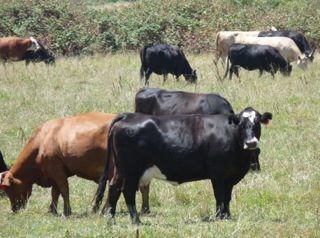
This would typically be a prime marketing time for California cattle ranchers, but pandemic-related slowdowns at meat processing plants have created a bottleneck in the beef market. Ranchers say the situation is forcing them into tough decisions about their market-ready animals. One rancher describes the situation as a waiting game, as ranchers monitor cattle markets and the status of grass on drying pastures.

People who need food assistance during the pandemic have started receiving California-grown food through a new federal program. The Farmers to Families Food Box program from the U.S. Department of Agriculture buys fresh produce, meats, and dairy products to be delivered to food banks and other nonprofits. The program intends to help both people in need and some of the farmers, ranchers, and food distributors who lost business due to stay-at-home protocols.

Rural sections of the University of California, Davis, campus are attracting more visitors, as people look for new outdoor recreation spots during the pandemic. But the university says the additional foot and vehicle traffic threatens to harm habitat and agricultural research. Officials say increased dog walking or jogger activity could unknowingly disrupt sensitive research projects and harm farm animals housed on the Davis campus.

2021-05-12T11:17:07-07:00June 11th, 2020|

Almond Leafout Problem Is Not Widespread


Leafout Problems In Almonds Not New

By Patrick Cavanaugh with the Ag Information Network of the West

The leafout problem in almonds has been around a couple of years, throughout Northern California, said Luke Milliron, a UCANR orchard system, farm advisor serving Butte, Glenn, and Tehama Counties.

Milliron explained that the leafout problem in almonds is not exactly new. “Some of these orchards have actually had the problem for a number of years now. Dani Lightle former advisor in Glenn County observed a number of orchards in Tehama County with the problem and going back to those same orchards this year, she said some of those growers say that it’s been getting worse in those blocks and the trees really don’t look good,” Milliron said. “But it’s certainly not something that’s affecting, for example, every Monterey tree, which is usually more susceptible to the problem.”

“There are orchards across the state that looked fabulous, so it’s highly variable between blocks and within blocks it might only be a low percentage of the trees being affected,” Milliron noted.

The reason for this disorder is not really widely known, but there are theories.

“Having warm winters and potentially this problem being in those varieties because of some genetic predisposition. Plus, why are we seeing it on some trees and not others? Well, maybe those trees had other stresses such as Anthracnose or mites or some other stressor at play that led them to be pushed into this stress, vegetative leaf failure state,” Milliron said.

2020-06-10T08:27:30-07:00June 10th, 2020|

CA FFA Treasurer Reese Gonsalves Promotes Careers in Ag


FFA Treasurer Instills Confidence to Pursue Agriculture


By Tim Hammerich with the Ag Information Network of the West

Reese Gonsalves was elected state FFA Treasurer at their virtual convention in April. She is a 4th generation family farmer and 3rd generation Modesto FFA member. Through her experience she found a love for the marketing and communications side of the ag industry.

“As I’ve gotten older, I’ve helped more with my family’s sale, kind of in the media side of things. So we have a bull sale every year and our sale is all online, said Gonsalves. We record videos and take pictures of the bulls, and then have it in a catalog and stuff. So I’ve helped a little bit more with that. I really like helping photograph the bulls and doing the sale management as well. So it’s kind of shifted as I’ve gotten older, which has been really cool because I found that my passion is actually more with the media and meeting with customers side of the production.”

Gonsalves said the FFA has given her confidence, and she hopes to spend this state officer year instilling a level of confidence in others.

“If I can help one member, and help them get the confidence to be able to help other people, I think that that would be amazing and to be a really great chain reaction of members helping other members,” said Gonsalves.

Her FFA experiences have inspired her to pursue degrees in Agricultural Communications and Agribusiness. She will attend Oklahoma State University after her year of service to the organization.

2020-06-06T12:45:44-07:00June 8th, 2020|

SmartFresh™ Helps Bring Fresh Melons to Distant Markets

Fisher Ranch Expands Its Business Using AgroFresh’s Flagship Technology to Deliver High Quality Melons


AgroFresh Solutions, Inc. (“AgroFresh” or the “Company”) (NASDAQ: AGFS), a global leader in produce freshness solutions, and family-owned grower and shipper Fisher Ranch recently partnered to deliver ready-to-eat, ripe melons from California to global markets using SmartFresh™ technology.

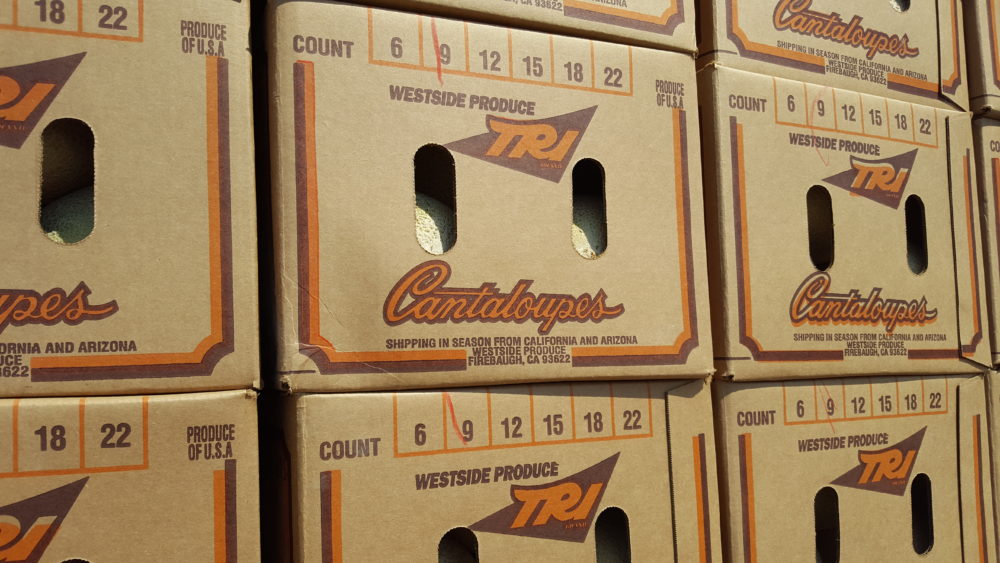
With the use of SmartFresh technology, California-based Fisher Ranch has created new business opportunities by extending the storage window and gaining improved inventory flexibility. The grower reported excellent freshness results using SmartFresh™ SmartTabs™ on cantaloupes and Golden Dewlicious™ honeydew melons. According to Fisher Ranch, AgroFresh’s industry-trusted post-harvest solution enables melons to ripen on the vine, allowing the fruit to retain great firmness and sugar content despite longer transit time.

SmartFresh SmartTabs helps growers and shippers maintain fresh and firm fruit during transit, which results in longer retail shelf life. SmartFresh has also been proven to help control skin disorders on melons for 26 days in cold storage.

“After the successful completion of our commercial trials last year, SmartFresh enabled us to deliver great-tasting, aromatic, high quality melons to global markets, which was a new achievement for us,” says Mike Farrage, sales manager at Fisher Ranch. “With this success in mind, we’ve increased our export volume this year and we’ll now apply SmartFresh to our entire shipment of export melons.”

SmartFresh SmartTabs is a convenient, easy-to-use solution for transport containers and small storage rooms. There’s no need to manually insert sachets in each box of produce.

“We’re excited to help our customers optimize the quality of their fresh produce and grow their business, at potentially higher margins, in distant markets that they otherwise could not access,” says AgroFreshcommercial development manager Fernando Edagi. “We’re thrilled to help growers such as Fisher Ranch deliver melons that provide a great eating experience with consistently high quality, flavor, sweetness and firmness.”

“In our industry, we’re noticing an increasing shift to long shelf-life (LSL) melon varieties that lack aroma and flavor,” says Farrage. “By using SmartFresh, we’re able to enjoy the same shelf-life benefits offered by the LSL varieties, but with enhanced characteristics such as aroma, flavor, firmness and texture that consumers prefer.”

SmartFresh technology empowers growers, packers and retailers from around the world to preserve quality and freshness for a wide range of crops including: apple, pear, avocado, banana, melon, tomato, broccoli, mango*, peach, nectarine, plum, persimmon, kiwifruit, lime* and watermelon.

SmartFresh SmartTabs is registered by the US EPA; Registration No. 71297-3. Always read and follow label directions.

2020-06-03T22:04:41-07:00June 4th, 2020|

State FFA Sentinel Wants Inclusiveness in Ag

State FFA Sentinel Spreads the Message of Inclusiveness in Agriculture

By Tim Hammerich, with the Ag Information Network of the West

Maico Ortiz from Galt was elected State FFA Sentinel last month. For the first time, the association had to move their elections online due to COVID-19 restrictions. Throughout his year of service, the newly elected state officer hopes to spread the message of inclusiveness.

“Inclusiveness is something that has really just stuck with me. At Galt High, we were very adamant about making sure everybody felt included and making sure everybody felt like they had a home in the ag department. And I know California FFA has done a ton of work in terms of moving into that direction, Ortiz said. But we also have a lot of work to do, and that’s okay because I mean, not everything’s going to happen overnight. But, we offer so many pathways for students in order for them to find a career or be successful. I was very attracted to the science aspect of it and the leadership aspect of it, but we have mechanics, we have horticulture,” he noted.

 “There’s just so many different parts of it that students can really find their passions within it,” Ortiz.  “So I want to make sure that students always know they have a home in their ag departments or in the association as a whole and to make sure that they find their passions and regardless of what they decide to do after high school, that they can always look back on their time and be like, that was worth it, And I’m happy that I got to be a part of it,” he said

Ortiz, who is already a student at Chico State, will take the year off from college to serve the youth agricultural leadership organization.

2020-05-31T17:09:16-07:00June 3rd, 2020|

Livestock Carriers Get Some Flexibility in Service Rule

U.S. Transportation Dept. Updates Final Hours of Service Rule


By Russell Nemetz, with the Ag Information Network of The West

The U.S. Department of Transportation’s Federal Motor Carrier Safety Administration published its final rule updating the “Hours of Service” rules designed to increase safety on America’s roads. The department updated multiple existing regulations for commercial motor vehicle drivers.

“America’s truckers are doing a heroic job of keeping our supply chains open during this unprecedented time,” says Transportation Secretary Elaine Chao (Chow). “These rules will help give them greater flexibility to keep America moving.”

The FMCSA says the changes were made based on thousands of comments they received from Americans across the country. There are four key changes to the existing hours of service rules, all of which do not increase driving time and will continue to prevent operators from driving for more than eight consecutive hours without at least a 30-minute break. The agency says the trucking industry is a “key component” of the national economy, employing more than seven million people and moving 70 percent of the nation’s domestic freight.

The new hours of service rule will be implemented 120 days after publication in the federal register.

2021-05-12T11:17:07-07:00June 1st, 2020|
Go to Top