HMC Farms Vaccinates Farm Employees

HMC Farms Delivers COVID-19 Vaccinations to Agriculture Workers


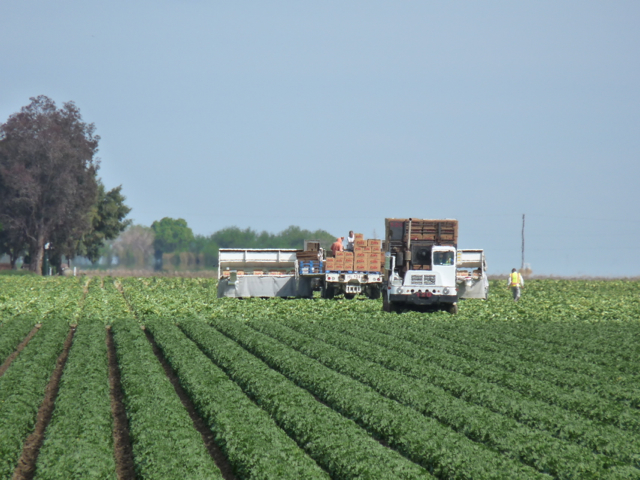
HMC Farms, based in Kingsburg,  has announced the successful distribution of 450 COVID-19 vaccines to agricultural employees in California’s Central Valley.

HMC Farms recently hosted vaccination clinics that distributed hundreds of COVID-19 vaccines to employees of HMC and several nearby businesses in the ag industry. More vaccinations are on the way as the first recipients near the second dose time frame.

HMC Farms is a family-owned and operated business, and the McClarty family values their employees as an extension of that family. Sarah McClarty, Chief Financial Officer of HMC Farms, stated at the event, “To watch every employee in our organization who wants a vaccine receive one over the last two days has been the biggest win in what has been an extremely challenging twelve months. Partnerships with the California Farmworker Foundation and Elite Medical that were in place prior to the pandemic have played a huge part in HMC’s continued efforts to support our employees’ health and well-being, and are what made this week’s event possible.”

At the vaccination event, it was clear to see that people were relieved to have vaccines available to them. Several employees were seen having their photos taken while receiving the vaccine to share with friends and family. “This is such a relief,” said one employee as she received her shot. Another employee commented, “The distribution process for vaccines has been confusing. It’s so helpful that HMC was willing and able to bring vaccinations directly to us.”

The past year has been difficult for people and industries around the globe, and the ag industry has felt the weight of keeping employees safe and healthy while maintaining the food supply. Speaking about the partnership with the California Farmworker Foundation which helped make the vaccination even possible, Harold McClarty, owner and Chief Executive Officer of HMC Farms, expressed gratitude. “We have all struggled during these very difficult times,” said McClarty. “We are very grateful and supportive of all the work that this organization has done for farmworkers. It gives us some hope that we will persevere and continue to move forward with our work to support the nation’s food supply.”

HMC Farms is located in the heart of California’s Central Valley, and has been family-owned and operated since 1887. All of their produce is grown sustainably, protecting the land, water, and people who make it possible to deliver delicious peaches, plums, nectarines, and table grapes year after year. To learn more, visit https://www.hmcfarms.com/ 
 

2021-05-13T16:11:22-07:00March 4th, 2021|

Farm Workforce Modernization Act Reintroduced

California Fresh Fruit Association Supports H.R. 1537


The California Fresh Fruit Association (CFFA) applauds the reintroduction of H.R. 1537 “Farm Workforce Modernization Act” which will create a workforce solution for the nation’s agriculture industry.

California agriculture represents $50 billion in production value and is a leader in the nation’s exports. However, securing a reliable workforce in California and across the nation has remained a constant struggle within the industry. With the introduction of H.R. 1537, there is an optimism that these concerns will finally be addressed.

CFFA President Ian LeMay stated, “The ability to have a reliable, legal workforce represents one of the most important steps forward our industry has made in over 30 years. H.R. 1537 will address critical needs within agriculture by providing a pathway to legal status for current undocumented employees, along with reform to the current H-2A program,” said Ian LeMay, CFFA President.

“There is no doubt the agricultural industry has waited many years for an immigration reform bill to address the labor concerns amongst the many different commodities produced here domestically so that it can continue to provide the nation and world with a safe and reliable food supply long into the future,” LeMay said.

The Farm Workforce Modernization Act that was originally passed out of the House of Representatives in the 116th Congress will make significant changes to address the needs of our current agricultural workforce and guestworker program. The Association will continue to engage in the bill negotiations to ensure the California fresh fruit industry’s concerns are addressed.

2021-05-13T16:13:38-07:00March 4th, 2021|

New H-2A Wage Rates In Effect

Adverse Effect Wage Rates (AEWR) for 2021 In Effect Immediately

By Western Growers Staff

On Feb. 23, 2021, the U.S. Department of Labor published the Adverse Effect Wage Rates (AEWR) for 2021. The new AEWRs go into effect immediately, meaning any H-2A workers or U.S. workers in corresponding employment, get an immediate pay raise.

The new wage rates are identical to those projected here:

  • California’s AEWR is now $16.05 per hour;
  • Arizona’s and New Mexico’s AEWR is now $13.67 per hour; and
  • Colorado’s AEWR is now $14.82 per hour.
  • California had the largest increase in the nation — jumping $1.28/hour, or 8.7%, above 2020.

The AEWRs are the minimum rates the DOL has determined must be offered and paid by employers to H-2A workers and workers in corresponding employment based on a particular occupation and area.

The DOL was ordered to publish new AEWRs this month after a U.S. District Court granted an injunction, effectively killing the rule that would have frozen the 2020 AEWRs for two years. The rule would have also adjusted how wages would be determined after 2023.

Wage rates were scheduled to be adjusted based on the Bureau of Labor Statistics’ Employment Cost Index, instead of the Farm Labor Survey.  The UFW has also asked the court to award backpay to H-2A employees who have worked under the 2020 wage freeze since the injunction was issued. That question remains unsettled.

All employers with H-2A contracts now in effect should adjust their payroll systems to reflect the new AEWR. Western Growers H-2A Services has begun filing H-2A applications reflecting the new AEWRs in filings on behalf of its clients.

2021-05-13T16:14:56-07:00March 2nd, 2021|

Less Almond Harvest Dust

Semi Off-Ground Almond Harvesting Leads to Less Harvest Dust

By Tim Hammerich with the Ag Information Network

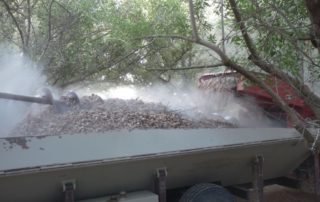
Almonds have traditionally been harvested by shaking the tree and sweeping the nuts into a windrow. Many are now looking for ways to skip this sweeper pass by harvesting the almonds off ground. One advocate of off-ground harvesting is Scott Hermann of TOL, Inc in Tulare. They sell equipment to make off-ground harvesting possible.

“We’ve proven that we have a machine that can right now in the orchards that exist in California, shake those almonds, catch the almonds and put it right down into a windrow and therefore eliminating the need to sweep during harvest,” noted Hermann

Hermann says this approach not only saves growers from having to make the sweeper pass, but it also helps the industry accomplish one of their Orchard 2025 goals.

“The Almond Board of California has set up a goal. And that goal is to reduce the amount of dust generated during harvest by 50%. And they want to accomplish this by the year 2025. Well, we’re very confident with the Twin D shakers that we can not only meet that 50% reduction goal, but we can by far surpass it. And we believe we can reduce the dust by 80 to 90%. Again, through the ability to eliminate the sweeping,” he said.

Hermann said the orchard requirements are that they are hedged and that there is 19” of available trunk space before the first scaffold.

“So that’s another big advantage. We can fit our machines into the orchards as they are grown today. We do not require significant changes in the planting dimensions or even the pruning style of the trees,” noted Hermann.


2021-05-13T16:16:21-07:00March 1st, 2021|

CALOSHA Unfairly Insists that Ag Increase Prevention of COVID Spread

Agriculture and Business Coalition Disappointed in Cal/OSHA Emergency Standards Preliminary Injunction Ruling


In response to the decision of the Superior Court to deny motions for preliminary injunctions restraining the California Occupational Safety and Health Standards Board from enforcing the Emergency Temporary Standards, a coalition of agricultural and business groups issued the following statement:

“The health and safety of farm and ranch employees is the top priority for agricultural employers. Throughout California, farmers and ranchers have adapted their operations to minimize the spread of COVID-19 in the workplace. In addition, agricultural organizations have advocated with local, state, and federal elected officials and agencies to prioritize access to vaccines for farm and ranch employees; individual farms and agricultural businesses have sponsored vaccination clinics, with more already scheduled.

“The court’s decision only complicates the ongoing work by family farms and other essential businesses to maintain safe, plentiful food supplies in the wake of COVID-19. The Cal/OSHA Board failed to justify the need for emergency intervention, despite their own staff report that the emergency standards were not necessary to protect employee health.

“With this decision, the court failed to properly exercise its oversight on this critically important issue, and we are now exploring our legal options to ensure the safe and timely delivery of food and essential services to all Californians. In the meantime, we will work with Cal/OSHA to assure the agency better understands the essential businesses and agricultural operations it regulates, and to inject practicality into the Emergency Temporary Standards as it develops forthcoming policies and guidance.”

2021-02-26T12:22:45-08:00February 26th, 2021|

Yes, Ants Are Amazing!

Why Ants Are Amazing: UC Davis Programs

“Ants are amazing because they’re way more diverse than most people realize,” says UC Davis entomology doctoral candidate Jill Oberski. “Some are huge, some are tiny, some are blue or green, and a lot of them have crazy spines. There are ants that run farms with crops and livestock, and ants that can build bridges and survive floods, and ants that live in the highest treetops and never touch the ground.”

That’s just some of the information showcased at the UC Davis Biodiversity Museum Month program on Saturday, Feb. 13 when three doctoral students in the Phil Ward lab, UC Davis Department of Entomology and Nematology, took the helm.  Oberski, a fourth-year doctoral student, and Ziv Lieberman, a first-year doctoral student, spoke about the diversity of ants and field questions, followed by doctoral candidate Zach Griebenow’s presentation on his research.

Then on Saturday, Feb. 20, from 11 a.m. to noon, Professor Phil Ward will host “All About Ants,” billed as a “fun and lively question and answer session.” The programs are free and family-friendly. See http://biodiversitymuseumday.ucdavis.edu/live-programs.html for the Zoom links.

Zach Griebenow
Griebenow grew up in rural Kentucky and received his bachelor’s degree in entomology in 2017 from The Ohio State University, undertaking undergraduate research with distinction on species boundaries in the Puerto Rican fauna of the subterranean termite Heterotermes.

“As so everyone in the Ward lab, I study how different groups of ants are related to one another, and why they look and behave the way that they do,” he said. “Specifically I study an obscure group called the Leptanillinae, which have no common name. As ants go, they are strange, and we know very little about them. So far, I have confidently teased out the major evolutionary relationships among leptanilline ants, but there is a lot more work to be done, particularly in comprehending the often bizarre structural modifications seen in the male Leptanillinae (legs that look like toothbrushes, etc.).”

Ziv Lieberman
Lieberman, born and raised in California, studied at the College of Marin before transferring to UC Davis to major in evolution, ecology and biodiversity, with a minor in insect evolution and ecology. “Prior to UC Davis, I spent several years working abroad for the California Academy of Science documenting historical ant specimens,” Lieberman said. “At the end of my undergrad, I published my first paper, a revision of the poorly-understood (and very cute) African species of the ant genus Discothyrea.”

In the Ward lab, Lieberman studies “ant evolution, specifically focusing on connecting evolutionary relationships (the ant ‘family tree’) with anatomy, using a combination of next-generation imaging techniques and large-scale genetic analyses. In particular, I am interested in describing and comparing internal anatomical features which are usually ignored, and understanding how these traits contribute to biodiversity.”

Jill Oberski
Oberski grew up in Minnesota. “I was fascinated by insects from a very young age,” she said. “I attended Macalester College, spent a few confused years on a pre-med track, and ultimately discovered a career in entomology was feasible and worth pursuing. This has led me to Phil Ward’s ant systematics lab at UC Davis, where I’m now a PhD candidate.”

“My research centers on the ant genus Dorymyrmex, which is commonly found all over the Americas,” Oberski said. “Even though they’re extremely common (Davis itself is home to two species!), we have no idea how many species there really are. In addition to discovering and naming these species, I’m really interested in biogeography and ancient history: Where did Dorymyrmex originate? How are the North American species related to the South American species? And how did they disperse before the isthmus of Panama was connected?”

Professor Phil Ward
Professor Ward teaches California insect diversity, insect taxonomy and field ecology, and introductory biology (the tree of life). His research interests include systematics, biogeography and evolution of ants; ant-plant mutualisms; phylogeny and speciation. He holds a bachelor of science degree in biology from Queens University, Canada (1973) and a doctorate in zoology from the University of Sydney, Australia (1979).

Due to the COVID-19 pandemic, the 10th annual UC Davis Biodiversity Museum program is all virtual this year via webinars and pre-recorded presentations and takes place throughout the month of February. The science-based event traditionally occurs on only one day–the Saturday of Presidents’ Weekend, when families and friends gather on campus to learn first-hand about the UC Davis museums and collections.

This year’s biodiversity event is showcasing 12 museums or collections:

  • Anthropology Museum
  • Arboretum and Public Garden
  • Bohart Museum of Entomology
  • Botanical Conservatory
  • California Raptor Center
  • Center for Plant Diversity
  • Häagen-Dazs Honey Bee Haven
  • Nematode Collection
  • Marine Invertebrate Collection
  • Museum of Wildlife and Fish Biology
  • Paleontology Collection
  • Phaff Yeast Culture Collection

For more information and the schedule, access these two formats on the UC Davis Biodiversity program website: (1) live talks and demonstrations at https://bit.ly/3d2p1rI and (2) pre-recorded talks and activities at https://bit.ly/3a4Q2Zw.

To help support the Biodiversity Museum event, contributions are being accepted through a month-long crowdfunding campaign program at https://crowdfund.ucdavis.edu/project/24310.

2021-02-23T18:10:14-08:00February 23rd, 2021|

Initial Water Allocation at 5 percent!

Westlands Water District Responds to Reclamation’s Five Percent Allocation for South-of-Delta Repayment and Water Service Contractors 


In response to today’s U.S. Bureau of Reclamation’s (Reclamation) announcement that the initial allocation for South-of-Delta agricultural repayment and water service contractors is 5%, Tom Birmingham, Westlands general manager, today issued the following statement:


“Today’s announcement is no surprise given current hydrologic conditions and regulations that restrict operations of the Central Valley Project, but it is devastating nonetheless for farmers and communities across the region that rely on water from the CVP and jobs created by irrigated agriculture. It’s also yet another reminder of the urgency behind our continued work with policymakers, regulators and the farming community to maximize water use efficiency, improve climate resilience, and ensure greater water supply reliability now and in the future.”


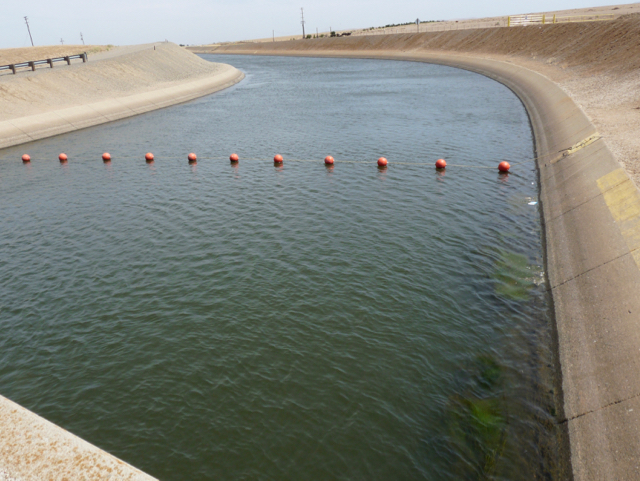
Westlands is among the South-of-Delta contractors that, together, hold contracts with Reclamation for approximately 3 million acre-feet (977 billion gallons) of water. Over the last 10 years, Westlands and other South-of-Delta agricultural repayment and water service contractors have received a 100% allocation of water only once and have received a 0% allocation two times. On average, these contractors have received less than a 40% allocation of water over the past decade.


Recent studies have shown that reductions in surface water availability in the Central Valley can cause approximately 194,000 acres of land to be taken out of production, more than $1.3 billion in lost crop revenue and thousands of job losses. Lack of surface water also increases reliance on groundwater and can have negative impacts on drinking water availability and quality – particularly in disadvantaged communities.


To maximize water use efficiency, Westlands’ water distribution system is comprised of approximately 1,100 miles of buried pipeline and is outfitted with over 3,000 water meters. Since 2017, Westlands has invested $14.2 million in its water infrastructure system, which measures every drop of water and minimizes losses caused by seepage and evaporation.

“With the announcement of this year’s initial allocation, Westlands remains more committed than ever to ensuring that every drop of water available to the District is put to beneficial use,” Birmingham added. “A 5% allocation, although better than zero, will result in a human and economic disaster for families on the West side of the Valley and could result in major strains for the nation’s food supply. We urge Governor Newsom to move swiftly to mitigate the impacts of today’s announcement and help prevent the disastrous impacts of past droughts by streamlining transfers of available water, immediately reengaging on negotiations of the voluntary agreements and supporting critical water infrastructure investments to help ensure we can continue managing water efficiently, even as we face the consequences of a changing climate.”


Past studies indicate that statewide economic losses as a result of California’s 2014-2016 drought totaled $3.8 billion, with thousands of jobs lost in the Central Valley alone and many rural drinking water wells running dry. Furthermore, parts of the Central Valley Project infrastructure that carry water to Westlands have lost up to 30% of their conveyance capacity over time due to subsidence; combined with higher operational and power costs, this results in millions of dollars in higher costs to convey less water through the system every year. Westlands is among a broad coalition of water agencies supporting both state and federal legislation to address this issue.

2021-05-12T10:52:43-07:00February 23rd, 2021|

Off Ground Almond Harvesting Studied

Reducing Dust in Almond Harvesting is Big Goal of the Industry

By Patrick Cavanaugh with the Ag Infomation Network

One major proposal is off-ground harvesting with the almonds being caught in a catch-frame, and then sent the processing from there.

Dr. Patrick Brown, a professor in the Department of Plant Sciences at UC Davis. He noted that the term off-ground harvesting is also known as alternative harvesting.

“The benefits from alternative harvesting are many fold, certainly soil health, and orchard sustainability, but in addition, reduce pests and disease interaction,” Brown said.

Brown said it will also reduce navel orangeworm damage as well as a problem known as Hull rot.

“There’s no negative impact on the quality of the fruit or the kernel nor the yield, the major issues to be resolved is how to dry the fruit effectively though about the information that has been presented, suggests it’s actually quite cheap and effective to dry the almonds mechanically,” noted Brown. “The big issue, I suppose, for most growers would be investments in new machinery and the optimization of their orchards for these practices. I think off ground has to go with early harvesting, like two weeks prior to what’s currently being done”

And we asked Brown why would a grower want to harvest earlier?

“Because you can. And because of the reason we were harvesting, when we are, is simply the convenience of getting the nuts as dry as possible on the tree before harvest. It was not for any particular horticultural benefit,” Brown said.

Still, mass adoption of off-ground harvesting is decades away.

2021-02-22T17:56:43-08:00February 22nd, 2021|

Congressman Valadao Urges SJV Vaccination Sites


Congressman David G. Valadao Pens Letter to Governor Newsom and FEMA Urging the Establishment of Vaccination Sites

Recently,  Congressman David G. Valadao, Leader Kevin McCarthy, Congressman Jim Costa, Congressman Devin Nunes, and Congressman Josh Harder sent a letter to Governor Gavin Newsom and Acting FEMA Administrator Robert Fenton strongly urging the establishment of multiple COVID-19 vaccination sites in California’s Central Valley.

Governor Newsom recently announced two community vaccination sites in Alameda and Los Angeles Counties, though those two counties already have far higher vaccination rates than Central Valley counties. While Governor Newsom later indicated the intent to establish a vaccination site in the Valley, low vaccination rates demonstrate the need for multiple sites throughout the region.

“I am encouraged that the state has indicated intent to establish a COVID-19 vaccination site in the Central Valley, but one is not enough to meet the needs of our communities,” said Congressman David G. Valadao. “The Valley was leading the state in cases per 100,000 residents over the summer, yet most Valley counties’ vaccination rates lag behind those of Los Angeles and Bay Area Counties. The area’s rural communities are home to thousands of farmworkers who risk COVID-19 exposure every day to feed America. The unacceptably low vaccination rate in the Central Valley indicates that we desperately need multiple vaccination sites throughout the region. I ask Governor Newsom to prioritize vaccination for the areas that need it the most.”

“Though the announcement of a new vaccination site in the Central Valley is welcome news, this is just the beginning of fixing a subpar vaccine distribution plan,” said Leader Kevin McCarthy. “The State must not forget Californians in the region as it continues to work with FEMA to identify locations and secure federal resources to enhance vaccine administration. The Central Valley is unique, and any expanded efforts must support the diverse socioeconomic and rural communities we are proud to represent.”

“I am hopeful the San Joaquin Valley will be next on the list in California to get a FEMA vaccination site,” said Congressman Jim Costa. “I’ve been working diligently with the Valley delegation, along with the White House and Governor’s office, to reiterate the extreme need in the Valley for one of these sites. As one of the hardest-hit areas in the Nation, vaccinating our Valley communities is key to overcoming this health crisis. Keeping my constituents safe is my number one priority and I will keep fighting alongside my colleagues to ensure that a vaccine will be made available to everyone that wants one.”

“As Governor Newsom attempts to reverse California’s abysmal vaccine rollout, it is imperative that the state work with FEMA to provide swift vaccine distribution to the Central Valley families and workers who risk their health to feed the nation,” said Congressman Devin Nunes.

“When disasters happen, the Central Valley is always the first to get hit and the last to recover. It’s time our community gets the resources we need,” said Congressman Josh Harder. “As some of the hardest-hit areas in the state, Stanislaus and San Joaquin Counties deserve a mass vaccine site close to home. Every farmer, teacher, and working mom and dad need to know they can get vaccinated without spending hours on the road away from their job and family.”


2021-02-18T21:03:29-08:00February 18th, 2021|

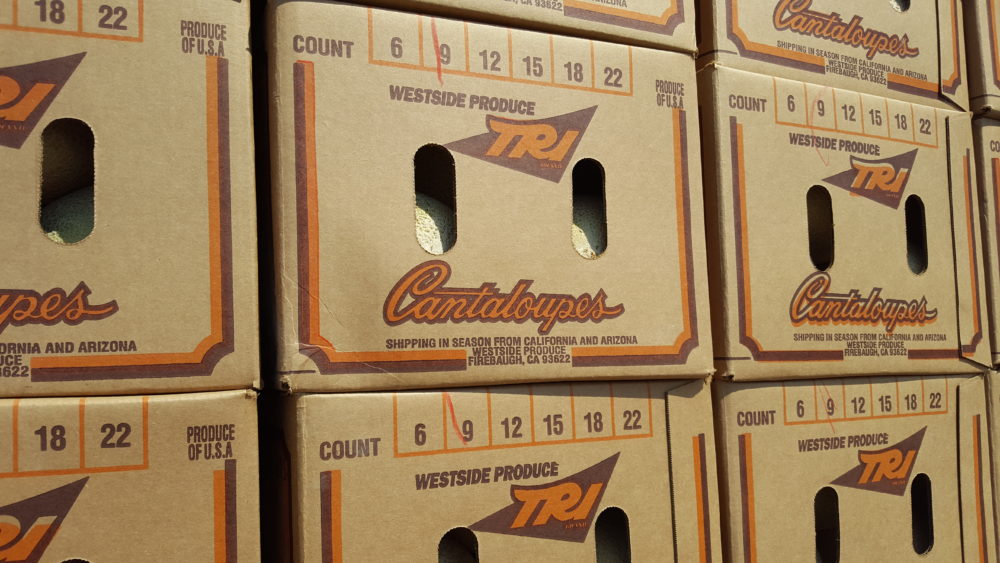
Vaccinations Begin For Cantaloupe Farmers and Employees

California Cantaloupe Farmers Begin Vaccinations for Essential Workforce


Fresno, CA — Essential workers employed by California cantaloupe growers are among some of the first front-line food workers to receive COVID vaccines in the state which grows the vast majority of our nation’s fruits and vegetables.

“We’re so thankful to be able to offer our workers these life-saving vaccines,” said Garrett Patricio of Westside Produce Company, a cantaloupe harvesting, packing, and shipping company located in Firebaugh, California. “Farmworkers are just one of the many groups who need and want to be vaccinated and we urge federal and state leaders to get more shots in more arms of more workers as quickly as possible.”

This week over 800 arms that work hard to pick, pack, and cultivate cantaloupe will receive shots — all thanks to the quick work of a team comprised of Patricio, California Secretary of Food Agriculture Karen Ross, local health care provider Valley Health Team, the Fresno County Department of Public Health and the Fresno Ag Commissioner’s office.

Firebaugh is located in Fresno County, which is the leading agriculture county in California and produces most of the state’s cantaloupe. In total, California grows about 75 percent of the fresh cantaloupe consumed in the U.S.  None of this would be possible without essential workers who harvest and pack the fruit.

In addition to Westside Produce, other cantaloupe companies instrumental in securing vaccines for their workers include Del Bosque Enterprises, R&N Packing Company, and Toma-Tek Firebaugh.

“Fresno County Department of Health has been working to make sure we have a plan in place for vaccinating farm employees,” said Tom Fuller, who works for the county health department as the liaison to the ag industry . “We’ve tested this plan and it’s working successfully as we’re seeing with these vaccination events involving cantaloupe growers.  We’re ready to do this in a big way as soon as more vaccines become available through the State.”

“As soon as we learned an opportunity might exist to have our employees vaccinated, we jumped at it,” stressed Patricio.  “Unfortunately, vaccines for essential front-line workers throughout the food industry – along with seniors, teachers, and others — are extremely limited in California. We knew that if we missed this chance, we might not have the opportunity again for many, many months. The situation is dire and we do hope solutions that allow more people to be vaccinated will be coming soon.”

According to Patricio, vaccinations at a majority of the county’s cantaloupe farming operations were made possible by quickly reaching out to local government officials and securing an approved health provider. “It was critically important that Valley Health, which has a clinic here in Firebaugh, was already an approved provider for the vaccine,” he said. “We are just so fortunate to have pulled this off.”

Over the past week, Patricio and other local cantaloupe growers have been able to hold a series of drive-thru vaccination events at their operations.  In addition to medical staff from Valley Health Team who are administering the vaccines, local law enforcement has been brought in to help manage traffic and other logistical challenges.

“We are all very happy to be getting the vaccine today as it will allow us to stay safe while we’re working and will protect us and our families,”  said (TBD)

“We’re offering vaccines to any of our employees who wish to receive them, but we’re not requiring anyone to do so,” said Patricio.  “Most workers are anxious to be protected from COVID by getting vaccinated, but not everyone has agreed to receive it.”

Patricio explains this means cantaloupe farmers will need to continue enforcing safety measures put in place during last season’s harvest to make sure workers are protected. The cantaloupe industry was able to get by with relatively few COVID outbreak incidents last year, but it’s been a challenge for everyone. Vaccines will go a long way to help reduce risk among workers. “This is why it’s just so critically important that we get more vaccines,” he said. “Protecting our essential workforce is a top priority for us all.”

Fresno County ag businesses with questions or who are interested in scheduling vaccinations are encouraged to contact the Fresno County Department of Health at covidag@fresnocountyca.gov

2021-02-17T18:39:09-08:00February 17th, 2021|
Go to Top