USDA Confirms Additional Cases of Virulent Newcastle Disease in Backyard Birds in California 

California Backyard Chickens Succumb to Newcastle Disease

News Release Edited By Patrick Cavanaugh

The United States Department of Agriculture’s (USDA) Animal and Plant Health Inspection Service confirmed five additional cases of virulent Newcastle disease in backyard exhibition chickens in California—two in Los Angeles County, one in Riverside County and two in San Bernardino County.

A complete list of confirmed cases is available on the USDA’s website at www.aphis.usda.gov/animalhealth/vnd.

Virulent Newcastle disease has not been found in commercial poultry in the United States since 2003.

No human cases of Newcastle disease have ever occurred from eating poultry products. Properly cooked poultry products are safe to eat.  In very rare instances, people working directly with sick birds can become infected.  Symptoms are usually very mild and limited to conjunctivitis. Infection is easily prevented by using the standard personal protective equipment.

Samples from the flocks were tested at the California Animal Health & Food Safety Laboratory System (CAHFS).  The APHIS National Veterinary Services Laboratories in Ames, Iowa, confirms all findings. APHIS is working closely with the California Department of Food and Agriculture to respond to these findings and to conduct an epidemiological investigation. Federal and State partners are also conducting additional surveillance and testing in the area.

In addition to practicing good biosecurity, all bird owners should report sick birds or unusual bird deaths to State/Federal officials, either through their state veterinarian or USDA’s toll-free number at 1-866-536-7593. Additional information on biosecurity for backyard flocks can be found at Biosecurity for Birds.
2021-05-12T11:17:09-07:00July 23rd, 2018|

Agritourism in California

UC Davis Experts Help Farmers, Ranchers Profit  in Growing Trend

News Release Edited By Patrick Cavanaugh

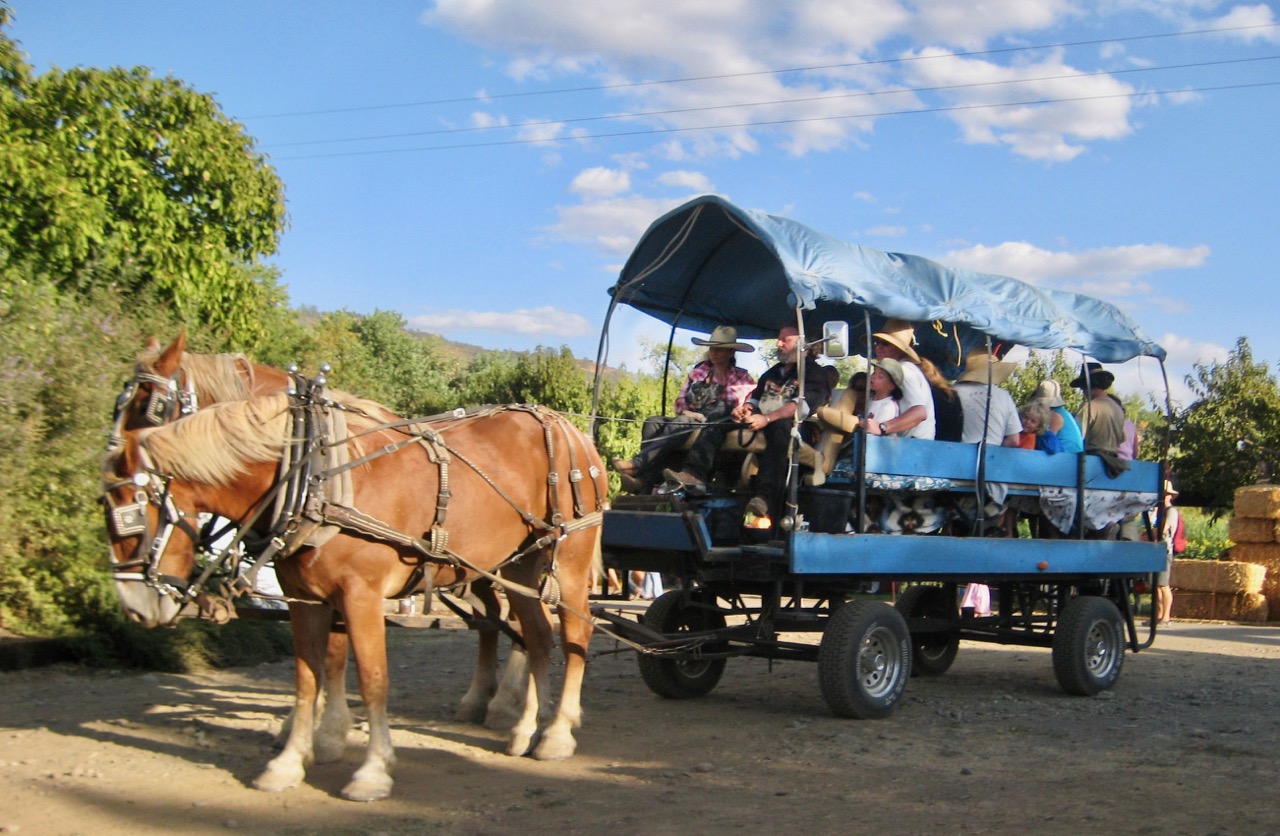
Agritourism is growing in California, along with sales and production of much of the world’s fruits, vegetables, and nuts. More and more people are paying to enjoy the bounty and beauty of California’s farms and ranches by touring peach and cherry farms near Fresno, taking classes in beekeeping, attending festivals devoted to strawberries or attending a host of other activities offered by farmers and ranchers throughout the state.

Many farmers could benefit from agritourism and the added value it brings, but developing successful agritourism operations can be tricky. Experts at the Agricultural Sustainability Institute (ASI) at UC Davis are helping farmers and others in the agricultural community understand the regulations, permits, insurance, marketing and other considerations needed to succeed.agritourism

“Agritourism operations are more successful when they’re part of a supportive community of tourism professionals, county regulators, agriculture regulations and others,” says Gail Feenstra, ASI’s food, and society coordinator.

Feenstra and her team recently received a $73,000 grant from Western Sustainable Agriculture Research and Education, a U.S. Department of Agriculture program, to develop training, resources and peer support for farmers and ranchers considering agritourism. Feenstra is working with Penny Leff, ASI’s statewide agritourism coordinator and team project manager.

Leff led previous projects that offered agritourism education to groups of farmers, ranchers, and others involved in California agritourism. In this new project, Leff is providing comprehensive training to smaller, more targeted groups that will then offer training to others in their community.

“We’re helping farmers and ranchers assess their agritourism potential, whether it be U-pick farming, dinners on the farm, classes or even overnight lodging,” Leff says. “We help navigate everything from zoning ordinances to marketing plans.”

The project’s ultimate goal is to develop at least 24 clusters of vibrant agritourism operations in California that sustain producers, educate visitors and support the economic health of the entire community.

As Leff explained, “Agritourism is an exciting opportunity for farmers, and also for visitors who can learn about and enjoy what farm living has to offer.”

You can learn more about agritourism opportunities at the ASI agritourism website. For more information on upcoming workshops, contact Penny Leff at paleff@ucdavis.edu or call 530-752-5208.

2018-06-29T16:49:08-07:00June 29th, 2018|

More Cooperation Regarding Citrus Health and HLB Disease

Citrus Health Response Program Discussed at UC Riverside

By Patrick Cavanaugh, Editor

California Ag Today recently interviewed Joel Nelsen, president and CEO of the California Citrus Mutual. He spoke on his recent trip to UC Riverside about the Citrus Health Response Program. While speaking with USDA, they discussed the game plans that will be used to battle Huanglongbing (HLB) disease, which is vectored by an invasive insect called Asian Citrus Psyllid.

“We got into it, which I thought was an interesting discussion. What would growers do if in fact HLB was discovered in a grower’s orchard and what would the be obligated to do,” Nelsen said.

“And what came out of that discussion is that we are going to work with the USDA. We’re going to develop a war game scenario. We’re going to bring people into a room and start talking about it, just to see what the reactions were, and we’re going to challenge these individuals to do what needs to be done,” Nelsen explained. “We’re just going to have to figure out how best to address the industry and areas like this.”

Nelsen said that they discussed whether or not there was enough being done in that partnership with the homeowner. “We came to the conclusion that no, quite frankly the industry has been carrying that ball and that USDA and CDFA can do a little bit more in their role as government”

Tree removal and beneficial insects were also discussed.

“We talked about the continued trees being removed, and everybody was satisfied about that. We talked about whether or not beneficial insects can help in this situation. Surprisingly, the answer was pretty much no,” Nelsen explained. “Beneficial releases may help in an urban environment to a small extent, but from a commercial standpoint, it doesn’t help. So there were a lot of discussions, some debate, and most of all, some camaraderie that was developed as far as going forward.”

Nearly 400 trees in front and back yards of homes have been destroyed due to testing positive to HLB disease.

“They’re all in a clearly defined geographical area in Southern California,” Nelsen said. “So what we have is a lot of backyard adventures that bring in rootstock that unfortunately was diseased, and as a result of that, those individuals are the ones that are seeing problems associated with their own trees.”

2021-05-12T11:01:56-07:00March 15th, 2018|

Fighting Huanglongbing Is Job One

Citrus Health Program Protecting State’s Industry

By Patrick Cavanaugh, Farm News Director

Joel Nelsen, president and CEO of the California Citrus Mutual based in Exeter, spoke to California Ag Today about a recent trip to UC Riverside to discuss the Citrus Health Response Program and huanglongbing disease.

“For the last several years, the federal government and the California citrus industry had a wonderful partnership with some ideas, some regulation, and most importantly, with some funds,” Nelsen said. “So periodically, USDA comes to do an audit as to what we’re doing, how we’re doing it, and whether or not there needs to be some reevaluation.”

“The Citrus Health Response Program is the program we call a CHRP for a two-day evaluation. You had scientists and regulators from USDA; you had regulators from CDFA, along with a few scientists,” Nelsen explained.

“You had that entire stakeholder group and members from the scientific community and UC Riverside to evaluate what we’re doing and why, but eventually we did achieve one objective and that’s coming up with several action steps that we need to do as an industry in partnership with government,” he said.

The concern of Huanglongbing disease was discussed and game plans were presented.

“What was interesting is this was a friendly audit. They weren’t interested in taking money away, they weren’t interested in determining if we’re using dollars appropriately, but they wanted us to talk about why we were still spraying in the urban environment for the Asian Citrus Psyllid, which vectors Huanglongbing,” Nelsen said.

“They wanted us to talk about whether or not growers were doing what they were supposed to be doing and of course, they are doing what they need to do to keep the deadly disease out of commercial citrus orchards,” Nelsen said.

2021-05-12T11:01:56-07:00March 8th, 2018|

Freeze Damage Could Be Wide Spread

Deep Freeze May Have Caused Significant Damage to Almonds, Tree Fruit

By Patrick Cavanaugh, Farm News Director

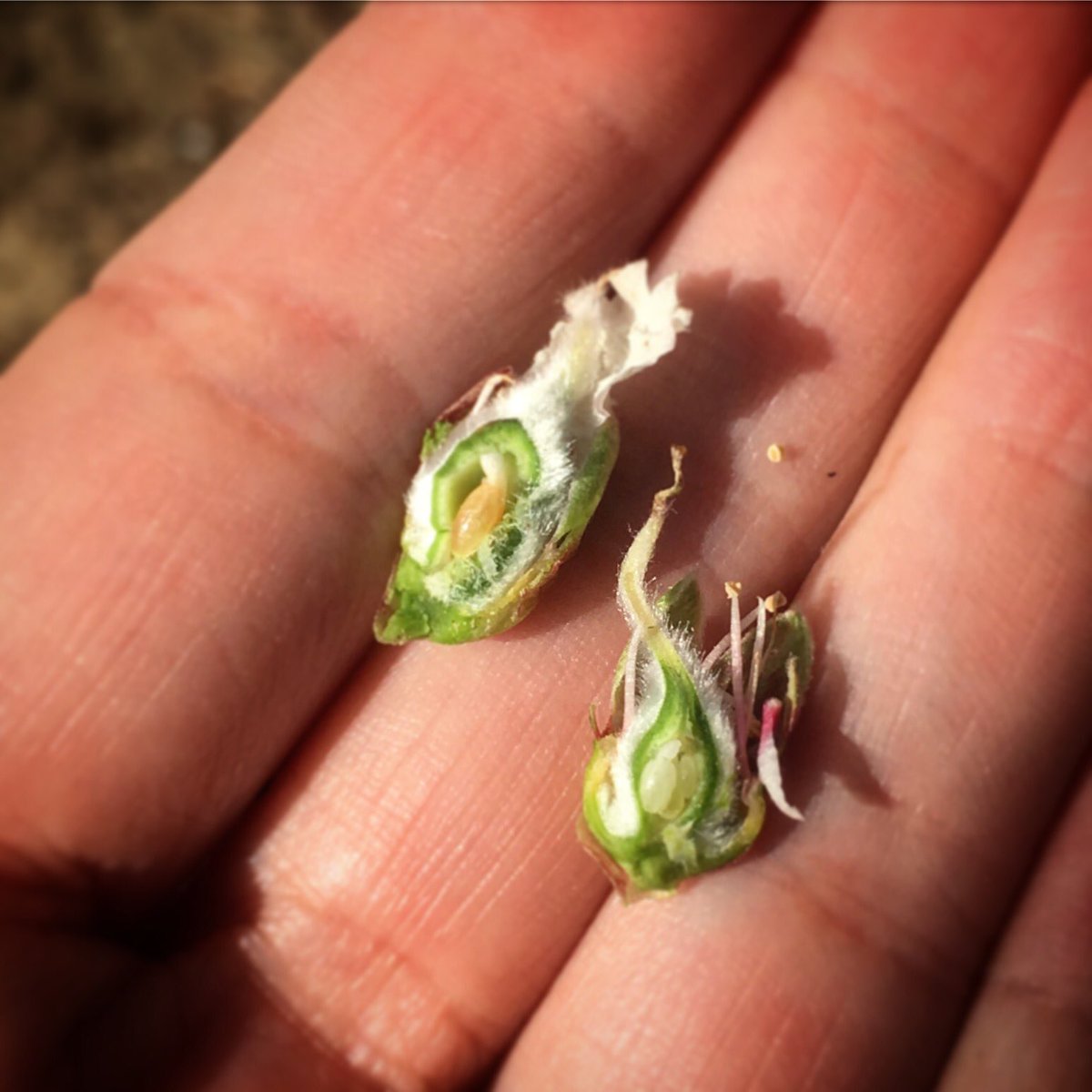
Editor’s note: Photo shows freeze damage to almonds ovule. On right is healthy ovule. On left, ovule died due to deep freeze. (Photo: Kern County Farm Bureau.)

While possible  freeze damage is still being calculated, we know that many areas of almonds and tree fruit have been damaged from recent hard freeze across the state, with temperatures as low as 23 degrees.

Daniel Jackson of Family Tree Farms, based in Reedley, reported that at least one block of peaches on sandy ground was lost.

“The sandy ground could not hold water to protect the roots from the freeze,” he said.

Jackson explained that the five-generation operation is waiting to see if more damage was suffered by the trees.

Significant almond damage could be widespread as the freezing temperatures struck the trees in full bloom.  If there is significant losses, it could result in higher almond prices around the world.

A report from Joel Nelsen, President 0f California Citrus Mutual, based in Exeter, noted no damage to the state’s citrus crops.

With California growers, ranchers, producers, and rural landowners experiencing recent freezing temperatures sweeping the state, the U.S. Department of Agriculture has multiple agencies that provide financial and/ or technical assistance to recover from natural disasters, such as freeze.

Listed below is an overview of applicable programs provided by the Farm Service Agency (FSA).

  • Tree Assistance Program: Provides financial assistance to replant or rehabilitate eligible trees, bushes and vines damaged by natural disasters. Forests are not eligible.
  • Non-Insured Crop Disaster Assistance Program (NAP): Provides compensation to producers who grow uninsurable crops and have purchased NAP coverage by the crop signup date.
  • For more information, visit http:// difsa.usda.gov

Please contact your local FSA County Office as soon as possible. Your local FSA specialists are available to assist you with the programs listed above and more.


2018-02-26T16:44:01-08:00February 26th, 2018|

Produce Rule is Now Mandatory

Produce Rule Now In Effect

By Sonia Salas, Western Growers, Director of Science and Technology

It’s official: Since January 26, domestic and international produce farms designated as “large” (those with annual sales greater than $500,000) are expected to comply with most provisions of the Produce Safety Rule, a federal law created under the Food Safety Modernization Act (FSMA). Smaller farms will be phased in over the next few years.

The Produce Safety Rule is mandatory throughout the United States and applies to both domestic and imported produce. Any produce farm found to be out of compliance may be subject to regulatory action. The State Departments of Agriculture play a key role in education, outreach and enforcement activities.

The California Department of Food and Agriculture (CDFA) recently announced that it will be launching a new Produce Safety Program, which will operate as part of its Inspection Services Division. This program has been created specifically to conduct on-farm inspections on behalf of the U.S. Food and Drug Administration (FDA) and will be used to verify compliance with the Produce Safety Rule.

Additionally, the program will distribute educational information designed to assist California produce farms in understanding the requirements and how to comply with the rule. More information about CDFA activities can be found in their Produce Safety Rule Fact Sheet. The Colorado and Arizona Departments of Agriculture are likewise taking the lead to enforce this rule and educate growers in their respective states.

The focus in 2018 is on education and on-farm readiness. While on-farm inspections are not likely until 2019, Western Growers encourages members to meet compliance deadlines and has developed resources to help members get ready, including an implementation guide and self-audit checklist, available on our FSMA Portal.

Below is a list of Western Growers’ resources and upcoming training to help growers with the FSMA Produce Safety Rule:

FSMA Portal: Click here to access the portal.

Produce Safety Rule Resources Portal (a full Implementation Guide with audit checklist will be available for download tomorrow): Click here to access the portal.

Webinar on February 26: Are you FSMA Compliant?: Click here to register.

Industry Workshops: Click here to view dates and register.

2018-01-29T18:18:25-08:00January 29th, 2018|

Bettencourt Says Livestock Program Can Help

Aubrey Bettencourt: Emergency Livestock Assistance Program Available for Losses in CA Fires

By Jessica Theisman, Associate Editor

“It’s been a crash course for me,” said Aubrey Bettencourt, a third generation farmer in California. In November she was appointed by the trump administration to serve as the executive director of the United States Department of Agriculture’s California Farm Service Agency. She is speaking about certain FSA programs for livestock. It would be applicable to all states across the country.

“Whether we are dealing with the emergency livestock assistance program, ELAP,is what we call that,” she said. “ELAP provides financial assistance for eligible producers for certain diseases, adverse weather events, wildfires, and more. These are great programs that we need, especially with some of the disasters California is dealing with.”

She was very close to the situation in southern California with all of the fires, that did affect some cattle. “Any cattleman or woman who is having trouble should get a hold of the FSA office immediately to get into the system to be matched up to the programs such as ELAP,” she said.

“We also have a livestock indemnity programs, so if there is unfortunately a loss of livestock, we can definitely help you with that,” said Bettencourt. ELAP also has a forage program that helps if you have lost the ability to graze.

There are also other programs along the lines of secondary insurance for noninsurable crops that can be purchased ahead of time. “In case there is a disaster, we can help cover some of the costs if you are not able to graze or you are not able to care for cattle in some capacity because of the loss or a disaster of some sort,” she said.

“I would encourage you not only to reach out to our offices, but a lot of the really good trade associations have great information on this as well,” said Bettencourt.


For more information, please go to the link below:

https://www.fsa.usda.gov/programs-and-services/disaster-assistance-program/emergency-assist-for-livestock-honey-bees-fish/index

2021-05-12T11:17:09-07:00January 9th, 2018|

Farm Service Agency Can Help with Livestock Losses

Emergency Livestock Assistance Program Can Help with Livestock Losses

By Jessica Theisman, Associate Editor

“It’s been a crash course for me,” said Aubrey Bettencourt, a third generation farmer in California. Last month, she was appointed by the Trump administration to serve as the executive director of the United States Department of Agriculture’s California Farm Service Agency. She recently spoke to California Ag Today about FSA programs for livestock losses, which would be applicable to all states across the country.

“Emergency Livestock Assistance Program … provides financial assistance for eligible producers for certain diseases, adverse weather events, wildfires, and more. These are great programs that we need, especially with some of the disasters California is dealing with,” Bettencourt said.

She is very close to the situation in southern California with all of the fires, which have affected a lot of cattle. Any cattleman or woman who is having trouble should get a hold of the FSA office immediately to get into the system to be matched up to programs such as ELAP.

“We also have a livestock indemnity programs, so if there is unfortunately a loss of livestock, we can definitely help you with that,” Bettencourt said.

ELAP also has a forage program that helps if you have lost the ability to graze, and there are also other programs along the lines of secondary insurance for non insurable crops that can be purchased ahead of time.

“In case there is a disaster, we can help cover some of the costs if you are not able to graze or you are not able to care for cattle in some capacity because of the loss or a disaster of some sort,” Bettencourt explained.

“I would encourage you not only to reach out to our offices, but a lot of the really good trade associations have great information on this as well,” she said.

2021-05-12T11:17:10-07:00January 3rd, 2018|

Farmers Encouraged to Fill Out Ag Census

2017 Ag Census Under Way

By Jessica Theisman, Associate Editor

California Ag Today recently spoke with Scot Rumburg, the Nevada State Statistician for the USDA National Agricultural Statistics Service. He stressed the importance of the 2017 Ag Census, which has recently been mailed out to anyone who makes a $1,000 or more from any agricultural enterprise.

“USDA has mailed four million copies of the census that will cover what we suspect is about three million farms. We have an over coverage of about one million trying to find everybody, trying to turn over every rock,” Rumburg said.

The Ag Census is conducted once every five years. The census is based off of any ag commodity, from bees and honey to crops, fruit and nuts to livestock of any type. If you produce or have the potential to produce $1,000, the statistic service wants to hear from you. There are people out there planting permanent plantings that are not up and running yet, but they are still considered.

The census is one of the only ways that the USDA can collect data.

“We have to try and get agriculture across the entire U.S. We do a lot of surveys between the five-year census,” Rumburg explained. “This is the only census where we go out and find every agricultural operator in the U.S., and it provides numbers and data that we cannot get on a regular survey.”

“There are people that want many different kinds of data to provide a near complete picture of what is going on in agriculture at nearly every level. The census is all- encompassing,” he said.

Many of the paper censuses arriving to farmers will direct them to an online digital census, by using a code that is given with the census. Operators are encouraged to use the online version.

The 2017 Ag Census is a reflection on 2017; it is not a future forecast. The census asks age, ethnicity, veteran status and many other items that give more information on American farms and farmers.

All farmers and those related to farms, including beekeeping operations, are encouraged to complete the census.

“Money for conservation programs and many other areas to be distributed at the national level is based on this data. It’s important for every operation to get the funding at, a minimum, the state level. All information is private and will not be disclosed to anyone,” Rumburg said.

2021-05-12T11:05:14-07:00December 18th, 2017|

Protecting California Citrus Industry

State’s Citrus Industry at a Crossroads

By Patrick Cavanaugh, Farm News Director

Karen Ross, Secretary of the California Department of Food and Agriculture, told California Ag Today recently that the fight to protect the California citrus industry from Citrus Greening is ongoing with many moving parts.

“We are working closely with both with USDA and county ag commissioners to protect our important citrus industry,” she said. “And funding from our federal agency partners is important in the fight.”

“There is a strong sense of urgency, and I honestly feel we’re at a significant crossroads because of the most recent Huanglongbing infected tree finds in Southern California that keep the infected Asian Citrus Psyllid numbers up,” Ross explained.

She noted that the biggest challenge is citrus in the state’s urban areas.

“The beauty of citrus is that nearly every Californian has a citrus plant of some kind. That’s also one of our biggest challenges right now, because we’re very dependent on our urban residential neighbors to allow inspectors to repeatedly go to their door, in order to take samples, and then possibly having to go back and pull trees.

Ross said that the state has dedicated full time leadership to help fight HLB. There’s a lot of moving parts in the program.

“It’s gotten very large, and we’re going do whatever we need to do to make sure California citrus has a long, long part of our history and our economy,” she said.

Ross noted that the Asian Citrus Psyllid isn’t the only pest concerning California agriculture.

“Besides our big Asian citrus psyllid program, we have ongoing medfly infestations, several fruit fly infestations, and light broth apple moth infestation, and we are working on Japanese beetle eradication programs,” she said.

2021-05-12T11:01:58-07:00October 31st, 2017|
Go to Top