Westlands Awards Eight Students Scholarships

Eight High School Students Awarded Westlands Water District’s 2021 Westside Scholarship


Westlands Water District is proud to announce the eight recipients of its 2021 Westside Scholarship, which recognizes and rewards exceptional academic achievement and leadership shown by graduating seniors at area high schools.

“Westlands is proud to recognize these outstanding students, whose accomplishments and achievements are points of great pride for the communities on the westside of the San Joaquin Valley,” commented Tom Birmingham, general manager of Westlands. “We hope these students will continue contributing to their communities during their college years and beyond and help build an even better future for generations to come.”


The recipients of the 2021 scholarships are:


Aidan Apgar – Aidan, a senior at Hanford West High School, plans to attend California Polytechnic State University in the fall of 2021 to study business administration. Aidan held a four-year commitment to the Future Farmers of America (FFA) program, water polo team, and swimming team. Aidan’s scholastic and extracurricular involvements were honored with a California Scholarship Federation: Lifetime Member achievement, placement on the honor roll for seven semesters, awards from both the water polo and swim teams, and FFA State and Chapter degrees. Aidan aspires to be in financial management.


Bryan Welch – Bryan, a senior at Coalinga High School, plans to attend California State University, Fresno, in the fall of 2021 to study mass communications and journalism. Bryan has been involved with the Pleasant Valley 4-H club for 10 years, tennis team for four years, Coalinga High School Band for three years, Coalinga FFA Chapter for two years, and as the announcer for the boys and girls basketball teams for three years. Bryan has served in a number of leadership roles with these groups, such as the president of the Pleasant Valley 4-H club, the vice president of the California Scholastic Federation Coalinga High School chapter, and team captain of the boys tennis team. Bryan aspires to become a sports broadcaster.


Chloe Scialo – Chloe, a senior at Hanford High School, plans to attend California State University, Fullerton in the fall of 2021 to study business. Chole has been involved with the Associated Student Body and is a member of the Hanford FFA chapter, earning both Chapter and Greenhand degrees. Chole is also involved with the Sons of Italy, Cabrillo, participated in the Girl Scouts of America and has earned a 10-year award from the Dancers Edge studio. Chloe aspires to become a real estate agent or work in interior design after completing her education.


Carlos Emilio Meza – Carlos, a senior at Lemoore High School, plans to attend the University of California, Santa Barbara in the fall of 2021, studying psychology and brain sciences. Carlos has been involved with the Guitar Club and has completed community service for the local Catholic church by volunteering time at various fundraisers. Carlos’s scholastic achievements have been recognized with an American Legion Award; Carlos also holds two jobs, one at Domino’s and another at a landscaping business. Carlos aspires to attend medical school and become a doctor or surgeon.


Jacquelin Garcia – Jacquelin, a senior at Tranquillity High School, plans to attend the University of California, Santa Barbara in the fall of 2021, studying psychology. Jacquelin has been involved with the Youth Leadership Institute, FFA, Anime club, and Drama club, and has taken on leadership roles as the President of Yearbook and Secretary of the Art Club. Jacquelin’s scholastic and extracurricular involvements have earned a Student of the Month award and an award for outstanding academics. Jacquelin aspires to become a psychiatrist.


Marcos Rivera Hernandez – Marcos, a senior at Mendota High School, plans to attend the University of California, Santa Cruz in the fall of 2021 to study computer science. Marcos has been a member of the Mendota FFA where he has earned an FFA Chapter and Greenhand degrees and conducted his own Supervised Agricultural Experience project. Marcos is also a member of the Mendota Junior State of America club, the Mendota National Alliance on Mental Illness Club, Link Crew, and the Mendota Youth Coalition. Marcos aspires to become a software engineer after completing his education.


Omar Almaraz – Omar, a senior at Firebaugh High School, plans to attend the University of California, Los Angeles in the fall of 2021, studying political science. Omar has been the captain of the football and tennis teams, been named a WSL Football Champion, and played for the soccer team. Omar was also involved with FFA, participating in Ag Awareness Day as the Sheep Showman Captain and winning Outstanding Showman and sheep production awards, obtaining a Firebaugh FFA Chapter Degree, and attending the California FFA Made for Excellence and Advanced Leadership Academy conferences. Omar will graduate high school with an associate’s degree from West Hills Community College. Omar aspires to become a government agent and farm owner.


Yasin Dominguez – Yasin, a senior at Riverdale High School, plans to attend West Hills Community College Disitrict in the fall of 2021, studying political science. Yasin has been involved with the Riverdale High School SMART (Students Mobilize Awareness and Reducing Trauma) Club and served as Club President in 2020 and 2021. Yasmin has also participated in the Associated Student Body as Secretary, Mental Health Awareness and Suicide Prevention Club as President, After Hours Club as Vice President and Secretary, Big Brother Big Sisters program as a mentor, Environmental Club, Academic Decathlon, AVID, Fresno State Education Talent Search, and Building our Leaders and Dreamers Cohort. Yasin aspires to become a writer and lawyer.

Each scholarship recipient will receive $1,000 for community college or university expenses. Applicants were judged on their academic performance, school activities, and community leadership.

Westlands Water District congratulates each of these talented students and wishes them the best of luck in their future academic and professional careers.

###


About Westlands Water District


Westlands Water District is recognized as a world leader in agricultural water conservation and has served the farmers and rural communities on the westside of Fresno and Kings counties for more than five decades. As stewards of one of California’s most precious natural resources, Westlands continually invests in conservation, and champions farmers deploying innovative irrigation methods based on the best available technology.
2021-07-12T15:49:29-07:00July 12th, 2021|

Westlands: New Drought Affect Life in SJV

Five Things to Know About the Drought


From Westlands Water District


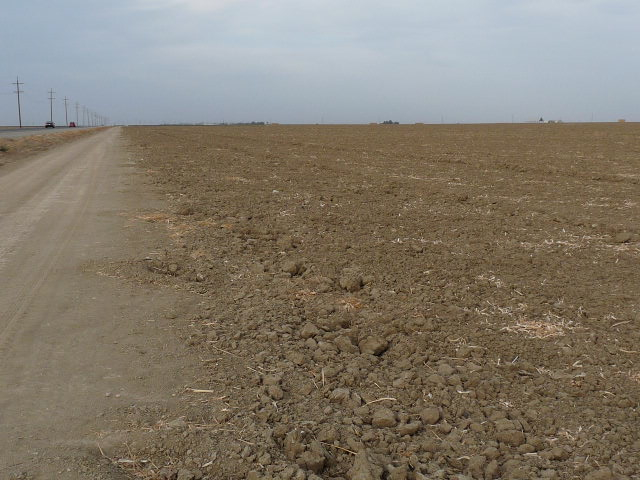
Every person who lives or works in Westlands Water District’s service area knows that California is facing yet another year of drought. We not only read and hear about it in the news, but we see it every single day in the fallowed fields around us. We feel it when we walk through the communities, like Mendota, Huron and Avenal. Drought conditions are affecting life in a very tangible way, especially here in the San Joaquin Valley.


There’s no doubt that the lack of water is having a negative impact on families and communities across the region. Westlands is working hard to collaborate with local, state, and federal partners to reduce the negative impacts of the drought. Here are five things – among many others – Westlands is doing to try to improve the short-term water supplies and advance long-term water reliability policies:


  1. Easing water purchases and transfers

Current drought conditions mean there just isn’t enough water to meet every demand. Not only have all south-of-Delta agricultural repayment and water service contractors had their Central Valley Project allocation reduced to 0 percent, but even municipal and industrial water users have been reduced to 25 percent of historic use. Water levels at lakes and reservoirs around the state are at historic lows.


At times like these, water purchases and transfers are critically important to support the communities and farms in the San Joaquin Valley. During drought, its essential to ensure that farmers receive sufficient water to meet their essential activities in order to sustain the community and the food people need. Westlands is working hard to purchase water, and to ensure that the water is available to the farmers in the District when they need it. That means working collaboratively with local, state, and federal partners, including regulators, to make it as easy as possible to move water as soon as possible.


  1. Groundwater stewardship

The farmers in Westlands have a long legacy of being good stewards of local groundwater resources – in fact, Westlands was formed, in part, because of concern with the groundwater aquifer underlying Westlands, with a focus on monitoring groundwater conditions. Farmers in Westlands have long known that groundwater management was critically important to the long-term viability of the region. The farmers’ and Westlands’ commitment to being thoughtful about groundwater use continues – not only because we’re now required to under the provisions of the Sustainable Groundwater Management Act (SGMA) but also because it’s the right thing to do to protect local aquifers.


  1. Supporting major infrastructure investments

The water infrastructure system that brings water to Westlands has suffered from decades of inadequate funding. There has been inadequate investment in new storage to keep up with increased social demands and climate change patterns. The inadequate storage facilities are unable to store sufficient water in the wet periods to sustain the San Joaquin communities in the dry years. There has also been inadequate investment in our conveyance system, which, as a result, has lost carrying capacity. This lost capacity means it costs more energy and money to move less water today than it did just years ago.


In pursuit of improved water infrastructure, the District is proud to support companion state and federal legislation designed to provide hundreds of millions of dollars in much-needed funding to help make necessary upgrades to our state’s major water infrastructure. We also have continually advocated for projects that can help increase above and below ground storage, such as the District’s Pasajero Recharge Project, to help improve water reliability during dry years.


  1. Implementing Voluntary Agreements

The Voluntary Agreements (VAs) – an effort started by then-Governor Jerry Brown and maintained by Governor Gavin Newsom – is aimed at protecting and restoring the Bay-Delta ecosystem while improving reliability for the 35 million people, nearly 8 million acres of farmland, and hundreds of thousands of acres of California wetlands that depend on the Sacramento-San Joaquin watershed.


Westlands is among a broad coalition that  supports adoption and implementation of the VAs, which represent a 15 year science-based strategy that provides the resources needed to address the multiple factors that impair the ability of the Sacramento-San Joaquin watershed to serve the many needs California places on it.

Solar

Solar Project in the San Joaquin Valley

  1. Farming the sun

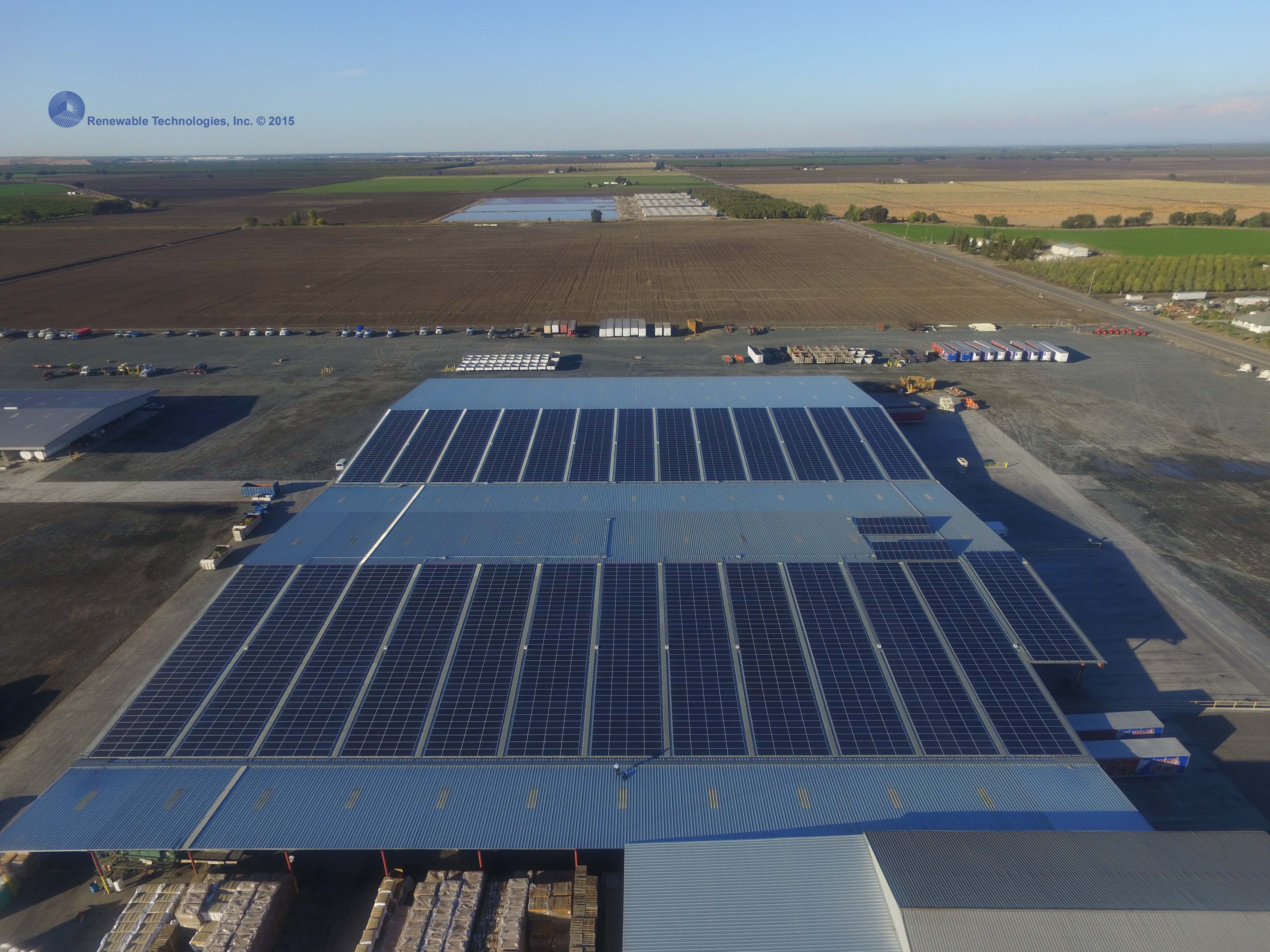
Westlands and farmers within Westlands recognize the value of solar energy development, which not only helps California reach its carbon-free energy goals and mitigate impacts of climate change, but it also gives “new” value to agriculture land. There’s already more than 700 MW of operational solar energy in the Westlands footprint – enough electricity to power approximately 130,000 homes. Westlands and the farmers within Westlands are often considering or pursing new solar projects.


The reality of our changing climate means that droughts may become even more frequent. Westlands is continually working to proactively to ensure the investments are made to reduce climate and drought impacts – not only this year but for many years to come.


2021-07-07T13:25:42-07:00July 7th, 2021|

UCANR’s Jeannette Warnert Retires

Warnert Served 31 years as a UC Communications Specialist

Communication methods have rapidly evolved over the past three decades. To ANR’s benefit, Jeannette Warnert has been an enthusiastic early adopter, figuring out how to use new media to deliver ANR news.

“When I started with UC ANR, there was no internet and no email,” Warnert said. “We photocopied news releases and mailed them to media, who transcribed them if they wanted to use the material. Film was dropped off at a lab, which provided us a proof sheet from which we could select black-and-white prints to mail to the media. Our jobs evolved rapidly and we had to continually update our skills as new technologies were introduced over the years.”

Along the way, she tutored her colleagues to use the World Wide Web and social media to disseminate information.

“I’m continually impressed by Jeannette’s work ethic, can-do attitude, the quality of her writing, and her willingness to take on new projects,” said Linda Forbes, Strategic Communications director. “She is incredibly organized, always reliable, has great ideas and she’s passionate about ANR’s mission and people.”

Before joining UC ANR, Warnert worked as a reporter at a small daily newspaper in Los Angeles, in a hospital public relations department, and in public relations for Toyota Motor Sales. After marrying and moving to Fresno, she worked briefly for the Fresno Fair and Radio Bilingue, then accepted the UC ANR public information representative job in 1990.

“I’ve enjoyed the opportunity to learn about agricultural science and work with so many intelligent and dedicated academics and staff,” Warnert said. “Knowing about the work of UC ANR makes me hopeful about the future, even as we face so many threats like drought, wildfire, climate change, invasive pests, etc. I especially enjoyed covering conservation agriculture for more than 20 years with stories about the potential for no-till and cover crops to improve soil health, sequester carbon, reduce dust emissions, and use less water while maintaining farms’ economic viability.”

Jeff Mitchell, UC Cooperative Extension conservation agriculture specialist based at Kearney Agricultural Research and Extension Center, described her as a “wonderful encourager and lifelong very good friend.”

“I consider Jeannette Warnert one of the exceptionally valuable workgroup colleagues that we could have ever had,” Mitchell said. “She was ever-ready in the trenches during our early formative days with superbly crafted communications, clear advice and guidance on outreach issues, and just an all-around level-headed colleague. She contributed so much to all that we have done over the years.”

Warnert, whose parents immigrated from The Netherlands, is fluent in conversational Spanish and often collaborated with the News and Information Outreach in the Spanish team.

In retirement, Warnert plans to spend more time with family – including her baby granddaughter and 90-year-old mother. “I hope to volunteer with the California Naturalist program and plan to apply to be a UC Master Gardener volunteer in Fresno County when the next class opens,” she said. “I’m also looking forward to more traveling, hiking, gardening, knitting, sewing, and cooking.”

2021-07-06T15:02:17-07:00July 6th, 2021|

Breeding Drought Resistant Crops Part Two

Drought-Resilient Tomatoes – Part Two

By Tim Hammerich with the Ag Information Network

As thousands of acres of California cropland are going fallow due to lack of water availability this year, researchers at UC Davis are trying to understand how to breed more drought-resilient crops. Some of that work is being done on tomatoes by Siobhan Brady and her colleagues, who are focused on cells within the plant’s roots.

“For the first time, we actually looked at what’s happening in those individual cells both in a lab, but also in a field environment. And that’s the first time that’s really been done at this resolution, which is really, really exciting. The second really high level of finding is that we’re able to integrate some genetic information from wild populations that are drought tolerant. And to be able to look at how xylem cells are formed,” said Brady.


“So the xylem are basically these long hollow pipes. They’re the ones that are responsible for transporting the water from below ground to above ground. Or transporting the nitrogen, the phosphate, etc. And so we now understand some of the genes that control that. And some of them were the ones that we expected from other species, and some of them were new and really unexpected.”


Brady hopes this work can be applied not only to tomatoes, but to other crops as well.

2021-06-30T20:06:20-07:00June 30th, 2021|

Ag Burning Alternatives

Agricultural Organizations Demonstrate Alternatives to Agricultural Burning


On June 29, Nisei Farmers League, along with other agricultural organizations, held an in-person demonstration pilot project at a vineyard in Madera County to display alternatives to agricultural burning. The project is looking for cost-effective solutions to orchard and vineyard removals due to most agricultural burning being phased out by December 31, 2024, as passed earlier this year by the California Air Resources Board (CARB).


Participating in the event were Jared Blumenfeld, Secretary of Cal-EPA; Carlos Suarez, State Conservationist for USDA-NRCS; Richard Corey, Executive Officer for California Air Resources Board; Samir Sheikh, Executive Director and Air Pollution Control Officer for the San Joaquin Air Pollution Control District (SJVAPCD); Dr. Tania Pacheco-Werner, CARB and SJVAPCD board member; Fresno County Supervisor Buddy Mendes, as well as SJVAPCD board member; Madera County Supervisor Tom Wheeler, as well as SJVAPCD board member; and City of Los Banos Mayor Pro Tem Deborah Lewis, as well as SJVAPCD board member.


Equipment demonstrated included:


  • An air curtain burner built by AirBurners. This machine utilizes a constant stream of air on the top of the wood waste to push emissions/smoke back into the fire to reburn, which significantly reduces particulate matter.


  • A horizontal grinder, provided by Bandit Industries, that chips wood debris and can remove metal, including wire, from the material.


  • A vineyard mulcher, built by Seppi, which drives over the top of the vine and mulches it back into the soil.


  • A mobile grinder that would grind trees, brush and vines (material that does not include metal.)


Other equipment used in the demonstration process included excavators, tree grapple machines, and log and brush loading equipment.

With some agricultural entities losing the ability to burn by December 31 of this year, finding economical alternatives quickly has become a top priority. Agricultural organizations are working with the SJVAPCD and CARB to locate and distribute funds for these alternative methods. All the demonstrated alternatives are many times more expensive than open burning because of the additional labor and equipment needed.

Agricultural groups sponsoring the event included: Fresno County Farm Bureau; Allied Grape Growers; California Fresh Fruit Association; California Cotton Ginners and Growers; Western Agricultural Processors Association; and

Nisei Farmers League. Other participating agricultural groups included: Sun-Maid Growers of California, Madera County Farm Bureau, Tulare County Farm Bureau, Raisin Bargaining Association and Milk Producers Council.

Equipment being demonstrated was provided by Shawn Sage, Cal-Line Equipment and Bandit Enterprises; Ed Martinez, Mowbray’s Tree Service; John Yergat, JFS Enterprises; and Jordan Harris, Seppi Subsoiler. Special thanks to these companies and their employees.

Local chippers and grinders participating included: Bill Boos of William Boos and Company; Lionudakis Orchard Removal; and Myron and Ryan Liebelt.

Special thanks go to Samir Sheikh and his staff at the SJVAPCD for helping with the demonstration, the documentation and acquiring the funding needed to make the alternatives available to growers in the San Joaquin Valley.

Lastly, a special thanks to Daniel Hartwig and Woolf Farms for providing the vineyard site.


Nisei Farmers League will continue seeking viable alternative to agricultural burning over the coming months.

2021-06-30T17:54:52-07:00June 30th, 2021|

Congressional Leaders Learn About Almond Pollination

Almond Board Briefs Congressional Caucus About Pollinator Coalition


Chief Scientific Officer Josette Lewis highlights coordinated efforts of state’s farm and conservation communities.


Lewis was one of four speakers, and the only representative from agriculture, at the virtual congressional briefing on the status of pollinators convened by Reps. Rodney Davis (R-IL) and Jimmy Panetta (D-CA) during National Pollinator Week. They are co-chairs of the Congressional Pollinator Protection Caucus.

“This hearing, and this week, were extremely valuable because they helped raise awareness about the need to protect all pollinators and their habitats,” Lewis said. “For the California almond industry, every week is pollinator week. This is something we work hard at every day.”

During the briefing, Lewis detailed the steps being taken by the California Pollinator Coalition and why its brand of collaborative conservation is a strong model to both bolster the health of pollinators and to set an example for a range of effective environmental alliances among independent groups.

The pollinator coalition includes more than 20 California organizations and was spearheaded by the Almond Board of California (ABC) along with the Pollinator Partnership and the state Department of Food and Agriculture. It represents the large majority of agricultural acreage in the state and its goal is to expand pollinator health and habitats on working ag lands.

bee protection

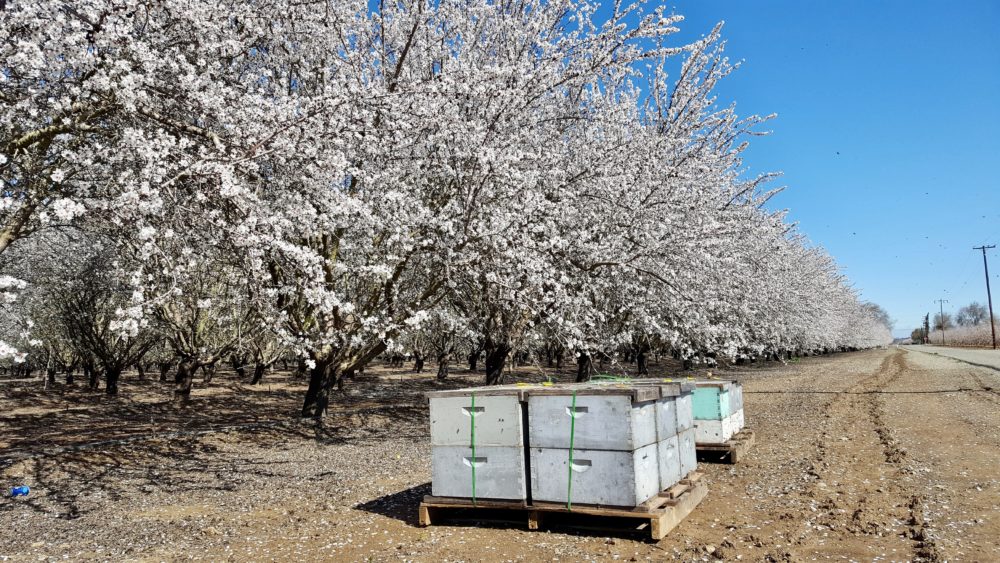
Bees pollenating almonds.

“The representatives heard how the coalition represents agriculture putting its best foot forward,” Lewis said. “Given the crucial importance of pollinators to food production and to ecosystems, it’s essential that agriculture be part of the solution. That’s one reason ABC partnered with the Pollinator Partnership to help build this coalition. We know the almond industry and the ag community can continue to help.”

A key subject the congressional leaders wanted Lewis to address was the value of collaborations like the Pollinator Coalition, how they can be built and how they can help in areas ranging from research to shared incentive programs.

One incentive example is ABC’s Bee+ Scholarship program, which pays up to $2,000 of the cost of seeds for pollinator-friendly cover crops and has added 15,000 acres of pollinator habitat in almond orchards in its first year. It will also cover the fees to register as a Bee Friendly Farm.

“The goal is to reduce the risks to growers to try new practices that can benefit pollinators and growers alike. One size does not fit all growers, so this offers a chance to try something new,” Lewis said. “Collaborations are effective because everyone has a stake in healthy ecosystems and healthy food, and together we can help each other take actions and make a difference.”


2021-06-30T12:52:43-07:00June 30th, 2021|

Tomato Roots Studied for Drought Resilient

Drought-Resilient Tomatoes – Part One

By Tim Hammerich with the Ag Information Network

The key to drought resilience in crops like tomatoes most likely lies in the roots, which are hard to study because they are of course underground. Siobhan Brady and a team of researchers at UC Davis have been working on creating a molecular atlas of tomato roots, where plants first detect the effects of drought and other environmental threats.

“We wanted to be able to first try to understand what is happening in the individual cells within those roots underground. And then to use that as a platform to try to understand similarities and differences in other root cells of other species,” said Brady.

Among many discoveries in this research, Brady and his team have been able to better understand how the exodermis helps make plants more drought resilient.

“It hadn’t really been molecularly characterized before, but it produces this barrier. And that barrier is thought to be really important for protecting the root when there isn’t enough water. In the ground. So it kind of forms a barrier to keep that water in. And so now we have the genes that we think are controlling that, and so we can study that process more and hopefully be able to breed more drought-resilient tomatoes,” noted Brady.


2021-06-28T18:33:53-07:00June 28th, 2021|

Managing Wildland Weeds

UC Launches WeedCUT,  To Manage Invasive Weeds in Wildlands 

California has abundant wildlands — forests, rangeland, open areas, wildlife refuges and national, state, and local parks — that need protection from invasive plants. Invasive plants affect all Californians by increasing wildfire potential; reducing water resources; accelerating erosion and flooding; threatening wildlife; degrading range, crop and timberland; and diminishing outdoor recreation opportunities. According to the California Invasive Plant Council (Cal-IPC), more than 200 identified plant species harm California’s wildlands.

Cal-IPC and the University of California Statewide Integrated Pest Management Program (UC IPM), with funding from the California Department of Pesticide Regulation (DPR) Alliance Grants Program, developed two resources that provide land managers access to the latest information on non-herbicide practices for managing weeds in wildlands. Best Management Practices for Non-Chemical Weed Control is a free downloadable manual. The same information has been incorporated into an interactive online tool called WeedCUT (Weed Control User Tool: weedcut.ipm.ucanr.edu).

“We anticipate WeedCUT will increase the use of more mechanical, physical, or biological practices, and potentially result in the reduction of herbicides used to manage wildland invasive weeds,” said area IPM advisor emeritus Cheryl Wilen. “Best Management Practices for Non-Chemical Weed Control and WeedCUT were developed so land managers can become more knowledgeable and skilled in the use of non-herbicide methods as part of an IPM program.”

Best Management Practices for Non-Chemical Weed Control provides comprehensive descriptions of 21 commonly used non-herbicide weed control techniques and biological control agents for 18 invasive plants. Each chapter is the synthesis of research and on-the-ground knowledge from practitioners about non-herbicide methods. The chapters describe how a technique is best applied, the types of invasive plants and environmental conditions where it is most effective, and what its shortfalls might be. Environmental, cultural, and human safety risks are highlighted to help support the safe and effective use of these methods.

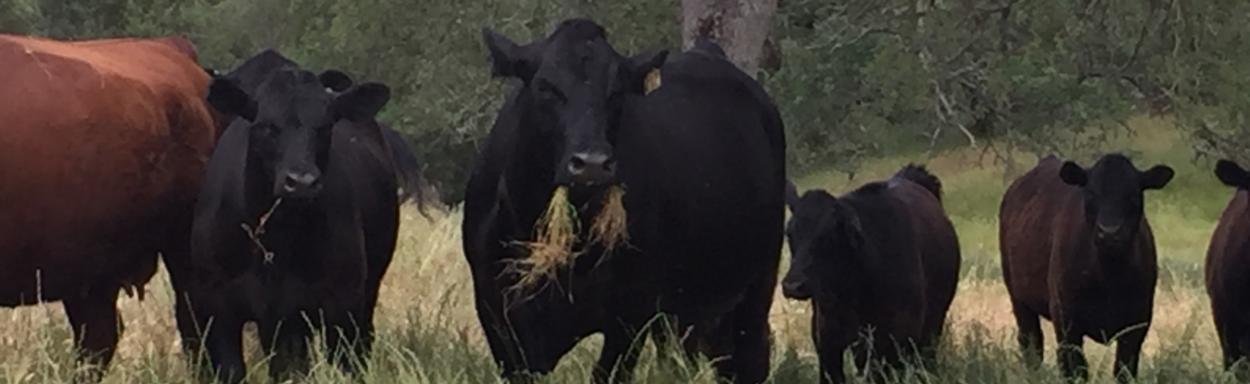
Wildland Weeds Harm Cattle

WeedCUT is the online version and can be used to learn about the different non-herbicide management methods, including the section on biological control. To filter through the database and learn which management practice to consider for a particular site and invasive plant type, a simple interface allows users to pick characteristics that describe their site and invasive plant problem. The tool then filters through the database to display the practices ranked by efficacy (excellent, good, fair, poor or ineffective). As in the manual, use of the technique and potential hazards are covered.

Best Management Practices for Non-Chemical Weed Control and WeedCUT are designed to be the go-to resources for practitioners that complement their conventional weed management work with non-herbicide techniques or are restricted in their use of herbicides. Both resources will help practitioners manage weeds more effectively.

“Many experts in the field have contributed to create the manual and WeedCUT. It has been exciting to see these techniques described and reviewed so carefully. We’re looking forward to seeing land managers, as well as all folks fighting weeds, incorporating the information from the manual and WeedCUT into their work,” said Jutta Burger, science program director and project lead with Cal-IPC.

While the manual and tool focus on non-herbicide methods, the hope is future funding can be found to continue the work and integrate herbicide options online.

“Land managers typically use both herbicide and non-herbicide methods, alone and in combination, to manage invasive plants in wildlands,” said UC Cooperative Extension advisor and UC IPM-affiliated advisor Tom Getts. “A tool that combined both herbicide and non-herbicide methods would guide land managers to determine the most effective overall management program for their particular site.”

2021-06-25T19:08:48-07:00June 25th, 2021|

Slowing Development Over Farmland

California Farmland Trust to Host Event to Slow Pace of Farmland Loss to Development


 California Farmland Trust (CFT) will be hosting the inaugural Race to Slow the Pace run at Bokisch Vineyards on Sunday, Sept. 19, 2021. This live (virtual optional) 5K fundraiser aims to connect people with nature, the environment and the family farms that feed them. The run will foster a connection to the land and the importance of slowing the pace of development to protect valuable farmland.

“We believe in connecting people with the land that feeds our families and the Race to Slow the Pace is a fun, healthy opportunity to take in the climate resilient environment that farmland provides,” shared Charlotte Mitchell, executive director at California Farmland Trust. “When we were brainstorming locations, Bokisch Vineyards was an obvious fit. Markus and Liz have a true appreciation for the land and have championed our mission. Not to mention, the course offers breath-taking views and opportunities to learn what makes Bokisch Vineyards unique.”

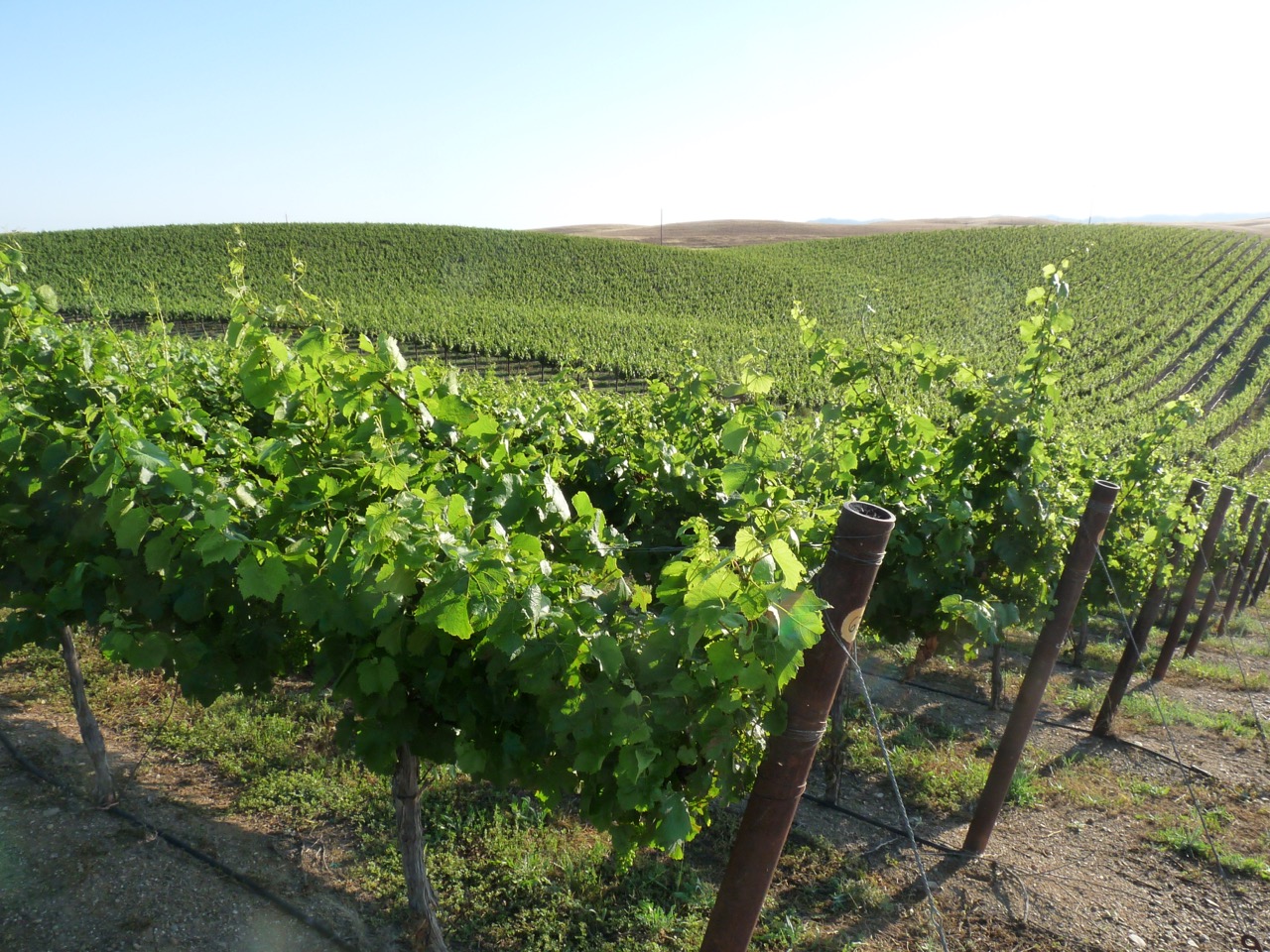
California Winegrape Vineyard

California Winegrape Vineyard

Race to Slow the Pace runners will weave through the scenic Bokisch Vineyards, kicking-off where the winery meets the vineyard, continuing through the property on a maintained terrain, taking in the vines and the habitat, and eventually crossing the finish line at Bokisch’s infamous oak tree picnic area. Runners and registered guests will be served a paella lunch and celebrate with awards and Bokisch wine.

“We’re honored to host the inaugural Race to Slow the Pace benefitting California Farmland Trust,” shared Markus and Liz Bokisch. “It’s been our mission to leave the land better than we found it, for our children and our children’s children, while also teaching and inspiring others towards that cause. We look forward to having trained runners, casual joggers, wine enthusiasts, and those that simply love the land, visit our vineyard.”


For event information visit www.cafarmtrust.org/racetoslowthepace. To learn more about Bokisch Vineyards visit www.bokischvineyards.com/.

2021-06-24T21:35:08-07:00June 24th, 2021|

Climate Change Affecting Water Availability

Climate Impact on Water Management

By Tim Hammerich, with the Ag Information Network

Unfortunately, California has had a lot of experience in dealing with drought. While that is not new to the state, what has changed are temperatures, which have a big impact on how we manage our water resources. Dr. Safeeq Khan is a water and watershed sciences extension specialist with the University of California Ag and Natural Resources.

“With a warmer climate, what is happening is actually the precipitation phase itself is shifting from snow to rain. So we’re getting a lot more rain. All the precipitation is falling as rain. So what is happening is, you know, all the water is actually hitting the creek and the stream and, you know, flowing down the stream. So it’s not being held, um, in any type of storage. So that’s one thing that has changed, right? So our capacity to store water has shifted drastically,” said Khan.

Dr. Khan adds that not only do these changing temperatures affect how much water we can capture, but it also increases the amount of water that we lose even if it is captured due to evaporation.

Khan… “Because of the warmer temperature of the atmosphere itself, you know, it’s warmer, right? So the hot air can boil a lot more water. So, the natural vegetation and evaporation from the water surfaces, be it a lake, or reservoirs, whatever. All of those things are increasing.”

2021-06-22T21:16:01-07:00June 22nd, 2021|
Go to Top