Weather

Historic Temperance Flat MOU Signing

Assemblymember Bigelow on Historic July 1 MOU Signing

By Patrick Cavanaugh, Farm News Director

East of Fresno at Friant Dam last Friday, July 1, the San Joaquin Valley Water Infrastructure Authority (SJVWIA) and the United States Department of the Interior, Bureau of Reclamation signed an historic Memorandum of Understanding to coordinate and complete feasibility studies of the proposed Temperance Flat Dam. 

Historic July 1, 2016 MOU Signing for Temperance Flat Dam

Historic July 1, 2016 MOU Signing for Temperance Flat Dam

State Assemblymember Frank Bigelow, 5th Assembly District (serving a large portion of Madera County, along with all the foothill and mountain communities north of Madera to the Sacramento area) noted the critical importance of getting Temperance Flat Dam built to store freshwater for the citizens and farmers of California.

Bigelow, a Madera rancher and farmer of pistachios, figs, and persimmons, said, “This is a huge event to enable us to have additional [water] storage. I just am so thankful to the people who put the water bond forward. Without the money that the people have made possible by voting to support the water bond, none of this would be possible; that’s a clear message.”

Friant Dam and Millerton Lake State Recreation Area

Friant Dam and Millerton Lake State Recreation Area (Source: U.S. Bureau of Reclamation)

“Without water,” Bigelow explained, “none of our communities would continue to survive in the way they have for years and years. Much of the water we see is being used in different ways; it is not all going to agriculture, and it is not all going to residential. It is going to the environment. So we’ve got to divide that up by the law now, and in equal proportional value.”

“Right now,” he detailed, “Millerton Lake captures 526,000 acre-feet of [fresh] water, but we have millions of lost acre-feet that flow past every year into the Delta, then ultimately to the ocean.” Upon completion, the Temperance Flat Dam would hold more than twice the amount of water that Friant Dam holds—”especially important for capturing freshwater during heavy rain and snow years,” noted Bigelow.
 

2016-07-07T10:05:08-07:00July 7th, 2016|

Recycled Water Project for Water Stability, Part 2

North Valley Regional Recycled Water Program Projected Completion

By Brian German, Associate Editor

In our continued coverage of the monumental North Valley Regional Recycled Water Program (NVRRWP), Anthea Hansen, general manager of the Del Puerto Water District, talked about the projected completion for the project.

Anthea Hansen, general manager, Del Puerto Water District

Anthea Hansen, general manager, Del Puerto Water District

“We estimate the pipeline will be completed by December 2017—less than two years,” Hansen stated. “The first year’s combined quantities, if both cities (Turlock and Modesto) are online at the start date, will be somewhere between 25K and 30K acre-feet per year,” Hansen calculated.

NVRRWP will convey recycled water from Turlock and Modesto, currently being discharged into the San Joaquin River, instead to the Delta-Mendota Canal via pipeline for storage purposes and later use. “The sense that we all have here,” said Hansen, “is that this transaction and this accomplishment will change the future of the Del Puerto Water District for the better. It will give us some stability in our base [water] supply that we know will come year in and year out.”

After many years of working with various agencies and collaborating with  multiple cities, the project has passed all of its major hurdles and is set to break ground within the next few months. Using recycled water from treatment plants will reduce reliance on unsustainable groundwater supplies and also lower the amount of water pumped from the Delta.

NVRRWP map recycled water

NVRRWP map (Source: NVRRWP map)

“People use water in the cities every day, 365 days a year,” explained Hansen. “The reliability of the supply is so important to us because, for such a long time, we have not had reliability in our water supply,” Hansen noted.

“We have 40-year agreements in place with both cities,” she continued. “As a result of the program, even in the first years, each irrigable acre in the district will receive somewhere between one half to three-quarters of an acre-foot of guaranteed water supply, year in and year out.”

Hansen added the project will sustain a growing population. “Over time,” she remarked, “as the cites grow and the populations expand, the quantities of water are projected to grow over the build-out period for the project.”

______________________________

See Also: Recycled Water Project for Water Stability, Part 1, “North Valley Regional Recycled Water Program: A New Water Source for Valley Farmers,” June 14, 2015.

Additional Benefits of the North Valley Regional Recycled Water Program

2021-05-12T11:05:53-07:00July 5th, 2016|

Temperance Flat Dam Brings Five Valley Counties Together

Key July 1 Signing Ceremony to Launch Temperance Flat Dam Process

by Patrick Cavanaugh, Farm News Director

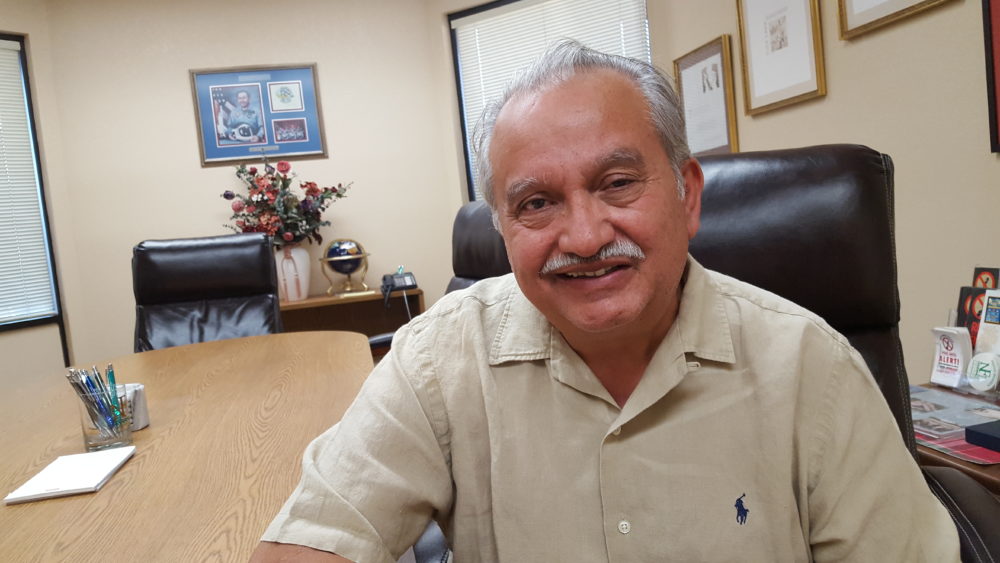
Mario Santoyo, executive director of the San Joaquin Water Infrastructure Authority (SJWIA), which represents the five-county joint powers of authority in the Central San Joaquin Valley, has announced an important event will launch the process needed for Temperance Flat Dam: the Temperance Flat Project Partnership Agreement Signing Ceremony outside Old Fresno County Courthouse overlooking Millerton Lake at 10 a.m. sharp on Friday, July 1, 2016.

USBR Water“This is a major event, a significant milestone in terms of the process to get Temperance Flat Dam built.” Santoyo said. “In essence, it is a partnership between the new joint powers of authority and the U.S. Bureau of Reclamation, and, more specifically, their study team who worked on the technical studies and the feasibility reports for Temperance Flat.”
Merced, Fresno, Kern, Kings and Tulare Counties are joining forces with leaders of cities, Tribes, and other agencies to begin this significant move towards building the Temperance Flat Dam. “Working together, we are going to put the application together and submit it to the California Water Commission for their consideration for funding through Proposition 1, Chapter 8,” Santoyo said.  “It’s a solid statement that needs a signature.”

“It’s a memorandum of understanding between the Bureau of Reclamation and the joint powers of authority,” he said, “that defines the scope of work. In essence, it’s full cooperation between their technical people and our joint powers of authority. Our people are tailoring the application to the state to optimize funding. Keep in mind, we’re talking big dollars here; we are not talking a million or a hundred million; we are talking a billion.”

Temperance Flat Dam would create nearly 1.3M acre-feet of new water storage, according to the SJWIA, 2.5 times the current capacity of Millerton Lake, and would be a part of the Federal Central Valley Project.

“Chapter 8, which is the storage chapter in Prop 1, has $2.7 billion in it,” Santoyo explained. “Projects that are submitted for funding are limited to up to 50% of the capital costs of their project. If we were to take Temperance Flat, for instance, that’s going to cost somewhere around $2.8 billion. The maximum you could ask from the state is $1.4 billion, but we don’t expect that because there is a lot of competition. There’s not enough dollars to go around. We’re hoping to shoot for somewhere around $1 billion.”

“I see [the July 1 event] as being historic,” Santoyo reflected, “because it is one of the most critical things to happen—to be able to build Temperance Flat, as well as a good opportunity to be at a place where history’s being made.”

__________________________

For more information, contact Mario Santoyo at 559-779-7595.

Featured image: Mario Santoyo, executive director of the San Joaquin Water Infrastructure Authority (SJWIA)

2021-05-12T11:05:53-07:00June 29th, 2016|

JUST RELEASED: Monterey County Ag Value Up Nearly Eight Percent

Monterey County 2015 Crop Report Shows Ag Value Up 7.75 Percent

By Patrick Cavanaugh, Farm News Director

Monterey County Ag Commissioner Eric Lauritzen announced TODAY the production value by farmers in Monterey County for 2015 is $4.84 billion, an increase of 7.75% or $348 million over the previous year. According to the the 2015 Monterey County Crop Report released TODAY, the Monterey is again the fourth highest Ag producing county in California, following Tulare, Kern, and Fresno Counties.Lettuce fields

“Crop values vary from year to year based on production, market and weather conditions,” said Lauritzen. “As often the case, there was much fluctuation in the 2015 values, with 22 commodities down and 29 commodities increasing in value.

Notable results include:

  • head values increased 12% on better pricing.
  • Head lettuce showed a decline of 2% with fewer acres planted but higher prices.
  • Spring mix and salad products also declined in overall value.
  • Strawberry values increased by 21% on increased acreage and higher production.
  • Cauliflower and celery each saw values increase by approximately 25%. Celery showed a decrease in production with stronger pricing and cauliflower posted increases in both production and pricing.
  • Winegrapes declined 25% in 2015, after above-average production in previous years. This followed the statewide trend, with lower production and slightly higher prices.
  • Despite reduced acreage related to the drought, the value of nursery products increased by 11% on stronger pricing for many products.
Monterey County Strawberries

Monterey County Strawberries

“It is always important to note that the figures provided here are gross values and do not represent or reflect net profit or loss experienced by individual growers or by the industry as a whole,” Lauritzen clarified. “The numbers are big and only tell part of the story. It’s really about diversity and the ability to withstand changes, whether it is commodity change or Mother Nature,” said Lauritzen. 

“Growers do not have control over increased input costs such as fuel, fertilizers and packaging, or drought and labor shortage conditions,” Lauritzen explained, “nor can they significantly affect market prices. The fact that the gross value of agriculture increased reflects positively on the diversity and strength of our agriculture industry and its ability to respond to the many challenges,” he noted.

“The mainstays in Monterey County are the cool season vegetables,” said Lauritzen. “County growers are able modify planting programs even within the same year depending on market strengths or changes in consumer needs. When the cable food shows or restaurants decide to feature certain vegetable there is suddenly increase demand so Monterey County growers are often flexible in their planting schedules to meet demand.

“The Salinas Valley floor is very tight on acreage and available land planted out on the bench lands,” he said. “And growers are being asked to produce more with the same amount or even less ground and we are seeing that it increases prices,” he noted.winegrapes

“Each year we like to highlight a component of the industry in our report,” Lauritzen elaborated, “and this year we chose Certified Farmers Markets. We include a short piece on some of the people who produce and sell their own products directly to consumers at the 14 markets in Monterey County and elsewhere,” he said. “This important segment of our industry lets consumers meet farmers face-to-face and to become more directly connected with the food they eat.”

“Monterey County is proud to produce the crops that are healthy for the nation,” Lauritzen said, “and if consumer demand really matched what we need for a healthy diet, there would not be enough vegetables produced. We produce the food that consumers need to eat and it’s not just an economic driver for our region, but for the health of our nation,” he added.

“This 2015 Crop Report is our yearly opportunity to recognize the growers, shippers, ranchers, and other businesses ancillary to and supportive of agriculture, which is the largest driver of Monterey County’s economy,” Lauritzen summarized. “Special recognition for the production of the report goes to Christina McGinnis, Graham Hunting, Shayla Neufeld, and all of the staff who assisted in compiling this information and improving the quality of the report.”

2021-05-12T11:05:54-07:00June 28th, 2016|

Dried Plum Prices and Production

Not on the Same Page: California Dried Plum Prices and Production

by Laurie Greene, Editor


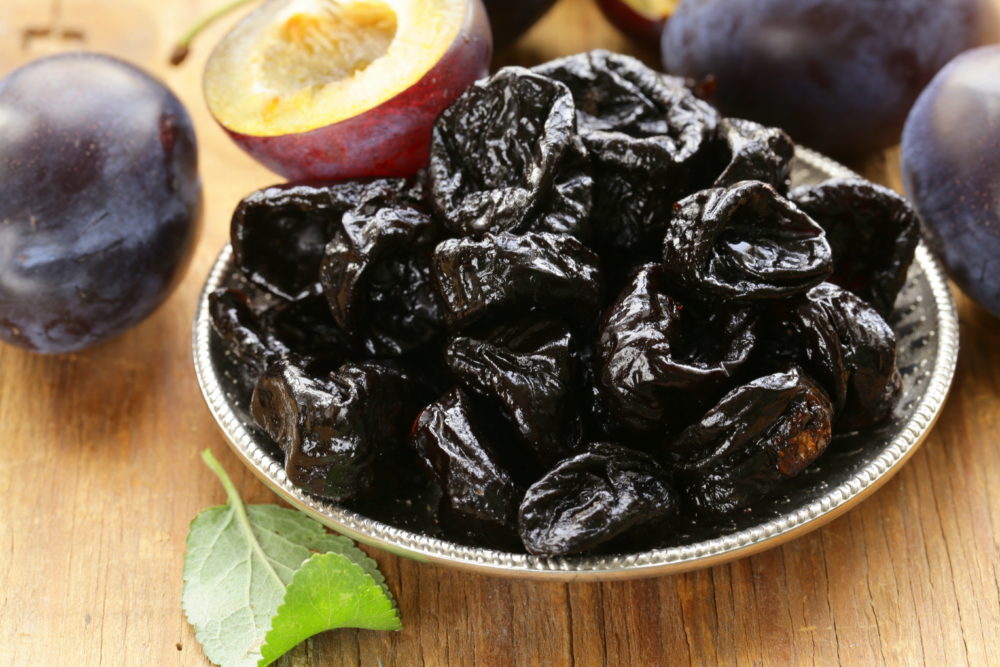
Gary Obenauf, agricultural research coordinator for the California Dried Plums Board, confirmed, “We had a normal crop last year. Prices are still up—have been up for the last several yearsand we are anticipating pretty good prices over the next several years for dried plum production.

Obenauf attributed good prices to crop shortage. “We went through several years of depressed prices, so we adjusted by taking out a number of acres a year ago,” he elaborated. “We’ve had acreage reductions in other parts of the world as well.”

Plums UCCE prunes

Plums (Source: UCCE)

So, while production is currently adequate for the current global market, Obenauf stated, “We’re now in the planning process again, trying to increase production. It’s not an easy thing to do.”

California is the world leader in dried plum production, according to the 2015 Prune Research Reports published in January, 2016 by the California Dried Plums Board, but is almost entirely dependent on the use of a single cultivar, the Improved French prune. “This monoclonal [cells or cell products derived from a single biological clone] situation lends itself to vulnerability to widespread disease, pest outbreaks and annual, statewide variations in yield caused by variable weather conditions that can negatively or positively affect fruit set and/or fruit retention.”

CA Dried Plum BoardSo despite enduring high prices, Obenauf explained, “we actually had real good chilling this year and a real heavy bloom during the bloom time, but we got over eight inches of rain in most of the plum production arearight in the middle of full bloom. We just didn’t have the bee activity to set a good crop. We’re estimating about half a crop this year.”

“As a grower,” Obenauf said, “you don’t have the production to make ends meet well when you have a short crop. And buyers like a more secure volume level. These up and down levels don’t help anybody.”

________________________

CURRENT RESEARCH

California Dried Plum Board has directed the development of new, acceptable or superior, dried plum cultivars to increase the efficiency of California dried plum production and give some protection against the risks involved with a monoculture. To stay globally competitive, current research goals include:

  1. Reduce production cost

a.  Develop new dried plum cultivars with cost-saving characteristics such as improved tree structure that would require less pruning

b. Improve fruit dry matter content to decrease drying costs

c. Increase plant tolerance to pests and diseases.

  1. Promote a broadening of the consumer base

a. Introduce new dried plums that differ in flavor or color

b. Improve dried fruit characteristics

  1. Adapt to California’s dry, hot climate

a. Introduce greater diversity of bloom timing in seedlings so the entire Californian crop will not be dependent on the same set of weather conditions during periods critical for fruit set and retention.

Featured Photo: Plums (Source: UC ANR Cooperative Extension)

2021-05-12T11:00:53-07:00June 13th, 2016|

VIDEO: Other Stressors, Not Pumps, Leading to Delta Smelt Decline

VIDEO: Wasted Freshwater in Failed Attempt to Save Delta Smelt and Salmon

By Laurie Greene, Editor

Other Stressors, Not Pumps, Leading to Delta Smelt Decline,” a video produced by Western Growers, explains why the communities, business, and farmland in the Central Valley and southward still experience regulatory water cutbacks that are extreme in some cases, while 3 billion gallons of extra freshwater flow out to sea in the failing effort to save the Delta Smelt from extinction.Western Growers logo

The VIDEO addresses this loss of freshwater unused by California residents and businesses still suffering from both drought conditions and environmental water cutbacks and that could have gone into water storage.

Decline in California Fish Population and Delta Smelt, Salmon

Western Growers accuses government agencies in charge of managing California’s water of restricting the Delta pumps far beyond what is required by the law. “As a result,” the association said, “billions of gallons of El Niño water have been flushed out to sea. Shutting down the pumps has not helped the Delta smelt and salmon recover, and government regulators are ignoring other stressors such as predation, invasive species and wastewater discharges.”

Delta Smelt Troll 2016

Delta Smelt Troll, Survey 6, 2016: “There were no Delta Smelt collected.”

______________________

Western Growers, founded in 1926, is a trade association of California, Arizona and Colorado farmers who grow, pack and ship almost 50% of our nation’s produce. Their mission is to enhance members’ competitiveness and profitability by providing products and services with agriculture in mind. Services include Affordable Care Act (ACA) compliant health benefits for farmworkers, cost-saving and environmentally-focused logistics, food safety initiatives and advocacy for members. 

They ask, “If you enjoy fruits, vegetables and nuts, support our members and the produce industry.”

Featured Photo: Delta smelt by metric ruler (Source: USFWS)

2021-05-12T11:05:55-07:00June 10th, 2016|

Drone Technology Benefits Agriculture

Drone Technology Useful for Calif. Ranchers and Growers

by Laurie Greene, Editor

Fifth-generation Parkfield rancher in southern Monterey County and 2016 Vice President of the National Cattlemen’s Beef AssociationKevin Kester, was introduced to the viability of potentially beneficial uses of owning and using a drone on his ranch for agricultural purposes.

Yamaha Drone

As owner and operator of Bear Valley Ranch & Vineyards, the family’s cattle and winegrape operations, Kester anticipated the biggest benefits of drone ownership would be the capability to check on cattle and ensure their safety from a bird’s eye view, and to determine water levels in reservoirs—a task that in the past could be completed only on foot or by vehicle. Cattle safety is especially important for ranchers, according to Kester, as the cattle industry has been experiencing stagnation in production.

Kester said having a drone would also helpful for security issues. He wants to detect human intrusion on his land, a problem that he experienced recently. “There have been some hunter-related trespass issues and people coming onto the ranch,” he said. “We’ve actually had cattle and horses shot.”

Kester, who is also a member of the California Association of Winegrape Growers, Paso Robles Wine Country Alliance and the Central Coast Vineyard Team, will purchase a commercial drone package and believes this modern technology will give not only cattlemen, but growers in California, a new way of assessing safety, production and maintenance.

2021-05-12T11:05:56-07:00June 9th, 2016|

Dry Weather Affecting Cattle Ranchers

Cattle Ranchers Hit Hard in the South Valley, Move to Greener Pastures

by Emily McKay Johnson, Associate Editor


Josh Davy, a University of California, Division of Agriculture and Natural Resources, Cooperative Extension livestock, range and natural resources advisor in Tehama County reported good news for the cattle industry despite dry weather conditions around the state.

Josh Davy, UCCE Tehama County

Josh Davy, UCCE Tehama County livestock, range and natural resources advisor (Source: UCCE Tehama)

Heading into last fall, the feed year started off relatively dry, according to Davy; however the end-of-season crops produced a better forage than the year before. Though prices slid for the cattle farmer, Davy said optimisticly, “We’re happier on our range conditions—as compared to the previous years that we’ve had—by a long shot.” he said.  

The drought that plagues California still directly impacts cattle ranges, and ranchers are not quite out of trouble. Davy had to resort to feed supplementation through the month of December. “We didn’t have to supplement as much as in the previous few years,” he said, “but we definitely did this fall.” Fortunately the winter months were short and the spring rainfall produced good growth—good assurances that will help Davy and his team make it through next year.

Cattle-on-I5Davy has fortunately sidestepped hardship with a tinge of luck, but it hasn’t been as easy for ranchers in the south of the state. When cattle lack enough sustenance, a domino effect is felt all across the state of California; a lactating cow may not produce enough milk to feed her calves.

The cows like lush grass, a rarity in the Central and South Valley summer months. Winter options for cattle are either winter range ground or mountain meadow ground where greenery is still prevalent. Some ranchers haul their cattle to summer pasture feedlots to graze, while some prefer Oregon instead.

“We’re dried off here to where you might find a swell with a little rye grass in it that’s still green,”Davy said regarding the disappearance of lush land, “but pretty much everything else, the oats and all that stuff, they’re done here.”

Looking forward, Josh Davy is hoping irrigation water will sustain not only the beef cattle, but the pastures as well, to keep the herds stationary and munching on green grass.


2021-05-12T11:17:13-07:00June 8th, 2016|

Boost in Butte County Rice Production

Butte County Rice Growers and Communities Are Optimistic

By Emily McKay Johnson, Associate Editor

Butte County rice growers are all smiles this year as regional filled-to-capacity water allotments have progressed crop production in a very timely manner. Randall Mutters, the county director of the University of California (UC) Cooperative Extension in Butte County, specializes in rice production.

Randall Mutters

Randall Mutters, county director of the UC Cooperative Extension in Butte County (Source: UCCE Butte County)

Butte County, known as the “land of natural wealth and beauty,” hosts the second largest acreage of rice in California and a population of over 220,000 residents as of 2012. Rice production is imperative for supporting local growers and surrounding communities. Mutters reiterated, “When the agricultural base is doing well, the community as a whole prospers.”

As growers continue to cultivate their rice, businesses and communities in the area are incredibly optimistic. Mutters explained, “I fully expect to have close to 500,000 acres of rice planted this year,” a remarkable number compared to last year’s 425,000 planted acres.

Mutters said, “It’s been relatively warm and dry, with just a few sprinkles here and there, but not enough to really slow down operations. The season is progressing very timely.” Also encouraging to Mutters, is pests that are typically an early season problem, have not been troublesome this year.

The UC Cooperative Extension in Butte County monitors and protects the agricultural industry by offering educational resources to promote technology and other strategies for farmers. Though the price of rice is not very strong, the community as a whole is enjoying their success.

2021-05-12T11:00:54-07:00June 7th, 2016|

RAIN Damages Alfalfa; Benefits Wheat

Above-Average California Rain Affects Larry Hunn’s Crops

by Emily McKay Johnson, Associate Editor

For fourth-generation farmer Larry Hunn of Hunn & Merwin & Merwin, Inc., based out of Clarksburg, Calif., the price of alfalfa is low this year due to water damage from late rains. Nevertheless, cannery tomatoes, cucumbers, safflower and wheat are looking pretty hopeful.

Larry Hunn

Larry Hunn

Mold from rainfall is a big issue in growing alfalfa; it not only reduces the quality of the perennial grass, but it reduces the nutritional value as well. Dairy farmers won’t buy it. “It has really depressed our alfalfa prices.” said Hunn.

On the bright side, rainfall has been beneficial for Hunn’s above-average winter wheat and safflower crops this year. “We had nice rainfall spread out through the whole winter,” he said. “It didn’t come all at one time and flood us out, so that was good.”

Hunn’s hard red winter wheat is drying down in the field, and will be harvested mid-June and sent mainly to flour mills for bread making. The safflower is still growing and looking healthy on a few hundred acres—acres that have been in his family for four generations—and won’t “come off” until late August or September.

Beginning in South Sacramento on 47th Avenue, Larry Hunn’s great-grandfather started farming in the late 1800s, and his grandfather moved to the Delta in the early 1920s, where they’ve been farming ever since. Hunn & Merwin & Merwin Inc. now operates on close to 3,000 acres in Yolo and Sacramento Counties.

Hunn’s other crops have already been contracted with a buyer. “All the cannery tomatoes are in the ground growing, and they look pretty good. We’re in the process of planting cucumbers, that’s just a continuous until the first of August,” mentioned Hunn.

The only disadvantage are the cool breezes from snow atop the Sierra Mountain range that is keeping temperatures low on the cucumbers and tomatoes. Hunn remarked, “I wish it would warm up a little bit. We’re only in the mid-seventies, low eighties, and it would be nice to be up in the mid-eighties or low nineties.”

Overall it’s been a decent year for the veteran Clarksburg grower.

(Featured photo: Alfalfa on edge of field of Larry Hunn, Hunn & Merwin & Merwin, California Ag Today)

2021-05-12T11:03:02-07:00June 6th, 2016|
Go to Top