Chinese Customers Hurt with Increased Tariff
Not Just California Farmers Hurt with Added Trade Tariff
By Patrick Cavanaugh, Editor
The extra tariff that China is putting on California agricultural products is an added frustration for the customers in China, said Jamie Johansson, President of the California Farm Bureau Federation.
“It’s not just the extra 15 percent being levied by that country. But for our nut crops and wine guys, we already have 15 or 20 percent tariffs,” Johansson explained. “This is nothing new to us in California. California agricultural products excel in the Pacific Rim. We know we can compete with anyone in a global market. We know that no one’s better than the California farmer in terms of serving the Pacific Rim nations, and no one can get their product to the market faster in those Asian countries than California.”
Customers are affected the most when tariffs are implemented.
“I say when we have these trade talks and trade negotiations—and even now China [is] threatening the trade tariffs or has current tariffs on California products—it isn’t just the farmers that suffer,” Johansson said.
“We need to remind China that it is their consumers who are demanding our quality milk, our cheeses, our wine, pistachios, and almonds as well. Their consumers will suffer just like the California farmer. And we need to remind them of that because we only sell to the countries with consumers who demand it, and that’s who decides what we grow and where we ship to,” Johansson said.
Additional Chinese Tariff on Ag is Disruptive
Growers Concerned Over Added Tariff into China
By Patrick Cavanaugh, Editor
Trade to China is so important to California, and for that reason, the 15 percent added Chinese tariff on ag products is devastating. It’s due to the retaliation of the Trump administration tariff, which he put on steel and aluminum exported by China.
It’s worrisome for growers such as Jeff Colombini, the president of Lodi Farming, with partners that grow cherries, apples, walnuts, and olives. He noted that apples and walnuts are an essential crop to China and he’s concerned.
“Trade is significant to the apple crop for California apples, but particularly for Washington state. Apples in Washington state is the largest producer of apples. They export greater than 25 percent of their crop,” Colombini said.
“Both China and Mexico take apple varieties that have fallen out of favor for U.S. consumers. So really, it’s a match made in heaven,” he said.
Colombini said growers have made decisions over the last 10 to 15 years on planting orchards based on these growing export markets.
“Then when the markets slam shut, what do we do with all this excess production/ This becomes disruptive to the markets … not to mention it significantly affects the farmer’s bottom line,” he explained.
Colombini said apples require a lot of labor—a big economic boost to many communities—and disruption in getting that crop to China is not good.
There’s a lot of people employed in the apple industry throughout the United States, and so a trade war can have a significant impact on many thousands of families.
Colombini said it took many years to get that China market open, and when it finally got opened in 2015, it has grown to be their sixth largest export market.
“Similarly, the export disruptions for walnuts is extremely concerning to that industry,” he said.
Temperance Flat Denied Funding
All Hope Dries Up
By Patrick Cavanaugh, Editor
Again, it came down to fish, specifically Chinook salmon, that forced the proposed Temperance Flat Dam out of the race for Proposition 1 funding for building new water storage projects.
For more than 20 years, the Temperance Flat Dam proposal was passionately advocated with unwavering support by Central Valley cities and the San Joaquin Valley Infrastructure Authority (SJVIA) who were behind the application. Temperance Flat came crumbling down Wednesday at the California Water Commission (CWC) meeting in Sacramento on the second day of discussion.
On Tuesday, CWC staff members assigned to crunch the Public Benefit Ratios for the project were solidly encased in concrete, refusing to grant the project any consideration for its ecosystem restoration benefits. The Dam would provide critical cold water to flow down the San Joaquin River, thus helping the salmon spawn.
And while the official public benefit calculation came up short today, proponents already saw that the project was already on life support Tuesday, with a dire prognosis.
“Stunned is an understatement,” said Mario Santoyo, executive director of the SJVIA, who has worked for more than 18 years on the project. “Temperance Flat is the most critical water project ever proposed for the Central Valley, which is ground zero for significant water shortages that will not go away.”
It all boiled down to the Ecosystem Diagnosis and Treatment (EDT) model that was approved by Bureau of Reclamation and the California Department of Water Resources. Despite both approvals, that model did not jive with the Commission staff’s model, which undervalued the project’s public benefit ratio, killing the opportunity for Temperance Flat Dam to receive funding of more $1 billion for construction.
“We are working in an area of great uncertainty in professional judgment,” Bill Swanson, vice president, Water Resources Planning & Management for Stantec, a global planning and engineering firm, who presented data for the SJVIA. “We do not have fish in the river. We do not have empirical data. The only issue available to us is a comparison of how the system would respond to changes in flow, temperature and habitat,” Swanson said.
“That’s the reason we used the EDT model, the same model that the Bureau of Reclamation has used in their models of flow,” Swanson explained. “The SJVIA’s challenge was how to take the results of that model and analyze them to a level of detail that distinguishes the precision that we might want to have around the results,” said Swanson.
“I’m very disappointed with the way they scored a great project that needed to be built,” noted Santoyo. “And I am not happy about one commissioner from Orange Cove who stabbed us in the back and scolded us on why we did not meet the Public Benefit Ratio. We did meet and exceed that ratio, but the CWC disagreed with our ecosystem restoration model that had been used by both the state and the feds.”
Several Water Commissioners publicly wrangled with their staff on how they could make the project work. They sought areas to increase the project’s cost-benefit evaluation to get it funded.
Commissioner Joe Del Bosque read the ballot text of Prop 1, approved by California voters by 67 percent in 2014. He reminded those present that voters expected a water storage project to be built, adding, “We need to find more certainty in order to get Temperance Flat built.”
Commissioner Daniel Curtain distinguished two parts to the discussion—physical and monetary. “Take a look and see if there is a physical benefit for ecosystem restoration. Finding a potential benefit and attaching a potential monetary benefit could be helpful,” he said.
The project was also short on points for recreation opportunities on what would be a new lake behind the 600-foot high dam east of Fresno, behind Friant Dam. Commissioner Joseph Byrne said he hoped for more thought given to the recreation cost benefit. “Intuitively, zero benefit does not make sense. We need a higher level of confidence in the estimated recreation cost-benefit,” he said.
CWC staff stipulated that while the newly created lake behind Temperance Flat Dam would accommodate boating activity, the lack of camping, hiking, and other activities within the existing San Joaquin River Gorge neutralized any recreation benefits.
If built, the Temperance Flat Reservoir would contain 1.26 million acre-feet of new water storage above Millerton Lake, northeast of Fresno. Temperance would have helped provide a more reliable supply of fresh drinking water for disadvantaged Valley communities. It would have enabled below-surface groundwater recharge, addressed extreme land subsidence and provided critical help to farmers facing severe groundwater restrictions due to the Sustainable Groundwater Management Act (SGMA).
Santoyo said the SJVWIA spent more than $2 million on the California Water Commission application, utilizing what he said were the most qualified engineers to develop the technical data required by Commission staff. The U.S. Bureau of Reclamation, which administers California’s Central Valley Project for the U.S. Department of the Interior, has invested more than $38 million in studying the project. Santoyo said those studies supported the finding that the selected Temperance Flat site is the most preferred location for such a crucial project.
iTrade Helps Growers
iTrade makes Growing and Shipping more Efficient
By Jessica Theisman, Associate Editor
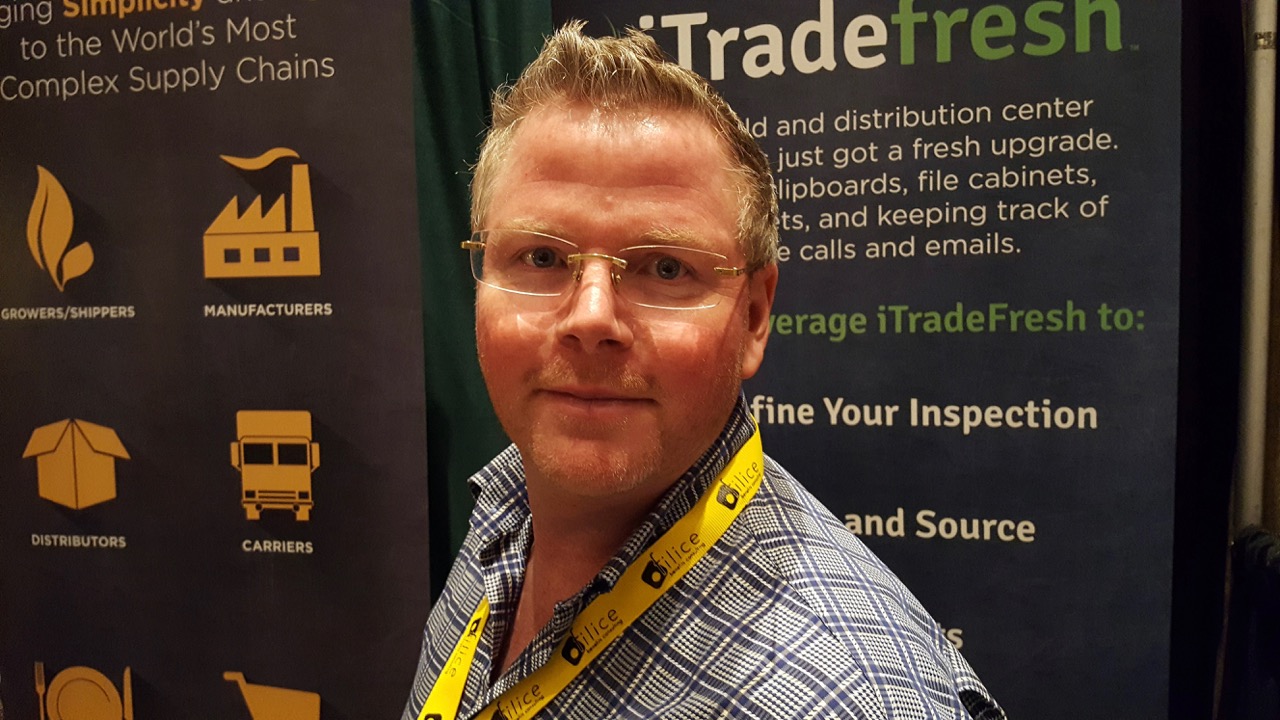
In a recent interview with California Ag Today, Dan Reighn, director of grower/shipper sales for iTrade, discussed how being a part of the system is helping the grower, shipper, supplier, and customers with iTrade’s efficiency by streamlining the process.
Cloud-based solution is key to the success of its speed. This will allow the information to flow quicker through all the channels by effectively being more beneficial to the grower, supplier, shipper, and inevitably the customer.
“The grower, shipper, and the supplier earn a lot of benefits when they are on our network every day transacting with 40 or 50 of their customers using an easy-to-use system, and we are able to handle that transaction for them rather than a purchase order being emailed or faxed or phone call,” Reighn explained.
iTrade is an efficient way to transact with buyers. It is a cloud-based software solution. There are carriers on the network to assist as well as field mobile systems that a grower can use at the source of picking. From that point, inventory can be done from the field to storage to assist the distribution.
“There are users in South America, Mexico, U.S. and Canada that are using our software on rugged mobile devices in the field,” Reighn said. “These customers are able to print off a PTI label, apply it to a case in the field as well as an electronic harvest tag. This also allows the supplier to know exactly what pallets, how much is in the field, when it is going to be received to the cooler, and when they can get that load off to Walmart or Safeway or Kroger.”
Consumers Get More Information with iTrade Fresh
More Transparency On Produce Available through iTrade Fresh
By Patrick Cavanaugh, Editor
There is more transparency available now in produce sales, according to Dan Reighn, director of grower/shipper sales with iTrade Fresh. He explained how iTrade works with the entire supply chain for produce and perishables, providing scanning information for the customer.
“People know iTrade as a portal between buyers and sellers, so a buyer like Safeway is transacting with a supplier like Dole, … [and] we handle the purchase order, invoice, advance ship notice for them, but also we extend across the entire supply chain,” Reighn said.
“We’re offering full visibility at the very first mile supply chain where a case is either packed in the field or packed in the packing shed, and we can put a PTI traceability sticker or an item traceability sticker on a clamshell of berries and we’re able to track that product all the way to the other end of the supply chain,” he explained. “So when a consumer scans the product at the other end, they can learn more about where the product came from, and it’s a way for increased consumer engagement.”
The stickers placed on the packaging are for the customer to learn more about the grower and the local communities where the product was grown.
“There is information about the grower, so whether the product is picked in Mexico or South America, there’s a lot of growers that do a lot for local communities, and so consumers can learn about giving back and how they support the community,” Reighn said.
Because consumers are voting with their dollar, learning and feeling good about products that they’re buying can support the grower who might be providing community services or hospitals or other educational opportunities in Mexico.
“Alerts can also be sent,” Reighn said. “Our system allows us to send alerts out to consumers, so if as a clamshell of berries is part of the food recall, they’re able to understand it and follow instructions on what to do. They can call a number, turn the product in and so forth. So it’s a way for consumers to feel good about what they’re eating and making sure that they’re eating safe produce.”
California Coffee Brews Success
Mark Gaskell on California Coffee Crop
By Laurie Greene, Founding Editor
California Ag Today recently spoke about the emerging California coffee crop with Mark Gaskell, who covers San Luis Obispo and Santa Barbara Counties as farm advisor for the University of California Small Farm Program as well as the UC Division of Agriculture and Natural Resources (UCANR) Cooperative Extension.
“Currently, there are about 30 farms with maybe 30,000 coffee plants between San Luis Obispo and San Diego Counties,” Gaskell said. “I would expect that to double this year. California’s coffee crop is doing well.”
“There is also now a private company, Frinj Coffee,” explained Gaskell, “that evolved out of a long relationship I had with Jay Ruskey, CEO and co-founder of Goleta-based Good Land Organics. Ruskey participated in some of our early research and development work with California coffee. Our collaboration has justified investment by the number of coffee growers in the Frinj Coffee operations.”
There are 25 growers, according to the Frinj Coffee website.
Coffee cultivation is new to California, because, as Gaskell explained, “traditionally, coffee is grown in subtropical areas, specifically at high elevations where the relatively cooler temperatures are. Cooler temperatures prolong the ripening time, which improves the quality of the coffee beans.”
“So, in the world’s newest coffee growing region, Coastal Southern California,” Gaskell said, “we replaced the high elevation with the influence of the Pacific Ocean. The ocean delivers a huge mass of relatively cool temperatures—always between 50 and 60 degrees Fahrenheit. These mild coastal conditions enable a very long ripening season for the coffee cherries and coffee beans.”
Gaskell projects the California coffee crop will be very successful.
“We expect the coffee volume will double this year and probably continue to double for the next few years. Just based on existing interest in coffee, I expect demand to keep pace with the ability of California growers to supply it, and more and more growers will be planting it this year.”
15 Percent Chinese Tariff will Harm Farmers
CCM President Issues Statement Regarding Chinese Tariff Announcement
News Release from California Citrus Mutual
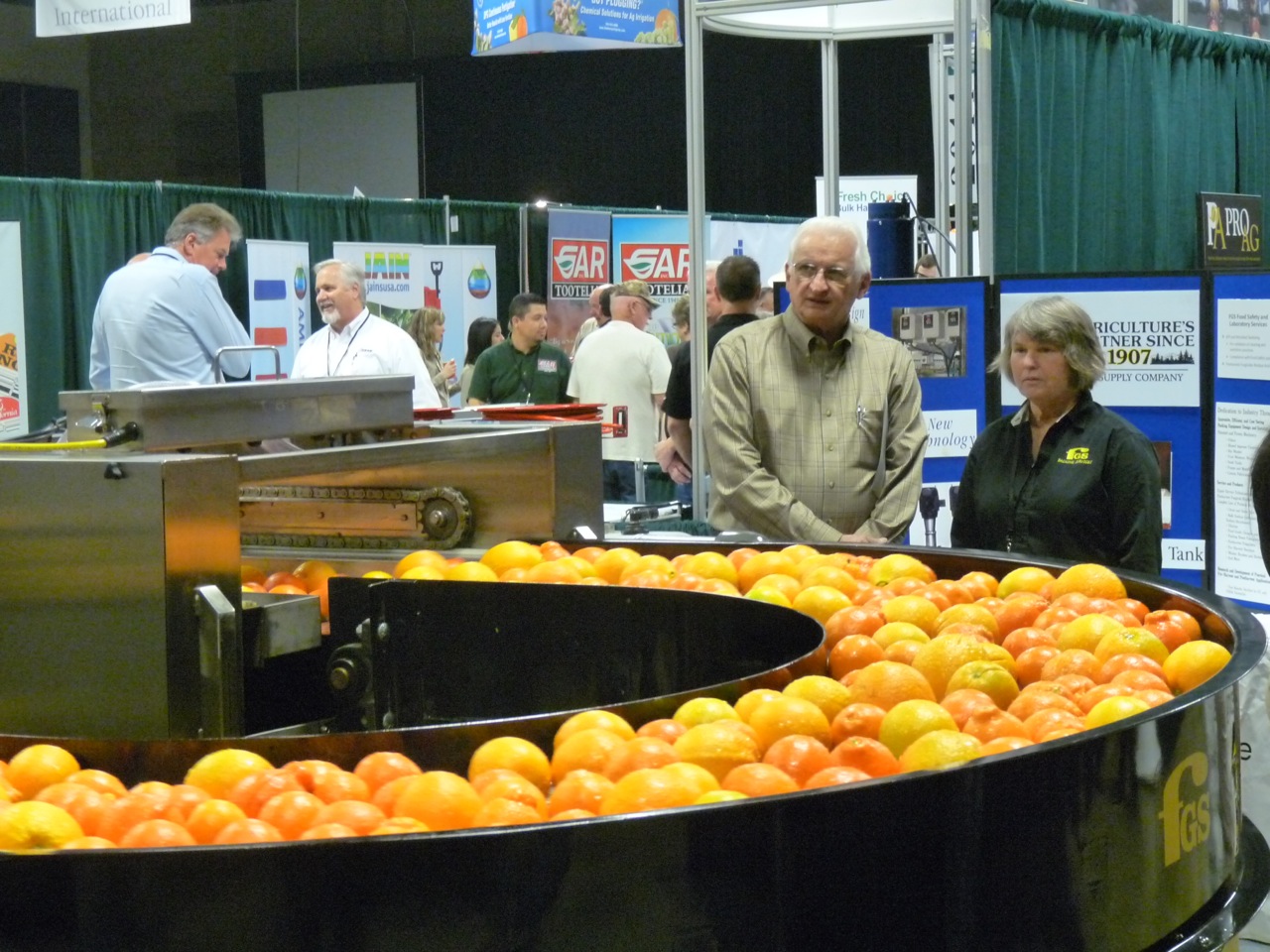
While the proposed 15% Chinese tariff increase will affect all fruits, nuts and vegetables shipped to China, California Citrus Mutual (CCM) President Joel Nelsen issued the following statement regarding the tariff increase on California citrus as a retaliatory counter to President Donald Trump’s new tariffs on steel and aluminum:
The decision by the Chinese government to levy exorbitant tariff increases on U.S. produce will surely have a direct impact on California citrus producers. Maintaining access to foreign markets and having the ability to compete in a global market place are critical to the success of the citrus industry.
The retaliatory tariffs imposed by China hinders our ability to be competitive by increasing costs for Chinese consumers, an important market for California citrus. Family farmers in our industry will suffer from the economic fallout unless we can find alternative markets for California’s While our Administration focuses on those business sectors requiring attention, the Chinese Administration has chosen to expand the discussion to include the agricultural industry. In fact, the Chinese indicated last week in a statement that constructive talks could alleviate the real issues, yet insufficient time was given to accomplish that objective. Now Chinese consumers and California citrus producers are innocent parties to a trade debate.
Nelsen, CCM Executive Vice President Casey Creamer, and Board Chairman Curt Holmes have traveled to Washington, D.C. recently for meetings with Congress and the Administration regarding trade and other important issues affecting the California citrus industry.
Trade Must be Fair for America
Ray Starling, Special Assistant to Trump, on Trade
By Patrick Cavanaugh, Editor
Ray Starling is Special Assistant to President Trump for Agriculture Trade and Food Assistance. He was the keynote speaker at the 2018 Citrus Showcase hosted by California Citrus Mutual.
He spoke about addressing imbalance in trade.
“The thing that the president wants to do is to address some of the imbalance that we have. We go out and negotiate these agreements,” Starling said. “We say that we’re all agreeing to the rules of the road and then all of a sudden in the middle of trading, when we will have almonds on a boat or we’ll have pork on a boat or have fruit on a boat and all of a sudden, we find out the rules have changed. That is not the kind of trade we’re talking about. We want to sort of fix those inequities, if you will.”
NAFTA also needs to be looked at closely.
“There are a number of chapters in the agreement and a lot of the things that we need to fix on agriculture, we have worked out,” Starling explained. “Some of those are things that are never going to make the news. They are agreements and understandings about maximum residue levels of pesticides. Their understanding about what is the tolerance of foreign matter in material that we may be shipping to Mexico or Canada.”
“But on the big issues for ag that we’ve still got to make progress on: One of those is with Canada, and it deals with the dairy issues,” Starling said. “They supposedly have a supply management system where they limit the amount that they produce in the country to get a higher price, but yet a lot of their products still ends up on the international market, so our point is if you’re going to have a supply management system, it’d be great if you actually manage your supply and then didn’t dump that product out on the world market to compete with American product out there.”
Enforcement is also a concern, noted Starling.
“I wouldn’t say that it has to be a sequential process like that. I mean, we’re always going to look for new agreements and new opportunities, but I think that often when we look at the way we’re resolving disagreements about trade, it’s a very long process,” he said.
“It takes years to go to the WTO and to get a successful outcome, and we’ve gotten many successful outcomes at the WTO, which some would argue is actually a sign that that system is not that successful because notwithstanding the fact that we keep winning there, we keep having to go there to get these solutions,” Starling explained.
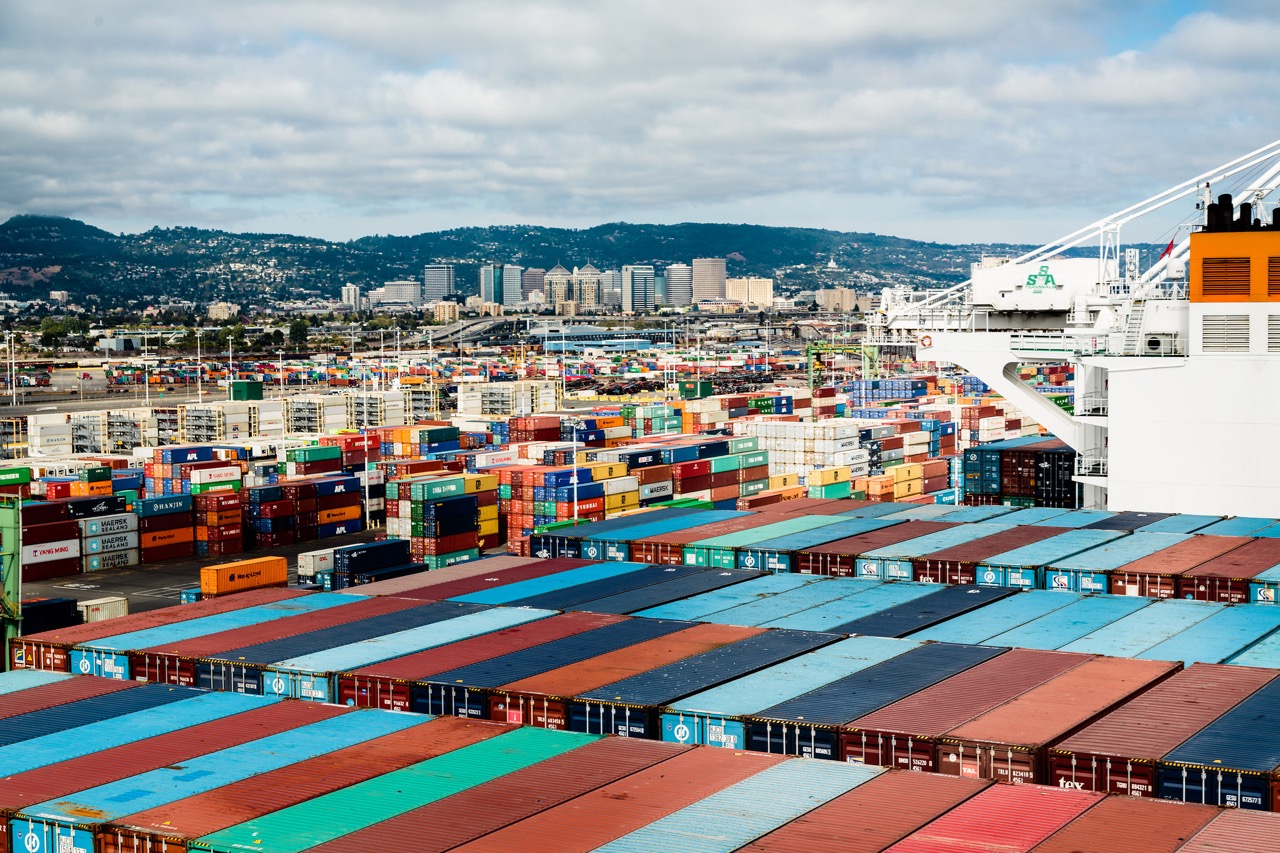
Photo Credit: Port of Oakland
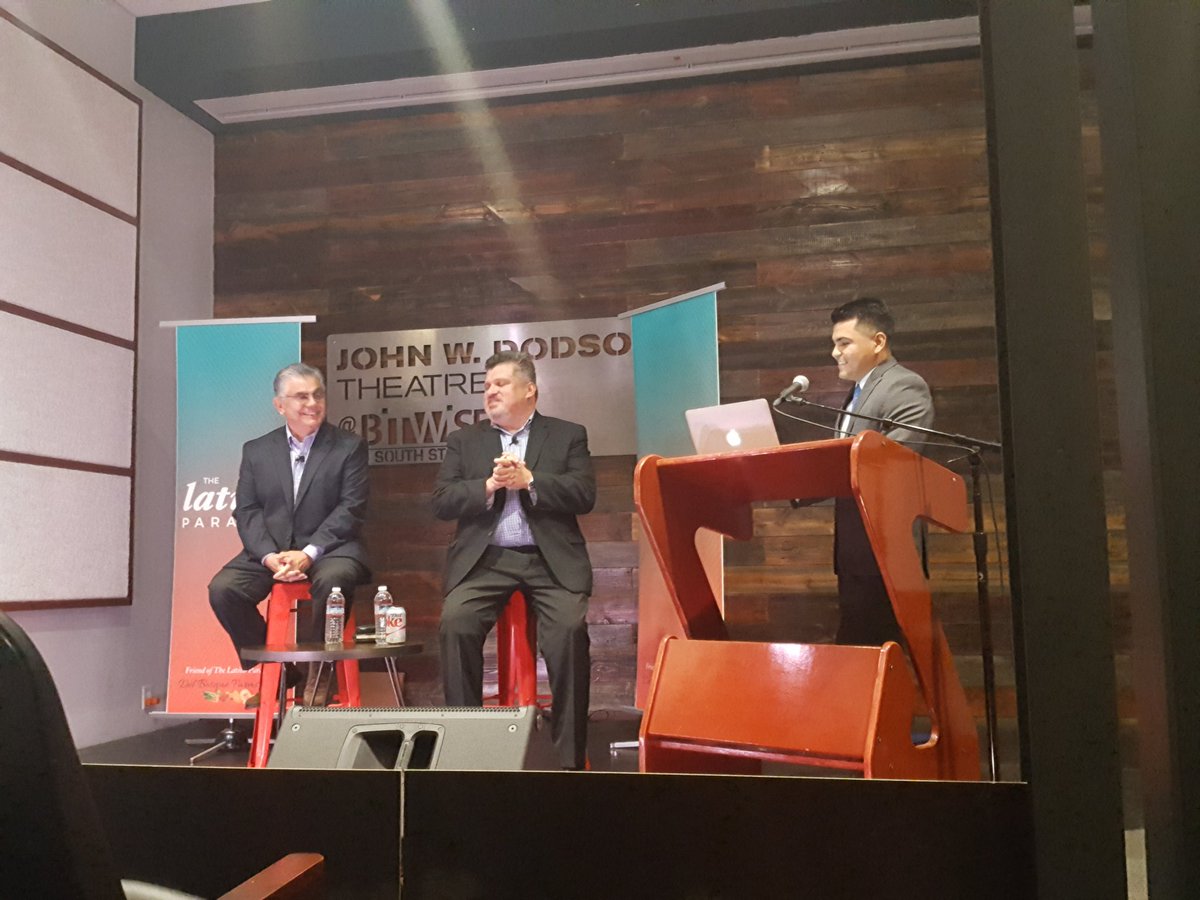
Latino Paradox is a Phenomenon
Latino Status Booming But Incomes Not Following
By Melissa Moe, Associate Editor
The Latino population in California is growing, but why is it that the economic status of the population has stayed about the same over the last 60 years even as Latinos are reaching new political and academic heights? Why is it that these accomplishments aren’t mirrored in household incomes? Arnold Torres calls this the Latino Paradox. He is an expert in Latino issues.
“I was born in Sacramento, CA, went to high school in Sacramento, went to University of the Pacific and did a Master’s at American University. I was a Lyndon Baines Johnson Fellow for Congressman Pete Stark. And then, I started working for the only lobbying entity in Washington known as the Congress of Hispanic-American Citizens. I came back home, then I went to work for Senator Tunney,” Torres said.
“I worked for other Hispanic groups, and then I became the national executive director of the League of United Latin American Citizens, which is the country’s largest Hispanic civil rights group founded in 1929 in South Texas,” Torres explained.
From 1979 to 1985, he was the congressional liaison for the first two years and then the national executive director. During that time, he testified close to 200 times on virtually every issue you can imagine during the Reagan years. He was there for the last two years of Carter and the first term of Reagan.
“The Latino paradox is when you have a huge population explosion. We have phenomenal economic consuming power,” Torres said. “We are elevating to the highest positions in the state and local level in politics. And yet, our social economic profile remains so much as it was 20, 30, 40 years ago, and that’s a phenomenal paradox.”
“As we are ascending to power, what are we going to be in charge of? The way things look now is that we’re going to be in charge of a wasteland. Climate change will hurt us. What are Latinos doing about that climate change? Why is it so important for Latinos to play a different role? Because our population is so big now,” Torres said.