Fig Fest This Saturday!

Fig Fest This Saturday at Fresno State

Chef Fabio Viviani

Bravo TV’s Chef Fabio Viviani

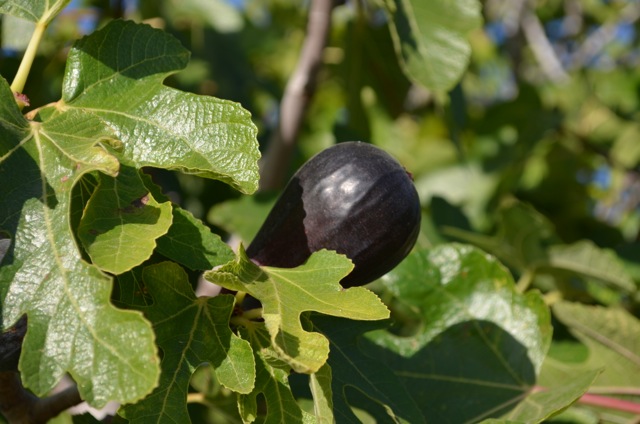
The big annual Fig Fest is coming up this Saturday, August 15, from 9 am till 1 pm at California State University Fresno.

“It’s going to be bigger and better than ever,” said Karla Stockli, chief executive officer with the California Fig Advisory Board in Fresno. “Guests will be able to savor gourmet fig-inspired recipes, extraordinary wines and craft beer from California’s best chefs, food purveyors, wineries and breweries.”

CA Fig Fest Logo“And there will be an exciting new addition this year; celebrity chef Favio Viviani will headline the event. Viviani is a restaurateur (5 in U.S.) and a New York Times best selling cookbook author (3 successful cookbooks). But, he is best known as the Fans’ favorite in Bravo TV’s Top Chef and the winner of Cutthroat Kitchen with the Food Network.” Viviani also sells his own wine collection and popular line of cookware.

“Viviani will be center stage at a chef culinary demonstration and he will also tape an episode of his new PBS series, Global Bites,” said Stockli. “He will be interacting with people and signing books. And he is very passionate about all things fig and fresh ingredients.”

Tickets are available. Go to California Fig Fest for more information.

2016-05-31T19:28:08-07:00August 10th, 2015|

“My Job Depends on Ag” is Growing

Steve Malanca on the Future of “My Job Depends on Ag”

By Charmayne Hefley, Associate Editor

Three months ago, a grassroots effort to spread the word of agriculturalists began in the form of the movement, My Job Depends on Ag. The organization held its first meeting this week at Harris Ranch in Coalinga with 50 members in attendance to discuss the future of the group.

Steve Malanca, co-founder of the movement, said his hope for the organization is to educate the consumer, as well as to unite the ag community. Malanca also sells agriculture equipment for AGCO.

“We really feel that educating the non-ag community about who we are and where our food comes from is very important,” Malanca said.

“We want to unite the ag community so that we all are represented together,” Malanca continued. “We want to encompass everybody—the organic farmer, the commercial farmer, the trucking company, the logging industry. But everybody that’s involved in ag we want them to know that we all have a stake in this, and if we can all come together and be as one, I think that we’ll be able to hopefully give a message to the general public that we have a need for people knowing where their food comes from.”

Malanca hopes to host a My Job Depends on Ag Festival in the future. The group is considering Los Banos as a location for the potential festival due to its accessibility with an airport, several hotels and a nearby fairgrounds for the event.

“We’re considering a festival in order to bring everybody together,” Malanca said, “and we’re considering combining the Salinas Valley growers with the San Joaquin Valley growers in a town for example like Los Banos.”

“We want to, perhaps, have ag tours around the city of Los Banos,” Malanca suggested, “and have buses available for people who aren’t familiar with ag to take a ride and come see what kind of crops are grown and how they’re done.”

“An historical pavilion would be nice to show people the history of agriculture, and California—not just central California, but the entire state,” Malanca stated, “and we’d bring in some big time entertainment and food, of course. And we’d have a way for everybody to be proud of what they do and to show people where their food comes from.”

Malanca said he hoped the group’s decal could be an icon that symbolized the importance of agriculture.

“We’re grateful for the response we’ve had with our decals,” Malanca said. “We hope that little decal being shown on people’s vehicles and equipment will be a sign or a vision for people to see where they’re food comes from and know that we are a huge community and that we are good people. Ag is good, and ag is where you’re food comes from.”

2016-05-31T19:28:08-07:00August 7th, 2015|

Subsurface Drip in Alfalfa

Subsurface Drip in Alfalfa–A Growing Interest

By Laurie Greene, Editor

Dan Putnam is a faculty member and Cooperative Extension specialist at UC Davis with a statewide responsibility for alfalfa and forage crops. He said there has been an increased interest in subsurface drip irrigation in alfalfa, which is usually flood-irrigated. Alfalfa is a key forage source for the state’s top agricultural product, dairy, to the tune of more than $7 billion per year.

“It does come with some challenges,” but he said, “the growers who have really treated this as an educational experience are continually learning how to manage this system; not only the gophers, but the irrigation management component as well. To establish a crop with drip irrigation, growers need to plant in early fall and use sprinklers to germinate the seeds. A lot of growers fail on agronomic issues, like not planting at the right time of year rather than on drip irrigation issues,” Putnam said.

Putnam noted that growers are more interested in learning about subsurface drip irrigation because of increased yields. “I think over time, we are going to see a greater adaptation of this technology in California,” Putnam explained, “particularly in areas that have very high yield potential. For example, in the San Joaquin Valley and the Imperial low desert areas where the crop is actually capable of 12-16 ton yields, our yields average about 7-8 tons per acre. And so,” he added, “we do have a yield potential that we are unable to achieve, and part of that is in the limitation of surface irrigation.”

Putnam also noted one advantage of drip irrigation is efficient nutrient delivery, which in turn fosters increased uniformity across the system. “Growers can ‘spoon-feed’ the crop rather than inefficiently apply it on the surface,” stated Putnam. “I think a lot of growers have figured this out, although alfalfa does not have a nitrogen issue. Nevertheless, we have to apply significant phosphorous, potassium and several other nutrients in some deficient soils.”

As with most things, there are drawbacks, and Putnam outlined two. “One is an increased cost of the drip line and filtration system,” Putnam said. “Growers who are considering subsurface drip need to wrestle with the cost to be sure they can increase yields enough to justify the cost. In most cases, growers have been able to substantially increase yields in their systems to pay for the $1500-2500 per acre upfront investment in the technology,” he said.

“The other drawback is maintenance,” Putnam continued, “particularly with regard to rodent infestations. We’ve seen gophers, in particular, ground squirrels and meadow voles absolutely devastate drip-irrigation fields. As our vertebrate pest specialist at UC Davis says, ‘It is essentially an ideal habitat for gophers as they have plenty of food, plenty of shelter, plenty of water, and they are able to reproduce pretty readily.’ ”

“You should consider this system only if you are willing to accept a very high level of maintenance and no tolerance for rodent infestation because, if left unchecked, they will chew on the tapes and ruin the system,” he said.

Putnam reported there are strategies to get around gophers and other rodent issues, “You have start clean and do some deep tillage. We also recommend  retaining the capability of flood irrigation in those fields to use once in a while because it reaches the furrows very effectively,” he noted.

For those gophers, Putnam recommends every trick in the book. “There are traps organic farmers are able to use, flood irrigation, and boxes to help control the population,” Putnam said. “There are products available for baiting and other types of control measures that should be used. It is really too expensive a system to allow the gophers to have their way with it, so we need to have a high level of management,” he concluded.

2016-07-30T21:43:15-07:00August 3rd, 2015|

Alliance Against Food and Farmer Disparagement

The Alliance for Food and Farming Counters Food and Farmer Disparagement

By Patrick Cavanaugh, Laurie Greene and Courtney Steward, CaliforniaAgToday

Experts around the world agree that eating more fruits and vegetables is the best thing we can do to reduce disease, prevent obesity, and improve our health. But sometimes consumers need to know more about organic and conventional fruits and vegetables so they can make the right shopping choices for themselves and their families.

The Alliance for Food and Farming (AFF), based in Watsonville, is a non-profit organization comprised of both organic and conventional farmers that delivers credible information to consumers about the safety of organic and conventional fruits and vegetables.

According to Teresa Thorne, with AFF, “Many organizations such as Friends of the Earth (FOE), and the Environmental Working Group (EWG) are at odds with AFF for providing science-based and peer-reviewed information to consumers so they can make good shopping choices for their families.”

Friends of the Earth logo“Whether consumers purchase organic or conventional produce, both are safe,” Thorne said. “Health experts say simply that we should be eating more. Decades of nutrition science and health experts everywhere support the recommendation to eat more organic and conventional produce every day for better health. So, it is a little puzzling why FOE and some of the other activist groups would be concerned about that message. But, apparently they are.”

“So, what we are trying to do,” explained Thorne “is present accurate and more balanced information for consumers. Our Board of Directors, nearly 7 years ago, established that calling our healthy and safe produce “dirty” or “toxic” has to stop. We are not going to allow the disparagement of these nutritious products and the disparagement of the farmers who are working hard every single day to provide these healthy products to consumers, to stand.”

Thorne said, “So, AFF got in gear to stop it, largely by going toe-to-toe with the EWG’s so-called ‘Dirty Dozen’ list—one of the main vehicles of product disparagement. Not long ago, when the EWG published the list, nearly all newspapers, television networks and cable channels gave it widespread media coverage in major media markets and publications.”

AFF has achieved some success by introducing peer-reviewed science from experts into consumer media, with the credible message that both organic and conventional produce are safe, healthful, and people should eat more of them every day. “Just in the course of the last six years of the campaign,” said Thorne, “we’ve seen coverage of the EWR list diminish to the extent that in 2015, only one daily newspaper in Ohio covered the story. So their message is mostly limited to blogs for those who are very friendly to their message.”

ewg logo


Aside from the “Dirty Dozen” list, the EWG website does support the same scientific research as the Alliance:

Should we eat more fruits and vegetables?

…The health benefits of a diet rich in fruits and vegetables outweigh the risks of pesticide exposure. Eating conventionally grown produce is far better than skipping fruits and vegetables. And with EWG’s Shopper’s Guide™, consumers don’t have to choose between pesticides and healthy diets.

Do all these pesticides mean I shouldn’t eat fruits and vegetables?

No, eat your fruits and vegetables! The health benefits of a diet rich in fruits and vegetables outweigh the risks of pesticide exposure. Use EWG’s Shopper’s Guide™ to reduce your exposures as much as possible, but eating conventionally grown produce is better than not eating fruits and vegetables at all.

Shouldn’t I try to buy everything organic?

EWG recommends buying organic whenever possible.

…However, we know that organics are not accessible or affordable for everyone, so we created the Shopper’s Guide™ to help consumers make the healthiest choices given their circumstances.

…EWG always recommends eating fruits and vegetables, even conventionally grown, over processed foods and other less healthy alternatives.

SafeFruitsandVeggies logo

AFF claims on its website:

We have an obesity epidemic and current media and internet reporting is increasing fears consumers have about eating fruits and vegetables and is lowering the faith people have in the government regulations implemented to protect them.  It is inaccurate to suggest that organic is the only safe choice when it comes to selecting safe fruits and vegetables; because there is no scientific consensus to substantiate this claim.

-See more at the Alliance’s website, SafeFruitsandVeggies.com.

Thorne believes the Alliance’s success has lead to another activist group, Friends of the Earth (FOE), taking them on. Thorne said FOE is trying to discredit the Alliance by calling it a “front group”.

In its “Spinning Food” report, published in June 2015, the FOE reports:CFBF logo

While the Alliance presents itself as a science-based resource on the safety of organic and conventional produce, its funding comes from trade groups for industrially grown apples, citrus, pears and grapes, among other industry groups.

The “leading corporate Board Members or Donors” of the Alliance are listed as:

-California Farm Bureau Federation

-Western Growers

-Produce Marketing Association

Western Growers logo


Wikipedia defines a front organization as “any entity set up by and controlled by another organization, such as intelligence agencies, organized crime groups, banned organizations, religious or political groups, advocacy groups, or corporations. Front organizations can act for the parent group without the actions being attributed to the parent group.”

Thorne stated, “We’re not a front group. We are who we are—very transparent. The entire tax return is posted on the “About Us” section of the AFF website, as well as:

Who is Behind the Alliance for Food and Farming?   andPMA Logo    How is the Alliance for Food and Farming funded?

“But they never attack the scientific content we present,” stated Thorne, “and that really underscores our science is good and solid. They only try to discredit the organization itself with those unfounded ‘front group’ allegations.”

2016-05-31T19:28:08-07:00July 31st, 2015|

New APG Ambassadors Shine!

American Pistachio Growers Introduces New Ambassadors 

By Patrick Cavanaugh, Deputy Editor, California Ag Today

American Pistachio Growers (APG) held its annual summer luncheon late last week in Visalia, shared the organization’s marketing plans with a large crowd of growers, and introduced the newest APG ambassadors.

Richard Matoian, executive director of APG, framed the meeting, “We’re voting on our budget for the upcoming year, so it is a good opportunity to tell our growers what we are doing on their behalf to promote and to help sell pistachios.”

From Left, Sanya Jones, Cheryl Forberg and Judy Hirigoyen, APG

From Left, Sanya Jones, Cheryl Forberg and Judy Hirigoyen, APG

Bree Morse, recently crowned Miss California and now serving as an ambassador for American Pistachio Growers, effused, “We have so many once-in-a-lifetime opportunities being here today at the annual luncheon. It’s neat today because I get to meet and interact with the people in the industry, APG staff and the growers themselves, who are behind what I’m representing. We have amazing opportunities; I get to go to China in December to be Ambassador of American Pistachios abroad, and I’m just really excited to be the face of pistachios.”

Another great APG Ambassador introduced at the lunch was Sanya Jones, the recent Season 16 Biggest Loser television show runner-up, who lost 144 pounds. And guess what? Jones considers pistachios an important part of her success, “Well the funny thing is, I always loved pistachios. I would always get them for my dad as a kid and we would sit in front of the tv and eat them mindlessly.” Anecdotally, Jones shared that pistachios was the one food that her dad would put his teeth in to eat!

“But once I got to the ranch,” Jones continued, “Cheryl Forberg, chef and nutritionist for the tv show, got them on the menu for us. Pistachios are nice when you are a food-addict or a bulk-eater because they make you slow down. I can’t just inhale them; I have to slow down and crack them open. Plus, they are so nutritionally wonderful and keep me fuller longer.”

Who can argue with success?

Featured Photo: Bree Morse, Miss California

2016-05-31T19:28:09-07:00July 30th, 2015|

California Safe Soil Honored

California Safe Soil Honored By Forbes Reinventing America

By Patrick Cavanaugh, Associate Editor, California Ag Today

At the recent invitation-only Forbes Ag Tech Summit “Reinventing America: The AgTech Summit” in Salinas, California Safe Soil (CSS) was awarded the Thrive Accelerator Sustainability Award. The Thrive Accelerator program is a highly selective mentorship and investment program for technology-enabled startups in precision agriculture.

Mark Bauer, California Safe Soil

Mark Bauer, California Safe Soil

Mark Bauer, director of business development for CSS said, “Forbes just started this process over a year ago when they interviewed over 100 companies throughout the world. About three months ago they notified us we were among the top ten finalists, and today we found out we won the Sustainability Award! So we are extremely pleased and quite honored to receive that award, ” said Bauer.

California Safe Soil, based in West Sacramento, is a fresh food recycler that increases a farm’s productivity at a low cost, while helping to improve the environment. The company converts food that supermarkets cannot sell or donate into its Harvest to Harvest (H2H) fertilizer which promotes sustainable agriculture by returning nutrients to the soil and increasing plant vigor and crop yield.

“We think it is really important to find sustainable solutions in agriculture today,” Bauer explained. “We have partnered with Save Mart Supermarkets because Save Mart recognized the value of our process. We take all of the organic food waste that Save Mart can’t sell or donate, interrupt that trip to the landfill, and we put it through a three-hour enzymatic-digestion process that takes all the available food energy and forms it into small particles that growers apply to the roots of their crops through their existing drip lines.”

Bauer noted, “We are seeing terrific response in a number of crops, especially with strawberries, raspberries and processing tomatoes. We are growing thousands of acres of almond trees right now and seeing great results. We’ve been working in the areas of leafy greens as well growing broccoli, cabbage and lettuce crops,” he said.

California Safe Soil (CSS)

California Safe Soil (CSS)

“The H2H material moves with the irrigation water through the drip or micro-sprinklers and supercharges the soil microbes,” Bauer explained. “After it goes through our process, the H2H material is composed amino acids, fatty acids and simple sugars–not what plants eat, but what soil biology needs. H2H is the food for the microbiology of the soil; it makes the micronutrients and macronutrients in the soil more available to the plant,” he said.

CSS’s unique full-cycle process assists supermarket customers in recycling their organics, improving store hygiene, and reducing costs. In addition, H2H is a safe, low-cost, high-volume and high-quality liquid fertilizer that helps agricultural customers save money, increase crop yield, and reduce nitrate runoff. These benefits deliver improved quality in air, water, and soil environments, while employing safe, efficient, and effective solutions.

2016-05-31T19:28:09-07:00July 27th, 2015|

Grape Harvester Safety

Grape Harvester Worker Safety


By Charmayne Hefley, Associate Editor, California Ag Today

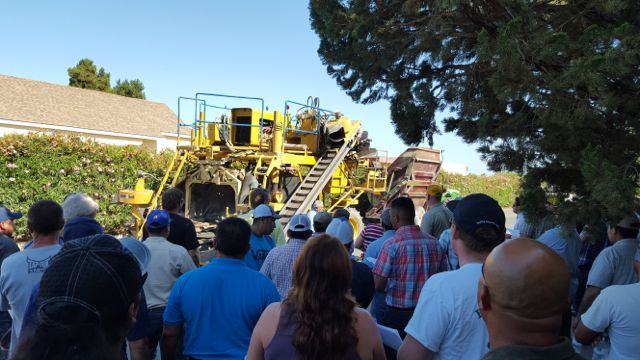
Worker safety is top-of-mind for agriculture, and a special raisin and wine grape mechanical safety training event was held in the Fresno County town of Easton. Grape harvester safety suggestions were  conveyed in both English and Spanish to more than 150 attendees.

Ryan Jacobsen, CEO of the Fresno County Farm Bureau, one of the event sponsors, said,Ryan Jacobsen Fresno County Farm Bureau “It’s no secret, grapes are one of the top crops here is Fresno County. So this raisin and wine grape mechanical harvest safety training is really just to make sure that all of our employers and employees have a safe harvest.”

“They’re working with some machinery that is used only during the harvest time,” said Jacobsen, “which is only a six-week to eight-week period of time. So we just want to get more familiarized with safety as the upcoming season approaches.”

“Most importantly,” Jacobsen continued, “farmers and farmworkers are working a lot of long hours during the harvest season, and this is just a constant reminder that safety is the number one priority. It’s most important that our folks go home safe every evening,” Jacobsen said.

Clint Erling, and his employer, Kingsburg Cultivator, also known as KCI Equipment, which manufactures vineyard equipment such as mechanical raisin harvest machines and almond harvesting equipment, wants to make sure everybody’s safe and gets to go home at night. “Some of this equipment can be extremely dangerous,” Erling explained, “so we engineer guards for areas of the machine to increase worker safety, while maintaining the machine’s effectiveness in the field.”

Worker safety is important to Erling, even after the sale. “We go to the field and work with farmworkers during the harvest or on any projects they’ve got going on,” he said.

2016-05-31T19:28:09-07:00July 23rd, 2015|

URGENT HLB Quarantine UPDATE

HLB Quarantine Update

A Huanglongbing (HLB) quarantine is now in effect in part of Los Angeles County following the detection of HLB in four citrus trees.

On July 10, a kumquat tree on a residential property was confirmed to be infected with the incurable HLB disease. After extensive surveying and testing in the area, three more diseased trees were found nearby. The four diseased trees were on four separate properties close to one another. The tree varieties include kumquat, lime, mandarin and calamondin.

California Department of Food and Agriculture (CDFA) has already removed two of the diseased trees and is currently working with the homeowners at the other two properties to remove those trees as soon as possible. See the CDFA press release below for more details on the resulting quarantine.

QUARANTINE FOR HUANGLONGBING DECLARED IN SAN GABRIEL, LOS ANGELES COUNTY

SaveOurCitrusSACRAMENTO, July 22, 2015 – An 87-square mile quarantine in the San Gabriel area of Los Angeles County has been added to the existing huanglongbing (HLB) quarantine in the Hacienda Heights-area following the detection of the citrus disease huanglongbing, or citrus greening.

Additional information, including a map of the quarantine zone, is available at the CDFA Save Our Citrus website The quarantine boundaries are: on the north, E. Orange Grove Boulevard; on the east, N. Lemon Avenue; on the west, Griffin Avenue; and on the south W. La Habra Boulevard.

This area is part of a much larger quarantine already in place for the Asian citrus psyllid (ACP), the pest that spreads bacteria causing huanglongbing (HLB). The new quarantine will prohibit the movement of all nursery stock out of the area, while maintaining existing provisions allowing the movement of only commercially cleaned and packed citrus fruit. Any fruit that is not commercially cleaned and packed, including residential citrus, must not be removed from the property on which it is grown, although it may be processed and/or consumed on the premises.

“The success of any quarantine depends on cooperation from those affected,” said CDFA Secretary Karen Ross. “The stakes couldn’t be higher for California citrus. We urge residents in the San Gabriel-area to do all they can to comply.”

CDFA, the USDA and the Los Angeles County Agricultural Commissioner’s continue their work to investigate the source of the disease, to survey and test for it throughout the Los Angeles Basin, and to continue with ground treatment of citrus trees within 800 meters of the find sites – which began earlier this week. In the long term, the strategy is to control the spread of ACPs while researchers work to find a cure for the disease.

Huanglongbing has been confirmed four times in San Gabriel, in a kumquat tree on a residential property, in a lime tree on an adjacent residential property, and in calamondin and mandarin trees on residential properties in close proximity to the original find. The disease is bacterial and attacks the vascular system of plants. It does not pose a threat to humans or animals. The Asian citrus psyllid can spread the bacteria as the pest feeds on citrus trees and other related plants. Once a tree is infected, there is no cure; it typically declines and dies within a few years.

Huanglongbing is known to be present in Mexico and in parts of the southern U.S. Florida first detected the disease in 2005, and the University of Florida estimates that the disease causes an average loss of 7,513 jobs per year, and has cost growers $2.994 billion in lost revenue since then. Huanglongbing has also been detected in Georgia, Louisiana, South Carolina and Texas as well as Puerto Rico and the U.S. Virgin Islands.

A total of 15 states or territories are under full or partial quarantine due to the presence of the ACP: Alabama, American Samoa, Arizona, California, Florida, Georgia, Guam, Hawaii, Louisiana, Mississippi, Northern Mariana Islands, Puerto Rico, South Carolina, Texas, and the U.S. Virgin Islands.

The Asian citrus psyllid was first detected in California in 2008 and quarantines for the pest are now in place in 17 California counties. If Californians believe they have seen evidence of huanglongbing in local citrus trees, they are asked to please call CDFA’s toll-free pest hotline at 1-800-491-1899 FREE. For more information on the Asian citrus psyllid and huanglongbing, please visit: http://www.cdfa.ca.gov/phpps/acp/.

2016-05-31T19:28:09-07:00July 23rd, 2015|

Location! Location! Location!

UC ANR Research and Extension Centers Strategically Located

By Charmayne Hefly, Assistant Editor, California Ag Today

Bill Frost is the director of the University of California, Division of Agriculture and Natural Resources’ Research and Extension Center System that has nine different research and extension centers located throughout the state.

UC ANR Research and Extension Center System

UC ANR Research and Extension Center System

Describing the strategy in their geographic placement, Frost said, “We have located them in different growing zones, climates and environments. We have chosen everything from the desert region in El Centro, to cropland here in Kearney, to livestock grazing in both our Hopland and Sierra Foothill Research and Extension Centers, all the way up to Intermountain in Tulelake, where we research potatoes, garlic and crops that can be grown in that fairly short growing season.”

The goal, according to Frost, is to solve local issues from a local or regional perspective. “Each one of our centers has different environments, crops and pest issues to address,” he explained. “These diverse locations are critically important to us because we can do localized, applied research and get useful information out to people, whether they are homeowners in their gardens or growers managing a thousand acres of a crop.”

Frost noted the UCANR Research and Extension Center System has been actively seeking new personnel to better meet the needs of growers. “Just in the last four years,” he said, “we’ve hired almost one hundred new cooperative extension advisors and specialists around the state—many of whom are housed here at the Kearney Research and Extension Center. They are also housed on UC campuses and in our county Cooperative Extension offices.”

Frost commented, “We continue to be relevant. We continue to do cutting-edge applied research. Our programs provide information to everyone; from our youth development program in 4-H and our nutrition education, to master gardener programs that help homeowners with pest problems and water management.”

“And of course, we serve the agricultural community. We have a lot of good research going on and we’re generating lot of good information in commodity production, pest management and water management,” Frost said.

The nine UC ANR Research and Extension Stations are:

Featured Photo: UC ANR

2016-05-31T19:28:10-07:00July 20th, 2015|

Phone Calls Needed Now

STOP WHAT YOU’RE DOING AND MAKE AS MANY CALLS AS YOU CAN!

CALL all Senators to support the WESTERN WATER AND AMERICAN FOOD SECURITY ACT OF 2015

WE ARE DEDICATING THE REST OF THE DAY TO MAKE THESE CALLS.

OUR LIVES DEPEND ON THIS!


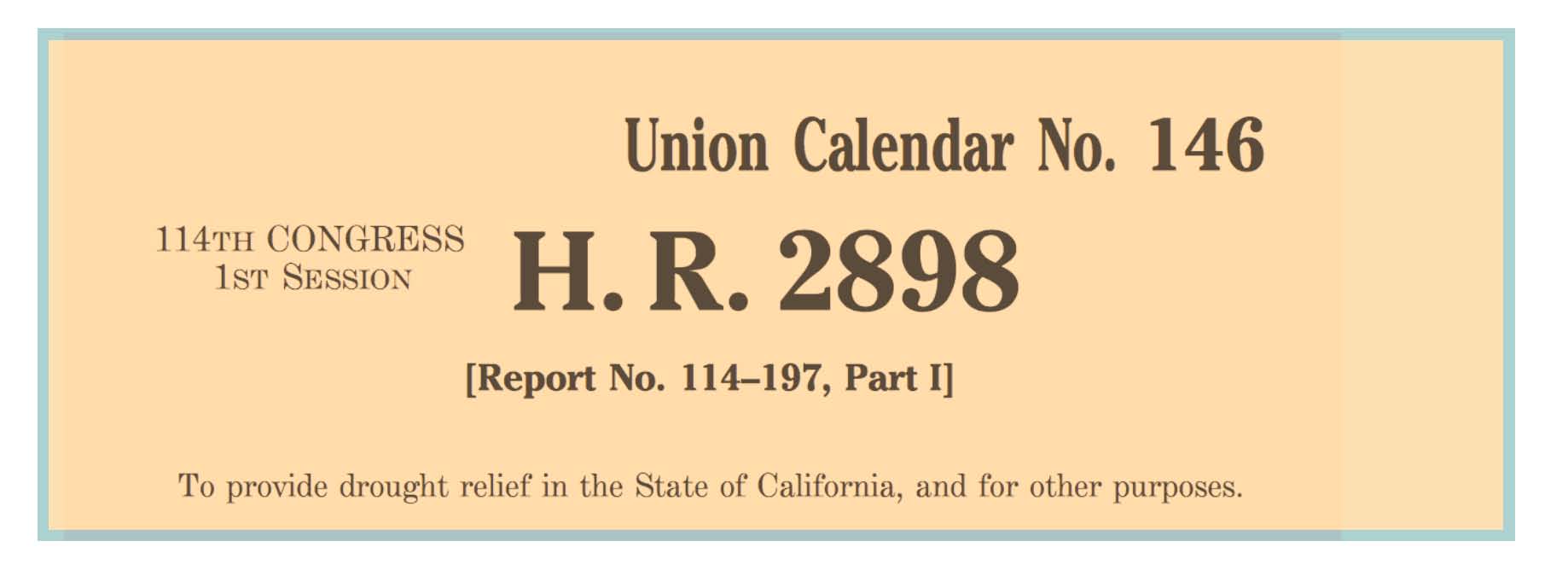
H.R.2898, the Western Water and American Food Security Act of 2015 has passed the House and is on the way to the Senate.

MY JOB Depends on Ag urges each and every one of us to call all U.S. Senators and tell them we want a YES vote.

  • Here’s a template letter to email.
  • Call these Senators, starting with CA and moving onward.
  • Say you are calling regarding HR 2898 and want the Senator to vote YES!! They may ask for your zip code and say they will pass along your concern.


Senator Dianne Feinstein (D-Calif.) TODAY released the following statement after the House of Representatives passed the Western Water and American Food Security Act:

“The House today passed a drought bill that included some useful short-term provisions as well as some provisions that would violate environmental law. While I cannot support the bill as passed, I remain hopeful we can come to an agreement that can advance through both chambers.

“House Republicans are right that we need to increase the flexibility of the state’s water delivery infrastructure. We need to facilitate water transfers and maximize water pumping without violating environmental laws like the Endangered Species Act or biological opinions, and we must do this using updated science and real-time monitoring. Provisions to accomplish this were in the bill the Senate unanimously passed last year, and I plan to include them again this year with added environmental protections.

“I also believe we must look closely at ways to support water recycling, storage, desalination and groundwater replenishment projects. There are already 15 ocean desalination projects and 65 water recycling projects being considered throughout California. These types of projects—as well as building or increasing reservoir capacity—must be a part of any long-term solution.

“To get a bill through the Senate and the House we’ll need to include provisions that benefit the entire West and help support the development of alternative water infrastructure. If the climate continues to warm, as I believe it will, these alternatives will be key.”

2016-05-31T19:28:10-07:00July 16th, 2015|
Go to Top