Expanding California Wine Industry

Will the Expanding Wine Industry Impact California Communities, Environments?

By Patrick Cavanaugh, Deputy Editor


How the expanding California wine industry might negatively impact the state’s communities and environment is growing concern. Rob McMillan, who founded Silicon Valley Bank’s Fine Wine Division in 1992, said in the Napa Valley community, “we are banding together to address apathy and address tourism issues in the community planning process. If we continue to build new wineries, those opposed characterize the downside in terms of traffic and noise, with very little fact-finding to back up their argument.”

McMillan described some current challenges associated with getting accurate information to the public. “With social media today, people just get to say what they want, and that grabs hold and becomes a catch phrase. Now in Napa Valley, we are working from behind in that there’s really a divide between growers and vintners about how Napa Valley ought to look. And this is not just limited to Napa Valley, either. You are seeing this anti-tourism attitude brewing in Sonoma County and in Santa Barbara County, legislatively.”

While growth of the industry is a good thing, McMillan believes implementing a strategy to prevent congestion is essential. “Whether you are in Washington or Oregon—pick a place—you also have to engage in the community planning process. If you are going to add tourism and direct consumer sales, you can’t have more and more people come and use your region’s resources until you have nothing but a Saturday traffic jam. Your neighborhood starts looking like New York or Tokyo. That is not going to convey the welcoming and accessible message you need to deliver.”

Silicon Valley Bank’s Fine Wine Division, founded by McMillan in 1992, has since become the leading provider of financial services to the U.S. fine wine industry. To ensure the California wine market remains vibrant, McMillan urges wineries to engage in the community planning process, reach beyond the individual winery to work together as a community, and determine how our wine tourism regions should look like. He elaborated, “We can’t go through distributors; we have to go directly to the public, and direct outreach requires a level of entertainment. We have to solve tourism issues in the planning process.”
2016-05-31T19:27:10-07:00September 16th, 2015|

Farmers Willing to Adapt

Farmers Willing to Adapt Farming Practices for Regulators

By Laurie Greene, Editor


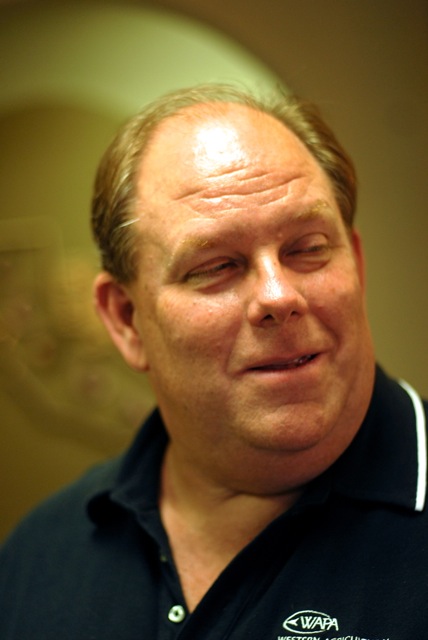
With increased scrutiny of the agriculture industry’s use of resources, growers must be proactive about their farming practices, and according to Roger Isom, president and ceo of Western Agricultural Processors Association, farmers are willing to adapt.

Isom noted how receptive growers are to improving their farming techniques. “One of the best examples I have for conservation management practices addresses air quality. Air quality regulators say we’ve got to put water on the back of tillage disks to suppress dust and to schedule no-farming days,” he said. “Wait a minute,” he added, “let’s get in a room and talk about what you want to do! You want to lower emissions? Well, farmers can combine practices and thereby lower emissions and save fuel and labor. And, we’ll do it!”

Isom said farmers appreciate incentive programs. “If I can get some money to help pay for it,” said Isom, “I’ll do it much sooner. There is nobody out there who doesn’t want a new tractor or truck to meet the mandated specifications; but if you provide some help, they will do it much sooner.”

“Growers and consumers each want the same things—a healthy environment and good produce,” he said. “You just have to sit down together and find solutions. The last thing we want is a food recall. Again, if we sit down in a room with scientists and the U.S. Food and Drug Administration, and develop agricultural guidance specific to each crop, farmers will be more amenable to adapt recommendations into practice,” Isom said.

2016-05-31T19:27:10-07:00September 16th, 2015|

Monterey County Rules Lettuce Market

Diversity Keeps Monterey County Going Strong

By Patrick Cavanaugh, Deputy Editor

Monterey County Ag Commissioner Eric Lauritzen talked about the success of local farmers in setting new crop production records, “Despite the water and labor shortages, crop values were up in 11 commodities that exceeded $100 million and 26 that surpassed $10 million. So, the diversity of the economic engine here in Monterey County remains strong despite adversity.”Monterey County Ag Comm Logo

The overall agricultural value of Monterey County is nearly $4.5 billion. Lauritzen noted, “Commodity by commodity, among our top crops, we saw leaf-lettuce surpass strawberries as the number one commodity again. Strawberries are still over $709 million, and the lettuces combined were about $1.4 billion. It is pretty amazing to see those kinds of numbers coming out of one county.

In addition to water and labor shortages, Lauritzen noted, “We have dealt with the impact of food safety issues with spinach. And though production levels continue to climb back, they have not reached levels achieved since the E. Coli outbreak back in 2010. Anyway, we are still thrilled to see the numbers so strong and this speaks to the economic engine of the County.”

Other achievements include:

-$8.1 billion generated for the local economy, including:

-$5.7 billion in direct economic output, nearly 20% of the county’s total direct economic output.

-$2.4 billion in additional economic output in the form of expenditures by agriculture companies and their employees

-76,054 jobs in Monterey County, including:

-55,702 direct employees, or nearly one quarter of all jobs in the county

-20,352 additional jobs made possible through expenditures by agricultural companies and their employees

-investments in ambitious new technology.

2016-05-31T19:28:04-07:00September 15th, 2015|

Citrus Growers Determined to Succeed

Frustrated Citrus Growers Are Determined to Succeed

By Patrick Cavanaugh, Deputy Editor

While farmers have been dealing with some tough times, Bob Blakely, vice president of California Citrus Mutual is optimistic about future generations of citrus growers, “Perceptions and attitudes are really all over the board; we’ve got growers who are really frustrated and ready to throw it in. But most growers are staying in, thinking they can still makeSaveOurCitrus it in the citrus industry.”

“California growers are known for their tenacity in the face of challenges,” Blakely commented.  “It’s exciting to see young farmers come on, even though they continue to fight the regulatory battles and higher farming costs. But these young guys have the same determination the prior generation had when they started. So, I am optimistic about the future of the citrus industry in California.”

One of the major threats to citrus is the Asian Citrus Psyllid (ACP) and its potential to spread the disease Huanglongbing (HLB), as it has in Florida and Texas. “We are very concerned about the recent HLB finds. Here again, they have been discovered in residential areas, which is no iPhone Save Our Citrus Appsurprise to us. That is typically where diseases first show up. At the present time, the ACP are contained. We are starting to delimit that area, and residents are very cooperative in allowing those trees to be removed.”


Download the Save Our Citrus App

There is now an iPhone app to help California residents identify signs of the Asian citrus psyllid and HLB, and easily report findings to agriculture officials. Download the free app in the iTunes store.

2016-05-31T19:28:04-07:00September 11th, 2015|

ALRB Education Does Not Require Worksite Access

Barry Bedwell Says ALRB Education for Farmworkers is Okay, But Not Worksite Access

By Patrick Cavanaugh, Deputy Editor

Officials from the California Agricultural Relations Labor Board (ALRB) held a public hearing in Fresno TODAY to talk about their proposal for worksite access– private operating farms–to educate farmworkers about the ALRB, and that did not sit well with ag leaders. Barry Bedwell, president of the California Fresh Fruit Association based in Fresno and other ag leaders questioned the ALRB’s motives.

“The real proposal has to do with granting legal access to ALRB agents to agricultural worksites for the purpose of educating workers about the Agricultural Labor Relations Act,” Bedwell said. “Education alone is something that no one I’ve talked to is against, clearly. We want people to understand their rights under the law.”

The Act provides, encourages and protects collective-bargaining rights for agricultural employees, but as Bedwell explained, access to a private worksite is a totally separate legal issue.

“It’s really complicated, unfortunately, because ALRB’s staff has shown to a great degree over the recent couple of years, a distinct bias towards organized labor,” Bedwell said. “The Act is all about a worker’s right to get one or more people together to complain about work conditions and to ask for certain things. It doesn’t mean the employer has to grant them; it’s really about worker’s rights.”

Bedwell said the request from the ALRB is distinctly not about a union’s rights, and “it’s never been about the employer’s rights,” Bedwell said. “We know that. But in this case, we think it’s at best premature to talk about workplace access without first understanding the issue of knowledge [or the lack thereof] out there currently and the best ways to conduct that education.”

Pointing to heat illness prevention and Cal/OSHA as a great example, Bedwell said, “Cal/OSHA did not ask for access to go onto someone’s private property. Instead, they said, ‘We will create the information systems through various media and through seminars which agriculture helped to organize and fund.’ We think that’s a great model for educational services, and we could help.”

2016-05-31T19:28:05-07:00September 10th, 2015|

Super PAC Needed to Fight Extreme Enviromentalists, Part 3

Rachel Martin on Need for Super PAC to Fight Extreme Environmentalists

By Charmayne Hefley, Associate Editor

Part 3:

This is the third and final part of a three-part series with Rachel Martin, the national chairperson of Homeland Security for the National Federation of Republican Women, on the importance of creating a political action committee (super PAC) to combat extreme environmentalists in order to save forests, wildlife, and ag suffering from limited water allocations during this extensive drought.

Martin discussed how groups in addition to agriculture are suffering due to the limited water allocations and environmental regulations that prevent forest maintenance, such as logging, thinning of the forests and controlled burns, the lack of which leaves forests vulnerable to wildfires that burn thousands of acres and kill protected animals annually. “The Super PAC that I’ve been putting together since February is bringing together law enforcement and fire fighting agencies,” Martin explained. “We’re also bringing in animal organizations; we’re just waiting for their board approval.”

Through combined funding, Martin hopes the Super Pac will  begin to rival the environmentalists who have already joined together to lobby for what they want. “We’re looking for associations and unions to get together and pool their money,” Martin said, “because that is what has helped the environmentalists get to this point–which is having almost total control of California. It’s lobbying, having the money, and joining forces to fight and pave their way through Sacramento and Washington to get their laws and their amendments approved. Yet we have a lot more people who are suffering, a lot more groups, organizations and animals that are suffering and dying because of the lack of water.”

Martin said she has been appealing first to those outside of agriculture to form her Super PAC and hopes the ag community will join in. “I figured ag is already in the fight,” Martin stated, anticipating strength in combined numbers and funds.


2016-05-31T19:28:05-07:00September 8th, 2015|

Super PAC to Save Animals that Die in Wildfires, Part 2

Rachel Martin on Need for Super PAC to Save Forests, Wildlife, Ag

By Charmayne Hefley, Assistant Editor

Part 2:  Animals Needlessly Die in Fires

We are continuing our three-part series with Rachel Martin, the national chairperson of Homeland Security for the National Federation of Republican Women (NFRW), who is urging the creation of a political action committee (super PAC) to save forests, wildlife, and ag suffering from limited water allocations during this extensive drought.

“Agricultural agencies aren’t the only entities suffering from the lack of water allocations,” Martin explained. “Other agencies are also suffering due to the environmental regulations that prevent forest maintenance, such as logging, thinning of the forests and controlled burns. Curtailment of forest maintenance leaves thousands of acres of forest, as well as wildlife, vulnerable to larger, more numerous, and containment-resistant wildfires each year.

“When law enforcement evacuates homes, they have to force people out,” Martin said. “People fight to come back into get their pets—their dogs, their cats, their horses, livestock and any other animals they may have. But, oftentimes, residents don’t have the means to haul their animals with them; they may not have horse trailers. Sometimes, animals actually run free up into the mountains and can’t readily be caught. As I was specifically told by some law enforcement officials, those animals end up dying in the fires.”

Martin realized that once animal lovers learn of the suffering caused by the environmental regulations, they might consider joining the fight against the environmentalists. “I’ve been working with animal organizations and animal lovers. I’m one myself. I have quite a few pets, and I grew up around horses. Animal organizations and animal lovers alike can get in on this fight against the environmentalists.”

“Environmentalists are trying to protect species that actually aren’t even on the protected list yet; they’re almost on the protected list,” Martin stated. “Yet, in doing so, they just keep getting further and further away with from their original goal of protecting endangered species and pristine forests. They’re getting away with a lot more through politicians, too.”

2016-05-31T19:28:05-07:00September 8th, 2015|

Karen Ross on Ag Innovation

CDFA Secretary Karen Ross on Ag Innovation


The next big thing is always right around the corner. Karen Ross, secretary of the California Department of Food and Agriculture, said while that may be so, farmers should be consulted to help with ag innovation–the creation of the next big thing–so both farmers and innovators will benefit.

“Here’s what we need to go to the next generation of innovation, so come talk to us early; don’t just come and say ‘we’ve got your solution,’” Ross said. “We manage a vast biological system, a complex system on the farming side, that responds to fast-moving markets on the consumer side. So don’t divorce yourself from us in the industry. Truly understand what we need and how we put together all these complex moving parts to meet consumer needs and expectations in the marketplace.”

Ross said while farmers are always willing to listen to a new way of doing things, involving them in the process and providing access to the data that demonstrates the need for a new product would be more beneficial.

“Farmers are always open to ‘is there a better way?’” Ross said. “But they want the data. They like to see some demonstration of that data—which comes back to partnering with our academic institutions and Cooperative Extension. Don’t just come out and sell me something; show me the data; show me the demonstration projects. Let me kick the tires. Maybe, I’ll put in a few acres of that this year. It’s not just a sales job. You’ve got to partner with the farmer. And if you do, you’re going to come up with a much better product.”

2016-05-31T19:28:05-07:00September 3rd, 2015|

The Peril of Smoke Taint on Winegrapes

Wildfires Threaten Smoke Taint on Winegrapes

By Charmayne Hefley, Associate Editor

There are at least two dozen major fires burning in the wilderness of California. Many are now contained, while others are only minimally contained. One recent serious fire, known as the “Rocky Fire” in Lake, Yolo, and Colusa counties burned nearly 70,000 acres before firefighters extinguished it last month.

But smoke from that fire may yet cause problems for the wine grape industry in Napa, Sonoma, and Lake counties. James Kennedy, chair of the Department of Viticulture and Enology and director of the Viticulture and Enology Research Center at California State University Fresno, explained the threat of smoke taint on winegrapes. “Anytime you have wildfires near vineyards,” Kennedy said, “there is a concern about how that smoke might become associated with grapes, and as a result, become associated with wine.”

Kennedy said they learned a lot about this problem from the Australian wildfires in 2003 that tainted their wine. Kennedy explained,“grape growers are oftentimes not aware of the extent to which smoke can damage fruit. In a sense, it is a two-edged sword. When wine is made from smoke-tainted grapes, it will have characteristics reminiscent of ‘the morning-after ashtray’ that is quite obnoxious and certainly not desirable. The other side of the sword occurs when smoke compounds interact with the grapevine and grape berries, it is modified by the grapes. Like an iceberg in the ocean, the ice above the water suffers the apparent smoke taint; whereas, the massive chunk underneath the ocean, though not initially as obviously smoke-tainted, reveals obvious taint over time.”

Kennedy said, “Winemakers in Australia realized that while you can treat that initial smoke taint, you don’t resolve the long-term taint problem. We, as an industry, are trying to identify vineyards with smoke taint problems before their fruit is made into wine. By testing grapes in laboratories, we are trying to prevent those wineries from wasting significant investment in converting tainted fruit into tainted wine.”

The Napa Valley Vintners nonprofit trade association reported on its website yesterday, “So far no vineyards or wineries in Napa County have been threatened by any of this season’s wildfires. Most of the time the fires were burning, the smoke blew away from Napa County due to the typically prevailing winds from the southwest. The weekend of August 15/16, we did experience very hot temperatures and a wind shift that caused our air to be hazy and smoky as a result of the many fires burning throughout CA. However, there were no reports of smoke taint affecting Napa Valley wine grapes as a result.”

“Most reports on smoke taint indicate that it exists only after an extended period of close contact with smoke; conditions that have not, to our knowledge, existed within Napa Valley this summer. Furthermore, Napa Valley is known for the highest standards of fine wine production and our winemakers will be paying very close attention to this situation as they harvest grapes for the 2015 vintage.”

2016-05-31T19:28:05-07:00September 3rd, 2015|

No-tillage Grows in California

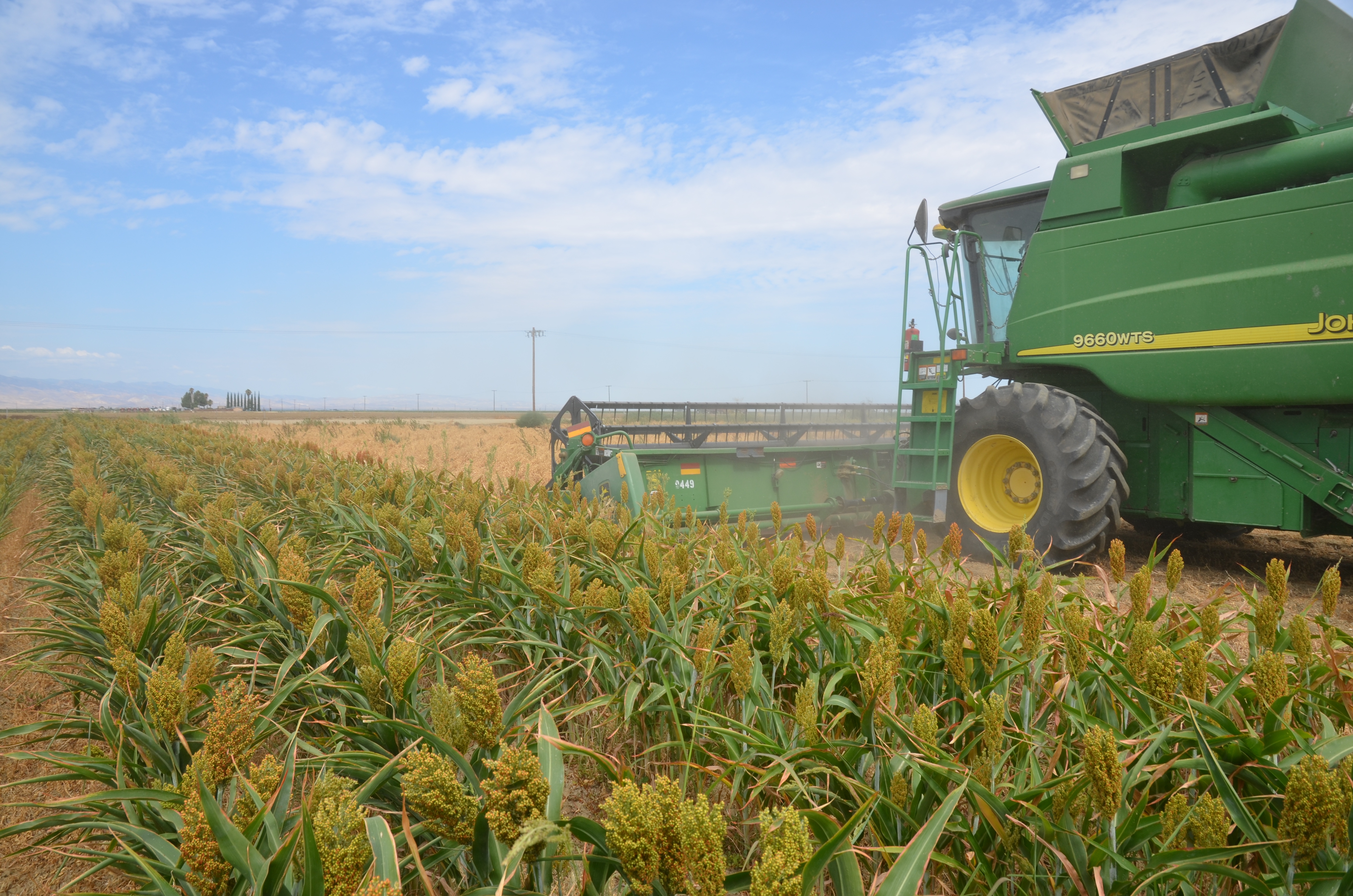
The list of crops that have been successfully grown using no-tillage in California continues to increase with garbanzo beans being the latest addition, according to Jeffrey P. Mitchell, CE cropping systems specialist, University of California, Division of Agriculture and Natural Resources.

Harvest data from the Conservation Tillage Workgroup are now in for a 2015 garbanzo crop that was no-till seeded in January in the longstanding conservation agriculture systems study field in Five Points, CA, and these data indicate no difference in yield between the no-till with and without cover crop treatments and the standard till with and without cover crop systems. Garbanzo yields for the four systems averaged about 3,600 lbs / acre with no statistical differences seen between the four experimental treatments.

Other than an herbicide spraying in the fall of 2014 to knock down weeds, the no-tillage systems relied on zero tillage prior to seeding that was done with a John Deere 1730 6-row 30” planter. Conventional tillage consisting of several passes of a Wilcox Performer bed-shaping tillage implement was done to prepare planting beds in the standard tillage plots as would be commonly done in the region.

There is now a growing list of several crops, including processing tomatoes, cotton and dairy forage that have been successfully produced, both in research studies and on California farms, with economically viable yields using no-tillage seeding.

Additional information about this study is available at the Conservation Agriculture Systems Innovation Center (CASI) website and by contacting Jeff Mitchell at jpmitchell@ucdavis.edu.

Established in 1998, the Conservation Cropping Systems Workgroup is a diverse group of more than 1,500 farmer, University of California, California State University, USDA – NRCS, Resource Conservation District, public agency, private sector and environmental group members that have come together to promote conservation cropping systems in California.

Featured Photo Soure: Source: CASI (Conservation Agriculture Systems Innovation) Center, University of California, Division of Agriculture and Natural Resources

2016-05-31T19:28:05-07:00September 2nd, 2015|
Go to Top