USDA NRCS Works To Increase Diversity

NRCS Conducts Outreach for Diversity


By Emily McKay Johnson, Associate Editor


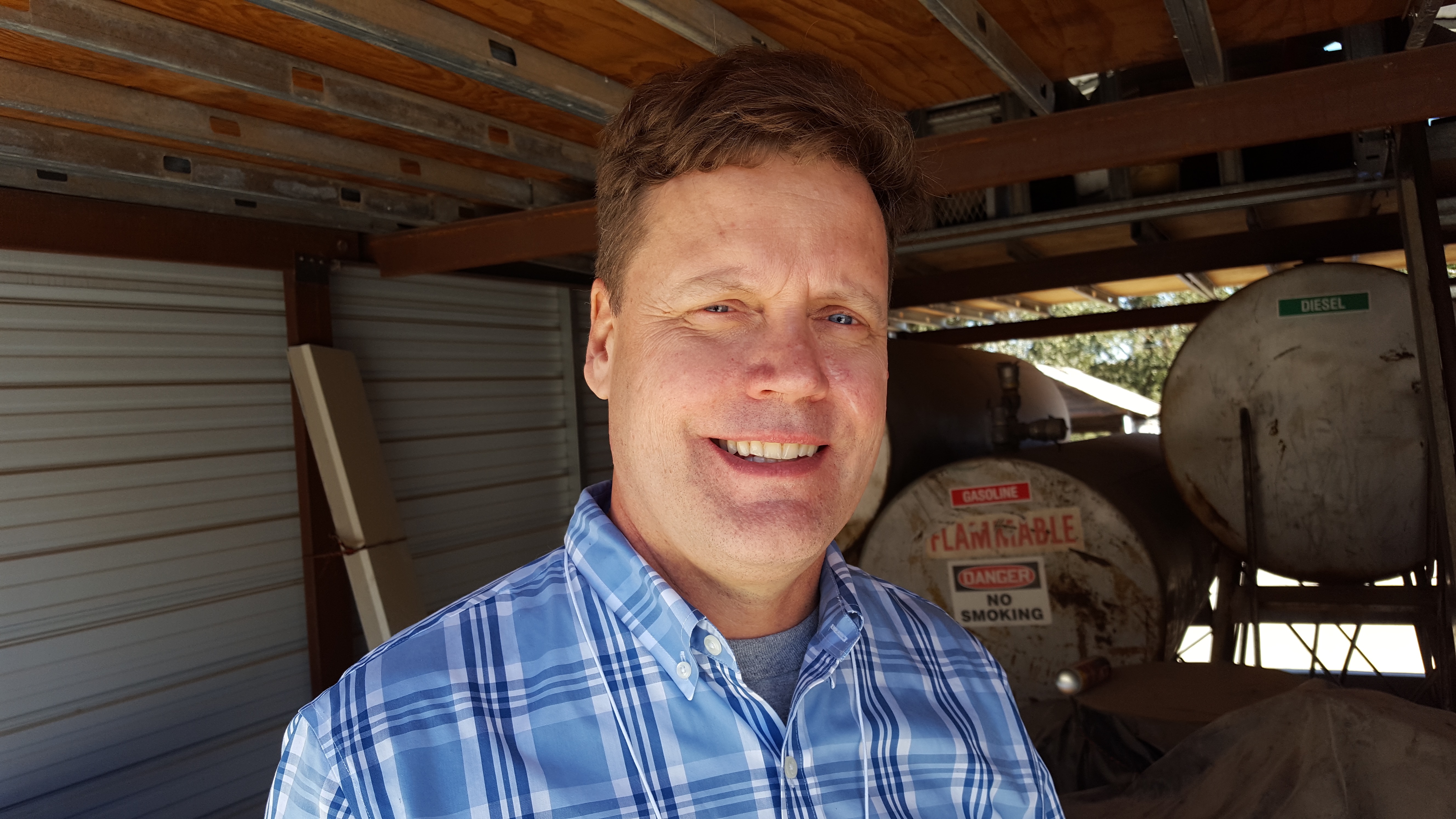
The United States Department of Agriculture (USDA) Natural Resources Conservation Service (NRCS) works with local growers across America to conserve the nation’s soil, water, air and other natural resources. Elisabeth “Elise” Miller, is an area engineer for the entire Southern California region. “I also serve my agency as the NRCS-California LGBT Special Emphasis Program Manager, a collateral duty that I perform on several levels to increase diversity,” said Miller.


“First, I work to educate employees within my agency, to make them better informed and more in tune to language,” Miller explained. “Then, I work to get a more diversified workforce within the USDA,” she added, to make the organization stronger and better.


Unlock the secrets in the soil diversity

“My efforts might include going to a university,” she elaborated, “trying to tie in with their resource center and encouraging more people who identify as LGBT to apply for federal jobs. Our colleges, the University of California (UC) and the California State (Cal State) University system, have a lot of really good, positive and powerful resource centers that I’m hoping will continue to help us with our outreach and pull more people in who want to work for us.”


“Certainly we do have human resources,” commented Miller. “And we do a lot of outreach. With California being so large and so diverse,” Miller said, “it is hard to reach out to everybody. We have to start with the big UC schools first. We also try to reach out to universities such as Fresno State, Cal Poly, San Luis Obispo or Pomona or UC Davis, or Humboldt State. Those would be schools that certainly we want to outreach to and try to bring more of those graduating students in under our fold.”


“My agency is a very technical agency,” said Miller. “We work on conservation-type issues—resource issues that farmers, ranchers or private landowners might deal with—requiring an agronomist, biologist or soil scientist. I often go out with a multi-disciplinary team and meet with a farmer, rancher, or just a landowner.”


“Every farmer I meet has some kind of issue,” Miller commented, “whether it’s pest management, whether it’s dealing with manure management or an erosion issue that’s going on. If they have a hillside orchard, they have to deal with that.”


“And obviously they focus a lot on drought management and water conservation,” Miller explained, “A lot of these farmers of course are forced to use groundwater, which is depleting the groundwater sources and may be causing irreparable damage.


We work cooperatively to try to help them resolve their land issues. That’s what I like about my agency—that we’re invited there. We’re not there to push a regulation. We’re there to help them to better manage. They always maintain control of their decision making. We try to give them options available and we have cost share programs to assist them, if something is identified. We work towards developing conservation plans on the property.”


The agency is also responsible for the soil survey work. “We map the soils five feet deep,” said Miller, “to gather information, resource information, which has worked fantastically well for a farmer to know what kind of soil he’s dealing with. It may make a difference on how a farmer irrigates. It may be why he’s having a problem with a crop or many other areas that could be helpful to them.”


“We are in the community. We’re very much aware; we know who the farmers are, we know what the issues are and we work with farmers to try to address their land problems. We don’t just pop in and then pop out,” Miller said.


The United States Department of Agriculture (USDA) Natural Resources Conservation Service (NRSC) works with local growers across America to conserve the nation’s soil, water, air and other natural resources with voluntary programs and science-based solutions that benefit both the landowner and the environment. 

2021-05-12T11:05:47-07:00September 12th, 2016|

Spider Mites Gave Almond Industry Reprieve in 2016

Spider Mites Showed up Late This Season

By Lauren Dutra, Associate Editor


This year, near-perennial spider mite pressure on almonds was delayed until hull-split. “That’s the big story this year,” said David Haviland, UC Cooperative Extension entomology farm advisor, Kern County. “The orchards of people who did early management programs well their fields looked great until hull-split. And the orchards of people who did not do anything well their fields looked great at hull-split as well—when the mites showed up,” he said.

Almond hull-split

Almond hull-split

“And a good population of them arrived,” Haviland continued.  “People sprayed, but now we’re at the beginning of September, and everyone I have talked to in the Southern San Joaquin Valley have reported the arrival of the sixspotted thrip, a beneficial spider mite predator. The thrips came in fierce, cleaning out anything that didn’t get controlled prior to Nonpareil harvest,” said Haviland.

“We are on the tail end of the season in Kern County, and mites ought to be going away in a couple of weeks,” he said.

almond-tree-shaking-harvesting

Haviland also explained the appearance of navel orangeworm this year is about average. “As far as navel orangeworm goes, things are looking good. They are certainly out there. They’re certainly in some nuts, but trap captures have been about normal, so—nothing really alarming in terms of numbers,” Haviland noted. “I haven’t heard of anybody really getting hit hard this year, other than some orchard edges here and there.”

“Growers seem to be happy. We are about halfway through the harvest, hoping the second half of almond-shaking goes just as well as the first,” said Haviland.

2021-05-12T11:02:58-07:00September 9th, 2016|

Salinas Valley SGMA Agency Progresses

Salinas Valley SGMA Agency Development Makes Headway

By Patrick Cavanaugh, Farm News Director


The Sustainable Groundwater Management Act (SGMA) empowers local agencies to adopt groundwater management plans that are customized to the resources and needs of their communities. All such designated groundwater sustainability agencies (GSAs) in the State’s high- and medium-priority groundwater basins and subbasins must be identified by June 30, 2017.


A GSA is responsible for developing and implementing a groundwater sustainability plan (GSP) to meet the sustainability goal of the basin to ensure that it is operated within its sustainable yield, without causing undesirable results. The GSP Emergency Regulations for evaluating GSPs, the implementation of GSPs, and coordination agreements were adopted by DWR and approved by the California Water Commission on May 18, 2016.


“We’re coming down to the wire pretty quickly,” commented Norm Groot, executive director of the Monterey County Farm Bureau in Salinas. “We’re moving forward with our SGMA implementation and moving closer to a proposal for our groundwater sustainability agency. We hope to have something presentable to the public entities sometime this fall.”


“We are meeting with stakeholders in the Valley and hopefully we can move forward with some of the solidification of the proposals and get into the nitty-gritty details of how to work that particular agency through the process,” Groot continued. “We have options to either take an agency that we have here in our county and rework it legislatively, or perhaps create a brand new agency. It just depends on the complexities of that particular issue based on the proposal that we come up with,” said Groot.


Groot noted local agricultural leaders have proposals on the table and various different options are under consideration. “The complexity of reworking an existing agency through a legislative process is rather daunting,” explained Groot. “The complexity of creating a new agency from the scratch is also very daunting and probably very expensive.”


Certainly any of these proposals under scrutiny will not be approved overnight. “It’s going to take some thought; some time, effort, and energy; and definitely some money to do,” said Groot.


Resources:

2016-09-08T08:02:22-07:00September 8th, 2016|

Episcopal Priest Becomes Farmer

Following His Heart to a Second Calling, Suburban Detroit Priest Becomes California Farmer


By Patrick Cavanaugh, Farm News Director


People change careers for a variety of reasons, but Ken Erickson took that notion to an extreme. Erickson, who had grown up in the Detroit suburbs and who was serving as an Episcopal priest in Detroit, received a phone call from relatives who had been farming in Sutter and Colusa Counties for 25 years.


“My aunt and uncle asked if I would be interested in coming to California to learn how to farm and help manage their orchards, which included walnuts, pecans, and olives for oil,” said Erickson. “So my family and I eventually made a decision to do just that, and it has been a big adventure for us.”

walnut orchard


Currently living in Meridian, Sutter County and working side by side with his cousin, Lars Jerkins, Erickson took stock, “We are enjoying living and working in the country. It’s great to work outside,” he said.


People often ask Erickson about the difference between farming and pastoring. “I tell people trees are like people; they need lots of nurture and care, but they don’t talk back,” he quipped.


But, of course, giving up his career as an Episcopal priest required a great deal of thought. “It was a hard decision,” Erickson explained. “It was a big change, but we decided to go for it. Here we are and learning from lots of people, especially from my aunt, uncle and cousin. And I have come to respect and appreciate the fact that the farming community is supportive. They want to help in any way. My family and I are here to stay.”

2016-09-06T17:50:08-07:00September 7th, 2016|

Will AB-1066 End Sunup to Sundown Farming?

Will Overtime Bill Kill Sunup to Sundown Way of Farming?

By Brian German, Associate Broadcaster


Newly approved by the California Assembly, AB-1066, which would effectively extend the payment of overtime compensation to agricultural employees after 8 hours of work in a day or 40 hours per week, instead of 10 hours per day or 50 to 60 hours per week, awaits Governor Jerry Brown‘s final decision this month. The theory behind the bill is understandable, but according to Bryan Van Groningen, field manager for Van Groningen & Sons, Inc.a California family farming business begun in 1922, agriculture works within a different timetable than other industries.


Because agricultural production is fundamentally nature-based, Van Groningen said there is an underlying need for non-traditional workdays. “Our crews, more or less, work from sunup to sundown,” he said. “That is what is required to get our harvest finished.”


Van Groningen & Sons employs different types of laborers, some who already work 8-hour days and others who work on a schedule that AB-1066 would  eliminate. “Our field workers—everybody is accustomed to a 10-hour per day and 50-hour per week system,” explained Van Groningen.


For Van Groningen & Sons, one of the largest producers of pumpkins for the West Coast, the period leading up to Halloween is naturally one of their busiest times of year. They have a short window of time to get their produce ready for its final destination, so putting an 8-hour limit on their employees would cause problems in meeting their deadline. “We have to get all of our crop in, harvested, transported, packed and shipped by a certain date. If we don’t,” he said, “the date comes and we’re pretty much finished.”

2016-09-05T21:44:31-07:00September 6th, 2016|

Celebrate Labor Day With California Strawberries!

Add California Strawberries to Your Labor Day Event


By Laurie Greene, Editor


Many people will be out and about with an extra day off on Labor Day, trying to get that last swallow of summer. They’ll crowd beaches, lakes, parks and backyard BBQs. What better way to celebrate the achievements of American workers than to add fresh-picked California strawberries to the menu?

Carolyn O'Donnell

Carolyn O’Donnell, communications director, California Strawberry Commission


“Any holiday can be celebrated with strawberries as they are available year-round,” said Carolyn O’Donnell, communications director of the California Strawberry Commission in Watsonville. “Strawberries are one of the most popular fruits around. They are sweet but low in sugar, and they are quite nutritious. People are often surprised to find out that having just eight medium strawberries gives you more vitamin C than eating an orange,” she said.


“Grown year-round, right now strawberries are coming mostly from the Salinas-Watsonville area on the Central Coast and also in the Santa Maria area,” noted O’Donnell. “As we get more into the fall there will be less coming from the northern sections and more from the Ventura County area to the south. Eventually strawberries will come out of Orange County and Northern San Diego County. The crop will roll back up the coast again with the New Year. By next April or May, strawberries will be coming mostly from the Watsonville area again,” O’Donnell explained.

generational_small strawberries


O’Donnell said that strawberry growers are very dedicated to growing the best possible product they can for their customers. “Their strawberries are actually often a crop of opportunity. A number of our farmers started as field workers and were able to work their way up to owning a farm because you can produce a lot of fruit and make a good living on a small amount of land.”


O’Donnell said supplies should be plentiful in the grocery store. “We probably have more fruit this time of year than usual probably because rain this past winter delayed harvest, which was good news. Now we’re just working our way along. Folks in the Watsonville areas are also beginning to start preparing their other pieces of fallow ground so that they can plant around Thanksgiving and produce next year’s crop,” she said.


Photos: Courtesy of California Strawberry Commission

2016-10-06T16:04:28-07:00September 4th, 2016|

Weedy Rice Challenges Some Rice Growers

Weedy Rice Crops Ups Again in Northern Calif. Rice Fields


By Patrick Cavanaugh, Farm News Director


In Northern California, rice growers typically prepare to start harvesting in mid-September, but some growers have endured a lot of weed pressure from weedy rice (Oryza), also known as red rice, according to Whitney Brim-DeForest, a UC Cooperative Extension Rice Farm Advisor in Sutter, Yuba, Placer, and Sacramento Counties who focuses particularly on weeds. Red rice is actually the same species as cultivated rice, but it produces far fewer grains per plant and is therefore considered a pest.


Brim-DeForest said weedy rice is common in the Southeast, but not in California. “We’ve been pretty lucky in California in that we actually don’t have a big problem with it,” she said. “It’s a big problem down in the southern U.S. and they have been dealing with it in for a long time; but we have had it crop up. I think the last time was in 2006, and we managed to deal with it. It somehow popped up again in the last couple of years, so we’re dealing with it again.”


How weedy rice reached California is apparently a mystery. “We don’t really know the source of it, to be honest,” said Brim-DeForest. “We’re investigating that through research, hopefully starting this fall,” she said.


Brim-DeForest said growers have few choices to control weedy rice. “Growers that have it will either have to rogue¹ it out, pull it out by hand or sacrifice that field and spray it with Roundup,” she said, “which would kill the rice as well. And, if the rice grower doesn’t know he has weedy rice in the field, it could hurt him later at the rice mill,” explained Brim-DeForest.


“Once harvested, the rice goes to the mill. If a certain amount of red rice bran (the outer layer surrounding the rice grain) is discovered, the mill will not accept it and could reject the entire load,” she said.


¹rogue (verb) to remove inferior or unwanted plants

2021-05-12T11:05:48-07:00September 2nd, 2016|

Julie Borlaug Honors her Famous Grandfather

Julie Borlaug Honors her Famous Grandfather, Norman Borlaug, in Advancing Science in Agriculture


Editor’s Note: Julie Borlaug spoke recently at the 2016 Forbes AgTech Summit in Salinas, and shared with us the legacy of her Grandfather, Norman  Ernest Borlaug, a man who used technology to ward off starvation and the recipient of the Nobel Peace Prize, the Medal of Freedom, the Congressional Gold Medal, as well as the importance of advanced technology in Agriculture. 


Julie Borlaug, associate director for external relations, Norman Borlaug Institute for International Agriculture at Texas A&M University, introduced the Institute’s mission, “We design and implement development and training programs. We take the legacy of my grandfather and we carry it out through the land-grant mission of teaching, research and extension. We’re primarily funded by organizations like USAID and USDA, so we truly are a development agency.”

Here is more of what she shared:

Norman Borlaug

We all know why we care about agriculture and a lot of why we care is pretty much some of the same reasons my grandfather was up against during the green revolution. My grandfather was the recipient of the Nobel Peace Prize, the Medal of Freedom, the Congressional Gold Medal and now a statue in the National Statuary Hall at the U.S. Capitol. However, when I speak about my grandfather I like to humanize him a little and make people realize he was a normal person and that anyone can, if they’re dedicated, change the world.

Norman E. Borlaug Statue

Norman E. Borlaug Statue, National Statuary Hall, U.S. Capitol.

Growing up with him, we didn’t really know what he did. We just knew he flew through Dallas on his way to Mexico or Africa or India. In third grade, I took him to show and tell, and he was upstaged by a hamster. I think it was good for him.

When he got the Congressional Gold Medal I got to sit with him on stage and he had two minutes to talk. The entire Congress was shut down. At 10 minutes, Nancy Pelosi‘s staff [was] poking me from behind saying, “You’ve got to stop him.” I leaned forward to President Bush and I said, “They want him to stop. You’re the President.” He said, “This isn’t my thing, this is the Congressional.” Right at that point, I think we were about 18 minutes in, my grandfather said, “Poverty and hunger are fertile seeds for isms, and terrorism is one of them.” At that point Bush leaned back and said, “Don’t stop him now.”

Norman Borlaug, Congressional Gold Medal

President George W. Bush Presents Congressional Gold Medal to Dr. Norman Borlaug. Also pictured is House Majority Leader Steny Hoyer, left, and Speaker of the House Nancy Pelosi. (Source: White House photo by Chris Greenberg)

My grandfather was many things. He was a warrior against hunger, he was a teacher, but first and foremost he was a scientist. He often said, “The fear of change is the greatest obstacle to progress.” He came down on the side of innovation and was known to be bold and quick.

He was a fierce advocate for innovation and technological change, especially when it came to developing countries and small-scale farmers. His most potent view of science was that man’s most advanced knowledge and technology should be used in the battle against hunger and poverty.

Like my grandfather’s green revolution, we have a huge challenge in front of us: How to feed 9 billion people. This is going to require new economic, political policies, new rounds of innovation, of technological advancements, but most importantly in agriculture, it will require a new way of agriculture to address things.

Transformation

We have to change our thinking, we have to have new partners and we can’t be the traditional Ag and take a silo approach. We have to be interconnected, transformative, with greater transparency and we need to bring the life science technology entrepreneurs—everyone, even the medical community—to the table.

That’s one of the reasons why my grandfather’s green revolution was so successful. He realized he had to bring the government, economic infrastructure and technology together for the small-holder farmer for it truly to work, because agriculture alone cannot transform.

Like my grandfather, I strongly believe in biotechnology and innovation. I always get asked, “Can we feed 9 billion people?” My answer is yes, if we are allowed to. If my grandfather were here he’d say, “We are not going to be able to do this without science and without pushing the boundaries of innovation.”

To feed 9 billion we need to realize we have a new strain of fact-resistant humans and we have a lack of transparency, that’s all you can call them. I could call them something else, but that’s the most polite way.

Consumer Confusion

We need to realize that our consumer is very different. We have mommy bloggers, we have foodies driving the conversation and the table is moving closer to the farm. We have all the misconceptions; a backyard garden is not farming.

Pretty backyard gardens with chickens running around is not going to feed the world. It takes more than that and we have a public who thinks that’s what it is. I always ask those people, if they want to go see reality, come with me to rural Kenya and let’s ask a female farmer what she needs. It’s seeds, inputs and technology.

We also have market confusion. We have vegan green beans, we have gluten-free cranberries, we have GMO-free beef. I was at an opening of Whole Foods a few years ago and there was a North Texas cattle company that was showing GMO-free beef and I had to walk over and ask what he meant. He said, “We do not genetically modify our cattle.” I said, “Well, of course you don’t. Do you mean you’re not giving feed that has been genetically modified?” He said, “No, no, no, we do that. We just don’t genetically modify our cattle.” It was great marketing.

Julie Borlaug -2

Julie Borlaug, associate director for external relations, Norman Borlaug Institute for International Agriculture at Texas A&M University

We had GMO-free salt that sold at stores. I like that one. We have a public that believes everything on social media, especially what their 20-year-old yoga instructor says, who got a degree in nutrition online. We also have fear campaigns; look at what Greenpeace has done.

You cannot be anti-hunger and anti-innovation. If you are going to be anti-innovation, you better have a solution for us because we’re willing to accept it.

Innovation and NextGen

What’s really [fascinating] is where my grandfather would be excited about the future of Agriculture. My grandfather would be most excited about the gene revolution. We have gene-editing and synthetic biology. There are so many new solutions out there. We have a sharing economy, internet of everything, cloud biology, MachineryLink—something I’m involved in. It’s an uber platform for sharing of equipment.

In order to really get to my grandfather’s legacy, we have to remember that we are responsible for the next generation. We have to build the hunger-fighters that my grandfather built. The next generation is growing up with technology, they’re creative, they have bold ideas, they collaborate across discipline and they want change. We need to bring them to the table and support them.wheat

When my grandfather got the Nobel Peace Prize, the Chair said, “Behind the outstanding results in the sphere of wheat research for which the dry statistics speak, we sense the presence of a dynamic, indomitable and refreshingly unconventional research scientist. We still need more of those today. It’s going to be unconventional partnerships and innovations that help us end hunger. Just remember, if we don’t allow it to happen here, if we try to ban the future of agriculture and innovation, it’s just going to happen somewhere else, and I think we want that to happen here.”

If my grandfather was here he would thank you for your dedication and he’d tell you to move faster, because there are 25,000 people who are going to die today while we’re debating future technologies. I think we need to always remember that.

Before he died he said he had a problem. This was when he was told he was going to pass away, and it was 3 days before he died. My mom and I asked what his problem was and he said it was Africa. “I never brought a green revolution to Africa.”

I quickly said, “All the hunger-fighters, everyone you’ve trained, everyone in this room is going to ensure we bring a green revolution to Africa that’s appropriate for each country and each area, and we will do that everywhere.” That is what you’re doing, but remember, your innovation and technology is only good when you take it to the farmer.


2021-05-12T11:05:48-07:00September 1st, 2016|

Brexit Hurts Wine Exports To U.S.

Brexit-Devalued Pound Hurts Wine Exports To U.S.


Jon Moramarco, managing partner of Bonded Winery 166 (BW 166 LLC), is a third-generation wine professional at the company that his grandfather, Giuseppe Moramarco, a tenth-generation wine professional émigré from Italy, acquired BW 166 LLC in Los Angeles from the Jesuits during Prohibition.


Moramarco explained the effects of Brexit on wine imports to the U.S. “The UK pound has dropped in value versus almost every currency,” he began. “The UK will not want to raise their price in British pounds, so it will probably drive them to become interested in any exports to the UK from the U.S. They will want to have a lower price in U.S. dollars, which will be tough for producers to do in the U.S.”

shutterstock_87596773 wine bottles

Continuing, “Now those [EU] European wine exporters are going to say, ‘Well, I don’t want to sell at that price to the UK. I’m gonna go try and sell more in the U.S.'” noted Moramarco. “So we will see more imports coming into the U.S. from Europe.”


“So you kind of have a double whammy for wine,” Moramarco concluded, “because they’ve kind of lost the margin in one of their key markets.” He anticipated “difficulty in exports with people wanting to drop price,” as well as a greater “increase in people wanting to import into the U.S.”

2016-08-31T13:10:33-07:00September 1st, 2016|

Tulare County Ag is Down But Strong

Tulare County Annual Crop Report is Down But Still Strong


By Patrick Cavanaugh, Farm News Director


The numbers are in for the 2015 Tulare County Annual Crop and Livestock Report.  Marilyn Kinoshita, Agricultural Commissioner/Sealer of Tulare County, reported, “We had an overall value of $6.9 billion, compared to last year, which was more than $8 billion,” which means the County led the nation in total crop value and dairy production, despite a decrease of nearly 14% in one year.

Tulare County’s top ten crops [crop value] in 2015 were:

  1. Milk
  2. Cattle & Calves
  3. Oranges- Navels & Valencias
  4. Grapes
  5. Almonds Meats & Hulls
  6. Tangerines – Fresh
  7. Corn – Grain & Silage
  8. Silage – Small Grain
  9. Pistachio Nuts
  10. Walnuts

Kinoshita explained, “Dairy is our number one industry here. Our milk production was off a little bit. We have fewer dairies in business now because of the low milk prices. Anytime your fresh market milk is off, that’s going to affect our overall value. A good 2/3 of that billion-dollar decrease came from the dairy industry. The price was low the entire year, as opposed to the year before.”

Marilyn Kinoshita, agricultural commissioner, Tulare County

Marilyn Kinoshita, Tulare County Ag Commissioner


Thus far, the reported 2015 county crop reports in the Central Valley are down this year. “Fresno County, for instance, was down 6.5% off its record $7 billion in 2014,” Kinoshita said.


“It has a lot to do with low water deliveries in Fresno and Tulare Counties,” she continued. “The smaller the water deliveries, the more efficient those growers have to be with that water. Anytime you’re pumping water out of the ground, it’s terribly expensive,” she noted.


“Some of our growers have had to decide, ‘All right, I’ve got this much water; I’m going to keep those blocks alive and I’m going to push an older block that isn’t producing as well.’ The returns aren’t as good as some of the newer plantings,” said Kinoshita.


Despite all of that, Kinoshita said agriculture does sit at the head of the table in Tulare County. “Yes, and we need a successful Ag industry to thrive here,” she said.


To view a video of the interview, click HERE.


Tricia Stever Blattler, executive director of the Tulare County Farm Bureau, noted the crop report demonstrates the strength of the agricultural industry. “I think every year when this crop report comes out, it is always a testament to the resiliency of this industry. This industry takes hard knocks, gets knocked down, then steps right back up to the plate and keeps swinging,” Blattler said. “The agricultural sector has a lot of outside challenges that impact the number that we see reported every year.”


Tricia Stever Blattler

Tricia Stever Blattler, executive director , Tulare County Farm Bureau

Blattler acknowledged the crop value numbers do not reflect net revenue for growers. “It’s always really important for our listeners to know that the crop value is a gross revenue number. When our Ag Commissioner steps to the microphone and speaks to our Board of Supervisors about this report each year, she’s reflecting values that are attributed to all of the gross revenue, and it’s not only the field value,” Blattler said.


“That gross number reported each year also represents our packing houses, our milk processing facilities—the creameries, the butter plants—the packing shedsall those other parts of our industry that [create] value in our industry,” said Blattler.


Blattler noted up or down, it’s all about the resiliency of farmers. “The industry has its years that are really blockbuster and it has its years when it falls back and we see a reduction acreage. We see reductions in surface water deliveries. The drought is still certainly playing a significant role in the numbers we’re seeing,” she explained.


With regard to surface water, Tulare County is in a bit of a unique position. “As an Eastside county, some of our water deliveries are not as subject to the situation that the Westside is in. In the same sense, we have some significant cutbacks that have been attributed to the San Joaquin River’s restoration and the biological opinions in the Delta—all have had an impact on the Central San Joaquin Valley [water] deliveries regardless of whether you’re Eastside or Westside.


“Also, as the exchange contractors either take greater deliveries of water or give up water, that also impacts the amount available to Eastside growers here in Tulare County,” she said.


In summary, 2015 Tulare Crop Report covers more than 120 different commodities, 45 of which have a gross value in excess of $1 million. Although individual commodities may experience difficulties from year to year, Tulare County continues to produce high quality crops that provide food and fiber to more than 90 countries worldwide.


Featured photo: Tulare County 2015 Crop Report

2021-05-12T11:17:12-07:00August 31st, 2016|
Go to Top