Publicity

Unique Wines Earn Packaging Design Awards

California Wines Win Packaging Design Awards for Innovation

By Laurie Greene, Editor 


Some interesting smaller California wineries won special awards during the third annual Wines & Vines Packaging Conference last month in Yountville, California, but not for the quality of their wine. It was all about what contained the wine—the packaging.


Jim Gordon, editor of Wines & Vines magazine that sponsored the awards, said, “One of the most interesting developments these days is the proliferation of different wine packaging types and designs. We decided to get a handle on that by starting the Wines & Vines Packaging Design Awards a couple of years ago.”


Out of 135 vintner and supplier entries from North American wineries, five wine packaging designs convinced a panel of five experts that they have what it takes to sway consumers to stop in the wine aisle to give the product a closer look. Packages were judged on their creativity, visual appeal, design functionality, appropriateness for the price segment and the package’s ability to stand out in a crowded marketplace.


Each package entered contained wine, was filled between Aug. 1, 2014, and July 31, 2016, and is currently available or was available to the general public between those dates. Submissions included wine boxes, wine bottles, wine bags or cans.

Wines & Vines 2016 Packaging Design Awards Winners (Source: Wines & Vines)

Wines & Vines 2016 Packaging Design Awards Winners (Source: Wines & Vines)

The winners of the 2016 Wines & Vines Packaging Design Awards are:

Supplier Contest

Most Outstanding Package–Supplier 

Stranger & Stranger’s design of Run Riot Pinot Noir

Run Riot, a Treasury Wine Estates brand created by Stranger & Stranger, an international design firm, is a “critter” brand with a purpose and a story about a wild boar that rampages through the vineyard. The wine label includes a fascinating die-cut and graphic.

Most Innovative Package–Supplier 

Quest Industries’ “masked spray” on a bottle of Reed Wine Cellars’ 2011 Lodi Cabernet Sauvignon

The bottle exterior is spray-coated in a unique process on the upper half in dark red.


Winery Contest

People’s Choice Most Innovative Package

One87 Wine & Cocktails’ single-serving plastic wine “glass” and “stem”

Designed by OGW/France, this single-serve container is a PET plastic, BPA-free vessel, 100% recyclable with a smooth glass-like rim and a guaranteed shelf life of 12 or more months.


Most Innovative Package–Winery

Rubin Wines’ Q&A brand packaging

A traditional bottle as well as a box wine was recognized for its large graphics. Each bottle of this new brand, known as “Q & A,” included sets of questions and answers that differed from bottle to bottle.


People’s Choice Most Outstanding Package

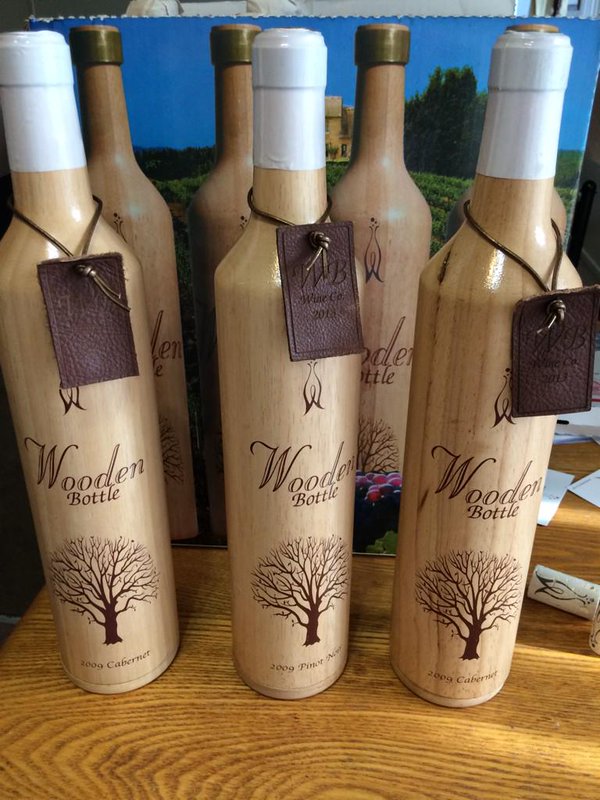
Wooden Bottle Wine Co.’s 2009 Pinot Noir

This wine was actually in a lathe wooden bottle designed and patented by owner Marcos Oliver crafted entirely of wood from the Thai rubber trees, lined with an FDA-approved, non-toxic product that protects the wine from wood and oxygen infusion.


Featured Photo: Wooden Bottle Wine Co.’s 2009 Pinot Noir, courtesy of Wines & Vines magazine.


Resources:

2016 Wines & Vines Packaging Design Awards

5 wine packaging designs win awards in Napa

Wine Packaging Design Awards Expand

Wooden and Plastic Wine Packages Win

2016-09-15T05:57:26-07:00September 15th, 2016|

Celebrating California Agriculture . . .

Celebrating California Agriculture . . .  An Ongoing Series


By Laurie Greene, Editor


Celebrating California agriculture is a refreshing perspective. Peterangelo Vallis, executive director of the Fresno-based San Joaquin Valley Winegrowers Association, has an astute viewpoint on California agriculture. Vallis said, foundationally, consumers loves farmers—unless those consumers have been exposed to oppositional or politicized messagingbut most have not been.

“You go talk to any random person in any city,” said Vallis. “If they’re not politicized, which most people aren’t, they are just trying to live their lives, eat their food and rear their children. And they love farmers because farmers make food,” Vallis said.

blue-diamond-a-can-a-week-is-all-we-ask

(Photo Source: Blue Diamond Growers)

“What have been some of the most effective agricultural campaigns in the country? Wendy’s ‘Where’s the Beef?’ Blue Diamond almonds, ‘A Can A Week, That’s All We Ask.’ These ads humanize who we are talking about.”

“How about the California Dancing Raisins? That was huge,” noted Vallis.  “Everyone in any part of the country remembers those raisins. That’s positive PR. That was positive recognition for Ag. We’ve got to be doing more of that.”

congress-created-dust-bowl Billboard on CA SR 99

Vallis advocates more positive PR, but says we need to take a different approach. “Instead of all these billboards running up and down [State Route] 99 that make us look like vigilantes with pitchforks, we need to take whatever money that took, buy some billboards in L.A. and San Francisco, Washington D.C., and New York with some happy kids, with a bowl full of veggies saying, “Thanks, mom! This was great!”

“This is basic, basic stuff because, realistically, we’re marketing the fact that we need help to make more food,” Vallis noted. “We’re making safe domestic food, but if we don’t engage with the people that are our customers, we’re never going to be able to get our ideas and our needs across, because we’re just not talking to the right audience.”

Statewide Drought Forces Californians To Take Drastic Measures For Water Conversation

“They’re not enough people here in the valley to move the needle. We’ve got to figure out a way to get San Francisco and L.A. appreciating our position, loving what we do, and trusting that we’re doing the very best job possible,” said Vallis.

2016-09-13T14:16:59-07:00September 13th, 2016|

CULTIVATING COMMON GROUND: Almond Growers on Assessment Increase

Almond Growers Want Justification and Vote on Almond Board’s Assessment Increase


Editor’s note: We thank John Harris for his contribution to California Ag Today’s CULTIVATING COMMON GROUND. The Almond Board’s Response can be read at Almond Board’s Response on Assessment Increase.

By John Harris, owner, Harris Ranch


Marketing orders give agriculture a great tool to collect fees from producers to promote products and/or conduct research projects.  The concept is great, and increasing demand is always good. To be successful, the plan needs to be affordable and explained so it is understood and backed by a big majority of the producers.  I am concerned the Almond Board’s recent assessment increase from 3 to 4 cents a pound—in the absence of an almond producer vote—is unwise.

Harris Farms Fresh LogoAt the current rate of 3 cents per pound, money raised will increase as production increases, which seem fairly certain.  Plus, the fund receives significant help from a government program to encourage exports.  A year or so ago, almond growers were doing really well, when many sales were exceeded $4 a pound.  But last fall prices dropped significantly, in some cases to the $2 range. This loss in revenue made it tougher for almond growers to break even. A grower producing 2,500 pounds per acre is now paying $75 per acre in assessments; under the new plan it would increase to $100 per acre.

To get feedback from growers, the USDA published a request for comments. The comment period opened on July 18 and closed on August 2. But the industry was not notified until July 27. I commented at the time that I was not in favor of the assessment without full knowledge of the purpose of the extra money. I am certain many growers have an opinion on this, but only five comments were submitted. I think most growers did not realize both the assessment increase was under discussion and a producer vote would not be forthcoming.

The time frame for comments was alarmingly short; however, the USDA has decided to reopen the comment period for 10 days.  The reopening of the comment period is expected to be announced within the next two weeks and will be communicated immediately to the industry once it is published in the Federal Register.

I urge all producers to take a good look at the proposal and voice your opinions.

This link will take you to the almond assessment comment page: https://www.regulations.gov/docket?D=AMS-SC-16-0045.

There should be more of a democratic process. I think this proposed assessment increase needs to go to a vote among the growers affected by it and should require strong approval by at least 51 percent of the growers representing 60 percent of the production. We don’t want to micromanage the Board’s process, but large changes like this assessment increase should demand some form of referendum.

I also think everyone would like to know how the millions of extra dollars collected would be used.

And, of course I think the industry deserves more awareness of this proposed increase in assessment. I do not hear people talking about it; many growers may not even learn about the extra assessment until they get their check from their handler next year. I think all almond growers need to know this is happening now and not be surprised next year.

If I asked my boss for a 33% raise, I believe the onus would be on me to sell the idea and win support, rather than just push it through providing little information to the guy who would be paying me.

If the Almond Board is increasing their budget by 33%, shouldn’t the burden be placed on the Board to win the support of growers?  I would think they would communicate a clear plan on how to spend the enormous increase—a strong and strategic plan—they would be eager and proud to share with growers and handlers.

To increase any tax/assessment, the logical thought process should be, “No, unless proven to be needed, supported, and affordable,” instead of defaulting to, “Increase the tax unless we get stopped.”


The Almond Board’s Response can be read at Almond Board’s Response on Assessment Increase.


Harris Ranch and Allied Companies


The Harris Family’s commitment to agriculture spans over 100 years, four generations, and four states, from Mississippi, to Texas, to Arizona, and eventually into California.

J. A. Harris and his wife, Kate, arrived in California’s Imperial Valley in 1916 to start one of California’s first cotton gins and cotton seed oil mills. They later moved to the San Joaquin Valley and began farming there.

In 1937, their only son, Jack, and his wife Teresa, began what is now known as Harris Ranch, starting with a previously unfarmed 320 acres of desert land on the Valley’s Western edge. With vision and determination, Harris Ranch has grown into the most integrated, diversified, and one of the largest agribusinesses in the United States.

Beginning with cotton and grain, Harris Ranch now produces over thirty-three crops annually, including lettuce, tomatoes, garlic, onions, melons, oranges, lemons, almonds, pistachios, walnuts and winegrapes, all backed by their commitment to superior quality and satisfaction. Harris Farms thoroughbreds are raised and trained to compete internationally. Harris Feeding Company, California’s largest cattle raising operation, and Harris Ranch Beef Company produce and market a premium line of packaged and fully-cooked beef products, including Harris Ranch Restaurant Reserve™ beef. All Harris products are served and sold at the internationally acclaimed Harris Ranch Restaurant and Inn.


The opinions, beliefs and viewpoints expressed by the various participants on CaliforniaAgToday.com do not necessarily reflect the opinions, beliefs, viewpoints or official policies of the California Ag Today, Inc.


2016-08-10T16:46:47-07:00August 10th, 2016|

Pecan Growers Excited about Federal Marketing Order

Calif. Pecan Growers Gather to Discuss Federal Marketing Order

By Patrick Cavanaugh, Farm News Director

On Wednesday, August 3, nearly 100 people attended the California Pecan Growers Association meeting at Linwood Nursery, the oldest supplier of pecan trees in the world, located in Le Grand in eastern Merced County.

Not all attendees were current pecan growers; many were contemplating planting pecan trees. New interest and excitement in pecan farming surrounds the newly approved (May 2016) and forthcoming Federal Marketing Order For Pecans (FMO) that will assess growers a few cents per pound to increase pecan marketing and awareness in California and other areas of the country.

Pecan growers and others interested in the crop gathered in Le Grand to discuss Federal Marketing Order for Pecans

“We want to model it after the Almond Board of California,” said Mark Hendrixson, president of the California Pecan Growers Association, whose members farm approximately 4,000 acres of the crop throughout the San Joaquin and Sacramento Valleys.

“We had a very a good turnout. Pecans are a growing industry in California; we have great weather for them,” said Hendrixson. “We do things a little bit differently because of our great weather, but we’re able to produce extremely good quality.”

CPGA-Logo“Pecans are extremely healthy,” said Hendrixson. “The research has been out there for quite some time, but the pecan industry has never had a unified marketing voice. Once we develop the Federal Marketing Order, we will be able to spread the message about health and other great benefits that will help drive interest in pecans and pecan consumption, and to deliver quality product to consumers around the world.

Hendrixson expects the Federal Marketing Order For Pecans to be in place very soon. The USDA will officially seat the Board of the American Pecan Council (APC), the new governing board of the FMO, by October 1, 2016 by calling for board member nominations, qualifying the candidates and issuing a ballot for qualified voters to vote on those nominations.

“Once those ballots are approved by the Secretary of Agriculture,” Hendrixson said, “we’ll have an elected Board that can begin to function and actually set the assessment, which in turn will be approved by the USDA going forward.”

2021-05-12T11:05:50-07:00August 4th, 2016|

Celebrate National Ice Cream Month!

Celebrate National Ice Cream Month with California Ice Cream and Flavors!

By Lauren Dutra, NAFB Summer Intern and Assistant Editor

Jennifer Giambroni, director of communications, California Milk Advisory Board

Jennifer Giambroni, director of communications, California Milk Advisory Board

First established in 1984 by Ronald Reagan, the 40th President of the United States, National Ice Cream Month was scheduled for the month of July, with the third Sunday of the month designated as National Ice Cream Day.

Jennifer Giambroni, director of communications, California Milk Advisory Board, explained why Californians, in particular, have so much to celebrate during National Ice Cream Month. “As the number one ice cream state,” she said, “we produce 126 million gallons of ice cream a year.”

Thats a lot of scoops!

California also leads the nation in milk production, and 99 percent of dairies in the state are family-owned. Including milk production on farms and milk processing, the California dairy industry, supports about 190,000 jobs in the California economy and contributed about $21 billion in economic value added in 2014, according to “Contributions of the California Dairy Industry to the California Economy,” by the University of California Agricultural Issues Center (May 14, 2015). 

Blueberry Ice Cream Float

Blueberry Ice Cream Float (Source: California Milk Advisory Board, Kristina Vanni Blogger, 2012)

Ice cream, being both timeless and innovative, has evolved in flavors and varieties over the years, according to Giambroni, while still holding true to the traditional treat you grew up with as a kid. “Ice cream is an important category that represents a lot of the milk produced on California’s more than 1,400 family dairy farms and carry the Real California Milk seal,” she noted.

“We’re seeing adult-friendly milkshakes with the addition of spirits, ice cream sandwiches made with more than cookies, and sundaes with everything from balsamic vinegar reductions to red bean paste,” Giambroni elaborated. Other new ice cream trends include hyper-indulgent flavor combinations, including nuts and fruits grown in California, and “better for you” versions with probiotics, varying levels of fat and sugar, added calcium, lactose-free, and different kinds of oils. “We’re loving the olive oil and walnut oil ice creams for their subtle flavors,” Giambroni noted.


Approximately 12 pounds of Real California Milk are used to make just one gallon of California ice cream.


Watermelon Chill Ice Cream (California Milk Advisory Board)

Watermelon Chill Ice Cream (California Milk Advisory Board)

The California Milk Advisory Board works with bloggers on how to incorporate ice cream into events for children of all ages:

TomKat Studio – DIY Ice cream Sandwich Bar

Hostess with the Mostess – Healthy Milkshake Bar

Hostess with the Mostess – How to Set Up a Cocktail Milkshake Bar

Hostess with the Mostess – Kids Sundae Party


Check it out:

Ice Cream Sandwich (California Milk Advisory Board)

Ice Cream Sandwich (California Milk Advisory Board)

Rick’s Ice CreamBlue Moon-A fruit loops tasting ice cream with super-secret natural ingredients

McConnell’s Boysenberry Rosé Milk JamCentral Coast, grass-fed milk & cream and cane sugar, slowly-simmered to a thick, rich and decadent milk jam – then churned into house-made, boysenberry & rosé wine preserves. 

Breyer’s Strawberry Ice Cream-packed with sun-ripened California strawberries picked at the peak of happiness!

Gilroy Garlic Festival Garlic Ice Cream-July 29-31, 2016

The Orange Works‘ Orange Ice Cream and Chili Mango Ice Cream

Where Is the Best Ice Cream in California? (PBS, 2014)

2016-07-23T17:33:15-07:00July 22nd, 2016|

Red, White and California Blueberries

Celebrate Independence Day with Native Blueberries

By Emily McKay Johnson, Associate Editor

As we celebrate 240 years of America’s independence, we look forward to indulging in festive red, white and blue foods. One of the best ways to incorporate blue in our holiday spread is to serve plenty of California blueberries.

Mark Villata, executive director, U.S. Highbush Blueberry Council.

Mark Villata, executive director, U.S. Highbush Blueberry Council.

Mark Villata, executive director of Folsom, California-based U.S. Highbush Blueberry Council, explained California is an important blueberry production state as, “It is among the top five producers, nationally. We produce [blueberries] in about 38 states nationally, but nine states account for about 98 percent of our total production, and California is in that top five,” he said.

“Last year, California produced about 62 million pounds of blueberries,” Villata said; “this year’s crop looks like it could be close to 70 million pounds. Total yield has been increasing each year as new plantings come into maturity and start to produce blueberries.”

California is an important player in the berry market, and blueberries are one of the healthiest fruits consumers can eat. “Of course we’re lucky here in California to have a crop that is so readily available that is also incredibly healthy for us all,” Villata noted.

And blueberries are almost the perfect crop for celebrating the Fourth of July because they are native to the region. “Blueberries play well into any Fourth of July barbecue,” said Villata. “Blueberries are so diverse, they can be incorporated in salads, smoothies, breakfasts, desserts, and more. “We bring blue to the red, white and blue festivities,” he declared.

______________________________

Blueberry Infographic on Nutrition, U.S. Highbush Blueberry Council

2016-08-03T20:48:52-07:00July 4th, 2016|

California Depends on National Dairy Month

National Dairy Month Encourages Americans to Eat More Cheese

By Patrick Cavanaugh, Farm News Director

Across the country, National Dairy Month will be celebrated during the month of June to promote the consumption of dairy products. Though California is the number one dairy state, California dairy farmers have been experiencing a decline in dairy production amidst high labor costs, competition from other states and declining profit.

Founded in 1937 as National Milk Month with the goal of increasing milk consumption to stabilize the dairy surplusthe holiday was renamed National Dairy Month to encompass all dairy products.

Anja Raudabaugh, CEO of Western United Dairymen

Anja Raudabaugh, CEO of Western United Dairymen

Anja Raudabaugh, CEO of Western United Dairymen in Modesto, Calif., is hopeful that celebrating National Milk Month will educate more consumers about the health benefits of diary products, increase dairy consumption opportunities, open more markets and enable the lagging dairy industry in California to better compete with other states.

States such as South Dakota and Wisconsin have ramped up their milk production significantly, which has stressed California producers to even the gap. According to Raudabaugh, the term oversupply doesn’t necessarily apply to the dairy conditions in this state. She remarked, “We’re actually in a 17-month decline at the moment, which is the longest decline [in milk production] we have ever been in.”

The dairy industry has managed to be very competitive with wages, another stressor, but the high labor costs are hurting production companies. “As things get more and more competitive globally,” said Raudaubaugh, “we are going to continue to struggle to figure out how those margins play out.”

“The margin is going to continue to shrink, especially as wages get more and more competitive,” Raudaubaugh observed. “Being a worker on a dairy farm is certainly very wage-competitive throughout the agricultural industry. We cannot keep workers at anything less than about $16 or $15 an hour as it is, so it’s a good time to be a worker in the dairy industry. It’s a good craft and skill to have if you become a milker.”Real California Cheese Logo

Given Western United Dairymen’s mission to promote and administer programs and policies aimed at maintaining the longevity of the dairy industry on the West Coast, and as the milk industry struggles and continues to face tough times, Raudabaugh has a solution: “Eat more cheese.”

Enter: National Cheese Day every June 4! According to the California Milk Advisory Board website and California Department of Food and Agriculture (CDFA) 2014 data, California is the #2 cheese producing state—right behind Wisconsin—and the #1 producer of Monterey Jack cheese. An amazing 43% of California’s cow’s milk is used to make California cheese, which is produced by more than 50 California cheesemakers.

Even beyond cheese, Raudabaugh said, “There is a tremendous amount of diversity in the way people have exposure to dairy products they don’t even know about. There are yogurts and sour creams, ice creams, and whey products.”  She believes market sectors should understand more about the dairy products consumers are exposed to every day to increase not only more milk consumption, but higher-value dairy as well.

“The diversification of the product line is really what has kept us in business,” reflects Raudabaugh, “It’s what keeps us looking to the horizon and looking to the future optimistically, even in the face of some pretty bad milk prices right now.”

Remember California dairy producers, particularly, this monthNational Dairy Month, and try a new dairy product. And discover a new cheese tomorrow, June 4, National Cheese Day!

2021-05-12T11:17:13-07:00June 3rd, 2016|

36th Annual UnitedAg Meeting & Conference Discusses Future of Agriculture 

36th Annual UnitedAg Meeting & Conference Discusses Future of Agriculture 


UnitedAg, California’s member-owned agricultural trade association, recently concluded its 36th Annual Meeting and Conference, held March 15-17 in Anaheim, California.

POLA6651 (1)

Pictured left to right, Karri Hammerstrom, Karen Caplan, Kirti Mutatkar, Ellen Way, Judy Lundberg, Abby Taylor-Silva and Fiona Ma. (Photo source: UnitedAg)

The three-day event, themed “Breaking Through,” featured speakers included, California State Assemblymember Fiona Ma, Tax Lobbyist Jon Coupal, Inspirational Speaker Lt. Col Kevin Sweeney, Agricultural Speaker/Comedian Jerry Carroll and Chapman University President Dr. James Doti who discussed issues and opportunities facing the California’s agriculture industry.

The conference also included a 5K Walkathon and member golf tournament benefitting UnitedAg’s scholarship foundation, as well as a member awards banquet.

“We believe the UnitedAg 36th Annual Meeting and Conference started a conversation for the future of the agriculture business here in California,” said Kirti Mutatkar, UnitedAg’s CEO and President.

Founded in 1980, UnitedAg is a member-owned agricultural trade association dedicated to providing innovative solutions for California’s strong and healthy agricultural industry.

UnitedAg works in close partnership with its 500 agriculture-affiliated member organizations to meet their employee benefits needs, promote their interests with lawmakers, and help them comply with legislation and regulation so members can focus on what they do best – run successful businesses and organizations.

_____________________________

For more information about UnitedAg and its activities, please visit www.unitedag.org.

2016-05-31T19:24:08-07:00March 29th, 2016|

Ag Day at the Capitol

Ag Day Celebration at the Capitol

By Charmayne Hefley, Associate Editor


In honor of National Agriculture Week, the California Department of Food and Agriculture (CDFA) will partner with the California Women for Agriculture and the California Foundation for Agriculture in the Classroom to host the state’s annual celebration of agriculture, California Ag Day at the Capitol in Sacramento tomorrow, Wednesday, March 16, 2016. Karen Ross, secretary of the CDFA, said she is excited for the event, which highlights the diversity of California’s agriculture.

National ag day logo“Our theme for this year’s Annual Ag Day at the Capitol is ‘Golden State on Your Plate,'” said Ross, “to honor our farmers and ranchers and all they provide. Legislators, staffers and the public will have the opportunity to shake a farmer’s hand and advance our shared understanding of the importance of our food supply. In addition to approximately 40 agricultural booths and exhibits, Buttercup the electronic cow, a favorite of children, will return to the Capitol for robotic milking demonstrations.  

“We’ve been watching the weather,” Ross said, cautiously. “We would not mind being in the rain, but it looks like we’re going to have a day of sunshine and 70-degree weather.”

Sheila Bowen, president of the California CattleWomen (CCW), said CCW and California Women for Agriculture members will attend tomorrow’s Ag Day at the Capitol, alongside many other agriculture organizations. “In addition to giving out our brochures,” Bowen said, “we’ll be giving out tri-tip sliders to the guests who come to the Capitol.”

The celebration will be held on Wednesday, March 16, 2016, from 10:30 a.m. to 11:30 a.m. for legislators and staff, and from 11:30 a.m. to 1:30 p.m. for the public at the California State Capitol grounds, west steps.

2016-06-03T09:27:56-07:00March 15th, 2016|

National Days Celebrations at Fresno State Farm Market

Fresno State Farm Market Hosts National Day Events

By Charmayne Hefley, Associate Editor


Fresno State’s Rue and Gwen Gibson Farm Market hosted its Annual Pistachio Day on February 26 in honor of World Pistachio Day. Miles Robinson, a student market lead, said, “We’ve been working with American Pistachio Growers (APG) to market this campaign and give away pistachio samples, all courtesy of APG. We are also raffling a gift basket with several of our products and APG items as well.”12821589_10153999748978330_676533612082576193_n

Robinson said the Fresno State farm market plans to host monthly events to feature the store and student products, including that very fowl day, Poultry Day, on March 18, and National Raisin Day on April 29. “For Poultry Day,” Robinson said, “we’ll be sampling Foster Farms chicken in a couple of different recipes. We look forward to having people actually taste our chicken. We will also have a chicken dance contest. For National Raisin Day we’re partnering with the California Raisin Board to bring information, samples and have a fun time.”

Robinson said the student-run farm market, which specializes in student-made products, is in the process of creating new recipes for its coated nuts and raisins. “Over the past year, we’ve been slowly rolling out new recipes for our milk chocolate raisins, milk chocolate almonds, milk chocolate cabernet raisins and dark chocolate raisins,” Robinson said. “All of our products will have brand-new recipes, 100 percent Fresno State-done.”

2016-08-10T11:56:30-07:00March 11th, 2016|
Go to Top