Renaissance in Agriculture

Ryan Jacobsen on the Renaissance in Agriculture 

By Charmayne Hefley, Associate Editor

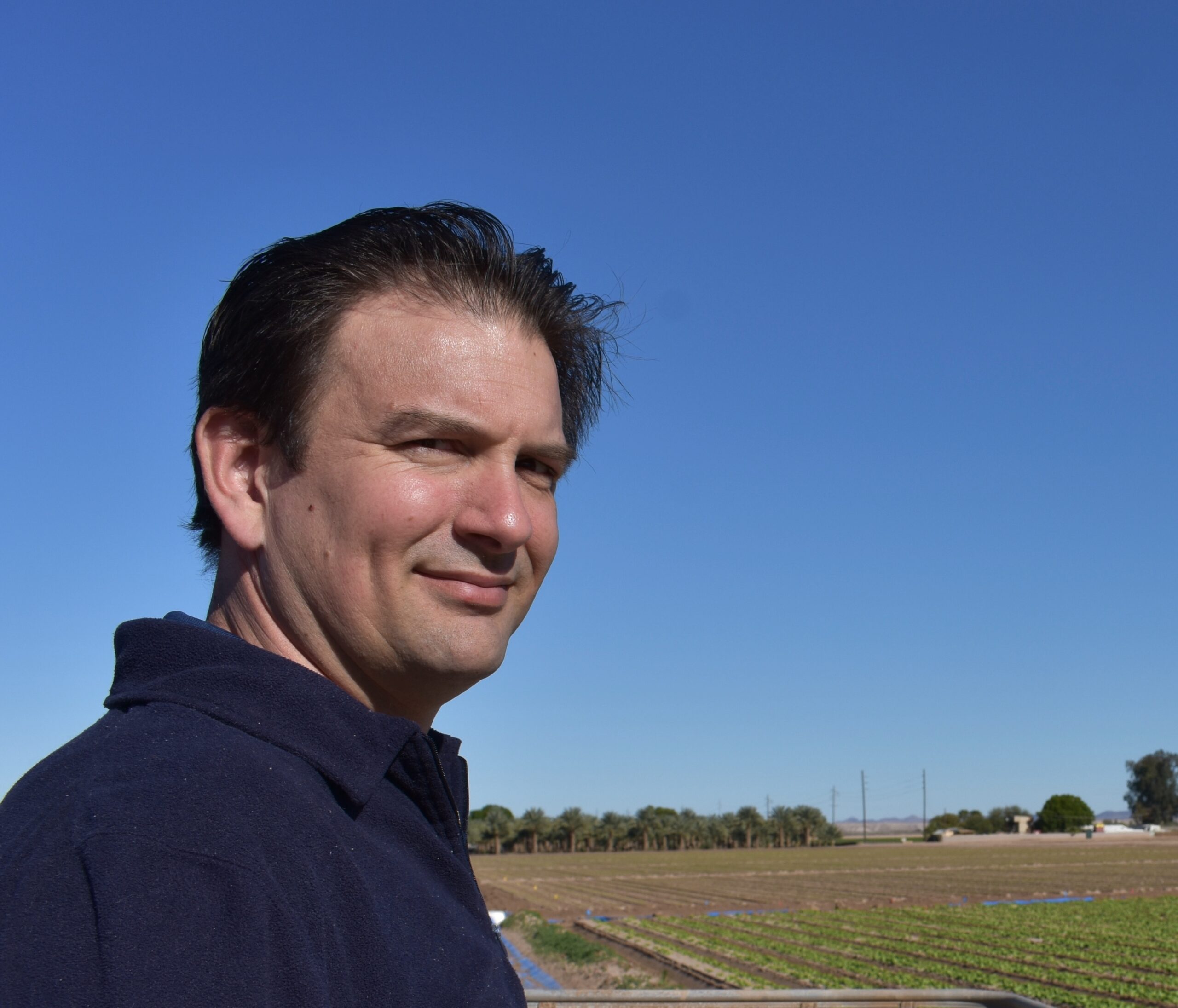
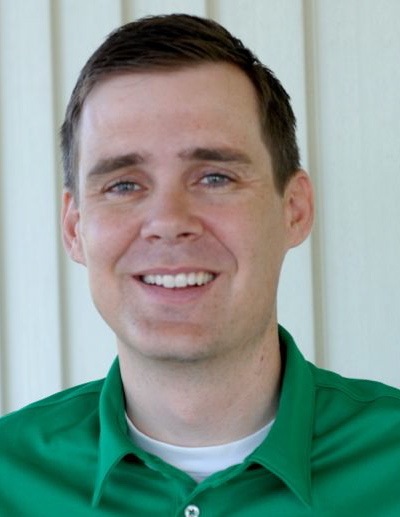
In the past, the children of farmers were known to leave the farm to pursue careers that required higher levels of education and not return. Ryan Jacobsen, executive director of the Fresno County Farm Bureau, said those days are behind us. Jacobsen said nowadays, we are experiencing a renaissance in agriculture, as sons and daughters return to the farms and college students study agriculture.

“We’ve been very fortunate,” Jacobsen said. “When you look at the overall agriculture industry over the last decade, it’s been pretty bright.” Despite the recent national and global economic downturn, Jacobsen contends the California agricultural economy remained a shining star. “That shining star created what I consider to be a renaissance in the agriculture industry,” Jacobsen explained, “where we actually saw younger individuals come back to the farm. For so many years we shipped off that talent. We encouraged them not to come back to the farm to be farmers; we encouraged them to go off to other professions.”

“We are truly fortunate to be where we are today,” Jacobsen continued, “because of the renaissance and higher commodities and crop values. We’re seeing sons and daughters able to return to the farms and take their places within their family operations.”

We’re seeing individuals go to college for a career in agriculture,” remarked Jacobsen. “Over at Fresno State, the Jordan College of Agricultural Sciences and Technology is seeing record enrollment—not just a little bit up, but shattering all previous records.” Fresno State’s Jordan College of Agricultural Sciences and Technology lists their current student enrollment as of September 14 at nearly 2,000 undergraduates and 75 graduate students.”

“It’s encouraging that young individuals see an opportunity and a future in agriculture, plus the desire to help our industry,“ Jacobsen said.
 

2016-05-31T19:27:03-07:00November 27th, 2015|

Thanks to California Ag!

Thanks to California Ag for Thanksgiving!

By Patrick Cavanaugh, Deputy Editor


As Americans enjoy Thanksgiving dinner, let us recognize that farmers, especially California farmers, have made our bounty possible.

pumpkin free imageCalifornia is a big turkey producing state, always ranking in the top six nationally.

pumpkin free imageIn 1948, Sophie Cubbison, who was born in San Carlos, California and who graduated from California Polytechnical University in 1912, invented the Mrs. Cubbinson’s melba toast or cornbread stuffing most of us serve. (She even paid her way through college with the money she earned feeding farmworkers. Sourcewww.mrscubbisons.com)

pumpkin free imageWhat would Thanksgiving be without wonderful California wines and Martinelli’s (another great California company) great sparkling apple and grape beverages to celebrate our good fortune?

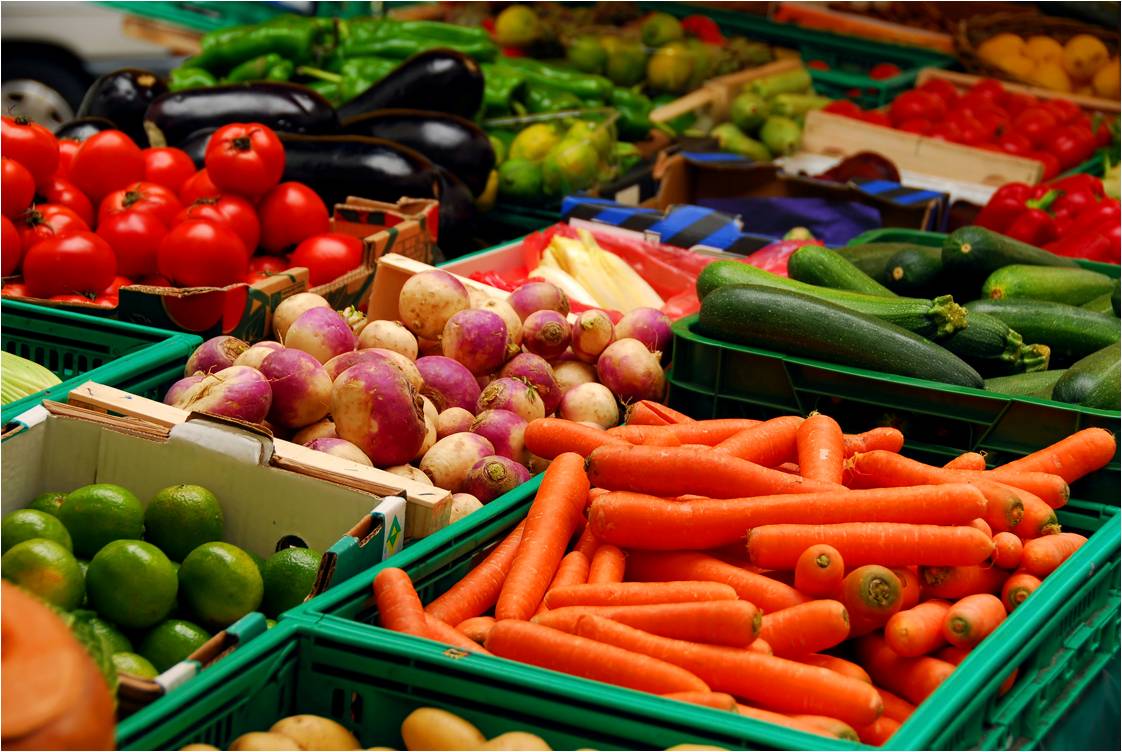
pumpkin free imageAnd all those amazing side dishes . . . the russet and red potatoes from Kern County; the sweet potatoes from Merced County; the many wonderful squash varieties including zucchini, yellow, acorn squash . . . are all produced by farmers and farmworkers in California.

pumpkin free imageGreen beans, lettuce, tomatoes, olives, cucumbers, radishes, and carrots will grace the tables across America, thanks to California producers in ped and other areas of the state.

Don’t forget gapumpkin free imagerlic, onions and mushrooms are all produced primarily in California!

California farmers produce it all, with the exception of cranberries!

Thanks Wisconsin!

(And New Jersey, Massachusetts, Oregon, Washington, and parts of Canada)

pumpkin free imageYou can thank California egg producers for those tasty hardboiled deviled eggs on Grandma’s favorite serving dish.

pumpkin free imagePlus raisins, a great addition to dressings and other dishes, thanks to the raisin producers in Fresno, Madera and Merced Counties.

pumpkin free imageAnd of course walnuts, almonds and pistachios are big part of our savory stuffing recipes and our snacks.

pumpkin free imageApple cider and apple pie? California, among the top five states, produces a wide variety of apples.

pumpkin free imageWait! What about pumpkin pie? California farmers.

pumpkin free imageAnd the wonderful whipped cream? Thanks to the California dairy industry.

pumpkin free imageDid you know the turkey pop-up timer was invented in California? Yes, indeed. Back in the 1950s, the California Turkey Producers Advisory Board brainstormed to figure out how to prevent over-cooked turkeys, according to Leo Pearlstein, a Los Angeles pubic relations pro in the food industry, who was among the five original board members. One board member—a California turkey producer, as Pearlstein tells it—looked up at the ceiling, noticed the sprinklers and had a Eureka moment! He suddenly realized the ceiling sprinklers were triggered when heat melted a material inside the gizmo. For a complete explanation, see How Pop-Up Turkey Timers Work at home.howstuffworks.com/pop-up-timer1.htm.

From all of us here at California Ag Today,

Thanks to California Ag for serving us a delectable nutritious Thanksgiving!

2016-05-31T19:27:03-07:00November 24th, 2015|

“The Other Drought”

“The Other Drought” in America’s #1 Agricultural State

By Charmayne Hefley, Associate Editor

California’s agriculture industry is experiencing a severe drought in terms of water shortage; however, this is not the only devastating drought in the state. Harold McClarty, owner of HMC Farms, told California Ag Today a secondary drought—“The Other Drought”—is plaguing California:  the loss of the family farmer.

McClarty explained, “I’ve taken a very liberal definition of the word ‘drought’ and tried to talk about the loss of the small farmer and the culture and values that are instilled in you when you grow up on a small farm. We’re going to lose the next generation [of family farmers] because of the consolidation of these farms.”

HMC Farms,1887 (Source: HMC Farms)

HMC Farms,1887 (Source: HMC Farms)

McClarty, whose company, HMC Farms, a grower, packer, and shipper of tree fruit and table grapes in the San Joaquin Valley, began in 1887 as a small 40-acre family farm, said his farm’s growth is representative of the progressive loss of the family farmer. When HMC Farms officially became an established company in 1987, 100 years after its establishment, he cofounder Mike Jensen began to purchase the property of family farmers who chose to leave the business when their children rejected farming to pursue careers in law, medicine and other fields.

McClarty admitted, “I’m obviously part of the problem, but this is the environment that I live and work in—that enables me to exist.” McClarty said in agriculture you’ve got to be able to do and keep up with all of the factors that go into farming. Unfortunately, the increasing work, pressures and regulations facing small family farms are overwhelming.

McClarty concluded, “the risks are so great, small farmers can’t do it anymore. They can’t keep up, and it’s just not worth it with today’s farm values.”

Of note, HMC Farms was named by the National Restaurant Association (NRA) as one of 18 Food and Beverage Product Innovation Award winners in 2012 for Grape Escape, the company’s washed and ready-to-eat de-stemmed grapes packed in single-serve two-ounce or three-ounce bags. Featuring an 18-day shelf life with no preservatives or additives, Grape Escape “meets the challenge of profitably serving healthy fresh fruit snacks year round,” according to a 2012 NRA news release.

2016-05-31T19:27:03-07:00November 19th, 2015|

Prather Ranch Receives 2015 California Leopold Conservation Award

Prather Ranch Named 2015 California Leopold Conservation Award® Recipient


SACRAMENTO, Calif. – (November 18, 2015) Sand County Foundation, the California Farm Bureau Federation and Sustainable Conservation are proud to announce Prather Ranch as the recipient of the prestigious 2015 California Leopold Conservation Award®. The award honors private landowner achievement in the voluntary stewardship and management of natural resources.

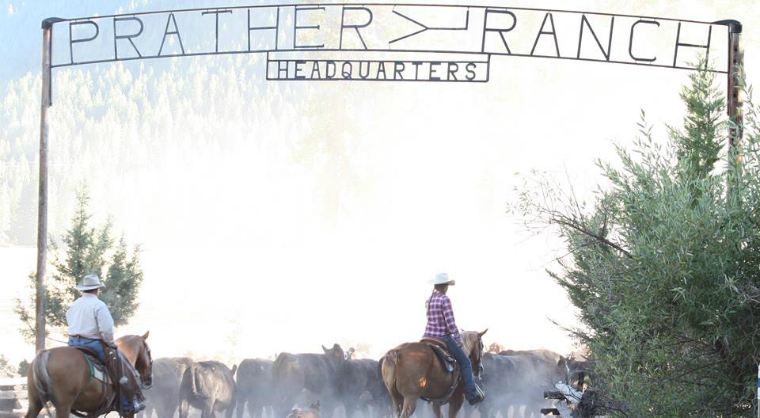
Prather Ranch, owned and managed by Jim and Mary Rickert, is a working cattle ranch headquartered in Macdoel, and stretches across five counties. Under the Rickerts’ management, Prather Ranch has grown in size, implemented conservation enhancements and established several permanent conservation easements. Over the last 35 years, Prather Ranch has continually collaborated with diverse partners to enhance the land and promote land stewardship in the community.

One of the ranch’s first efforts to promote biodiversity was taking an unusual approach to managing the wild rice fields on their land near Mt. Shasta. After rice harvest, they began tilling the stubble into the soil and keeping their fields covered in water year-round. The practice not only benefited common species of waterfowl such as Canada Geese and Snow Geese, but it also attracted shore birds like plovers and terns, previously found only on the coast.

Through conservation easements in cooperation with the Shasta Land Trust, the Rickerts have preserved some of the state’s most spectacular wildflowers and protected sensitive vernal pools and riparian areas. Prather Ranch has also planted several miles of riparian habitat along streams and irrigation canals to benefit a wide range of animals such as the California Quail and the endangered Shasta crayfish.

Jim and Mary Rickert provide community leadership, working with 4-H, Future Farmers of America, and local schools for ranch field trips and other activities.

Given in honor of renowned conservationist Aldo Leopold, the Leopold Conservation Award recognizes extraordinary achievement in voluntary conservation. In his influential 1949 book, A Sand County Almanac, Leopold called for an ethical relationship between people and the land they own and manage, which he called “an evolutionary possibility and an ecological necessity.”

“Because more than half of all land in California is privately owned, how landowners manage their properties has a dramatic and lasting effect on the environment and quality of life for all Californians,” said Ashley Boren, executive director of Sustainable Conservation. “Since the 70s, Jim and Mary have demonstrated an above-and-beyond commitment to enhancing the land, water and wildlife across a large swath of the state. And, they’ve done it in true Leopold fashion, regarding their land not simply as a commodity that belongs to them, but rather seeing their land as a community to which they belong.”

“The Leopold Conservation Award recognizes unique yet replicable strategies a farmer or rancher has developed in managing their land, to be the best steward of the natural resources,” said Paul Wenger, California Farm Bureau President. “We are honored to join Sand County Foundation and Sustainable Conservation to recognize the extraordinary efforts of California farmers and ranchers who go above and beyond in managing and enhancing our natural resources.”

The Leopold Conservation Award program inspires other landowners through these examples and provides a visible forum where farmers, ranchers and other private landowners are recognized as conservation leaders.

The 2015 California Leopold Conservation Award will be presented December 7 at the California Farm Bureau Federation’s Annual Meeting in Reno, NV. Each finalist will be recognized at the event, and Prather Ranch will be presented with a crystal depicting Aldo Leopold and $10,000.

The award sponsors also wish to congratulate the 2015 finalists for their outstanding contributions to agriculture and conservation: Bruce and Sylvia Hafenfeld, who own Hafenfeld Ranch and manage public lands in eastern Kern County, and Ken and Matt Altman, who own and manage Altman Specialty Plants in Riverside and San Diego Counties.

The California Leopold Conservation Award is made possible thanks to generous contributions from American Ag Credit, The Harvey L. & Maud S. Sorenson Foundation, The Nature Conservancy, Environmental Defense Fund, The Mosaic Company, DuPont Pioneer, and The Lynde and Harry Bradley Foundation.


ABOUT THE LEOPOLD CONSERVATION AWARD®
The Leopold Conservation Award is a competitive award that recognizes landowner achievement in voluntary conservation. The award consists of $10,000 and a crystal depicting Aldo Leopold. Sand County Foundation presents Leopold Conservation Awards in California, Colorado, Kansas, Kentucky, Nebraska, South Dakota, Texas, Utah, Wisconsin and Wyoming.

ABOUT SAND COUNTY FOUNDATION
Sand County Foundation is a non-profit conservation organization dedicated to working with private landowners across North America to advance ethical and scientifically sound land management practices that benefit the environment.

ABOUT SUSTAINABLE CONSERVATION

Sustainable Conservation helps California thrive by uniting people to solve the toughest challenges facing our land, air and water. Since 1993, it has brought together business, landowners and government to steward the resources that we all depend on in ways that make economic sense. Sustainable Conservation believes common ground is California’s most important resource. 


ABOUT CALIFORNIA FARM BUREAU FEDERATION

The California Farm Bureau Federation works to protect family farms and ranches on behalf of over 53,000 members statewide and as part of a nationwide network of more than 6.2 million Farm Bureau members. 

2016-05-31T19:27:03-07:00November 18th, 2015|

Avian Influenza Mapping Plan to Prevent CA Outbreaks

High Pathogenic Avian Influenza Mapping Plan (HPAI) to Prevent Outbreaks in California

By Patrick Cavanaugh, Deputy Editor

In 2014 and 2015, the outbreak of High Pathogenic Avian Influenza (HPAI) caused unprecedented damage to the mid-western commercial poultry industry, requiring the depopulation of 48 million birds, particularly turkeys and laying hens. There were isolated cases in last autumn in California as well. Migrating birds, generally considered to be the source of HPAI, move throughout the state in their flyways this time of year.

USDA Pacific Flyway Map

USDA Pacific Flyway Map

Maurice Pitesky, a UC Cooperative Extension population health & reproduction assistant specialist with an appointment in poultry health and food safety, emphasized the importance of the flyways, “These global flyways that waterfowl use to move north and south and back again every single year are like freeways. And in those freeway lanes, different birds interface with each other.  So, we might have a Pacific flyway that covers California, but that Pacific flyway can interface with the East Asian and Australian flyway in the Northern Arctic. If you look at the genetics of the strains that were found in North America, especially in California, the genetics match some of the HPAI found in South Korea for example,” Pitesky said.

The Avian Influenza Mapping Plan is like overlaying maps of birds’ flying patterns for an early warning system for commercial operations. Pitesky observed, “We’re really just scratching the surface in how we can utilize maps with respect to surveillance and risk-mapping. For example, if I can locate on a map, where waterfowl, flooded rice fields, or wet fields are, and I can also determine where commercial poultry operations are, then I can start understanding which operations are at highest risk.”

I can triage my focus, outreach, and biosecurity efforts to those farms that are most closely located.

“New techniques are available so our national network of weather radar can actually be leveraged, and that data can be utilized remotely to understand in real time where waterfowl are hanging out. Eventually we can use that information to warn farmers in real time if there are migrating waterfowl near their farm,” he said.

2016-05-31T19:27:03-07:00November 18th, 2015|

Bridging the Farm-City Gap

Stanislaus Outreach Bridges Farm-City Gap  

By Patrick Cavanaugh, Deputy Editor


Wayne Zipser, executive director of the Stanislaus County Farm Bureau, noted that he, his staff and farm bureau members are working hard to bridge the farm-city gap. “We certainly do a lot of outreach,” Zipser said. “We mainly try to reach out to our young people and change their attitudes towards production agriculture.”

“We teach them where their food actually comes from,” he explained, “so when they grow older, they have a different opinion and know exactly where their food comes from—not just from the grocery store off the grocery shelf. It takes a lot of people to make that happen so consumers can appreciate the nutritious food they are consuming.”

”We have several Ag Days in the County. We visit schools individually and do presentations,” said Zipser. “One of the big presentations is something we call ‘Ag Adventure.’ We bring third graders because we’ve been told that third grade is when they absorb the most information into their minds.”

“We bring classes out to the fairgrounds and introduce every child to our industry, to where their milk and eggs come from. We also talk about how rain and snow filter down into reservoirs for storage. The teachers are also become immersed; they take the lessons back to the classroom and apply them to their own curriculum.”

Zipser explained the staff is big on social media now, “Social media benefits our industry; almonds being the number one commodity—but we’ve all heard it takes one gallon of water to produce one almond. We want to go back and say, “Look, it may take that, but look at the benefits coming back to the community.”

“One of our biggest outreaches is letting people know that our farmers and ranchers are suffering through this drought too,” Zipser said. “We, as producers, are suffering, and we have made tremendous strides in conserving water. We see many of the irrigation districts in our county now have extra water that they didn’t know they were going to have because the farmers did such a good job conserving,” Zipser clarified.

2016-05-31T19:27:04-07:00November 16th, 2015|

Drought Lessons from Israel

Drought Lessons from Israel  Part 1

By Patrick Cavanaugh, Deputy Editor

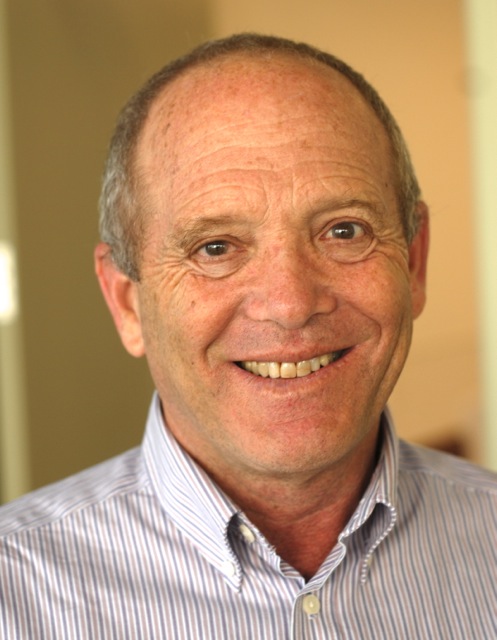
Six years ago, Israel was in the grips of a drought so dire the government considered shipping in water from Turkey, more than 1,000 nautical miles away. Instead, the country embarked on a coordinated effort of recycling water, desalinization (desal) and conservation education. Uri Shani, a professor at Hebrew University who was with the Israel Water Authority during this recent drought, says the country is now very secure in meeting its water needs, including agriculture and environmental requirements. California can learn from these drought lessons from Israel.

Desalinated water from Mediterranean Sea became a significant tool, but it didn’t happen very fast. Shani told California Ag Today, “For Israel it happened very slowly. The government hesitated going to desal and resistance came from, I believe, the farmers. They were afraid that desal would raise their prices for agriculture. In addition, pushback from the Minister of Finance focused on “the spending of money; they thought it was better to take the water from the farmers.”

Despite desal’s slow start, Israel relies very much on desal. “Private companies came in to build the desal plants,” Shani said, “and promised to run them for a minimum of 25 years. They were paid back when the government bought water from them.

“We use the metric system in Israel. One cubic meter of water equals 250 gallons. So the best price we get now is 50-60 cents (U.S.) for 250 gallons or 1 cubic meter. This is the price at the exit of the plant. It has only added about 60 cents to the urban customer’s water bill.

2016-05-31T19:27:04-07:00November 11th, 2015|

Trade Agreement Big for State

Trans-Pacific Partnership Trade Agreement Will be Boon for California

By Laurie Greene, Editor

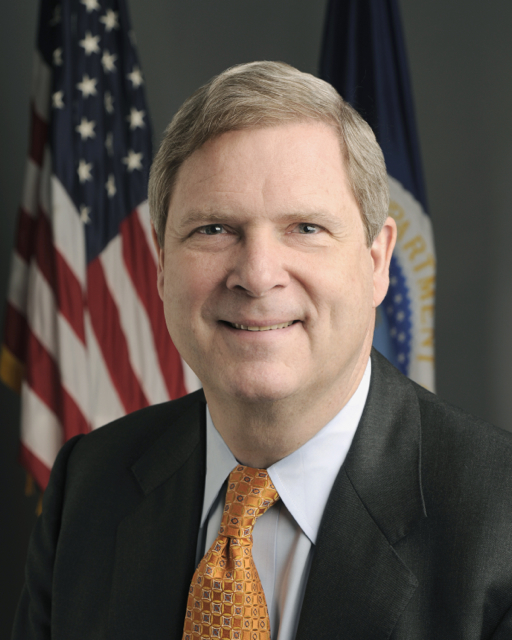
On Friday, Nov. 6, Agriculture Secretary Tom Vilsack told California Ag Today the released full text of the Trans-Pacific Partnership Trade Agreement shows that it will be boon for California Exports. Vilsack said, “You’re close to the market, you have ports that access and serve those markets, and you have the products those markets want—whether they are fruits and vegetables or tree nuts,” Vilsack noted. “In fact, we just released a report on our exports as they exist today. Obviously tree nuts are a big export opportunity. We saw significant growth there as well; it is now an $8.8 billion market and California certainly plays to that,” he said.

Vilsack said the trade deal is all about better access, “The fact that tariffs are going to be eliminated in a number of these countries that we do business with will level the playing field for our fruits, vegetables and tree nuts. It is going to open up enormous opportunities for us.”

Vilsack also said these increased exports will definitely increase jobs in California, “This agreement will add and anticipated $120 to $130 billion in U.S. export opportunities, of which agriculture is roughly 9%, so you do the math; it is billions of dollars in additional trade. California is going to get their fair share. It will impact employment because every billion dollars in ag sales supports 6500 good paying jobs, and these are jobs that currently pay about 18% more in benefits than non-export-related jobs.”

President Obama intends to sign this legislation, but first, Congress is poring over the text to make their concerns or support known. Then they will have an up or down vote, but no amendments can be added to the bill.

Again, California specialty crop growers stand to benefit greatly from this trade bill. Ag leaders are urging Congress to pass it and all California commodity trade groups are solidly behind it as well.

2016-05-31T19:27:04-07:00November 10th, 2015|

Vandenheuvel Justifies FMMO in CA

Vandenheuvel Justifies FMMO in California

By Charmayne Hefley, Associate Editor

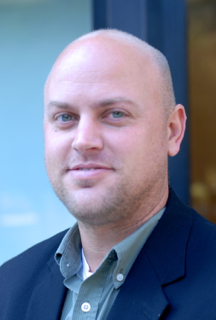
This Federal Milk Marketing Order (FMMO) hearing in Clovis, now in its seventh week, still has more ground to cover before it wraps up. Rob Vandenheuvel, general manager of the Milk Producers Council (MPC), reflected on the current California Marketing Order, “We’ve been operating under a separate system for many, many years. And while that may have worked for a good chunk of that time, in recent years, we’ve seen that the California system has not kept up with prices paid for milk in other parts of the country. So we’re trying to get on an even playing field.”

Vandenheuvel said resistance to the FMMO has come mainly from those who currently purchase California milk. “They’re not interested in a system that would require them to pay more for their milk,” he said. “They’ve had a pretty good deal in California, so they’re trying to protect it.”

He said some minor resistance comes from non-California dairymen concerned their prices could decrease should California join the FMMO. “There was talk earlier in this hearing that if dairy farmers in California were put on an even playing field and had more money paid for their milk, would they increase production? What impact might that have on the overall market?”

“When you look at California and the competition for land from pistachios and almonds,” Vandenheuvel said, “dairy is not the only agricultural interest here. So competition for land and competition for water are really going to put a lid on future growth—no matter what the dairymen get paid.”

Significant LossesMilk Producers Council

Vandenheuvel said the state’s current system has caused a significant profit loss for dairymen in California. “Our milk going to cheese plants is the largest class of milk sold in the state, but it’s still 45 percent of the total milk production. So, the state cheese price is less than the Federal price on that 45 percent of milk. The difference is a shortfall of nearly $2 billion since 2010 for the California producer.”

Vandenheuvel said when all dairies in the United States slumped in 2009, those outside of California were better able to recover under the FMMO than those inside under the CSMO. “When you look at the peaks and valleys that the dairy industry has gone through, we’ve had years like 2009, which was the worst ever,” Vandenheuvel said, “and 2012 was probably the second worst ever due to high feed costs. Most of the rest of the country recovered in the months and years following 2009 and then again 2012.

“California is still reeling. If we had sold off assets, we really haven’t recovered to where we were before 2009. So that $2 billion divided by the 2,000 dairymen that existed at that time in California was the difference between catching up and netting a profit. But actually happened, is that the industry has never recovered the losses, even after a few good years,” he noted.

Out-of-State Dairies Object to Federal Order

Vandenheuvel said that many California dairymen are looking to become part of the FMMO to get on a level playing field with the rest of the country’s milk producers. “If you buy into the theory that California dairymen got a fair price for milk will increase milk production and that would have a negative impact on the rest of the country,” Vandenheuvel said. “The best thing to happen to the rest of the country would be for California to go completely broke and shut down our entire dairy industry because they would be better off because we’d have twenty percent less milk in the whole country. That’s why I don’t think that those concerns are really strong. This hearing is more about the sellers of milk getting a fair shake and the buyers of milk not wanting to pay that fair shake.”

Vandenheuvel said that the way the dairy industry works—with milk spoiling each day—the government had to get involved in order to prevent buyers from refusing to buy one dairy’s milk and significantly devaluing the price of milk. “Cows don’t produce Monday through Friday only; there is no on or off spigot,” Vandenheuvel said. “So when you have a product that is being produced and piled up every day and has to be sold every day to a group of buyers who don’t have to buy every day –and they don’t have to buy from you—you’re at a huge disadvantage negotiating a fair price for that product.

“Imagine going to a car dealership where they had to sell a certain amount of cars that day or the vehicles would literally spoil, go bad and be worthless,” he noted. “You would have a great position to buy a car. That’s where we are, and that’s why the government got involved, said milk is important and we know dairymen are at a disadvantage. So we’re going to play referee between the two parties. Our problem in California is that that referee has been much more on the side of the processors keeping a low price in California.”

Two Main Proposals

Vandenheuvel said that two major proposals have been submitted to the USDA—one from the dairy-farmer-owned cooperatives and the other from the manufacturers. He said the USDA would decide upon the final proposal that will be voted on by producers.

“Manufacturers do not vote on Federal orders,” Vandenheuvel said, “It’s a producer vote. So it really comes down to the USDA. We think we’ve put together—as a producer coalition—a very sound, comprehensive approach of going to a FMMO while still respecting some of California’s issues—like our quota program; our transportation program.”

Vandenheuvel explained that it was very difficult to get the USDA to hold a hearing on the Milk Marketing Order. “We had to basically exhaust every alternative option in the state system,” he noted. “We tried a dozen hearings over the last ten years. We’ve tried legislation in California. We’ve tried suing the Secretary of Agriculture in California. We’ve tried protests and rallies on the steps of the capitol in front of CDFA, and at the end of the day last year our milk prices, compared to the rest of the country, had a bigger gap than we’ve seen in the last ten years.”

Vandenheuvel said the CDFA could have easily addressed many of the issues that caused milk producers to fight for a FMMO. Nevertheless, one issue, the CDFA could not have regulated for producers is interstate commerce. “That’s big for a state like California,” Vandenheuvel said. “We’ve got 35-40 million people here who drink milk and we’ve had situations in the past and currently in which milk is moving into California just to take advantage of the fact that California can’t do anything about it. Only a FMMO can regulate interstate commerce because of the way the constitution is drafted.”

Vandenheuvel said he hopes to see a recommended decision on the order by the middle of next year.


2016-05-31T19:27:04-07:00November 9th, 2015|

Calif. Profs Win Irrigation E3 Leader Awards

Irrigation E3 Leader Awards Go to Two California Faculty

The Irrigation Foundation has named 15 outstanding students and faculty as winners of the 2015 Irrigation E3 Program. The Foundation selected two faculty 2015 Irrigation E3 Leaders, both in California, Florence Cassel, Fresno State and Tim Ellsworth, West Hills College Coalinga.

This year’s class of faculty and students will receive an all-expenses-paid trip next week to the Irrigation Show & Education Conference, Nov. 9 – 13, in Long Beach, Calif.

Founded in 2012, the E3 program provides students and faculty with exposure, experience and education in the irrigation industry. Academics nominate outstanding students for consideration as E3 Learners and/or apply to become E3 Leaders themselves.

To qualify to apply for Irrigation E3 Leader status, an instructor must be teaching, or will be teaching within the next six months, irrigation-related coursework at a North American community college, university or similar institution of higher learning. Prior winners may not reapply.

Chosen faculty will have the opportunity to participate in education classes, industry sessions and networking events. Working with academics is essential to the Foundation’s mission of attracting people to careers in irrigation by supplying the irrigation industry with educated professionals. Faculty members help shape the future career paths of their students and keeping instructors up-to-date on the latest and greatest in the irrigation industry is a must. 

“This is the fourth year of the program, and the Foundation is sending a record number of students to the show,” said senior foundation manager Janine Sparrowgrove. “We are excited to give the students and faculty the opportunity to attend classes and gain exposure to industry companies and technologies.”

Florence Cassel Sharma, Assistant Professor Irrigation/Water Management, Jordan College of Agricultural Sciences and Technology, Department of Plant Science, California State University, Fresno researches optimizing water use efficiency through low and deficit irrigation practices, improving irrigation scheduling, and utilizing remote sensing techniques for water resources management, crop water use, and soil salinity assessment. Assistant director of research of the Center for Irrigation Technology, Sharma is a recipient of the 2009 Outstanding Research and Scholarly Activity Award for the Jordan College of Agricultural Sciences and Technology.

Tim Ellsworthagriculture technology instructor at West Hills College Coalinga, researches primarily soil science with a focus on precision agriculture and nutrient management. He currently serves on the advisory board for the Canadian Biochar Consortium.

Prior to West Hills, Ellsworth was a professor and faculty director of the online master’s program for the Department of Natural Resources and Environmental Science at University of Illinois, Urbana-Champaign, a soil scientist with the USDA U.S. Salinity Laboratory, a visiting faculty member at the Centre for Water Research, Department of Civil Engineering, University of Western Australia in Perth and a senior scientist performing hazard assessments and hazard evaluations for the U.S. Army with regard to management of the U.S. Army Chemical Weapon Stockpile.

This year’s Irrigation E3 Learners are:

  • Samia Amiri, Oklahoma State University
  • Garrett Banks, Colorado State University
  • Colton Craig, Oklahoma State University
  • Spencer Davies, Brigham Young University
  • Daniel Greenwell, Auburn University
  • John Hawkins, Alamance Community College
  • Tsz Him Lo, University of Nebraska, Lincoln
  • Michelle Mbia, Prairie View A&M University
  • Ryan McBride, Brigham Young University, Idaho
  • Alan Rourke, Kansas State University
  • Daniel Selman, Brigham Young University
  • Amandeep Vashisht, Colorado State University
  • Christopher Weathers, Mira Costa College

Toro Company is the lead sponsor and the Carolina’s Irrigation Association is a supporting sponsor for this year’s program. 

Links:

Irrigation E3 Program 

Irrigation Foundation

2016-05-31T19:27:04-07:00November 5th, 2015|
Go to Top