Record Enrollment at UC Davis College of Agriculture and Environmental Sciences

UC Davis College of Agriculture and Environmental Sciences Really Rocks!

By Patrick Cavanaugh, Farm News Director


Helene Dillard, dean, UC Davis College of Agriculture and Environmental Sciences, is pleased with the big numbers of students attending the top-ranking College of Agricultural and Environmental Sciences.

Helene Dillard, dean, UC Davis College of Agriculture and Environmental Sciences

Helene Dillard, dean, UC Davis College of Agriculture and Environmental Sciences

“It’s really rocking,” said Dillard. “We’re doing very, very well. We have one of the largest numbers of incoming students ever in the entire university. Our College has peaked out its 7,300 undergraduates. We’ve never had that many at one time.”

Why the increased interest in studying agriculture? Dillard said, “We think what’s moving that needle is that everyone is interested in food. They are interested in agriculture.  And they are really interested in that intersection between agriculture and the environment. We have a record number of students that just cannot wait to come on board. We are really thrilled with how smart they are and how eager they are to learn.”

Among the many courses offered by the College, Dillard said Animal Science classes are probably among the most popular. “But of course, beer classes and the coffee class are really popular too. But right now, I’m seeing tremendous interest in agricultural economics and in animal science, to become veterinarians and ranchers, plus specific academic interest in poultry and sheep.”

“Again, those are all things that UC Davis does, so we’re really excited. We’re also seeing a lot of interest in plant sciences, more on that sustainable and food systems and our viticulture and enology program’s growing as well.


Recent Graduate Program Rankings for UC Davis College of Agriculture and Environmental Sciences and related disciplines include:
  • 1st in agricultural sciences (Thomson Reuters ScienceWatch 2011) 
  • 2nd in agriculture and forestry (QS World University Rankings 2016)
  • 2nd in agriculture worldwide (U.S. News & World Report’s “2016 Best Global Universities”)
  • 1st in ecology and the environment (Thomson Reuters ScienceWatch 2011) 
  • 1st in food science and nutrition (Thomson Reuters ScienceWatch 2010)
  • 1st in plant science (U.S. News & World Report’s “2016 Best Global Universities”)
  • 1st in animal science (U.S. News & World Report’s “2016 Best Global Universities”)
  • 1st for veterinary science (QS World University Rankings 2016)
  • 1st among the nation’s veterinary schools (U.S. News & World Report’s “Best Graduate Schools” 2016)
  • Between 1st and 15th among 44 programs in nutritional biology (National Research Council 2010)
  • 4th in environment/ecology (U.S. News & World Report’s “2016 Best Global Universities”)
  • Between 1st and 7th in Entomology among 28 programs (National Research Council 2010)
  • Between 5th and 29th among 116 programs in plant biology (National Research Council 2010) 
  • Between 7th and 42th among 116 programs in plant pathology (National Research Council 2010)
  • 13th in environmental engineering worldwide (QS World University Rankings 2016)
  • 29th in environmental engineering worldwide (2016 Global Ranking of Academic Subjects, ShanghaiRankings)

(Source:  University of California, Davis, Graduate academic program rankings.)

UC Davis College of Agriculture and Environmental Sciences

2021-05-12T11:17:11-07:00December 7th, 2016|

Livestock Economics for Western Producers

Livestock Economics: What Attributes Bring Higher Prices?


By Laurie Greene, Editor


At the 100th Annual California Cattlemen’s Association (CCA) & California CattleWomen’s (CCW) Convention last week in Sparks, Nevada, Tina Saitone, cooperative extension specialist, UC Davis Department of Agricultural and Resource Economics, described her research on rangeland and livestock economics. “Primarily, my focus has been on cattle — beef cattle to date — but I’ve also started some projects recently with sheep producers and the predator interactions they have specifically with coyotes. I am examining whether or not [producers] can use nonlethal depredation methods to mitigate those losses.”

“Right now, I have been concentrating on marketing characteristics of cattle,” she said. “I study those practices employed by producers, such as when they wean their cattle; how many vaccinations they have; whether they market [their cattle] as natural, grass-fed, or organic; and the impact that [these choices] have on their prices.”

Tina Saitone

Tina Saitone, cooperative extension specialist, UC Davis Department of Agricultural and Resource Economics

Interestingly, Saitone and her colleagues have mainly been using satellite video auction data. “Western Video Market Auction actually held their auction this month here in Sparks, Nevada because they can do it at different locations all the time. So, we use that data to figure out cattle characteristics and then determine the marginal impact that each of those characteristics has on price,” said Saitone.

Characteristics such breed, frame score, flesh score, and weight, are definitely controls in Saitone’s research model because those are main drivers of price. “But what we want to do is figure out — holding all those things constant —if a producer raises their cattle natural, what kind of premium does that bring them? We’re really looking for that incremental difference.”

One might expect certain factors such as natural or organic, to deserve a higher price, but there always has to be a buyer. “Right now, when prices are low relative to 2014 and early 2015, ranchers do have some opportunities to get some higher prices in what we would call niche markets. Consumers are increasingly demanding a wider range of characteristics. They want grass-fed. They want organic. They want natural, no hormones. All of these are what we would call credence attributes. If you go to the grocery store and you taste a steak, you probably don’t know if it was raised natural.”

Accordingly, the industry has third-party certification to assure consumers that when they pay a higher price for that product they are actually getting those traits. “Farmers actually have the ability to fill some of those niche markets that consumers have created with their demand and possibly get higher prices than just selling into traditional commercial channels.”

The data that Saitone has been looking at from Western Video is focused on Western states, including California. Certainly, location places Western producers at a persistent disadvantage because the majority of the processing capacity is in the central part of the country, with Nebraska being the hub. Saitone said, “When you think about cattle being raised in California having to be transported all the way to Nebraska, some 1600 or 1700 miles, not only do you have the cost associated with that transportation, but you also have shrink; you have mortality.

California Cattlemen’s Association (CCA)

California CattleWomen

UC Davis Department of Agricultural and Resource Economics

2021-05-12T11:17:11-07:00December 6th, 2016|

Postcard Campaign to Stop Additional Pesticide Regulations Near Schools

Call to Growers: Join Postcard Campaign to Stop Additional Pesticide Regulations Near Schools before Friday, Dec. 9


By Brian German, Associate Broadcaster


Proposed DPR Regulations

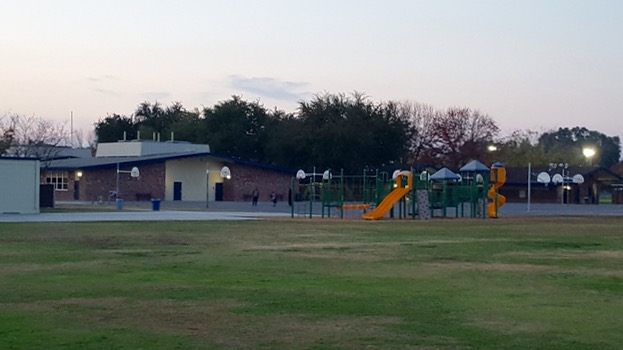
“The proposed California Department of Pesticide Regulation (DPR) further restricting growers from applying crop protection products near schools is unnecessary,” noted Kelly Covello, president of the Almond Alliance of California, which advocates and lobbies for the almond industry.

“Basically, this proposed rule is going to add a layer of unnecessary regulation. It proposes restricting pesticide applications within a quarter mile of schools and daycare centers between Mondays and Fridays, 6am to 6pm,” said Covello. She noted there are already regulations in place to protect both the community and the applicator.

Likewise, Colleen Cecil, executive director, Butte County Farm Bureau, said, “We’re very confident in the regulation that currently exists and the responsibility that landowners take when it comes to spraying anywhere. There are rules in place and these rules work.”

“The environmental community has done a bang-em-up job at fear-mongering, period. They believe they can take pictures of kids next to fields and make the farmer the bad guy. Nothing can be further from the truth,” Cecil said.

“Nothing is more important than the health and safety of people,” noted Ceil. “As stewards of the land, farmers already do everything in their power to mitigate risks involved in agriculture and the application of pesticide is no exception.”  Cecil added, “The puzzling part of the proposed regulation is that DPR have stated themselves that they were ‘unable to quantify the benefits’ and that ‘any health benefits of the prohibitions are unknown.'”


Postcard campaign to stop additional pesticide regulation near schools dpr

Postcard campaign to stop additional pesticide regulation near schools

Call for Growers to Take Action

“We have joined California Farm Bureau Federation (CFBF) and other organizations that are working on this issue,” said Covello. “One of the main calls to action for grower engagement with DPR is CFBF’s postcard campaign. If you would like postcards to share with your grower network, please email staff@almondalliance.org or simply print from the Postcard PDF document and mail directly to DPR (contact information is on the last page of the PDF document).   A high volume of input will be critical.

Growers can also sign and share CFBF’s petition. Farm Bureau will deliver the petitions to DPR before the comment period closes on December 9.

“This [proposed regulation] really is unnecessary,” said Covello. “There is no science. There is no injury or illness that has sparked the need for new regulations. We are really hoping we can get our growers engaged by sending in a postcard or sending in comments. Again, growers can contact the Almond Alliance by email at staff@almondalliance.org and by phone at (209) 300-7140.

“We would be happy to get you a postcard,” Covello said. “We can also email it to anyone. So please help us in this fight to stop unnecessary regulation.”


Almond Alliance of California

Butte County Farm Bureau

California Department of Pesticide Regulation

California Farm Bureau Federation

2021-05-12T11:05:43-07:00December 5th, 2016|

Modifying Rootstocks to Fight, Prevent Pierce’s Disease

Scientists Help Grapevines Double-team Pierce’s Disease

By Patrick Cavanaugh, Farm News Director


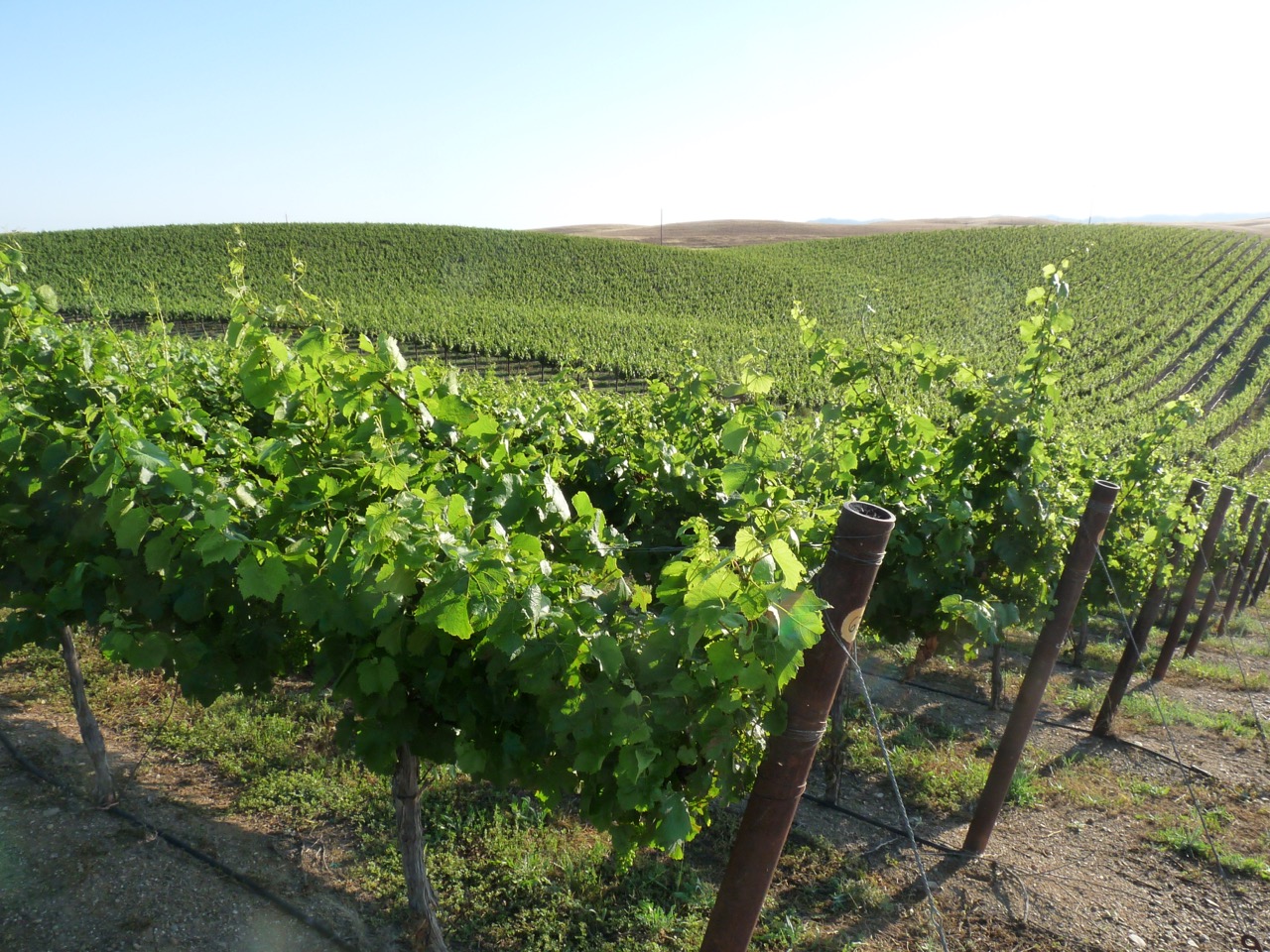
The glassy-winged sharpshooter is a flying insect that vectors a fatal grapevine malady known as Pierce’s Disease. Scientists are conducting volumes of research to fight this insect and reduce disease infection on vines. Moreover, scientists are studying methods to prevent the spread of Pierce’s Disease on winegrapes in California entirely.

California grapevine rootstock

California grapevine

Ken Freeze is the outreach coordinator for the California Department of Food and Agriculture (CDFA) Pierce’s Disease Glassy-winged Sharpshooter Board (PD/GWSS) as well as an account director at Brown-Miller Communications. On behalf of the PD/GWSS Board, Freeze communicates with winegrape growers who pay the Board an assessment to conduct research. Freeze explained ongoing research and how research funds are being spent.

FIGHTING PIERCE’S DISEASE

Could introducing pectin into grapevines, help prevent that bacteria, Xylella fastidiosa, from entering the vine? Freeze said, in a recent field trial, “scientists found five different genes that when placed in a rootstock, put either a molecule or a protein up into an unmodified scion that in one way basically stops the bacteria from moving around,” he said.

“For instance, one of the genes comes from the pear,” said Freeze. “I think we’re all familiar with pectin. A lot of plants produce pectin naturally; grapevines are not one of them. By modifying a rootstock with this pear gene, when the bug comes and injects the bacteria into the plant, the pectin literally gums it up and it can’t move around.”

An unmodified plant injected with bacteria by the glassy-winged sharpshooter, turns to another strategy. “When the bacteria population reaches a certain point, [the plant] releases a protein that causes the bad bacteria to stop moving around. However, in grapevines, it is too late when that signal comes; the plant is already dead. By modifying the rootstock to automatically generate that same protein when the bacteria enters the plant, the bacteria shuts down,” said Freeze.

winegrapes fight Pierce's Disease

Winegrapes

Freeze said scientists are seeing that these strategies are working quite well. “What scientists are actually doing now is stacking these genes, two by two, in the rootstock. Now each root will produce two different ways to shut down the bacteria. If for some reason in the future the bacteria figures out a way to overcome one of those ways, chances are it won’t figure out how to overcome both of them.”

PREVENTING PIERCE’S DISEASE

Dr. Andy Walker, a UC Davis professor and geneticist in the Department of Viticulture and Enology, has been working for years on rootstock that could block Pierce’s Disease from entering the vine. “He’s already released 14 different varieties to the Foundation Plant Services as well as three different rootstock that are resistant to Pierce’s Disease,” said Freeze. “The best varieties will be released to nurseries probably next year. Then from there [nurseries will] basically start growing them and taking orders from winegrowers.”

Freeze noted that other field trials are continuing. “We have field trials for a benign strain of Pierce’s Disease. It is like giving plants a smallpox vaccination, only it is the bacteria. That is on its way to commercialization. In the future, you might actually order your new vines from the nursery pre-infected with the bacteria that would normally cause [Pierce’s Disease]. But in this case, it will not cause it,” said Freeze.


CDFA Pierce’s Disease Glassy-winged Sharpshooter Board (PD/GWSS)

CDFA Pierce’s Disease Glassy-winged Sharpshooter Board (PD/GWSS) Interactive Forum

CDFA Pierce’s Disease Control Program

UC Davis Department of Viticulture and Enology

UC Davis Foundation Plant Services

2021-05-12T11:02:00-07:00December 2nd, 2016|

WANTED: New Director, Fresno State Viticulture and Enology Department

Fresno State Viticulture and Enology Department Shines, But Needs New Director


By Patrick Cavanaugh, Farm News Director


No doubt, the Fresno State Viticulture and Enology Department is important not only to the Central San Joaquin Valley, but also to all of California’s agricultural areas. Nat DiBuduo, president, Fresno-based Allied Grape Growers, and a 1973 Fresno State alumnus, said Fresno State’s top administration is exceptionally dedicated to the department.


Research Buildings at Viticulture and Enology Research Center VERC

Research Buildings at Viticulture and Enology Research Center VERC

“It is really critical that we highlight the fact that Joseph Castro, president of Fresno State, and Sandra Witte, dean of Fresno State’s Jordan College of Agricultural Sciences and Technology, as well as the entire Industry Advisory Board for the Viticulture and Enology Research Center (VERC), are committed to the department,” said DiBuduo. “The entire board is committed to continuing the world-class program at the Viticulture and Enology Research Center that Vincent Petrucci (1985-1994) started so many years ago and has been continued on through Robert Wample (2000-2009) and James Kennedy (2010-2015).”

DiBuduo, who studied plant science and viticulture as a student, said, “We’re committed to providing this first class program for our students and for the industry. We’re in the midst of the search for the right person to head the program so that he or she can bring on the faculty and support staff who will continue that progress into the next century and beyond.”

As California’s agricultural industry feeds the world, it is important the industry supports this search for a new department chair. “It is important the University gets the right person in there, so we’re asking everyone out there who knows anyone qualified, [to encourage them] to apply for this position,” said DiBuduo. “We need to have the right person to provide the education, research and leadership into the future.”

Fresno State Winery Bottling Line

Fresno State Winery Bottling Line

Fresno State agricultural programs are unique due to a hands-on approach designed to give students the practical knowledge they need to get out and work. “They will know how to farm,”DiBuduo said. “They will know how to apply their teachings and their education to become managers, foremen and operators, and supervisors of field operations.”

Students come from all over the Central Valley and beyond the Valley because of Fresno State’s excellent reputation. “If students have enough units in the program, they can become Pest Control Advisors (PCAs),” said DiBuduo. “In fact, I was a PCA myself.”

fresno_state_makes_winemakers, Fresno State Viticulture and Enology Department“But the problem we’re having in agriculture today is that many in the industry are an aging society,” DiBuduo said. “So we need to get young entrepreneurs, young farmers and ranchers who want to become PCAs or farm managers or viticulturists or winemakers,” DiBuduo said. “We need these trained students to run the farms and ranches in the future.”


NEW! FACULTY POSITION VACANCY: Chair of the Department of Viticulture & Enology and Director of the Viticulture & Enology Research Center.   Vacancy #12978  (7/20/16) Review of applications will begin September 19, 2016 and continue until the position is filled.


Resources:

Allied Grape Growers

California State University (Fresno State)

Fresno State’s Jordan College of Agricultural Sciences and Technology

Fresno State’s Viticulture and Enology Department

Industry Advisory Board for the Viticulture and Enology Research Center

2021-05-12T11:05:43-07:00November 30th, 2016|

Water Diversion Plan for Fish, Part 2

Grober: It Won’t Help to Vilify People

Part 2 of 2-part Series 

By Patrick Cavanaugh, Farm News Director


California Ag Today conducted an extensive interview with Les Grober, assistant deputy director, State Water Resources Control Board (SWRCB, Water Board) Division of Water Rights. We published Part 1, “Water Board’s Point of View on Increasing San Joaquin River Flows,” on November 28, 2016.

http://yn2.000.myftpupload.com/increasing-san-joaquin-river-flows/

Grober explained the Water Board’s water diversion plan to adjust the flow objectives on the San Joaquin River to protect fish and wildlife. The plan, specifically, is to divert 40 percent of water flows from the Stanislaus, Tuolumne and Merced Rivers that flow into the lower San Joaquin River. 

California Ag Today: We asked Mr. Grober to explain how the Federal Water users on the Westside of Fresno and Kings Counties were granted a mere 5 percent allocation this year, and why many did not receive their full 5 percent.

Grober: The 5 percent allocation is due to the junior water rights of those growers and to the interconnections of so many things — priority of right, hydrologic conditions, and minimal protections or fish and wildlife. Anyone who thinks it’s all due to fish is simplifying a very complex situation. 

California Ag Today: Regarding the water hearings that are scheduled over the next few months, is the Water Board trying to give information to farmers and others would be affected by the decreased water should the Water Board’s proposal go through?

Grober: The ultimate goal is to make people even more prepared to provide comments to the Board at the scheduled hearings. It’s part of a public process where, if we did not get our economic figures right, we want [accurate] information from the stakeholder to make it right.

We thought we did a good job in an economic analysis on how we thought the proposed taking of 40 percent water would affect the communities and farmers. We clearly heard from many people who thought we did not do a good job, and my response is: Good, show us why, make a proposal and take it to the Water Board hearings, and then we can adjust it.

California Ag today: The Water Board has a 3,100-page report all about saving the salmon.

Grober: The reason we have a big report is because we are making a proposal and we’ve shown our work. Although it is work for people to look at it and review it, we have tried to make it easy so that people can see if we have made mistakes, if there are things that are left out or if we have made an incorrect assumption. That’s why we’ve shared it with everybody and here’s your opportunity for setting us straight.

It won’t help to vilify different people who are making good use of the water or to vilify or disparage the implementation of our laws and what we are required to do. We have a great process I think, as hard as it is, a public process where we can work these things out in the open, just to use it and deal with each other professionally.  
-Les Grober, assistant deputy director, State Water Resources Control Board (SWRCB, Water Board) Division of Water Rights


California Ag Today: We are sure you are getting a lot of information from farmers and city leaders about this not being a good use of the water.

Grober: These problems are not so simple that they could be reduced to a sound bite. I think we would have solved the salmon problems by now, but because we are in the drought situation, we are dealing with a precious resource, which is water. Everybody wants the water but there’s not enough to do all the things we would like to do with it. 

California Ag Today: But there are many people in California who feel that more water for fish instead of farmers is reprehensible.

Citrus Tree devastated by drought.

Citrus Tree devastated by drought.

Grober: It won’t help to vilify different people who are making good use of the water or to vilify or disparage the implementation of our laws and what we are required to do. We have a great process I think, as hard as it is, a public process where we can work these things out in the open, just to use it and deal with each other professionally. 

California Ag Today: But we’ve heard from experts that have been studying this, that the increased flows have not really helped these species. Do you have proof that they have?

Grober: It’s hard to show proof one way or the other because recently we have not increased flows to see what effect it would have. That seems to be a notion that is out there, that we have somehow done something to increase flows in recent years, and that’s simply not the case.

If anything, flows have gone down. And in the recent drought years, as I said, even the minimal flows that were required were adjusted downward. You would have to show me that evidence that flows have gone up and there has been no response to those higher flows. I do not believe that there is any.

California Ag Today: So, the Water Board wants 40 percent of unimpaired flows?

Grober: When we say the requirement is 30 percent to 50 percent of unimpaired flows, it is 30 percent to 50 percent of that amount, which means just the opposite. It means that 50 to 70 percent of [flows] for February through June would be available for consumptive use.

That is frequently misunderstood and turned around. That is still from February through June, so it means more than 50 to 70 percent since other times of the year this water is available for consumptive use.

California Ag Today: Is the Water Board looking at the fact that if the water is needed for the species, it is going to force these growers to use more groundwater? That is a direction in which we do not want to go, especially in a region that has not yet had critical overdrafts. How does the Water Board look at that domino effect forced on these growers in order to survive, stay in business and produce the food in this major Ag production region?

Grober: Implementing that 30 to 50 percent of unimpaired flows would mean less surface water available for diversion. So our analysis of the potential environmental effects and overall effects of the program, based on recent drought information and other information, shows we would see increased groundwater pumping.

California Ag Today: Is the increased pumping weighted at all in the proposal, because overdraft groundwater pumping is not sustainable?

Grober: By our analysis, the area is already in overdraft.

California Ag Today: What? Why would there be overdraft pumping in an area that has great irrigation districts such as Modesto and Oakdale Irrigation Districts delivering surface water? We did not think growers in those districts would be overdrafting.

Grober: Sure. Within those irrigation districts themselves, they are not overdrafting. That’s why the analysis we do goes into that level of detail. The irrigation districts that already have a source of surface water actually apply much more water than they need just for the crop, so they are recharging groundwater within those districts, and even with this proposal, would continue to recharge groundwater. It is all those areas outside of those districts that don’t have access to surface water that are pumping groundwater.

California Ag Today: There is a lot more pumping of groundwater on the east side near the foothills.

Grober: Based on the information that we have, the total area — not just the districts that have access to surface water — but the total area, is already overdrafting groundwater. And there are many areas on the east side of these districts now, up into areas that were previously not irrigated, converting now to orchard crops. So with the information we have, there are large areas of production using water from the basin. The entire area is to some extent pumping more groundwater than there is recharge.

California Ag Today: We’ve been concern about this.

Grober: That’s why the Sustainable Groundwater Management Act (SGMA) is going to be good, because the local areas are going to have to get on top of that information and on top of the management.

2016-11-30T10:25:24-08:00November 29th, 2016|

Safe Food Alliance Helps Farmers Cope with MRL Disharmony

California Farmers Cope with MRL Disharmony


By Patrick Cavanaugh, Farm News Director


California farmers are careful with crop protection products because they know the importance of producing safe and wholesome food for their customers across the nation and in their export markets. “However, I think that there are some real challenges facing growers in California today,” said Thomas Jones, senior analytical services director for the Fresno-based Safe Food Alliance.

“As growers send their commodities around the world, they’re facing increasing challenges of knowing the right chemicals to apply and at what levels. We have our own strict regulations within California, if needed, [that govern] not only the application but also the maximum residue levels (MRL) or tolerances allowed for various crops,” said Jones.

Thomas Jones, senior analytical services director, Safe Food Alliance, MRL Disharmony

Thomas Jones, senior analytical services director, Safe Food Alliance

“That’s also carried onto the federal level; we have very strict EPA regulations. But as we [export] into other countries, they may have entirely different regulations,” said Jones. He noted this could be confusing not only to farmers, but also to registrants of crop protection materials because there is a lack of standardization of MRLs in different countries.

“Historically, there was the CODEX system, a UN-based system geared towards a more international standard for pesticide residues. It was very thought out, and very scientifically based,” Jones said.

However, as Jones explained, many countries do not want to follow the important scientific standard. “Increasingly, we are seeing countries want to establish their own systems, their own tolerances. They may be responding to their own political pressures within their countries.”

“We are seeing a process called ‘deharmonization’ in which every country wants to establish its own positive list of what is allowed and what is not allowed in [farm] products. Sometimes, those are in agreement with U.S. regulations and California state regulations; sometimes they are not. So it is important that [our] growers know not only what is legal in this country and in our state, but also what is allowed in their target [export] markets.”

Jones commented it is now known that some of these marketers [apply] random low MRLs and keep other MRLs high on some of their own products in order to get a marketing edge. “Some of those MRLs may or may not be based on any scientific standards.”

“There are a number of great tools out there,” he said. “There are a number of great software programs. Obviously, anything that [information growers] can get out of the print media or any educational courses are really essential. It is important to work with your Pest Control Adviser (PCA), as well. It’s important that [farmers] know what they are up against, as far as growing these crops,” said Jones.

The Safe Food Alliance is available to growers to help them qualify to meet the standards in the U.S. and abroad. “We [provide] training twice a year on fumigation safety for the various processors of dried fruits and tree nuts. We focus particularly on commodity fumigations and on what treatments are allowed and not allowed. We also have a full-service pesticide-testing laboratory and are very aware of the requirements in these other countries, so we’re happy to help both processors and growers with our monitoring efforts,” noted Jones.


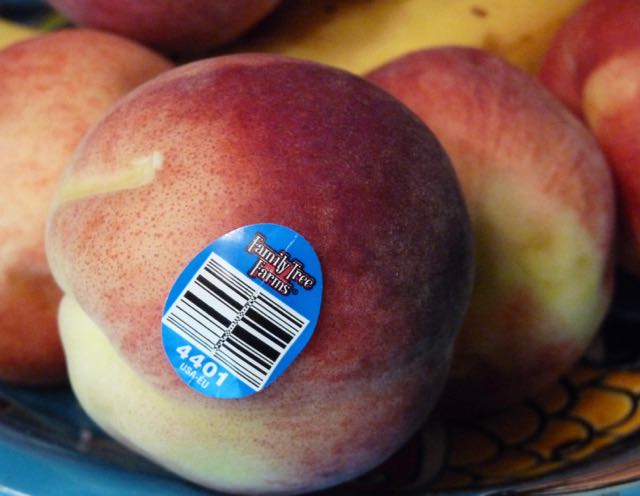
Featured Photo: For these California-grown peaches to be shippable to any out-of-state U.S. consumers or international export markets, they must meet scientific Maximum Residue Levels (MRLs).

C O D E X  A L I M E N T A R I U S, the international food standards, guidelines and codes of practice contribute to the safety, quality and fairness of the international food trade. Begun in 1963, Codex standards are based on the best available science assisted by independent international risk assessment bodies or ad-hoc consultations organized by Food and Agricultural Organization of the United Nations (FAO) and World Health Organization (WHO). Consumers can trust the safety and quality of the food products they buy and importers can trust that the food they ordered will be in accordance with their specifications.

2021-05-12T11:05:44-07:00November 28th, 2016|

Water Board’s Point of View on Increasing San Joaquin River Flows, Part 1

Les Grober Explains Increasing San Joaquin River Flows

This is part 1 of a 2-part series.

By Patrick Cavanaugh, Farm News Director


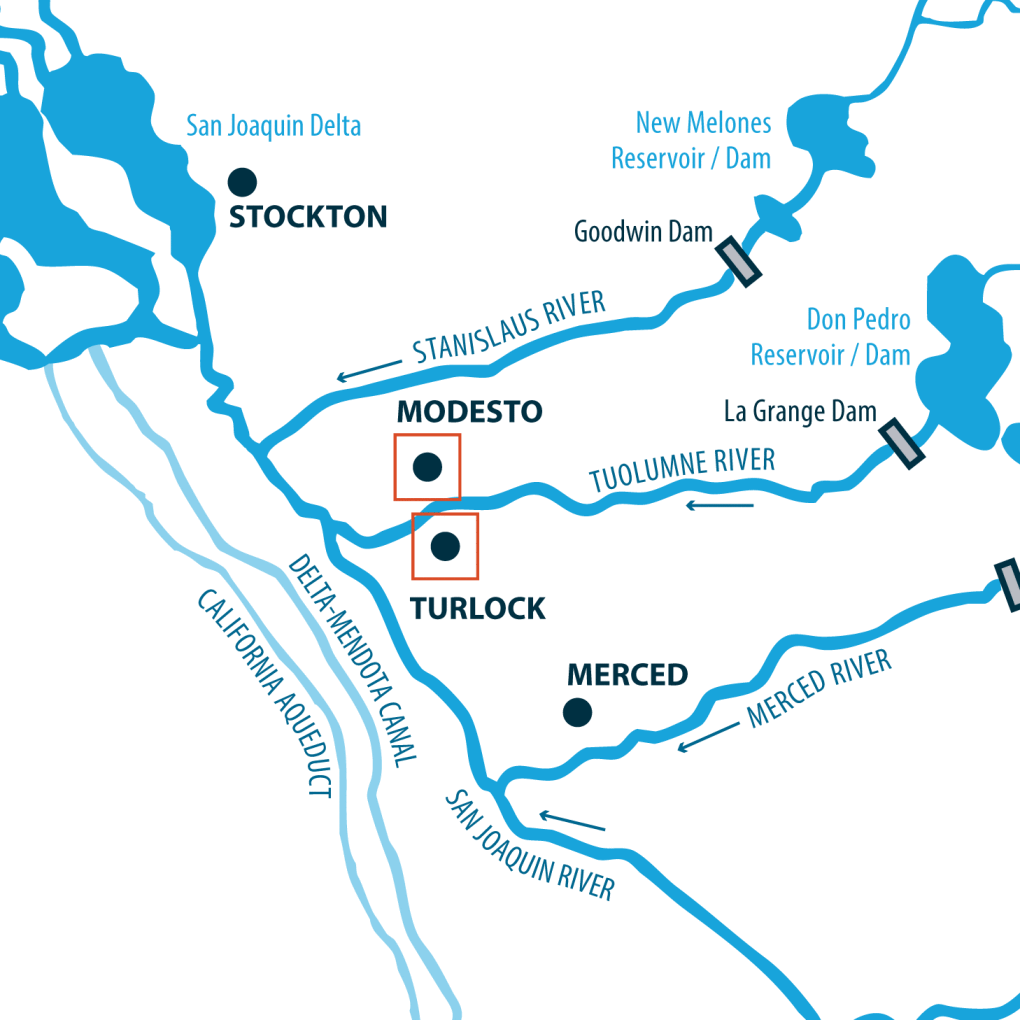
California Ag Today conducted an extensive interview with Les Grober, assistant deputy director, State Water Resources Control Board (SWRCB, Water Board) Division of Water Rights, regarding the Water Board’s proposal to adjust the flow objectives on the San Joaquin River to protect fish and wildlife. The plan, specifically, is to divert 40 percent of water flows from the Stanislaus, Tuolumne and Merced Rivers that flow into the lower San Joaquin River. 


Hearing on the Potential Changes to the Water Quality Control Plan for the San Francisco Bay-Sacramento/San Joaquin Delta Estuary: San Joaquin River Flows and Southern Delta Water Quality and on the Adequacy of the Supporting Recirculated Draft Substitute Environmental Document.

Hearing begins at 9:00 a.m. on the following dates:

November 29, 2016   Joe Serna Jr. CalEPA Headquarters Building, Byron Sher Auditorium, 1001 I Street, 2nd Floor, Sacramento, CA 95814

December 16, 2016  Stockton Memorial Civic Auditorium, Main Hall, 525 N. Center Street, Stockton, CA 95202

December 19, 2016  Multicultural Arts Center, 645 W. Main Street, Merced, CA 95340

December 20, 2016  Modesto Centre Plaza, Tuolumne River Room, 1000 K Street, Modesto, CA 95354

January 3, 2017  Joe Serna Jr. CalEPA Headquarters Building, Coastal Hearing Room, 1001 I Street, 2nd Floor, Sacramento, CA 95814


California Ag Today: At a recent public workshop in Sacramento, Les Grober, you cited some statistics that show the Water Board really has not done a lot—or much of anything particularly—in the San Joaquin River in terms of helping salmon. Is this accurate?

Grober: Yes. I did not discuss specifically the flow benefits or the fish benefits, but I did explain there are times between February and June when flows are critical for salmon. During the months of March and April, especially, less than 10 percent of the water flows than would be there normally if you were not storing it or diverting it.

Water Board proposes water diversions for fish from three San Joaquin River tributaries: Stanislaus, Tuolumne, and Merced Rivers

Water Board proposes water diversions for fish from three San Joaquin River tributaries: Stanislaus, Tuolumne, and Merced Rivers (Map Source: WorthYourFight.org)

California Ag Today: So the Water Board proposes taking 40 percent from the rivers to help the salmon?

Grober: I posed the question, “If there is a species that has adapted to 100 percent flow, how likely would it be that it could be successful with less than 10 percent of that?” If you look at the overall statistics between 1984 and 2009 for the three tributaries (Stanislaus, Tuolumne and Merced Rivers), the average flow during the February through June period was 40 percent on the Stanislaus, 21 percent on the Tuolumne, and 26 percent on the Merced.

California Ag Today: So you need water from all three tributaries to accomplish the objective?

Grober: Currently, there are flow objectives only for the San Joaquin River at Vernalis where the San Joaquin River flows into the Delta. The current objective skews the flows so they are coming from just the Stanislaus River, which has problems achieving those flows at all times because it is all coming from one location. It also does not achieve the fish protection goals because it’s all coming from the same location.

So, based on the core science, we are proposing to establish objectives on the three salmon-bearing tributaries to the San Joaquin River. This is about reasonably protecting fish and wildlife in the San Joaquin River. 

California Ag Today: So the Water Board is not trying to protect the salmon at any cost, which is the mandate from the Endangered Species Act?

Grober: The proposal is not establishing flows that provide absolute protection. We are establishing flows to reasonably protect species—in this casefish and wildlife.

California Ag Today: The Water Board earlier proposed the need for 60 percent to be unimpaired flows?

Grober: The science developed over the years has shown that if you were not going to consider any other uses of water, like agriculture, drinking water or anything else, the number you would need is 60 percent of unimpaired flow.

California Ag Today: Due to agriculture pushback, the new goal is 40 percent?

Grober: That is why what we are doing now is very hard. We’re doing the balancing that says we have the science that shows the need for increased flows. We have all the information that shows how important the current uses of water are now for agriculture and municipal supply and hydropower. so how do you come up with a balance that takes into account all of that information?

California Ag Today: We have been following closely the extraordinarily increased flows through the Delta and to the Pacific Ocean, which seemed to be No. 1, a total waste of freshwater, and No. 2, at least a few acre-feet could have been pumped into the San Luis Reservoir for cities and farmers.

Grober: It would be interesting to see the numbers that you are citing because, during this recent drought, in particular, there have been greatly reduced flows throughout the system—not in any way—by any stretch—increased flows. In fact, the Water Board approved emergency change petitions not to increase flows, but to do just the opposite.

In general, they have relaxed or shifted downward required flows so there would be more water available to be smartly used for multiple purposes, not just for fish and wildlife, but also to get more water for public interest uses. 

California Ag Today: We know that flood control pulse flows are difficult to capture, but it seems that some of that great volume of water could be pumped southward.

Grober: Many times, people will fail to notice or acknowledge that during periods of high rainfall and high flow, a lot of water goes out because it cannot be captured. So very large quantities of water go out because of flood flows and high flows.

This is not to say that there are no constraints, at times, on what can be diverted or exported to protect fish and wildlife due to objectives, the State Boards, the Water Quality Control Plan, or biological opinions. But much of that water that people look at and say, ‘Why is that all going out?’ — a lot of that is flood flows that cannot be captured. So it ends up looking like a very big number, but it is not a number that can be captured because, as you can imagine during wet years and high flow times, it is almost too much. People can’t capture it. 

California Ag Today: So there is not even an effort to export that water to those who need it — farmers and communities?

Grober: Like I said, there have been constraints on export pumping. But those constraints are intended to provide some protections for fish and wildlife, while at the same time they are opportunities for getting water for other uses. So I see a lot of overstatements.

California Ag Today:  Again, when there are pulse flows, why can’t we collect them and exported them? Why can’t we just turn up the pumps to capture some of the extra water moving through the Delta to export it to farms and cities?

Grober: There are constraints on what are called reverse flows in Old and Middle Rivers (OMR), which is a critical area of Smelt risk. This is part of the biological opinions intended to protect smelt and salmon at critical times that happen to coincide occasionally with higher flow events.

That is one of those times when it’s kind of striking a balance as well. The flows are still not optimal for the protection of the species, but certainly, from the water supply perspective, they are not seen as optimal for the water supply. That makes all of this so very hard. How do you strike that balance?

California Ag Today: You talk about striking a balance. It seems that the environmental side gets nearly 100 percent of what they need and Ag gets nearly zero. 

Grober: Where is Ag getting zero?

California A Today: There are Federal Districts on Fresno County’s Westside that for several years have received zero water allocation. This past season, they were promised 5 percent, but they were not able to get the entire amount.

Grober: If I may, it is clear that you have a certain view on this.

California Ag Today: Absolutely. It just does not seem that agriculture has a seat at the table.  

We’ll continue Part Two of this series tomorrow. We’ll discuss, among other things, that if the proposal goes through, farmers would be forced to use more groundwater.

2021-05-12T11:05:44-07:00November 28th, 2016|

Celebrating California Agriculture . . .A Farmer Can Be The Cowboy, Buying Everybody Drinks

Peterangelo Vallis Offers Advice on How Farmers Can Connect with Public

By Patrick  Cavanaugh, Farm News Director


Peterangelo Vallis, executive director of the San Joaquin Valley Wine Growers Association based in Fresno.  He says if you were to go around the world and see how farmers interact with the public, you would observe their interactions are different in other countries than here in California.

“Especially if you go to Europe, agriculture is pervasive in the countryside. If you have a city, automatically you’re going to have farmland around it,” Vallis said. “It’s a little different than what we have in California, where you have urban spaces, some desert, mountains and then you tend to have agriculture, but realistically the core portion’s the same.

Peterangelo Vallis, executive director of the San Joaquin Valley Wine Growers Association

Peterangelo Vallis, executive director of the San Joaquin Valley Wine Growers Association

“If you go to France or Italy, your main business is agriculture. Farmers are not looked at as being different somehow. They are looked at as businessmen who happen to make the food that we’re serving on the table, you’re buying at the store or the restaurateur is preparing for you to enjoy,” he said.

There, they think about the farmer—the agriculturalist, who brings that food to them as “filling up your happy, cheese-loving belly. That’s something that we are totally missing in this country because, by and large, our rural populations are removed from our urban populations,” Vallis said.

california saloon, Peterangelo Vallis“As a result, that’s on us, with our own PR for our own businesses—to come into town and make a place for ourselves. . . show ourselves off so that people recognize when we come in and are thinking about us when we’re not there.”

“It’s just like in the Old West. No one worried about the guy that slunk in the back door of the saloon and just sat there with his hat down hoping no one would shoot at him. But everyone knew the guy with the black hat who walked right through the front door into the middle of the bar, said hello and bought everyone drinks. That’s us!” Vallis said.

2016-11-28T00:37:42-08:00November 25th, 2016|

Almond Alliance Advances Almond Issues

Alliance Advocates for Almond Industry

By Patrick Cavanaugh, Farm News Director


The Almond Board of California does many great things for the California almond industry, most notably marketing annually about two billion pounds of almonds—both domestically and internationally. But there is one thing the Almond Board cannot do, and that is lobby on behalf of this big industry.

Kelly Covello, president of the Almond Alliance

Kelly Covello, president of the Almond Alliance

Enter the Almond Alliance of California (AAC) on August 1, 2016. Formerly known as the Almond Hullers and Processors Association (AHPA) and established in 1980, this renamed and revitalized trade organization is the only trade association fully dedicated to advocating for and protecting members’ investment in the almond industry. The AAC will represent and serve growers, hullers/shellers, handlers, processors and allied industry partners.

Kelly Covello, president of the Almond Alliance, said, “Over the last year, we’ve done some strategic planning with the Almond Board so that we can complement one another’s activities. The Almond Board cannot lobby or advocate, and the trade association—the Almond Alliance—can.” Nevertheless, Covello said, “the industry has invested in the Almond Board through their assessment and has great resources available in terms of expertise, data [and] research that we can use to support our policy positions.”

For nearly 100 years, the almond industry has been active in California without a dedicated political voice. “The trade association has always been able to advocate on issues when necessary. The industry has grown; we’re over a million acres now. With the increase in acreage, the number of issues, the visibility and the scrutiny of our industry has dramatically increased,” Covello said.

Ms. Covello currently serves on the Board of Directors for the Agricultural Council of California and serves on two Almond Board of California (ABC) committees: the Almond Quality & Food Safety Committee and the Technical and Regulatory Affairs Committee.

2016-11-23T17:02:09-08:00November 23rd, 2016|
Go to Top