Who Safeguards CA Farm Workers’ Rights? Part 5

Post-Labor Day, Forced Unionization Hearing at CA Supreme Court


By Laurie Greene, Founding Editor


Forced Unionization Hearing

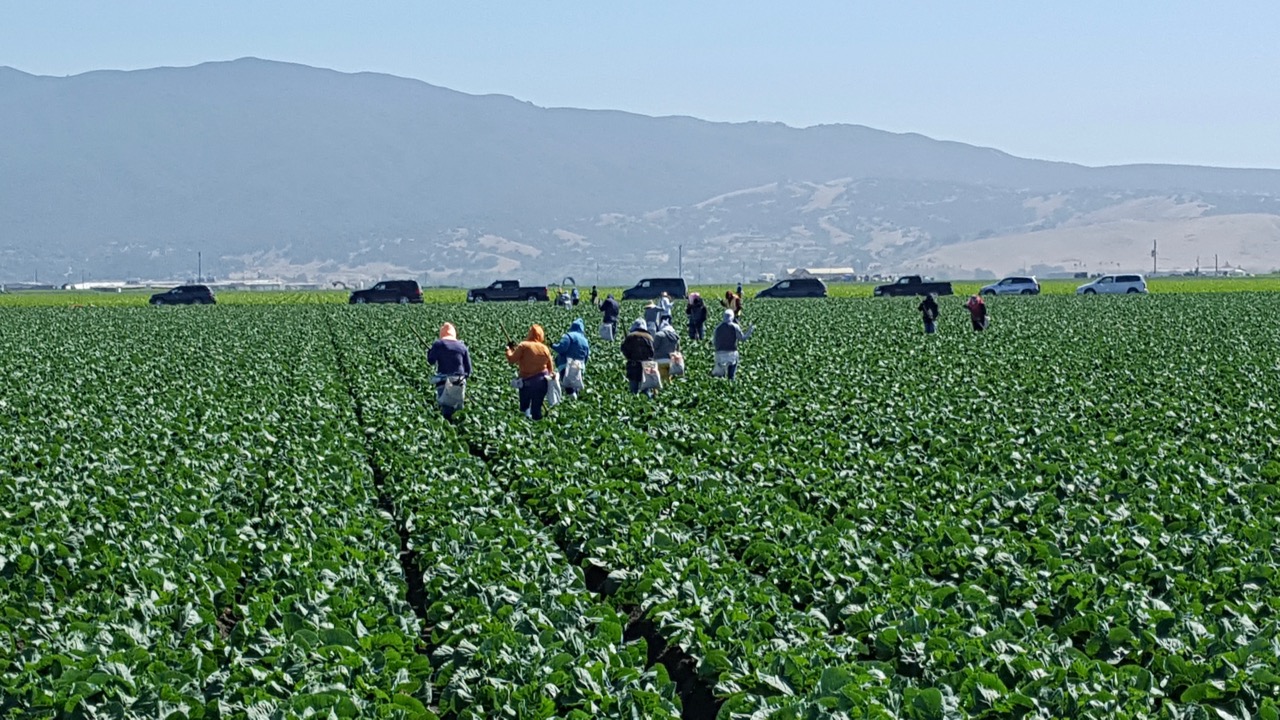
On Tuesday, Sept. 5, one day after Labor Day, busloads of concerned farmers and farm workers will arrive at the Supreme Court of California in San Francisco to support Gerawan Farming and farm workers—and quite possibly 80,000 family farms in the state—against forced unionization in the first case on the Court’s agenda:  Gerawan Farming, Inc. v. Agricultural Labor Relations Board (United Farm Workers of America, Real Party in Interest) and Consolidated Case, S227243 (Kline, P. J., assigned justice pro tempore).


Gerawan Case History

Explaining the case history, David Schwarz, attorney for Gerawan Farming, Inc. from the Los Angeles-based law firm of Irell & Manella LLP, said, “This case began almost five years ago in mid-October of 2012. The United Farm Workers (UFW) sent a letter to Gerawan Farming demanding that the company resume bargaining over a collective bargaining agreement. The UFW had won an election at Gerawan in 1990 and was certified to represent the workers by the California Agricultural Labor Relations Board (ALRB) in 1992. After one preliminary negotiating session in early 1995, the union disappeared and wasn’t heard from by Gerawan for nearly 20 years.”


“The UFW resurfaced in late 2012 demanding negotiations,” Schwarz stated, “but after ten bargaining sessions, the union abandoned the bargaining table.” This scenario was similar to UFW’s behavior after having won several certification elections by California farm workers employed on separately-owned farms but was unable to obtain first contracts with many growers on behalf of these farm workers.


Farm Worker Rights under the Agricultural Labor Relations Act 

According to the ALRB website, all agricultural employees in California, whether or not they are represented by a labor organization (union), have certain rights under the Agricultural Labor Relations Act (ALRA or Act). The purpose of the Act is to ensure peace in the agricultural fields by guaranteeing justice for all agricultural workers and stability in labor relations. The ALRA became law in 1975.

The Act describes and protects the rights of agricultural employees to make their own decisions about whether or not they want a union to negotiate with their employer about their wages, hours, and other working conditions. Where the employees, through a secret ballot election, have selected a union to represent them, the Act requires that the employer bargain in good faith with the union concerning wages, hours, and other working conditions.

The Agricultural Labor Relations Board (ALRB) is the state agency established to enforce the Act.


Mandatory Mediation and Conciliation (MMC)

“At this juncture, UFW invoked a process known as “Mandatory Mediation and Conciliation (MMC), a euphemism for forced-contracting, passed by the legislature in 2002 at the behest of UFW,” Schwarz explained. “Through MMC, the State of California imposes a contract on the employer and its farm workers at the union’s request. In Gerawan’s case, the failure to reach a contract can be explained by the failure of the UFW to show up and attempt to negotiate; however, that failure to bargain—or for that matter, the union’s complete abandonment of the Gerawan farm workers—was deemed irrelevant in the eyes of the ALRB.”

Count our votes Farm workers' rights UFW Endorsement

“The ALRB argued that the union certification in 1992 means the UFW remains the perpetual representative of Gerawan workers now and forever,” said Schwarz, “and until such time as the workers vote the union out through a petitioned election process known as decertification.” The ALRB disregarded both UFW’s failure to represent Gerawan farm workers in any successful contract negotiation and the UFW’s failure to qualify to collect union dues from Gerawan farm workers. Most significantly, the ALRB disregarded the legally-sanctioned and ALRB-supervised election on November 5, 2013, in which Gerawan farm workers had the opportunity to vote to decertify the UFW or not—the ballots of which have never been counted and are believed to be stored in an unknown, unsecured location.


“Let’s be clear,” Schwarz explained, “at no point after this union was certified until this union invoked the MMC process, was there an allegation that Gerawan refused to show up or refused to negotiate the terms of the contract. So this is not a case about a grower refusing to show up at the bargaining table or a grower inserting that the abandonment forfeits the right of the union to bargain.”


“Rather, this is a case about whether or not the union’s abandonment means that it forfeits the right to compel the State of California to force a contracting process on the workers. And that’s the key difference: between duty to bargain, which is a continuous bargain, and the right, as the union claims, to impose a state-ordered contract.”


What is at Stake for Farm Workers?


Tal Cloud, president and co-founder of Fresno-based family-owned Paper Pulp & Film, Inc., a converter of printing and industrial papers, including raisin (drying) trays, is part of the team that organized the trip. Cloud said, “The UFW and the California ALRB are hoping the California Supreme Court will rule in their favor by forcing unionization on California farms and farm workers—the next flash point in the two-decade long battle between Gerawan Farming and the UFW.”


“People don’t understand that this is incrementalism,” Cloud said. “If the California Supreme Court rules against Gerawan, it literally puts every agricultural operation of any size in the state right in the “bulls-eye” for mandatory UFW unionization, and that is what is so concerning. And although people do not understand it, the laws are already all there; they just need to be formalized. So, yes, it is really scary.”


“The ALRB has power in these courts due to California legislators who have given the ALRB all these powers, but without checks or balances,” said Cloud. “So, you have an agency that basically plays god with people’s lives and there are no legitimate governmental organizations or courts looking at it, until now that [the forced unionization case] has come to the California Supreme Court.”


The upcoming California Supreme Court hearing follows the UFW’s appeal of a lower court ruling in favor of Gerawan on the same issue in 2015. “We are hoping that the Court goes by the law, and does not give [the ALRB and UFW] this kind of opportunity to really put all of our operations in California at risk for forced unionization and forced contracts,” Cloud said.


“The bus trip on Tuesday is to make a statement and not sit by silently. The hearing is at 9:00 A.M., and more than 300 people from the Valley are going. We are leaving at 3:30 AM, providing food for our passengers and protesting outside the Supreme Court. The UFW also will be rallying at the Supreme Court.


It remains uncertain if farm workers will be allowed inside the courtroom. Cloud said, “There has already been a lot of back and forth about not allowing any farm workers, or Silvia Lopez (the Gerawan farm worker spokesperson) into the courtroom. The attorneys are still fighting on that. But there will be a big protest, so to speak, outside.”


“There are public areas for us to be in, and we will be peaceful like all the other demonstrations that we have done,” Cloud said. “My hope is that everyone stays safe and we do not have extremists or rabble-rousers there who try to cause problems.”


Cloud said there is a glimmer of hope for the farming industry because the UFW lost to the lower courts. “But, you just don’t know. We are hoping these farmers, farm workers and protesters will bring attention to this issue,” he said.


Once the California Supreme Court hearing is completed, the court will have 90 days to make its ruling. “The reality is:  If agriculture does not get behind the effort against MMC now, and the California Supreme Court reverses the lower court’s decision, literally every farming organization in California could face unionization. And that is a scary thought,” said Cloud.


“Likewise, if the ruling goes against the UFW,” Cloud said, “I am sure the case will go to United States Supreme Court, which would certainly be a do-or-die point for agriculture.”


Who Safeguards CA Farm Workers’ Rights? Part 6 – Facts vs. PR



2019-12-25T15:36:31-08:00September 4th, 2017|

Real California Dairy Stories Told

California Milk Advisory Board Rolls Out New Social Media Series

By Aiden Glaspey, Editorial Intern

The California Milk Advisory Board, based in Tracy, recently released a new social media series called Real California Dairy Stories. California Ag Today spoke to Jennifer Giambroni, the director of communications with the California Milk Advisory Board, about the project.

“It’s a series of short, analyzed videos with our dairy families because when we talk to consumers, it’s really sharing the story, not just about the food, but about the families. So it’s all about returning to real. Real foods from real families, kissed by the California sun.”

Giambroni said the dairy food story is easy to tell.

“Obviously everyone loves dairy products. They love dairy foods. But we really want to get to know the farmers behind the seal. Why do you care if you buy that Real California Milk product? It’s because you’re supporting actual dairy families.”

“So Real California Dairy Stories goes into the field with our California Dairy Families, and just tells little ‘moment in time’ stories. We just launched this on our social media platforms. They’re all on our YouTube channel at Real California Milk,” Giambroni said.

And another place to view those unique videos is at the RealCaliforniaMilk.com website.

2017-09-02T23:11:57-07:00September 1st, 2017|

Blue Tech Valley Innovation Cluster – Part 1

Blue Tech Valley Funded by California Energy Commission

By Patrick Cavanaugh, Farm News Director

The Blue Tech Valley Central Valley regional innovation cluster represents an expansion and interconnection of multiple incubators in entrepreneurship programs, with services located at each of the seven designated Blue Tech Valley cluster hubs, collectively serving 39 counties and covering two-thirds of California’s geographic area. Funding for the new cluster is provided by a $5 million grant from the California Energy Commission.

The designated hubs for the Blue Tech Valley innovation cluster features Fresno State as the central portion. Other hubs include: CSU Bakersfield, Chico State, Humboldt State University, Cal State University, Monterrey Bay, Sacramento State, and a Sierra small business development center.

California Ag Today recently spoke with Erik Stokes of the California Energy Commission Research and Development Division. Blue Tech Valley was part of a major $60 million initiative the Energy Commission launched about a year ago to really try to create a state-wide ecosystem to support clean energy entrepreneurship across the state.

“As part of this initiative, we created four regional innovation clusters to manage a network of incubator-type services that can encourage clean tech entrepreneurs in the region and really try to help make what can be a very tough road towards commercialization a little bit easier,” Stokes said.

“Blue Tech Valley and their partners were selected to be the Central Valley cluster. A big reason for that was their strength and expertise in the food and agricultural sector,” he explained.

One of the focus areas of the incubator is to find areas in farming to save costs and minimize greenhouse gases.

“We really want to focus on those technologies that can help both reduce water use, as well as energy use,” Stokes said.

2021-05-12T11:05:15-07:00August 30th, 2017|

PowWow Energy Gets Major Funding

The Central Valley Angel Group Invests in PowWow Energy, Inc.

News Release

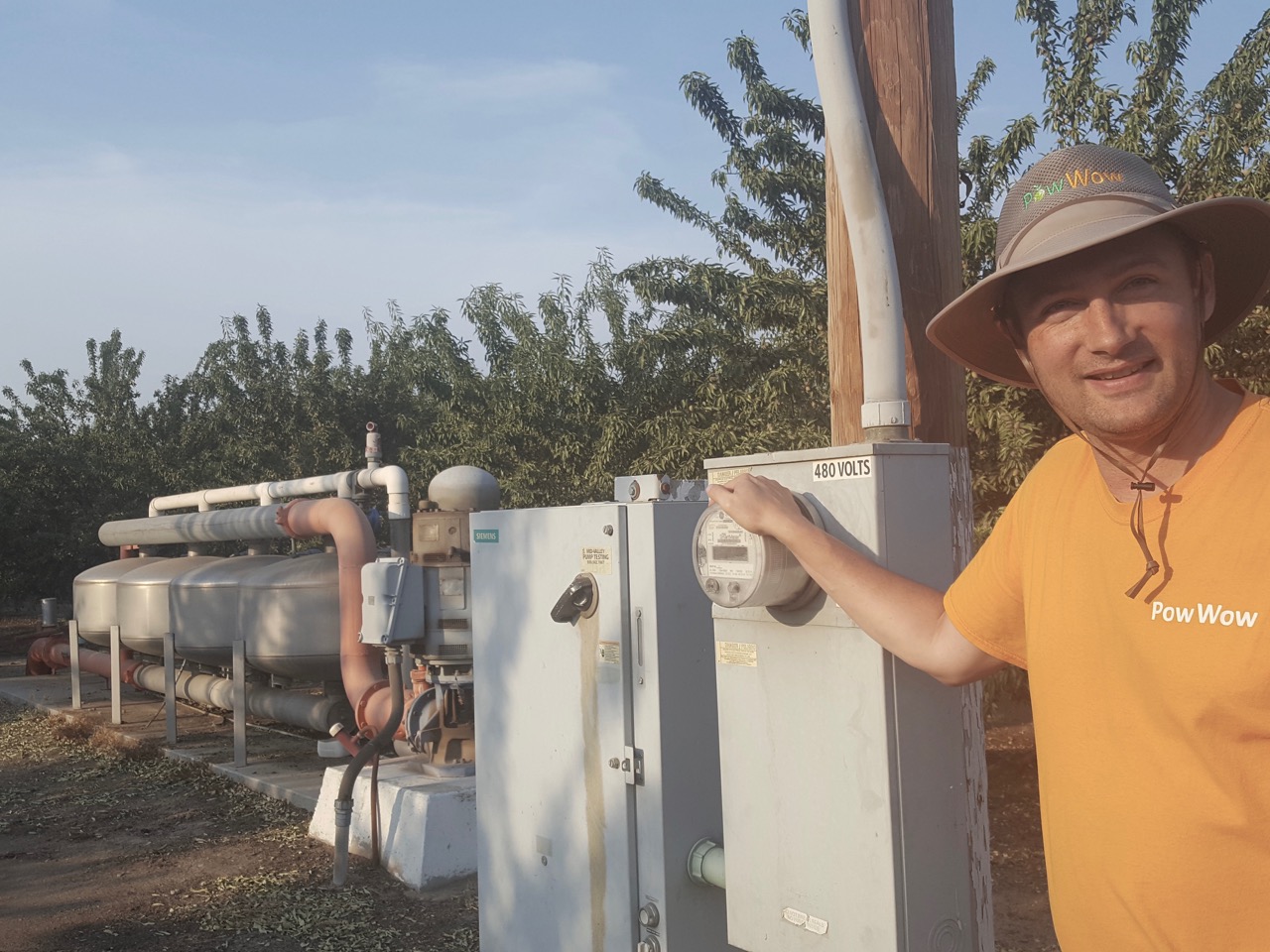
PowWow is applying data science to solve practical problems in agriculture. It provides a simple water compliance solution using a clever algorithm that turns energy data into useful text alerts and water records for growers.

The team of agronomists and computer scientists are extending the data-mining platform with 100 Terabits of aerial images and weather forecasts to identify where farms can recover revenue losses and improve their bottom-line.

Fund Chairman A. Emory Wishon said, “We are thrilled to invest in a company that is passionate about working with farming communities to save water and energy while preserving quality crops.”

PowWow CEO Olivier Jerphagnon added, “Central Valley Angel Group’s investment expands PowWow’s presence in the San Joaquin Valley. We started to work at the Water and Energy Technology incubator in Fresno three years ago, and we’ve taken the time to work closely with growers to understand their needs”.

The local commitment of Central Valley farmers and investors, when combined with the experience of Silicon Valley technology entrepreneurs and investors, strengthens the unique dual culture of PowWow Energy, which is critical to its continued growth and success.

Formed in September 2015, Central Valley Angel Group is a $1 million+ fund whose members are accredited investors. The Central Valley Angel Group invests in high-growth, early-stage companies that are located within the region. In addition to making a return on its investments, the goal is to educate local Angel investors and create ongoing investment capital to help the Central Valley’s start-up economy thereby retaining businesses and supporting job growth.

To learn more about the Central Valley Angel Group or to apply for funding visit www.centralvalleyangels.com

Contact: A. Emory Wishon III, Chair, Central Valley Angel Group, 559-439-4000

2021-05-12T11:05:16-07:00August 29th, 2017|

Maintaining Food Safety – LGMA Part 3

Understanding the Farming Operation

By Jessica Theisman, Associate Editor

California Ag Today met recently with Jon Kimble, and among other topics, he reported on food safety in the state of California. Kimble is the operations business development manager at Safe Food Alliance.

Jon Kimble, Safe Food Allicance

Safety is a big concern for those who work in the agricultural community. Kimble spoke on how it is important that farmers assess those on their property.

“If you see somebody getting out, and getting into your fields, certainly you want to talk to them and make sure they are not going to impact the safety of your products, because that is your financial future.”

Operations such as U-Pick, people out in the fields, or people part of an activity raise concern. Risks may be managed in terms of providing hand washing, communication, putting up signs, and making sure they understand that they can impact the safety of others when they’re out in the field.

“It really comes down to just practical due diligence, activities, recommendations that come right out of the good agriculture practices that has been developed over the past few decades,” Kimble said.

Kimble also spoke to California Ag Today about the Leafy Green Marketing Agreement (LGMA). This puts standards and measures in place to protect the safety of the crops.

“That is a great example of voluntary activity rising up from within the industry to control risks and control hazards,” he said.

The industry has established the best practices, which have led to a world class food safety program through the LGMA.

“The first compliance dates are coming up in January, and I think a lot of growers do not realize how soon their compliance dates are hitting,” Kimble said.

2021-05-12T11:05:16-07:00August 23rd, 2017|

Expert Talks Protecting Our Food Supply And Industry

Maintaining Food Safety – Part 2

By Patrick Cavanaugh, Farm News Director

Continuing our series on food safety in the state of California, we spoke with Jon Kimble, Operations Business Development Manager at Safe Food Alliance, and he explained the need for worker awareness when it comes to protecting our food supply.

“Too often, we see these recalls on foods where people are getting ill. Many times, it gets tracked back to an employee. Somebody’s got a virus, somebody’s got a bacteria, they’re sick,” Kimble said. “They come in contact with the food while they’re ill, and that translates back to getting out in the food supply and making people sick.”

“That’s what we’re trying to minimize. In a practical sense, in cases where we’ve observed people getting sick from things, we track that back, see what the source is, and try and share that information with everybody so that they can minimize that from happening in the future,” Kimble explained.

There are economic implications to consider as well.

“It is really paramount to prevent not only economic damage to your own farm and your own business, but also an entire industry,” Kimble said. “We see [that] one bad apple affects the whole industry.”

“We’ve even seen situations, such as a few years ago ,where there were some contaminated peppers, but they suspected tomatoes initially. It impacted an entire year’s harvest of tomatoes,” Kimble said. “We want to minimize the damage to the industry, and how people protect their businesses legally, by doing the right thing.”

Buyers are also setting a higher standard of quality, in light of the new rule.

“The regulation does set a minimum requirement, but buyers, customers, purchasers are setting a higher standard,” Kimble said.

“We’re seeing that trickle down effect as a result of the Food Safety Modernization Act (FSMA), that even folks who aren’t necessarily required to do certain things in their operation are being asked by their customers to do above and beyond what the regulation requires, and even in advance of their compliance dates for the regulation.”

“We’ve seen it both on the processing side and on the growing side, that customers are starting to raise their expectations for growers,” he said.

This is Part 2 of a 3 Part Series.

2017-09-02T23:13:09-07:00August 23rd, 2017|

FSMA Produce Rule – Part 1

Mandatory Training Under Way

By Patrick Cavanaugh, Farm News Director

Jon Kimble, the operations business development manager at Safe Food Alliance in Sacramento, spoke to California Ag Today recently about the Produce Rule of the Food Safety Modernization Act (FSMA)

“The new produce safety rule that FDA has released under FSMA is a rule for growers,” he said. “For part of that rule, certain trainings are required, and the training that we’re conducting has been approved by the FDA. It’s been developed by the Produce Safety Alliance, and meets those requirements that they want to have a supervisor or somebody involved in the operation trained according to this training or equivalent to it.”

“We’re very excited, in that we are working with the California Farm Bureau Federation on many of these trainings. We’re looking forward to working with growers and helping them understand what the regulations say and some practical ways to apply the regulations within their operation,” Kimble said.

Kimble explained that the mandatory training covers every aspect of the operation. “Things that you’re doing before planting, during harvest, and even afterward when the produce is being handled in packing houses,” he said.

The training entails topics such as worker hygiene, water control, soil amendments – the whole gamut of the operation.

“The focus is minimizing potential contamination. We all understand that a farm is not sterile,” Kimble said. “We also understand there are potential sources of contamination that need to be minimize. That’s the focus: minimizing contamination – and the main primary emphasis is really on microbial or biological hazards.”

“Of course, there are chemical and physical hazards, but FSMA is focused on microbiological, including bacteria, viruses and parasites,” he said.

This is Part One of a Three Part Series on Maintaining Food Safety


2017-09-02T23:12:52-07:00August 22nd, 2017|

Chlorpyrifos Under More Scrutiny in California

California Regulators Pursuing Health Protections for Chlorpyrifos

News Release

The California Environmental Protection Agency (CalEPA) announced recently that both the California Department of Pesticide Regulations and the Office of Environmental Health Hazard Assessment are pursuing health protections on one of the most widely used agricultural pesticides in the nation, chlorpyrifos.

The Department of Pesticide Regulation (DPR) released an updated draft risk assessment for public comment. This action marks the start of a public and scientific review of the document, which could lead to increased restrictions on chlorpyrifos statewide. DPR is currently developing interim restrictions on use of the pesticide and recommendations will be made to county agricultural commissioners next month.

In addition, the Office of Environmental Health Hazard Assessment (OEHHA) is referring chlorpyrifos for potential listing as a developmental toxicant under Proposition 65. OEHHA recently posted an announcement that the state’s Developmental and Reproductive Toxicant Identification Committee will consider the listing of chlorpyrifos at its next public meeting.

 “While chlorpyrifos has been protecting crops for more than 50 years, new information in the scientific community leads us to believe the level of risk it poses is greater than previously known,” said CalEPA Secretary Matthew Rodriquez. “We need to better understand the science to ensure our actions protect public health. The actions we are taking today reflect our commitment to the health and safety of all Californians, and the environment.”

Department of Pesticide Regulation

DPR scientists believe chlorpyrifos may pose a public health risk as a toxic air contaminant based on its assessment of the latest studies in the scientific community. However, this new finding, indicated in the updated draft risk assessment has not been peer reviewed and must go through a public comment period and be independently evaluated by other scientists.

On September 15, DPR will hold a public workshop on the updated draft risk assessment at the Pesticide Registration and Evaluation Committee meeting in Sacramento.

After the 45-day written public comment period, which began August 18, DPR’s updated draft risk assessment will go before an independent panel of nine scientists known as the Scientific Review Panel (SRP). The thorough review process, which may ultimately lead to more restrictions on use, may conclude in December 2018.

Next month, DPR will provide county agricultural commissioners with specific interim recommendations, including:

  • Increasing distances between sites where the chemical is applied and sensitive locations, such as homes and schools. These would be specific to each type of application method.
  • New restrictions on methods used to apply chlorpyrifos.

Office of Environmental Health Hazard Assessment

OEHHA will soon open a written public comment period on scientific materials that describe the evidence for the developmental toxicity of chlorpyrifos.  OEHHA will provide the materials and the written public comments to the Developmental and Reproductive Toxicant Identification Committee. The committee is an independent panel of 10 scientific experts that determines whether chemicals are added to the Proposition 65 list as causing birth defects and other reproductive harm. The committee will also consider public comments presented at its November 29 meeting.

If the committee adds chlorpyrifos to the Proposition 65 list as a developmental toxicant, businesses that knowingly cause exposures above minimum levels must provide a Proposition 65 warning.

DPR’s updated draft risk assessment and other documents relating to chlorpyrifos are available at:http://www.cdpr.ca.gov/docs/whs/active_ingredient/chlorpyrifos.htm

OEHHA’s notice of the November 29 meeting of the Developmental and Reproductive Toxicant Identification Committee concerning chlorpyrifos is available at: www.oehha.ca.gov.

2021-05-12T11:05:16-07:00August 21st, 2017|

Raley’s Wants More Fresh Produce

Raley’s Owner Mike Teel On California Farmers

By Patrick Cavanaugh, Farm News Director

California Ag Today recently had an exclusive conversation with Mike Teel, the owner of the Raley’s Supermarket chain, which has 135 locations throughout California and Nevada. We asked him what he’s looking for in terms of the produce produced by farmers in California.

“We’re looking for fresh, and any new products that could be in development, because that’s what differentiates us from the rest of the competitors,” Teel said.

“You know, there are new products coming on, and while most of them are not in the produce and fresh arena, there are interesting ways to combine and bring fresh produce and different combinations for our consumers. We’re a great chain for that, because we’re not too big, but yet not too small,” Teel explained.

Teel told us that Raley’s being based in California does have an advantage in being close to the farming industry. “It does make it easier for us to get it into the market faster,” he said.

And Teel said that consumers want to know more about the produce they’re buying. “Today’s consumer wants to know where their food comes from, and who’s producing it,” Teel said.

“They want to have somewhat of a relationship, even if it’s just the knowledge of who they are, particularly if they’re a family business, and so we try and highlight that,” he continued. “We have great relationships with our producers.”

Teel added that consumers would like to see an image of the farmer on the package. “I think they want to see that. They want to have a connection with the source of their food, and so any way that we can convey that to our consumer, whether it is with photographs or information at point of sale, or highlighting them in an ad, where it be online or on television. I think it resonates with the consumer.”

2017-09-02T23:14:31-07:00August 18th, 2017|

Expert Emphasizes Farm Equipment Safety

Nut Harvest Safety – Part 4

By Jessica Theisman, Associate Editor

On the job injuries are all too common in agriculture when working with tractors and other machinery. We spoke with Paul Williams, a senior loss prevention consultant with the State Compensation Insurance Fund, about the importance of farm equipment safety.

One big safety concern is unguarded PTO shafts and missing guards, which could also lead to a hefty fine. Checking these areas are part of the preseason inspections that should be done at harvest. Farmers should get out there and make sure everything is working properly.

Farm Equipment Safety

Paul Williams

“It is cheaper to repair equipment in the shop than it is trying to make the repairs in the field. Just proper maintenance and making sure things are properly guarded,” Williams said.

According to Williams, wearing seat belts while operating tractors is also extremely important. “Every year we get these fatalities operating tractors. Fifty fatalities a year maybe in tractors; they’re all so preventable,” he said.

“We are all used to driving cars in our California, wearing our seat belt. We get on farm equipment, all of the sudden we don’t know what that seat belt’s for anymore,” Williams said. “There are all kinds of excuses for not wearing a seat belt. At the end of the day, your safety is worth the extra three seconds it takes to put one on.”

Even if your tractor has rollover protection, it is very important to wear a seat belt as well. A lot of safety equipment is the cause of death when a worker does not wear their seat belt.

“They are ejected and tractors roll over and what kills the worker? It is that rollover protection that crushes them into the ground,” Williams explained.

Many workers rush because they think that it makes them more efficient. If you are being rushed, you are putting yourself at risk.

“The whole idea at the end of the day is to go home to your family, safe. Be able to return the next day to your work. You should always work to provide, to live, not live to work,” Williams said.

2017-09-02T23:21:23-07:00August 17th, 2017|
Go to Top