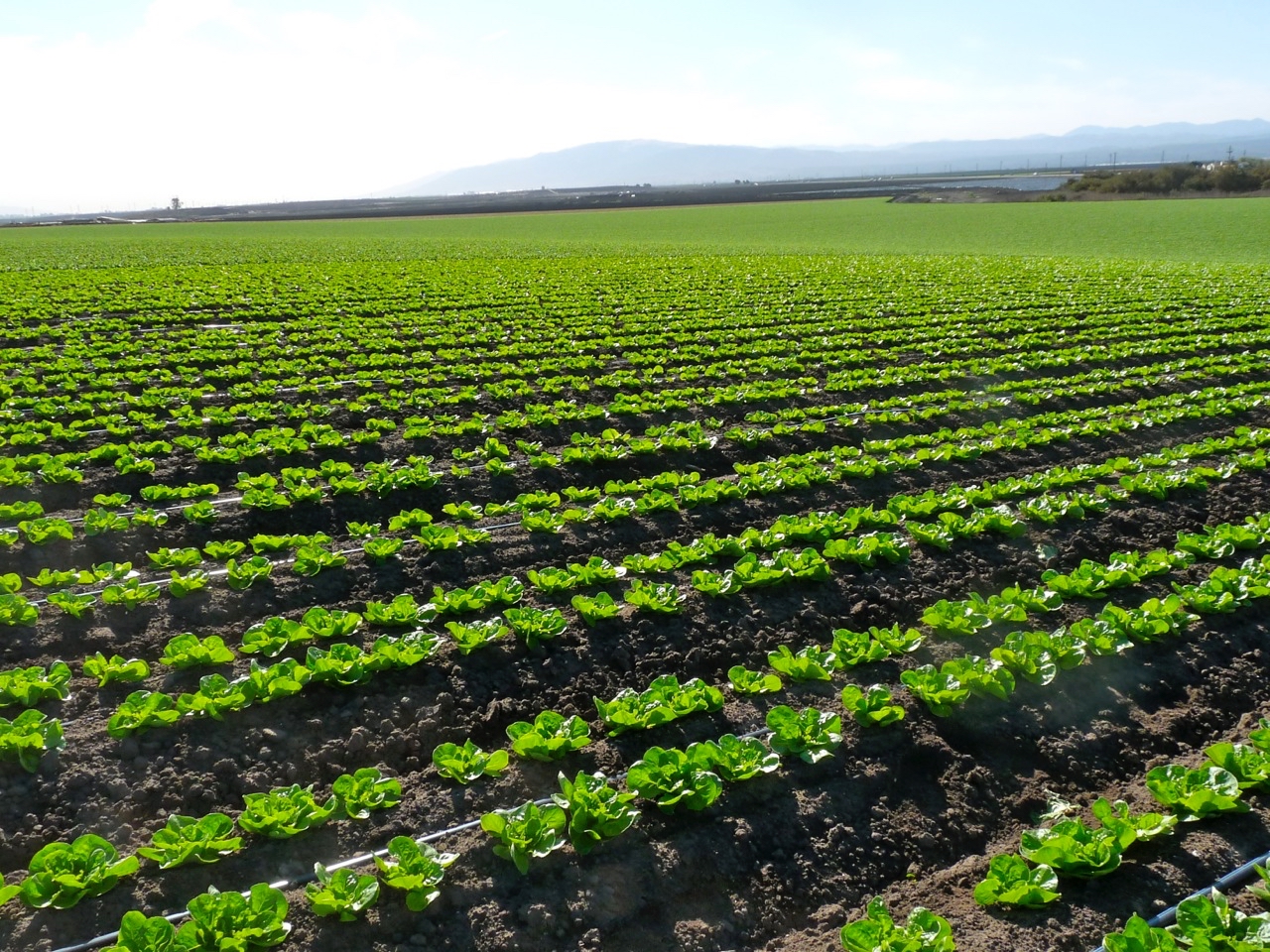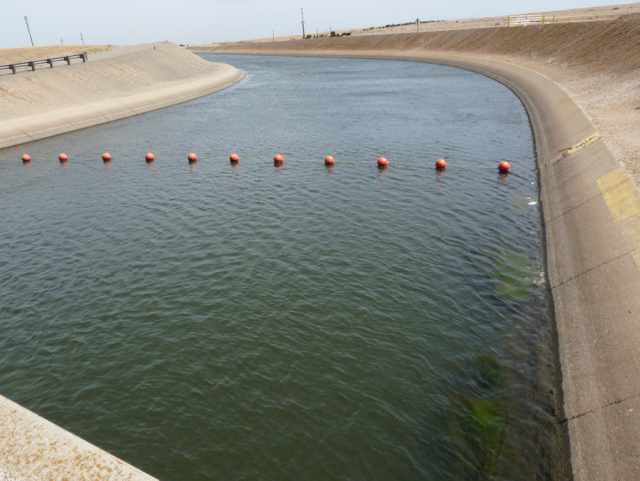
Water Reductions Would Devastate Valley

Big Study Shows Loss to Central Valley Economy with Loss of Water

By Patrick Cavanaugh. Farm News Director

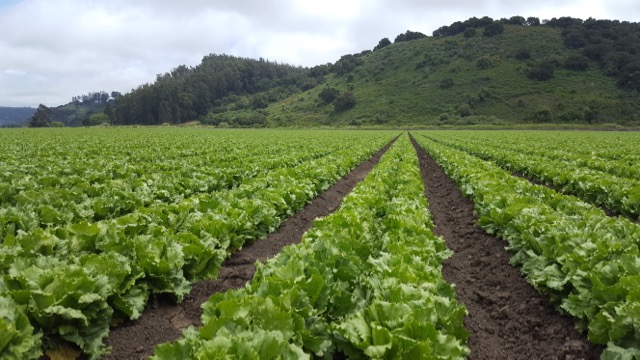
A new study entitled, “The Implications of Agricultural Water for the Central Valley,” by Dr. Michael Shires of Pepperdine University, shows the economic implications of water in the Central Valley, and the potential outcome of continued water reductions in agriculture.

Agriculture is a major part of California’s economy, and this study illustrates both the outcome of increased water allocation and the potential growth that would come with it, or what could happen to the economy if this decline continues. This continued loss of water would result in a huge increase in the unemployment rate. Fresno would require 6.2 billion in solar farm investment annually to replace agricultural jobs that would be lost.

Johnny Amaral is the Deputy General Manager of External Affairs of the Westlands Water District. We spoke with him about Dr. Shire’s study, and what it means for the Central Valley. Shires is an economics professor at Pepperdine.

“He’s been involved for years, and has done economic reports and studies for other organizations and other groups with a particular interest in how public policy affects the economy and certain industries,” Amaral said. “And a couple of years ago, we started working with Dr. Shires in this debate over public policy as it relates to water.”

A lot of false information circulates about water use and agriculture. Most of this misinformation leads to a general negative opinion about agriculture, especially when it comes to water use.

“We’re constantly dealing with misinformation, deliberate misinformation about water policy, about agriculture,” Amaral said.

“You hear all the buzz words all the time about ag uses 80% of the water, which is not true. We’re constantly dealing with misinformation, so we thought it would make sense to have a document put together, a study done to show just what agriculture means to the Central Valley and to the state,” Amaral said.
2021-05-12T11:05:15-07:00September 18th, 2017|

Who Safeguards Farm Worker Rights? – Part 8

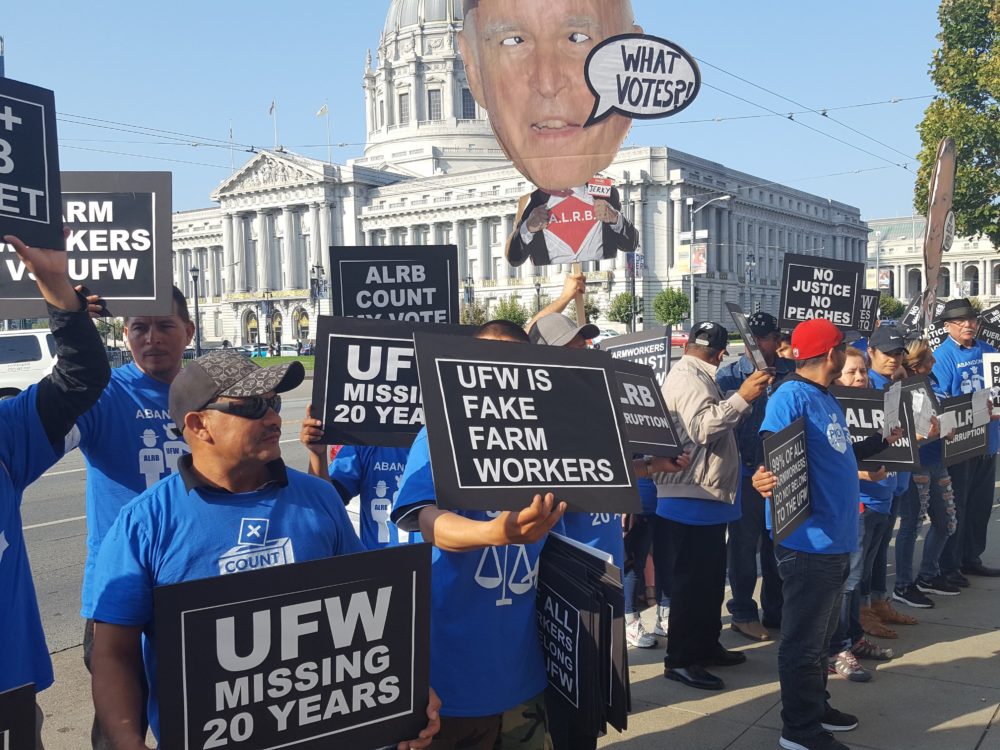
Pick Justice, Gerawan Farm Workers Protest Forced Unionization


By Laurie Greene, Founding Editor


Jesse Rojas, spokesperson for Pick Justice, a farm worker rights group (not a union) organized a rally of farm workers last week at the California Supreme Court building in San Francisco to bring attention to the court hearing on the UFW’s effort to force unionization on farm workers at Gerawan Farming, Inc.—despite having abandoned the workers for nearly 20 years. Over 150 Gerawan workers traveled from the Central Valley to protest the UFW/ALRB team that is pushing for forced unionization of these farm workers via the justice system through Mandatory Mediation and Conciliation (MMC).

Jesse Rojas, spokesperson for Pick Justice (PickJustice.com)

Gerawan workers, dressed in blue Pick Justice t-shirts and armed with company ID cards and pay stubs to demonstrate authenticity, chanted at the UFW protesters who wore red UFW t-shirts. Rojas said the UFW individuals were apparently not Gerawan farm workers and were paid to be there. “All attending [in our group] are employees of Gerawan Farming,” he stated.

“I wish all 3,000 Gerawan workers could have come today like they’ve done in the past,” Rojas said. “But they actually have to work because they are real workers and they don’t get paid to come here. They miss days of work. A lot of them are going to get written up. They are going to get into trouble. They have had to find babysitters to take care of their kids; they are real workers.”

Rojas explained the focus of the demonstration is the need for these employees to choose their own future. “At this point, what is really important for them—not just them, but for all farm workers in the state—is simply to have the freedom to choosefreedom to vote.”

“Why would they have to be forced into a contract without reading it, without negotiating it, without approving it?” Rojas asked. “It’s not the American way. That’s not a democracy. The most fundamental civil right that all employees have is the right to vote if they want a union or not or if they want a contract or not.”

“But they are not getting those rights. Why not them? It is their right to vote and have their votes counted,” Rojas said.

If the Court imposes mandatory mediation, Rojas said the outcome “would affect about every farm worker in the state, almost 800,000 of them. The rights of the workers would be taken away.”

“The way mandatory mediation and conciliation works is the ALRB, the state government, has the right to write and impose a contract on employees without their approval,” Rojas explained. “In the Gerawan case, they will not have the right to strike or protest like they are doing today.”

“On top of that, this so-called contract will actually lower their take-home pay,” said Rojas, because mandatory UFW union dues totaling three percent of their paychecks would be imposed on the workers. If any of them refuse to pay the union as a condition of employment, they will be fired.

The justices of the California Supreme Court have until December 5th to make a ruling.

To see a video of Jesse Rojas speaking to California Ag Today, click here.


PickJustice.com celebrates freedom of choice for farm workers. As posted on their website:

We are concerned citizens who support the rights of workers to choose whether or not they want to have a union represent them. We are standing up for workers who are victimized by a politicized government agency.

Freedom of choice is a human right. People who are not educated are deprived of their freedom by those who are educated.

PickJustice.com exists to educate the public about the corrupt relationship between a once-noble union and the dishonest attorneys at the California Agricultural Labor Relations Board (ALRB). We want to help social change to show that, once a union has violated the trust of those it purports to represent, that union no longer votes for the workers.

As César Chávez himself said, “Once social change begins, it cannot be reversed. You cannot un-educate the person who has learned to read. You cannot humiliate the person who feels pride. You cannot oppress the people who are not afraid anymore.”

A generation ago, many farm workers were afraid of their employers. That isn’t the case anymore.

Thanks to organization against social injustice and a greater consciousness of producers and consumers alike, the plight of thousands of farm workers in America is over.

In César’s words more than three decades ago: “The very fact of our existence forces an entire industry – unionized and non-unionized – to spend millions of dollars year after year on improved wages, on improved working conditions, on benefits for workers.”


Who Safeguards California Farm Employees’ Rights? – Part 9  Court Allows UFW to Force Representation and Dues on Gerawan Employees


2019-12-25T15:48:07-08:00September 14th, 2017|

Farmers Appreciate Leafy Green Marketing Agreement

Leafy Green Marketing Agreement Raises Bar

By Jessica Theisman, Associate Editor

The Leafy Green Marketing Agreement took huge steps in the advancement of food safety.

Scott Horsfall, CEO of the California of the Leafy Green Marketing Agreement, said, “In 2007, there had never been government inspectors on the farm on a routine basis related to food safety.”

Many other regulators such as the Department of Public Health would often check in on businesses. However, there had never been a routine food safety oversight program on the farm.

Farmers joined this agreement voluntarily. “All of these companies that have joined, and been in the program since 2007, they do so voluntarily, and they pay the freight,” Horsfall said. This raises the bar for food safety and provides value to the industry.

Farmers, who were wary at first, came back to Horsfall saying, “They sleep better at night knowing that they’ve got this program in place, that the auditors are going to be there.”

The California Leafy Green Marketing Agreement continues to improve. Every year, the numbers are studied to see what areas have a continuing problem.

“We have used that to decide what to create in a training program. We hope that we’re helping the industry to better comply with these standards as we go along too, by offering the training,” Horsfall said.

For more information, visit the California Leafy Green Marketing Agreement web page.


2017-09-14T16:03:16-07:00September 14th, 2017|

Fresno State’s WET Center Home to BlueTechValley Entrepreneurs

BlueTechValley Series – Part 3

By Patrick Cavanaugh, Farm News Director

We’re continuing our series on California Ag Today regarding the BlueTechValley Initiative, which was established on the Fresno State campus in 2011, and part of an innovation cluster that provides access to commercialization services that will accelerate innovation and growth of water and energy-oriented companies in 39 counties from central to northern California.

We spoke to Helle Petersen, the manager of the Water, Energy and Technology Center – also known as the WET Center – at Fresno State, where BlueTechValley is centered.

“The WET Center is a physical building located on the Fresno State campus, and it has six offices for entrepreneurs that want to grow their water, energy or agricultural business and be around companies that share those same visions and the same business,” Peterson said. “The WET Center also has a testing lab to test different kind of water technologies.

“The WET Center is very unique. I haven’t really seen anything at any university that’s the same. It was built in 2007 as a partnership between Fresno State and what used to be the Central Valley Business Incubator, but now it has rolled in under the International Center for Water Technology, and it’s part of their program,” Peterson said.

Petersen said it is a very busy place. “As I mentioned, we have six offices, but we also have about 30 other company startups … [and] also more mature companies that are members of the center, and they really want to be part of the community, if you will, because there’s something synergetic about working with companies or maybe talking about some of the same problems you have when you work in the same industry.”

Peterson said the WET Center is expanding for those entrepreneurs that may be coming out of town.

“Actually what we’re doing is across the street … there’s another smaller building that we are actually incorporating into the WET Center, and we’re going to build an additional six offices there, plus a plug-and-play space,” she explained. “ Let’s say you have a tech company out of the Bay Area and you’ve kind of outgrown that space, because you’ve realized you need to be in the central San Joaquin Valley if you have anything to do with agriculture. So you can come down here for a few days a week or a month, and you have a workspace. You also will have a conference room that you can all use.”

This is part of an ongoing series on the BlueTechValley Innovation Cluster, which includes entrepreneurs at several California State Universities and the Sierra Small Business Development Center. It’s all about finding efficiencies in water and energy.


2021-05-12T11:05:15-07:00September 13th, 2017|

Tony Francois Suggested Duarte Settle

Judge Refused to See New Evidence in John Duarte Trial, Forcing Him to Settle

By Patrick Cavanaugh Farm News Director

Duarte Nursery, its president John Duarte, and legal counsel, Pacific Legal Foundation, agreed to a settlement with the federal government over the Army Corps of Engineers’ nearly five-year enforcement action for Duarte’s routine plowing of his wheat field in late 2012, said PLF senior attorney Tony Francois, who represents Duarte, gratis.

PLF Attorney Tony Francois

Among the main reasons for Duarte’s settlement is the judge’s refusal to consider new evidence regarding the restored condition of the vernal pools on Duarte’s land, which were at the nucleus of the controversy.

“Vernal pools are wet six to eight weeks out of the year due to rainfall,” according to Francois. “They have a kind of hard pan underneath them, so the water stays in place for a bit.”

“On August, 15, the morning of the trial, we intended to provide the judge with current evidence of the good condition of the vernal pools to show there was no significant harm to the environment from plowing the property,” Francois said.

“However, the government persuaded the judge to exclude that evidence,” Francois explained. “The government claimed that vernal pool-specific vegetation would not recover from being plowed.”

“We also were prepared to show how any significant penalty would affect Duarte Nursery and its ability to maintain its workforce. The judge allowed some older evidence, but excluded the most current evidence, basically, of the company’s ability to pay,” he said.

“Both rulings were significant because the court was supposed to consider those two factors in imposing their penalty,” Francois explained. “The judge actually acknowledged that excluding evidence of the current condition of the vernal pools would make a material difference on how large a penalty would be imposed.”

“Nonetheless, the judge excluded evidence on the legal grounds that it would be unfair to the government because they had not asked for or taken any steps to update their own information,” Francois said.

Francois explained how easily they could have demonstrated the vernal pools were undamaged.

“First, the vernal pools themselves are all still there. Second, the government’s own evidence shows that all the vernal pools still exist,” he said. “Our experts went out there last year and this year and showed that, with normal rainfall, the vernal pools are doing fine. The vegetation is healthy and fairly abundant, with all the right types of plants present. Basically, our evidence showed there was no harm done to the vernal pool from plowing.”

“Now, some of the scars to the vernal pools from government’s excavation may still be there,” he continued. “That, I have not seen, myself. But, as far as the plowing, our evidence that it had not harmed the vernal pools, is what the court excluded.”

According to Francois, the government claimed that Duarte’s current evidence was unfair to them because they had not taken any opportunities to update their own experts’ view of the property or to request access for inspection. “The result of the ruling was to cut off consideration of how plowing affected the vernal pools to the time period when California was in the midst of a multi-year drought,” he said.

“We think there were a number of ways the government could have looked at the evidence, if it were admissible, and responded to it, including driving to the property and observing several of the vernal pools from the road. In fact, seeing the vernal pools from the roadside is what lead the Army Corps to claim the violation in the first place,” Francios noted.

Duarte did not get a permit, according to the Clean Water Act, to plow the land, but Francois explained, “That is not really the problem. The problem is, a farmer reads the Clean Water Act that says ‘normal farming practices’ do not require a permit. The farmer knows what normal farming practices are; I would think that everybody knows that plowing is a normal farming practice.”

“You read a little further, and the regulations actually say that plowing to produce a crop is never even a discharge under the Clean Water Act. Plowing, in a very wide general sense, is not even regulated by the Army Corps of Engineers. It’s not a question of the type of plowing or if plowing in this location requires a permit. The law speaks clearly and broadly and says that you do not need a permit.”

“Nevertheless, the U.S. Army Corps of Engineers, backed up by the Justice Department, has reinterpreted what plowing and normal farming practices are in a way that is very unclear as to when they will think you need a permit and when they will think you don’t. So, if they think you needed a permit, and it never occurred to you that you would need one, this is what can happen to you. We deposed several employees and even officials with the Army Corps of Engineers about their understanding of all this. They were pretty clear; there is no way for a farmer to know without asking the Army Corps in advance what a normal farming practice is.”

“The entire U.S. agricultural industry is up against this scenario right now. One of the interesting things about the Army Corps’ approach—‘Just come and ask us’—is what how their press release announced the settlement,” according to Francois. “Anybody who wants to is welcome to come and ask us and we’ll tell you what you have to do.”

“Here is how that works in practice,” Francois explained. “You can go and ask the Army Corps. They are going to say you need to prepare an expensive study on whether there are any navigable waters on your property, and then we’ll tell you whether we agree with it or not. Then, you have to tell us everything you’ve done in the past and everything you plan on doing, and we will tell you whether what you plan to do is normal.”

“They way they view it, ‘normal’ does not mean ‘something that farmers normally do.’ They reinterpret ‘normal’ to mean something done routinely done on this property. If you have not done the particular practice on this property routinely in the past, they think of the practice in terms of conversions, changes in use and zoning. Their view is if you are changing things, you probably need a permit if there is anything they consider navigable waters on the property,” he said.

“So, for example, this property was in the Conservation Reserve Program for a number of years under a prior owner. The Army Corps convinced the judge in this case that because it had not been plowed in several years, plowing was no longer normal on this property. How many farmers who have their land enrolled in the Conservation Reserve Program are aware that the Corps of Engineers is going to expect to get their permission to resume plowing it?”

The United States Department of Agriculture (USDA) Farm Service Agency (FSA) oversees the Conservation Reserve Program (CRP). According to the CRP website, “In exchange for a yearly rental payment, farmers enrolled in the program agree to remove environmentally sensitive land from agricultural production and plant species that will improve environmental health and quality. Contracts for land enrolled in CRP are 10-15 years in length. The long-term goal of the program is to re-establish valuable land cover to help improve water quality, prevent soil erosion, and reduce loss of wildlife habitat,” Francois said.

“Or, let’s say, you have been through a business reorganization, an estate process, or just for market reasons, your land has been fallow for a few years,” Francois said. “Perhaps you have not built something or put the land to grazing. After all those scenarios, the Corps of Engineers told us there is probably a permit required.”

Farmers may view these activities as normal farming practices that do not need a permit, only to learn at the end of this process, a permit was warranted.

Francois believes, “In essence, the Army Corps has taken a protection from permitting in the Clean Water Act and turned it into a permit application in which, randomly, they will tell you, ‘Thanks for filing this expensive and time-consuming permit application. You don’t need a permit.’ ”

“We are optimistic that even though these issues are not properly resolved in this case, we will continue litigating these issues until the courts clearly reinforce and enforce the clear protection for farming in the Clean Water Act. We believe that farmers, and really all citizens, all regulated parties, should be able to rely on the clear text of the law rather than be subject to all this after-the-fact rewriting, reinterpreting and explaining away that the Corps has done in cases like this.”

2017-09-11T22:03:28-07:00September 11th, 2017|

Dave Cogdill Will Be Remembered at Temperance Flat Dam

Dave Cogdill Remembered For His Water Priorities

By Jessica Theisman, Associate Editor

Dave Cogdill, a former state senator (2006 to December 2010) and the California State Senate Republican Leader from 2008-2009, has passed away at the age of 66. Cogdill was instrumental in getting Prop 1 through the state House and Senate and onto the ballot. Mario Santoyo, executive director of the San Joaquin Valley Water Infrastructure Authority, shared his thoughts on the late Dave Cogdill and his influence on California water.

The late Dave Cogdill

“Many thank Cogdill for the success that Temperance Flat Dam has been seeing,” Santoyo said. “He is the guy who made this happen, yet not enough credit has been given to him. Those of us who have been involved know what he contributed.”

“Senator Cogdill initiated some water bonds for water storage when he was in the Assembly. He wrote the water bond in 2009 and facilitated getting it across the table with both Republicans and Democrats. I can safely say Senator David Cogdill was a consistently strong proponent for water service storage and the one individual who had the most to do with the ability to have Temperance Flat built,” Santoyo said.

“Lots of folks could be characterized as being critically helpful; but if it wasn’t for Cogdill, nothing would have happened in terms of developing big water storage,” Santoyo said. “Many wish to memorialize him at Temperance Flat Dam, whether it is a plaque or some portion of it being called Cogdill, because he deserves it”.

OF NOTE:

Cogdill was awarded the Profile in Courage Award from the John F. Kennedy Library Foundation for his actions during the 2009 state budget fight for joining Governor Schwarzenegger in putting the people’s needs above party.

2017-09-11T16:11:56-07:00September 11th, 2017|

SGMA Workshop Features GSA Updates

SGMA Workshop Sept. 20

Clovis Veterans Memorial District

Join the Department of Water Resources (DWR) staff for an interactive workshop to discuss DWR Sustainable Groundwater Management Act (SGMA) implementation efforts and key components of Groundwater Sustainability Plan (GSP) development.

The workshop will feature groundwater sustainability agency (GSA) formation updates, assistance & engagement information; guidance, data, and tools overviews; interactive forums on Groundwater Sustainability Plan development; and information booths on the Proposition 1 Sustainable Groundwater Planning Grant Program (SGWP).

Don’t miss the opportunity to meet DWR’s SGMA Program and Region Office Staff! Information booths will open at 12:30 P.M.

The workshop will be held on September 20, 2017, from 1 PM to 5 PM at the Clovis Veterans Memorial District, 808 Fourth Street, Clovis, CA 93612.

Please RSVP for the workshop by clicking here.  Registration is not required but is appreciated to ensure suitable accommodations for all attendees. This workshop is free of charge and is open to all interested persons and the public.

2017-09-08T16:56:14-07:00September 8th, 2017|

Who Safeguards CA Farm Workers’ Rights? # 7 – CA Supreme Court

CA Supreme Court Hears Case of Gerawan Farming, Inc. vs. UFW/ ALRB


By Laurie Greene, Founding Editor


Gerawan Farm Workers Show Company IDs and Paystubs (Identification has been blurred out for privacy reasons.)

A significant labor hearing occurred at the California Supreme Court (Court) in San Francisco yesterday, the day after Labor Day, between the team of the United Farm Workers (UFW) and the California Agricultural Labor Relations Board (ALRB or Board) versus Fresno County-based Gerawan Farming, Inc. over self-determination. At stake is the right of farm workers to determine if they want to be represented by the union or not. Under scrutiny is the Mandatory Mediation and Conciliation (MMC) provision of the Agricultural Labor Relations Act that paves the road for the UFW to force unionization on all farm workers.


Anthony Raimondo, of Fresno-based Raimondo & Associates, lawyer for Gerawan farm worker spokesperson, Silvia Lopez

“Although Gerawan farm workers attempted to participate in this hearing, as well as other hearings, they were denied legal participation in the trial by the state of California and by the UFW,” according to Anthony Raimondo, of Fresno-based Raimondo & Associates and lawyer for Gerawan farm worker spokesperson, Silvia Lopez. Nevertheless, hundreds of Gerawan employees in blue t-shirts attended the proceedings and protested outside the courthouse, lending their voices, exercising their free speech and showing their legitimate Gerawan company ID cards and payroll stubs.


Dan Gerawan, who co-owns Gerawan Farming, Inc., with his brother Mike and father Ray, commented on the court hearing just after it ended. “It is frightening to see the deference that the Court gives to the ALRB. Everyone in our industry and all farm workers should be scared by the deference this Court gives to a Board that is clearly not interested in the employees’ best interests.” Describing his perceptions in the courtroom, Gerawan said, “It was Orwellian to hear the government attorneys argue that they are defending self-determination, when in fact, what they are doing is the exact opposite.”


“That said,” he continued, “I am encouraged by the questions I heard from the Court. They obviously are taking this very seriously, and I’m hopeful that they will side with our employees and us.”


Silvia Lopez, Gerawan farm worker spokesperson

Members of the UFW were also present at the Court in red t-shirts, though only one person claimed to be a Gerawan employee. Marc Grossman, spokesperson for the United Farm Workers of America and communications director of the Cesar Chavez Foundation, said that the Gerawan operation should be unionized because the UFW was elected in 1990 by Gerawan farm workers and certified in 1992 by the ALRB.


However, the UFW did not successfully reach a contract for the Gerawan farm workers, and therefore did not collect dues. Furthermore, the UFW abandoned the Gerawan farm workers for nearly 20 years.


Grossman said the Court discussed today the long-standing principle that a union is certified until it is decertified. Workers have a right to decertify the union but it has to be the workers—not the company. It is patently illegal for an employer to have anything to do with determining union representation by his or her employees.

Marc Grossman, spokesperson for the United Farm Workers of America


When asked to account for UFW abandonment of Gerawan farm workers, Grossman said, “Bogus issue! The UFW never abandoned the workers at Gerawan. It repeatedly attempted to negotiate with Gerawan. At every step, it was met with virulent resistance by the company. It became apparent that only a law that would allow neutral state mediators to be brought in to hammer out a union agreement when the grower refused to do so would be the only course, and we followed it.”


Grossman asked us to read the September 5 ‘News from UFW’ press release he provided, entitled, “Giant grower challenging law giving farm workers the union contracts they voted for already owes its workers $10 million under a state-imposed union contract.”  Here are excerpts:


What about Gerawan’s claim the union “abandoned” the workers for 20 years?

Even before the Mandatory Mediation statute was adopted in 2002, the ALRB and the courts consistently rejected employer claims that unions should not be deemed workers’ bargaining representatives if they allegedly “abandoned” them. It is long-established law that a union remains certified as bargaining representative until workers—and only workers—vote to decertify it. At the time of the law’s passage in 2002, Gerawan was one of the 243 companies where farm workers voted for the UFW but the companies never agreed to contracts. (See UFW-Gerawan chronology)

1995-2002: Gerawan workers and the UFW continued working to improve conditions while the ALRB stopped enforcing the farm labor law under Republican political appointees.

2002: The Mandatory Media law was enacted. The agricultural industry mounted a major constitutional challenge.

2006: The Third District Court of Appeals in Sacramento upheld the Mandatory Mediation law. The industry appealed to the state Supreme Court, which refused to take the case. The industry declined an appeal to the U.S. Supreme Court—and the law’s constitutionality was settled.

2012: The UFW sent a new negotiations request to Gerawan. At least 10 bargaining sessions failed to produce a union contract.

March 2013: The UFW requested mandatory mediation at Gerawan with the ALRB.


The above chronology vaguely refers to UFW involvement between 1995 and 2002 that remains unsubstantiated. UFW contact with Gerawan farm workers appears to have been reestablished in 2012.

Dan Gerawan, co-owner Gerawan Farming, Inc.

Dan Gerawan, co-owner Gerawan Farming, Inc.

The ALRB did supervise a sanctioned election for Gerawan farm workers to decertify the UFW on November 5, 2013; however, the ballots were collected, sealed and never counted.

When told that UFW representative Grossman said they never walked away, Gerawan asked, “If they didn’t abandon, then where were they for almost two decades? They did not phone us or send us a fax. They did not show up on our property. They did not inquire on behalf any of our employees. They did not file an unfair labor practice. They did nothing during that time. They abandoned our employees.”

Ron Barsamian, attorney for Gerawan Farming, Inc.


One of Gerawan’s attorneys, Ron Barsamian, managing shareholder of Fresno-based Barsamian & Moody, stated, “I’m very encouraged. I think the Justices’ questions indicated that they understood the issue we were raising. I think they certainly read the briefs. I think they understand the difficulty in how locked-in workers, such as the [Gerawan] ones behind us, can be under the way this law works: if you have an MMC contract, [the workers] never have an opportunity to decertify the union. Even the questions asked by the justices that we expected to be against us were great, and I certainly loved the answers that Mr. Schwartz gave.”

David Schwarz, attorney for Gerawan Farming, Inc.


Barsamian was referring to another Gerawan attorney, David Schwarz, from the law firm, Irell & Manella, who addressed the central issues of the case: “I think it was a full and fair hearing. I think the Court—all members—are deeply concerned about the unaccounted for two-decade [UFW] absence, an unaccountable power given to a mediator [ALRB], and uncheckable power given to the union [UFW] to compel one grower and one group of employees into this process. Ultimately, I think the justices were very much focused on and troubled by the inability of the [ALRB] agency to step in in a situation of gross abandonment where a contract is being imposed by that agency.”


The California Supreme Court typically releases it decisions and commentaries after 90 days.

Protesting are Gerawan farm workers (in blue) and UFW members (in red)

Protesting are Gerawan farm workers (in blue) and UFW members (in red)


Who Safeguards Farm Worker Rights? – Part 8

Pick Justice, Gerawan Farm Workers Protest Forced Unionization


2019-12-25T15:44:52-08:00September 6th, 2017|

LGMA: A Decade of Protection – Part 1

California Leafy Green Marketing Agreement Now 10 Years Old

By Jessica Theisman, Associate Editor

Scott Horsfall, CEO of California Leafy Green Marketing Agreemen

After a severe E.coli outbreak nearly a decade ago, California took steps in ensuring the safety of consumers through the creation of the California Leafy Green Marketing Agreement (LGMA). We met with Scott Horsfall, CEO of the California Leafy Green Marketing Agreement, which is managed by the CDFA, to talk about the topic.

“The Marketing Agreement was actually created February of 2007. The outbreak was in the fall of 2006 and then, for a few months, the industry worked with the government to figure out what to do, and they created this Marketing Agreement,” Horsfall said. “The Marketing Agreement was moving fast and in the right direction. The leaders of the industry came together or appointed to that initial board of directors. With the little staff, it was those people and their internal staffs who did all the heavy lifting.”

The outbreak was the driving force behind the creation of this Marketing Agreement.

“They saw the impact that the tragic outbreak had on businesses, consumers, and on individuals. The will was there on the part of the industry to do something quickly and I think they brought in the people who had the expertise,” Horsfall said. “The California Department of Food and Agriculture (CDFA) were there with the marketing agreement option. Also there was the Western Grower’s Association, Produce Marketing Association and United Fresh. They were all putting up their best people to figuring out a solution.”

2017-09-06T15:05:59-07:00September 6th, 2017|
Go to Top