The Quick Math on Navel Orangeworm

The Math on Navel Orangeworm Sanitation

By Patrick Cavanaugh, with AgInformation Network

Get a napkin out. Let’s do some math on navel orangeworm sanitation. The numbers really matter.

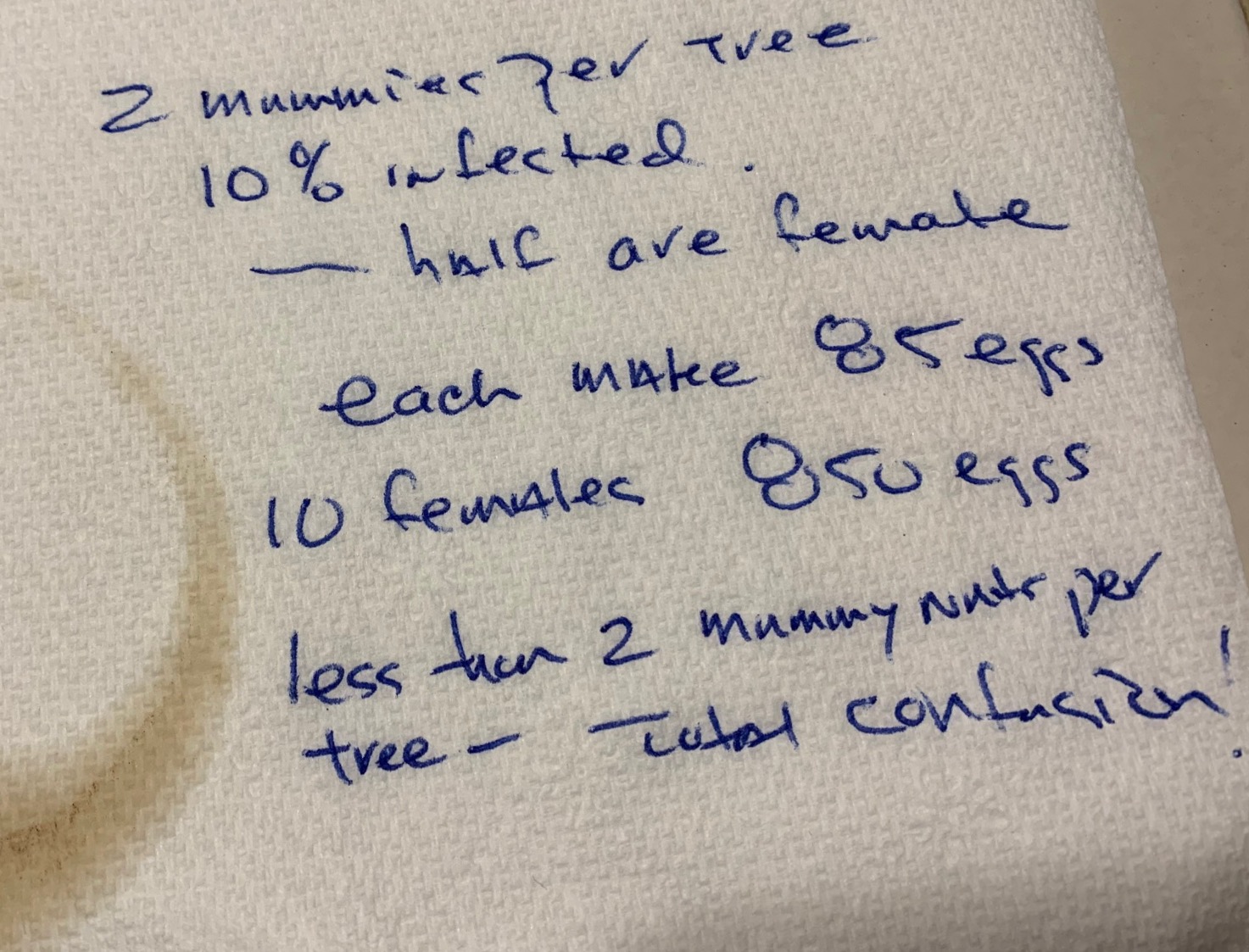
David Haviland is a UCANR Cooperative Extension Entomologist in Kern County. “I just want to do a little bit of a back of a napkin math. Just think about this scenario. If you’re down to two mummies per tree, if 10% of those were infested, you assume that half of any worms in there are going to be females. And each of those females, when it comes out, it’s going to make 85 eggs. Just roughly look at that scenario,” noted Haviland.

“In that case within an acre, you’re going to have 10 females that are all coming out at different times that are all competing to lay 850 eggs. And they’re trying to do that in 200 nuts. They’re also trying to find mates in the process,” explained Haviland.

“And if you think about it, each one of those females, in order to lay 85 eggs, they have to find a nut in a tree, fly around the tree, find another nut, lay an egg, and so on. They literally have to fly to 42 different trees to lay one egg in each nut, if you’re down to two nuts per tree,” he said.

And that’s the goal with sanitation, no more than two mummy nuts per tree. “So, you know, all that’s being done uncoordinated, of course, sometimes they’re flying back to the same nuts. Sometimes there’s a nut that isn’t even suitable. Sometimes there’s already an egg in that nut,” Haviland said.

Haviland noted: You’re just creating a lot of chaos! “When you can get under two mummies per tree,” he said.

“And when you think about it, any egg that you prevent from being laid in May is one less moth at hull split. So, sanitation is extremely important and we do recommend that everybody do their best attempt,” he said.
2021-01-07T18:13:24-08:00January 7th, 2021|

High Density Avocado Farming

New Avocado Study Outlines Costs/Returns of High-Density Plantings

By Pam Kan-Rice  UCANR Assistant Director, News and Information Outreach

Growers considering producing avocados in San Diego County with high-density plantings now have help to determine the economic feasibility. A new study on the costs and returns of establishing and producing avocados in San Diego County has been released by UC Agriculture and Natural Resources’ Cooperative Extension, UC Agricultural Issues Center and the UC Davis Department of Agricultural and Resource Economics.

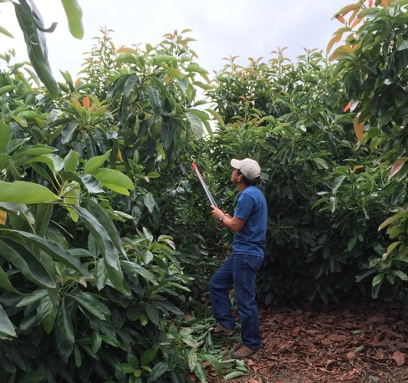
UCANR Cooperative Extension Advisor Gary Bender, checks sunlight penetration in a high-density avocado orchard.

Avocado has been one of the prominent crops produced in Southern California since the early 1950s. California avocado production peaked in 1987-88 with about 76,300 acres. San Diego had been the leading producer accounting for about 60% of the acreage.

“Beginning in the early 1980s, there has been a continuous decline of acreage and production of avocados in San Diego County, said Etaferahu Takele, UC Cooperative Extension farm management advisor for Southern California and co-author of the study. “This is mainly because of the expansion of urban development that has increased the cost of producing the crop and especially the cost of water, reaching to up to $2,000 per acre feet in 2020.”

High-density planting increases profitability of avocado production given there is suitable land for high-density orchard development.

Although the cost of water accounts for 44% of the total production cost in the high-density planting, the water cost is proportionally less than in the conventional planting of 145 trees per acre when distributed over a higher yield per acre, the authors write.

Their cost analysis describes production operations for avocados planted at 430 trees per acre, with an expected life span of 40 years. The study includes a detailed summary of costs and returns and a profitability analysis of gross margin, economic profit and a break-even ranging analysis table, which shows profits over a range of prices and yields. Growers can identify their gross margin and returns to management based on their yield and prices received.

Input and reviews were provided by a UC Cooperative Extension farm advisor and grower cooperators in San Diego County. The authors describe the assumptions used to identify current costs for avocado establishment and production, material inputs, cash and non-cash overhead.

The new study, “Avocado  Establishment and  Production Costs and Profitability Analysis in High Density Planting, San Diego County-2020,” can be downloaded for free from the UC Davis Department of Agricultural and Resource Economics website at http://coststudies.ucdavis.edu and UCCE Riverside County Farm Management website at https://ucanr.edu/sites/Farm_Management/Costs_and_Returns. Sample cost of production studies for many other commodities are also available on the websites.

For additional information or an explanation of the calculations used in the studies, refer to the “Assumptions” section of the report or contact Takele at (951) 683-6491 Ext. 243 or ettakele@ucanr.edu or Donald Stewart at the UC Agricultural Issues Center at destewart@ucdavis.edu.

2021-01-05T19:11:54-08:00January 5th, 2021|

Improving Food Safety

Government, Academia and Farmers Join Forces to Improve Food Safety

By  April Ward, LGMA Director of Marketing and Communication

On November 19, 2020 the U.S. Food and Drug Administration announced the launch of a longitudinal study in partnership with the California Department of Food and Agriculture (CDFA), University of California Davis, Western Center for Food Safety (WCFS) and agricultural stakeholders in the Central Coast of California.

In recent years several E. coli O157:H7 outbreaks have been linked to lettuce. In an effort to find the cause of these outbreaks and arm farmers with a way to prevent them, this multi-year project will examine how pathogens survive and move through the environment and possibly contaminate produce. FDA will work closely with water quality, food safety, and agricultural experts, representatives from various agriculture industries, and members of the leafy greens industry.

As a part of the project, research teams will aim to determine potential sources of contamination by collecting and examining samples from the environment including adjacent lands, well and surface waters, soil inputs that include compost, dust and animal fecal samples.

U.S. FDA:

The findings from this study will contribute new knowledge on how various environmental factors may influence bacterial persistence and distribution in this region, and how those factors may impact the risk of leafy greens becoming contaminated. Results from this collaboration will lead to improved practices to prevent or mitigate food safety risks, and ultimately enhance the safety of leafy greens grown in California.

CDFA Secretary Karen Ross:

California leads the world in leafy greens production and innovation. Industry and food safety officials are proud to partner on this in-depth scientific study protecting public health.

Dan Sutton, Chairman of the California LGMA and General Manager of Pismo Oceano Vegetable Exchange:

The California LGMA completely supports this joint effort spearheaded by the U.S. Food and Drug Administration. LGMA members are committed to safe leafy greens and look forward to any findings that will help to make our crops safer for consumers. We are pleased to see wide participation from industry, academia and regulators. All of these stakeholders bring different strengths to the project and share a common goal of improving food safety for lettuce and leafy greens.

A similar study is being conducted in the Yuma, Arizona growing region.

2021-01-06T18:27:55-08:00December 30th, 2020|

SGMA Resource for Growers

New SGMA Resource for Underrepresented Growers

By Tim Hammerich, with the Ag Information Network

Vicky Espinoza is a PhD candidate at UC Merced who is researching the impacts of the Sustainable Groundwater Management Act on agricultural land use. She noticed that there weren’t enough resources out there for underrepresented growers about SGMA, especially those who English is not their first language. So she developed a series of bilingual videos and posted them on a new YouTube channel: CaliWaterAg.

“Hopefully through CaliWaterAg, they can obtain what is SGMA, how does it impact them and how they can become involved. Because you know, our growers and communities can attend Groundwater Sustainability Agency meetings, and they could voice their concerns and any suggestions that they may have for developing solutions,” said Espinoza

Those videos are free on YouTube and can be found just by searching CaliWaterAg. Espinoza is also hosting a series of workshops on the topic next month.

“So it’s really a channel to inform, empower and encourage them to become involved in the conversation. And I will be hosting a workshop January 13th in English and January 14th in Spanish to talk to growers and community members, answer any questions they may have regarding the series, SGMA, land use or land re-purposing options that I go over in the fourth video of the series,” noted Espinoz.  “And to listen to them, to listen to their perspectives and what they think about land re-purposing options and to address groundwater overdraft.”

2020-12-21T18:02:01-08:00December 21st, 2020|

Dan Sumner on Almond Industry


Economics Of The Massive and Growing California Almond Industry

By Patrick Cavanaugh, with the Ag Information Network

Dan Sumner is a Distinguished professor in the Department of Agricultural and Resource Economics at UC Davis, as well as the Director of the UC Agricultural Issues Center at UC Davis.

“Of course, we’ve seen this coming for a decade. So, we’ve known that the bearings acreage was going to continue to go up because we’ve got the non-bearing acreage, and that’ always coming up,” Sumner said. “We don’t know for sure how many acres will be pulled, but nobody’s surprised that we have a massive crop.”almond crop

“The question is long-term demand. Do we get used to lower prices? There’s a million-dollar question. Actually, that’s a billion-dollar question, isn’t it? And nobody really knows the answer and I’m not going to pretend like I do either,” said Sumner.

“And we do know as well that even though you can’t grow almonds, very many places everybody’s trying to figure out whether the can expand outside of California. So,we know it’s a world crop and California dominates the world,” Sumner said. “It’s not just our additional size of crop, but it’s the rest of the world as well. And you can do a few almonds in Australia and you can do a few almonds here and there, and everybody’s going to try to figure out they can expand,” he said.

“And so, I don’t see any long-term disaster going on and almonds that is to say demand will continue to grow. But the real question is can demand keep up with the very rapid production increases. And the answer is maybe,” explained Sumner.

2020-12-17T18:01:07-08:00December 17th, 2020|

Blue Diamond Growers Love Cooperative

Growers are Loyal to Blue Diamond Growers

By Patrick Cavanaugh, with the Ag Information Network

Blue Diamond Growers, is the only cooperative in the almond industry, and it has loyal growers. Charles Crivelli is a Walnut and almond grower in the Stanislaus County area. He’s a member of Blue Diamond Growers and he loves being part of that Cooperative.

“Blue Diamond is the only cooperative and bit is the largest almond processor in the world. It’s been a real leader in the industry working along with the Almond Board of California and a dynamic organization— constantly developing new product lines, and they spend a lot of time on promotion marketing, truly been a leader in the industry,” said Crevelli.

“There’s about a 110- plus independent processors. And then there’s the Blue Diamond Co-op, with 3,000 members give or take. It’s a dynamic organization, and an organization that I have really enjoyed being a part of,” Crevelli said. “And the CEO Mark Jansen has done a fantastic job. Just doing a phenomenal job and leading the organization in the industry.”

And Jansen’s been heading up the co-op for more than 10 years.


Blue diamond Growers was founded in 1910, which means the Co-op is 110 years old this year.

2020-12-16T18:19:47-08:00December 16th, 2020|

Individual 24/7 Bee Monitoring Now Available


ApisProtect Has Launched in the US

More than ten years of research, decades of beekeeping, three years of validating and testing, over 15 million anonymized data sets and more than 20 million honey bees monitored. There have been a few challenges along the way but the day is finally here.

“We are delighted to launch our new technology now exclusively available in the United States. There are a limited number of monitors available now,” said ApisProtect VP of Sales Dennis Kautz.

“Watch our short video here to demonstrate just how quickly and easily our monitors can be installed in the hive,” noted Kautz

“Our science-based honey bee monitoring technology empowers beekeepers to manage their apiaries more efficiently, reduce labor and transport costs, and focus on cultivating larger and stronger colonies. Using ApisProtect, beekeepers can generate an additional $98 of value from each hive per year,” Kautz said.

Commercial beekeepers in the United States will now be able to drive operational improvements, including increased labor efficiencies of up to 50% and reduced transportation costs during pollination by up to 25%.

Deciding which hives to send to pollination is important and time-consuming. “We provide beekeepers with an instant condition report on each hive so they can identify strong hives to travel to the almond orchards. This ensures beekeepers can fulfill their pollination contracts, earn bonuses, and increase productivity for growers,” Kautz said.

ApisProtect works with the beekeepers to ensure they have the strongest hives to maximize revenue from the pollination season. “Critically, we give beekeepers control of their information and data, enabling them to maximize the value to their operation,” noted Krautz.


2020-12-15T18:44:03-08:00December 15th, 2020|

Agreeing on Water Needs

Sixth Generation Farmer and EDF Director Discuss Water Challenges

By Cannon Michael and Ann Hayden

Despite a seemingly endless era of upheaval – a surging pandemic, contentious election cycle and racial strife – we still have the responsibility to address pressing issues that cannot wait for calmer times. The future of California’s water is one of those issues.

While collaboration and relationship building have been made even more challenging due to distancing required by COVID-19, we believe that water is an issue where we can rise above party lines and entrenched perspectives.

Cannon Michael, Sixth Generation Grower

Water is the backbone of California’s agricultural economy, supports our iconic rivers, and of course, is essential to our survival.  Simply put, water is a lifeline that binds us together, and without it, we jeopardize our future and that of coming generations.

Could now be the time to collectively start down a better path for managing this precious resource and roll up our sleeves to make it happen? We think so.

For decades, fighting over water has stalled progress and sown deep mistrust across different water users.

We have forgotten that we are all stewards of California – a special place like no other, a rich connected tapestry of environmental beauty, diverse communities and productive agriculture.

We need to come together as Californians – not just farmers, environmentalists, rural community organizers and urbanites. We need to come together as Californians working for our children and future generations who are depending on us to leave them with a better California than we have today.

We need to come together to solve some admittedly difficult water challenges that affect the future of rural communities, cities, wildlife, farming in the Central Valley and consequently our country’s food supply. Drought and water scarcity are high on the list of these challenges. During our last major drought, the Sustainable Groundwater Management Act was enacted as one major piece of the solution to ensure we have enough water for future generations.

Looking forward, 2021 will be an important year for moving ahead on implementation of this sweeping change to water law. The state will be rolling out its first assessments of sustainability plans developed by regions with the most critically overdrafted groundwater supplies.

Balancing groundwater supply and demand, as required by the law, will no doubt be challenging: Some models say San Joaquin Valley landowners may need to take equivalent acreage to Yosemite National Park out of production to balance groundwater supply and demand.

To reach durable, fair solutions to such large challenges, we need to drop the baggage we’ve amassed over time. We need to come together as Californians to start collaboratively tackling problems – not just talking and arguing them. We need to come together and break the cycle of mistrust and take the time to truly understand how each side views the challenges and potential solutions.

It’s unlikely we will agree on everything – if we did California wouldn’t be the dynamic, diverse state it is today. But there is significant common ground we can build from. For instance, we all agree every single person in California should have clean and affordable drinking water when they turn on their kitchen faucet.

We also agree that replenishing groundwater is one of many solutions we will need to comply with the Sustainable Groundwater Management Act. But it’s not the only solution; it’s inevitable that we still will need to scale back some agriculture.

The question we need to address is, how can we make sure that agriculture can still thrive while some farmland becomes productive in new ways, whether it’s with less water-intensive ranching, low-impact solar projects, wildlife habitat or recreational areas for our families to enjoy on picnics and hikes?

Taking action to address these challenges may mean parts of our state and the very communities we live in will look different from how they look today. But if we can come together as Californians to get it right, California will evolve and endure as the special place it is today for generations to come.

We have decades of experience coming at water challenges from our silos. Let’s break down those silos, come together as Californians and see what happens. Isn’t it worth a shot?

Cannon Michael is a sixth-generation farmer and president and CEO of Bowles Farming Co., headquartered in Los Banos, cannon@bfarm.com

Ann Hayden is senior director of western water and resilient landscapes at Environmental Defense Fund, ahayden@edf.org

This document first appeared in WaterWrights.net


2020-12-14T11:32:24-08:00December 14th, 2020|

Dairy Waste Turns To Electricity


Dairy Generates Electricity

By Tim Hammerich with the Ag Information Network

A lot of great things come from your local dairy: milk, cheese, and ice cream, just to name a few. But some dairy producers like Modesto-based Brian Fiscalini are also supplying their community with electricity.

“What we do is we collect the waste from our farm. So we collect all of the cow manure, we collect any spoiled feed, and then we also bring in a few waste streams from other industries that would normally either go into a landfill or would have to travel quite far for someone to be able to process,” said Fiscalini.

This waste is stored in concrete tanks and the lid captures methane gas.

“Then what we do is we convert that methane gas, with the help of an internal combustion engine, into electricity. So that electricity is used to power our facility as well as selling electricity to our local utility, which equates to enough power to take care of 300 homes in our community,” noted Fiscalini.

This is one more way that our California farmers are providing us with delicious food, and a whole lot more.

2020-12-09T18:24:14-08:00December 9th, 2020|

Litigation Changes IDD Water Rights

California’s Colorado River Water Users do not have Traditional Water Rights

By  Sean Hood, attorney of Fennimore Law

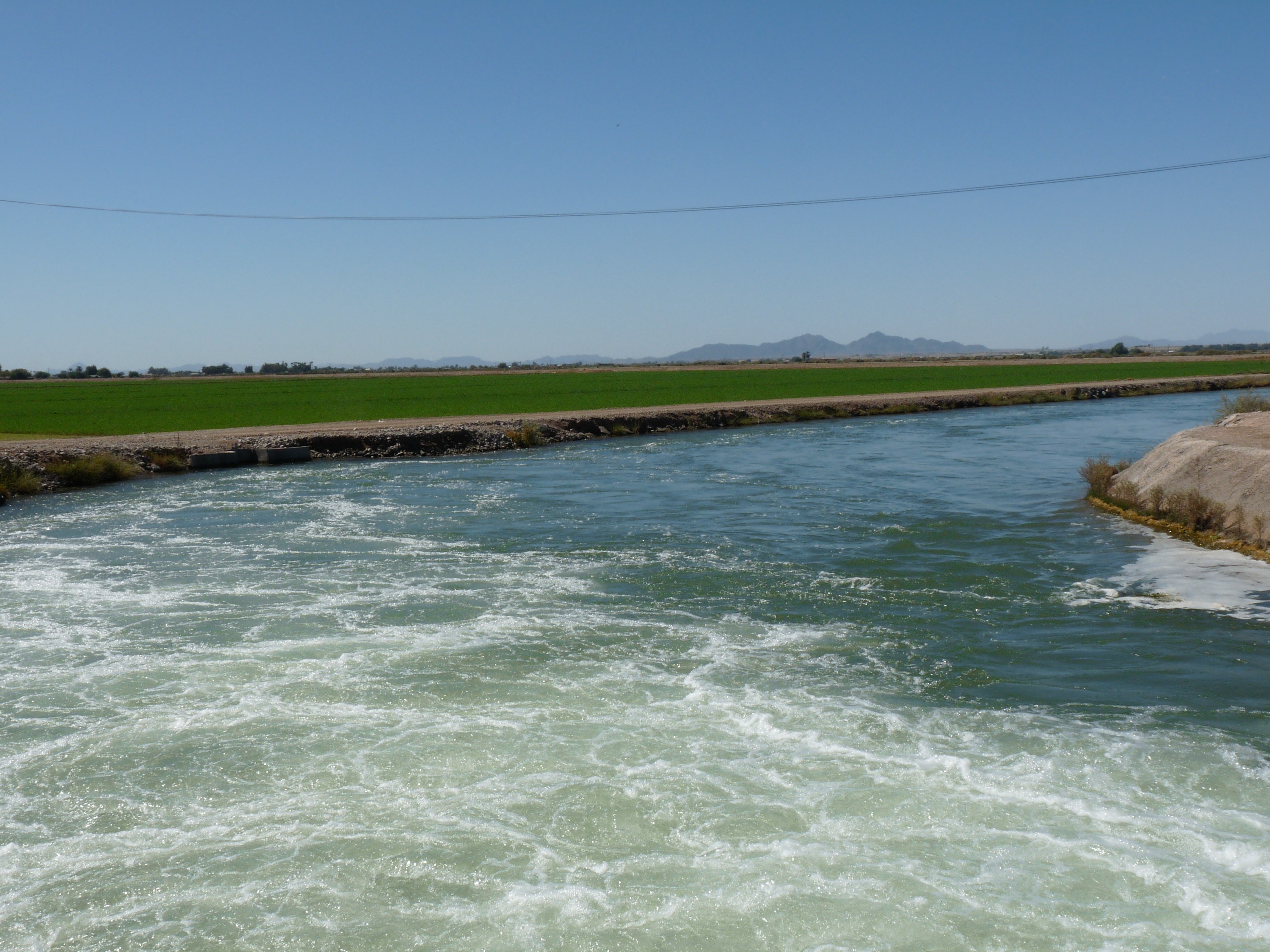
Farmer Michael Abatti v. Imperial Irrigation District is a landmark decision by the California Court of Appeals concerning the millions of acre-feet of Colorado River water used annually to meet the needs of Southern California’s agricultural empire.

The issue was the nature of landowners’ rights to use Colorado River water to irrigate their fields. The plaintiff, a farmer and landowner in the Imperial Irrigation District (“IID”), asserted that the farmers possess appropriative water rights to the Colorado River water delivered by IID, and are entitled to receive the quantities of water they have historically used on their fields. The Court of Appeals disagreed with most aspects of the plaintiff’s claims. The California Supreme Court recently declined to review the dispute making Abatti the law of the land.

The Abatti litigation arose from IID’s adoption of an “Equitable Distribution Plan” (the “EDP”) to govern allocation of water during times of shortage. IID is a California special district that delivers Colorado River water for numerous purposes including agriculture, municipal, and industrial uses, uses supporting feed lots, dairies, and fish farms, and environmental water uses.

Allocation under the EDP is dependent on the category of water use, and there is a stark distinction between agricultural water uses versus all others.  During times of water shortage, the EDP is far more favorable to non-agricultural water users, who are apportioned water based on criteria such as current and past uses, and future needs.

Agricultural water users, on the other hand, are restricted to the remaining available supply. In times of water shortage, the EDP would result in curtailment of agricultural water uses. In fact, the EDP imposes nearly the entire burden of water shortage on agricultural water users and the Abatti plaintiff contended that the EDP is inequitable in its treatment of farmers.

Under a traditional system of appropriative water rights, longstanding agricultural uses like the Abatti plaintiff’s would have senior priority over other uses. This means that, in times of water shortage, newer non-agricultural uses would be curtailed, whereas the senior irrigators would continue to receive their water supplies. Accordingly, allocations pursuant to the EDP are a significant departure from the manner in which allocations would be made following traditional principles of appropriative water rights.

The reason that senior agricultural water users in IID are not protected from curtailment is that they do not possess a water right to a particular quantity of water. In fact, according to the Court of Appeals, these Colorado River users do not possess a water right at all.

The Court of Appeals held that the water rights are held by IID, not by the farmers.  Instead, the farmers possess equitable and beneficial interests in IID’s water rights. A farmer’s interests are not water rights, but, rather, rights to water service.

This distinction is significant. It empowers IID to exercise discretion in allocating water.  Specifically, the Court of Appeals held that IID has discretion to modify water deliveries in furtherance of its duties to equitably distribute and conserve water for all users.

Because IID has discretion in how it allocates water among its users, landowners’ rights to water service are less protective than traditional water rights.

The good news is that farmers are not subject to the arbitrary whims of district decisionmakers. The Court of Appeals confirmed that farmers’ rights to water service are constitutionally-protected property rights, and that IID’s allocations must be consistent with the district’s purposes. The court made clear that IID’s allocations must provide for equitable distribution of water, and the allocations must be reasonable.

In this regard, the court held that it was not reasonable for IID to adopt a plan that singled out agricultural water users to bear nearly the entire brunt of water shortages. Accordingly, while the Court of Appeals disagreed with most aspects of the lower court’s analysis, it affirmed the lower court’s determination that IID abused its discretion by singling out agricultural water users for curtailment.

IID withdrew the EDP during the pendency of the Abatti litigation, and IID will presumably develop a new plan for water allocation. How IID will impose curtailments among the various categories of users remains to be seen. Abatti provides only general guidance. The Abatti decision stands for the proposition that IID has the discretion to develop an allocation plan as long as (1) it is consistent with the district’s purposes, (2) it is reasonable, and (3) it treats all categories of users equitably. Abatti strongly suggests that IID has the discretion to treat user groups differently, although requiring one class of users to bear the entire burden of water shortages is inequitable and unreasonable. That leaves a wide range of potential allocations, because Abatti otherwise does little to define the extent of IID’s discretion in making allocation decisions between and among different user groups.

The upshot is that, unless IID can achieve stakeholder buy-in, IID’s forthcoming plan will be fertile ground for additional litigation. IID should be motivated to find a balance that is acceptable to all categories of users, and agricultural water users will be wise to engage as stakeholders throughout the entire plan development process.

What Does This Mean for California’s Agricultural Colorado River Water Users?

The Court of Appeals was careful to note that its holding is specific to IID. However, the Abatti reasoning would seem to apply to Colorado River water users served by other special districts in Southern California.

The high-level takeaway from Abatti is that farmers’ rights to delivery of Colorado River water are less certain than traditional appropriative water rights. Longstanding water uses may be subject to curtailment at the same time that newer water uses are unaffected by water shortage.  Similarly, water uses that don’t exist today may in the future place additional constraints on the available supply, and, to a large degree, the allocation preferences afforded to these competing uses will be determined by the discretionary judgment of the users’ special district.

In other words, water supply allocation under a water rights priority system has been supplanted by political decision-making. It is therefore important for water users to exercise great care in selecting their districts’ boards of directors, and for these water users to be actively engaged in all phases of plan development and review.


2020-12-07T13:09:31-08:00December 7th, 2020|
Go to Top