Building Bee Habitats

Benefits of Bee Habitat Go Beyond Pollination

By Tim Hammerich, with the Ag Information Network

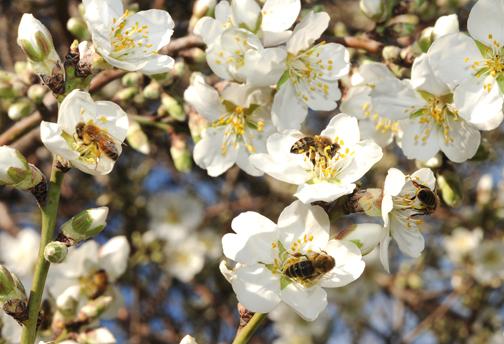
Building bee habitat is a great way to bring in pollinators, but its benefits go way beyond pollination, says Xerces Society senior pollinator conservation specialist Jessa Kay Cruz.

“So in addition to obviously the marketing benefits, a lot of the habitat and the plants that support pollinators also support other beneficial insects. So like natural enemies of crop pests, lady beetles, lacewings, parasitic wasps,” said Cruz.

“You know, if you’re a total bug geek, you could just go down the rabbit hole here. But it’s just seeing, you know, all of those insects are attracted to the same type of habitat, floral resources, all of that. And so farmers really will benefit by the ecosystem services that both pollinators provide, but also all of these other beneficial insects,” noted Cruz.

Cruz sees the construction of bee habitat as good for the environment, good for the crop, and good for the bottom line.

“Having habitat on a farm. Really helps with water infiltration, control erosion, it helps with the process of carbon sequestration. So, there are so many reasons to do this, not just for bees, but just for our health as a planet, as a whole,” said Cruz.

The Xerces Society offers a Bee Better Certification that allows some farmers to differentiate their products based on bee-friendly practices.
2021-02-03T19:22:50-08:00February 3rd, 2021|

BioConsortia Expands Davis Labs

BioConsortia Moves to New, Larger Laboratories and Expands R&D Team

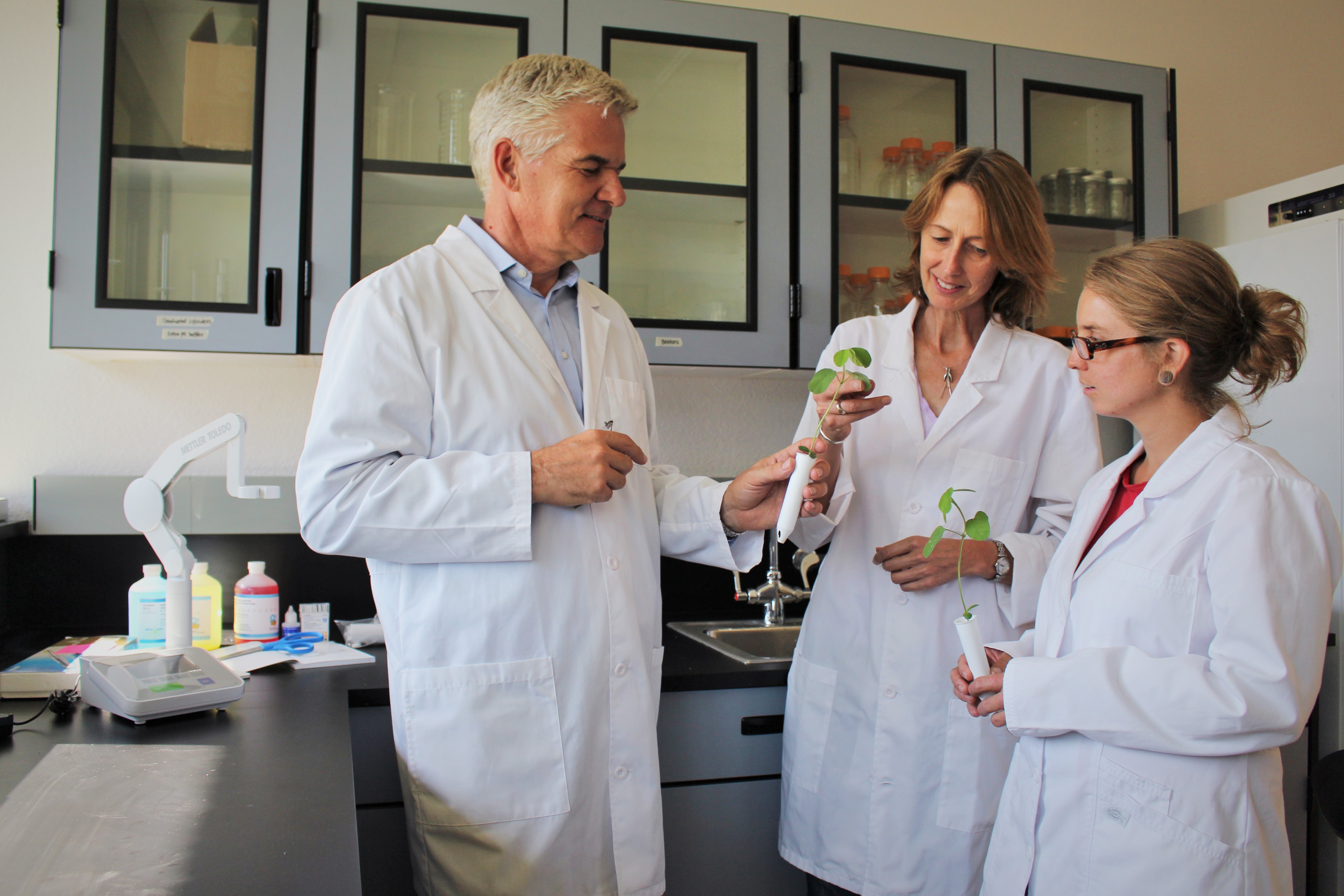
  BioConsortia, a  leader in microbial solutions that improve plant phenotypes and increase crop yields with reduced chemical and fertilizer inputs, is announcing an expansion of its R&D laboratories and team with a new, state-of-the-art facility in Davis, CA.

BioConsortia’s new facility is located at Cousteau Place in Davis, CA, encompassing initially 15,000 square feet of laboratories and offices, and an additional 5,000 square feet of yet unfurnished space for further expansion.

BioConsortia Senior VP Operations & Administration, Christina Huben, said, “The new and modern laboratories will provide the needed space and facilities for our growing R & D team and expanded platform, particularly in synthetic biology, microbiology and fermentation. This new facility has more than doubled BioConsortia’s operations space and positioned our Company for future growth.”

Betsy Alford Ph.D. from UC Davis and Andrew Phillips Ph.D., from Bayer CropScience, both join the BioConsortia team that is currently utilizing gene editing to develop the next generation of products for nitrogen fixation, yield enhancement, and crop protection. The power of gene editing unleashes the natural power of microbials by enabling an over-expression of biocontrol metabolites or the continuous fixation of atmospheric nitrogen to help plants grow healthily and higher-yielding with fewer conventional chemical inputs.

BioConsortia CEO Marcus Meadows-Smith concluded, “It is a very exciting time at BioConsortia. The most recent hires to our world-class team of scientists further expand our expertise and will accelerate our work in gene editing and genomics. Our new laboratories provide the space needed to further our endeavors.

In December we announced a major collaboration with Mosaic for the development and commercialization of our nitrogen-fixing products. We have a pipeline of biopesticides and biostimulants in registration and partner evaluation phase.”

Meadows-Smith concluded, “We are delivering on our goal to support growers and sustainable agriculture by developing microbial products with higher consistency and superior efficacy.”


2021-02-02T18:08:30-08:00February 2nd, 2021|

Coalition Sends Pres. Biden Immigration Reform Letter

Immigration Reform  &  Almond Pollination

By Tim Hammerich with the AgInformation Network

Calling for “strong leadership and bipartisanship” from Congress and the incoming Biden administration, more than 180 groups, companies and individuals urge quick action on immigration reform. The coalition, which includes the California Farm Bureau and other agricultural groups, issued a joint statement Tuesday. It described immigration laws as “decades overdue for an overhaul” to create a “modern, humane and effective immigration system.”

A measure passed by California voters last fall could complicate the transfer of family farms from one generation to the next. Proposition 19 affects taxes on homes and inherited property. A California Farm Bureau specialist says the measure could trigger a partial property tax reassessment of an inherited farm or ranch—depending on property value and other factors. Farm Bureau is seeking clarification on the measure’s impact.

During the next few weeks, beekeepers will finish moving some 2.5 million honeybee colonies into California orchards to pollinate almond trees. But beekeepers who lost hives to wildfires last summer say it may take them more than a year to rebuild. A Solano County beekeeper who lost most of her bees, buildings and equipment to wildfire says she will spend this spring making more hives, to be ready for the 2022 pollination season.


2021-02-01T22:47:10-08:00February 1st, 2021|

Farmworkers Need Vaccine Now!

Nisei Farmers League Implores Quick Action For Front Line Workers

Manuel Cunha, Jr., President of Nisei Farmers League recently expressed his disappointment in the lack of COVID-19 vaccine that has been made available to our frontline essential farmworkers. (namely Pfizer-BioNTech and Moderna COVID-19 vaccines) 

“There are approximately 629,000 agricultural workers in California that not only feed the United States but also feed the world.”

Mr. Cunha stressed the importance of the recommended 2 doses of the vaccine being made available before May and the summer months when it becomes very difficult for the employer to be without the workers for several days and the worker will not want to take time off to take the vaccine. 

Cunha stated “These workers go to the fields, packing houses and processing plants every day and should be given some priority. Farmworkers and farmers do deserve this protection.  They have kept us healthy and alive.” We are proud to work with private health clinics, such as United Health Centers and our counties.

We implore our Governor, Secretary of Agriculture, the State Department of Health, and our local counties to implement the recently announced “My Turn Program” and the “Vaccine Delivery Network” to get our farmworkers vaccinated by the promised start date of mid-February.


2021-01-29T10:54:51-08:00January 29th, 2021|

Pushing Back on UFW Access to Farms

Western Growers Files Amicus Brief in Union Access Case

By Jason Resnick, Sr. VP, and General Counsel, Western Growers Association

Western Growers, California Fresh Fruit Association, Grower Shipper Association of Santa Barbara and San Luis Obispo Counties and Ventura County Agricultural Association have filed an amicus curiae – friend of the court – brief at the U.S. Supreme Court in a case challenging the so-called Access Regulation promulgated by the Agricultural Labor Relations Board (ALRB) in 1975.

California’s Access Regulation requires agricultural employers to allow labor union organizers such as the United Farmworkers Union onto their private property for up to three hours per day, 120 days per year, for the purpose of organizing agricultural employees. A divided panel of the Ninth Circuit Court of Appeals upheld the regulation, but eight judges dissented noting the “decision not only contradicts Supreme Court precedent but also causes a circuit split” (i.e., conflicting decisions between different federal circuits that can only be reconciled by the Supreme Court.)

The amicus brief was filed in the case of Cedar Point Nursery and Fowler Packing Company, Inc. v. Hassid, in which the question presented to the Supreme Court is “whether the uncompensated appropriation of an easement that is limited in time effects a per se physical taking under the Fifth Amendment.”

The amicus brief argues that California has repeatedly recognized the sanctity of the right of private property owners to exclude third parties under the Fifth Amendment, but not when it comes to the Access Regulation. The brief goes on to say:

“California has upended that proposition for the sake of one privileged group: organized labor. Specifically, in this case, agricultural labor unions. In all other cases, California recognizes the right of private property owners to establish rules by which third parties may be allowed to access private property, if at all. Otherwise, trespassers are subject to criminal prosecution… But not in the case of organized labor. In that case alone, California has enacted statutes and regulations that coerce acceptance of physical invasion. Regulations of the State’s ALRB have exacerbated the problem for farmers by authorizing repeated trespass by union organizers for 120 days each year.”

The amicus brief was drafted by Michael Berger with Manatt, Phelps & Phillips, one of California’s preeminent appellate land use lawyers. The petitioners, Cedar Point Nursery and WG member Fowler Packing Company, Inc., are represented by Howard Sagaser and Ian Wieland with WG Ag Legal Network member Sagaser, Watkins & Weiland, and Joshua Thompson, Damien Schiff and Wencong Fa of Pacific Legal Foundation (PLF). PLF is a nonprofit legal organization that defends Americans’ liberties when threatened by government abuse. Western Growers lauds the petitioners and their counsel for taking this important fight all the way to the United States Supreme Court.

2021-01-28T18:31:40-08:00January 28th, 2021|

Pandemic Still Effecting Wineries

Ongoing Effects of the Pandemic on California Agriculture

By Tim Hammerich, with the Ag Information Network

Throughout the pandemic, we have regularly brought you stories of how various agricultural groups are faring during this difficult time. Here are a few more of those stories courtesy of the California Farm Bureau.

With tasting rooms closed due to the pandemic, many California wineries struggle to adapt. Some small wineries say their business has declined to “virtually zero.” Others have found success in online sales and tastings conducted via videoconference. Smaller wineries in particular tend to depend on tasting-room sales. Larger wineries that sold wine primarily through restaurants have suffered more than those that focus on retail sales.

Stress-related to the pandemic has affected the mental health of farmers and farm employees. A survey by the American Farm Bureau says two-thirds of farmers and employees reported mental-health effects since the pandemic began. Among rural adults more generally, more than half reported effects. Farm Bureau has advocated for improved mental health care in rural communities and offers resources on a website, farmstateofmind.org.

Efforts to grow the local-meat business in California have been hampered by a lack of processing facilities. A group of 16 ranchers in the Bay Area has tackled the problem by forming a cooperative. The Bay Area Ranchers Cooperative wants to raise enough money to purchase a mobile facility to process animals for local sale. The co-op president says demand for local meat has picked up during the pandemic, but there aren’t enough small meatpackers to serve that demand.

Souce: Califonria Farm Bureau

2021-01-19T16:24:57-08:00January 19th, 2021|

Effort to Stop Colony Collapse Disorder Underway

Scientists Developing Electronic Honeybee ‘Veterinarians’

By Jules Bernstein, UC Riverside, Senior Public Information Officer


The University of California, Riverside, is leading a new effort to stop and reverse a worldwide decline in honeybees, which threatens food security and prices.

Honeybees pollinate more than 80 agricultural crops, which account for about a third of what we eat. Several factors, including pesticide exposure and the spread of parasites and environmental changes, are to blame for the widespread collapse of bee colonies over the past decade.

To boost dwindling honeybee populations, the University of California’s Office of the President has awarded $900,000 to a four-campus network of bee researchers and engineers.

“This will become one of the largest honeybee health networks in the country,” said Boris Baer, a professor of entomology at UC Riverside and principal investigator of the project. “I’m very excited about so many different kinds of bee expertise joining forces through this project.”

The network, which includes researchers from the Davis, San Diego and Merced campuses, is approaching the problem in three main ways.

The first is through breeding programs — a particular focus of Baer’s laboratory. “We seek to identify and breed bees that are better able to cope with environmental stress,” he said.

A second goal of the new network is to develop medications and treatments for sick bees. Certain types of honeybees generate molecules that make them more tolerant of pesticides and parasites. New technology will enable the scientists to isolate those molecules and use them as a basis for drugs.

Finally, the group is looking to give beekeepers tools to better monitor bees’ health. Small devices will be able to ‘listen’ and ‘smell’ inside hives to give beekeepers indications about the health of the hive.

“We know bee queens have a special pheromone they give off when they’re hungry or dying, and these can be traced,” Baer said. “We are essentially building ‘electronic veterinarians.’”

Preventative devices like these are key to keeping bees alive, because once the colony collapses, it’s too late to bring it back, Baer said.

Read more: https://news.ucr.edu/articles/2021/01/07/scientists-developing-new-solutions-honeybee-colony-collapse

2021-01-11T18:21:20-08:00January 11th, 2021|

Agreeing on Water Needs

Sixth Generation Farmer and EDF Director Discuss Water Challenges

By Cannon Michael and Ann Hayden

Despite a seemingly endless era of upheaval – a surging pandemic, contentious election cycle and racial strife – we still have the responsibility to address pressing issues that cannot wait for calmer times. The future of California’s water is one of those issues.

While collaboration and relationship building have been made even more challenging due to distancing required by COVID-19, we believe that water is an issue where we can rise above party lines and entrenched perspectives.

Cannon Michael, Sixth Generation Grower

Water is the backbone of California’s agricultural economy, supports our iconic rivers, and of course, is essential to our survival.  Simply put, water is a lifeline that binds us together, and without it, we jeopardize our future and that of coming generations.

Could now be the time to collectively start down a better path for managing this precious resource and roll up our sleeves to make it happen? We think so.

For decades, fighting over water has stalled progress and sown deep mistrust across different water users.

We have forgotten that we are all stewards of California – a special place like no other, a rich connected tapestry of environmental beauty, diverse communities and productive agriculture.

We need to come together as Californians – not just farmers, environmentalists, rural community organizers and urbanites. We need to come together as Californians working for our children and future generations who are depending on us to leave them with a better California than we have today.

We need to come together to solve some admittedly difficult water challenges that affect the future of rural communities, cities, wildlife, farming in the Central Valley and consequently our country’s food supply. Drought and water scarcity are high on the list of these challenges. During our last major drought, the Sustainable Groundwater Management Act was enacted as one major piece of the solution to ensure we have enough water for future generations.

Looking forward, 2021 will be an important year for moving ahead on implementation of this sweeping change to water law. The state will be rolling out its first assessments of sustainability plans developed by regions with the most critically overdrafted groundwater supplies.

Balancing groundwater supply and demand, as required by the law, will no doubt be challenging: Some models say San Joaquin Valley landowners may need to take equivalent acreage to Yosemite National Park out of production to balance groundwater supply and demand.

To reach durable, fair solutions to such large challenges, we need to drop the baggage we’ve amassed over time. We need to come together as Californians to start collaboratively tackling problems – not just talking and arguing them. We need to come together and break the cycle of mistrust and take the time to truly understand how each side views the challenges and potential solutions.

It’s unlikely we will agree on everything – if we did California wouldn’t be the dynamic, diverse state it is today. But there is significant common ground we can build from. For instance, we all agree every single person in California should have clean and affordable drinking water when they turn on their kitchen faucet.

We also agree that replenishing groundwater is one of many solutions we will need to comply with the Sustainable Groundwater Management Act. But it’s not the only solution; it’s inevitable that we still will need to scale back some agriculture.

The question we need to address is, how can we make sure that agriculture can still thrive while some farmland becomes productive in new ways, whether it’s with less water-intensive ranching, low-impact solar projects, wildlife habitat or recreational areas for our families to enjoy on picnics and hikes?

Taking action to address these challenges may mean parts of our state and the very communities we live in will look different from how they look today. But if we can come together as Californians to get it right, California will evolve and endure as the special place it is today for generations to come.

We have decades of experience coming at water challenges from our silos. Let’s break down those silos, come together as Californians and see what happens. Isn’t it worth a shot?

Cannon Michael is a sixth-generation farmer and president and CEO of Bowles Farming Co., headquartered in Los Banos, cannon@bfarm.com

Ann Hayden is senior director of western water and resilient landscapes at Environmental Defense Fund, ahayden@edf.org

This document first appeared in WaterWrights.net


2021-05-12T10:52:43-07:00January 11th, 2021|

Dairy Waste Turns To Electricity


Dairy Generates Electricity

By Tim Hammerich with the Ag Information Network

A lot of great things come from your local dairy: milk, cheese, and ice cream, just to name a few. But some dairy producers like Modesto-based Brian Fiscalini are also supplying their community with electricity.

“What we do is we collect the waste from our farm. So we collect all of the cow manure, we collect any spoiled feed, and then we also bring in a few waste streams from other industries that would normally either go into a landfill or would have to travel quite far for someone to be able to process,” said Fiscalini.

This waste is stored in concrete tanks and the lid captures methane gas.

“Then what we do is we convert that methane gas, with the help of an internal combustion engine, into electricity. So that electricity is used to power our facility as well as selling electricity to our local utility, which equates to enough power to take care of 300 homes in our community,” noted Fiscalini.

This is one more way that our California farmers are providing us with delicious food, and a whole lot more.

2021-01-11T16:47:17-08:00January 11th, 2021|

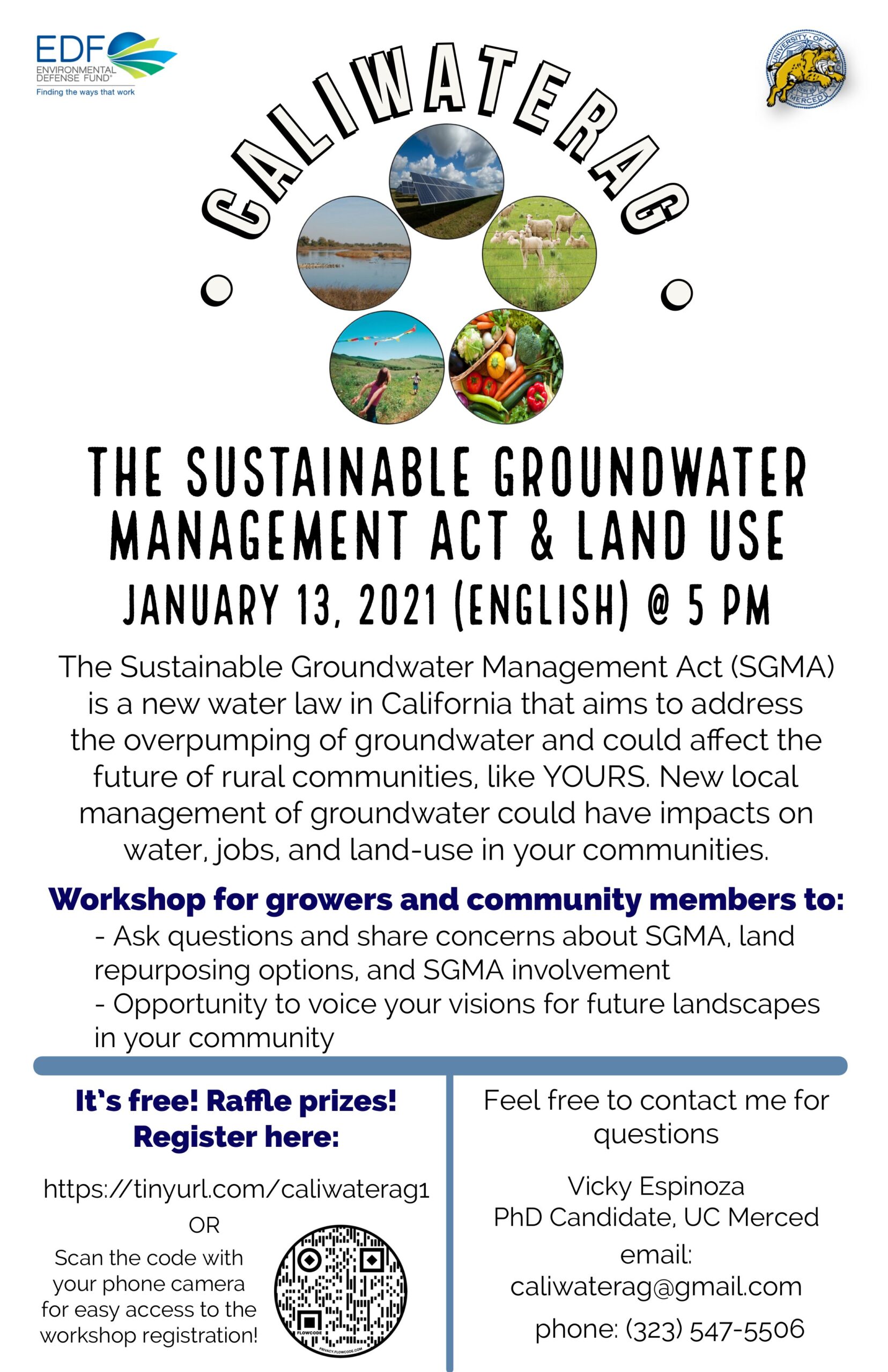
SGMA Workshop Jan. 13 and 14

SGMA Workshop To Voice Concerns

There will be a SGMA and Land Use Workshop (via Zoom) January 13 5PM for English speakers and January 14 5pm for Spanish Speakers.

This is for San Joaquin Valley farmers and community members to voice concerns about SGMA and share their visions of future landscapes in their community.


2021-01-10T12:46:01-08:00January 8th, 2021|
Go to Top