E-Commerce is Big for Blue Diamond


Blue Diamond Does Big E-Commerce on Amazon


By Patrick Cavanaugh, AgInformation Network

Mark Jansen is CEO of Blue Diamond Growers. “Three years ago, we were in strategic planning and seeing what was happening and realize that we had to get dramatically better at e-commerce,” he said.

“So, I think if we do this right, Amazon can become one of our top five largest customers within five years. And at the time I believe we were, it was w it was still had a nice business, but it was like our 87th largest customer at that time,” Jansen said.

“So what we did is we over-invested to develop our muscle around e-commerce. We hired away a director of e-commerce from ConAgra, which is a much, much bigger food company,” Jansen said. “I think most people don’t realize that being on a scale basis, working in e-commerce requires many changes within your supply chain and customer service and your web presence. It’s not as easy as just hopping on Amazon and selling something,” he noted.

Jansen said Blue Diamond Growers has worked hard over the last couple of years to fully develop its e-commerce offering. Jansen said they were doubling and tripling their business over the year.

“In this past year, we did that. We more than doubled it again, and certainly, the COVID pandemic accelerated those efforts for us and so Amazon—well it didn’t take five years it was just over three years, became a
2021-03-11T18:01:02-08:00March 11th, 2021|

Help Needed for Smoky Vineyards


Long Term Solutions for Smoke-Affected Vineyards

By Tim Hammerich, with the Ag Information Network

The fires of this past year have prompted many in the winegrape industry to rethink how they want to handle smoke-affected vineyards. Glenn Proctor is a partner at the Ciatti Company, which brokers wine and grapes based in Navato.

“We can’t afford to go through 2020 again. We need to be better organized in terms of how we do it. And everybody got bruised. I mean, it was a tough year just because of the unknowns and what it meant,” said Proctor. “So we are seeing things go in a place like analysis of baseline numbers. Because we really don’t know what kind of compounds are going to be in the grapes in a year when there are no fires. We haven’t measured that. So let’s say we see Guaiacol at some level when there’s a fire. Well, we really don’t have the numbers that say there was no fire this year, what is the level it’s naturally at? We just don’t have some of that data.”

Proctor says growers and wineries need to work together to come up with solutions that are both fair and equitable.

“The winner in this should not be who has the thickest contract or the biggest clause on smoke, whether grower or winery. I think we need to try to work together on this. Fires are probably going to happen again. Now, you know, for a while there in 2015, I’m like, Oh no, this is just a one in 20 year event. Sure doesn’t look like that’s the case. So I think we’re going to have to adjust expectations,” said Proctor

Proctor is hopeful that buyers and suppliers will find solutions that will maintain their interdependent working relationships.

2021-05-13T16:09:44-07:00March 8th, 2021|

New H-2A Wage Rates In Effect

Adverse Effect Wage Rates (AEWR) for 2021 In Effect Immediately

By Western Growers Staff

On Feb. 23, 2021, the U.S. Department of Labor published the Adverse Effect Wage Rates (AEWR) for 2021. The new AEWRs go into effect immediately, meaning any H-2A workers or U.S. workers in corresponding employment, get an immediate pay raise.

The new wage rates are identical to those projected here:

  • California’s AEWR is now $16.05 per hour;
  • Arizona’s and New Mexico’s AEWR is now $13.67 per hour; and
  • Colorado’s AEWR is now $14.82 per hour.
  • California had the largest increase in the nation — jumping $1.28/hour, or 8.7%, above 2020.

The AEWRs are the minimum rates the DOL has determined must be offered and paid by employers to H-2A workers and workers in corresponding employment based on a particular occupation and area.

The DOL was ordered to publish new AEWRs this month after a U.S. District Court granted an injunction, effectively killing the rule that would have frozen the 2020 AEWRs for two years. The rule would have also adjusted how wages would be determined after 2023.

Wage rates were scheduled to be adjusted based on the Bureau of Labor Statistics’ Employment Cost Index, instead of the Farm Labor Survey.  The UFW has also asked the court to award backpay to H-2A employees who have worked under the 2020 wage freeze since the injunction was issued. That question remains unsettled.

All employers with H-2A contracts now in effect should adjust their payroll systems to reflect the new AEWR. Western Growers H-2A Services has begun filing H-2A applications reflecting the new AEWRs in filings on behalf of its clients.

2021-05-13T16:14:56-07:00March 2nd, 2021|

Hemp in the Produce Department?

Hemp as a Leafy Green


By Tim Hammerich, with The Ag Information Network

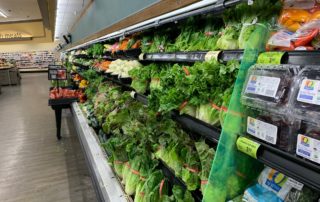
You’ve probably heard of a wide variety of uses for hemp, but you may not have heard of this one. Researchers down in Yuma County Arizona are experimenting with hemp as a leafy green, similar to kale or spinach. Robert Masson with the Yuma County Cooperative Extension, says he sees real commercialization potential.

“We planted it just like how we would plant baby leaf spinach. So we had really high planting densities, 3 million seeds per acre. And that makes it grow up and etiolates it so that there’s a lot of tenderness in the leaves,” said Masson. “And, you know, we just wanted a similar comparison to spinach. Because we figured it would be something similar where you’d plant, sprinkler up, we definitely sprinkled it, and then flood irrigated it to complete. We planted it on big beds, 84-inch beds, just like we do baby leaf spinach.”

To be clear though, these are not the same varieties used to produce CBD or THC.

“We are specifically looking at the industrial grain and fiber varieties. So these are used to make rope and to make clothing and also to grow seeds. These are not varieties that produce high levels of cannabinoids. So these are no risks to the grower of going hot for THC,” noted Masson.

Masson says there are regulations in progress that could allow for state-by-state legalization of hemp for this purpose.

2021-02-25T18:02:44-08:00February 25th, 2021|

Dibble’s Law for Spraying–Go Slow

Go Slow for Best Spray Coverage

By Patrick Cavanaugh, with the Ag Information Network

It’s called Dibble’s Law and it’s named after Dr. Jack Dibble, a retired UC Berkeley and UC Kearney Agricultural and Extension Center Research Entomologist.

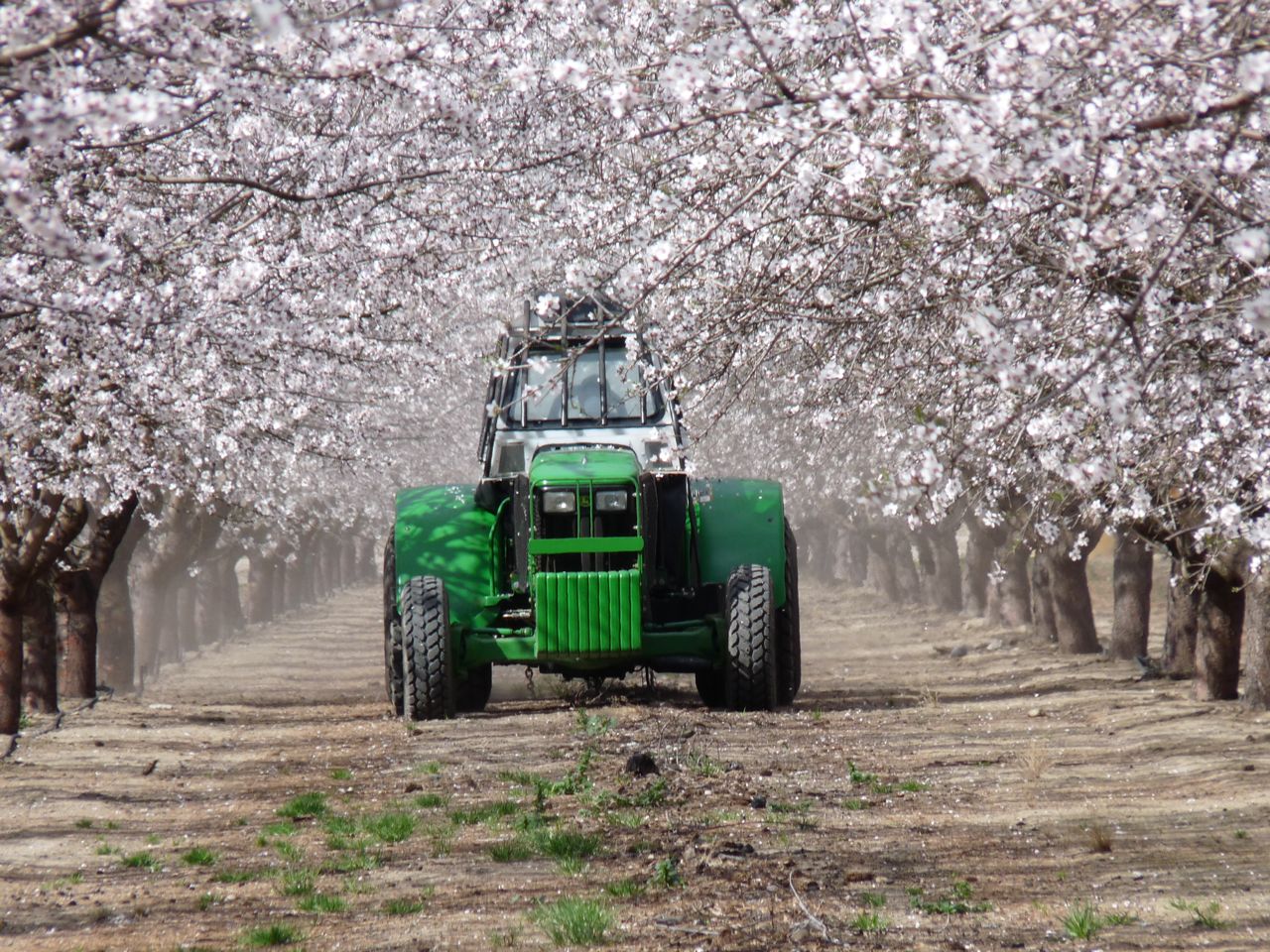
He has worked primarily in tree crops and a big part of his career was on spray techniques and he is well known for Dibble’s Law, which states the best spray coverage is when the driver goes less than two miles per hour down the row.

“We found out right from the outset and continued to prove this with growers and commercial spray applicator companies that speed of travel is very important,” said Dibble.

“The faster you go, the whippier the spray gets, and the spray that is released must be pushed up into the tree by the spray behind it,” said Dibble.

“If the driver is going too fast, there is no spray pushing the spray you just released. Therefore, you lose control of the spray project because you are not getting coverage in the centers at the top of the tree.”

spray tank mixes“By going two miles per hour or less, the spray released will be pushed up into the tree by the spray behind it. It just pushes it up,” said Dibble.

“It’s hard for a grower to do that because it’s a dirty, wet job,” noted Dibble.

However, returning to the orchard for another spray is even more costly. Of course, lack of good coverage will lead to more pest damage before you get back at it.

Speaking of spraying, growers should assess the diseases present in their orchards and select materials carefully. Not all fungicides are equally effective against all diseases.

2021-05-13T16:17:03-07:00February 24th, 2021|

Yes, Ants Are Amazing!

Why Ants Are Amazing: UC Davis Programs

“Ants are amazing because they’re way more diverse than most people realize,” says UC Davis entomology doctoral candidate Jill Oberski. “Some are huge, some are tiny, some are blue or green, and a lot of them have crazy spines. There are ants that run farms with crops and livestock, and ants that can build bridges and survive floods, and ants that live in the highest treetops and never touch the ground.”

That’s just some of the information showcased at the UC Davis Biodiversity Museum Month program on Saturday, Feb. 13 when three doctoral students in the Phil Ward lab, UC Davis Department of Entomology and Nematology, took the helm.  Oberski, a fourth-year doctoral student, and Ziv Lieberman, a first-year doctoral student, spoke about the diversity of ants and field questions, followed by doctoral candidate Zach Griebenow’s presentation on his research.

Then on Saturday, Feb. 20, from 11 a.m. to noon, Professor Phil Ward will host “All About Ants,” billed as a “fun and lively question and answer session.” The programs are free and family-friendly. See http://biodiversitymuseumday.ucdavis.edu/live-programs.html for the Zoom links.

Zach Griebenow
Griebenow grew up in rural Kentucky and received his bachelor’s degree in entomology in 2017 from The Ohio State University, undertaking undergraduate research with distinction on species boundaries in the Puerto Rican fauna of the subterranean termite Heterotermes.

“As so everyone in the Ward lab, I study how different groups of ants are related to one another, and why they look and behave the way that they do,” he said. “Specifically I study an obscure group called the Leptanillinae, which have no common name. As ants go, they are strange, and we know very little about them. So far, I have confidently teased out the major evolutionary relationships among leptanilline ants, but there is a lot more work to be done, particularly in comprehending the often bizarre structural modifications seen in the male Leptanillinae (legs that look like toothbrushes, etc.).”

Ziv Lieberman
Lieberman, born and raised in California, studied at the College of Marin before transferring to UC Davis to major in evolution, ecology and biodiversity, with a minor in insect evolution and ecology. “Prior to UC Davis, I spent several years working abroad for the California Academy of Science documenting historical ant specimens,” Lieberman said. “At the end of my undergrad, I published my first paper, a revision of the poorly-understood (and very cute) African species of the ant genus Discothyrea.”

In the Ward lab, Lieberman studies “ant evolution, specifically focusing on connecting evolutionary relationships (the ant ‘family tree’) with anatomy, using a combination of next-generation imaging techniques and large-scale genetic analyses. In particular, I am interested in describing and comparing internal anatomical features which are usually ignored, and understanding how these traits contribute to biodiversity.”

Jill Oberski
Oberski grew up in Minnesota. “I was fascinated by insects from a very young age,” she said. “I attended Macalester College, spent a few confused years on a pre-med track, and ultimately discovered a career in entomology was feasible and worth pursuing. This has led me to Phil Ward’s ant systematics lab at UC Davis, where I’m now a PhD candidate.”

“My research centers on the ant genus Dorymyrmex, which is commonly found all over the Americas,” Oberski said. “Even though they’re extremely common (Davis itself is home to two species!), we have no idea how many species there really are. In addition to discovering and naming these species, I’m really interested in biogeography and ancient history: Where did Dorymyrmex originate? How are the North American species related to the South American species? And how did they disperse before the isthmus of Panama was connected?”

Professor Phil Ward
Professor Ward teaches California insect diversity, insect taxonomy and field ecology, and introductory biology (the tree of life). His research interests include systematics, biogeography and evolution of ants; ant-plant mutualisms; phylogeny and speciation. He holds a bachelor of science degree in biology from Queens University, Canada (1973) and a doctorate in zoology from the University of Sydney, Australia (1979).

Due to the COVID-19 pandemic, the 10th annual UC Davis Biodiversity Museum program is all virtual this year via webinars and pre-recorded presentations and takes place throughout the month of February. The science-based event traditionally occurs on only one day–the Saturday of Presidents’ Weekend, when families and friends gather on campus to learn first-hand about the UC Davis museums and collections.

This year’s biodiversity event is showcasing 12 museums or collections:

  • Anthropology Museum
  • Arboretum and Public Garden
  • Bohart Museum of Entomology
  • Botanical Conservatory
  • California Raptor Center
  • Center for Plant Diversity
  • Häagen-Dazs Honey Bee Haven
  • Nematode Collection
  • Marine Invertebrate Collection
  • Museum of Wildlife and Fish Biology
  • Paleontology Collection
  • Phaff Yeast Culture Collection

For more information and the schedule, access these two formats on the UC Davis Biodiversity program website: (1) live talks and demonstrations at https://bit.ly/3d2p1rI and (2) pre-recorded talks and activities at https://bit.ly/3a4Q2Zw.

To help support the Biodiversity Museum event, contributions are being accepted through a month-long crowdfunding campaign program at https://crowdfund.ucdavis.edu/project/24310.

2021-02-23T18:10:14-08:00February 23rd, 2021|

Grape Consumption May Protect Against UV Damage to Skin

Study: Grapes Increase Resistance to Sunburn and Reduced Markers of UV damage


A recent human study published in the Journal of the Academy of Dermatology found that consuming grapes protected against ultraviolet (UV) skin damage.1 Study subjects showed increased resistance to sunburn and a reduction in markers of UV damage at the cellular level.2 Natural components found in grapes known as polyphenols are thought to be responsible for these beneficial effects.

The study, conducted at the University of Alabama, Birmingham and led by principal investigator Craig Elmets, M.D., investigated the impact of consuming whole grape powder – equivalent to 2.25 cups of grapes per day – for 14 days against photodamage from UV light. Subjects’ skin response to UV light was measured before and after consuming grapes for two weeks by determining the threshold dose of UV radiation that induced visible reddening after 24 hours – the Minimal Erythema Dose (MED). Grape consumption was protective; more UV exposure was required to cause sunburn following grape consumption, with MED increasing on average by

74.8%. 3 Analysis of skin biopsies showed that the grape diet was associated with decreased DNA damage, fewer deaths of skin cells, and a reduction in inflammatory markers that if left unchecked, together can impair skin function and can potentially lead to skin cancer.4

It is estimated that 1 in 5 Americans will develop skin cancer by the age of 70.5 Most skin cancer cases are associated with exposure to UV radiation from the sun: about 90% of nonmelanoma skin cancers and 86% of melanomas, respectively. Additionally, an estimated 90% of skin aging is caused by the sun.

“We saw a significant photoprotective effect with grape consumption and we were able to identify molecular pathways by which that benefit occurs – through the repair of DNA damage and downregulation of proinflammatory pathways,” said Dr. Elmets. “Grapes may act as an edible sunscreen, offering an additional layer of protection in addition to topical sunscreen products.”

2021-02-10T19:49:04-08:00February 10th, 2021|

Timorex Act BioFungicide Expands Label

Timorex Act OMRI-Certified Biofungicide now Registered Throughout Mexico

Also approved by California and Florida through distributor Summit Agro

 STK bio-ag technologies, Israel’s innovative leader in botanical – based organic and hybrid solutions for sustainable agriculture and aquaculture, announces that Timorex Act organic biofungicide is now registered throughout Mexico, with Syngenta as the exclusive distributor.

Timorex® Act is based on a botanical extract of the tea tree plant. A purely organic formulation, certified by OMRI and Ecocert, Timorex® Act is highly effective against a broad spectrum of plant diseases in a variety of fruit and vegetable crops, including anthracnose, powdery mildew, early blight, botrytis, cencicilla, et al. Timorex® Act is also friendly to pollinators, such as bees, and has been endorsed by the Xerces Society of Invertebrate Conservation in its latest report.  Moreover, Timorex® Act has no chemical residues whatsoever.

Timorex® Act’s mode of action is to find and rupture disease cells. This botanical-based biofungicide is in Frac Group 46. “TIMOREX ACT has a unique activity against fungal plant pathogens”, explained Marco Tulio, STK Country Manager in Mexico. “This activity is a huge benefit to organic growers since there are not many products available to growers looking for biological certified products without compromising  efficacy, as proven by the numerous trials performed in Mexico and in the USA.”

For example,  purely organic Timorex Act has proven to be as good as the chemical mixture of boscalid and pyraclostrobin in the vines trial in in Mexico against botrytis and Erysiphe necator:

2021-02-08T19:10:06-08:00February 8th, 2021|

Critical Water Legislation Introduced by Valadao

2021-05-13T16:17:40-07:00February 5th, 2021|

Class 51 Ag Leadership Seeking Applicants

Applications Available for California Ag Leadership Program’s Class 51 

Applications are now being accepted for Class 51 of the California Agricultural Leadership Program (CALP). Applicants should be mid-career growers, farmers, ranchers, agricultural professionals, and/or individuals working in allied businesses and organizations who are emerging leaders in agriculture.

The Ag Leadership Program, operated by the California Agricultural Leadership Foundation (CALF), is considered to be one of the premier leadership development experiences in the United States. More than 1,300 men and women have participated in the program and are influential leaders and active volunteers in agriculture, communities, government, business and other areas.

“We are delighted to open the application process for Class 51,” said CALF President and CEO Dwight Ferguson. “The California Agricultural Leadership Program is uniquely positioned to prosper and produce leaders who benefit their communities, their companies and California agriculture as a whole due to our unique curriculum, personalized coaching and a dedicated focus on lifelong learning.”

The 17-month program includes approximately 55 days of formal program activities. Four partner universities—Fresno State, UC Davis, Cal Poly San Luis Obispo, and Cal Poly Pomona—deliver comprehensive, diverse and high-impact curriculum designed to improve leadership skills. As a valuable extension to the monthly seminars, fellows participate in national and international travel seminars and receive individualized leadership development coaching. Working with our partner universities, CALF is preparing various options to ensure we continue to effectively implement this program during and following the COVID-19 pandemic.

CALF invests more than $50,000 per fellow to participate in the Ag Leadership Program. The costs are underwritten by individual and industry donations. Candidates are strongly encouraged to talk with Ag Leadership alumni about the program and to attend a recruitment event. All recruitment events will adhere to state and local guidelines for safety and health.

Detailed program information and the phase one application are available online at www.agleaders.org/apply. Phase one of the two-part application process is due no later than April 26, 2021. Individuals are encouraged to complete the application as soon as possible.

2021-02-04T18:02:21-08:00February 4th, 2021|
Go to Top