Want Better Heart Health? Consume Walnuts!

Effects of Walnut Consumption for 2 Years on Blood Lipids and Lipoprotein Subclasses Among Healthy Elders


By:  Rajaram S, Cofan M, Sala-Vila A, Haddad E, Serra M, Bitok E, Roth I, Freitas-Simoes TM, Kaur A, Valls-Pedret C, Domenech M, Oda K, Corella D, Sabate J, Ros E.


Frequent consumption of nuts, an important component of plant-based diets, is associated with 15% lower total cardiovascular disease (CVD) and 23% lower CVD mortality rates. Small, short-term randomized controlled trials (RCTs) indicate that diets supplemented with nuts have a consistent cholesterol-lowering effect; however, no trials of nut-enriched diets for lipid changes focused on elderly individuals, recruited participants from diverse geographical locations, or lasted 2 years. Also, there is little information concerning effects of nuts on lipoprotein subclasses.


We hypothesized that incorporating walnuts into the usual diet would improve the lipid profile irrespective of differences in geographical and dietary background.


Methods: The Walnuts and Healthy Aging (WAHA) study is a two-center (Barcelona, Spain and California, USA), 2-year, parallel-group RCT testing the effects of walnut-supplemented diets in healthy elders. Lipoprotein changes were a pre-specified secondary outcome. Eligible candidates were cognitively healthy elders (63-79 years old) without major comorbidities. Participants (n=708) were allocated to either a walnut-free (control) or walnut-supplemented diet (≈15% of energy, 30-60g/day). In 2 monthly visits, compliance, tolerance, medication changes, and body weight were recorded. At each visit, 8-week allotments of raw, pieced walnuts were delivered to the corresponding group.


Results: 636 participants completed the study (90% retention rate), and 628 had full data for lipoprotein analyses (mean age 69 years, 67% women, 32% treated with statins). Mean baseline LDL-C and triglycerides were 117 and 105 mg/dL, respectively. The walnut diet significantly decreased (mg/dL) total cholesterol (mean -8.5 [95% CI, -11.2, -5.4]), LDL-C (mean -4.3 [-6.6, -1.6]), and intermediate-density lipoprotein (IDL)-C (-1.3 [-1.5, -1.0]), corresponding to reductions of 4.4%, 3.6%, and 16.8%, respectively, while triglycerides and HDL-C were unaffected (Figures-B, C). Total LDL particles and small LDL particle number decreased by 4.3% and 6.1%, respectively (Figure-D). Results were not different by study site. Lipid responses to the walnut diet differed by sex: LDL-C was reduced by 7.9% in men and by 2.6% in women (P-interaction=0.007).


Conclusion: The results demonstrate that incorporating daily doses of walnuts (≈15% of energy) to the habitual diet of free-living elders with an essentially normal lipid profile resulted in a mean 4.3 mg/dL LDL-C reduction, which is modest, although greater responses have been observed among individuals with hypercholesterolemia. Our data also support a beneficial effect of the walnut diet on NMR-assessed lipoprotein subfractions, with reductions of IDL-C (a sizable contributor to remnant-C) and total LDL particles. Prospective studies have reported that LDL particle number consistently outperforms LDL-C in CVD risk prediction and that remnant-C causally relates to CVD independent of LDL-C. That lipid responses were not different in two cohorts consuming diverse diets strengthens the generalization of our results. WAHA is the largest and longest nut trial to date, overcoming the limitations of prior smaller and shorter nut studies. The novel finding of sexual dimorphism in LDL-C response to walnut supplementation needs confirmation.

WAHA was conducted in free-living individuals, who chose their daily foods, which may be viewed as desirable since it is closer to real life than the situation in controlled feeding studies. On the basis of associations ascertained in cohort studies, the observed shift of the lipoprotein subclass phenotype suggests a reduction of lipoprotein-related CVD risk by long-term consumption of walnuts, which provides novel mechanistic insight for their potential cardiovascular benefit beyond effects on the standard lipid panel. Our data reinforce the notion that regular walnut consumption may be a useful part of a multi-component dietary intervention or dietary pattern to lower atherogenic lipids and improve CVD risk.
2021-09-22T14:17:04-07:00September 22nd, 2021|

California Grapes Get Air Time

On the Air with California Grapes

Radio commercials for California grapes created with major influencers are live and on the air.

Four radio show influencers have recorded radio commercials focused on choosing Grapes from California as a healthy snack.

Amy Brown voiced radio spots that are running on stations airing The Bobby Bones Show and Women of iHeart Country radio shows, plus on the 4 Things with Amy Brown podcast.

Enrique Santos is reaching Spanish-speaking consumers on stations that air the Tu Mañana program and English-language stations that air On the Move, plus on the Hola, My Name Is podcast.

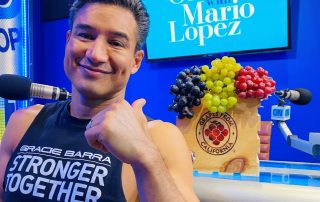
Mario Lopez voiced California grape spots that are running on stations airing On with Mario Lopez and iHeartRadio Countdown, plus on the On with Mario Lopez podcast.

On stations that air The Steve Harvey Morning Show, California grape spots featuring Nephew Tommy are airing.

The ads will run through mid-December.

You can listen to the August and September spots here. The influencers will record new spots each month.

Photo is  Mario Lopez who voiced a spot

2021-09-22T11:41:13-07:00September 22nd, 2021|

Walnuts in Plant Based Diets

Walnuts Are Part of Plant Based Eating


By Patrick Cavanaugh, Editor


The California Walnut Board & Commission are working hard to position walnuts as a perfect plant-based protein food. Jennifer Olmstead is Marketing Director for domestic public relations for the California Walnut Board & Commission. She said you definitely don’t want to overlook walnuts when talking about plants.

They have so many different nutrients to offer. One of them is the fact that they’re the only nut that’s significantly high in essential plant-based Omega-3 ALA.

And she said that’s the kind of Omega-3 fatty acid that you can get only by consuming this type of food. And then of course, they offer a nice amount of plant-based protein and fiber and are also a good source of magnesium.

Olmstead comments on the Have A Plant eating guide, that’s available. “It’s available through the Produce for Better Health Foundation website. And we worked with Produce for Better Health Foundation to develop this Plant-Forward eating guide that’s really targeted to health professionals, retailers, and food professionals,” noted Olmstead.

We have also provided all of those people with a toolkit of recipes, social media posts, graphics, and other assets that they can use to then take the information from the guide and share it with their own customers.

You can find out more information at fruitsandveggies.org, where you’ll find that Have A Plant information also information at walnuts.org.

2021-09-21T19:31:55-07:00September 21st, 2021|

LearnAboutAg Classroom Conference 2021

Save the Date for the Virtual 2021 California Agriculture in the Classroom Conference, September 24-25, 2021


LearnAboutAg.org, the California Foundation for Agriculture in the Classroom has scheduled its  34th annual conference for educators—an online class

California agriculture is diverse—producing everything from vegetables, to milk, to fruits and nuts, and to field crops and livestock. Farming shapes the local landscape in each California county. The goal is to make sure students learn about agriculture and how it contributes to each and every one of our lives each and every day.

Teaching students about the journey their food and fiber undergoes from the farm to their everyday lives is an important message. Using Agriculture in the Classroom allows students to experience real-life lessons that they will remember for the rest of their lives.

Although the conference lasts only two days, it’s hoped that teachers continue to LearnAboutAg® all year long! LearnAboutAg is here to help you continue incorporating the theme of agriculture into your classroom, or for those of you new to our program, how to get started!

We look forward to your registration and “seeing” you on Zoom!

2021-09-16T19:29:18-07:00September 16th, 2021|

Elaine Trevino is Tapped as U.S. Chief Agricultural Negotiator for the United States

Almond Alliance President Elaine Trevino Nominated as U.S. Chief Agricultural Negotiator 

Almond Alliance of California President Elaine Trevino has been nominated by President Biden as the Chief Agricultural Negotiator for the United States Trade Representative. The position is responsible for conducting and overseeing international negotiations related to trade of the nation’s agricultural products – including California almonds.

Almond Alliance Chairman Mike Curry commented, “Although we will miss Elaine’s leadership and energy, we are excited for the almond industry, the Central Valley (where she grew up) and California agriculture to have such a passionate and committed person serving in the Chief Agricultural Negotiator role. We are thrilled to see Elaine nominated for this position and know that her experience with us at the Almond Alliance will carry over into her new role – working for farmers and ranchers, their families and the workers and businesses in the rural communities where we live.”

Curry noted that Elaine’s nomination requires U.S. Senate confirmation. “We assure our members that the Board of Directors of the Almond Alliance will lead a smooth transition in partnership with Elaine to identify and hire her successor. While we’re transitioning, the Board, Elaine and the Almond Alliance team will not skip a beat in our advocacy work on behalf of California almonds, both on the state and federal levels.”

As President of the Almond Alliance of California (AAC), Elaine leads a member-based trade association that advocates on regulatory and legislative issues in areas of international trade, food safety, water quality and availability, crop protection, air quality, worker safety, supply chain and feed quality.

Elaine has worked on advocating for funding for COVID-19 relief, addressing retaliatory tariffs, climate smart farming, public private partnerships for opening new markets and strengthening existing markets and addressing technical sanitary and phytosanitary barriers. Elaine works at the local and federal levels on addressing port congestions and supply chain disruptions and excessive costs.

Elaine served as a Deputy Secretary at the California Department of Food and Agriculture for Governor Arnold Schwarzenegger and Governor Gray Davis.  She was responsible for the oversight of the international export and trade programs, specialty crop block grant funding, division of marketing services, plant health and pest prevention and the statewide county fair network. Elaine serves on USDA’s Agricultural Policy Advisory Committee (APAC).  Born and raised in the Central Valley of California, Elaine has a long history of community service and has a great respect for agriculture and the value of the industry to California’s economy. She received her undergraduate degree from the University of California Berkeley and attended the John F. Kennedy School of Government.

2021-09-14T17:05:19-07:00September 14th, 2021|

Trade Offs for Sustainability

Sustainability is All About Trade Offs

By Tim Hammerich, with the Ag Information Network

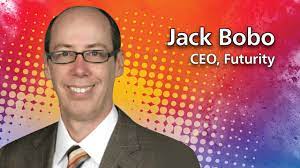
There is often misunderstanding and disagreement on what is truly sustainable when it comes to food and agriculture. Food futurist and author Jack Bobo said a lot of this difference in perspective comes from how localized your point of view is coming from. He says it’s a continuum that involves trade offs along the way.

“We need to think of sustainability, not in terms of good or bad or right or wrong, but in terms of choices and consequences. Consumers think of sustainability in terms of local sustainability,” Bobo said. “If I use less water, less fertilizer, less insecticides, that’s good. But agribusinesses think in terms of global sustainability. The more intensively I farm, the lower the impact in other places. And so it’s a continuum from local sustainability to global sustainability, and there will always be trade offs between the two.

“Organic has a lower local environmental footprint often, but it has a bigger global footprint because you just need more acres. Consumers though, are working with food companies and asking for regenerative because it has that local environmental benefit, but we need them to also understand the global consequences of that,” explained Bobo.

Bobo recently released a new book titled “Why Smart People Make Bad Food Choices”.

2021-09-08T21:07:09-07:00September 8th, 2021|

Ag-Tech Needs to Collaborate

Agtech Companies Need to Integrate and Collaborate

By Tim Hammerich with the Ag Information Network 

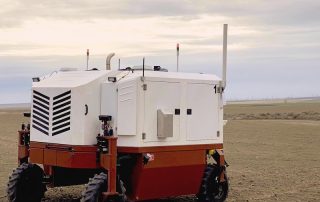
As technology for the farm has developed, new problems have emerged. Two big ones for autonomous farming, said Carbon Robotics CEO Paul Mikesell, are too many separate applications that don’t integrate, and no way for companies to interact with each other on the farm level.

“We have this sort of field readiness for autonomy problem that I think we’re going to have to work together to overcome so that we can have a cooperative environment. Airplanes do this with a system called ADS-B where they talk to each other. We need to have some way for these different companies to work together so that they don’t bump into each other, and so that they can schedule around each other. And it’s not even just the autonomous stuff, but it’s things like where are the center pivots and what direction are they going? And things like that,” said Mikesell.

Mikesell noted at an even more fundamental level, all of ag-tech needs better ways to integrate with each other so that farmers don’t have to reinvent the wheel every time they want to add a new tool.

“What I think would be bad for everybody is if all of these companies went out and had their own independent walled garden platform. And then as a farmer, you don’t have any, the ability to jump from one to the other or aggregate the data together.” explained Mikesell. “As a farmer, you want to be able to see all that stuff together, and if everybody’s doing this separate and there’s not an open platform, we’re going to wind up in a spot that just makes things worse. You know, like why do you have so many apps on your phone, right? It’s because well everything tries to keep itself separate.”

Carbon Robotics is one ag-tech company seeking collaboration in these areas.


2021-09-07T20:56:15-07:00September 7th, 2021|

Robotics vs Machinery


Robotics Companies Trying To Go Mainstream on Farms


By Tim Hammerich, with the Ag Information Network

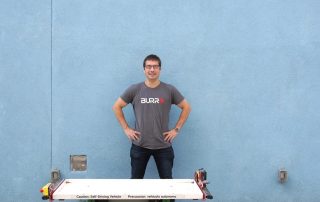
Robotics companies are betting the farm on automation being adopted by agricultural producers. But in order for robots to be adopted by farmers, the perception needs to change from looking at them as simply another piece of farm machinery. Something that operates completely on its own, says Burro founder Charlie Andersen, needs to be evaluated differently than equipment that you have to operate.

“You look at a used tractor, that’s 80 horsepower, and it will sell for like 20 grand. Right? And I think that farmers in their heads, as they’re looking at these systems, they have a narrative of like, ‘here’s the piece of hardware that I used to buy’. And you’ve got these smaller devices or different shape devices. You’re not really buying a piece of hardware. You’re buying a thing that does a task on its own. People are really, really expensive and they’re oftentimes are much more expensive than the equipment that is doing a lot of the mechanized work. I think there’s a shifting perception in terms of autonomous systems versus what’s out there today,” said Anderson

Andersen’s company Burro offers a people-scale autonomous cart that transports hand picked produce during harvest.

“Like, you know, if you look at an ATV. An ATV in our case sells like eight grand, and we’re selling a product that’s roughly double that in the first year, but it’s worth that much more because it is driving itself. It’s not just a piece of hardware,” Anderson said.

This is one key challenge ag robotics companies need to overcome for more widespread adoption of this technology.

2021-08-31T20:34:52-07:00August 31st, 2021|

Industry Calls for Governor to Veto Card Check (AB 616)


California Fresh Fruit Association Calls on Gov. Newsom to Veto AB 616

On August 26, the California State Senate voted 24-11 to pass AB 616 (Stone), commonly referred to as “card check.” AB 616 would alter the traditional petition and secret election process overseen by the Agricultural Labor Relations Board (ALRB) in which farmworkers can vote for a union. The California Fresh Fruit Association joined a broad coalition of agricultural organizations to oppose AB 616, which proponents have misleadingly characterized as “vote by mail” legislation. Unlike mail-in voting, AB 616’s process would allow for interested parties to select the timing and manner of a union election, as well as who receives a card check form, and would limit the ability of the ALRB to provide impartial supervision of an election.


CFFA President Ian LeMay stated, “the California State Senate’s vote to pass AB 616 and undermine the integrity of the secret ballot in union elections is beyond disappointing. The right to an impartial, secret ballot election, free from undue pressure, is foundational to the democratic process that all of us cherish as Americans. AB 616 would allow for interested parties (union) to deliver a representation card to a select group of employees to sign in their presence smacks of voter coercion and intimidation – an anathema to the democratic voting process. The bill fails to even require that every employee of a company have the opportunity to vote on who or if they want to be represented.”


LeMay continued, “At the same time that our state legislators are smacking the pulpit regarding protections needed for our state and national voting processes, it is unfathomable that they would strip our farmworker community of that same basic right. We now call on Governor Newsom, to have the same foresight as his predecessor Governor Brown did when he vetoed the previous card check attempt. Veto AB 616 and protect California farmworker’s right to a free and fair election process.”

2021-08-27T11:49:27-07:00August 27th, 2021|

Goats Welcomed Young Students

‘I wish this was my school’: Young Students Get Hands-on at Elkus Ranch

By Pam Kan-Rice UCANR  Assistant Director, News and Information Outreach

Curious goats milled around the masked elementary school students who were raking out the livestock stalls. After a year of social distancing due to COVID-19 precautions, the goats were enthralled by the youngsters who visited UC Agriculture and Natural Resources’ Elkus Ranch Environmental Education Center in San Mateo County.

“The animals were missing kids, they’re used to getting more loving,” said Beth Loof, 4-H youth community educator at Elkus Ranch. “Goats are really social. They get distressed when they are alone.”

Tucked behind the rolling green hills of Half Moon Bay off state Route 1, Elkus Ranch is a working landscape that, in a normal year, hosts people from all over the San Francisco Bay Area for field trips, conferences, community service projects, internships and summer camps.

During the pandemic, UC ANR has limited visitors to “social bubbles” of children and adults for outdoor education at the 125-acre ranch, which has implemented a variety of COVID protocols for the safety of visitors. During Adventure Days, young people spend four hours caring for animals, tending gardens, making a nature-themed craft project and hiking around the property.

“We would love to bring children from urban areas of the Bay Area to Elkus Ranch,” said Frank McPherson, director of UC Cooperative Extension for Alameda, Contra Costa, San Mateo and San Francisco counties. “So they can learn where food comes from, before it gets to the grocery store.”

On a sunny spring day, 11 students from Share Path Academy in San Mateo visited for Adventure Day, as their first field trip of the year.

“Coming here and having the hands-on learning, being able to hold objects, touch objects, interact with things, it’s all part of learning,” said Erin McCoy, a Share Path Academy teacher. “In science, you can talk about certain things in classes, but when you come out here and you actually apply it to what they’re doing and it’s tactile for them, at this age, it’s really important.”

The group – composed of McCoy, nine fifth-graders, a fourth-grader, a sixth-grader and a couple of parents – spent the day outdoors petting the donkeys, goats, chickens, rabbits and sheep and learning about the animals that live at Elkus Ranch.

“I think it’s been a great opportunity for our children to be outdoors and to enjoy nature, to reconnect with the environment – animals, plants, just the outdoors,” said parent Christina Cabrera. “It’s great for the children and the adults accompanying them.”

Inside the barn, Loof invited the students to sit on straw bales – not the hay bales, which are food for the livestock. She showed the students how wool that is sheared from sheep’s coats is spun into yarn. First, they carded the wool. “You’re going to card it like this. It’s like brushing your hair, but it has a little resistance so it can be a workout,” Loof said, cautioning the students wearing shorts to be careful not to brush their skin with the sharp, wire teeth of the tool. “Get all the fibers nice and flat, lined up, going one way. Fibers are what we call all the strands of wool.”

“This place is awesome.”


After twisting the wool by hand into yarn, the students fashioned the natural-colored fuzzy strands into bracelets.

“We love Elkus,” said McCoy, whose son has attended summer camp at the ranch. “This place is awesome.”

Taking a break for lunch, the group walked down the dirt path from the barn past the livestock pens to wash their hands, then sat at primary-colored picnic tables to eat next to a garden.

After lunch, the students exercised their creativity with buckets of clay to mold into animals or roll out and cut with cookie cutters.

In the chicken coop, Loof, who is one of four community educators who work at Elkus Ranch, shared animal science facts such as, “Eggs are viable for two weeks after the hen sits on them in the nest.” She also told funny stories such as how Dora, the white bantam, escaped the coop and ate all the chard in the garden.

“I wish this was my school,” said one student as he held an egg-laying chicken.

The visit ended with a garden tour and a game of hide and seek among the raised beds of onions, squash and other vegetables.

“Being outdoors is an important counterbalance to being on a computer,” said Cabrera, who is also a San Mateo High School wellness counselor. “It’s a great addition to what we’re doing. Just to be with animals.”

Elkus Ranch is still offering Adventure Days for children; the cost is $425 for 10 people. Small groups are also invited for 90-minute visits.

“If all goes well, we plan to offer a three-day mini-camp on Monday through Wednesday of Thanksgiving week,” said Leslie Jensen, Elkus Ranch coordinator.

For more information about Elkus Ranch activities, visit ucanr.edu/adventure or contact Jensen at LKJensen@ucanr.edu.


UC Agriculture and Natural Resources brings the power of UC to all 58 California counties. Through research and Cooperative Extension in agriculture, natural resources, nutrition, economic and youth development, our mission is to improve the lives of all Californians. Learn more at ucanr.edu and support our work at donate.ucanr.edu.


2021-08-25T20:41:30-07:00August 25th, 2021|
Go to Top