California Beef Council Announces New Executive Committee

By California Beef Council

The California Beef Council welcomed a new executive committee for 2022, with Cindy Tews of Fresno serving as chair for the coming year. Tews comes into the role on the heels of Tom Barcellos, who provided leadership and guidance as chair during 2021.

The announcement came at the close of the CBC’s annual meeting held December 7-8 at Pismo Beach. Tews takes the reins as the CBC begins its 68th year as the country’s oldest State Beef Council. Outgoing Chair Tom Barcellos of Porterville, will continue in an ex-officio role.

Tews is the co-owner of Fresno Livestock Commission, LLC, which has long had a role in the community. It is the only livestock market in Fresno County and serves as a gathering place where information is passed about beef quality assurance and the latest in production practices. The on-site café also provides a space for visitors to talk about what is going on in the community.

“As a CBC Board member, I get to see firsthand how invaluable that one Checkoff dollar is that is deducted for each head that we sell. I’m finding that dollar grows into so much more,” Tews said.

Looking ahead, the CBC plans to invest more than $1.2 million in 2022 to promote beef, provide consumer information, engage with foodservice and retail stakeholders, educate health and nutrition influencers, and provide educational and informational resources to beef producers.

The CBC Executive Committee includes:

  • Cindy Tews, chair (range)
  • Steven Maxey, vice chair (packer/processor)
  • Mike Williams (range)
  • Frank Gambonini (dairy)
  • Jarred Mello (dairy)
  • Mike Sulpizio (feeder)
  • Craig Finster (feeder)
  • Tom Barcellos, ex officio (dairy)

The CBC also welcomed the following new members and alternates to the council:

  • Lizette Cisneros, feeder alternate, Hanford
  • Frank Nunes, dairy member, Tulare
  • William Vanbeek, dairy member, Tipton
  • Frank Mendonsa, dairy alternate, Tulare

The CBC board is comprised of 42 members and alternates, each appointed by the California Secretary of Agriculture. Both the Executive Committee and the full council represent all segments of beef production within California, including range cattle, dairy cattle, feeders, packers/processers and the general public. A full list of the council is available here.

2022-02-02T10:53:41-08:00February 2nd, 2022|

California Farmland Trust Protects 253 Acres of Almonds in East Merced County

By California Farmland Trust

California Farmland Trust is proud to announce the recent permanent protection of 253 acres of almonds in Merced County, owned by The Myers Irrevocable Flying M Ranch Trust.

Established in the 1950s, Flying M Ranch began farming and ranching in the area of Merced, plentiful with rich agricultural soils and riparian areas. As generations of the Myers family have taken over the operation, they have remained focused on their farming roots and ways to be leaders in facing agriculture’s most persistent challenges, including the preservation of vital natural resources.

This 253-acre property placed in an agricultural conservation easement (ACE) with CFT is one of the many conservation easements protecting the working landscapes of Flying M Ranch. Approximately 5,900 acres of grazing land on their farm has been preserved through other conservation organizations, and the Myers are actively pursuing another ACE with CFT.

“The idea of putting a conservation easement on the property was to keep the ranch in a perpetual state, and we like the idea of keeping it continuous,” said Wes Myers, Flying M Ranch Trust co-trustee. “CFT understands farming and ranching, which is why we chose to work with them on this project.”

Funding for this conservation project was provided through the Agricultural Land Mitigation Program (ALMP), which is administered by Department of Conservation (DOC) on behalf of the California High-Speed Rail Authority.

“The growth pressure from the City of Merced and even surrounding communities like Planada, in combination with the Myers desire to be stewards of the land, are all contributing factors that make this farm a quality project for permanent protection,” said Chelsea Slaton, conservation director at CFT. “Given the resources and geographical features of this farm, protecting this property will help sustain long-term production of agricultural commodities for years to come, and we commend the Myers for their stewardship.”

CFT’s portfolio of protected farmland is most prevalent in Merced County and Flying M Ranch adds to these efforts. CFT has now protected 11,669 acres of farmland on 36 farms in Merced County.

2022-01-31T08:48:38-08:00January 31st, 2022|

USDA Announces Plenary Speakers for 2022 Agricultural Outlook Forum

Glenda Humiston to speak on market opportunities for climate smart agriculture

By Pamela Kan-Rice, UCANR

The U.S. Department of Agriculture announced plenary speakers for the 2022 Agricultural Outlook Forum, themed “New Paths to Sustainability and Productivity Growth” to be held virtually Feb. 24–25, 2022.

The opening plenary session will feature a fireside chat between Secretary of Agriculture Tom Vilsack and Elizabeth Economy, senior advisor to the Secretary of Commerce. Secretary Vilsack and Economy will discuss U.S.-China agricultural trade relations and prospects for the Chinese agriculture market.

The Secretary’s discussion will be followed by a panel titled “Growing Market Opportunities for Climate Smart, Sustainable Agriculture Systems,” which will bring together sector leaders to discuss how climate smart, sustainable production practices can generate both environmental and economic returns, while still meeting the needs of consumers.

Speakers at the plenary panel include:

  • David Allen, VP of Sustainability at PepsiCo Foods;
  • Glenda Humiston, Vice President, Agriculture & Natural Resources at University of California;
  • Mike McCloskey, Co-Founder and CEO of Select Milk Producers;
  • Elena Rice, Chief Scientific Officer of Genus, PLC; and
  • Emily Skor, CEO, Growth Energy

“The Outlook Forum is USDA’s largest event of the year. Being asked by Secretary Vilsack to serve on the opening plenary panel is a significant honor,” said Humiston.

Also, during the Thursday morning session, USDA Chief Economist Seth Meyer will unveil the Department’s 2022 outlook for U.S. commodity markets and trade and discuss the U.S. farm income situation.

Along with the plenary session, Forum attendees can choose from 30 sessions with more than 90 speakers. The concurrent track sessions and topics supporting this year’s theme are: climate mitigation and adaptation, supply chain resilience, commodity outlooks, frontiers in agricultural production and technology and U.S. trade and global markets.

Visit the Agricultural Outlook Forum website to register and read the program at a glance. Follow the conversation at #AgOutlook on USDA’s TwitterInstagram, and Facebook.

Registration to the 2022 Outlook Forum is free but required. Register at https://www.labroots.com/ms/virtual-event/usda-aof-2022.

USDA touches the lives of all Americans each day in so many positive ways. In the Biden-Harris Administration, USDA is transforming America’s food system with a greater focus on more resilient local and regional food production, fairer markets for all producers, ensuring access to safe, healthy, and nutritious food in all communities, building new markets and streams of income for farmers and producers using climate smart food and forestry practices, making historic investments in infrastructure and clean energy capabilities in rural America, and committing to equity across the Department by removing systemic barriers and building a workforce more representative of America. To learn more, visit www.usda.gov.

2022-01-27T10:59:05-08:00January 27th, 2022|

Farmers Invited to Tour Cover Crops in Sacramento Valley March 3

Farmers and ranchers are invited on a tour to learn how to use cover crops to build soil health. A full-day tour of several cover crop sites in orchards and annual crop fields in the Sacramento Valley is being offered on March 3 by the Western Cover Crop Council’s Southwest Region Committee.

“The goal of this tour is to demonstrate ways to use cover crops effectively in annual crops and orchards in the Sacramento Valley,” said tour organizer Sarah Light, UC Cooperative Extension agronomy advisor.

“This tour will cover a range of topics, including cover crop selection, equipment needed to manage cover crops, considerations for cover cropping in the region, and the importance of building soil health,” said Light, who is also chair of the Western Cover Crop Council’s Southwest Region Committee and a board member of the Western Cover Crop Council.

Cover crop species, cultivars and mixes including legumes, grasses and brassicas will be showcased in Colusa County, with farmers, UC Cooperative Extension specialists and researchers giving presentations.

The tour bus will depart from the Colusa County Cooperative Extension Office at 100 Sunrise Blvd., Suite E, Colusa, CA 95932 at 8 a.m. and return at 7:30 p.m.

Priority registration is limited to farmers and ranchers until Feb. 1. Other interested people may join after Feb. 1. ​The $50 registration fee includes morning refreshments, transportation, lunch and dinner. To register or to see the agenda, visit https://surveys.ucanr.edu/survey.cfm?surveynumber=36190.

Source: UCANR

2022-01-25T08:28:47-08:00January 25th, 2022|

Current and Former FFA Officers Tour CA Ag

FFA Members Explore Agriculture in California During January

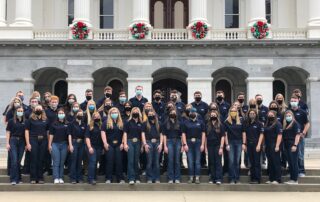
Earlier this month, 46 current and former state FFA officers visited California and learned about the various types of agriculture the state offers.

Members flew into California and toured various agribusinesses — from the largest U.S. producer of caviar to a fourth-generation ranch practicing responsible carbon farming and more. They also talked with Karen Ross; California Secretary of Agriculture, Dorene D’Adamo; the vice-chair of the California Water Board, Matthew Allen; vice president of state government affairs at Western Growers.

FFADuring the second week of the tour, members visited berry farms, nurseries, a horse ranch, and a feedlot; experienced whale watching; and explored the Muir National Forest. They spoke with a variety of agriculture experts, learned about practices they could take home to their communities, and visited the Mark Richardson Career Technical Education Center & Agricultural Farm in Santa Maria.

The experience was made possible thanks to FFA sponsors John Deere and Bunge.

FFA members who participated in the experience include: Alyssa Andrews and William Blankenship of Arkansas; Jillian Johnson, Carter Howell, Julia Heijkoop, Kelly Alexander, Barrett Young and Tyler Brannan of Florida; Madison Stevenson and Kesley Holdgrafer of Iowa; Cassandra Moody, Claire Shelton and Katherine Hebdon of Idaho; Julia Hamblen of Indiana; Ashley Chandler and Rachel Sebesta of Kansas; Kyle Schulze of Maryland; Olivia Coffey and Adele Battel of Michigan; Nicol Koziolek of Minnesota; Joceyln Dvorak of Missouri; Regan Hand of Mississippi; Bailey Robinson, Emma Kuss, Madison Stracke and Victoria Ference of Nebraska; Emily Sadlon, Abigail Goodenough, and Johnathan Finney of New Jersey; Aubrey Schwartz, Jacob Zajkowski, John Dippold, Katherine Price, Kylie Baldwin, Isabel D’Aquisto-Butler and Justin Sharp of Oregon; Hunter Eide of South Dakota; Ryder Mortenson of South Dakota and Samantha Olson of South Dakota; Charles Moser; Samuel Leach; Ellie Vance; Jackson Lohr, Lauren Rhodes and Emma Jackson of Virginia.

The National FFA Organization is a school-based national youth leadership development organization of more than 735,000 student members as part of 8,817 local FFA chapters in all 50 states, Puerto Rico and the U.S. Virgin Islands.

2022-01-24T09:11:42-08:00January 24th, 2022|

California Marijuana Growers Can’t Take Much to the Bank

Study analyzes tension between legal cannabis, financial industry

Legalization of marijuana in California has helped some financial institutions in the state increase their assets. At the same time, many banks, feeling stifled by federal regulations, deny services to licensed growers, manufacturers and retailers, a new study shows.

“Licensed cannabis businesses need to bank their cash and take out loans to build their businesses, but many banks worry that by doing business with the cannabis industry, they’ll be flouting federal laws,” said co-author Keith Taylor, University of California Cooperative Extension community development specialist. “Banks that won’t accept legal cannabis cash deposits and don’t provide loans, aren’t monetizing their deposits. Marginalized cannabis communities are missing out on capital.”

Of the banks and credit unions contacted by researchers at The Ohio State University and University of California for the study, most were not knowingly involved in the cannabis industry.

Combining data on bank holdings and interviews with growers and bankers, the research –published online in the journal Agricultural Finance Review – paints an initial picture of how the marijuana and financial industries co-exist in California now, and suggests regulatory changes could create new opportunities for both.

The data analysis did make one thing clear: Legalization of the estimated $16 billion marijuana industry in California has been a boon to financial institutions. But restricted access to banking, from checking accounts to loans, perpetuates inequities for those participating in the legal production of cannabis – while unlicensed, illegal growing and exporting continues as an enormous cash-based sector of the industry.

“We need a better understanding of the economics of this industry and all of the questions and implications related to it so the impacts of policy choices are intentional,” said lead study author Zoë Plakias, assistant professor of agricultural, environmental and development economics at The Ohio State University.

“If we want to have a more equitable society and allow communities to keep more of the value of this crop, how do we do that? We first need to characterize what happens in communities when you legalize cannabis.”

Plakias and Margaret Jodlowski, assistant professor of agricultural, environmental and development economics at Ohio State, conducted the study with researchers Taylor, Parisa Kavousi and Taylor Giamo at the University of California, Davis.

“The tensions we are observing in the cannabis banking space comes about in part due to the inequity felt between large cannabis and small and legacy operators,” Taylor said. “The ‘big guys’ are able to absorb a great deal more than ‘Ma and Pa.’”

Legalization benefited financial institutions indirectly

Marijuana is listed as a Schedule 1 drug under the federal Controlled Substances Act. Even in states that have legalized recreational and medicinal use of cannabis, it is still a federal crime to possess, buy or sell marijuana. California legalized recreational cannabis for adults in 2016, and the industry is overseen by the Department of Cannabis Control.

Data used by the researchers for this study included bank and credit union call data for the years 2015-2020. The analysis showed that assets held by financial institutions in counties that legalized marijuana had increased in that period by almost $750 million and loan activity rose by about $500 million.

These benefits are presumed to be spillover effects of better overall economic health that followed cannabis legalization in specific counties, Jodlowski said, because the interviews with financial institutions indicated there has been little appetite among banks to associate with the marijuana industry.

“It’s important to remember when talking about loans that it’s not possible to identify whether they were for cannabis operations, and they’re probably not based on what we heard from stakeholders,” she said. “It’s more of a general relationship. The bank is doing better, and they’re able to lend out more in general and earn more interest from loans.”

When they narrowed the analysis to banks that operate only in California, the researchers found that for each single new manufacturing or retail license, bank assets and loan capacity grew by tens of thousands of dollars. Cannabis cultivation licenses, on the other hand, had no impact on California banks’ holdings.

“This suggests that a lot of the economic benefits of legalization come from other stages of the supply chain – and it’s not a foregone conclusion that farmers benefit from legalization,” Plakias said. “There’s a need to think about how farmers who are producing cannabis in the legal market, often operating in rural environments with a weaker economic base to start with, can be supported in the context of economic development.”

The team also interviewed marijuana farmers and representatives from banks and credit unions in Humboldt, Trinity and Mendocino counties – the “Emerald Triangle” region known historically in California and nationally for the quantity and quality of marijuana produced there.

Cannabis growers face obstacles, risk-adverse bankers

On the financial side, bankers reported being hamstrung by ambiguous federal guidelines that pose a real risk to financing cannabis, largely because banks are required to report suspicious transactions to the federal government. They might be seen as players in a criminal enterprise even by providing banking services to employees who work for licensed members of the cannabis industry, or they could lose big on lending if cannabis-related assets backing a loan were seized by federal agents.

“What’s consistent across all financial institutions is that it’s very costly, and does involve taking on some risk, to be in compliance with all of the guidelines – the risk being that even if you follow all guidelines to the letter, there’s no assurance that you can’t still get in trouble,” Plakias said.

Cannabis growers they interviewed reported paying fees ranging from $200 to $3,000 per month for bank accounts, which they found to be cost prohibitive. These limitations leave most licensed marijuana producers and retailers in the lurch, forcing them to rely on nontraditional financing arrangements – maybe investing in friends’ endeavors – or risk running cash operations.

“There is a lot of evidence that cash can be better for a local economy because cash tends to stay local – but we are now a credit-based economy,” Jodlowski said. “In this day and age it’s incredibly harmful for local economic development to have an entire sector that’s denied access to credit, because so much of developing as a household, or individual, or industry requires credit and requires demonstration of credit-worthiness.

“That’s a fundamental harm of these sorts of restrictions.”

This research is part of a larger project on cannabis and community economic development in California supported by a grant from the UC Davis Cannabis and Hemp Research Center. As part of this project, the California authors on this paper recently published a review of the opportunities and challenges marijuana legalization poses for localities in which the crop is cultivated and sold.

“It’s clear we need policies making cannabis banking and finance more equitable,” Taylor said. “It’s also clear that ‘Ma and Pa’ enterprises need to associate together in formal organizations so they can achieve economies of scale and harness their political power to endure the transition to legal.”

Despite the stigma attached to marijuana, even when legal, its status as California’s most valuable crop – estimated to be worth more than almonds and dairy combined – attracts outsiders who are better-equipped to come up with funding to get their operations started and compete with legacy growers who have lived and worked in California for generations.

This trend necessitates development of evidence-based policies that take all participants into consideration, the Ohio State researchers say.

“Our findings speak to confusion around existing policies and the need for streamlining, clarifying and having a more unified approach to regulating this industry,” Jodlowski said.

2022-01-20T13:14:22-08:00January 20th, 2022|

New Book Shows Grapes a Top Food for Immunity and Brain Health

By California Table Grape Commission

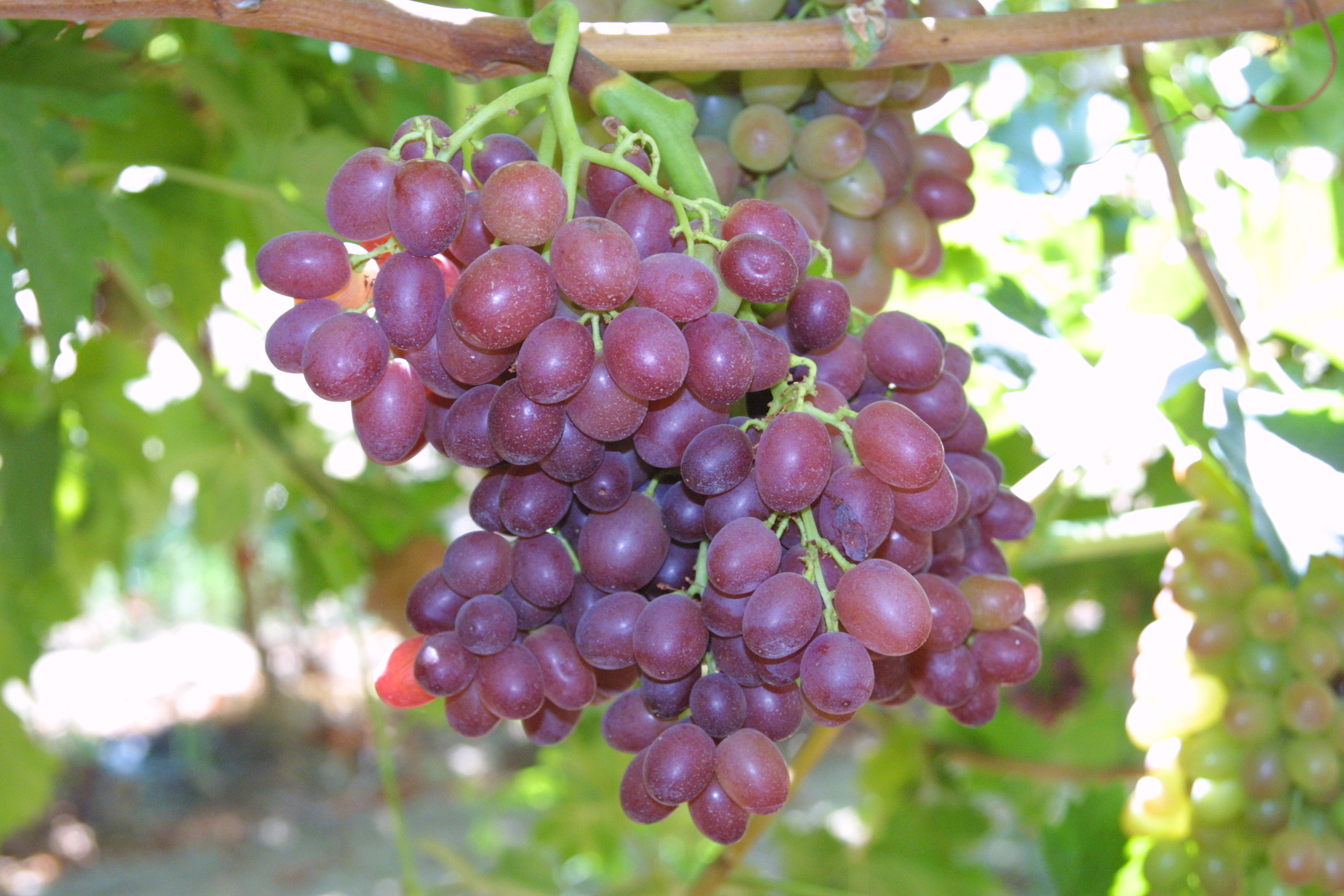
Grapes are a top food for immunity and brain health, according to a new book soon to be released by dietitian and author Patricia Bannan.

The book is titled “From Burnout to Balance: 60+ Healing Recipes & Simple Strategies to Boost Mood, Immunity, Focus & Sleep.” The book lists top foods in several categories, among them brain and immune health, with grapes on the list for both.

In addition to the recipes, Bannan includes grapes in her “Nearly No-Cook Meal Ideas” section of the book.

“Grapes are my go-to ingredient for color, hydration, and nutrition. As a snack or recipe ingredient, grapes are an easy, healthy choice for wellness. Studies show that grapes are linked to benefits in multiple areas of health, including support for brain and immune health,” said Patricia Bannan, MS, RDN, author of “From Burnout to Balance.” “Three of my favorite recipes with grapes in ‘From Burnout to Balance’ are my Simple Salmon Burgers with Grape Salsa, Lemony Farro and Lentil Bowls with Shrimp and Grapes, and my Kale, Sweet Potato & Grape Salad with Walnuts. Not only are these recipes delicious, they are packed with nutrients to support both brain and immune health.”

Bannan will promote her new book throughout the upcoming California table grape season.

2022-01-20T08:13:24-08:00January 20th, 2022|

UC Scientists Receive Big Climate-Smart Grant

UC ANR Scientists Receive $1.5M NIFA Grant For Climate-Smart Agriculture

By Pam Kan-Rice, UCANR Assistant Director, News and Information Outreach

To help California farmers and ranchers adjust to uncertain weather and climate events, the USDA National Institute for Food and Agriculture has awarded $1.5 million to a team of scientists led by UC Agriculture and Natural Resources. The project is one of six projects funded by USDA NIFA’s $9 million investment to expand adoption of climate-smart practices.

“The Cooperative Extension system and the USDA Climate Hubs have unmatched capacity to reach agricultural, Tribal and underserved communities, as well as educators and students, and our nation’s farmers directly,” said Agriculture Secretary Tom Vilsack in a statement announcing the grant recipients. “This partnership will strengthen climate research efforts and accelerate the development, adoption and application of science-based, climate-smart practices that benefit everyone.”

California has the largest and the most diverse agricultural economy in the nation, with revenue exceeding $50 billion, which is larger than the revenues of the other 10 Western states combined. Despite its size, the state is highly vulnerable to climate change.

“California farmers and ranchers need locally relevant climate information and adaptation resources,” said Tapan Pathak, UC Cooperative Extension specialist based at UC Merced and principal investigator for the grant. “Similarly, technical service providers are often ill-equipped to assist farmers and ranchers when asked questions about climate change, weather variability and local implications to implement those decisions.”

To train the next generation of workers to be climate-ready, colleges expose students to climate science and agricultural science separately, but often lack opportunities for the students to learn about the nexus of climate and agriculture.

Pathak plans to provide classes – along with opportunities for practical learning experiences – to farmers, ranchers, agricultural service providers and students.

“An overarching goal of this project is to develop robust multifaceted pathways to climate-smart agriculture by integrating Extension and participatory education program development and delivery to enhance agricultural resilience to climate change,” he said.

“To tackle this ambitious goal, we have a large team of multidisciplinary leading scientists and experts from local, state and federal agencies, the California Climate Hub and the University of California ready to work with diverse stakeholder groups.”

UC Cooperative Extension specialists Leslie Roche, Vikram Koundinya and Daniele Zaccaria at UC Davis; Mark Cooper, UC Davis professor; and Steven Ostoja of the USDA California Climate Hub, are co-principal investigators with Pathak.

They will begin with a needs assessment for all of their stakeholders, including socially disadvantaged farmers and ranchers. Through three components, the project team will work to understand growers’ perception of climate change-related threats, build capacity for technical assistance providers to advance climate-smart agriculture research and delivery of science-based information, and educate community college and undergraduate university students.

Engaging with farmers and ranchers

With the help of community partners including the Community Alliance of Family Farmers and the California Association of Resource Conservation Districts, the team will reach out to socially disadvantaged and limited-resource producers, including beginning and first-generation farmers and ranchers to attend regional workshops, led by instructors who are fluent in Spanish and Hmong.

Workshop content will address a broad range of topics including climate change trends and local impacts, drought planning strategies, optimization of agricultural productivity with limited resources and farm and ranch economic sustainability.

“California has so much diversity in terms of scale, crops, geography, micro-climates, market conditions and natural resource considerations that a one-size-fits-all approach will not work,” wrote Renata Brillinger, CalCAN executive director, in her letter supporting the project. “We support your plans to address the needs of producers though region-specific workshops.”

Five county-based UC Cooperative Extension academics will serve as regional leads for the farming workshops across broad geographic regions:

  • Andre Biscaro, UCCE irrigation and water resources advisor serving Ventura County
  • Ruth Dahlquist-Willard, UCCE small farms advisor for Fresno and Tulare counties
  • Surendra Dara, UCCE entomology and biologicals advisor serving San Luis Obispo and Ventura counties
  • Jairo Diaz, director of the UC Desert Research and Extension Center in Southern California
  • Jhalendra Rijal, UCCE integrated pest management advisor serving San Joaquin and Merced counties

Workshops for ranchers and rangeland managers will be coordinated by UCCE rangeland and livestock advisors in their respective regions:

  • Dan Macon, UCCE livestock and natural resources advisor for Plumas, Nevada, Sutter and Yuba counties, will organize workshops for the Sierra Nevada mountains and foothill region
  • Grace Woodmansee, UCCE livestock and natural resources advisor for Siskiyou County, will organize workshops in Northern California
  • Rebecca Ozeran, UCCE livestock and natural resources advisor for Fresno and Madera counties, will organize workshops in Central California
  • Devii Rao, UCCE livestock and natural resources advisor for Monterey, San Benito and Santa Cruz counties, will organize workshops in the coastal region
  • Brooke Latack, UCCE livestock advisor for Imperial, Riverside and San Bernardino counties, will organize workshops in Southern California

Training technical service providers

The team will offer climate-smart agriculture trainings for technical service providers on how to prepare for key stressors in California agriculture such as floods, droughts, wildfires and heatwaves; effective climate communications; invasive pests and disease management under future climate; and weather and climate resources and decision support tools for managing risks.

One of the aims of this component is to encourage more coordinated efforts among different agencies to deliver climate change resources to their respective stakeholders, Pathak said.

California Cattlemen’s Association has expressed its support for the project.

“Given ranchers’ strong relationships with and reliance upon technical services providers – particularly those housed within the USDA and University of California – CCA also sees great value in the project’s goal of building capacity within those organizations to assist ranchers in addressing the challenges of climate change,” wrote Kirk Wilbur, CCA vice president of government affairs.

Nurturing future generations

For college students, there will be the UC Merced Summer Institute on Climate and Agriculture certificate course organized by Karina Diaz Rios, UC Cooperative Extension specialist based at UC Merced; the UC Davis credit-based course “Science and Society: Climate Change and Agriculture;” and a certificate course for community college students, which will be overseen by the Bay Area Community College Consortium of 28 colleges.

“We will join you in this exciting work and shared vision towards inclusive education in climate resilient agriculture,” wrote Nancy Gutierrez, statewide director of the Agriculture, Water, Environmental Tech sector of the California Community College System.

Students from the three courses will be selected for paid summer internships to engage in Cooperative Extension projects.

“Through climate-smart agriculture education, the workforce will be prepared to advance climate science and research efforts for future generations,” Pathak said.

2022-01-18T08:08:21-08:00January 18th, 2022|

Devastating Virus Challenges Lettuce Growers

Lettuce Growers Hope Weeding, Research Can Counter Devastating Plant Virus

Population explosion of insect vector contributed to $100 million in losses in 2020

By Mike Hsu. UCANR Senior Public Information Representative

While most Californians are wholeheartedly embracing the wet start to winter, one group is welcoming the rain more warily (and wearily) – lettuce growers in the Salinas Valley.

“It’s a blessing, yes, we need the water,” said Tony Alameda, managing partner of Topflavor Farms, which grows a variety of produce in Monterey and San Benito counties. “But, oh gosh: with that water, here come the weeds, here comes the habitat, here comes all the other problems that go along with it.”

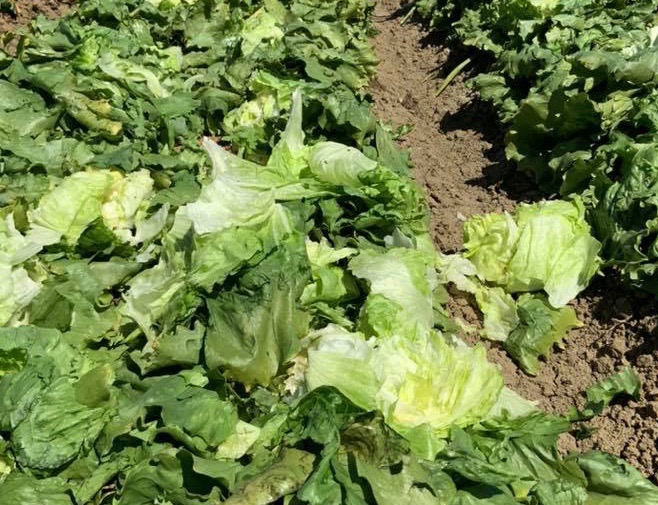
Weeds are overwintering havens for a tiny insect called the Western flower thrips, which in turn carries the impatiens necrotic spot virus (INSV) – a plant virus that caused $100 million in lost gross revenue for Salinas Valley growers in 2020.

The agricultural community called it “the biggest problem we’ve seen in a long, long time,” said Mary Zischke, facilitator of a task force convened by the Grower-Shipper Association to address INSV and a related affliction, Pythium wilt.

Widespread crop failure in 2020

Since INSV was first observed in the state in 2006, the virus – which poses no threat to people – triggered significant crop losses in 2019, leading up to a catastrophic 2020. As Alameda’s lettuces began to show the telltale “bronzing” of the leaves, efforts to bag up or remove the infected plants had no effect on the virus’ implacable spread.

“Nothing seemed to work,” he recalled, “and you just watch those fields collapse, week after week, until you’re just like, ‘Ugh, there’s nothing here to even harvest.’”

After “100% crop failure” that year in his prime fields at the heart of the Salinas Valley, Alameda tried to dodge the virus in 2021 – shifting lettuce plantings to San Benito County and instead using his most valuable land for unaffected crops such as cilantro, leeks and radishes. By decamping to San Benito, Alameda was able to harvest 70% of his usual lettuce yield.

Generally, growers enjoyed a reprieve from virus pressures in 2021. Even in this “good” year, however, about one-third of all lettuce plantings in the Salinas Valley had at least a low level of infection, according to Zischke.

“Since we were attributing a lot of our so-called good fortune – on having less damage this year – to the cooler weather, we know we can’t count on that to get us out of this problem,” Zischke said. “All the models point to the fact that we’re in a warming climate, so we were fortunate this year.”

More research needed on thrips

Heat waves were a major driver of the INSV disaster of 2020. Although researchers have established a link between warmer temperatures and population increases of thrips, science still has a lot to learn about those disease vectors.

“Thrips are something we’re trying to understand as much as we can, but it’s pretty tough because they’re a little mysterious in the way they get around and where they overwinter,” said Richard Smith, a University of California Cooperative vegetable crops and weed science farm advisor for the Central Coast region.

Smith – along with U.S. Department of Agriculture research entomologist Daniel Hasegawa and California State University-Monterey Bay plant pathologist JP Dundore-Arias – provided an INSV update during an Assembly agriculture committee hearing in December.

Recent studies have identified several weeds as key “reservoirs” of thrips, including malva, marestail, and hairy fleabane. The ubiquitous mustards, fortunately, appear to be poor hosts for thrips, although their pollen serve as potential food sources.

Controlling those weeds – which are beginning to spring up as the days lengthen – is a top priority during the winter months, according to Smith. Aggressive weed management in the preceding winter was an important factor in limiting the virus’ spread in 2021.

And because weeds recognize no boundaries, experts are also urging managers of non-agricultural lands to keep their properties as clean as possible, including industrial sites, equipment yards and the edges of roadways – namely U.S. Route 101, which runs through the center of the valley. Some growers have been volunteering to weed their neighbors’ vineyards.

“We’re encouraging everybody – as best they can – to knock down known weed hosts; that’s really critical,” Zischke said.

Search for long-term solutions

Within the grower community, there is “nervous optimism” for the coming year, said Alameda, as he continues to hope for an innovation that would aid in the fight against INSV – whether a more targeted pesticide application or a beneficial insect that could deter the thrips.

However, both Alameda and Zischke pointed to the breeding of more resistant lettuce varieties as the ultimate solution to INSV – albeit one that is years away.

“We have a lot of different types of lettuce that we grow, so to move resistance into all the different types of lettuce we grow throughout the season … that’s going to take time,” Zischke explained.

Research funding from the state and USDA – as well as projects supported by the California Leafy Greens Research Program – can help expedite that process. But, for Alameda, the INSV crisis underscores the need for more resources and farm advisors such as Smith, who has spent more than three decades cultivating relationships and building trust within Salinas Valley communities.

Alameda would like to see a renewed focus on bringing “bright, young, passionate people who live and breathe this stuff” to the region, so growers are better equipped to handle the inevitable next calamity.

“Hopefully this is a wakeup call to all,” he said. “This is a valued industry – you have to take care of it; it cannot be taken for granted. The ‘salad bowl of the world’ cannot rest on its laurels.”

2022-01-17T09:16:29-08:00January 17th, 2022|

UC Davis Doctoral Student Alison Coomer Wins Global Nematode Thesis Competition

UC Davis doctoral student Alison Coomer is an international champion

By Kathy Keatley Garvey, UC Davis Department of Entomology and Nematology

UC Davis second-year doctoral student Alison Coomer is now a global champion.

Coomer, a member of the laboratory of nematologist Shahid Siddique of the UC Davis Department of Entomology and Nematology, just won a world-wide competition sponsored by the International Federation of Nematology Societies (IFNS) for her three-minute thesis on root-knot nematodes.

She delivered her video presentation virtually on “Trade-Offs Between Virulence and Breaking Resistance in Root-Knot Nematodes.” She will be awarded a busary and plaque at the 7th  International Congress of Nematology (ICN), set May 1-6 in Antibes, France.

Coomer earlier was selected one of the nine finalists in the 22-participant competition, vying against eight other graduate students from the University of Idaho, Moscow; and universities in England, Australia, Brazil, Ireland, Kenya, Belgium and South Africa.

“Our entire lab is glad for Alison winning this award,” said Siddique. “This is an outstanding performance and Alison has really been working hard for that. I feel proud about it. I am also looking forward to Alison’s presentation at ICN.”

Judges announced that Rhys Copeland of Murdoch University, Australia, won second, and Laura Sheehy of Liverpool John Moores University England,  scored third. They also will receive busaries and plaques at the 7th  International Congress of Nematology.

IFNS hosts the competition, IFNS 3-Minute Thesis, “to cultivate student academic and research communication skills, and to enhance overall awareness of nematodes and the science of nematology.”

The competition began with 22 participants. Each was required to present a single static slide, and not use any props or sound-effects. In the finals, a panel of judges–six nematologists and three non-experts from other areas of plant sciend science–scored them on the quality of their research presentation, ability to communicate research to non-specialists, and the 3MT slide.  (See the winning videos at https://bit.ly/3naarTe)

In her presentation, Coomer related that: “Root-knot nematodes, specifically the MIG-group, consisting of Meloidogyne incognita, javanica, and arenaria, are the most damaging of the plant parasitic nematodes causing severe yield loss in over 2,000 different plant species including tomatoes. The Mi-gene, which is a resistance gene in tomato, has been used in commercial farming and has been praised for its effectiveness towards the MIG group. This gene has been cloned but the mechanisms of how it’s resistance works is still unknown.” (See video at https://www.ifns.org/alison-coomer)

Coomer, a doctoral student in plant pathology with an emphasis on nematology and advised by Siddique, is working on her dissertation, “Plant Parasitic Nematode Effectors and Their Role in the Plant Defense Immune System.”

Coomer, originally from the St. Louis, Mo., area, received two bachelor degrees–one in biology and the other in chemistry–in May 2020 from Concordia University, Seward, Neb., where she won the Outstanding Graduate Student in Biology Award. She served as a biology lab assistant and taught courses in general biology and microbiology.

As a biological science aide/intern, Coomer did undergraduate research in the Sorghum Unit of USDA’s Agricultural Research Service. Lincoln, Neb.  Her work included collecting, prepping and analyzing DNA, RNA and proteins to identify genes that contribute to an under- and over-expression of lignin in sorghum plants.


2022-01-11T13:12:33-08:00January 11th, 2022|
Go to Top