University of California, Division of Agricultural and Natural Resources

Drought Tolerant Sorghum in CA

California Ideal for Drough Research

By Jessica Theisman, Associate Editor

Research is being done on drought tolerance and sorghum. California Ag Today recently spoke with Jeff Dahlberg, director of the Kearney Agricultural Research and Extension Center in Parlier about the topic.

“The sorghum research has gone pretty well for the drought tolerance; we have just finished publishing our fifth article on their first year of data,” he said.

There is a lot of interest in the research findings developing through all the drought work. California is a unique spot to do drought work on a field scale because it does not rain very often.

“That allows us to basically control the field through our ability to add water whenever we want to. I’m really excited about this,” Dahlberg said.

There are genes that are turned off and on with the application and/or lack of water.

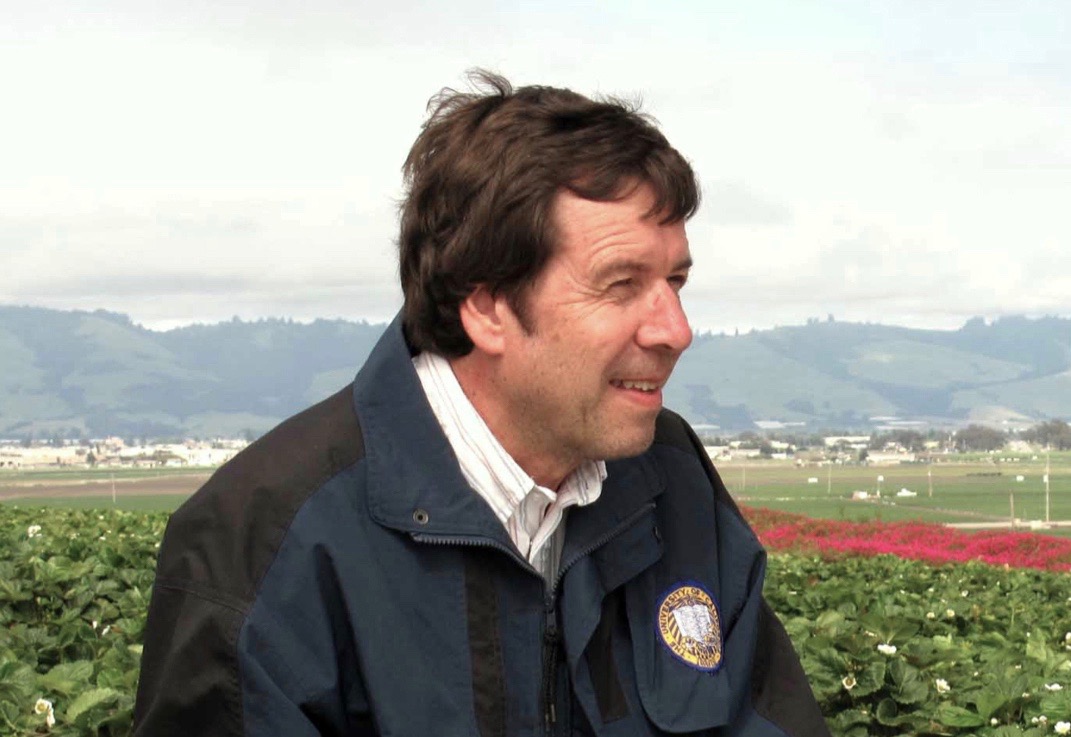
Jeff Dahlberg, director of the Kearney Agriculture Research and Extension Center in Parlier, Fresno County

Jeff Dahlberg, director of the Kearney Agriculture Research and Extension Center in Parlier, Fresno County

“The challenge for us now is to start taking all this data and trying to make some sense out of it,” Dahelberg explained.

It is critical to find out which genes are needed for drought tolerance and how they can get them expressed in plants.

“I think this is long-term basic research but has long-term implications in our ability to produce more drought tolerant crops to help feed the world,” Dahlberg said.

Sorghum has a long-standing history in California. It was grown here in the late 1800s. The USDA brought sorghum to California as a drought-tolerant feed.

“In the 1960s, there were almost 400,000 acres of grain sorghum grown in the state, primarily as a rotation crop for cotton,” Dahlberg said.

This crop is making a come-back with all of the droughts California has been going through.

“It’s a very drought tolerant crop. Probably one of the most drought tolerance cereal crops that we grow worldwide,” Dahlberg explained.
2021-05-12T11:05:07-07:00November 23rd, 2018|

Preventing the Spread of ACP

Valley Citrus Growers Continue Vigilance

By Jessica Theisman, Associate Editor
ACP

USDA ACP Cooperative Program Map (Source:
California Citrus Pest & Disease Prevention Program)

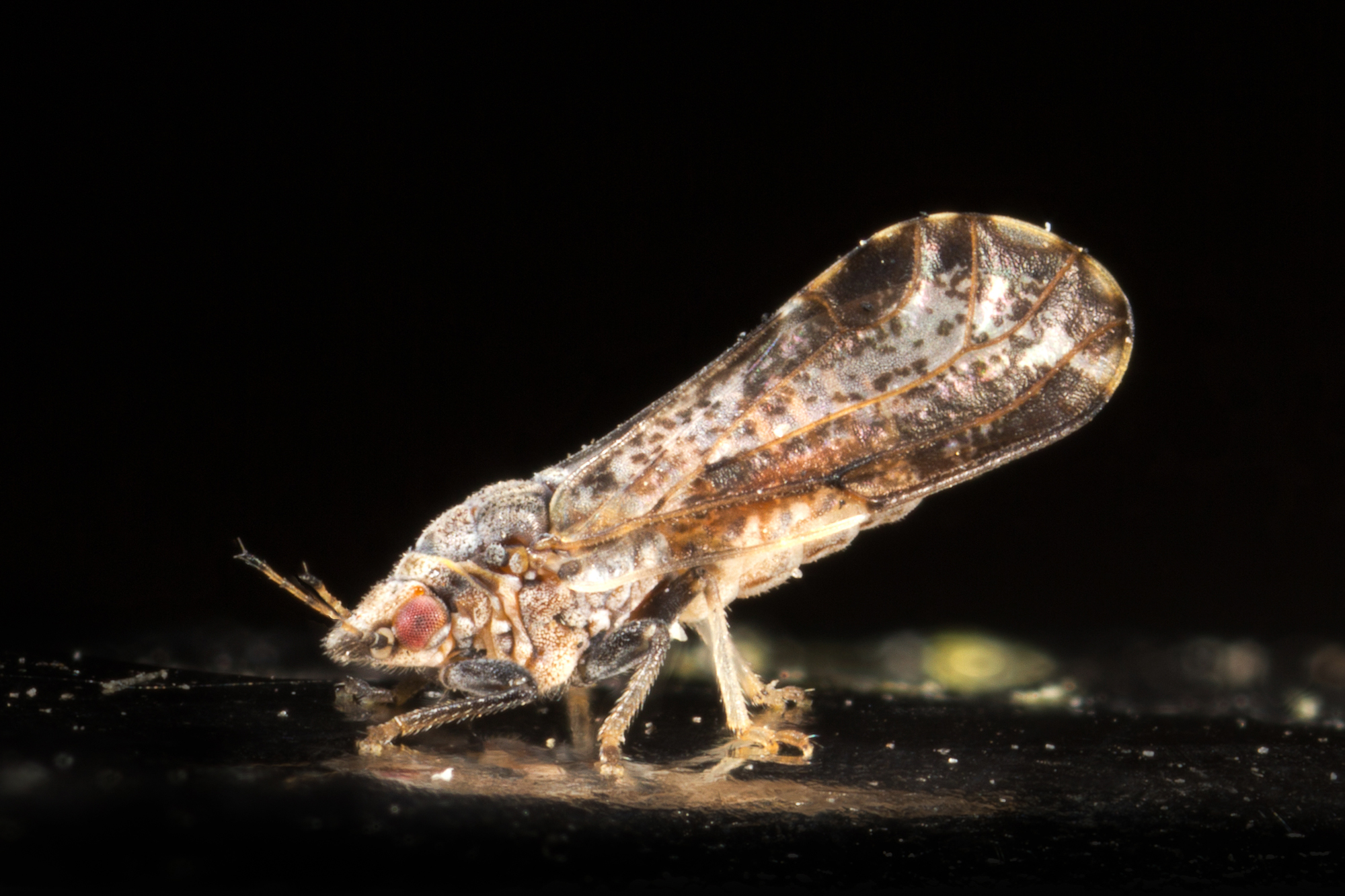
The spread of Asian Citrus Psyllid (ACP) continues to be a looming threat for Central Valley citrus growers as it vectors Huanglongbing (HLB), a disease that destroys citrus trees. Greg Douhan, a University of California Cooperative Extension Tulare County citrus farm advisor reported to California Ag Today recently that, “There have been so many people onboard really working at this from multiple angles, and we’re in the eradication mode. We want to make sure the insect doesn’t get established in the San Joaquin Valley.”

“If one were to look at a map of ACP infestation in California [such as CDFA Quarantine Maps and California Citrus Pest & Disease Prevention Program Threat map], they may consider it to be endemic in the Los Angeles area. Rest assured that anytime ACP is found in a trap, the CDFA sprays everything in that area within 400 meters.”

Douhan said the Valley is on high alert to find ACP in traps. “

If researchers discover a cluster of finds in any particular area, we manage some spray programs and try to get all the growers to do a coordinated effort in order to try to combat it,” he said.

SaveOurCitrusIn addition, the SAVE OUR CITRUS app is a free USDA iPhone app to report and identify the four leading citrus diseases: citrus greening, citrus canker, citrus black spot and sweet orange scab. Report your symptoms, upload a photo, and citrus experts will respond.

So far, the practices have been working well.

“I think most of the growers are very well informed,” Douhan said, “and are taking this very seriously because it is this their livelihood.”

2021-05-12T11:01:51-07:00November 21st, 2018|

California Sweet Potatoes are One of A Kind

California Sweet Potatoes Grow in Well-Drained Soil

By Jessica Theisman, Associate Editor

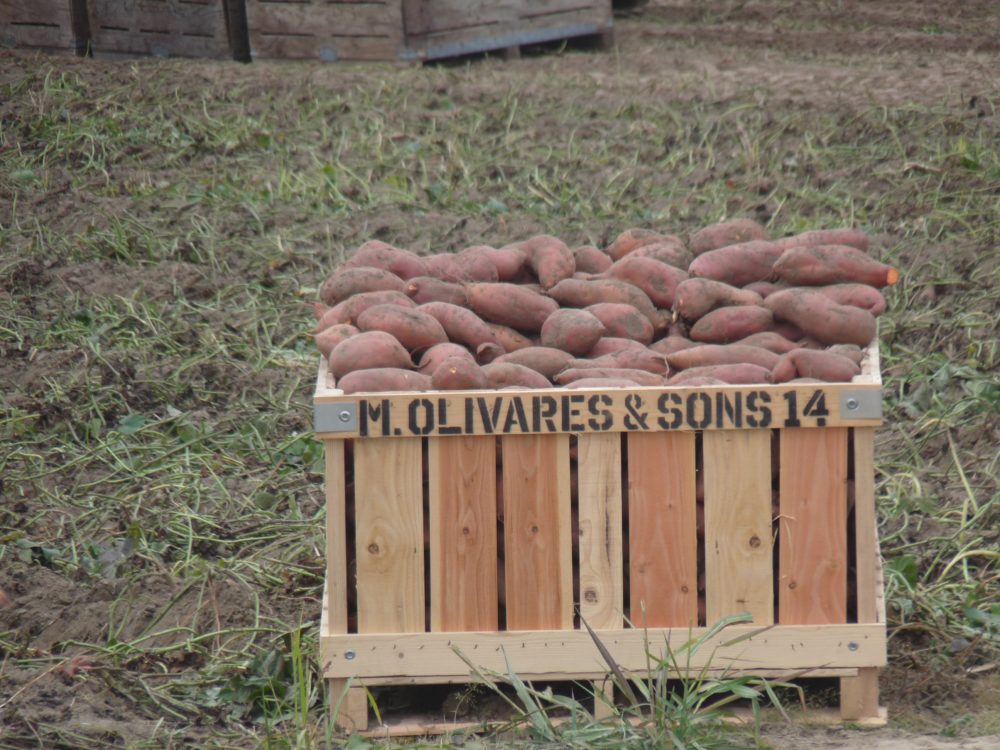
California sweet potatoes are in full harvest, and our potatoes are one of a kind, said Scott Stoddard a UCANR Cooperative Extension farm advisor for vegetable crops in Merced County. The difference is the sheen.

Scott Stoddard

“Sometimes they come up clean out of the ground because we’ve grown them in a very loose sand, so the sand just falls off of them, and it almost leaves some shine,” he said.

You can get what is called the California Sheen.

In a lot of other areas of the country, there is a little bit of mud and a little bit of silt. The crop they’re digging up is growing in the ground and kind of looks like it needs to be washed.

“A lot of times with California sweet potatoes, they don’t even look like they need to be washed when they come up out of the ground. It looks like they can just go straight from the field to fork,” Stoddard said.

Well-drained soil is important. Well-drained soil is what they grow best in.

“Not like a cactus where they can survive on no water, but we can get by in about two and a half acre feet. That’ll give you a good 100 percent potential yield,” Stoddard explained.

2018-10-24T16:15:13-07:00October 24th, 2018|

Livestock Owners Asked to Weigh in on Fire Impact

Livestock Owners Should Participate in Fire Survey

By Pam Kan-Rice, UC Agriculture & Natural Resources

Preparing a farm for wildfire is more complicated when it involves protecting live animals. To assess the impact of wildfire on livestock production, University of California researchers are asking livestock producers to participate in a survey. 

People raising cattle, sheep, goats, poultry, swine, horses, llamas, alpacas, aquaculture species or other production-oriented animals in California who have experienced at least one wildfire on their property within the last 10 years are asked to participate in the FIRE survey.

“We will aim to quantify the impact of wildfires in different livestock production systems,” said Beatriz Martinez Lopez, director of the Center for Animal Disease Modeling and Surveillance in the UC Davis School of Veterinary Medicine. “The idea is also to create a risk map showing areas more likely to experience wildfires with high economic impact in California.

“This economic and risk assessment, to the best of our knowledge, has not been done, and we hope to identify potential actions that ranchers can take to reduce or mitigate their losses if their property is hit by wildfire.”

Martínez López, who is also an associate professor in the Department of Medicine & Epidemiology at UC Davis, is teaming up with UC Cooperative Extension livestock and natural resources advisors and wildfire specialists around the state to conduct the study.

“Right now, we have no good estimate of the real cost of wildfire to livestock producers in California,” said Rebecca Ozeran, UC Cooperative Extension livestock and natural resources advisor for Fresno and Madera counties. “Existing UCCE forage loss worksheets cannot account for the many other ways that wildfire affects livestock farms and ranches. As such, we need producers’ input to help us calculate the range of immediate and long-term costs of wildfire.”

Stephanie Larson, UC Cooperative Extension livestock and range management advisor for Sonoma and Marin counties, agreed, saying, “The more producers who participate, the more accurate and useful our results will be.”

“We hope the survey results will be used by producers across the state to prepare for wildfire,” said Matthew Shapero, UC Cooperative Extension livestock and natural resources advisor for Ventura and Santa Barbara counties, “And by federal and private agencies to better allocate funds for postfire programs available to livestock producers.”

The survey is online at http://bit.ly/FIREsurvey. It takes 15 to 30 minutes, depending on the number of properties the participant has that have been affected by wildfire.

“Survey answers are completely confidential and the results will be released only as summaries in which no individual’s answers can be identified,” said Martínez López. “This survey will provide critical information to create the foundation for future fire economic assessments and management decisions.”

2021-05-12T11:17:09-07:00October 18th, 2018|

Karen Klonsky Dies, Thursday, Sept. 27

Klonsky Credited for CA Agricultural Cost and Return Studies


By Patrick Cavanaugh, Editor and Laurie Greene, Founding Editor

Editor’s Note: We extend our deepest condolences to Karen’s family. Below is our interview with Karen upon her retirement in 2015.


This is an exclusive interview with Karen Klonsky, UC Davis Cooperative Extension specialist emeritus, in the UC Davis Department of Agricultural and Resource Economics. Her expertise has been farm management and production, sustainable agriculture and organic agriculture.

CalAgToday: Congratulations on your recent retirement!UCANR 100 years logo

Klonsky: Thanks, Patrick. I retired on July 1, 2015, after 34 years. I started at UC Davis in ’81, straight from graduate school.

CalAgToday: What has been your primary research interest?

Klonsky: My primary research areas are c and organic agriculture. I have approached these subjects from several dimensions, including the economic feasibility of alternative farming practices, the size and growth of organic production in California, and factors influencing the adoption of alternative farming systems.

Karen Klonsky UC Cooperative Extension specialist

Karen Klonsky UC Cooperative Extension specialist

CalAgToday:  Wow, what a great career! I understand your interest in alternative farming systems began with your dissertation work comparing alfalfa systems with integrated pest management.

Klonsky: I studied agricultural economics in graduate school and started working with a professor in my department who had a joint appointment in agricultural economics and entomology. And I just became very interested in that research area.

I worked with entomologists and researchers on a computer model of plants and alfalfa weevils, and their interaction, plus a management component. I studied the plant and bug components, then did the management part and imposed it on top and asked, ‘If you did this, how many bugs would die?’ The plant model showed how much the alfalfa would grow, and at what point you could cut the alfalfa and achieve the desired yield. I never actually did any fieldwork.”

CalAgToday:  Since 1983, you not only directed ongoing Cost and Return Studies, but the development of an entire archived library of Cost and Return Studies for the UC Davis Department of Agricultural and Resource Economics. You recently completed studies on pistachios and walnuts, right?

Klonsky: Yes, both “Sample Costs to Establish and Produce English Walnuts In the Sacramento Valley, Micro sprinkler irrigated” and “Sample Costs to Establish and Produce Pistachios In the San Joaquin Valley-South, Low-Volume Irrigation.”

Our library contains studies about field, tree and vine crops and animal commodities. But since I retired, Dan Sumner, director, University of California Agricultural Issues Center and Frank H. Buck, Jr. Distinguished Professor for the Department of Agricultural and Resource Economics has taken that over and I continue to be peripherally involved.

CalAgToday:  These cost studies have been recognized worldwide.ARE Cost and Return Studies

Klonsky: Yes, and it has been very gratifying work. We decided to put them online routinely, and we have had a million downloads per year. Around 2005, Pete Livingston, my staff research associate, got the idea of scanning in the older studies. All of the newer studies were in electronic file format, so posting was easy. However, most of the older studies were paper copies, so we got a grant to scan and add them to our new online archive.

CalAgToday:  What was the most interesting thing about doing those cost studies?

Klonsky: I loved doing those studies. I really learned a lot because all cost studies are done directly with farmers we met through county farm advisors. I really got to know what farmers were thinking about and what their options were.

CalAgToday:  So those were real costs, not university costs?

Klonsky: Those were not university costs. The farmers tell us what equipment they will use, and then we calculate the cost of using their equipment—the fuel used to operate the equipment and the repair costs—with an agriculture-engineering program.

CalAgToday:  Do you have a math background?

Klonsky: Yes, I got my bachelor’s at the University of Michigan in mathematics. It was very helpful.

CalAgToday:  And you also earned your Ph.D. at the University of Michigan?

Klonsky: Yes.

CalAgToday:  So did you grow up in Michigan?

Klonsky: No, I grew up in New York.

CalAgToday:  And you had an interest in going to Michigan State University?

Klonsky:  I had an interest in agriculture because I had an uncle who farmed corn and vegetables in upstate New York. We would go up there and I thought it was the most wonderful thing in the world.

CalAgToday:  What were some of the highlights of your career?

Klonsky: For many, many years, I was involved in the long-term on-campus sustainable agriculture research on land that is now on Russell Ranch, but it started as Sustainable Ag Farming Systems. We looked at four different farming systems, organic, low input, high-input, and we did a lot of analyses with cover crops and rotations. It was great to work on that project.

CalAgToday: And you worked with USDA on the trends of organic farms?

Klonsky: Then I worked quite a bit with Department of Food and Agriculture on using the registration data for their organic farmers to compile statistics about how many farmers they had, what they grew, and the number of acres they planted with each crop. They had this database, which started in 1992 I believe, but they weren’t using it. Now the most recent registration analysis is available for 2012.

CalAgToday:  Just to try to get more data on the organic movement and organic growth?

Klonsky: Yes, because there was no data at all about it. Now NASS (National Agriculture Statistics Service) conducts a nationwide Organic Census, in addition to the regular Census of Agriculture.

CalAgToday:  I understand you served as an editor of the Journal of American Society of Farm Managers and Rural Appraisers (ASFMRA). What did that entail?ASFMRA

Klonsky: Yes. I did that for many years. ASFMRA is a national organization. The Journal of the ASFMRA comes out annually. As editor, I corresponded with the authors, assigned reviewers, and ultimately, accepted or rejected submissions, like any journal.

CalAgToday:  Did you travel a lot with your work and presentations?

Klonsky: You know, not so much, I went to Spain one time and France once for work. But I did travel around domestically to symposiums and conferences to speak on the economics of growing a lot of different crops, including many presentations at the EcoFarm Conference.

CalAgToday:  You worked and collaborated with some really interesting people.

Klonsky: Most of my important collaborations were conducting trials with people in other disciplines. For instance, at Russell Ranch, I was the only economist involved in the collaboration with plant pathologists and pomologists who ran trials to discover fumigation alternatives in the preplanting of trees.

Then I worked with people at UC Santa Cruz on alternatives for strawberry fumigation. Most of my work has been interdisciplinary.

CalAgToday:  California farming is a tremendously diverse industry. We produce 60% of the fruits and vegetables, and nearly 100 percent of the nut crops that people across the country consume. Any comments on that and on how, valiant and resilient farmers are to get through year after year, particularly lately with the drought and the lack of water deliveries?

Klonsky: When I first started, there was a land price bubble, and there were a lot of bankruptcies because people had these land payments they just couldn’t pay.

It was kind of like the mortgage crisis that housing saw in 2008, agriculture saw in the early 80s.

CalAgToday:  So as you have been editor for the Journal of the American Society of Farm Managers and Rural Appraisers, you see land values going up and that keeps agriculture strong—the high land values, right?

Klonsky: Well, but it keeps it expensive. So now there is more and more leasing of land. As farmers retire from permanent crops, they have an orchard, but they don’t really want to sell it, so they lease it.

CalAgToday:  There you go. Keep it somehow in the family.

Klonsky: Yes, they try to keep ownership in the family. Or what we see also are these development leases where a young farmer can’t afford to buy the land, so they lease the land, but they pay for the trees to be planted.

CalAgToday:  So you are still coming to your office at UC Davis?

Klonsky: I am officially retired, but we have what we call a ‘partial recall’ where you can do things if you have funding. I have a project along with Rachel Goodhue, Professor, UC Davis Department of Agricultural and Resource Economics, with the California Department of Food and Agriculture, funded through the California Department of Pesticide Regulation. The Department of Pesticide Regulations is required by law to do an economic analysis of all proposed new regulations. So that is what I am working on.

CalAgToday:  Give me a couple of examples. VOC regulations?

Klonsky: Yeah, we do VOC.

CalAgToday:  Are you looking at sustainable groundwater legislation?

Klonsky: No, just pesticide regulation. It is funded by the Mill tax on pesticides.

CalAgToday:  Did you work with a lot of graduate students at UC Davis?UC Davis Graduate Studies

Klonsky: Oh yeah, I worked with a lot of graduate students coming through. One of them was on different ways of pesticide management on eucalyptus trees. I said I went to Spain. On that trip, I spoke about growing eucalyptus for firewood.

CalAgToday:  That was an economic study, wasn’t it?

Klonsky: Yes it was. They grow it not for firewood, but for paper. But that never really caught on here.

CalAgToday:  Are you bullish on agriculture? Do you think Ag is going to continue thriving in California?

Klonsky: Oh, sure. Oh, sure. But I think that the water situation is definitely real, and I think agriculture already has definitely made tremendous strides in irrigation systems, especially the subsurface irrigation in vegetables, in particular processing tomatoes, which I worked on.

CalAgToday:  That was a huge improvement in growing tomatoes. And people didn’t think it was going to work, but it turned out to be fantastic.

Klonsky: Yeah, a really win-win on that one. And orchards are getting more efficient. If you look at the water per pound of crop produced, you see major improvements with water efficiency.

CalAgToday:  Absolutely. Of course, most plants transpire most of the water they take up through the roots, up through the leaves and the stomata cells. By the way, do you have any interesting stories regarding your career?

Klonsky: It’s not the highlight, but the weirdest thing of my career is I got an email from somebody in Ministry of Agriculture and Fisheries from the United Arab Emirates. They wanted me to give a live presentation about Cooperative Extension in California and how it’s organized.

So I had to go to this office building in downtown Sacramento at 10:00 at night because of the time difference. I went into a conference room that had a special kind of projector so I could see them and they could see me. And on the monitor I see all these men walked in—they were all men—and half of them were in Western dress and half of them were wearing a Sheik-like headdress, with a band that sits on top and holds it on.

That was crazy, just being downtown after everybody is gone and the whole building was dark and quiet, except the one room that I was in.

CalAgToday:  How long was the presentation?

Klonsky: Gosh, maybe an hour.

CalAgToday:  You needed to do some research for that presentation?

Klonsky: Yeah, I had to do some research, I had to think about Cooperative Extension in a different way—the big picture. 

CalAgToday:  Keep up the good work, and I hope you are enjoying retirement.

Klonsky: Yeah, I come in two days a week, so it is nice to see everybody. I still get a lot of emails, which I need to answer.

2018-10-02T20:13:53-07:00September 29th, 2018|

UC and Israel Sign Agricultural Research Agreement

California and Israel Face Similar Challenges

By Pam Kan-Rice, UC ANR News

From left, Ermias Kebreab, Eli Feinerman, and Mark Bell sign the agreement for Israel and California scientists to collaborate more on water-related research and education.

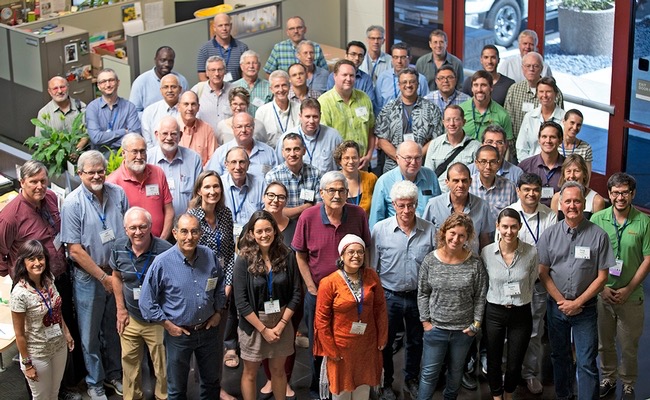
Pledging to work together to solve water scarcity issues, Israel’s Agricultural Research Organization signed a memorandum of understanding with the University of California Division of Agriculture and Natural Resources and UC Davis recently. The signing ceremony kicked off the 2018 Future of Water for Irrigation in California and Israel Workshop at the UC ANR building in Davis.

“Israel and California agriculture face similar challenges, including drought and climate change,” said Doug Parker, director of UC ANR’s California Institute for Water Resources. “In the memorandum of understanding, Israel’s Agricultural Research Organization, UC Davis and UC ANR pledge to work together more on research involving water, irrigation, technology and related topics that are important to both water-deficit countries.”

The agreement will enhance collaboration on research and extension for natural resources management in agriculture, with an emphasis on soil, irrigation and water resources, horticulture, food security and food safety.

“It’s a huge pleasure for us to sign an MOU with the world leaders in agricultural research like UC Davis and UC ANR,” said Eli Feinerman, director of Agricultural Research Organization of Israel. “When good people, smart people collaborate, the sky is the limit.”

Feinerman, Mark Bell (UC ANR vice provost) and Ermias Kebreab (UC Davis professor and associate vice provost of academic programs and global affairs) represented their respective institutions for the signing. Karen Ross (California Department of Food and Agriculture secretary) and Shlomi Kofman (Israel’s consul general to the Pacific Northwest) joined in celebrating the partnership.

“The important thing is to keep working together and develop additional frameworks that can bring the people of California and Israel together as researchers,” Kofman said. “But also to work together to make the world a better place.”

Ross said, “It’s so important for us to find ways and create forums to work together because water is the issue in this century and will continue to be.”

She explained that earlier this year, the World Bank and United Nations reported that 40 percent of the world population is living with water scarcity. 

“Over 700,000 people are at risk of relocation due to water scarcity,” Ross said. “We’re already seeing the refugee issues that are starting to happen because of drought, food insecurity and the lack of water.”

Ross touted the progress stemming from CDFA’s Healthy Soils Program to promote healthy soils on California’s farmlands and ranchlands and SWEEP, the State Water Efficiency and Enhancement Program, which has provided California farmers $62.7 million in grants for irrigation systems that reduce greenhouse gases and save water on agricultural operations.

“We need the answers of best practices that come from academia, through demonstration projects so that our farmers know what will really work,” Ross said.

As Parker opened the water workshop, sponsored by the U.S./Israel Binational Agricultural Research and Development (BARD) Program, Israel Agricultural Research Organization and UC ANR, he told the scientists, “The goal of this workshop is really to be creating new partnerships, meeting new people, networking and finding ways to work together in California with Israel, in Israel, with other parts of the world as well.”

Drawing on current events, Bell told the attendees, “If you look at the World Cup, it’s about effort, it’s about teamwork, it’s about diversity of skills, and I think that’s what this event does. It brings together those things.”

2021-05-12T11:05:10-07:00July 24th, 2018|

Frank Zalom Named Editor-in-Chief of Journal of Economic Entomology

UC Davis Professor to Head Distinguished Publication

News Release Edited By Patrick Cavanaugh

Integrated pest management specialist Frank Zalom, distinguished professor of entomology, UC Davis Department of Entomology and Nematology, and a past president of the Entomological Society of America (ESA) is the newly selected editor-in-chief of the Journal of Economic Entomology, the largest and most cited of ESA’s family of scientific journals.

Frank Zalom

The ESA Governing Board today announced that Zalom will succeed John Trumble, distinguished professor of entomology at UC Riverside. Trumble, editor-in-chief for 20 years, informed ESA in late 2017 of his intent to leave the role in 2018. In January, the journal’s editorial board launched a widespread search for his successor.

A 43-member of ESA and the 2014 president, Zalom will serve a five-year term as editor-in-chief. The journal publishes research on the economic significance of insects. It includes sections on apiculture and social insects, insecticides, biological control, household and structural insects, crop protection, forest entomology, and other topics.

“Dr. Frank Zalom’s career can be viewed as a model of applied entomology derived from an understanding of basic biology, and he is an ideal choice to be the new editor-in-chief of the Journal of Economic Entomology (JEE),” said ESA President Michael Parrella in an ESA news release.

“His unparalleled and broad expertise will serve to continue the journal’s growth as the publication of choice for applied entomological research and to build upon the legacy of Dr. John Trumble,” said Parrella, who is also dean of the College of Agricultural and Life Sciences at Idaho State University and former professor and chair of the UC Davis Department of Entomology and Nematology. 

Zalom’s 40-year career intersects entomological research, teaching, and application. He served 16 years as director of the University of California Statewide Integrated Pest Management Program (UC IPM) and is the only entomologist in the UC system to receive a simultaneous appointment in teaching, research, and extension. He focuses his research on IPM of agricultural crops.

Editorial board chair Xuguo Zhou, associate professor of entomology at the University of Kentucky, said he and his colleagues are delighted to welcome Zalom as the next editor-in-chief. “We could not have asked for a better candidate in terms of vision, dedication, reputation, experience, and integrity,” Zhou said. “And we also express our deep gratitude to Dr. John Trumble, whose tireless work ethic and unerring leadership have driven JEE to such great success for so long.”

“I couldn’t be more pleased to be selected the next editor-in-chief of the Journal of Economic Entomology,” Zalom said. “I have spent the last 40 years of my career trying to solve economically important problems caused by arthropods using an IPM approach, and this journal, as well as ESA’s other journals, have always served as a primary foundation and outlet for research conducted in my lab. As I approach the end of my career, I hope to be able to dedicate my efforts to enhancing our Society’s influence on science and its application to addressing some of the most important entomological challenges that affect communities worldwide. JEE is uniquely positioned to do exactly that.”

Zalom joined the UC system in 1980, serving in roles ranging from extension IPM coordinator to professor to vice chair of the department to advisor of the UC Davis International Agricultural Development Graduate Group. He has authored more than 335 journal articles and book chapters. including “Food, Crop Pests, and the Environment” published by APS Press. 

His career includes serving as major professor for 12 Ph.D students and seven master’s degree students.

Zalom is a fellow of the California Academy of Sciences, the American Association for the Advancement of Science, the Royal Entomological Society, and ESA.  Among his numerous honors: a Fulbright Senior Research Scholarship (1992-93), the ESA Achievement Award in Extension (1992), the ESA Recognition Award (2002), the James H. Meyer Award from UC Davis for teaching, research and service (2004), the Entomological Foundation IPM Team Award (2008), the Entomological Foundation Excellence in IPM Award (2010), Outstanding Mentor Award from the UC Davis Consortium for Women and Research (2013) and the C. W. Woodworth Award (2011), the highest award given by the Pacific Branch of ESA (PBESA).

More recently, Zalom received a lifetime achievement award, presented at the 9th International IPM Symposium, held March 19-22 in Baltimore. Last month he played a key role in a U.S. Congressional briefing held in the Rayburn House Office Building to raise awareness for and increase understanding of areawide integrated pest management (AIPM) and the benefits of a comprehensive pest management policy, particularly as it relates to invasive species.

Zalom, who received his doctorate in entomology from UC Davis in 1978, holds two degrees in zoology and ecology from Arizona State University (bachelor of science, 1973, and master’s degree, 1974).

Founded in 1889 and headquartered in Annapolis, Md., ESA is the world’s largest organization serving the professional and scientific needs of entomologists and people in related disciplines.

2021-05-12T11:05:11-07:00June 25th, 2018|

California Blueberry Growers Fit a Profitable Gap

Blueberry Production in California

By Patrick Cavanaugh, Editor

California blueberries are harvested from more than 5,000 acres in the state, but it took quite a bit of work in the early 1990s to make the crop viable for the area.

“We took a lot of varieties that had been developed for the early season low-chill areas of the southeast, and then we had to modify the pH of the soil and water, which was important. They were also finicky with heavy soils and would not tolerate drought,” said Mark Gaskell, a UCANR Cooperative Extension Small Farm and Specialty Crop Advisor for San Luis Obispo County who was very involved in establishing the early blueberry industry in California.

“We had to come up with a growing regime, and that took a few years, but there was enough success in the early years and the crop price would be at transitional periods between the northern and southern hemisphere,” Gaskell explained. “This is because, historically, most of the blueberries were grown in relatively few states and started being harvested in April and went to maybe October or September. And then it all shifted to the Southern hemisphere.”

At the time of a shift in the production area, there is a huge price incentive. And California growers filled that in.

“Soon, there was a lot of interest in producing for the fresh markets and as a result of having more blueberries in the market, more of a year, consumption has gone up,” Gaskell said. “At the same time, blueberries had become a super food for health.”

Other specialty small food crops are diversifying growers’ fields after the great success of introducing blueberries as a profitable crop.

“Much of the same kinds of things had been happening with other specialties, small fruit crops,” Gaskell explained. “California used to be primarily a strawberry-producing state. And many of those strawberry growers now have diversified in a wide range of other berries. And so those raspberries, blackberries, and blueberries have all increased in acreage and value.”

More information on California Blueberries can be found here.

2018-04-12T16:33:56-07:00April 12th, 2018|

GMO Technology Can Help Prevent Starvation

First World Activists Dictate to Third World

By Patrick Cavanaugh, Editor

Needed GMO technology to help citizens in Third World countries is being thwarted by activist groups in First World countries who are anti-GMO, said Alison Van Eenennaam, a UCANR Cooperative Extension Specialist focused on Animal Genomics at UC Davis.

“If the African people choose to use this to develop better bananas, they should have the right to use that and not be dictated to by activist groups in the First World promoting fear around this technology,” she said.

GMO technology could greatly benefit those in the developing world, especially those who struggle with starvation on a daily basis.

“Most people have never seen starvation. People take food for granted, and when you see people that have problems in their agricultural production systems that are actually affecting the food security, you have to address those problems, whether they be drought or disease problems,” Van Eenennaam explained.

“And I’m all for using whatever technology that works best to address a problem. Maybe it’s conventional breeding or maybe its GMO, or gene editing. I don’t really care. I just want to use the best tool that is available. But it doesn’t make sense to take some tools off the table for no reason, and I think that’s what’s happening around the debate of genetic engineering,” she said.

And the use of GMO crops in a third world country has dramatically decreased the use of pesticides, which should be celebrated by activists.

“About 90 percent of the farmers growing GMO crops are on small acreage producers in the developing world, that are growing insect-protected Bt cotton. And the dramatic decrease of insecticide use resulting from that—well environmentalist should be singing this from the rooftops,” Van Eenennaam said.

“It’s incomprehensible to me that if your real intent is to decrease pesticide use in agriculture, to not appreciate what those Bt crops have done for global insecticide use is to be willfully ignorant of what the data shows,” Van Eenennaam said. “It’s just a win-win for everyone.”

2021-05-12T11:05:12-07:00April 11th, 2018|

Helping Anti-GMO Consumers Know the Truth

Van Eennennaam: It’s Tough to Change Emotion

By Patrick Cavanaugh, Editor

California Ag Today recently spoke with Alison Van Eenennaam, a UCANR Cooperative Extension Specialist focused on  Animal Genomics at UC Davis. She discussed the argument against GMOs and the difficulty that some science communicators have with reaching anti-GMO consumers whose arguments are more emotion-based than fact-based.

“When every major scientific society in the world says something, then I don’t believe it’s a giant conspiracy theory,” Van Eenennaam said. “I believe that’s what the data show, and I get a little bit frustrated when people cherry pick an outlining study and just selectively ignore the consensus opinion of every single scientist in the world. That doesn’t make sense.”

“It becomes more like a denialist instead of a skeptic at that stage. Then discussion around the safety of GMOs is just out of kilt with the actual scientific data. It’s frustrating trying to correct that with science because it’s very hard to counter an emotional argument. So we need to peel back the story in a narrative form,” she said.

Van Eenennaam highlighted a movie called Food Evolution, narrated by American astrophysicist Neil deGrasse Tyson, which presents a factual representation of GMOs.

“I think that’s what’s been encouraging to me, just with general audience populations watching it, is they’ll come up afterwards and say, ‘You know what? This film made me think.’ ” Van Eenennaam said. “As a science communicator, I cannot ask for more than that. That’s exactly what I want people to do. I want them to dig down into the data and recognizing where they are getting the information and what it’s saying. I think that is a positive outcome.”

And certainly the movie has changed the mind of some people.

“And that is great, but we are wanting people to reevaluate on why they are changing their minds and are they willing to change their minds based on the evidence?  That is one of the focal points of the movie,” Van Eenennaam explained.

The Food Evolution movie can be seen free if you subscribe to Hulu. It can also be seen in different areas on the web. Simply search for it online.


2021-05-12T11:05:12-07:00April 9th, 2018|
Go to Top