University of California, Division of Agricultural and Natural Resources

California Coffee Brews Success

Mark Gaskell on California Coffee Crop

By Laurie Greene, Founding Editor

California Ag Today recently spoke about the emerging California coffee crop  with Mark Gaskell, who covers San Luis Obispo and Santa Barbara Counties as farm advisor for the University of California Small Farm Program as well as the UC Division of Agriculture and Natural Resources (UCANR) Cooperative Extension.

“Currently, there are about 30 farms with maybe 30,000 coffee plants between San Luis Obispo and San Diego Counties,” Gaskell said. “I would expect that to double this year. California’s coffee crop is doing well.”

“There is also now a private company, Frinj Coffee,” explained Gaskell, “that evolved out of a long relationship I had with Jay Ruskey, CEO and co-founder of Goleta-based Good Land Organics. Ruskey participated in some of our early research and development work with California coffee. Our collaboration has justified investment by the number of coffee growers in the Frinj Coffee operations.”

There are 25 growers, according to the Frinj Coffee website.

Coffee cultivation is new to California, because, as Gaskell explained, “traditionally, coffee is grown in subtropical areas, specifically at high elevations where the relatively cooler temperatures are. Cooler temperatures prolong the ripening time, which improves the quality of the coffee beans.”

“So, in the world’s newest coffee growing region, Coastal Southern California,” Gaskell said, “we replaced the high elevation with the influence of the Pacific Ocean. The ocean delivers a huge mass of relatively cool temperatures—always between 50 and 60 degrees Fahrenheit. These mild coastal conditions enable a very long ripening season for the coffee cherries and coffee beans.”

Gaskell projects the California coffee crop will be very successful.

“We expect the coffee volume will double this year and probably continue to double for the next few years. Just based on existing interest in coffee, I expect demand to keep pace with the ability of California growers to supply it, and more and more growers will be planting it this year.”


2021-05-12T11:05:12-07:00April 4th, 2018|

Herbicide Limits Plantings Following Cilantro

Caparol Label Change Sought To Reduce Plant-Back Restrictions Following Cilantro

By Patrick Cavanaugh, Editor

Cilantro production is important in California and more growers are planting it. However, an herbicide used in cilantro has plant-back restrictions to other crops.

It’s easy to grow and works well as a rotation crop, explained Oleg Daugovish, a UCANR Cooperative Extension Strawberry and Vegetable Crop Advisor serving Ventura County.

“It’s an easy fit in our production systems. You can fit it between many crops,” Daugovish said. “It’s a quick crop and can be planted in a small planting window.”

To help minimize weeds, Caparol herbicide is labeled for use on cilantro. “It works very well and it’s all we need to control weeds in cilantro,” Daugovish explained.

“But the problem is that we have some plant-back restrictions. Some of the crops, we obviously have to rotate your cilantro with something,” Daugovish said. “You have to have a label that allows you to go back to the field with other crops such as peppers, lettuce, Brussel sprouts or spinach.”

That’s the biggest problem for growers, as they like how it works on cilantro, but need an allowance to go back in with different crops without worry.

Under the IR-4 program, Daugovish conducted research to see if other crops could safely be planted after a cilantro crop. The research indicated that crops following cilantro within the plant-back restrictions were safe for the most part.

“They treatments were similar to the untreated,” said Daugovish. “We are putting some numbers together and running statistics in different locations such as Salinas, Santa Paula, and Ventura.”

Daugovish said it appears that it is safe to follow cilantro without waiting for plant-back restrictions, and he plans to submit the data to the IR-4 program who can get it to the registrant who can amend the label.

“We need to make the change on the label so growers can use it without the plant-back restrictions,” said Daugovish. “We expect to have the data sets to support a label change so that growers can use it.”

“As far as herbicides, we may not have another option for a while, but if growers can use is safely with peace of mind it will be a major benefit,” he said.

2021-05-12T11:05:13-07:00March 21st, 2018|

UC Estimates Costs and Returns for Growing Garbanzo Beans

By Pam Kan-Rice, UCANR

The UC Agriculture and Natural Resources’ Agricultural Issues Center has released two new studies on the estimated costs and returns of producing garbanzo beans, also known as chick peas, in the Sacramento and San Joaquin valleys.

“Although acreage is relatively small, garbanzos are an important crop because California growers produce the large, cream-colored seed that’s used for the canning industry, often used for garnishes for salads,” said Rachael Long, a UC Cooperative Extension farm advisor serving Sacramento, Solano and Yolo counties.

Chick pea seedlings in field.

The studies estimate the cost of producing garbanzo beans on 200 acres as part of a row crop rotation, using subsurface drip irrigation. A three-row bed tillage implement shallowly chisels, tills and reshapes the beds, avoiding disturbance of the buried drip tape left in place. Planting of seed treated for fungal and seedling diseases—Ascochyta rabiei, Rhizoctonia and Pythium—into residual soil moisture occurs in December. Seeding rates for the garbanzo beans are 85 pounds per acre.

Input and reviews were provided by UC ANR Cooperative Extension farm advisors and other agricultural associates. Assumptions were used to identify current costs for the garbanzo bean crop, material inputs, cash and non-cash overhead. A ranging analysis table shows profits over a range of prices and yields. Other tables show the monthly cash costs, the costs and returns per acre, hourly equipment costs, and the whole farm annual equipment, investment and business overhead costs.

Chick peas nearing harvest.

“The importance of these studies right now is that they are currently being used to help secure USDA crop insurance for garbanzo production, expected in 2020,” Long said.

The new studies are titled: “Sample Costs to Produce Garbanzo Beans (Chick Peas), in the Sacramento and Northern San Joaquin Valleys – 2018” and “Sample Costs to Produce Garbanzo Beans (Chick Peas), in the Southern San Joaquin Valley – 2018.”

Both studies can be downloaded from the UC Davis Department of Agricultural and Resource Economics website at http://coststudies.ucdavis.edu. Sample cost of production studies for many other commodities are also available at the website.

For additional information or an explanation of the calculations used in the studies, contact the Agricultural Issues Center at (530) 752-4651 or the local UCCE Farm Advisors; Sarah Light, selight@ucanr.edu, Rachael Long, rflong@ucanr.edu, Michelle Leinfelder-Miles, mmleinfeldermiles@ucanr.edu, or Nicholas E. Clark, neclark@ucanr.edu.

2021-05-12T11:05:13-07:00March 7th, 2018|

Navel Orangeworm Control Critical

Orchard Sanitation is Critical This Season To Lower NOW Numbers

By Patrick Cavanaugh, Farm News Director

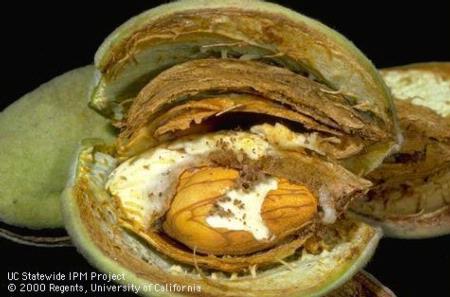
Emily Symmes is the area Integrated Pest Management farm advisor for the Sacramento Valley in the statewide IPM program. She recently spoke to California Ag Today about the high level of Navel Orangeworm (NOW) damage in nut orchards throughout California this past season.

“We had a lot of unique circumstances. The amount of rainfall we got in late 2016 into 2017 was pretty unprecedented and really led us into a really bad navel orangeworm year because we couldn’t get out and sanitize our nut crops,” she said.

Emily Symmes

“NOW is ubiquitous, and there is an increased nut crop footprint in California, with more than one million acres of almonds, plus pistachios and walnuts,” Symmes explained. “All play host to NOW, as well as a host of natural plants. This thing isn’t going anywhere. And it was pretty bad in 2017 in terms of harvest damage.”

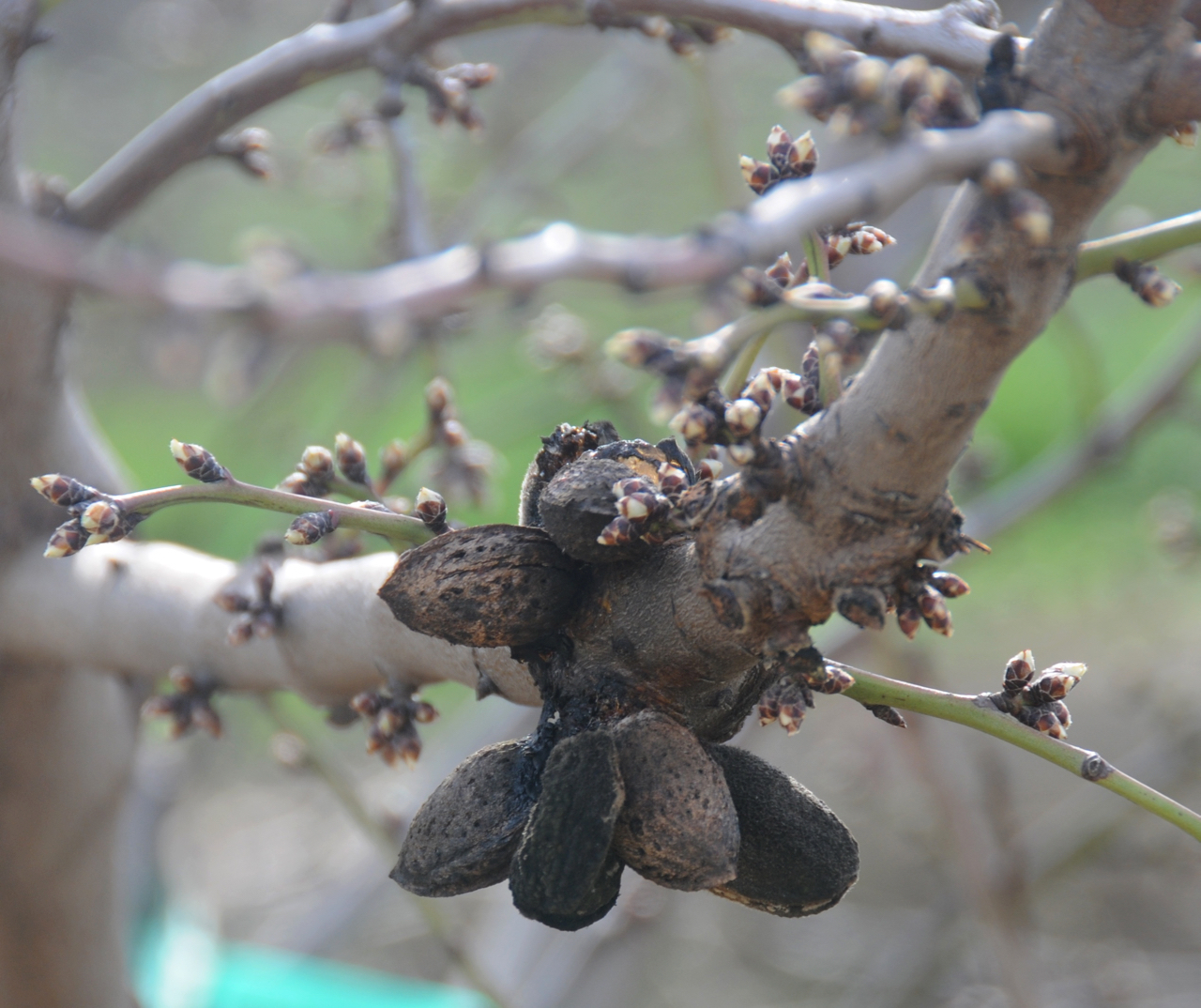
One of the key factors for higher navel orangeworm damage was not being able to get into the fields because of the standing water.

“There were a couple of other factors as well. Typically, rainfall and moist conditions can help NOW mortality in the winter. We tend to think that it can help rot the nuts and do us some favors, but we have to be able to get out and get the nuts shaken or get pulling crews in and get those things on the ground. And then them being on the ground is not always a sure thing. Sanitation was huge in terms of NOW problems this year,” Symmes said.

Heat units also played a part in the development of more NOW pressure. There were a lot of moths flying around longer and laying eggs.

“It got hot in mid to late June, and it seemed to just not let up. What that meant was, in terms of our degree-day models or the heat unit that drive insect development, it ended up getting pretty far out ahead of what is typical, if there is anything such as typical. But certainly ahead of the last couple of years,” Symmes explained.

By September, we were about two weeks ahead in degree-days and that means that the moths were out earlier. They’re flying around. They’re laying eggs on the nuts when they’re still on the trees.

Symmes stressed that the importance of sanitation is to minimize the site where the NOWs mature.

“It’s really important to remember that sanitation efforts aren’t just directly killing any worms that are over-wintering in your orchard. Yes, it does that. But it also minimizes those sites where your first and second generations are going to develop next year,” she said.

2021-05-12T11:01:58-07:00November 29th, 2017|

Future of Integrated Pest Management

IPM: A Decision Making Process

By Joanne Lui, Associate Editor

Lori Berger is the academic coordinator for the University of California’s statewide Integrated Pest Management program. She spoke with California Ag Today recently about the sustainability of IPM and where it’s heading in the future.

“IPM is part of a sustainable approach to pest management. It’s very holistic. It’s a decision-making process. It incorporates all factors in an environment and in a situation, and it uses all human resources.”

Berger believes that even though IPMs are sustainable, the system might not work as well as it should.

“IPM has been around for 50 years, but our system is somewhat stuck in that we tend to be more reactive than proactive,” she explained. “If there’s an event such as an invasive pest or some … pesticide incident, some huge regulatory change or some legislative pressure, it’s like all of a sudden the system needs to reboot itself. We need to look deeper into the system and be working in a more embedded way across platforms and people.”

Berger told us that instead of looking at things in a linear way, it’s important to look at all the parts and how they relate to each other to find flaws in the system.

“As scientists, we tend to look at things cause and effect. We were looking into optimizing the whole by looking at the parts, but now taking things that are more of a systemic level, we’re trying to looking at the parts and also how they work in relationship to each other. That’s to where we can realize some of our biggest gains that there’s not as much at stake, or there’s less risk for all parties, and people are more aware of what’s going on.”

2021-05-12T11:01:58-07:00November 28th, 2017|

Push Back NOW with Orchard Sanitation

Part One of a Series

Orchard Sanitation Critical This Season

By Patrick Cavanaugh, Farm News Director

We recently spoke with Emily Symmes, the UC Area Integrated Pest Management farm advisor for the Sacramento Valley in statewide IPM program. She told California Ag Today about few reasons as to why Navel Orangeworm damage was so devastating this year, costing tree nut growers at least $137 million.

UC Cooperative Extension Integrated Pest Management Advisor, Butte County

Emily Symmes, UC Cooperative Extension Integrated Pest Management Advisor, based Butte County.

NOW is ubiquitous. And the nut crop footprint in California is larger, with one million acres of almonds, along with pistachios and walnuts up and down the San Joaquin valley.

“The pest is not going anywhere,” Symmes said.

“We had a lot of unique circumstances. The amount of rainfall we got in late 2016 into 2017 was unprecedented and led us into a bad navel orange worm year because growers couldn’t get out and sanitize their orchards”

“Growers were not able to get into their orchards because of standing water,” Symmes explained.

Also, rainfall and moist conditions can help NOW mortality in the winter. “

We tend to think that it can help rot the nuts and do us some favors, but we have to be able to get the nuts shaken or get pulling crews in and get the mummies on the ground and destroyed,” Symmes said.

Heat units also played a part in the development of more NOW.

“It got hot. And it seemed to just not let up. Our degree-day models, or the heat unit that drive insect development, ended up getting pretty far out ahead of what is typical,” Symmes explained.

“By September, we were about two weeks ahead in degree-days, and that which meant moths were out earlier. They’re flying around. They’re laying eggs on the nuts when they’re still on the trees, and we are talking almonds, pistachios and to a lesser extent, walnuts.”

Symmes said the importance of sanitation is to minimize the site where the NOWs mature.

“It’s really important to remember that sanitation efforts aren’t just directly killing any worms that are over-wintering in your orchard. But the other thing that it does is it minimizes those sites where the first and second generations are going to develop next year,” she said.

Despite all these circumstances as to why NOW was serious this this year, it is critically important to start orchard sanitation as soon as possible. It may not be a good idea to wait for rain and fog to help loosen the nuts this season.


2021-05-12T11:01:58-07:00November 13th, 2017|

Napolitano Says Ag Needs Technology

UC President Janet Napolitano: Technology Drives Ag

By Patrick Cavanaugh, Farm News Director

Janet Napolitano, President of University of California, gave the opening keynote presentation on the first of two days at the recent 3rd annual Forbes AgTech Summit in Salinas in late June.

She spoke with California Ag Today, noting that technology is driving agriculture like never before.

“I think this is a great time in California history, where you have the Salinas Valley and Silicon Valley all focused on innovation and where it’s now time to have these two areas converge – agriculture and technology,” she said.

And of course, agriculture is open to new technology to help farmers produce food more efficiently and safely.

“It’s all about the world food supply; it’s all about the food supply in the state. It’s all about the economy in the state of California; it’s going to need technology to really thrive,” Napolitano said.

Napolitano noted that she has seen first hand how technologies have driven solutions to age-old problems.

“A UC Santa Barbara Materials alumnus professor, James Roger, realized that a third to a half of our fresh fruits and vegetables end up in landfills due to consumers throwing the produce out due to browning or other decomposition,” she said. “In 2012, Rogers founded Apeel Sciences, where his team created a product from natural plant extracts that can be sprayed on fruits and vegetables, which can protect them from bacteria, doubling their shelf life and therefore decreasing the amount of food waste.”

Rogers is one example of many within the UC system who have come up with innovations to help agriculture.

“We know we drive innovation by supporting innovation in our classroom and in our laboratories. And we support it with faculty, we support it with our own monies, and our own investment dollars,” Napolitano said. “And, we also bring together the private sector with the university to look at different kinds of partnerships that can be undertaken.”

The UC system has the resources to fund the early stage capital that is needed to get ideas off the ground.

“We have set aside a billion dollars of our own investment capital for early stage investment, and an additional 250 million dollars for sustainable energy technologies,” Napolitano said.

2017-07-06T15:12:40-07:00July 6th, 2017|

Sorghum May Be Alternative to Corn

Researcher Looks to Sorghum to Replace Corn Silage in Dry Years

By Jessica Theisman, Associate Editor

Water has been a big issue in California for the last couple of years, and many dairy producers are looking for an alternative to corn silage for when water is scarce. Sorghum silage may be a viable alternative to corn. California Ag Today met with Jennifer Heguy, a farm advisor with the UC Cooperative Extension in Merced County who is working on a project, funded by the University of California, to research sorghum.

Heguy’s project consists of looking at sorghum silage to see if it is a good replacement for dairies when California does not have enough water to grow corn. Heguy said this is, “not a good time to talk about sorghum right now because we’ve had a really wet winter and we had this devastating sugar cane aphid last year, which just decimated sorghum crops, but we are continuing to work on sorghum silage.”

With the recent emergence of the sugar cane aphid last year, the sorghum crop in California took a big hit, but the project continues. Some of these projects can take two to three years to determine if it is a good fit into the California feeding systems.

“So this year, we are going to be taking a deeper look at the sorghum quality in terms of nutrition, fermentation characteristics, how people are putting this silage up, and how they are actually feeding it out,” Heguy said.

Photo Courtesy of University of California

2021-05-12T11:05:16-07:00June 15th, 2017|

New Estimates on Broccoli and Lettuce Production Costs

Broccoli and Lettuce Production Cost Studies Released by UC ANR

News Release

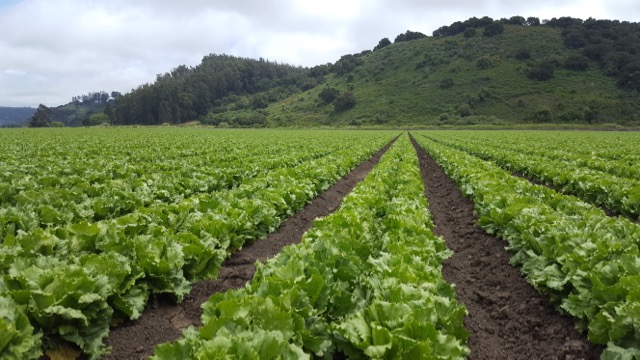
New studies with sample costs to produce and harvest iceberg lettuce and broccoli for fresh market in the Monterey, Santa Cruz and San Benito counties have been released by UC ANR Agricultural Issues Center and UC Cooperative Extension. Vegetable growers may find these useful for estimating their own production costs and potential returns on investment.

“These studies have an expanded section on labor, which includes information on California’s new minimum wage and overtime laws,” said Laura Tourte, UC Cooperative Extension farm management advisor in Santa Cruz, Monterey and San Benito counties, who co-authored the study.

The analysis is based on a hypothetical well-managed farming operation using practices common to the Central Coast Region. The costs, materials and practices shown in this study will not apply to all farms. Growers, UC ANR Cooperative Extension farm advisors and other agricultural associates provided input and reviewed the methods and findings of the study.

Both studies assume a farm operation of 1,500 non-contiguous acres of rented land. The hypothetical iceberg-lettuce farm has 250 acres planted to iceberg lettuce. The lettuce is hand-harvested into 42-pound cartons containing 24 film-wrapped heads. The hypothetical broccoli farm has 500 acres planted to broccoli. The broccoli is hand-harvested into 21-pound bunch cartons.  On each farm, the remaining acreage is assumed to be planted to other cool season vegetable crops. 

The authors describe the assumptions used to identify current costs for production material inputs, cash and non-cash overhead. Ranging analysis tables show net profits over a range of prices and yields. Other tables show the monthly cash costs, the costs and returns per acre, hourly equipment costs, and the whole farm annual equipment, investment and business overhead costs.

Free copies of “Sample Costs to Produce and Harvest Iceberg Lettuce in the Central Coast – 2017” and “Sample Costs to Produce and Harvest Broccoli in the Central Coast – 2017” and other sample cost of production studies for many commodities are available. To download the cost studies, visit the UC Davis Department of Agricultural and Resource Economics website at https://coststudies.ucdavis.edu.

The cost and returns studies program is funded by the UC Agricultural Issues Center and UC Cooperative Extension, both of which are part of the UC Division of Agriculture and Natural Resources, and the UC Davis Department of Agricultural and Resource Economics.

For additional information or an explanation of the calculations used in the studies, contact Jeremy Murdock of the Agricultural Issues Center University at (530) 752-4651, Richard Smith, UC Cooperative Extension advisor in Monterey County, at (831) 759-7357 or Tourte at (831) 763-8005.

2017-06-08T14:59:43-07:00June 8th, 2017|

Cheryl Foster Talks California CattleWomen

Meet Cheryl Foster, President of California CattleWomen

By Patrick Cavanaugh, Farm News Director

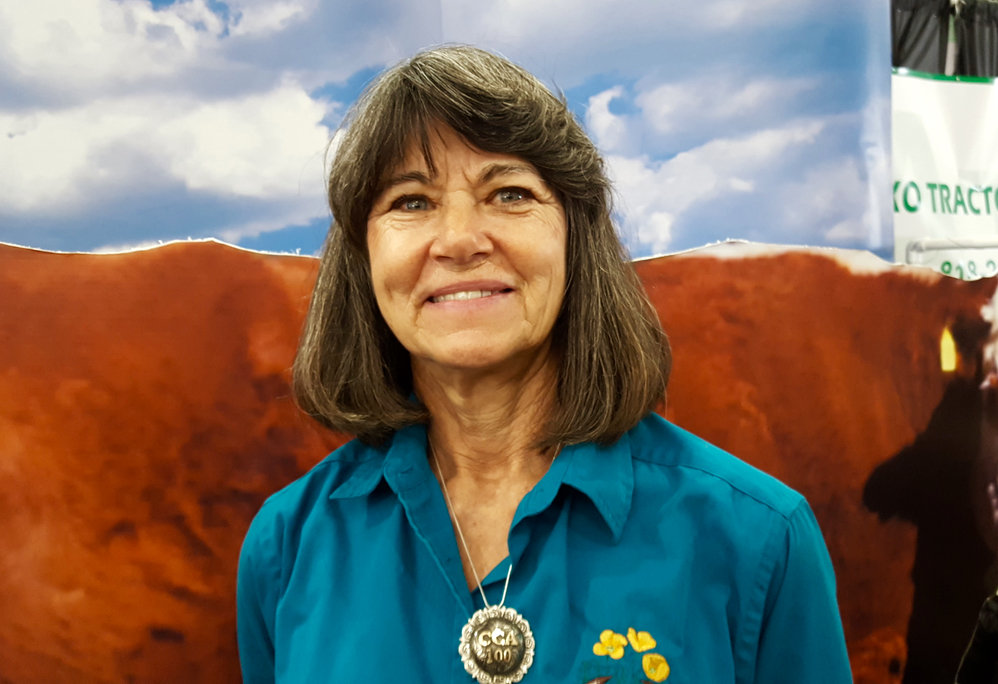
Cheryl Foster is the President of the California CattleWomen and a sixth generation rancher. Her operation ranch house is in Siskiyou County, about seven miles from the Oregon border. It’s a cow-calf operation on deeded ground, as well as forest service leased ground.

“It all started back in 1871, with a livery stable in Yreka, and then when that burned down, my family went out and bought the ranch land. My grandfather, John Foster is the one who really expanded the ranch,” Foster said.

The cattle breed on the ranch is predominantly Hereford and Red Angus cross. “That cross helps a lot with the fertility and longevity of the cow,” Foster said. “It’s Northern California and pretty tough country, with hillsides and lots of rocks. You put cattle where you can’t have row crops, so it’s rough!”

Foster’s husband is a CPA; she runs the cattle operation with her brother. “My brother is responsible for equipment, and I’m responsible for the cattle and the irrigating our 450 acres of hay, so we have it divvied up well,” she said.

Foster focuses on the primary tasks of California CattleWomen. “We are trying to get the women to be engaged with the truth about the industry and keep pushing, because it’s a very, very important industry,” she said.

“We get out and tell a positive story, because I think sometimes we are afraid of what to say to counteract when people come in with wrong information. So, real important to get good information out and get the ladies confident to get out and say that we are doing a good thing for the land,” Foster noted.

Foster explained the traditional roles of the men and the women in the California cattle industry. “The men’s organization has been going for a 100 years and the women have been going for 65 years,” she said.

“Initially, the men and their organization were more on the production, and the genetics of the herd. The women started being the beef promoters, to get out there and say, ‘It’s not just about the production. People need to eat our product,’ ” Foster explained.

The CattleWomen are out and about wherever they can spread the positive word on the beef industry. They go to fairs and trade shows and participate in the California Agriculture in the Classroom, where they engage in K-12 audiences and improve agricultural literacy.

2017-02-20T16:12:28-08:00February 17th, 2017|
Go to Top