Associations, Organizations, Educational and Research Institutions
CalAgJobs: Big industry Needs

CalAgJobs Connects Job Seekers

By Brian German, Associate Broadcaster

The men and women in the California agriculture industry help provide food to consumers all around the world.  That makes it even more important to prepare the next generation of farmers and ranchers to fill that role.

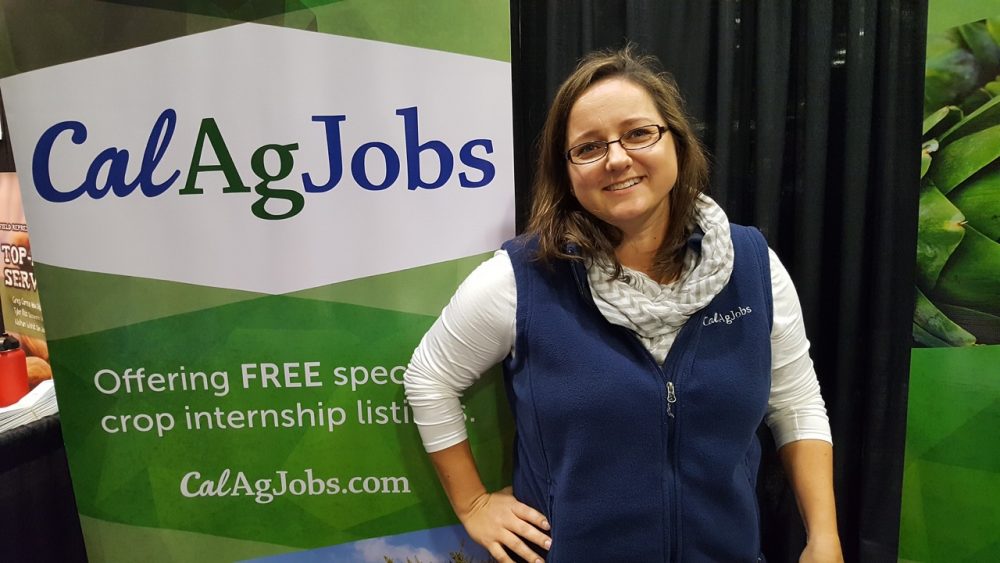
Shannon Douglass is the Director of Outreach at CalAgJobs – a company that connects those looking for ag careers with employers who are looking to find long-term team members. Some people think about agriculture in terms of being a shrinking industry, but Douglass explained that California agriculture is as vibrant as ever. “Farms themselves are getting larger, and we need people who are those professionals, who can help the farmers and help those farms continue,” she said.

Throughout the state, agricultural companies face unique needs that require specialized knowledge. CalAgJobs was established with a goal to link passionate and qualified people with great ag careers.  “We think it’s really important to be encouraging people in college, especially, to be looking at internships in agriculture so eventually they’ll look at those jobs,” Douglass said.

The team at CalAgJobs believe that agriculture is more than just a job – it’s a way of life.  Douglass indicated that a tremendous number of opportunities available for those who are interested in studying agriculture.  “We end up with about 4.5 job opportunities for every crop science grad in California; especially in crop science, the jobs are huge,” Douglass said.

To search for employment using CalAgJobs, go to their website here.
 

2016-12-31T12:14:17-08:00December 31st, 2016|

Better Navel Orangeworm Spray Coverage

Navel Orangeworm Sprays Tough to Target

By Patrick Cavanaugh, Farm News Director

Naval orangeworm is the number one pest in almonds and pistachios, and there’s a lot of research going on to find ways to manage this pest. One important strategy is timely sprays, but Joel Siegel, a research entomologist with USDA Ag Research Service in Parlier, CA, said that it’s tough to get that spray on target.

Joel Siegel Navel Orangeworm Expert

Joel Siegel

“Spraying for naval orangeworm is learning to live with loss. Many years ago, my professor told me to assume that 90 percent of what you put out never goes where you want it to go. I didn’t know that he was being an optimist when he told me that,” he said.

To confirm this, Siegel set up a controlled experiment sponsored by DuPont.  “Using the best setup of spray rigs at two miles per hour, we’re basically getting 10 percent of what we calculated in the tank was actually getting on the nut,” he said.  “Then if you add the difficulty of saying, you want to get it in the suture on an early split almond, you’re probably getting about  two percent of what’s in your tank actually on that suture zone, so you’re dealing with a 98 percent loss.”

Siegel said the spray is getting in the tree, but not on the nut or the suture of the nut. “I’m talking about just getting on target. It’s getting on the leaves, it’s getting on the bark, it might be getting on the ground.”

Siegel noted that it’s actually better to spray at night, when the naval orange worm adults are flying. “That way, some of the drift can actually contact the adults. The other advantage of night spraying is that the humidity is higher, so you’re not getting that loss of having the droplets evaporate.”

2021-05-12T11:02:00-07:00December 29th, 2016|

FFA Inspired Animal Sciences Major

Fresno State Student Jessie Theisman Wants to Teach Next Generation

By Patrick Cavanaugh, Farm News Director

Jessie Theisman grew up in San Diego and is now a senior at Fresno State studying Animal Science. She did not come from a farm family and virtually none of her friends had any knowledge of agriculture.

But then she discovered FFA. “I began my interest in ag my freshman year through FFA, where I started getting involved with lambs. Eventually it turned into goats. Then it turned into cattle,” Theisman said.  “After that, I decided I wanted to be an Animal Science major, and I transferred up to Reedley College, where I studied Animal Science and even became involved with the Young Cattlemen’s Committee.”

“I then transferred to Fresno State where I continue my studies in Animal Science and my interest within the YCC. I should be graduating next fall. I’ll take another year to get my credentials, and I’ll be an Animal Science teacher,” she noted.

Another individual who fueled Theisman’s passion in agriculture was her great-grandmother, who had a farm in Anderson, which is in Shasta County, just south of Redding.  “Basically, she was the last person we had that was involved in ag.”

Theisman noted that when she got involved with FFA, all the doors opened up for her in high school.

“That’s what lead me to wanting to become an ag teacher so that I could open up those doors for the younger generations themselves,” she said.  “I want to make it easier for the younger generation who did not come from an ag background to become involved in ag because that’s a very difficult thing to do if you’re not born into an ag family.

And Theisman is still working with livestock while at Fresno State. “I do breed goats, and I want to give kids the chance to show their animals, get involved in ag, and hopefully, it opens more doors for them, as well as builds confidence.”

“I really hold 4-H and FFA very close to my heart. Those were probably the best years of my life,” she said.

“And I’m still involved with the FFA. I go back to my high school. I volunteer all the time. I do  go to the state conference [in Fresno] and I work that through Fresno State.”

Theisman was also involved with the speech contest, the livestock judging contest and the livestock show team.

“All of that was honestly the best years of my life. There is not anything I would ever change … I would never give that up,” she said.

2017-02-22T18:37:34-08:00December 27th, 2016|

Farm Advisor Culumber is in Awe

Catherine Culumber is Impressed by Big Production

By Patrick Cavanaugh, Farm News Director

Catherine Culumber is a UC Cooperative Extension Orchard Crops Farm Advisor in Fresno County. She has been on the job since June 30, and we wanted to catch up with her since she’s gotten her feet on the ground.

catherine_culumber

Catherine Culumber, UC Cooperative Extension Farm Advisor, Fresno County.

She came to the position with a Masters in Plant Science and a PhD in Soil Science.

“I’m so happy to be here, and it’s been great to get to know the network of people working in the University of California Cooperative Extension.  There is endless amounts of resources and wealth of knowledge that I feel really fortunate to have.”

She is working with almond, walnut and pistachio growers, with the majority of her calls from almond producers.

Culumber was surprised with the vastness of Fresno County and all the production here. “My PhD research was in orchard systems at Utah State University, and it didn’t nearly prepare me for the infinite acreage that I saw upon arriving here,” she said.

She said that she has met some very innovative growers, and they all seem to be doing the best they can for the family farm.

“I think that farmers are very adaptable, and I can see that in recent years with the decrease in water availability, most people have adapted and gone to different micro-irrigation systems to increase their water use efficiency,” Culumber said.  “The farmers are working hard to not only be sustainable, but they’re smart business people as well.”

2016-12-27T12:38:59-08:00December 27th, 2016|

Record Enrollment at UC Davis College of Agriculture and Environmental Sciences

UC Davis College of Agriculture and Environmental Sciences Really Rocks!

By Patrick Cavanaugh, Farm News Director


Helene Dillard, dean, UC Davis College of Agriculture and Environmental Sciences, is pleased with the big numbers of students attending the top-ranking College of Agricultural and Environmental Sciences.

Helene Dillard, dean, UC Davis College of Agriculture and Environmental Sciences

Helene Dillard, dean, UC Davis College of Agriculture and Environmental Sciences

“It’s really rocking,” said Dillard. “We’re doing very, very well. We have one of the largest numbers of incoming students ever in the entire university. Our College has peaked out its 7,300 undergraduates. We’ve never had that many at one time.”

Why the increased interest in studying agriculture? Dillard said, “We think what’s moving that needle is that everyone is interested in food. They are interested in agriculture.  And they are really interested in that intersection between agriculture and the environment. We have a record number of students that just cannot wait to come on board. We are really thrilled with how smart they are and how eager they are to learn.”

Among the many courses offered by the College, Dillard said Animal Science classes are probably among the most popular. “But of course, beer classes and the coffee class are really popular too. But right now, I’m seeing tremendous interest in agricultural economics and in animal science, to become veterinarians and ranchers, plus specific academic interest in poultry and sheep.”

“Again, those are all things that UC Davis does, so we’re really excited. We’re also seeing a lot of interest in plant sciences, more on that sustainable and food systems and our viticulture and enology program’s growing as well.


Recent Graduate Program Rankings for UC Davis College of Agriculture and Environmental Sciences and related disciplines include:
  • 1st in agricultural sciences (Thomson Reuters ScienceWatch 2011) 
  • 2nd in agriculture and forestry (QS World University Rankings 2016)
  • 2nd in agriculture worldwide (U.S. News & World Report’s “2016 Best Global Universities”)
  • 1st in ecology and the environment (Thomson Reuters ScienceWatch 2011) 
  • 1st in food science and nutrition (Thomson Reuters ScienceWatch 2010)
  • 1st in plant science (U.S. News & World Report’s “2016 Best Global Universities”)
  • 1st in animal science (U.S. News & World Report’s “2016 Best Global Universities”)
  • 1st for veterinary science (QS World University Rankings 2016)
  • 1st among the nation’s veterinary schools (U.S. News & World Report’s “Best Graduate Schools” 2016)
  • Between 1st and 15th among 44 programs in nutritional biology (National Research Council 2010)
  • 4th in environment/ecology (U.S. News & World Report’s “2016 Best Global Universities”)
  • Between 1st and 7th in Entomology among 28 programs (National Research Council 2010)
  • Between 5th and 29th among 116 programs in plant biology (National Research Council 2010) 
  • Between 7th and 42th among 116 programs in plant pathology (National Research Council 2010)
  • 13th in environmental engineering worldwide (QS World University Rankings 2016)
  • 29th in environmental engineering worldwide (2016 Global Ranking of Academic Subjects, ShanghaiRankings)

(Source:  University of California, Davis, Graduate academic program rankings.)


UC Davis College of Agriculture and Environmental Sciences

2021-05-12T11:17:11-07:00December 7th, 2016|

Livestock Economics for Western Producers

Livestock Economics: What Attributes Bring Higher Prices?


By Laurie Greene, Editor


At the 100th Annual California Cattlemen’s Association (CCA) & California CattleWomen’s (CCW) Convention last week in Sparks, Nevada, Tina Saitone, cooperative extension specialist, UC Davis Department of Agricultural and Resource Economics, described her research on rangeland and livestock economics. “Primarily, my focus has been on cattle — beef cattle to date — but I’ve also started some projects recently with sheep producers and the predator interactions they have specifically with coyotes. I am examining whether or not [producers] can use nonlethal depredation methods to mitigate those losses.”

“Right now, I have been concentrating on marketing characteristics of cattle,” she said. “I study those practices employed by producers, such as when they wean their cattle; how many vaccinations they have; whether they market [their cattle] as natural, grass-fed, or organic; and the impact that [these choices] have on their prices.”

Tina Saitone

Tina Saitone, cooperative extension specialist, UC Davis Department of Agricultural and Resource Economics

Interestingly, Saitone and her colleagues have mainly been using satellite video auction data. “Western Video Market Auction actually held their auction this month here in Sparks, Nevada because they can do it at different locations all the time. So, we use that data to figure out cattle characteristics and then determine the marginal impact that each of those characteristics has on price,” said Saitone.

Characteristics such breed, frame score, flesh score, and weight, are definitely controls in Saitone’s research model because those are main drivers of price. “But what we want to do is figure out — holding all those things constant —if a producer raises their cattle natural, what kind of premium does that bring them? We’re really looking for that incremental difference.”

One might expect certain factors such as natural or organic, to deserve a higher price, but there always has to be a buyer. “Right now, when prices are low relative to 2014 and early 2015, ranchers do have some opportunities to get some higher prices in what we would call niche markets. Consumers are increasingly demanding a wider range of characteristics. They want grass-fed. They want organic. They want natural, no hormones. All of these are what we would call credence attributes. If you go to the grocery store and you taste a steak, you probably don’t know if it was raised natural.”

Accordingly, the industry has third-party certification to assure consumers that when they pay a higher price for that product they are actually getting those traits. “Farmers actually have the ability to fill some of those niche markets that consumers have created with their demand and possibly get higher prices than just selling into traditional commercial channels.”

The data that Saitone has been looking at from Western Video is focused on Western states, including California. Certainly, location places Western producers at a persistent disadvantage because the majority of the processing capacity is in the central part of the country, with Nebraska being the hub. Saitone said, “When you think about cattle being raised in California having to be transported all the way to Nebraska, some 1600 or 1700 miles, not only do you have the cost associated with that transportation, but you also have shrink; you have mortality.

California Cattlemen’s Association (CCA)

California CattleWomen

UC Davis Department of Agricultural and Resource Economics

2021-05-12T11:17:11-07:00December 6th, 2016|

Algae in Soils Increases Soil Health, Better Crops

Is Algae in Soils a New Frontier in Plant Health and Yield?


By Patrick Cavanaugh, Farm News Editor


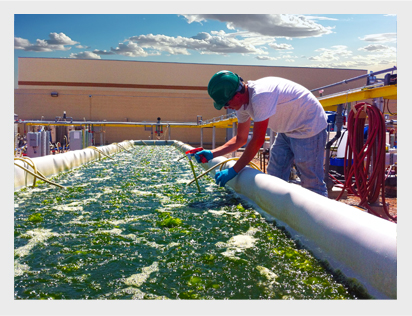
Could applying microalgae to the soil boost yield and strengthen plants? We spoke to Len Smith, chief business office, Heliae Development LLC., based in Gilbert, Arizona, in the southeast Phoenix metropolitan area. “Heliae is a company that is dedicated to unlocking the potential of microalgae,” said Smith. “We’ve been in business now for over eight years. We hope to be able to deliver microalgae products in a lot of areas, including in plant agriculture.”

“While we work with hundreds of algae species, the algae we are currently marketing for plant agriculture is a green algae. It is actually subject to genetic classification so I couldn’t even tell you the exact species at the moment,” noted Smith. “We’re working on several others as well. We have often seen in our early stage testing that many different kinds of microalgae have different positive effects on plant agriculture, so we’re bringing many of them along,” he said.

Unlock the secrets in the soil diversity

Natural Resources Conservation Service (NRCS) Soil Health Campaign

Smith said these algae are among the most common components in healthy soil. “A lot of what we’re doing is actually restoring what is already present in the soil. A lot of the scientists we work with think this is a critical component of the whole plant ecosystem below the soil line.”

Similarly, many university researchers are taking a closer look at algae. “We have about 30 university and contract research studies in, and we are working with growers. We have been selling the product in what I would consider almost a beta launch mode for about two years. So, we probably have about that same number of grower trials—maybe even double that,” said Smith.

Having the algae in the soil not only increased yields, according to Smith, it increased crop quality and strengthened the soil. “Benefits include root mass; in fact, we saw a 20 percent root mass increase in cotton. We have also seen the plant’s ability to grow in stressed environments such as heat stress and drought stress, in some of the work UC Davis did for us. We saw a 25 to 30 percent increase in overall yield in the stressed soils in which the algae was present, as compared to the control,” Smith explained.

Could it be that algae may be the new frontier in plant health and yield? “Yes, we’re very excited about what we’re doing. I would say we are opening a field here that nobody else is really paying attention to. I think that you will be seeing more of these products come to market, hopefully  helping growers get better results in a restorative and natural way,” Smith said.


Heliae Development LLC.

Phycoterra

2021-05-12T11:05:43-07:00December 5th, 2016|

Improved Huanglongbing Detection in Citrus Trees

Projects Underway for Better Huanglongbing Detection in Infected Trees


By Patrick Cavanaugh, Farm News Director


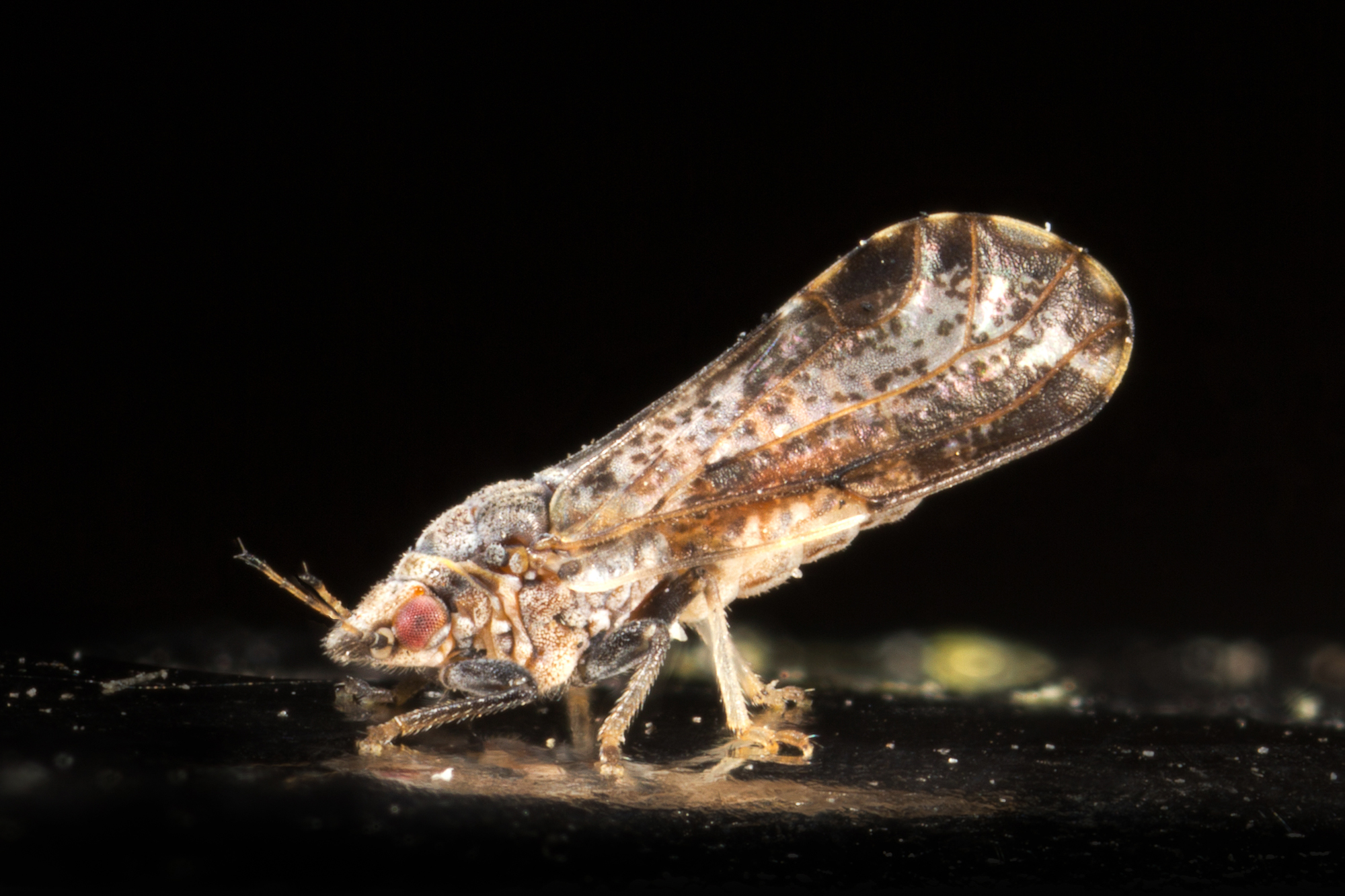
The big problem with Huanglongbing Disease (HLB), also known as citrus greening, is that an infected tree, despite having no visual symptoms, could quietly be a massive reservoir of HLB. The main vector, the Asian Citrus Psyllid (ACP), could easily pick up HLB from that tree and spread the disease throughout the orchard.

Currently, the main push to contain the possible spread of HLB is by controlling ACP. Yellow sticky traps are positioned near every commercial orchard in California, as well as near non-commercial trees in neighborhoods. Finding a psyllid on a trap triggers mandatory spray programs to help eliminate all psyllids in the area.

Neil McRoberts, Huanglongbing Detection

Neil McRoberts, associate professor of plant pathology, UC Davis

“Yes, one of the most critical questions in managing in HLB is the trees can be infected for a long time before you can visually see the ACP there,” said Neil McRoberts, an associate professor of plant pathology, University of California, Davis.

“There is a group of scientists, funded by the Citrus Research Board of California (CRB), working on different early detection methods. Those are methods where you would be able to tell the tree was infected before you could see the tree is infected,” said McRoberts.

The CRB funded field trials in Texas over the last few years that have narrowed the field of competitors to two or three techniques. The CRB will continue to fund the two leading contenders in that race to determine the leading early detection technology.

In the first technique, researchers analyzed all the microbes that live on a non-infected leaf surface and studied how that profile of microbes changes when the tree gets infected. Detecting a change in microbe profile could indicate the tree is not as healthy as it should be.

“Researchers take the microbes that live on an infected tree, extract the DNA from those microbes and run the DNA through a sequencer. The sequencer identifies which types of microbes are there,” he said.

McRoberts said sampling for microbes is easy. Researchers use an industrial-sized swab on the leaf surface. “You literally clean the leaf surface with the swab until it’s squeaky clean, put that swab in a bottle and send it to a lab. When it gets to the lab, they extract the DNA out of it and the rest of the process happens from there.

ACP Nymph Tamarixia Huanglongbing

A female Tamarixia radiata laying egg on an ACP nymph. (Photo by J. Lotz). Courtesy of Citrus Research Board

In selecting which trees should undergo microbe swabbing, McRoberts noted that the ACPs tend to attack the groves from the outer edges, inwards. “At different times of the day, the light will be on different edges of the grove depending on where the sun is and how warm it is. You can target your sampling towards the places where you’re more likely to find it, but still, finding those initial little infections is tough.”

The second method is a technique called metabolic profiling. A newly infected tree starts to produce different proteins and other chemicals in response.

Still another research strategy is analyzing things that stay in the tissue. “There’s a change in the profile of metabolites in the tree. If you run those metabolites through a mass spectrometer, the mass spectrometer will spit out a profile. You can tell the difference between a healthy profile and an infected profile,” McRoberts said.

“This is how the dogs come into the picture. Everybody knows that citrus has an odor. When the trees are infected, the profile of the chemicals and the composition of that odor change. We can’t smell it, but a very sensitive electronic detector device can sometimes pick it up. Remarkably, dogs can pick it up. We think that’s what happening with the canine detectors; they’re picking up some change in the smell of the trees.”

McRoberts said that dogs are amazingly accurate in detecting trees with HLB disease. “The best that we can tell from the trials involving dogs, the false positive rate is less than 1 in 1,000. I’m very confident with the detector dogs,” McRoberts said.


Featured photo: Adult Asian citrus psyllid (Photo by J. Lewis). Courtesy of Citrus Research Board

Citrus Research Board of California (CRB)

UC Davis Department of Plant Pathology

2021-05-12T11:02:00-07:00December 2nd, 2016|

WANTED: New Director, Fresno State Viticulture and Enology Department

Fresno State Viticulture and Enology Department Shines, But Needs New Director


By Patrick Cavanaugh, Farm News Director


No doubt, the Fresno State Viticulture and Enology Department is important not only to the Central San Joaquin Valley, but also to all of California’s agricultural areas. Nat DiBuduo, president, Fresno-based Allied Grape Growers, and a 1973 Fresno State alumnus, said Fresno State’s top administration is exceptionally dedicated to the department.


Research Buildings at Viticulture and Enology Research Center VERC

Research Buildings at Viticulture and Enology Research Center VERC

“It is really critical that we highlight the fact that Joseph Castro, president of Fresno State, and Sandra Witte, dean of Fresno State’s Jordan College of Agricultural Sciences and Technology, as well as the entire Industry Advisory Board for the Viticulture and Enology Research Center (VERC), are committed to the department,” said DiBuduo. “The entire board is committed to continuing the world-class program at the Viticulture and Enology Research Center that Vincent Petrucci (1985-1994) started so many years ago and has been continued on through Robert Wample (2000-2009) and James Kennedy (2010-2015).”

DiBuduo, who studied plant science and viticulture as a student, said, “We’re committed to providing this first class program for our students and for the industry. We’re in the midst of the search for the right person to head the program so that he or she can bring on the faculty and support staff who will continue that progress into the next century and beyond.”

As California’s agricultural industry feeds the world, it is important the industry supports this search for a new department chair. “It is important the University gets the right person in there, so we’re asking everyone out there who knows anyone qualified, [to encourage them] to apply for this position,” said DiBuduo. “We need to have the right person to provide the education, research and leadership into the future.”

Fresno State Winery Bottling Line

Fresno State Winery Bottling Line

Fresno State agricultural programs are unique due to a hands-on approach designed to give students the practical knowledge they need to get out and work. “They will know how to farm,”DiBuduo said. “They will know how to apply their teachings and their education to become managers, foremen and operators, and supervisors of field operations.”

Students come from all over the Central Valley and beyond the Valley because of Fresno State’s excellent reputation. “If students have enough units in the program, they can become Pest Control Advisors (PCAs),” said DiBuduo. “In fact, I was a PCA myself.”

fresno_state_makes_winemakers, Fresno State Viticulture and Enology Department“But the problem we’re having in agriculture today is that many in the industry are an aging society,” DiBuduo said. “So we need to get young entrepreneurs, young farmers and ranchers who want to become PCAs or farm managers or viticulturists or winemakers,” DiBuduo said. “We need these trained students to run the farms and ranches in the future.”


NEW! FACULTY POSITION VACANCY: Chair of the Department of Viticulture & Enology and Director of the Viticulture & Enology Research Center.   Vacancy #12978  (7/20/16) Review of applications will begin September 19, 2016 and continue until the position is filled.


Resources:

Allied Grape Growers

California State University (Fresno State)

Fresno State’s Jordan College of Agricultural Sciences and Technology

Fresno State’s Viticulture and Enology Department

Industry Advisory Board for the Viticulture and Enology Research Center

2021-05-12T11:05:43-07:00November 30th, 2016|

Water Diversion Plan for Fish, Part 2

Grober: It Won’t Help to Vilify People

Part 2 of 2-part Series 

By Patrick Cavanaugh, Farm News Director


California Ag Today conducted an extensive interview with Les Grober, assistant deputy director, State Water Resources Control Board (SWRCB, Water Board) Division of Water Rights. We published Part 1, “Water Board’s Point of View on Increasing San Joaquin River Flows,” on November 28, 2016.

http://yn2.000.myftpupload.com/increasing-san-joaquin-river-flows/

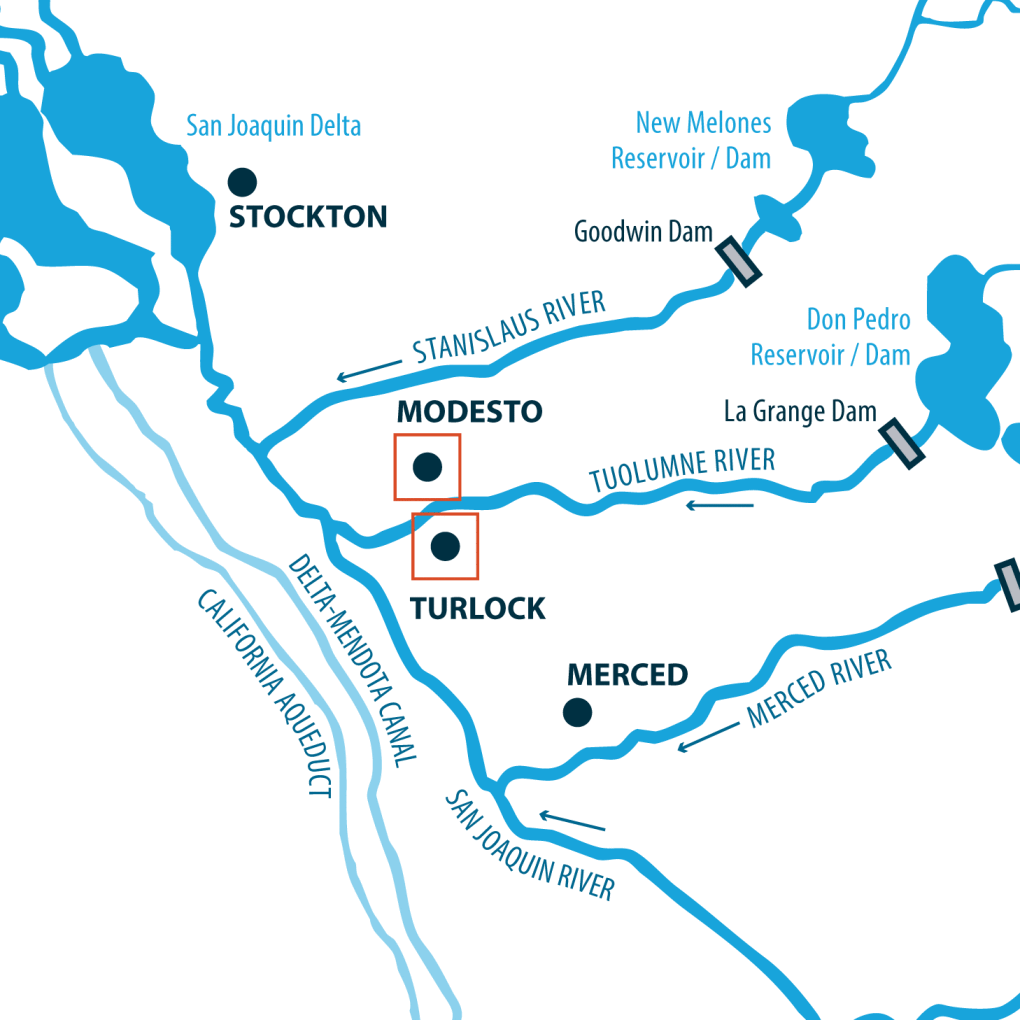
Grober explained the Water Board’s water diversion plan to adjust the flow objectives on the San Joaquin River to protect fish and wildlife. The plan, specifically, is to divert 40 percent of water flows from the Stanislaus, Tuolumne and Merced Rivers that flow into the lower San Joaquin River. 

California Ag Today: We asked Mr. Grober to explain how the Federal Water users on the Westside of Fresno and Kings Counties were granted a mere 5 percent allocation this year, and why many did not receive their full 5 percent.

Grober: The 5 percent allocation is due to the junior water rights of those growers and to the interconnections of so many things — priority of right, hydrologic conditions, and minimal protections or fish and wildlife. Anyone who thinks it’s all due to fish is simplifying a very complex situation. 

California Ag Today: Regarding the water hearings that are scheduled over the next few months, is the Water Board trying to give information to farmers and others would be affected by the decreased water should the Water Board’s proposal go through?

Grober: The ultimate goal is to make people even more prepared to provide comments to the Board at the scheduled hearings. It’s part of a public process where, if we did not get our economic figures right, we want [accurate] information from the stakeholder to make it right.

We thought we did a good job in an economic analysis on how we thought the proposed taking of 40 percent water would affect the communities and farmers. We clearly heard from many people who thought we did not do a good job, and my response is: Good, show us why, make a proposal and take it to the Water Board hearings, and then we can adjust it.

California Ag today: The Water Board has a 3,100-page report all about saving the salmon.

Grober: The reason we have a big report is because we are making a proposal and we’ve shown our work. Although it is work for people to look at it and review it, we have tried to make it easy so that people can see if we have made mistakes, if there are things that are left out or if we have made an incorrect assumption. That’s why we’ve shared it with everybody and here’s your opportunity for setting us straight.

It won’t help to vilify different people who are making good use of the water or to vilify or disparage the implementation of our laws and what we are required to do. We have a great process I think, as hard as it is, a public process where we can work these things out in the open, just to use it and deal with each other professionally.  
-Les Grober, assistant deputy director, State Water Resources Control Board (SWRCB, Water Board) Division of Water Rights


California Ag Today: We are sure you are getting a lot of information from farmers and city leaders about this not being a good use of the water.

Grober: These problems are not so simple that they could be reduced to a sound bite. I think we would have solved the salmon problems by now, but because we are in the drought situation, we are dealing with a precious resource, which is water. Everybody wants the water but there’s not enough to do all the things we would like to do with it. 

California Ag Today: But there are many people in California who feel that more water for fish instead of farmers is reprehensible.

Citrus Tree devastated by drought.

Citrus Tree devastated by drought.

Grober: It won’t help to vilify different people who are making good use of the water or to vilify or disparage the implementation of our laws and what we are required to do. We have a great process I think, as hard as it is, a public process where we can work these things out in the open, just to use it and deal with each other professionally. 

California Ag Today: But we’ve heard from experts that have been studying this, that the increased flows have not really helped these species. Do you have proof that they have?

Grober: It’s hard to show proof one way or the other because recently we have not increased flows to see what effect it would have. That seems to be a notion that is out there, that we have somehow done something to increase flows in recent years, and that’s simply not the case.

If anything, flows have gone down. And in the recent drought years, as I said, even the minimal flows that were required were adjusted downward. You would have to show me that evidence that flows have gone up and there has been no response to those higher flows. I do not believe that there is any.

California Ag Today: So, the Water Board wants 40 percent of unimpaired flows?

Grober: When we say the requirement is 30 percent to 50 percent of unimpaired flows, it is 30 percent to 50 percent of that amount, which means just the opposite. It means that 50 to 70 percent of [flows] for February through June would be available for consumptive use.

That is frequently misunderstood and turned around. That is still from February through June, so it means more than 50 to 70 percent since other times of the year this water is available for consumptive use.

California Ag Today: Is the Water Board looking at the fact that if the water is needed for the species, it is going to force these growers to use more groundwater? That is a direction in which we do not want to go, especially in a region that has not yet had critical overdrafts. How does the Water Board look at that domino effect forced on these growers in order to survive, stay in business and produce the food in this major Ag production region?

Grober: Implementing that 30 to 50 percent of unimpaired flows would mean less surface water available for diversion. So our analysis of the potential environmental effects and overall effects of the program, based on recent drought information and other information, shows we would see increased groundwater pumping.

California Ag Today: Is the increased pumping weighted at all in the proposal, because overdraft groundwater pumping is not sustainable?

Grober: By our analysis, the area is already in overdraft.

California Ag Today: What? Why would there be overdraft pumping in an area that has great irrigation districts such as Modesto and Oakdale Irrigation Districts delivering surface water? We did not think growers in those districts would be overdrafting.

Grober: Sure. Within those irrigation districts themselves, they are not overdrafting. That’s why the analysis we do goes into that level of detail. The irrigation districts that already have a source of surface water actually apply much more water than they need just for the crop, so they are recharging groundwater within those districts, and even with this proposal, would continue to recharge groundwater. It is all those areas outside of those districts that don’t have access to surface water that are pumping groundwater.

California Ag Today: There is a lot more pumping of groundwater on the east side near the foothills.

Grober: Based on the information that we have, the total area — not just the districts that have access to surface water — but the total area, is already overdrafting groundwater. And there are many areas on the east side of these districts now, up into areas that were previously not irrigated, converting now to orchard crops. So with the information we have, there are large areas of production using water from the basin. The entire area is to some extent pumping more groundwater than there is recharge.

California Ag Today: We’ve been concern about this.

Grober: That’s why the Sustainable Groundwater Management Act (SGMA) is going to be good, because the local areas are going to have to get on top of that information and on top of the management.

2016-11-30T10:25:24-08:00November 29th, 2016|
Go to Top