Associations, Organizations, Educational and Research Institutions

Trade Must be Fair for America

Ray Starling, Special Assistant to Trump, on Trade

By Patrick Cavanaugh, Editor

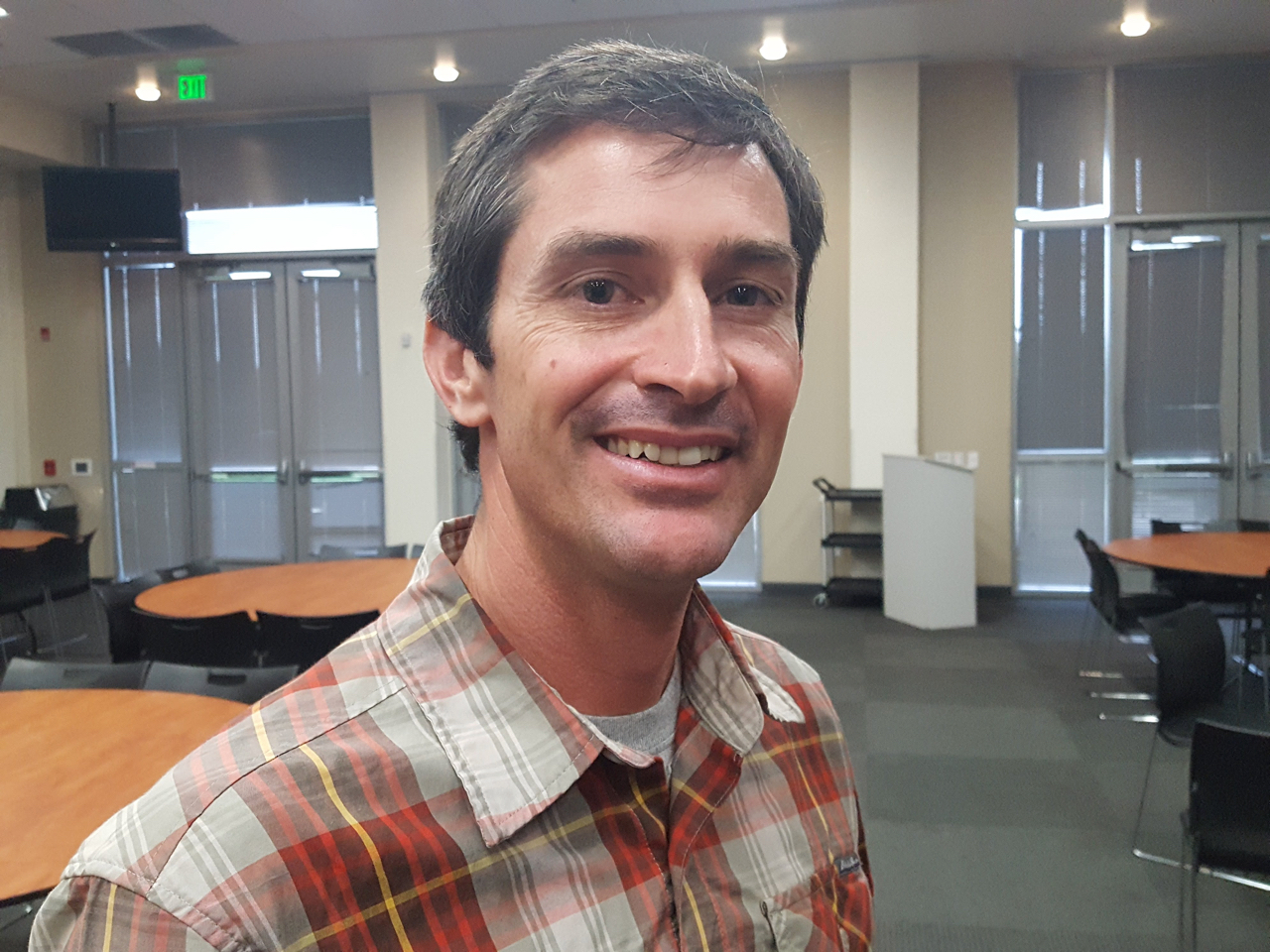
Ray Starling is Special Assistant to President Trump for Agriculture Trade and Food Assistance. He was the keynote speaker at the 2018 Citrus Showcase hosted by California Citrus Mutual.

He spoke about addressing imbalance in trade.

Ray Starling, left, with Joel Nelsen of California Citrus Mutual.

“The thing that the president wants to do is to address some of the imbalance that we have. We go out and negotiate these agreements,” Starling said. “We say that we’re all agreeing to the rules of the road and then all of a sudden in the middle of trading, when we will have almonds on a boat or we’ll have pork on a boat or have fruit on a boat and all of a sudden, we find out the rules have changed. That is not the kind of trade we’re talking about. We want to sort of fix those inequities, if you will.”

NAFTA also needs to be looked at closely.

“There are a number of chapters in the agreement and a lot of the things that we need to fix on agriculture, we have worked out,” Starling explained. “Some of those are things that are never going to make the news. They are agreements and understandings about maximum residue levels of pesticides. Their understanding about what is the tolerance of foreign matter in material that we may be shipping to Mexico or Canada.”

“But on the big issues for ag that we’ve still got to make progress on: One of those is with Canada, and it deals with the dairy issues,” Starling said. “They supposedly have a supply management system where they limit the amount that they produce in the country to get a higher price, but yet a lot of their products still ends up on the international market, so our point is if you’re going to have a supply management system, it’d be great if you actually manage your supply and then didn’t dump that product out on the world market to compete with American product out there.”

Enforcement is also a concern, noted Starling.

“I wouldn’t say that it has to be a sequential process like that. I mean, we’re always going to look for new agreements and new opportunities, but I think that often when we look at the way we’re resolving disagreements about trade, it’s a very long process,” he said.

“It takes years to go to the WTO and to get a successful outcome, and we’ve gotten many successful outcomes at the WTO, which some would argue is actually a sign that that system is not that successful because notwithstanding the fact that we keep winning there, we keep having to go there to get these solutions,” Starling explained.

Photo Credit: Port of Oakland
2018-03-17T12:35:22-07:00March 16th, 2018|

More Cooperation Regarding Citrus Health and HLB Disease

Citrus Health Response Program Discussed at UC Riverside

By Patrick Cavanaugh, Editor

California Ag Today recently interviewed Joel Nelsen, president and CEO of the California Citrus Mutual. He spoke on his recent trip to UC Riverside about the Citrus Health Response Program. While speaking with USDA, they discussed the game plans that will be used to battle Huanglongbing (HLB) disease, which is vectored by an invasive insect called Asian Citrus Psyllid.

“We got into it, which I thought was an interesting discussion. What would growers do if in fact HLB was discovered in a grower’s orchard and what would the be obligated to do,” Nelsen said.

“And what came out of that discussion is that we are going to work with the USDA. We’re going to develop a war game scenario. We’re going to bring people into a room and start talking about it, just to see what the reactions were, and we’re going to challenge these individuals to do what needs to be done,” Nelsen explained. “We’re just going to have to figure out how best to address the industry and areas like this.”

Nelsen said that they discussed whether or not there was enough being done in that partnership with the homeowner. “We came to the conclusion that no, quite frankly the industry has been carrying that ball and that USDA and CDFA can do a little bit more in their role as government”

Tree removal and beneficial insects were also discussed.

“We talked about the continued trees being removed, and everybody was satisfied about that. We talked about whether or not beneficial insects can help in this situation. Surprisingly, the answer was pretty much no,” Nelsen explained. “Beneficial releases may help in an urban environment to a small extent, but from a commercial standpoint, it doesn’t help. So there were a lot of discussions, some debate, and most of all, some camaraderie that was developed as far as going forward.”

Nearly 400 trees in front and back yards of homes have been destroyed due to testing positive to HLB disease.

“They’re all in a clearly defined geographical area in Southern California,” Nelsen said. “So what we have is a lot of backyard adventures that bring in rootstock that unfortunately was diseased, and as a result of that, those individuals are the ones that are seeing problems associated with their own trees.”

2021-05-12T11:01:56-07:00March 15th, 2018|

UC Estimates Costs and Returns for Growing Garbanzo Beans

By Pam Kan-Rice, UCANR

The UC Agriculture and Natural Resources’ Agricultural Issues Center has released two new studies on the estimated costs and returns of producing garbanzo beans, also known as chick peas, in the Sacramento and San Joaquin valleys.

“Although acreage is relatively small, garbanzos are an important crop because California growers produce the large, cream-colored seed that’s used for the canning industry, often used for garnishes for salads,” said Rachael Long, a UC Cooperative Extension farm advisor serving Sacramento, Solano and Yolo counties.

Chick pea seedlings in field.

The studies estimate the cost of producing garbanzo beans on 200 acres as part of a row crop rotation, using subsurface drip irrigation. A three-row bed tillage implement shallowly chisels, tills and reshapes the beds, avoiding disturbance of the buried drip tape left in place. Planting of seed treated for fungal and seedling diseases—Ascochyta rabiei, Rhizoctonia and Pythium—into residual soil moisture occurs in December. Seeding rates for the garbanzo beans are 85 pounds per acre.

Input and reviews were provided by UC ANR Cooperative Extension farm advisors and other agricultural associates. Assumptions were used to identify current costs for the garbanzo bean crop, material inputs, cash and non-cash overhead. A ranging analysis table shows profits over a range of prices and yields. Other tables show the monthly cash costs, the costs and returns per acre, hourly equipment costs, and the whole farm annual equipment, investment and business overhead costs.

Chick peas nearing harvest.

“The importance of these studies right now is that they are currently being used to help secure USDA crop insurance for garbanzo production, expected in 2020,” Long said.

The new studies are titled: “Sample Costs to Produce Garbanzo Beans (Chick Peas), in the Sacramento and Northern San Joaquin Valleys – 2018” and “Sample Costs to Produce Garbanzo Beans (Chick Peas), in the Southern San Joaquin Valley – 2018.”

Both studies can be downloaded from the UC Davis Department of Agricultural and Resource Economics website at http://coststudies.ucdavis.edu. Sample cost of production studies for many other commodities are also available at the website.

For additional information or an explanation of the calculations used in the studies, contact the Agricultural Issues Center at (530) 752-4651 or the local UCCE Farm Advisors; Sarah Light, selight@ucanr.edu, Rachael Long, rflong@ucanr.edu, Michelle Leinfelder-Miles, mmleinfeldermiles@ucanr.edu, or Nicholas E. Clark, neclark@ucanr.edu.

2021-05-12T11:05:13-07:00March 7th, 2018|

Grain Diseases Must Be Closely Monitored

Diseases are Always Evolving

By Patrick Cavanaugh, Farm News Director

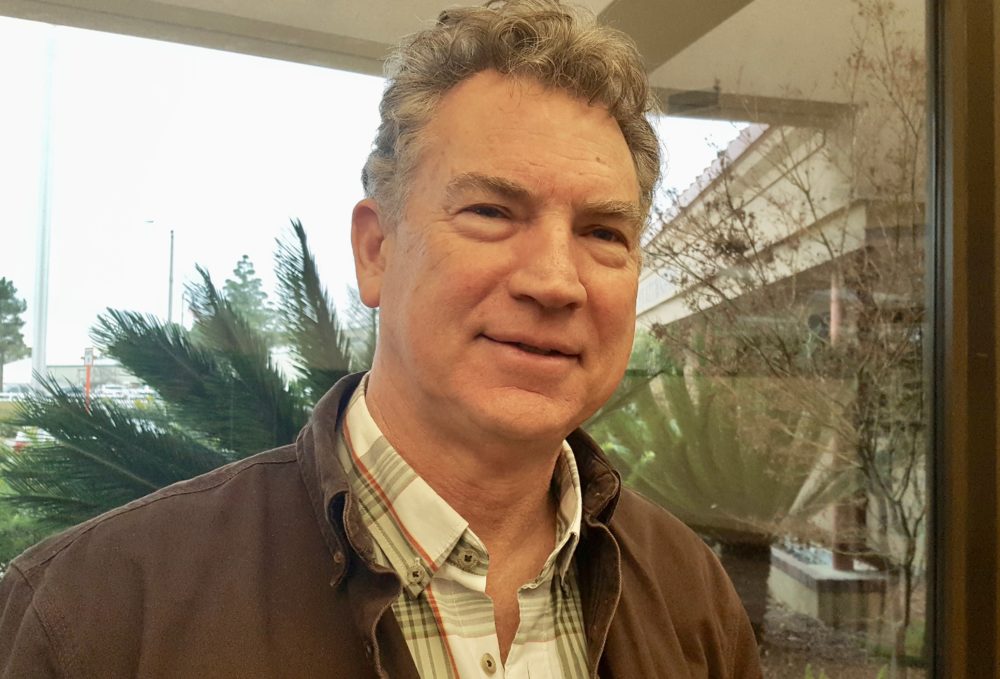
Mark Lundy is a UC Cooperative Extension Specialist in grain cropping systems at UC Davis. Lundy runs trials on grain crops because California is such a diverse environment and there are different conditions from year to year so it’s important to be consistent in measuring yield and crop quality, grain diseases, and agronomic traits on small grains.

Lundy’s work is predominantly on California wheat, but there are many trials on barley.

“Improved varieties have been the mainstay of my work,” Lundy said. “I came at it from a water and nitrogen management background, and one of our goals is trying to disentangle the environment that you can’t control from the environment that you can control. But this is the second year where we have some of those gradients in there so we are trying to maintain the attributes we have, while also trying to add some value.”

And diseases have been closely monitored within the trial system, noted Lundy.

“We do try to keep track of disease, and so when there are diseases of concern such as stripe rust, which was historically a big problem for growers, it has been successfully addressed through breeding,” he said.

The breeding is spearheaded by Jorge Dubcovsky, a professor at UC Davis Department of Plant Sciences working on wheat genes.

“Stripe rust is still something we have to keep an eye on, and it’s certainly a disease that is always evolving,” Lundy said. “And because resistance is not permanent, we’re always looking for the big diseases that can be detrimental to the production system, such as stripe rust.”

“We also keeping track of leaf rust,” Lundy said. “I’m not a pathologist by training, so I’ve been learning on the job, and I’m grateful to the former UC Cooperative Extension Specialist Lee Jackson, who was a pathologist. He created a nice knowledge base for us to build on.”

2021-05-12T11:05:13-07:00February 27th, 2018|

American Society of Agronomy Meets

Plant Soil Conference Discusses Nitrogen Management

By Patrick Cavanaugh Farm News Director

Dan Munk is a UC California Cooperative Extension Fresno County Farm Advisor who specializes in irrigation, crop nutritional management and cotton production systems. He recently spoke about the California chapter of the American Society of Agronomy holding its annual plant and soil conference recently in Fresno. Attendance was great, and agronomic issues regarding water, irrigation and nutritional management were covered.

“[The] California chapter of the American Society of Agronomy convenes a annual meeting known as the plant and soil conference, which was held recently in Fresno for a day and a half. We had the CDFA Secretary Karen Ross address the group as well as some nutrient management experts from across the state and outside of the state,” Munk said. “And we discussed agronomic issues related to water irrigation, nutrient management in agriculture. And there was a pest management session as well.”

There were more than 220 top state agronomists, with many Certified Crop Advisors as well as some growers and industry affiliates attending that meeting.

Nutritional management plans for efficiency, especially for nitrogen, are being closely looked at and discussed.

“I think the nutrient management plans that we’re doing is something that we need to continue to get better information. We have an understanding now of where some of the limitations are now for efficiencies,” Munk explained. “I mean, we can’t always be 100 percent efficient in these things and when we are, that’s when you get into the situation where you have some yield losses. So there’s, there’s always going to be some nitrate movement out of the root system in agricultural systems. That’s just the nature of the beast.”

2021-05-12T11:05:13-07:00February 20th, 2018|

Groundwater Nitrates Due to Legacy Issues

Minimizing Groundwater Nitrates

By Patrick Cavanaugh, Farm News Director

Groundwater nitrates have been a concern over the last decade and growers have made much improvement to minimize the problem. But still, new regulations are requiring that growers not make the problem worse.

California Ag Today recently spoke with Dan Munk, a UC Cooperative Extension Fresno County Farm Advisor, about the topic. He specializes in irrigation crop nutritional management and cotton production systems. He explained that when water leaves the root zone, it takes away salts and nitrates.

The issue is that irrigated agriculture is always going to have some water leaving the root zone simply to leach salts.

“And when you leach salts, you take away with that water, along with something like nitrates. So that’s part of the system,” Munk said.

“And so what we can do in agriculture is limit those losses and try to be more efficient because it still makes us more efficient in that we spend less money on fertilizers that way,” he said.

“However, there’s always going to be some losses to … systems over time, and I think that’s the best we can do,” Munk said.

He said that many of the nitrates in the ground water are due to legacy issues. When growers had different irrigation systems or when growers had different access to water.

“Today, we’re applying a lot less water, much more uniformly and have been for many years. Things really have changed in terms of the amount of nitrates that are going below that root zone and into the groundwater,” Munk explained. “It is much less today.”

For more help in understanding the problem of nitrates in the groundwater: www.cvsalinity.org

2018-02-16T16:59:44-08:00February 16th, 2018|

Offering Grapes in School Lunch Promotes Better Eating

Less Waste When Grapes Were Served

By Jeff Cardinale, California Table Grape Commission

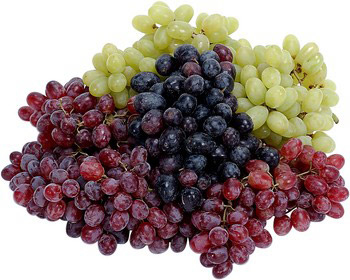
Offering fresh grapes as part of the school lunch menu helped improve the school lunch eating behaviors of children in a pilot study conducted through Texas A&M University.

The study looked at the effects on plate waste when fresh grapes were offered compared to when they were not offered. The results show that when the school meals included grapes, consumption of healthier menu items increased, suggesting that grapes can serve as a “gateway” fruit to healthier eating.

The study was conducted in two elementary schools and two middle schools from one school district in Texas. Grapes were made available on “grape days” as an offered fruit choice. Non-grape days were defined as days when grapes were not offered.

Study results included:

  • When offered as a fruit choice, grapes were minimally wasted.
  • On grape days, lost dollars attributed to vegetable plate waste was significantly less than on non-grape days.
  • Intakes of effective calories, fat, sodium, protein, and fiber per serving of entrees, vegetables and fruits on grape days were higher than on non-grape days.
  • On grape days, the children consumed more of the school lunch, which is an overall goal of school lunch.

“Our study shows that offering grapes in school lunches is a smart strategy that goes beyond grapes’ status as a favorite fruit to grapes having a beneficial impact on the degree to which students make healthy choices, and on their consumption of the school lunch overall,” said Dr. Peter S. Murano, co-author of the study.

It is hoped that schools across the country take note of the benefits of serving California table grapes in an effort to help encourage good eating habits for the students.

2021-05-12T11:05:14-07:00February 14th, 2018|

World Ag Expo is Feb 13-15

UC Davis Engineers, Economists, Advisors gather at World Ag Expo

By Diane Nelson, College of Agricultural and Environmental Sciences dean’s office

UC Davis specialists in everything from grapes to livestock to irrigation management will join staff and students at the World Ag Expo in Tulare, February 13-15, to chat with farmers, prospective students, alumni and leaders throughout the agricultural industry.

More than 100,000 people are expected to attend the 51st annual event, where 1,500 exhibitors display cutting-edge agricultural technology and equipment over a massive 2.6 million square feet of show grounds.

“We’re thrilled to be taking part in this incredible agricultural exhibition and reconnecting with alumni from the Central Valley and beyond,” said Sue Ebeler, an associate dean for the UC Davis College of Agricultural and Environmental Sciences and professor of viticulture and enology. “Faculty will be in town and available to discuss current agricultural research and our Aggie Ambassadors can answer questions about our majors and campus life.”

The UC Davis team will be located in the World Ag Women’s Pavilion. In addition to Professor Ebeler, dean of undergraduate academic programs for the college, seven faculty experts will attend portions of the three-day event. They include:

  • Rachel Goodhue, professor and chair of the Department of Agricultural and Resource Economics,
  • Deanne Meyer, Cooperative Extension specialist in livestock waste management,
  • Samuel Sandoval Solis, associate Cooperative Extension specialist in water management,
  • Ali Pourreza, assistant Cooperative Extension specialist in agricultural mechanization and precision agriculture,
  • Matt Fidelibus, Cooperative Extension specialist in grape production
  • Anna Denicol, assistant professor and veterinarian who specializes in reproductive biology, and
  • Jeff Mitchell, Cooperative Extension specialist in conservation agriculture.

UC Davis is ranked number 1 in the nation for agriculture, plant sciences, animal science and agricultural economics. The College of Agricultural and Environmental Sciences enrolled more than 2,000 new students in the fall of 2017, many of them from California’s Central Valley. The college offers 29 majors—everything from agriculture to nutrition to global disease biology.

“Prospective students can learn about all our majors and the career paths they provide,” Ebeler said. “At the World Ag Expo, we get to meet with agricultural leaders from around the world, as well as so many passionate young people who will become tomorrow’s leaders.”


Media contacts:

Diane Nelson, College of Agricultural and Environmental Sciences dean’s office, 530-752-1969, denelson@ucdavis.edu

Sue Ebeler, College of Agricultural and Environmental Sciences dean’s office, 530-752-7150, seebeler@ucdavis.edu

2018-02-07T17:42:01-08:00February 7th, 2018|

Rootstocks Offer Production Attributes

Tomato Rootstocks Grafting

By Jessica Theisman, Associate Editor

California Ag Today recently spoke with Brenna Aegerter, a UC Cooperative Extension farm advisor in San Joaquin County, about grafting rootstocks to tomato plants.

“Rootstocks are cut below the cotyledons, while the scions are cut above the cotyledons at an angle,” she said.

These two plants are then clipped together and go into a high humidity healing chamber for about one week.

Aegerter explained that, “In the beginning, there is no light. They gradually increase the light because they do not want to stress the plants, and so if those two angles match … then everything grows back together.”

Each tomato plant can differ depending on the rootstock that it has been grafted to. Different rootstocks have varying levels of resistance to disease and pests. Rootstock resistance does have an effect on crop yield. If all of the fruiting varieties had the nematode resistance gene, they could potentially improve their yields.

There is great success rate on grafting these tomato plants.

“We have had pretty good success, 90 percent and up,” Aegerter said.

The remaining 10 percent is because the angles were not matched up quite right and there is not enough contact between the two tissues.

“Rootstocks are for the most part, hybrids between our cultivated tomato and wild tomato species,” Aegerter explained.

Wild tomatoes are used often to bring in new genetic material due to their diversity and natural resistance. Depending on the type of tomato that is being used, the resistance can differ.

The fruiting varieties are resistant, but are resistant to a shorter list of diseases.

“These root systems are are bigger, the crown is bigger, and sometimes they aren’t even purely resistant to the disease, but just by virtue of the fact that they grow faster, they can outgrow it,” Aegerter said.

2021-05-12T11:05:14-07:00February 2nd, 2018|

Grain Crop Variety Trials Important

Grain Crop Variety Trials Ongoing in California

By Brianne Boyett, Associate Editor

Grain crop variety trials are taking place around the state in hopes of measuring productivity among a diverse range of environments. California Ag Today spoke with Mark Lundy, UC Cooperative Extension Specialist for grain cropping systems at UC Davis, about the topic.

“We’ve been doing statewide variety trials as an institution for decades, almost a century. The goal is to be consistent, as California is such a diverse environment and because there are different conditions from year to year,” Lundy said.

“We are conducting trials that we measure yield and crop quality, disease reactions, agronomic traits on small grains—which are predominantly wheat in California, but we also do trials on barley,” Lundy explained.

The goal is for producers to be able to utilize this data and apply it in their own management systems.

“We want to take that data and put it into a format that growers can use to make decisions about what to plant. Also, we want to make it so the breeders can use it to make decisions on what to advance in, what lines to make available for growers,” Lundy said.

These trials are widespread and take place in a variety of locations.

“We have trials as far north as Tule Lake in the intermountain region, as far south as the Imperial Valley. Trials are conducted on a combination of grower fields and also at research and extension centers where we can have better control over the variables. We want to get a little better understanding of not just the location and its inherent characteristics, but the management in terms of how much water or nitrogen it may need,” Lundy explained

For More information on Mark Lundy:

http://www.caes.ucdavis.edu/about/directory/fsd/mark-lundy


2021-05-12T11:05:14-07:00January 31st, 2018|
Go to Top