Associations, Organizations, Educational and Research Institutions

Kroger Backs off “Net 90” Payment Plan to Produce Shippers

Produce Industry Gets Praise for Unified Voice on the Matter

News Release

The California Fresh Fruit Association is pleased with Kroger’s recent announcement that produce shippers will not have to comply with its new “Net 90” payment plan.

California Fresh Fruit Association President George Radanovich stated, “We appreciate Kroger’s acknowledgment that the ‘Net 90’ payment plan didn’t work for the produce industry. We stand by our position that Kroger’s original push to implement its plan was wrong and illegal.”

To force suppliers to forfeit their rights under the Perishable Agricultural Commodities Act (PACA), an act created specifically to protect the perishable fresh fruit industry, was unconscionable and should never have been proposed.

Radanovich continued, “We would like to commend the fresh produce industry for coming together as a unified voice for our industry. Today we held the line on an important issue.”

Radanovich concluded, “As I’ve stated before, the fresh produce industry has been a good partner to Kroger; we appreciate that Kroger remembered that partnership and fixed the mess it created.”

2018-07-11T16:40:06-07:00July 11th, 2018|

Researchers Take a Look into the Future of Strawberries

Survey Coming to Growers to Gauge Interests

By Hannah Young, Associate Editor

A strawberries survey connected to a project that looks at the future of strawberry genetics will soon be sent to strawberry growers.

Daniel Tregeagle, a postdoctoral scholar of agricultural economics at UC Davis, is working on the survey.

“This project is being run over the state of California, through a number of different institutions, different universities, including the state of Florida,” Tregeagle said. “Strawberry growers all over the country are trying to find out what we should be breeding in the next generation of strawberry cultivars.”Strawberries

The project is part of a Specialty Crop Research Initiative, which is considering what growers are looking for in the next generation of strawberries, Tregeagle said.

“Do they want better yields? Do they want more attractive features that the consumers are going to like? Do they need disease resistance?” Tregeagle asked.

However, growers can’t have everything, because when a cultivar is strong in one area, they tend to be less strong in other areas.

“So what we’re doing in the survey is asking growers what are the main diseases that they’re facing, how are they managing those diseases currently and what would they do differently if they had a better, more resistant strawberry cultivar that could resist those particular diseases,” Tregeagle explained.

Researchers are also interested in looking at fumigation and how they might change in the presence of a more resistance cultivar, Tregeagle added.

2021-05-12T11:05:11-07:00July 1st, 2018|

Agritourism in California

UC Davis Experts Help Farmers, Ranchers Profit  in Growing Trend

News Release Edited By Patrick Cavanaugh

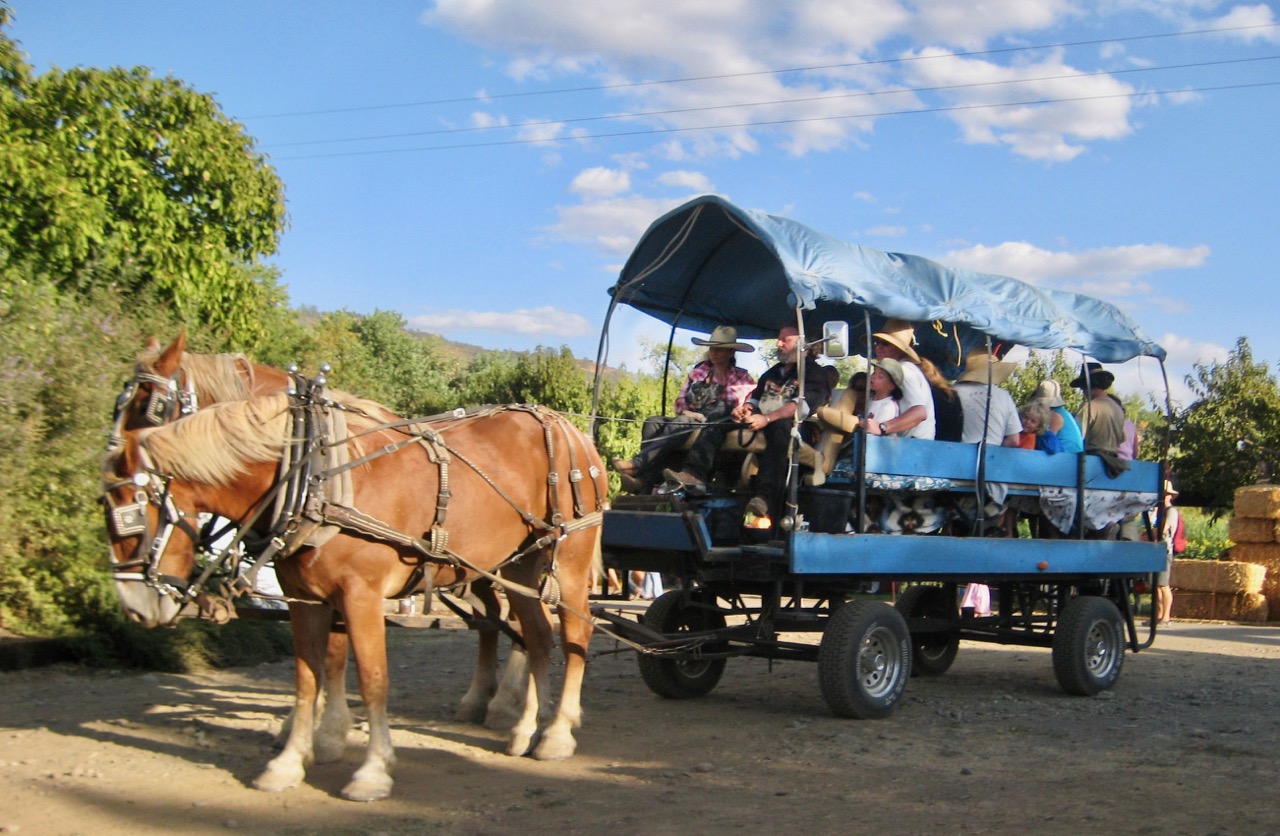
Agritourism is growing in California, along with sales and production of much of the world’s fruits, vegetables, and nuts. More and more people are paying to enjoy the bounty and beauty of California’s farms and ranches by touring peach and cherry farms near Fresno, taking classes in beekeeping, attending festivals devoted to strawberries or attending a host of other activities offered by farmers and ranchers throughout the state.

Many farmers could benefit from agritourism and the added value it brings, but developing successful agritourism operations can be tricky. Experts at the Agricultural Sustainability Institute (ASI) at UC Davis are helping farmers and others in the agricultural community understand the regulations, permits, insurance, marketing and other considerations needed to succeed.agritourism

“Agritourism operations are more successful when they’re part of a supportive community of tourism professionals, county regulators, agriculture regulations and others,” says Gail Feenstra, ASI’s food, and society coordinator.

Feenstra and her team recently received a $73,000 grant from Western Sustainable Agriculture Research and Education, a U.S. Department of Agriculture program, to develop training, resources and peer support for farmers and ranchers considering agritourism. Feenstra is working with Penny Leff, ASI’s statewide agritourism coordinator and team project manager.

Leff led previous projects that offered agritourism education to groups of farmers, ranchers, and others involved in California agritourism. In this new project, Leff is providing comprehensive training to smaller, more targeted groups that will then offer training to others in their community.

“We’re helping farmers and ranchers assess their agritourism potential, whether it be U-pick farming, dinners on the farm, classes or even overnight lodging,” Leff says. “We help navigate everything from zoning ordinances to marketing plans.”

The project’s ultimate goal is to develop at least 24 clusters of vibrant agritourism operations in California that sustain producers, educate visitors and support the economic health of the entire community.

As Leff explained, “Agritourism is an exciting opportunity for farmers, and also for visitors who can learn about and enjoy what farm living has to offer.”

You can learn more about agritourism opportunities at the ASI agritourism website. For more information on upcoming workshops, contact Penny Leff at paleff@ucdavis.edu or call 530-752-5208.

2018-06-29T16:49:08-07:00June 29th, 2018|

Frank Zalom Named Editor-in-Chief of Journal of Economic Entomology

UC Davis Professor to Head Distinguished Publication

News Release Edited By Patrick Cavanaugh

Integrated pest management specialist Frank Zalom, distinguished professor of entomology, UC Davis Department of Entomology and Nematology, and a past president of the Entomological Society of America (ESA) is the newly selected editor-in-chief of the Journal of Economic Entomology, the largest and most cited of ESA’s family of scientific journals.

Frank Zalom

The ESA Governing Board today announced that Zalom will succeed John Trumble, distinguished professor of entomology at UC Riverside. Trumble, editor-in-chief for 20 years, informed ESA in late 2017 of his intent to leave the role in 2018. In January, the journal’s editorial board launched a widespread search for his successor.

A 43-member of ESA and the 2014 president, Zalom will serve a five-year term as editor-in-chief. The journal publishes research on the economic significance of insects. It includes sections on apiculture and social insects, insecticides, biological control, household and structural insects, crop protection, forest entomology, and other topics.

“Dr. Frank Zalom’s career can be viewed as a model of applied entomology derived from an understanding of basic biology, and he is an ideal choice to be the new editor-in-chief of the Journal of Economic Entomology (JEE),” said ESA President Michael Parrella in an ESA news release.

“His unparalleled and broad expertise will serve to continue the journal’s growth as the publication of choice for applied entomological research and to build upon the legacy of Dr. John Trumble,” said Parrella, who is also dean of the College of Agricultural and Life Sciences at Idaho State University and former professor and chair of the UC Davis Department of Entomology and Nematology. 

Zalom’s 40-year career intersects entomological research, teaching, and application. He served 16 years as director of the University of California Statewide Integrated Pest Management Program (UC IPM) and is the only entomologist in the UC system to receive a simultaneous appointment in teaching, research, and extension. He focuses his research on IPM of agricultural crops.

Editorial board chair Xuguo Zhou, associate professor of entomology at the University of Kentucky, said he and his colleagues are delighted to welcome Zalom as the next editor-in-chief. “We could not have asked for a better candidate in terms of vision, dedication, reputation, experience, and integrity,” Zhou said. “And we also express our deep gratitude to Dr. John Trumble, whose tireless work ethic and unerring leadership have driven JEE to such great success for so long.”

“I couldn’t be more pleased to be selected the next editor-in-chief of the Journal of Economic Entomology,” Zalom said. “I have spent the last 40 years of my career trying to solve economically important problems caused by arthropods using an IPM approach, and this journal, as well as ESA’s other journals, have always served as a primary foundation and outlet for research conducted in my lab. As I approach the end of my career, I hope to be able to dedicate my efforts to enhancing our Society’s influence on science and its application to addressing some of the most important entomological challenges that affect communities worldwide. JEE is uniquely positioned to do exactly that.”

Zalom joined the UC system in 1980, serving in roles ranging from extension IPM coordinator to professor to vice chair of the department to advisor of the UC Davis International Agricultural Development Graduate Group. He has authored more than 335 journal articles and book chapters. including “Food, Crop Pests, and the Environment” published by APS Press. 

His career includes serving as major professor for 12 Ph.D students and seven master’s degree students.

Zalom is a fellow of the California Academy of Sciences, the American Association for the Advancement of Science, the Royal Entomological Society, and ESA.  Among his numerous honors: a Fulbright Senior Research Scholarship (1992-93), the ESA Achievement Award in Extension (1992), the ESA Recognition Award (2002), the James H. Meyer Award from UC Davis for teaching, research and service (2004), the Entomological Foundation IPM Team Award (2008), the Entomological Foundation Excellence in IPM Award (2010), Outstanding Mentor Award from the UC Davis Consortium for Women and Research (2013) and the C. W. Woodworth Award (2011), the highest award given by the Pacific Branch of ESA (PBESA).

More recently, Zalom received a lifetime achievement award, presented at the 9th International IPM Symposium, held March 19-22 in Baltimore. Last month he played a key role in a U.S. Congressional briefing held in the Rayburn House Office Building to raise awareness for and increase understanding of areawide integrated pest management (AIPM) and the benefits of a comprehensive pest management policy, particularly as it relates to invasive species.

Zalom, who received his doctorate in entomology from UC Davis in 1978, holds two degrees in zoology and ecology from Arizona State University (bachelor of science, 1973, and master’s degree, 1974).

Founded in 1889 and headquartered in Annapolis, Md., ESA is the world’s largest organization serving the professional and scientific needs of entomologists and people in related disciplines.

2021-05-12T11:05:11-07:00June 25th, 2018|

UC Davis Student Maureen Page Speaks for the Bees

Maureen Page to Spread Flowers for Bees

By Jessica Theisman, Associate Editor
Maureen Page pollination

Maureen Page

California Ag Today recently spoke with doctoral student Maureen Page of the Neal William’s lab at UC Davis, Department of Entomology and Nematology. She is the recipient of a prestigious three-year fellowship for promoting food security by optimizing wildflower planting. She supports the wild and bee management. We asked her about the flowers that she plans on planting to help those bees.

“I do believe that in general, flowers are really important for bees. Planting flowers are generally good for them,” she said.

Although planting is good for the bees, there are some precautions that need to be made.

“Some flowers can be somewhat toxic to bees. Some do not actually provide bees with pollen and nectar resources,” Page said.

There are many ornamental plants that are bred to not have much pollen so that people do not sneeze as much.

“On top of that, if you are planting non-native species that are really weedy, it may be great for the bees, but might not be great for other plant species,” Page said.

2021-05-12T11:05:11-07:00June 21st, 2018|

Enjoy California Table Grapes Year-Round

Harvest Will Continue into December

By Jessica Theisman, Associate Editor

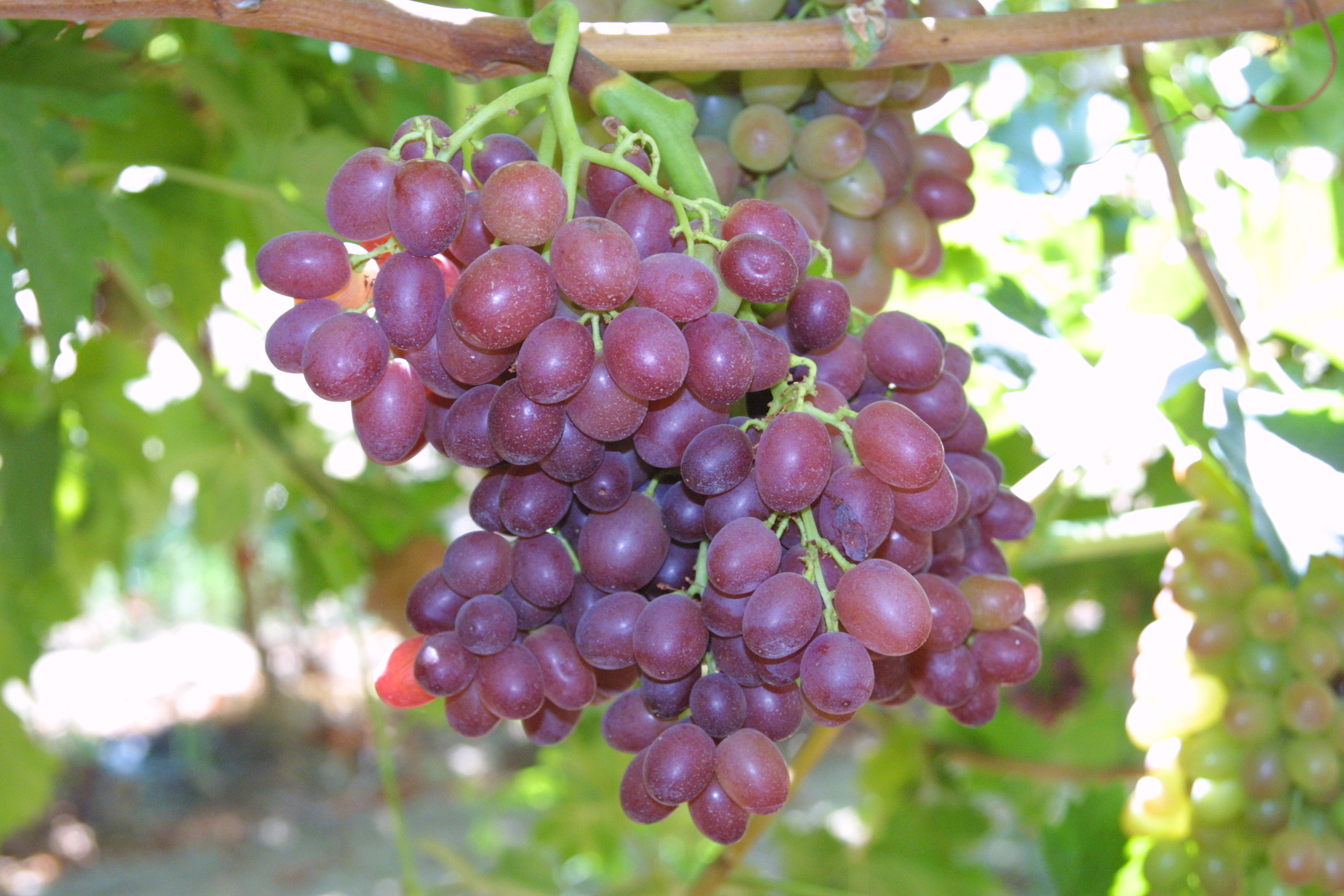
The California grape season is beginning, and the harvest will continue into the winter. California Ag Today recently spoke with Kathleen Nave, president of the Fresno based California Table Grape Commission, about table grapes.

The California Table Grape Commission was established by an act of the state legislature in 1967 and approved by a grower referendum in 1969. The purpose of the commission is to maintain and expand markets for fresh California grapes and to create new, larger interstate and foreign markets.

Kathleen Nave, California Table Grape Commission president

Kathleen Nave, California Table Grape Commission president

“We are just getting started with a California season. We will be picking grapes all the way into December,” Nave said.

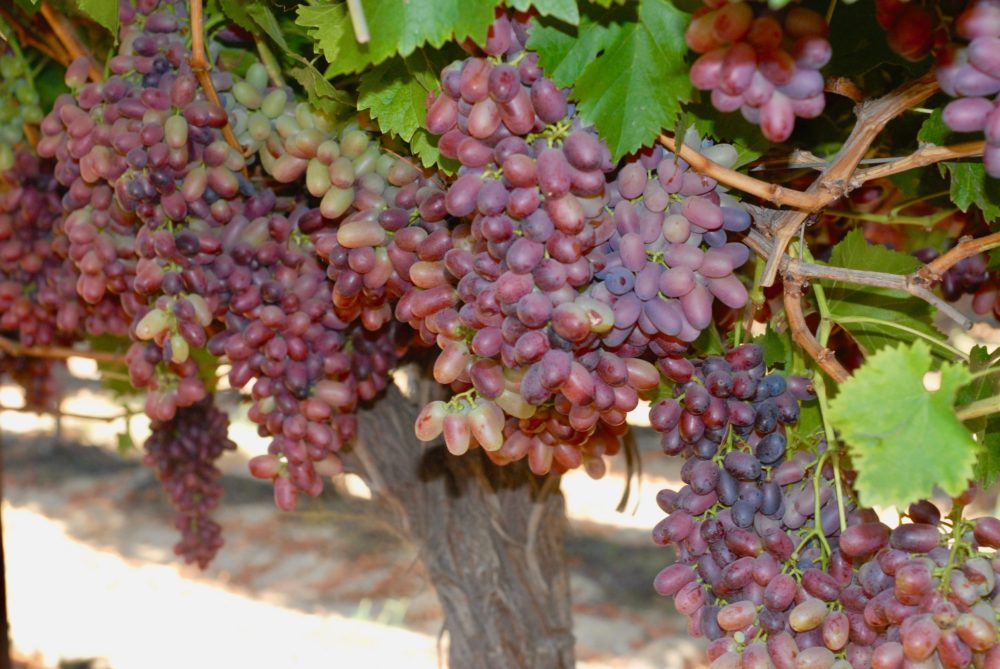
Grapes are a spring, summer, fall and early winter fruit. Sixty percent of the table grapes that are harvested in the state of California are harvested after September first.

“I would just ask people to remember that they can enjoy California grapes in the spring and the summer, in the fall and into the early winter,” Nave said.

There are new varieties of California table grapes. These grapes have been grown by and designed to provide more product for the customer.

“New varieties of grapes were created that would allow growers to continue growing and harvesting in the late October, November, and December time period,” Nave explained.

These varieties were created with the climate in mind. This way, they can thrive and be packed and shipped in November and early December.

“It takes a long time to develop new varieties of table grapes, get them out in the field, learn how to grow them and to get them to the marketplace,” Nave said.

2018-06-19T15:28:20-07:00June 19th, 2018|

Spotted Wilt Virus Impacting Tomatoes Again

Virus has Gotten Past Resistant Gene

By Patrick Cavanaugh, Editor

Tomato spotted wilt virus is becoming big in the central San Joaquin Valley, according to Tom Turini, University of California Cooperative Extension Farm Advisor in Fresno County for vegetable crops. The virus had earlier been spotted in lettuce, and this has caused some concern in this season’s tomato crop.

Tom Turini

“We had some concerns early in the season that we might be looking at a year where it’ll become a challenge, because we were finding it in lettuce back in February and March in the Huron area,” Turini said. “And then we notice that tomatoes were showing the virus symptoms. We had been managing tomato spotted wilt in processing and fresh market tomatoes largely with a resistance gene, and it seemed that the resistance was breaking.”

The virus is spread by thrips, and the gene in the tomato was the biggest deterrent in combating thrips.

“We were also talking about an IPM program, but the industry was leaning on this gene. This gene became a big part of their spotted wilt prevention program,” Turini said. “While sanitation of weeds was practiced, and there was some thrips management, it was really dependent upon this single gene resistance in the tomatoes, and as of 2016, we saw evidence that that gene was no longer performing.”

Because the virus can wipe out entire tomato fields, researchers are scrambling to find a new way to deter the thrip spreading the virus on tomatoes.

2021-05-12T11:01:55-07:00June 18th, 2018|

California Table Grape Commission is Raisin the Bar for a Fruitful Industry

Research is Huge for the Commission

By Mikenzi Meyers, Associate Editor

With grape season in full swing, there’s an abundance of fresh, local grapes in our grocery stores. While our farmers are hard at work, so is the California Table Grape Commission, and their president Kathleen Nave. They are not only making their presence known in the media but are constantly doing research to improve the industry as a whole.

The California Table Grape Commission has been doing viniculture research since 1972 and is funded by growers.

“The commission does a lot of research on ways in which to help growers grow more grapes more efficiently,” Nave said.

This is done by trying to figure out how to grow grapes with fewer inputs, an example being less water.

Nave also explained the research they do to find the benefits of eating grapes, saying, “We do a lot of health research on those 1,600 phytonutrients that are found in grapes to try to pin down the ways in which grapes are good for us, as it relates to various disease states.”

Kathleen Nave, California Table Grape Commission president

Kathleen Nave, California Table Grape Commission president

Although research is huge for the commission, Nave described their relationship with retailers in the U.S., Canada, and about 30 other countries as “the heart of the commission’s work.” This includes urging retailers to promote grapes by putting them on the shelf, offering multiple varieties, and carrying California grapes from May to January.

In addition, Nave talked about the major presence the commission is making in the media in order to reach consumers.

“We’re on The Food Network [on] television as well as The Cooking Channel, and then we do a lot on social media,” Nave said.

The commission is active on Facebook, Pinterest, and Instagram. In fact, Nave noted that their social media presence has quadrupled in the past two years.

Their goal is to showcase the beauty and versatility of California Grapes and make known the quality of work that the California table grape growers are doing every day.

2021-05-12T11:05:11-07:00June 13th, 2018|

Time for California Table Grapes

Buy Local: Make a Difference One Grape at a Time

By Mikenzi Meyers, Associate Editor

You might want to take a second look when reaching for fresh grapes in your local grocery store, said Kathleen Nave, president of the Fresno-based California Table Grape Commission.  She urged buyers to choose California table grapes when grocery shopping.

Kathleen Nave, California Table Grape Commission president

Kathleen Nave, California Table Grape Commission president

“It can be convenient to reach for the nearest bag in the store when turning to grapes for a healthy snack, but what if we told you those grapes could be from places as far as Mexico or Chile? What if we then gave you the option to have some right out of your backyard?” Nave asked.

“If you have the choice, please choose the California grapes, because those are the grapes that are supporting our rural communities here,” she said.

Nave explained that the California Grape Commission is pushing retailers hard to get their grapes up on the shelf, and they need consumers to support them. She said that if the bag says U.S., then it is from California, as California grows 99 percent of the grapes that are commercially produced in the United States.

Nave explained that the best way to make sure you are buying local is by asking.

“Ask your produce manager for U.S. or for California grapes. That’ll make a big difference,” she said.

2018-06-08T16:09:19-07:00June 8th, 2018|

California Food Processing: $200 Billion in Value

California Food Processing is Massive Business

By Patrick Cavanaugh, Editor

The food packaging business is massive in California. California Ag Today spoke recently with Rob Neenan, president and CEO of the California League of Food Producers, based out of Sacramento, about California food processing.

“The League of Food Producers is a statewide trade association. Our primary function is regulatory and legislative affairs on behalf of our members,” Neenan said.

Rob Neenan is president and CEO of the League of Food Processors

The association represents about 50 food processor members across the state, most of the Central San Joaquin Valley, but it serves seven or eight members in southern California. “We have Del Monte in Modesto. We have Hilmar Cheese in Hillmar. In Lodi and Woodland, we have Pacific Coast Producers. We also have also some nut processors, dried fruit processors, so the whole gamut,” Neenan said.

“There aren’t as many frozen fruit and vegetable companies as there used to be, but we have a few, for example, Del Mar Food Products in Watsonville and a couple of companies in the Merced area,” Neenan noted.

The processing industry represents a big part of the power of California agriculture.

“The annual output of the food processing industry in California is about $200 billion. About $25 billion is in direct value added on top of the ingredients,” he said.

The food processing industry directly employs about 190,000 people. However, if you add in all the people who work in packaging, labeling, trucking, energy, IT, in support of the industry, there are 760,000 people in California whose jobs either directly or indirectly rely on the food processing industry, and that’s on top of the production agriculture component.

It’s the third largest industry in the state regarding the manufacturing sector—only high tech and oil refining are larger in California.

And Neenan explained that there are some significant issues that canners are facing.

“The biggest is the proposed steel and aluminum tariff situation. The canning industry needs tinplate steel, which is also used in cans and aluminum foil, which is inside of some packaging as well. For the canneries left in California, this is going to increase their cost of doing business greatly,” Neenan said.

2018-06-04T15:43:45-07:00June 4th, 2018|
Go to Top