Associations, Organizations, Educational and Research Institutions

Healthy Soils Initiative Looks at Cover Crops

Cover Crops Between Annual Veg Crops Studied

 By Patrick Cavanaugh, Editor

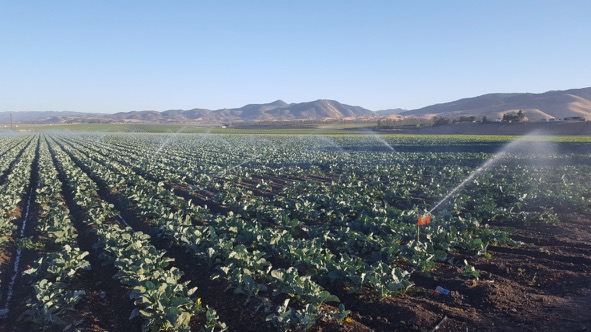
Research is under way to determine if using cover crops between two annual vegetable crops will improve the soil for future crops. It’s all part of the California Department of Food and Ag Healthy Soils Program—a statewide project.

Amber Vinchesi is a UCANR Vegetable Crops Farm Advisor in Colusa, Sutter and Yuba counties. She works mainly with processing tomatoes but also with growers farming vegetables for seed as well as fresh market vegetables such as honeydew and cantaloupe melons.

Vinchesi is collaborating with California’s Healthy Soils Initiative, a partnership of state agencies and departments led by the CDFA Healthy Soils Project. It’s a combination of innovative farm and land management practices that may contribute to building adequate soil organic matter that may increase carbon sequestration and reduce overall greenhouse gases.

“We have three sites, and the site that I’m working on is focused on winter cover crops between crops such as wheat, tomato or corn, to improve soil health,” said Vinchesi, who is being assisted by her colleague Sarah Light, the agronomy advisor in Sutter, Yuba, and Colusa counties

Other Healthy Soil sites are located in the Delta area, and overseen by Michelle Leinfelder-Miles, UCANR Delta Crops Resource Management Advisor in San Joaquin County. Brenna Aegerter, a UCANR Vegetable Crops Farm Advisor also in San Joaquin County, is working with Leinfelder-Miles. Additionally, Scott Stoddard a UCANR Vegetable Crops Farm Advisor in Merced County has a site.

The cover crop will be vetch, a legume.

“We hope that it will put nitrogen and biomass into the soil,” Vinchesi said. “We’re not sure what the results will be, but we hope it will help with aggregate stability, water infiltration, and even reduce weed density.”

She noted that the trial, which is in the first year of a three-year project, will include two different seeding rates, a high and low rate, and then an untreated control where there’s no cover crop.

“And we’ll do soil testing to see how things change in the soil over time,” she explained.

2021-05-12T11:05:06-07:00January 29th, 2019|

Casey Creamer Named New President/CEO of California Citrus Mutual

New Role Effective Feb. 1

News Release


CCM appoints current Executive Vice President and veteran agriculture industry representative.  Current President, Joel Nelsen to step down after 37 years at the helm and assume new role within the organization.


The California Citrus Mutual (CCM) Board of Directors has named current Executive Vice President Casey Creamer as its new President and CEO effective February 1st.  Creamer came to CCM last February after a national search process to eventually assume the role of President.  He succeeds Joel Nelsen, who has guided CCM for the last 37 years.

Huanglongbing

Joel Nelsen semi-retires after 37 years at the Helm.

“The citrus industry is very fortunate to have had an individual of Joel’s caliber the last 37 years.  That kind of loyalty is not only rare, it’s unheard of,” Board Chairman Curt Holmes said.  “Joel has taken a relatively small industry and has given us a huge voice.  We’ve faced many challenges over the years and have addressed them head on with his energy and passion leading the way.  We are incredibly grateful to him for his service and we appreciate his willingness to stay engaged in the industry.

“We are also very excited to have Casey on board as our new President and CEO,” continued Holmes.  “The Board conducted an extensive search process and interviewed viable candidates from across the country.  We ultimately found the right person in our own backyard.  His prior experience working for a sister commodity organization and his work representing growers on water issues made him an ideal selection.  Over the last year, his knowledge of the citrus industry has greatly expanded, and he has quickly become a valuable member of the CCM team on behalf of the industry.”

“I’m humbled by the opportunity to serve,” Creamer said.  “I’ve been extremely fortunate to work with some of the best leaders over my career and have nothing but respect and admiration for the job that Joel has done advancing issues important to the citrus industry.  I’m looking forward to carrying on the many successful traditions at CCM, while constantly seeking new ideas and pathways to address the significant challenges we face.  With the enthusiasm and commitment that exists in this industry, I am confident that together, we tackle any obstacle thrown our way.”


2019-01-28T16:55:42-08:00January 28th, 2019|

William Bourdeau Speaks Out About SGMA

William Bourdeau: Surface Water Must Be Tied to SGMA

By Patrick Cavanaugh, Editor

William Bourdeau is Vice President of Harris Farms, a Director of Westlands Water District, and Chairman of the Board of the California Water Alliance. Bourdeau recently talked to California Ag Today about the Sustainable Groundwater Management Act (SGMA), which will force growers in 2040 to keep the water levels in their wells in balance and not allow over-drafting.

William Bourdeau

“It’s mostly about living and growing up in the community and hearing about what the people did when I was still young,” Bourdeau said. “I understand that we were over-drafting the aquifer in the early days of agriculture on the west side of the valley and some very innovative, pioneering individuals figured out how to solve the problem. They built the Central Valley Project and delivered surface water. And if you look at the statistics, the problem was nearly solved. It’s only started to become a problem when the surface water deliveries have been cut off as a result of the biological opinions.”

“I can’t understand why that we can’t solve this problem. And I do think surface deliveries need to be tied into SGMA,” he said.

Bourdeau said he believes that the problem can be solved and not be detrimental to the environment.

“But any solution must consider humans and our needs … surface deliveries need to be incorporated into the plan,” Bourdeau added. “We need to use sound science, and it needs to be peer-reviewed.

“We need to make sure that we’re doing everything we can to preserve a domestic food supply capability. I think it’s in our national interest. … It’s a national security issue,” he said.

Bourdeau believes that we need to get away from looking at these very narrow issues and look at the big picture.

“We must find a way to do what’s best, and not all the decisions are going to be desirable, but I do think we can. We can make decisions that solve the problem and don’t take this wonderful resource out of production.

As a director for Westlands Water District, Bourdeau said no stones will be unturned for compliance to SGMA.

“We’re doing everything we can to try to make sure that we manage this situation to the best of our ability and our growers are represented in a way that they will succeed in the long term,” he said.

2019-01-22T16:43:33-08:00January 22nd, 2019|

Tomato Spotted Wilt Virus Fights Back

New Strain Creates Challenges

By Mikenzi Meyers, Associate Editor

A new strain of the Tomato Spotted Wilt Virus has created a challenge among vegetable growers, making integrated pest management, or IPM, increasingly critical. Bob Gilbertson, plant pathologist at UC Davis, has insight and advice as to how farmers should tackle this new strain.

“The first thing is to know what’s out in your field. And there’s a good diagnostic test for curly top, spotted wilt, alfalfa mosaic, and other viruses,” Gilbertson said.

Bob Gilbertson

After the virus is confirmed, he encourages growers to explore their options of treatment. Prior to the new spotted wilt virus strain, growers could turn to the SW-5 resistance gene to cure their field. Unfortunately, Gilbertson explained, the new strain actually breaks that resistance, which is where IPM becomes even more important.

In the future, Gilbertson hopes to find additional resistance genes to break the new strain. Until that time comes, he wants to use good IPM to manage it.

Gilbertson further added, “Increased sanitation, removing overwintering hosts, weeds, and bridge crops like lettuce, and then timing the applications of thrips management better, to slow down the appearance of adult thrips that carry the virus,” are all examples of good IPM.

2021-05-12T11:01:50-07:00January 18th, 2019|

California Fresh Fruit Association: Top Issues in 2019

Immigration and Labor Cost are Big Issues

News Release

The California Fresh Fruit Association (CFFA) recently announced their Top Issues for 2019. Members were surveyed in December 2018 and ranked the top issues for CFFA to concentrate on in 2019.

George Rodanovich

President of the California Fresh Fruit Association, George Radanovich, stated “As in years past, our membership has given us strong direction in identifying their top priorities for 2019. The issues of labor, water, and food safety, will lead our list of issues. CFFA will continue to serve as the primary liaison between regulatory and legislative authorities by acting as the unified voice for our members on these and many other issues.”

Here are the results:

1) Federal Immigration Policies Addressing Current and Future Labor Force

2) Increasing Wage Costs (Base Wages/OT Thresholds)

3) Water Supply Availability and Curtailment

4) Immigration Enforcement (ICE)

5) Groundwater Management Requirements (S.G.M.A.)

6) Labor Regulatory Compliance

7) Water Quality Requirements and Clean Drinking Water Liability

8) Federal and State Food Safety Compliance Requirements

9) Health Care Costs (Policy Costs/Paid Sick Leave)

10)  Plant Health Materials (Pesticide, Herbicides, Fungicides, etc.)

As always, it will be the Association’s goal to work on behalf of its members to address these issues and many more, in an effort to create a better working environment for their businesses.

2021-05-12T11:01:50-07:00January 15th, 2019|

Curious of How Safe is Fresh Produce?

Residue Calculator Helps Public Understand How Safe Food Is

News Release

Recently, we have shared new government residue sampling results from the Federal Food and Drug Administration (FDA), United States Department of Agriculture (USDA) and the California Department of Pesticide Regulation (CDPR).  These programs consistently show that 99% of the foods sampled had no detectable residues at all or residues found were well below safety levels set by the Environmental Protection Agency (EPA).

For those who do not want to review these lengthy government reports, the Alliance for Food and Farming (AFF) created an easy-to-use “residue calculator” on safefruitsandveggies.com, which is based upon the USDA data.  We asked toxicologists with the University of California Personal Chemical Exposure Program to analyze this data.  Their findings: A child could literally eat hundreds to thousands of servings of a fruit or veggie in a day and still not have any health effects from residues.  This analysis shows how very minute residues are, if present at all.

The residue calculator features 19 of the most popular fruits and veggies, and you can click on a man, woman, teenager, or child to see the number of servings one would have to consume.  For example, a child could eat 181 servings or 1,448 strawberries in a day and still not have any effects from residues.  Apples?  A child could eat 340 apples in a day.  Kale?  7,446 servings!

These government reports and the UC toxicological analysis underscore the diligence of fruit and vegetable farmers when it comes to the judicious use of pesticides approved for organic and conventional crops.

“… Growers and farmers are adept at following our comprehensive rules to ensure produce is grown to the highest pesticide standards,” said Brian Leahy, Director of the California Department of Pesticide Regulation.

“Based on the PDP data, consumers can feel confident about eating a diet that is rich in fresh fruits and vegetables,” concludes the USDA report.

Read, learn, choose but eat more organic or conventional fruits and veggies for better health and longer life.

2021-05-12T11:01:50-07:00January 11th, 2019|

Alliance for Food and Farming Supports Industry

Alliance for Food and Farming Works Hard for the Produce Industry

By Patrick Cavanaugh, Editor

Since 1989, the Alliance for Food and Farming based in Watsonville has constantly been on guard for the national produce industry. They fight against misinformation on conventional farming, all while supporting organic production.

Teresa Thorne has been with the Alliance since it began and now serves as Executive Director. She is assisted in all aspects of running the non-profit organization by Rosi Gong. These two women share respect and admiration for the farmers who work diligently every day to bring healthy fruits and vegetables to our table.

Teresa Thorne

The Alliance is a nationwide organization representing growers and shippers in California, the Northwest, Texas, Florida, and other states.

Top of mind at the Alliance is the Environmental Working Group (EWG), which will soon release its Dirty Dozen list of popular fruit and vegetables that they deem the public should not eat due to crop protection material contamination. Furthermore, they recommend that consumers only eat organic food.

The EWG list has come out since 1995, and the Alliance has debunked it with facts.

“We work diligently to put factual information out, to help consumers make the right choices for their families in the produce aisle,” Thorne said. “For the EWG to call healthy and safe conventionally grown produce dirty is really unconscionable and has no scientific basis.”

The Alliance wants the consumer to choose what is affordable, choose what’s accessible and buy it where it’s most convenient but choose to eat more every day, for better health and longer life.

The EWG is incentivized to promote organics, and because they are a multi-million dollar organization, they are able to get to the press.

“We are not even close to the budget they have, and we are always puzzled and surprised when they constantly refer to us,” Thorne said.

In fact, the EWG always refers to the Alliance as a front group that represents big farmers who produce both organic and conventional fruits and vegetables.

“If you want to call us a front group for farmers, it’s okay. But to try and categorize us as this big organization, we’re not, but what we have on our side is science and experts in the areas of nutrition, farming, toxicology and risk analysis,” Thorne explained.

“It’s interesting that the EWG has never questioned our science, and they’ve never questioned any of the content on our website, www.safefruitsandveggies.com. And it’s largely because they can’t, so they’re only real road is to try and discredit the organization carrying it,” Thorne continued. “That’s why they make allegations of us being a front group. But they are very much incentivized to promote organics; there’s no doubt about it. And again, that’s why they’re a multi-million dollar organization, and has celebrities as their spokespersons, and we don’t.”

And of course it is okay to promote organic food, but not at the expense of conventionally-grown produce.

“EWG is one-sided. It promotes organically-grown produce, yet maligns conventionally-grown produce—outright saying it’s unhealthy. That’s the crutch of the Dirty Dozen list,” Thorne explained.

“We strongly advocate organic as well as conventional production. We’re advocates for all fruit and vegetable production,” Thorne said.

The Alliance is also an advocate for consumer choice in the marketplace for conventional or organic produce, whether you prefer to buy at your favorite warehouse store, small grocery store, or farmer’s market. The Alliance wants consumers to have the choice of fruits and vegetables no matter how it’s grown.

The Alliance also interacts with consumers on social media, and many are confused as what they should be eating.

“We see a lot of confused consumers in our social media, and many consumers go to our website and sign up for informational food safety emails from us,” Thorne said.

“And that’s why we try and provide information for consumers on our website from nutritionist about the importance of eating fruits and vegetables and from farmers about how they preserve food safety and really … [get] that message across,” Thorne said. “We want consumers to know that the farmer’s first consumer is their own family. So food safety is obviously a top priority for them.”

2021-05-12T11:05:06-07:00January 9th, 2019|

Berry Industry Without Methyl Bromide

Berry Industry Must Now Work Smarter in Post Methyl Bromide Era

By Patrick Cavanaugh, Editor

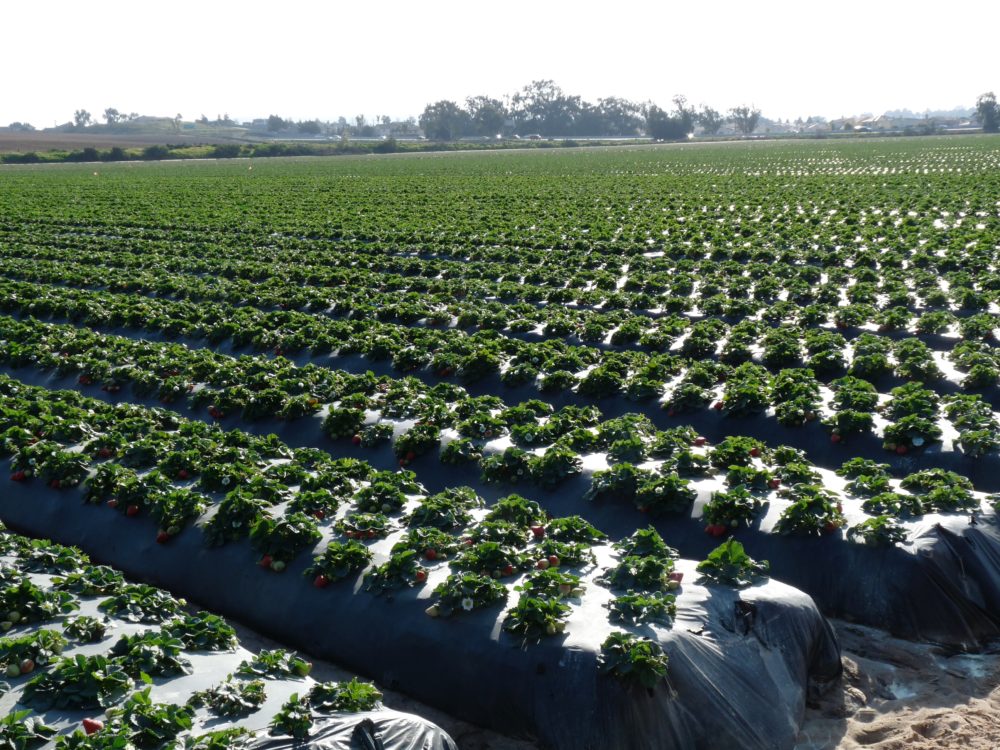
The strawberry fruit production industry, with the exception of plant nurseries, has reached the point where methyl bromide is no longer available under any circumstances, and new alternatives or strategies must be found to protect strawberries from serious diseases.

The University of California is focused on a holistic approach, which includes the tried-and-true method of integrated pest management in this post Methyl Bromide era.

“None of the alternative fumigants are as good as methyl bromide,” said Mark Bolda, UC Cooperative Extension Farm Advisor for Santa Cruz County, who is working closely with growers on alternative methods. “So one area that we could focus on is different strategies at the time of planting. For example, strawberries have different chill times. You must add cold conditioning to give the plant more vigor.”

Mark Bolda

There are many questions. Could the colors of the plastic mulch that growers are using manage the temperatures of the soil? How about the amount of fertilizer that is being used?

“We need to start integrating these variables into the way we grow strawberries with the lack of fumigants that are as effective as methyl bromide,” Bolda explained. “We need to integrate all these things and others in order to grow berries with the lack of available fumigants that are as effective as methyl bromide.”

“It’s a little disappointing that here we are at zero-hour and we do not have this worked out,” he continued. “The University of California Cooperative Extension have had a number of meetings in my office, as well as other places where we get many people in the same room to try to figure out what we know and what we don’t know.”

“There’s a lot of smart people in the industry, and I know we can get on this and find solutions,” he said.

2021-05-12T11:05:06-07:00January 8th, 2019|

CDPR: 96% of Produce has No Residue Or Far Below EPA Levels

CDPR Releases New Residue Results

News Release

Recently, the California Department of Pesticide Regulation (CDPR) released its 2017 Pesticide Residues in Fresh Produce report. During its 2017 survey, CDPR found 96 percent of all samples had no detectable pesticide residues or residues were below levels allowed by the Environmental Protection Agency (EPA).

The CDPR report complements the recently released United States Department of Agriculture’s (USDA) Pesticide Data Program results which found 99% percent of the foods sampled had no detectable residues or residues were well below EPA tolerances. The Federal Food and Drug Administration (FDA) also conducts pesticide residue sampling.  FDA results mirrored the USDA’s.

The FDA, USDA and CDPR reports all concluded that these residue results should provide consumers with confidence about the safety of eating fruits and vegetables.

All three government reports garnered very little attention. However, this is reassuring food safety information that consumers should know. Instead, they often receive inaccurate assertions about residues carried by activist groups promoting one production method over another.

The Alliance for Food and Farming supports consumer choice by providing science-based facts to help them make the right shopping decisions for themselves and their families. Whether they choose organic or conventional produce, consumers should know that when it comes to residues, both production methods yield safe produce that can be eaten with confidence.


2021-05-12T11:05:06-07:00January 7th, 2019|

Curly Top Virus Light In 2018

CDFA Surveys Predict Curly Top Vectored by Leafhoppers

By Patrick Cavanaugh, Editor

Curly top virus is a common disease in California. In its worst years, entire fields have been lost to curly top in the foothills of the Central Valley, and it can infect a variety of plants from a total of 44 plant families as well as 300 individual species.

Curly top commonly affects tomatoes, peppers, beets, spinach, potatoes, and beans, as well as a variety of weeds. A common characteristic of curly top is stunting of the plant as well as curling and twisting of the leaves, where it gets its name, curly top. Leafhoppers are the main vector of the virus.

Currently, the CDFA conducts a yearly curly top prediction where they monitor numbers and the leafhopper population as well as the prevalence of the virus to give a scope of what the upcoming year might look like.

“Curly top virus was very low in 2018 as predicted—based on the amount of virus carried by the leafhoppers and the leafhopper population,” said Bob Gilbertson, Plant Pathologist, Department of Plant Pathology at UC Davis.

“We hope that CDFA will continue to carry out the leafhopper screening for the virus and for the population so growers get a prediction of what the curly top incidents will be the coming year,” Gilbertson said. “It’s good that we can tell growers when there’s going to be a bad curly top year so they can implement additional strategies.”

These strategies include changing where they’re going to plant a field or using timed insecticides, particularly systemic insecticides like the new Verimark (From FMC) insecticide to manage curly top.

“We’ve already found that that material can slow down the spread of curly top in a field,” Gilbertson explained. “So in a year where it’s predicted to be bad—high populations of leafhoppers carrying high amounts of the virus—then you as a grower would then want to consider using some of these insecticide approaches.”

2021-05-12T11:01:51-07:00January 4th, 2019|
Go to Top