Associations, Organizations, Educational and Research Institutions

Fresno State Student Studies Palmer Amaranth

Sami Budhathoki Finds Palmer Amaranth Can Adapt to Saline Soils

By Jessica Theisman, Associate Editor

Palmer Amaranth

Sami Budhathoki is in the last semester of her undergrad degree at Fresno State. She spoke with California Ag Today recently about her research on how the Palmer Amaranth can adapt to saline soils in the San Joaquin Valley. Palmer amaranth as among the most troublesome weeds in agriculture because it is a very prolific seed producer and very tough to control due to widespread glyphosate escapes. It is found throughout California.

Her major advisor is Anil Shrestha, a professor in weed science at Fresno State. Budhathoki presented her research at a recent California Weed Science Society Meeting in Sacramento.

“I treated soils with five different salt levels, and I found out that the weed likes that higher salt levels, and they did fine, and they all germinated,” Budhathoki said.

Based on the pictures on Budhathoki’s poster, the Amaranth grew better in soils with higher salinities.

“That gives us the hint that Fresno is more resistant for the Palmer Amaranth plants because the west side has a lot of salt in its soil,” she said.

That is why it is hard to control in those areas, especially because they propagate so easily.

Budhathoki gave California Ag Today more insight on her research.

“Before treating the soil with salt, the plants were all the same height and same size. After the treatment, you can see the differences in how each plant reacted to the salt,” she said.

We asked Budhathoki what it was like working with such a troublesome weed in the ag industry.

“It was my first time working with Palmer Amaranth; it was a good experience,” she said.

Budhathoki says that she thinks there will be more research on this weed in the future so that farmers can find out how to better control it.

2021-05-12T11:05:05-07:00February 25th, 2019|

Unified Wine Symposium Showcased Trends

Wine Industry Gathered in Sacramento 

By Muriel Bañares Miller, Brown·Miller Communications

Every facet of the wine and grape industry, from science and technology to trends and markets, was examined and discussed at the 25th Unified Wine & Grape Symposium (Unified), which wrapped up Jan.  31

The largest wine and grape trade show of its kind in the Western Hemisphere, the Unified drew thousands of industry professionals from all over the world eager to hear about the impact of regulatory changes, trends, technology, research, and issues shaping their business decisions.

At Unified, the wine industry exhibits their products and services.

Presented by two nonprofit organizations, the American Society for Enology and Viticulture (ASEV) and the California Association of Winegrape Growers (CAWG), the Unified’s comprehensive format responds to the wine and grape industry’s critical need for information, discussion and connections.

“If you want to understand what’s happening in the industry and how to stay competitive, the Unified is the place to be,” said John Aguirre, CAWG president. “The Unified draws nearly 14,000 from all over the globe, including exhibitors from nearly 30 countries. For 25 years, the Unified is where industry leaders and professionals meet to discuss the latest news and share strategies for staying abreast of changing markets, technologies and regulations.”

Put on by the industry for the industry, the three-day conference draws on some of the most respected industry experts. The three days of sessions included 26 presentations and panel discussions organized by a diverse panel of volunteers who recruited nearly 100 experts to speak on topics ranging from digitalization in the vineyards to how cannabis is affecting the wine industry. Complementing those talks was a two-day, 170,000-square-foot trade show that housed nearly 700 exhibitors.

In 2020, the Unified will be at Cal Expo, a temporary host site, due to the Sacramento Convention Center’s large-scale renovation that will close it down starting this summer. With the Unified set for February 4-6, Cal Expo will provide an alternative to the Convention Center with ample space, parking and facilities for a conference of Unified’s size.

“Cal Expo, as a premier regional event facility, is excited to host the Unified Wine and Grape Symposium in 2020,” says Rick Pickering, CEO and General Manager of California Exposition and State Fair.  “We look forward to working with Unified and the City of Sacramento to make the transition extremely smooth and the 2020 show a huge success.”

The organizers of the Unified share that optimism.

“We are confident that, while the 2020 show will have a slightly different feel, the quality of exhibits, presentations and networking opportunities will again deliver an invaluable service to all of our guests and the industry,” says ASEV Executive Director Dan Howard. “We’re excited to return to the newly renovated Sacramento Convention Center in 2021. It will offer opportunities for expansion, including additional nearby hotels.”

2019-02-22T16:52:43-08:00February 22nd, 2019|

Cover Crops in Almonds Can Displace Annual Winter Weeds

Steve Haring Working With UC Davis on Cover Crops

By Mikenzi Meyers, Associate Editor

Depending on your location, cover crops can have a big impact on your fields. Steve Haring, second-year Ph.D. student in the Department of Plant Sciences at UC Davis, has been collecting research on how different climates influence the effectiveness of cover crops.

Almond Cover Crop Displacing Weeds

“As we try to design cover crops, there are a lot of different paths we can take, and it’s important to test these different things out and see what is best for the specific things we can use cover crops for in the Central Valley,” Haring said.

He further mentioned that for optimum weed control in the Valley, growers should plant in the early winter months in order to prevent annual winter weeds.

Haring worked with the UC Davis Cooperative Extension on three different sites across both the Central Valley and northern Sacramento Valley collecting data on growth rates for cover crops. He found that because the northern valley had more direct sunlight hit the ground, cover crops thrived, and as a result, weeds were minimized.

The research will not stop there, though, Haring ensured. “The study I’m working on is funded by the Almond Board, and it’s continuing for a second year and maybe a third, so we’re trying to repeat it and validate and then also sort and synthesize information because there are people working on weeds but also working on water, insect pests, pollinator health, nematodes, and call sorts of ecosystem services,” he concluded.

2021-05-12T11:05:06-07:00February 20th, 2019|

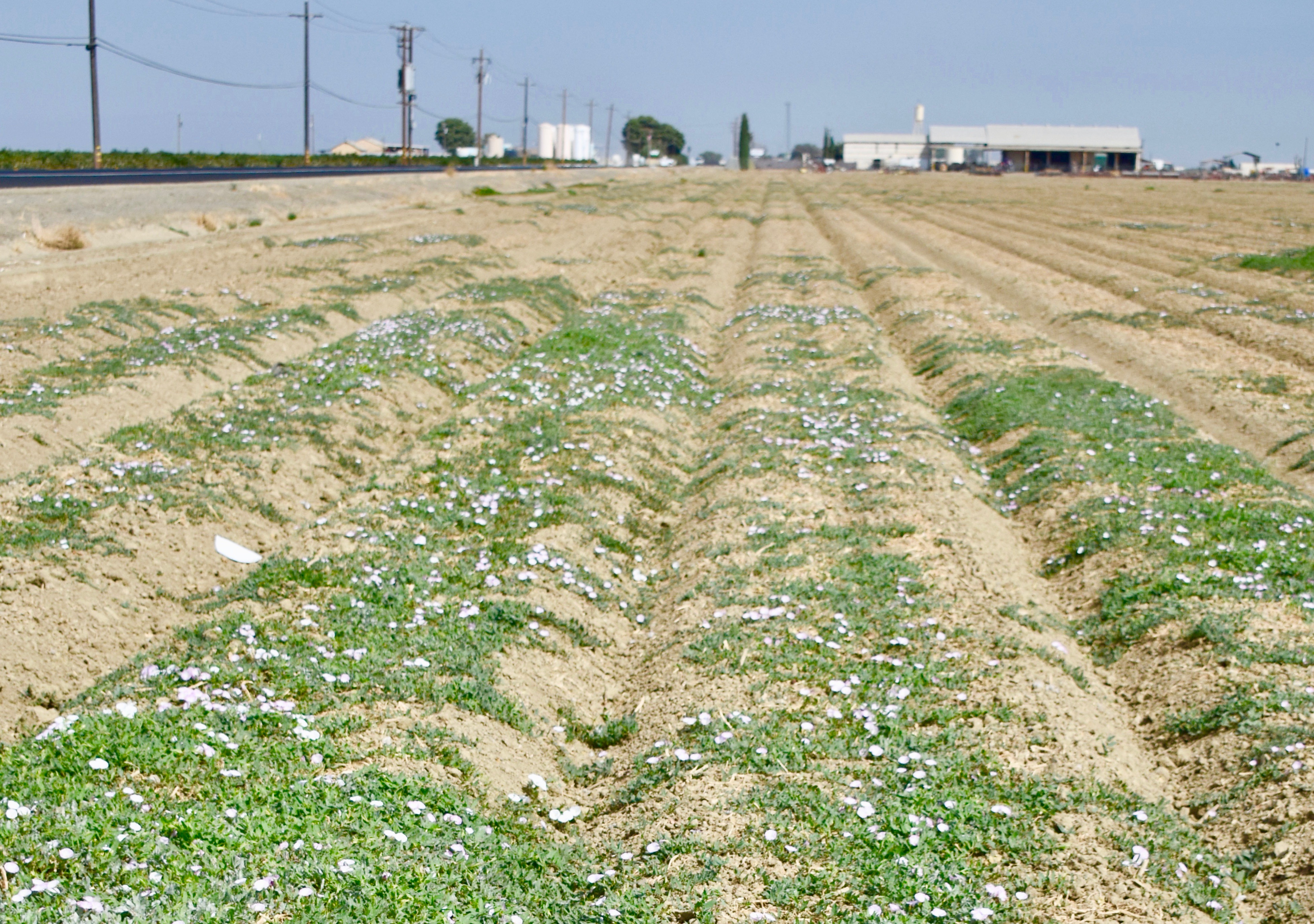
Helpful Tips for Fighting Bindweed

Multiple Herbicides Can Help with Management

By Mikenzi Meyers, Associate Editor

Field bindweed is continuing to inconvenience farmers and ranchers. However, Scott Stoddard of the UCANR Cooperative Extension in Merced County has some tips on how to control it.

Scott Stoddard

Stoddard explained that the solution isn’t as simple as applying one herbicide, but using a combination might provide some results.

“You have to combine the Roundup with something like a Treflan, and then combine that maybe with some applications of herbicides,” he said.

Stoddard further added that although more successful than applying Roundup alone, even stacking the herbicides will only provide marginal to good control.

The best approach to getting rid of this stubborn weed? Stoddard recommends rotating your field with Roundup Ready varieties so that the herbicide can be more effective on non-Roundup Ready crops.

“For example, a Roundup Ready cotton or corn will clean up a field for the following year for things like tomatoes or melons. In that particular case, Roundup can be very useful,” he said. “Otherwise get it in when you can. If you can apply it before you transplant, or if the bindweed does come out before your transplant that’s when Roundup should be used.”

2021-05-12T11:01:50-07:00February 14th, 2019|

ACP Control Protocols At World Ag Expo Feb. 13

World Ag Expo Seminar: Asian Citrus Psyllid and Huanglongbing – Regulatory Compliance Update and Treatment Protocol

News Release

If you’re attending the World Ag Expo, the Citrus Pest & Disease Prevention Program encourages you to attend a seminar on Feb. 13 to learn about regulatory protocols relating to Asian citrus psyllid and Huanglongbing quarantines, the proper mitigation requirements for transportation of bulk citrus, and recommended treatment options for ACP in commercial citrus groves and residential citrus trees from industry experts.

During the seminar, Keith Okasaki of the California Department of Food and Agriculture will discuss the regulatory protocols for moving bulk citrus fruit in the state of California. Dr. Beth Grafton-Cardwell will discuss the University of California’s recommended treatment options for suppressing and controlling the Asian citrus psyllid in commercial citrus groves and residential citrus trees.

This seminar is free to attend with a World Ag Expo attendee ticket or exhibitor pass.

Asian Citrus Psyllid and Huanglongbing – Regulatory Compliance Update and Treatment Protocols Seminar

Wednesday, Feb. 13

Noon – 1 p.m.

Location

Seminar Trailer 1 in the Seminar Center

The Seminar Center is near South Gate 15, at the corner of U Street and Expo Lane.

2021-05-12T11:01:50-07:00February 12th, 2019|

Pests and Diseases Cause Worldwide Damage to Crops

Pests and Pathogens Place Global Burden on Major Food Crops

By Pam Kan-Rice, UC Agriculture & Natural Resources

Scientists survey crop health experts in 67 countries and find large crop losses caused by pests and diseases

Farmers know they lose crops to pests and plant diseases, but scientists have found that on a global scale, pathogens and pests are reducing crop yields for five major food crops by 10 percent to 40 percent, according to a report by a UC Agriculture and Natural Resources scientist and other members of the International Society for Plant Pathology. Wheat, rice, maize, soybean, and potato yields are reduced by pathogens and animal pests, including insects, scientists found in a global survey of crop health experts.

At a global scale, pathogens and pests are causing wheat losses of 10 percent to 28 percent, rice losses of 25 percent to 41 percent, maize losses of 20 percent to 41 percent, potato losses of 8 percent to 21 percent, and soybean losses of 11 percent to 32 percent, according to the study, published in the journal Nature, Ecology & Evolution.

Viruses and viroids, bacteria, fungi and oomycetes, nematodes, arthropods, molluscs, vertebrates, and parasitic plants are among the factors working against farmers.

Food loss

“We are losing a significant amount of food on a global scale to pests and diseases at a time when we must increase food production to feed a growing population,” said co-author Neil McRoberts, co-leader of UC ANR’s Sustainable Food Systems Strategic Initiative and Agricultural Experiment Station researcher and professor in the Department of Plant Pathology at UC Davis.

While plant diseases and pests are widely considered an important cause of crop losses, and sometimes a threat to the food supply, precise figures on these crop losses are difficult to produce.

“One reason is because pathogens and pests have co-evolved with crops over millennia in the human-made agricultural systems,” write the authors on the study’s website, globalcrophealth.org.  “As a result, their effects in agriculture are very hard to disentangle from the complex web of interactions within cropping systems. Also, the sheer number and diversity of plant diseases and pests makes quantification of losses on an individual pathogen or pest basis, for each of the many cultivated crops, a daunting task.”

“We conducted a global survey of crop protection experts on the impacts of pests and plant diseases on the yields of five of the world’s most important carbohydrate staple crops and are reporting the results,” McRoberts said. “This is a major achievement and a real step forward in being able to accurately assess the impact of pests and plant diseases on crop production.”

The researchers surveyed several thousand crop health experts on five major food crops – wheat, rice, maize, soybean, and potato – in 67 countries.

“We chose these five crops since together they provide about 50 percent of the global human calorie intake,” the authors wrote on the website.

The 67 countries grow 84 percent of the global production of wheat, rice, maize, soybean and potato.

Top pests and diseases

The study identified 137 individual pathogens and pests that attack the crops, with very large variation in the amount of crop loss they caused.

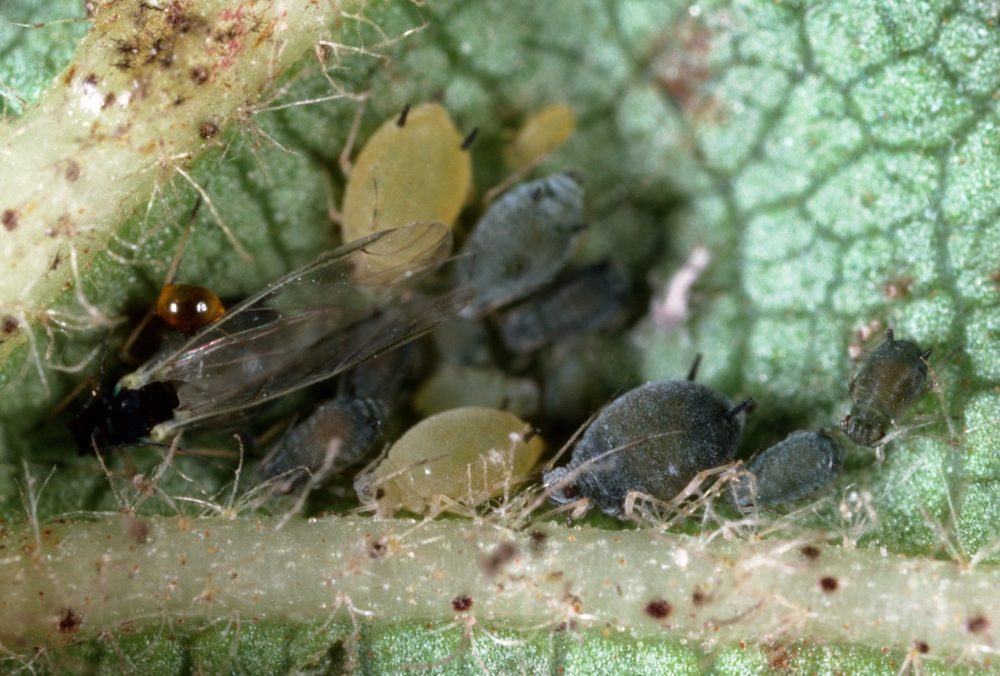
For wheat, leaf rust, Fusarium head blight/scab, tritici blotch, stripe rust, spot blotch, tan spot, aphids, and powdery mildew caused losses higher than 1 percent globally.

In rice, sheath blight, stem borers, blast, brown spot, bacterial blight, leaf folder, and brown plant hopper did the most damage.

In maize, Fusarium and Gibberella stalk rots, fall armyworm, northern leaf blight, Fusarium and Gibberella ear rots, anthracnose stalk rot and southern rust caused the most loss globally.

In potatoes, late blight, brown rot, early blight, and cyst nematode did the most harm.

In soybeans, cyst nematode, white mold, soybean rust, Cercospora leaf blight, brown spot, charcoal rot, and root knot nematodes caused global losses higher than 1 percent.

Food-security “hotspots”

The study estimates the losses to individual plant diseases and pests for these crops globally, as well as in several global food-security “hotspots.” These hotspots are critical sources in the global food system: Northwest Europe, the plains of the U.S. Midwest and Southern Canada, Southern Brazil and Argentina, the Indo-Gangetic Plains of South Asia, the plains of China, Southeast Asia, and sub-Saharan Africa.

“Our results highlight differences in impacts among crop pathogens and pests and among food security hotspots,” McRoberts said. “But we also show that the highest losses appear associated with food-deficit regions with fast-growing populations, and frequently with emerging or re-emerging pests and diseases.”

“For chronic pathogens and pests, we need to redouble our efforts to deliver more efficient and sustainable management tools, such as resistant varieties,” McRoberts said. “For emerging or re-emerging pathogens and pests, urgent action is needed to contain them and generate longer term solutions.”

The website globalcrophealth.org features maps showing how many people responded to the survey across different regions of the world.

In addition to McRoberts, the research team included lead author Serge Savary, chair of the ISPP Committee on Crop Loss; epidemiologists Paul Esker at Pennsylvania State University and Sarah Pethybridge at Cornell University; Laetitia Willocquet at the French National Institute for Agricultural Research in Toulouse, France; and Andy Nelson at the University of Twente in The Netherlands. 

UC Agriculture and Natural Resources researchers and educators draw on local expertise to conduct agricultural, environmental, economic, youth development and nutrition research that helps California thrive. Learn more at ucanr.edu.

2021-05-12T11:05:06-07:00February 11th, 2019|

Jeff Mitchell Will Show The Benefits of Soil Building Practices

Researcher Invites Public to Visit San Joaquin Valley Soil Health Demonstration site in Five Points

News Release

UC Cooperative Extension cropping systems specialist Jeff Mitchell is issuing a standing invitation to the public to visit the site of an ongoing conservation agriculture research project and see for themselves the results of long-term soil building practices.  

“Every Friday morning from 9 o’clock till noon, beginning in February and going through June, I invite folks to come to the project site to see up close and personal just what soil health means,” Mitchell said.

The research site is at the University of California’s West Side Research and Extension Center, 17353 W. Oakland Ave., in Five Points.

“I promise to be out there every Friday morning from Feb. 15 through June 26,” Mitchell said.

The project, funded by the Natural Resources Institute, compares plots that have been managed for more than 20 years in an annual rotation of cotton, processing tomatoes and, more recently, sorghum, garbanzo beans and melons under four different treatments: no-tilled plus cover crops, no-tilled with no cover crops, conventionally tilled with cover crops and conventionally tilled without cover crops.

“What we’ve got at this site is a very long-term example of exactly what implementation of a small set of soil care, or soil health, principles really means for soil function and management,” Mitchell explained.

Mitchell said that the study site in Five Points is a valuable resource for the people of California because of its dedicated adherence to principles that are widely touted to improve production efficiencies, reduce dust emissions, sequester carbon and reduce inputs over time.

“I recently heard about the value of publicly showcasing long-term sites such as the one we’ve got in Five Points. It’s being done in several other places, including the Dakotas and in Europe,” Mitchell said. “It just seems to make sense to open up our field more widely to folks who might be interested in seeing the remarkable changes we’ve seen and monitored for a long time.”

According to Mitchell, the NRI Project field is already “the most visited research field in the state,” but with this new invitation, he is hoping to have still broader impact.

“We’ve got a simply amazing resource here and I want folks to see it,” he said.

The study has been selected as one of the monitoring sites of the North American Project to Evaluate Soil Health Measurements that have been initiated by the Soil Health Institute of Morrisville, N.C. More than 20 peer-reviewed scientific articles have been published based on work done in this study field.

2021-05-12T11:05:06-07:00February 7th, 2019|

More Effort in Bee Protection

The Current Bee Buzz with CAPCA CEO Ruthann Anderson

By Mikenzi Meyers, Associate Editor

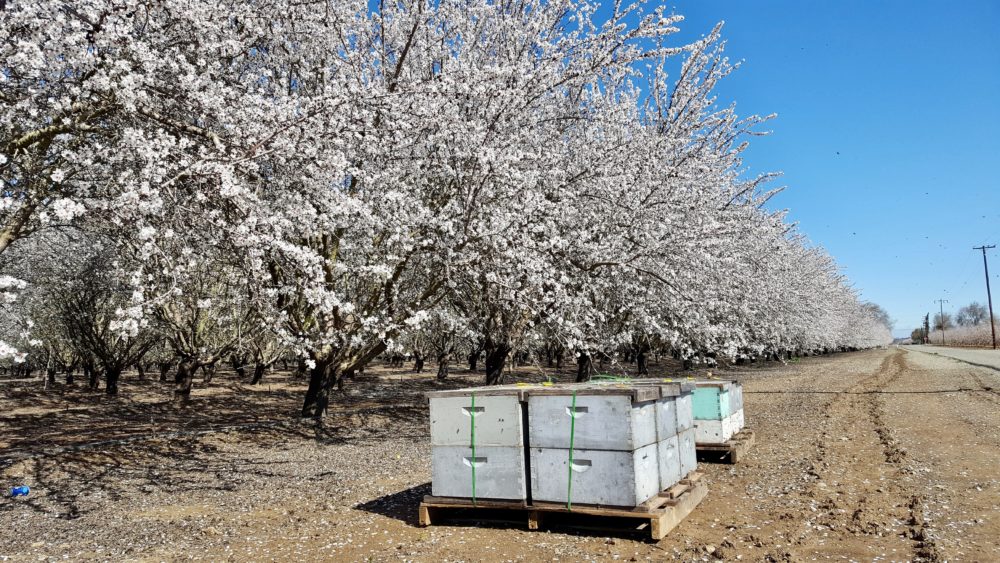
With spring right around the corner, it is crucial that farmers and beekeepers are working together to ensure bee protection. Ruthann Anderson, CEO for the California Association of Pest Control Advisers (CAPCA) is adamant about the communication between the two.

Anderson has been in correspondence with Ag Commissioners to create a reliable system in response to the AB-2468 law signed last year.

“The registry will come through a few different portals, but it will all go into CalAg Permits, into their sensitive site layer,” Anderson said.

She further explained that through this layer, the applicator can access beekeepers within a mile and request information.

CAPCA CONFERENCE 2016 audience

Ruthann Anderson, CAPCA CEO

“That communication in the field is so important for us, especially during almond bloom, but even beyond that, it is just education of beekeepers. Helping them understand what the rules and regulations are and how they are set up to provide them the privacy they are requesting,” Anderson said.

2019-02-06T16:42:52-08:00February 6th, 2019|

Almond Board of California Election Under Way

Almond Industry Is Urged to Vote for Grower Positions on Almond Board of California

News Release

Voting began Jan. 31 to select two independent grower member and alternate positions and one independent handler member and alternate position on the Almond Board of California (ABC) Board of Directors. These positions will serve terms beginning on March 1.

Candidates for the independent grower position are:


Position One, Member (One-year term):

Brad Klump, Escalon (petitioner)


Position One, Alternate:

Mike Mason, Wasco (petitioner)

Position Two, Member (Three-year term):

Brian Wahlbrink, Waterford (incumbent)

Dave DeFrank, Fresno (petitioner)


Position Two, Alternate:

Bill Harp, Bakersfield (incumbent)

Candidates for the independent handler positions are:


Position Three, Member (One-year term):

Micah Zeff, Modesto (incumbent)

Position Three, Alternate:

Jonathan Hoff, Denair (petitioner)

Ballots and instructions have been mailed to all independent growers whose names are on file with ABC. The Almond Board must receive ballots by Feb. 16, for them to be counted. If any independent grower or handler does not receive a ballot, one may be obtained by contacting Bunnie Ibrahim, senior analyst, Government Affairs, ABC, at (209) 343-3228.

As a governing body for the industry, the ABC Board of Directors is composed of five handler and five grower representatives who set policy and recommend budgets in several major areas, including production research, public relations and advertising, nutrition research, statistical reporting, quality control, and food safety.

2019-02-05T16:31:52-08:00February 5th, 2019|

OSHA 300A Log Posting Due Feb. 1

OSHA Log Summary Must Be Posted in Common Areas

News Release from Western Growers Association

OSHA’s Form 300A logs with work-related injuries and illnesses occurring in the prior calendar year must be posted. All eligible employers are required to maintain and post an annual OSHA 300A summary sheet from February 1 to April 30.

February 1 marks the deadline for you to tabulate your annual OSHA Log Summary (OSHA Form 300A) and post it in a common area wherever notices to employees are usually posted. The summary must list the total number of job-related injuries and illnesses that occurred during the previous calendar year and were logged on the OSHA 300 Form. The summary should remain posted until April 30. Instructions on how to complete both the log and annual summaries of work-related injuries and illnesses can be downloaded for free from Cal/OSHA’s Record Keeping Overview. The definitions and requirements for recordable work-related fatalities, injuries and illnesses are outlined in the California Code of Regulations, Title 8, sections 14300 through 14300.48. Employers are required to complete and post Form 300A even if no workplace injuries occurred.

Employers with 10 or less employees or who work in low-hazard industries are not required to post their summary. Additional details regarding eligibility for the exemption can be found on the OSHA Injury Tracking Application webpage.

Electronic Reporting Requirement

Additionally, many employers are required to also submit their OSHA 300A information electronically. The classes of business who must comply with the electronic reporting process include:

  1. Any business with at least 250 employees.
  2. Any business with 20 to 249 employees who falls into one of several classifications including agriculture. (A complete list of the affected classifications can be found here.)

Affected employers are advised to submit their 2018 OSHA 300A data through the Fed-OSHA portal by the March 2 deadline. Updates regarding the 300A reporting requirements can be found here.

For instructions regarding the electronic filing process, please see federal OSHA’s ITA website.

2019-02-01T16:55:33-08:00February 1st, 2019|
Go to Top