About California Ag Today

This author has not yet filled in any details.
So far California Ag Today has created 2014 blog entries.

Low Priced Imports Hurt CA Growers

CCM Commends Actions Regarding Seasonal and Perishable Products


California Citrus Mutual commends the Office of the U.S. Trade Representative (USTR), U.S. Department of Agriculture (USDA), and U.S. Department of Commerce (DOC) for the actions they recently announced to address the injury caused by increased imports of seasonal and perishable products.

Low-priced imports have previously caused a substantial market disruption for the California citrus industry during its marketing season. We are encouraged by both the Administration’s plan and its determination to bring relief to fruit and vegetable growers who are suffering from similar import issues.
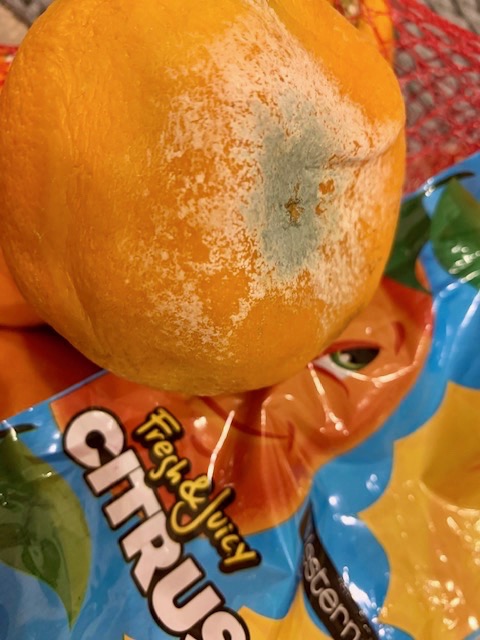
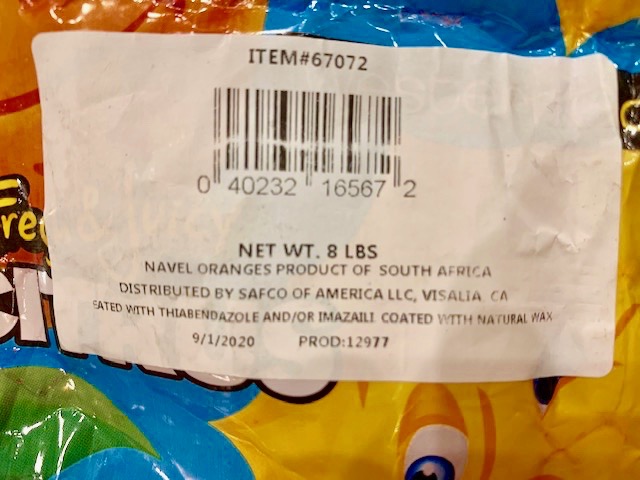
Imported Citrus Often Lacks Quality

The trade remedy steps announced include the self-initiation of Section 201 global safeguard action on certain imports, USTR’s coordination with specific sectors to monitor and investigate imports under the Section 201 provisions covering perishable agricultural products and citrus products, DOC’s coordination with effected sectors on possible self-initiated antidumping and countervailing duty actions, and the Administration’s indication that still other actions and investigations may be taken. These steps are essential safeguarding and supporting all U.S. fruit and vegetable growers harmed by this problem.

In 2017, low-priced citrus imports from the Southern Hemisphere increased 40% over the prior year’s shipments, causing significant price declines and harm to California growers. Consistent with last week’s announcement, California Citrus Mutual will closely monitor imports in the coming California season and continue to coordinate with the U.S. Government regarding any import surges, unfair import practices, and injury to our citrus growers.

2020-09-10T18:06:02-07:00September 10th, 2020|

Jeanette Lombardo Heads up Farmer Veteran Coalition

Farmer Veteran Coalition Appoints New Leadership

By Tim Hammerich, with the Ag Information Network

After starting the Farmer Veteran Coalition in 2008 and growing it to over 20,000 members nationwide, Michael O’Gorman is transitioning the organization over to newly appointed Executive Director Jeanette Lombardo.

“It really just blended everything I am, and it was perfect timing for me. And I have this great vision of moving the organization and increasing our national expansion,” said Lombardo

Lombardo brings both a family background in the military and years of working in the ag industry to the Farmer Veteran Coalition.

“What the  Farm Veteran Coalition does is we mobilize veterans to feed America. So we take that trans who are leaving whatever branch of service they’re in, and we introduce them to careers in agriculture,” Lombardo said.  “And we help them with the training, apprenticeships and placement and all aspects of it. Additionally about 54% of our membership, which is about 24,000 people altogether, have one form of disability or another. So they range anywhere, from an issue with vision to complete amputation and everywhere in between,” she noted.

Lombardo said they are rolling out a new program in addition to their perennial efforts for remote jobs in agriculture. Learn more at FarmVetCo.org.

2020-09-10T11:09:47-07:00September 10th, 2020|

Leafy Greens Safety Increased

Ten Things That Will Make Leafy Greens Safer This Fall

In a year of unparalleled tragedies stemming from the pandemic to California wildfires, lettuce farmers in California and Arizona are taking action to prevent foodborne illness outbreaks.

Scott Horsfall, CEO LGMA

“As we approach the Fall transition when patterns have emerged in recent years, everyone is taking additional precautions to prevent potential problems,” said Scott Horsfall, CEO of the California Leafy Greens Marketing Agreement (LGMA), a stringent food safety program that verifies science-based food safety practices are being followed on leafy greens farms.

“This year has been challenging enough for everyone including consumers, farmers and farmworkers,” said Dan Sutton, a grower of leafy greens in San Luis Obispo, California and chairman of the LGMA food safety program. “As farmers, we’re doing everything possible to make sure our crops are farmed safely and we’re working together with government, food safety experts and the produce industry to keep people safe. ”

The LGMA announced today several activities implemented since an outbreak of E. coli associated with romaine lettuce occurred last November.

“The LGMA has issued an action list of ten things being done to keep leafy greens safe. These activities are designed to improve leafy greens safety now and into the future,” said Horsfall, who noted that the LGMA is the most stringent food safety program in the produce industry. “In many areas, the LGMA program goes well beyond what’s required of other produce crops under federal laws.

“For example, the LGMA is the only program that requires its farmers to perform mandatory water testing and have traceback systems in place to track product back to the farm and forward to the first customer who receives it,” he said. “On top of that, we’ve strengthened our existing standards even further in the aftermath of recent outbreaks.”

Horsfall explained the ten items on its action list include things like:

  • A heavying-up of government audits conducted on leafy greens farms over the next three months;
  • Stringent enforcement of sweeping new water standards for all LGMA member companies;
  • An ongoing pilot program to improve the supply chain’s ability to assist government investigators in tracing lettuce from consumers back to the farm where it was grown;
  • Enhanced testing of farming inputs like compost to monitor for pathogens.

“More improvements are coming in the near future,” added Horsfall. “Most importantly, we are looking closely at the LGMA’s required food safety practices for the proximity of animals to leafy greens farms in light of findings from FDA investigations into past outbreaks. We have already increased buffer zones required between animal operations and our farms. Additional changes are being considered now.”

“All of this is being done to ensure consumers are protected,” emphasized Sutton. “Now more than ever, it’s our responsibility to prevent leafy greens products from becoming the source of foodborne illness. We owe this to the millions of families, including our own, who eat the healthy foods we grow.”

A list of all ten action items is below.

Note: The LGMA held a webinar September 1 to provide additional detail and presentations from industry and government representatives including; Scott Horsfall, CEO California LGMA; Dan Sutton, Chairman California LGMA; Teressa Lopez, Arizona LGMA Administrator; Greg Komar, California LGMA Technical Director; Sonia Salas, Western Growers Assistant Vice President Food Safety, Science & Technology; Natalie Krout-Greenberg, California Department of Food and Agriculture Inspection Services Director; and Jennifer McEntire, United Fresh Fruit and Vegetable Association Senior Vice President Food Safety & Technology.


ACTION LIST:
TEN THINGS BEING DONE TO MAKE LEAFY GREENS SAFER

  1. LGMA food safety audits are ongoing during COVID-19.

Mandatory on-farm audits of all LGMA members by government officials have continued during the pandemic. Members have a remote option for document review and verification.


  1. The California LGMA is “heavying up” audits during the season transition.

The California Department of Food and Agriculture is bringing in additional personnel to ensure that every LGMA member is audited at least once between now and November.


  1. LGMA requires 100% compliance.

As always, the LGMA requires its members to be in compliance with all 300+ food safety checkpoints that make up every on-farm audit conducted through the LGMA program.


  1. 2019 irrigation water standards are being implemented and enforced.

LGMA members are following new, more stringent standards approved in 2019 and these are being verified by government auditors. Farms must now comply with 92 different food safety checkpoints that deal exclusively with ensuring the safety of water used to grow leafy greens.


  1. New food safety updates approved by LGMA Board in August 2020.

The LGMA recently approved several more changes to its required food safety practices in the areas of farm water use and field/equipment sanitation. These will become part of audits in the near future. Education and training on how to comply with these new requirements is underway now. Additional updates to other areas of the LGMA ‘s required food safety practices will be announced soon.


  1. State agencies are monitoring compost used on leafy greens farms.

The California Department of Food and Agriculture and sister state agencies are      conducting a surveillance project to monitor compost used to grow leafy greens.


  1. Government inspectors are working to ensure leafy greens farms are in compliance with the Produce Safety Rule.

Leafy greens farms in California and Arizona are being visited by additional state government inspectors acting in conjunction with FDA to ensure they are following all regulations under the Produce Safety Rule.


  1. New research projects are underway to learn more about potential risks involved in farming leafy greens.

It’s clear that we need to know more. Several new projects are being conducted by government, industry and academia with the goal of better informing the required food safety practices implemented under the LGMA.


  1. The LGMA verifies with every audit that a traceability system is in place at all member companies.

A recent survey of LGMA members shows 100% of LGMA members companies are tracking information that could assist government outbreak investigations.


  1. The LGMA supports a Leafy Greens Traceability Pilot to improve traceback through the supply chain.

A coalition of food industry groups that includes the United Fresh Produce Association and the Produce Marketing Association is conducting a project aimed at improving the speed and efficiency of tracing product during an outbreak investigation.


2020-09-09T09:13:32-07:00September 9th, 2020|

Ron Fisher, A Veteran in the California Almond Industry

Starting a Major Almond Industry Processing Company

By Patrick Cavanaugh with the Ag Infomation Network

Ron Fisher is the founder and CEO and president of Fisher Nut Company based in the Modesto area. He’s been a veteran of the California almond industry since 1980. Here’s his story.

“I started in 1980, working for a company and agriculture was having a tough time all through the eighties. And I saw an opportunity for an independent packer to come into the business that would offer faster cash flow and competitive prices because in the late eighties, the growers were really hurting with high-interest rates,” explained Fisher

Commodity prices were low as well.

“I launched out on my own and opened up an almond processing company that accommodated what the growers needed. And we were able to utilize some of the faster-paying markets to get some cash-flow to the growers that were hurting, to get them through that tough period,” noted Fisher

“And so at that time, we started growing through the benefit of all that. And we were able to offer the growers a slightly different service than was available at that time,” he noted.

“I believe, at the time, there were about 35 handlers in the business. And from there, we were able to grow from our success of accommodating that. And as the industry changed and morphed into a better economic situation where prices were going up and people were planting, more almonds, where water and labor were available. The almond industry within the Central Valley boomed and with that, our company did as well,” he said.


2020-09-09T09:12:31-07:00September 9th, 2020|

Automation in Agribusiness

Tyson Foods Makes Bet Increased Automation

By Tim Hammerich, with the Ag Information Network

It’s no secret that labor is a massive challenge in agriculture, from the vegetable farms of the Salinas Valley all the way up to the country’s largest meat processing companies. Automation is coming to agriculture, but it takes more than just a product to change the way a company approaches this technology.

Tyson Foods recently made the bold move of hiring Dean Banks as their new CEO. His background? Not meat. Automation.

Janette Barnard is a Consultant for animal agriculture companies and writes Prime Future, a weekly newsletter about the industry.

“It’s a huge bet that Tyson has made. But if you look at the last year that they’ve had, where their biggest challenge during COVID has been keeping plans running as a function of labor, right? Whether labor was sick or scared to come in, whatever that situation was for employees, the root issue was that Tyson could not run their plants without people. And so combine that with the fact that, you know, if you look at the cost of goods of a pound of beef or a pound of pork, whatever it is, a huge percentage of it is associated with the labor of processing,”said Barnard.

Barnard said she couldn’t recall another move similar to this one from a major agribusiness in the past. It could be a sign of things to come, but it is a big risk.

“This could backfire in a number of ways. And so it’s interesting because it is very much a high risk, high reward strategy that they’ve taken,” said Barnard.

2020-09-08T10:35:37-07:00September 8th, 2020|

Sacramento Valley Crop Webinars Scheduled

UCCE Sutter-Yuba-Colusa Continuing Education Seminars:

Sept-Oct 2020

University of California Cooperative Extension Sutter-Yuba-Colusa will hold a series of webinars in September and October providing research updates on many of the major crops in the Sacramento Valley. The classes are relevant to growers throughout California and are primarily focused on pest management and pesticide safety.

October WalnutsThe September 9th webinar will feature Franz Niederholzer, Orchard Systems Advisor.

“We will be reviewing proven almond IPM practices with an eye to reducing input costs, where possible, while delivering effective pest control,” says Niederholzer. He has been working in almonds in the Sacramento Valley for almost 20 years.

Amber Vinchesi-Vahl, Vegetable Crops Advisor, will give her webinar on September 16th. She states, “I will be providing information on important pest issues in vegetables and the latest research updates on disease and weed management in processing tomatoes and cucumber beetles in melons.” Her research on tomatoes covers cultivator trials for within-row weed control and monitoring of soilborne fungal pathogens.

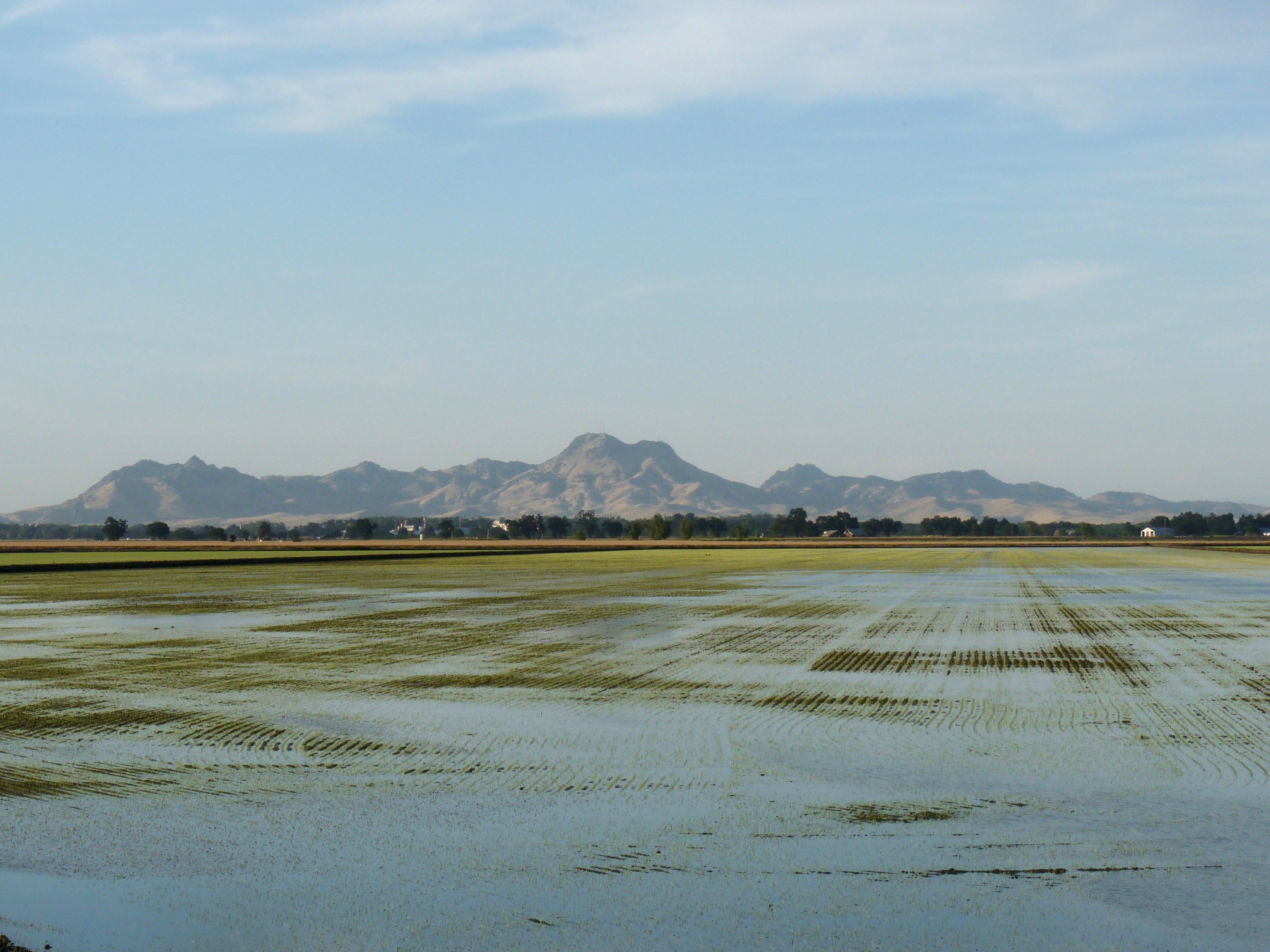
California-rice-field with Sutter Buttes in BackgroundWhitney Brim-DeForest, Rice and Wild Rice Advisor, will present September 30th. “The webinar will provide an opportunity for discussion and interaction about weed identification,” she says.

“We will also cover the latest research updates on specific weed species, resistance management, and new herbicides in rice.”

The information is relevant to both organic and conventional rice growers, so all are encouraged to attend.

The final webinar will take place on October 7, and will be given by Sarah Light, Agronomy Advisor.

“We will cover opportunities to decrease environmental risk through pesticide selection and application, accurate diagnosis, and reduction of loss to the environment,” said Light.

Enrollment is limited, so register early. The cost is $20 for 1, $35 for 2, $50 for 3, and $60 for 4 webinars. For more details or to register, visit http://ucanr.edu/syc-uccevirtualwebinars.

DPR CE credits are approved (4 “other” hours total, 1 per class), and CCA credits have been approved for IPM credits (4 hours total, 1 per class).

If you have questions, contact Whitney Brim-DeForest [wbrimdeforest@ucanr.edu or call the UCCE Sutter-Yuba office at (530) 822-7515].


2020-09-07T19:35:54-07:00September 7th, 2020|

California Ag Irrigators Annouce Scholarships

California Agricultural Irrigation Association Names Scholarship Winners

In an effort to develop the next generation of leaders, the California Agricultural Irrigation Association (CAIA) member companies provide scholarships to students with a desire to pursue a career in the agricultural irrigation industry. The sponsors and winners this year were:

  • Irrigation Design and Construction LLC and RDO Water scholarships went to Brayan Garcia, a senior at Cal Poly, San Luis Obispo majoring in Agricultural Systems Management and minoring in Water Science.
  • Buckner Superior awarded the Gary Pendleton Scholarship to Alexa Sutter, a junior at Cal Poly, San Luis Obispo majoring in BioResource & Ag Engineering.
  • Agri-Valley Irrigation selected Jose Amezcua, a junior at Cal Poly, San Luis Obispo, as the recipient of their scholarship. Jose is majoring in BioResource & Ag Engineering.
  • Fresno Valves & Castings and Agri-Valley Irrigation awarded scholarships to Joshua Porter, a junior at Cal Poly, San Luis Obispo majoring in BioResource & Ag Engineering.
  • Western Ag & Turf chose Liliana Reyes Solorio, a senior at Fresno State University, as the recipient of their scholarship. Liliana is a senior majoring in Agricultural Education with an emphasis in Plant Science.

In 2017, CAIA began offering member companies the opportunity to sponsor scholarships to applicants within the California university and college systems—the average award being $1200 per academic year.

In addition to the financial support, scholarship recipients automatically receive student memberships in CAIA for the duration of their scholarship period. Other companies are encouraged to join these sponsoring companies in supporting our leaders of tomorrow by contacting Jane Townsend (jane@agamsi.com).


2020-09-07T09:20:24-07:00September 7th, 2020|

Stop 4 Bills Affecting Farm Employment Law

Stop Crippling Employment Policy Bills Before the Legislature Adjourns

The California Legislature is expected to consider four important bills in the last week of the 2020 legislative session that will make detrimental changes to California employment law and hinder California farm businesses’ ability to recover from the COVID-19 recession:
AB 685 (Eloise Reyes, D-San Mateo) imposes vague new reporting requirements to numerous government agencies for new COVID-19 infections that may or may not be work-related; may make an employer liable for a retaliatory employment action for sending a sick worker home; and requires employers to give employees medical advice on how to properly isolate at home.
SB 1383 (Hannah-Beth Jackson, D-Santa Barbara) is a massive expansion of family and medical leave requiring employers of as few as five employees to provide job-protected family and medical leaves of up to 12 weeks. SB 1383 also imposes a private right of action permitting small agricultural employers to be sued for unintentional, technical violations of the California Family Rights Act.
SB 1102 (Bill Monning, D-Monterey Bay) requires a misleading new notice for non-immigrant H-2a ag workers that mis-states state California law by claiming that all travel time in employer-provided transportation is compensable time, and that all occupants of employer-provided housing are protected by California landlord/tenant law. These mischaracterizations of California law in a newly-required notice will strengthen employee advocates’ legal position when they sue ag employers claiming that travel time is compensable or that ag employees are protected by landlord/tenant law.
Please contact your Senator TODAY and urge opposition to AB 685, and contact your Assembly TODAY and urge opposition to SB 1383, SB 1159 and SB 1102.
2020-09-05T15:09:22-07:00September 5th, 2020|

Big Updated To Food Safety Practices

California Leafy Greens Marketing Agreement Takes Action to  Update Food Safety Practices

The California Leafy Greens Marketing Agreement Board voted last week to accept several updates to required food safety practices for the farming of leafy greens.

“Over 50 recommended changes were unanimously approved by the Board to strengthen food safety requirements for the production of leafy greens in the areas of Farm Water Use and Field/Equipment Sanitation,” explained Scott Horsfall, CEO of the California Leafy Greens Marketing Agreement (LGMA). “These are in addition to several significant changes made by the LGMA less than a year ago.”

Scott Horsfall, CEO LGMA

Horsfall explained the most recent updates are the first of many more as the LGMA conducts a complete review of all its mandatory food safety practices, or metrics, in the wake of recent outbreaks linked to romaine lettuce.

“A series of Subcommittees has been reviewing the LGMA’s required food safety practices in all areas,” explained Horsfall. “The Subcommittees for Water Use and Field/Equipment Sanitation met numerous times in recent months to consider new research, examine findings from outbreak investigations, gather input from food safety experts and the public before making recommendations to the full LGMA Board last week. This process is being facilitated by Western Growers as part of an open, transparent process.”

“The LGMA is committed to strengthening required food safety practices throughout our processes,” said Dan Sutton, Chairman of the LGMA and a leafy greens farmer from San Luis Obispo, CA. “We are doing everything possible on our farms to prevent future foodborne illness outbreaks.”

Although many of the 50+ changes strengthen existing language or provide additional guidance and direction for leafy greens food safety, several substantive changes were approved by the LGMA Board last week. Some of the more important changes include:

  1. Adoption of new requirements that ensure the safety of water used during overhead application of pesticides and crop protection materials. This update is similar to changes approved by the LGMA last year requiring that any water from open sources – such as a canal or reservoir — applied via overhead application must be treated to eliminate pathogens during the previous 21 days before harvest.
  2. Approved enhancements to monitoring requirements for water used in farming leafy greens to ensure that regular water quality tests are conducted and that samples are collected throughout the irrigation systems used in leafy greens fields.
  3. Added language to minimize the risk of water applied via furrow irrigation from coming into contact with any edible portion of the leafy greens plant.
  4. Updated best practices for cleaning harvest equipment, containers, tools and bathroom facilities in and near leafy greens fields.
  5. New language designed to prevent the cut end of leafy greens product from coming into contact with the ground during harvest.

Similar changes were also adopted by the Arizona LGMA.

“California and Arizona produce approximately 90% of the leafy greens grown in the U.S.,” said Horsfall. “The LGMA programs ensure a unified set of food safety practices based on the last science are being followed on leafy greens farms in these two states.”

Horsfall explained that approved updates will now be forwarded to the California Department of Food and Agriculture to be incorporated into food safety checklists used by government auditors to verify new practices are being followed on leafy greens farms.

The LGMA program will immediately begin educating members on how to comply with the new standards.

“Additional updates are forthcoming in the areas of Soil Amendments/Inputs and Adjacent Land as the Subcommittees assigned to these topic areas are currently meeting to review existing practices. These Subcommittees will be making their recommendations to the LGMA Board in the near future,” said Horsfall. “We are very grateful to the industry members and scientists who are working diligently as part of the LGMA Subcommittee process to help improve the safety of leafy greens.”

2020-08-28T13:26:46-07:00August 28th, 2020|

Pistachios Now Included in CFAP Direct Grower Payments

Pistachios Eligible for Direct Payments Under Coronavirus Food Assistance


American Pistachio Growers (APG) today announced to its members that the United States Department of Agriculture (USDA) has now included pistachios in the Coronavirus Food Assistance Program (CFAP).

The official notice, which is expected to be published in the Federal Register on or about August 14, 2020, states that pistachios are among 20 additional agricultural crops in the U.S. that will receive direct payments under CFAP Category 1 due to commodities experiencing a 5 percent or greater price decline between January 15, 2020 and April 15, 2020 as a result of the COVID-19 pandemic.

In addition to making pistachios eligible for direct payments under Category 1, USDA has also increased the payment rate under CFAP Category 2, which is for sales losses for pistachios due to product that spoiled in the marketing channel, or due to the loss of the marketing channel. Increased payments under Category 2 apply to product that was actually shipped from the point of origin.

“As a grower, we know and feel the effects directly when prices decline. This program provides the support needed by farmers during this difficult time we are all currently experiencing,” said Brian Watte, Chair of APG’s Board of Directors. “

Pistachios were not initially included in the CFAP direct grower payment program, but through the concerted efforts of APG’s Washington, D.C. lobbying firm and numerous conference calls placed by APG representatives to officials within USDA to provide them with accurate sales data, pistachios are now included in the Category 1 list.

“We’re pleased that USDA took the effort to review all sales data on pistachios, particularly exports which have seen declines as a result of the Coronavirus pandemic experienced on a global basis,” said APG President Richard Matoian.

Pistachio growers can access the necessary forms at www.farmers.gov/CFAP. Matoian explained that growers will be working through their local Farm Service Agency office to submit the forms for direct payment.

Growers are advised to call (877) 508-8364 to begin the application process. For growers who applied for and were paid for CFAP prior to Category 1 eligibility being granted should not submit a new application, but rather should contact their FSA office to amend the application. Importantly, USDA has announced that the application deadline has been extended to September 11, 2020.


2020-08-27T10:36:58-07:00August 27th, 2020|
Go to Top