About California Ag Today

This author has not yet filled in any details.
So far California Ag Today has created 2014 blog entries.

California Fairs May Get Help Due to COVID Losses

Harder’s Bill to Support State and County Fairs Gains Momentum

Senator Doug Jones Introduces Senate Companion

Today, Senator Doug Jones (D-AL) introduced the Senate companion to Representative Josh Harder’s (CA-10) Protecting Fairs During Coronavirus Act. The bill would establish a $5 billion federal grant program to offset fair revenue losses during the Coronavirus Pandemic.

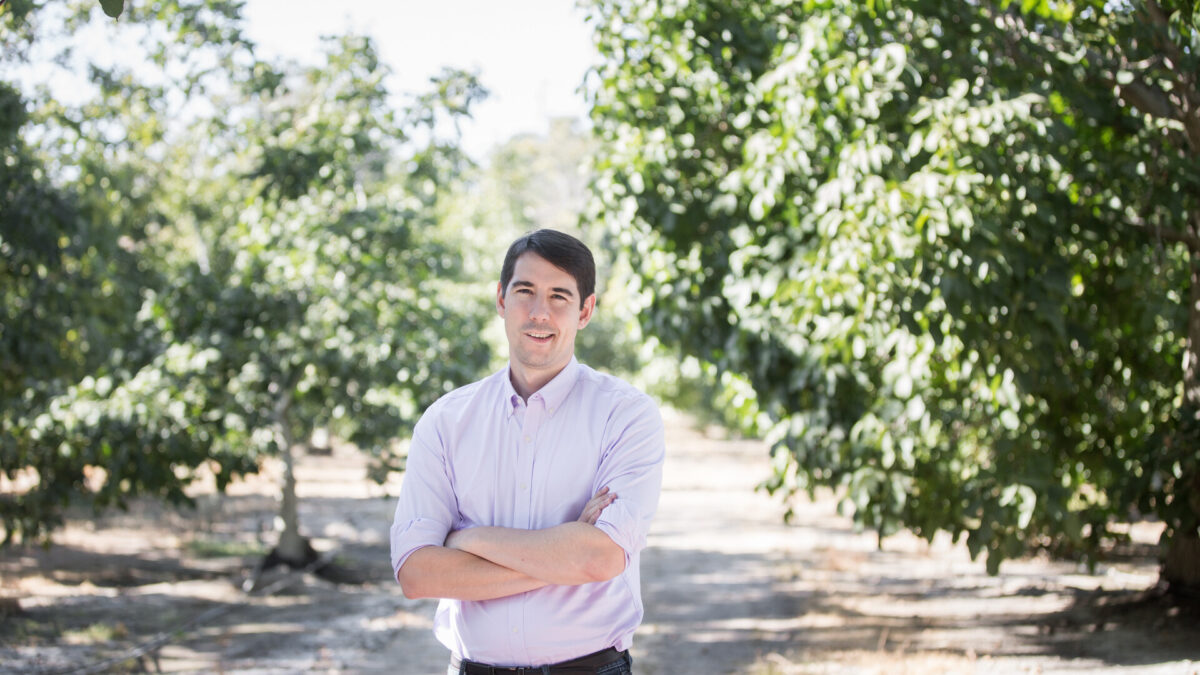
“I want to thank Senator Jones for joining me in the fight to protect our county and state fairs,” said Rep. Harder. “Working together, we will continue pushing to get our fairs the relief they need to weather this storm – we don’t want to lose a single acre of fairgrounds or see any fairs close permanently because of the pandemic.”

“State and county fairs are not just an important part of our social fabric, they’re also a key part of the agriculture business. The COVID-19 pandemic has caused many of these fairs to be cancelled, leaving farmers without an important market and the fairs at risk of permanent closure,” said Senator Jones. “That’s why I’m introducing the Protecting Fairs During Coronavirus Act in the U.S. Senate to support fairs with emergency funding that will allow them to continue to serve our communities for years to come. I am proud to partner with Congressman Harder on this important legislation and appreciate his leadership in this space.”

The Protecting Fairs During Coronavirus Act’s grant program would be available for both 2020 as well as 2021. States could apply for aid from the United States Department of Agriculture (USDA) and then distribute the funds to fairs in their state. Rep. Harder originally introduced the bill in July.

2020-09-18T12:41:09-07:00September 18th, 2020|

Recycling an Almond Orchard

Care Needs to be Taken on Chip Size When Recycling an Almond Orchard

By Patrick Cavanaugh with the Ag Information Network

When a grower wants to replace his orchard with new more productive trees they may opt for recycling the older trees in their orchards—meaning the old trees are chipped up and applied back to the soil

Mae Culumber is a UCANR Nut Crops Farm Advisor in Fresno County. She noted some concerns that growers have with wood decay pathogen impacting the new trees.

“Growers have a lot of concerns especially if they had problems with fungi and a lot of wood decay,” Culumber said. “I’ll sometimes get calls from growers questioning whether or not to do recycling stating that they had some wood decay fungi that killed some some of their mature trees in their last orchard.”

And of course, that is the big grower worry.

“The current research suggests is that if it’s chipped to a small enough size, it’s not going to have a long lifespan, as a soil-borne pathogen in the soil. So eventually that will break down and it shouldn’t be a problem for the next orchard,” explained Culumber.

“So we recommend that people use as small as a four-inch screen to run the chips through. The practice now is that the trees are excavated, then run through a chipper and the chips are screened out when they are distributed with a modified manure spreader,” she said.

Those chips are incorporated in the ground and then the all the normal preparation that occurs with a pre-plant orchard, can take place after that.

2020-09-18T09:42:37-07:00September 18th, 2020|

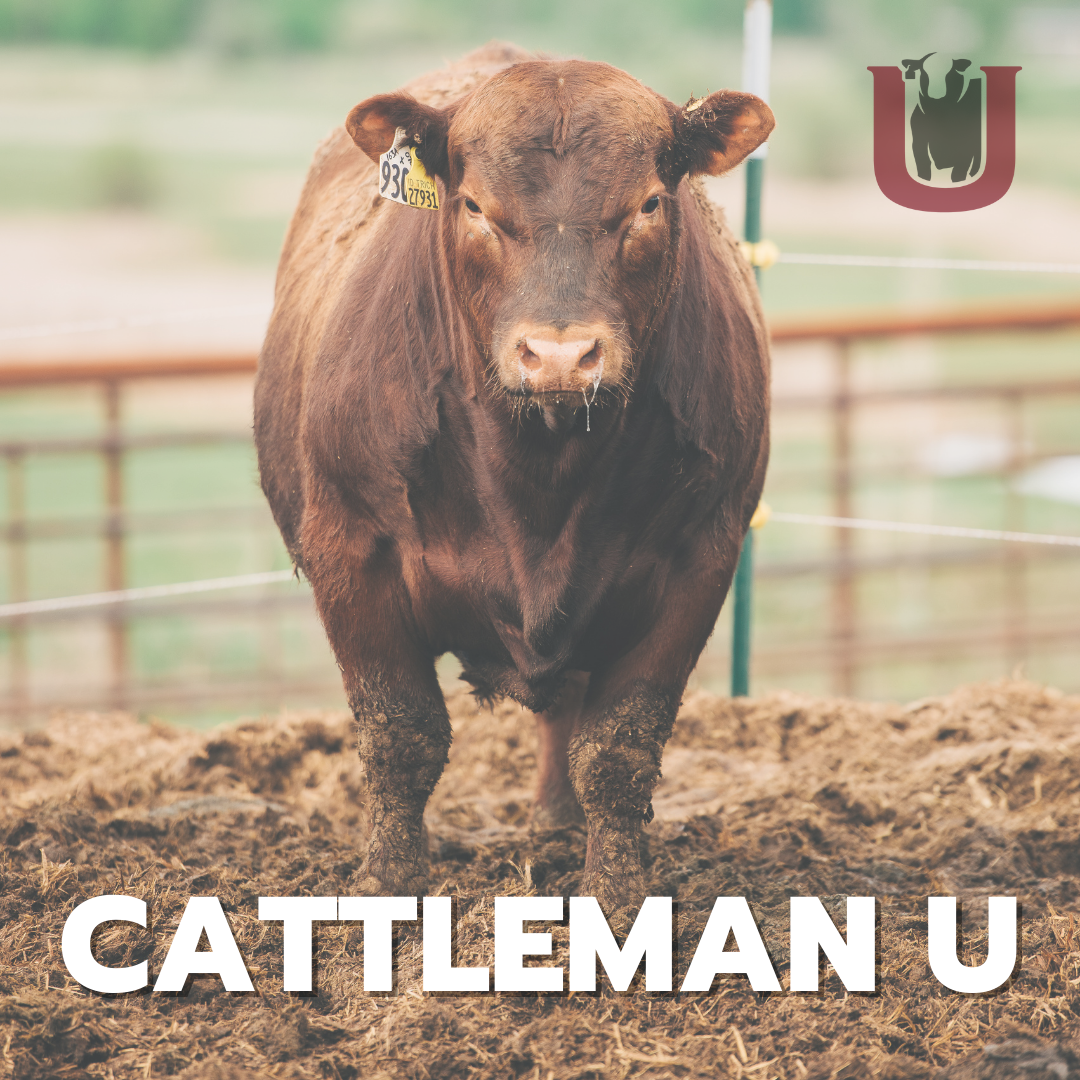
Cattleman U: Virtual Education for Cattle Producers

New Platform Brings Education and Community to Young Producers

What started as a desire for more community with peers in the agriculture industry as a young rancher, quickly grew into a passion to take action for Karoline Rose, owner of KRose Company. Amidst conference and training cancellations due to the COVID-19 outbreak, the KRose team began plans for a new way to connect with other professionals in agriculture, access educational content, and compare notes on ranch and farm topics.

“Cattleman U is an educational platform and community for the next generation of producers or people who want to raise livestock or crops in the near future. So many of this generation are working their operation full time and aren’t able to get away for conferences. There is a need for education that is easily accessible on an as-you-get-to-it basis,” says Rose.

Cattleman U became the newest online platform designed specifically for the next generation in agriculture. The online membership allows members to access expert advice and pre-recorded trainings presented by well-known speakers from respected organizations. It also has a free classifieds page where members can post items for sale or advertise their business. Members receive access to industry discounts for bulls, semen, ear tags, vaccines, and more. One of the biggest advantages Cattleman U offers is a community where members can network and access resources. 

“There are a lot of questions that go unasked because a next-generation producer might be embarrassed to ask or not know who to turn to for an honest and straightforward answer. We need to be in community with other producers and growers to build a network while we learn and discuss alternative solutions and ways of doing things that might not be just like grandpa did them,” says Rose.

Cattleman U consists of 6-week sessions on topics such as agriculture marketing strategies, adding value to your calves, certified branded beef programs, and the futures market. Each session is packed with information, real-life examples, and expert advice from cattlemen who have been there before, and tried many different techniques. The first six-week session will focus on marketing cattle.

There are plenty of flexible options for everyone wanting to sign up for Cattleman U, with monthly, yearly, and 6-week only membership options. The waitlist for the second segment, Futures and Hedging Basics, is now open. On October 5th, the second segment will start. Learn more at cattlemanu.com.

For more information:

Markie Hageman 

markie@krosecompany.com

559-901-7806

Additional assets such as audio clips, graphics and images to support this release may be downloaded here

KRose Company strives to be the best agriculture marketer in the United States, whether that be by helping ranchers increase their bull sale average with digital marketing, or by providing services such as design, social media marketing, and advertising to agriculture businesses. KRose Company also works to market the highest quality of calves and offer a country contract for classifieds. Learn more at www.krosecompany.com

2020-09-17T09:01:28-07:00September 17th, 2020|

Amy Hustead is First Master Beekeeper

California Master Beekeeper Program Announces First Master Beekeeper.


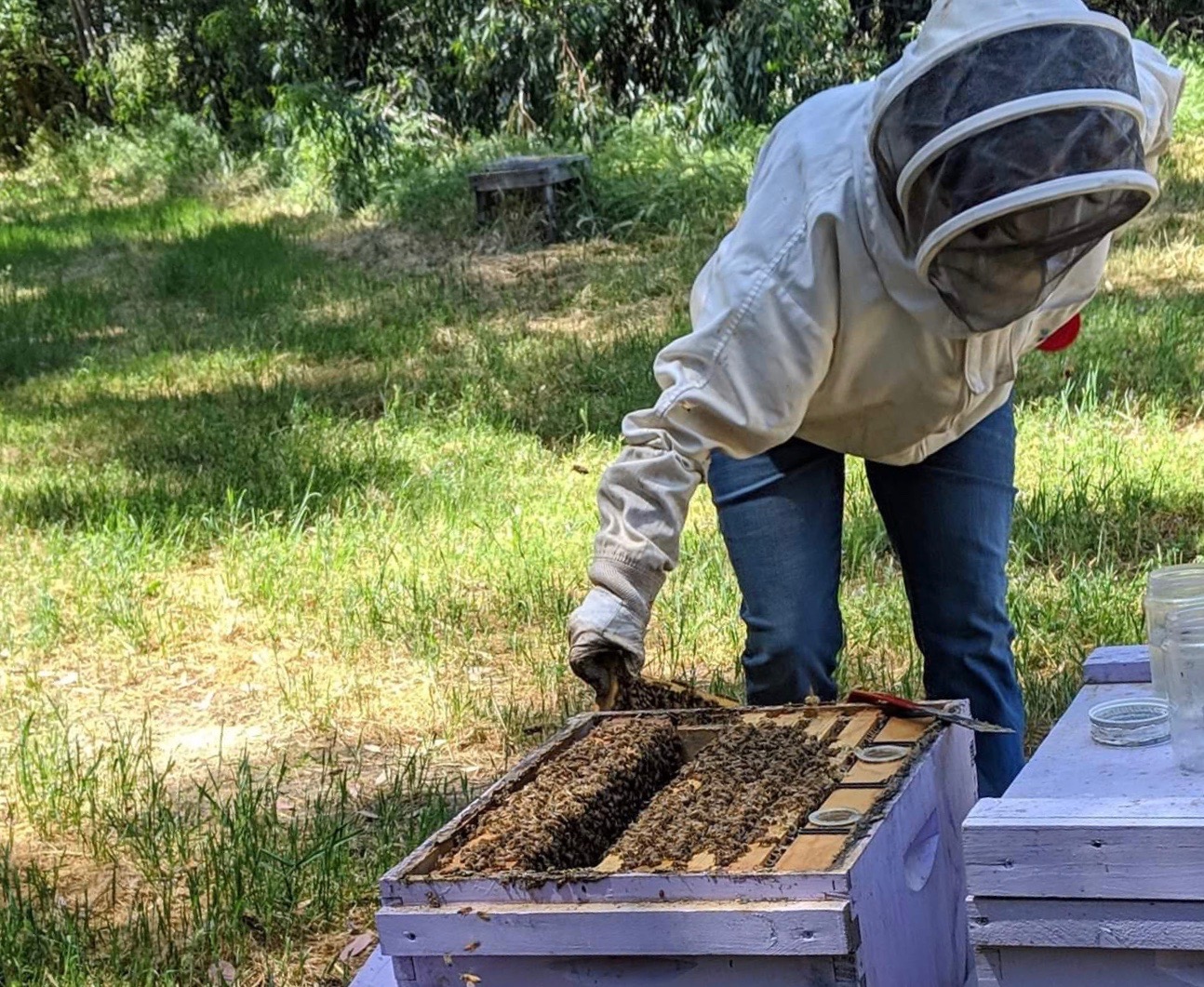
Despite COVID-19 pandemic precautions and constraints, the California Master Beekeeper Program (CAMBP), headquartered at the University of California, Davis, has certified its first-ever Master Beekeeper:  Amy Hustead of Grass Valley, a veteran beekeeper who also happens to be the first and only beekeeper in her family.

Hustead, president of the Nevada County Beekeepers Association and a veterinary technician, recently passed the Master-level beekeeper certification process.

CAMBP, founded and co-directed by Extension apiculturist  Elina Lastro Niño of the UC Davis Department of Entomology and Nematology, uses science-based information to educate stewards and ambassadors for honey bees and beekeeping. It offers three levels of certification (Apprentice, Journey and Master). Niño launched the first Apprentice class in 2016.

Hustead’s passion is education and outreach, said Niño and CAMBP manager Wendy Mather.

Hustead’s Master Capstone project involved teaching two, three-hour online CAMBP classes (“Planning Ahead for Your First Hives,” and “Working Your Colonies.”)  She designed, developed and successfully delivered “Intermediate Backyard Beekeeping,” an in-depth, online, four-hour course on science-based beekeeping for the hobbyist and sideliner.  Topics included winter and spring preparation, swarm prevention, active swarming, splits and nucs (nucs, or nucleus colonies, are small colonies created from larger colonies), diseases, nutrition, maximizing honey production, and harvesting honey, wax, propolis and pollen.

Amy Hustead, a wife,  mother of 9-year-old twin boys, and a seven-year beekeeper, said she really enjoys CAMBP. “It has allowed me to meet some really excellent beekeepers. I plan to continue to teach classes and help educate people on the biology of bees.”

Highly praised for her work, she has drawn such comments as “the class exceeded my expectations”; her “lecture style is professional, yet warm, which is needed in the context of Zoom classes”; and she “keeps an open mind about other beekeepers’ goals.” Wrote another: “Amy is very informed and easy to follow, and shares her information with the right amount of applicable detail for the intermediate.”

What fascinates Hustead about bees? “When I was in college I studied sociobiology, which is a field of biology that explains social behavior in terms of evolution,” she said. “I have always been fascinated by the cross section of evolution and behavior. Bees are the epitome of social insects. Everything they do is for the good of the whole.”

“I dabbled in homesteading when I first moved to the foothills, and like a lot of people, started out keeping chickens. I think I wanted to get goats but my husband was not on board, so I decided to get bees instead.”

As a veterinary technician, she works in low-cost spay and neuter programs. “I also volunteer with an organization that provides veterinary care to pets of homeless and low-income people in the Sacramento area.”

Bees keep her occupied at several locations. “I have between 15-20 personal colonies at three different locations,” Hustead related. ”I also manage a few colonies for other people.”

As it turns out, this year is not a good year for bees. “Mostly my bees aren’t doing well this year,” she said. “The nectar flow was non-existent, and the recent fires haven’t helped. For the first year ever I am harvesting no honey from my yard at home.”

Hustead home-schools her twins. “I am very serious about home-schooling my kids, and part of our curriculum is extensive travel.” The Hustead family has visited a number of states in the nation, and has already been to Mexico, Ireland, Costa Rica. “We are planning a Europe trip as soon as possible.”

Since late 2016, CAMBP has certified 206 Apprentices and 22 Journey-level beekeepers, who have volunteered more than 24,510 service hours in science-based education and outreach in beekeeping and environmental stewardship. Total value of the service hours: $623,289. Total number of individuals served:  98,618.

“This year, despite COVID-19 constraints, the California Master Beekeeper Program continues its mission of using science-based information to educate stewards and ambassadors for honey bees and beekeeping, by moving its courses and exams online,” Mather said.

Online Exams

CAMBP’s current 53 Apprentice candidates took their online exam Sept. 12. To pass, they had to score at least 75 percent. “Candidates uploaded videos or partook in ‘live from their apiary’ Zoom sessions to satisfy the requirements of the practical rubric,” Mather said.

The Journey-level candidates have completed the online written portion of their certification and their videos and Zoom practicals are in progress. “So far, we’re proud to announce that all 15 Journey level candidates scored above 80 percent on their written exams, and their videos and Zoom practicals are looking great!” Mather commented.

The Master level usually takes an average of five years to achieve. Some candidates choose to remain as Apprentice or Journey-level beekeepers. CAMBP offers pre-approved Master Capstone Tracks, but also encourages candidates to follow their passion if their favorites are not on the list, which includes:

  • Native Bees and Pollinator Gardens
  • Commercial Beekeeping
  • Scientific Research
  • Education and Outreach
  • Policy for Honey Bees and Native Pollinators

Seven Master-Level Candidates

The seven Master-level candidates for the 2020-21 season are pursuing a variety of projects, including mapping drone congregation areas, authoring a book on the history of honey in ancient Greece, establishing a pollen library for the state of California, starting a commercial beekeeping business, and training a “detector dog” in the apiary.

To maintain active status as a Master Beekeeper with CAMBP, members are required to perform and log 25 hours of BEEs (Beneficial Education Experiences).  Hustead will perform a minimum of 25 volunteer hours annually. Her volunteer service, at the minimum, is valued at $25.43 per hour or about $600 per year.

“Amy will have no problem doing that as she’s active as the president of her local beekeeping club,” Mather said, “and she mentors many new beekeepers to help them become science-based stewards and ambassadors of honey bees and beekeeping.”

For more information about CAMBP, see its website at https://cambp.ucdavis.edu/


2020-09-16T10:00:57-07:00September 16th, 2020|

Roma Tomato with ToBRFV Resistance?

Bayer Launches Large-scale Pre-launch Trial of New Tomato Varieties with Resistance to Tomato Brown Rugose Fruit Virus (ToBRFV)


Bayer announced today the final large-scale pre-launch trials of Roma-type tomatoes to help growers address Tomato brown rugose fruit virus (ToBRFV). The trials, which begin later this month in Mexico, will include two varieties of Roma-type tomato that claim Intermediate Resistance (IR) to ToBRFV.

The type of IR Bayer has seen in these varieties is commonly referred to as the “symptomless carrier,” where, despite the presence of virus particles, the crop can show little or no symptoms of the virus in the leaf and/or fruit should the crop become infected by the virus. Adding ToBRFV in the pathogen list for tomato was discussed during last week’s September meeting of the International Seed Federation.

ToBRFV was first observed in 2014 and spread rapidly to different world areas. This viral disease impacting tomato plants represents a challenge for the industry as it can be transmitted very easily through many vectors including farming tools and equipment, workers’ hands, plants, water, soil, and people.

“ToBRFV can quickly devastate tomato crops, so Bayer worked to develop a product to help growers combat it,” said JD Rossouw, Head of Bayer’s Vegetable Seeds R&D. “Bayer leveraged our global cross-functional teams and extensive research and development pipeline to offer a solution designed to ease the day-to-day challenges faced by growers. Our research continues across several tomato species with the goal of bringing further innovative resistance to growers as quickly as possible.”

Following the trials, Bayer anticipates the products will be available for commercial sale in Mexico in 2021, to later be followed by offerings in other important markets around the world.

The ToBRFV resistance program is part of Bayer’s corporate commitment to Health for All, Hunger for None. It complements the company’s SHIELD program, a comprehensive approach to deliver clean seeds season after season to growers around the world. For more than 10 years, the focus of SHIELD has been on the prevention, detection and elimination of pathogens at our own Bayer production and processing sites, as well as third-party production and processing sites for Seminis and De Ruiter brands.

The SHIELD program continues to incorporate market-leading best practices into seed production and supply. In addition to its strict production protocols that are applicable whatever the growing environment (open field, greenhouse or glasshouse), Bayer has always, and will continue to have, stringent testing measures in place aligned with the International Seed Health Initiative (ISHI) guidelines and any applicable laws, which includes testing our seed for the presence of ToBRFV before it is shipped to customers.


2020-09-15T13:40:21-07:00September 15th, 2020|

Farm and Tractor Safety

Important to Maintain All Safety Equipment


By Rick Worthington, with Ag Information Network

Rollovers or overturns are involved in about half of the fatal tractor accidents and are responsible for many disabling injuries and much property damage.

With the use of protective frames and crush-resistant cabs with seat belts, the number of serious and fatal injuries from such accidents should decrease. Rollovers are generally due to driving too fast for conditions; striking surface hazards such as rocks, stumps and holes; running into ditches; hitching high for extra traction; driving on steep slopes; and operating front-end loaders improperly. Tractor upsets also occur when handling large round hay bales and other heavy loads with front-end loaders.

Falls from moving tractors often result in serious and sometimes fatal injuries. Many times the victim is a child, but operators and adult riders can also fall. Falls often occur from smaller and/or older tractors used around the farmstead, where extra riders and overhead hazards are more common than in fields.

Another cause of tractor-related death and serious injury is being caught by, or entangled in, rotating power takeoff (PTO) shafts. In most cases, the PTO shields were inadequate or had been removed.

Other tractor-connected injuries and damage involve:

  • Colliding with motor vehicles or roadside objects;
  • Slipping and falling while mounting and dismounting;
  • Running over bystanders;
  • Striking overhead hazards;
  • Being struck by flying objects, broken parts, or hydraulic fluid;
  • Being crushed by a poorly supported tractor during repair work;
  • Sustaining cuts, bruises, burns and other nuisance, but painful injuries, connected with maintenance and routine operation;
  • Being overcome by exhaust gases inside closed buildings;
  • Being burned by fires that erupt during refueling or as a result of a collision or upset.
2020-09-15T11:12:30-07:00September 15th, 2020|

More Water Storage is Critical

Doing Every Possible to Have Water Storage For Drought Years

By Patrick Cavanaugh, with the Ag Information Network

Save Water Resources Act, is written by Congressman Josh Harder representing the Modesto area.  The Act will fund the construction or upgrades of several water storage areas such as Sites Reservoir, Del Puerto Canyon Reservoir, Los Vaqueros and San Luis Reservoirs and provides $100 million in storage funding.

It’s all about helping Californian’s including the farmers during drought. “That’s right. I mean, we know that we are having more and more extended droughts.  We know the next one is around the corner and we know what we have to do in order to address it,” said Harder

“In order to  make sure that we have a full, comprehensive approach to water and all of the above approaches that combined storage with recycling and groundwater recharge,” noted Harder

Harder said shipping all the water out to the ocean is not the way to go. “Instead of just shipping out water to the ocean, we can actually make sure that we can put it in these reservoirs such as Los Vaqueros, Sites and Del Puerto and that’s going to be really essential for the almond and walnut growers in the Central Valley,” Harder said.

“When you have tree crops, you have to have a reliable source of water. We can’t just be in a boom and bust cycle where you have water one year and not the next; maybe that works for row crops, but it doesn’t work very well for trees. And so these reservoirs are going to go a long way towards ensuring water, stability and water security for the long-term,” Harder said.

2020-09-14T20:58:02-07:00September 14th, 2020|

World Ag Expo 2021 Canceled!

COVID-19 Cancels World Ag Expo and Causes Big Economic Hit to Agri-Center, hotels, restaurants Etc.

For more than 52 years, World Ag Expo® has served agriculture by bringing buyers and sellers together to innovate, collaborate, and advance agriculture. In 2021, the show will not be held live for the first time in World Ag Expo® history.

“After working with the Tulare County Health Department and other officials, it has become evident that given health and safety restrictions from the State of California, holding a live, international event is not responsible in February,” said Jerry Sinift, International Agri-Center® CEO.

The International Agri-Center® Board of Director’s decision to cancel the 2021 World Ag Expo® was not taken lightly, and comes after months of research and evaluation of future trends and known constraints. The decision was finalized earlier than the initial November deadline to provide exhibitors, attendees, volunteers, concessionaires, contractors, and local businesses time to adjust their Tulare farm show plans.

The cancellation of World Ag Expo® comes as another negative effect of COVID-19 for the International Agri-Center®, exhibitors, non-profit food vendors, attendees, area hotels, restaurants, and other associated businesses.

Attendees are encouraged to follow World Ag Expo® social media channels and watch their email inboxes for more information on World Ag Expo® projects throughout 2020 and 2021. They can join the World Ag Expo® email list to stay up-to-date at http://bit.ly/WAEupdates.

World Ag Expo® staff will reach out to exhibitors concerning fees and more options for 2021 starting Wednesday, September 16.

The 2022 World Ag Expo® is scheduled for February 8-10 at the International Agri-Center® in Tulare, CA.

2020-09-14T11:38:14-07:00September 14th, 2020|

Automation in Specialty Crops Part 2

Automation is Going Beyond Harvest

By Tim Hammerich, with the Ag Information Network

The Burro, is an autonomous robot that transports fruit from where it is picked to where it is packed. But Burro CEO Charlie Andersen sees this innovation going far beyond just helping with harvest. He sees it as a platform to bring automation onto specialty crop farms.

“The challenge with these industries is that each respective crop is relatively small from a market size perspective,” said Anderson.   “For that reason, I think that what you’re going to have is companies that are focused on doing things like yields in blueberries, yields in table grapes, digital entomology in certain spaces. They’re gonna be taking data off of platforms like ours, and then providing that data back to growers in a creative way. And we see our platform being something that enables them to do that,” said Andersen.

Andersen also sees the platform as an economical entry point which may lead to not only data, but potentially crop scouting and spot spraying.

“And so most of the customers that we are working with right now see this logical progression. They recognize that if we get autonomy into our operation, we might get like a 20 to 40% efficiency today, which is quite significant with labor going to 15 or 18 bucks an hour with when it’s fully burdened. But beyond that, you have a vision based platform online that can over time be scaled up to do more things,” Andersen said.

Learn more about Burro on tomorrow’s episode of “The Business of Blueberries” Podcast which can be downloaded any podcast player.

2020-09-14T11:09:26-07:00September 14th, 2020|

Automation in Specialty Crops Part 1

Automation is Difficult In Specialty Crops

By Tim Hammerich, with the Ag Information Network

Automation in row crop farming is difficult enough, but the problems get even more complex in specialty crops. Charlie Andersen and his team at Burro are helping farmers take the first step to bring robots onto the farm.

“You know, you think, if you’re in the Midwest and you’re a big tractor, you’re high up, there’s nothing above you. You can use high precision GPS to navigate around. If you’re in a blueberry ranch or a table grape vineyard, you’re under the canopy,” Andersen said.  “You can’t see the sky at all. There’s oftentimes no cell phone reception. GPS is going to be super spotty.”

“And so you’ve got to be able to perceive the world with computer vision and recognize where can I drive? Where can’t I drive? Is it a bucket? Is it a person? All those other things. So a lot of the seemingly basic questions around how to drive around in a crop like blueberries or table grapes are actually quite difficult to solve,” noted Andersen.

Burro is a robot that moves by itself transporting fruit from the point of harvest to where it will be ultimately loaded out of the field on a truck

“It’s an autonomous vision-based platform that is people scale. It’s about four horsepower, runs about eight miles on a charge, and can carry about 500 pounds give or take. Fits in either 27 or 28-inch wide spacing or 36-inch wide space, if you’re in table grapes, and it uses a ton of computer vision to navigate around,” said Andersen

Andersen hopes to expand the robot as a platform to perform many other autonomous functions for specialty crop growers.


2020-09-12T09:16:09-07:00September 12th, 2020|
Go to Top