About California Ag Today

This author has not yet filled in any details.
So far California Ag Today has created 2014 blog entries.

Fiscalini Dairy Produces Power

Dairy Produces Electricity to Power 300 Homes


By Tim Hammerich, with the Ag Information Network

A lot of great things come from your local dairy: milk, cheese, and ice cream, just to name a few. But some dairy producers like Modesto-based Brian Fiscalini are also supplying their community with electricity.

“What we do is we collect the waste from our farm. So we collect all of the cow manure, we collect any spoiled feed, and then we also bring in a few waste streams from other industries that would normally either go into a landfill or would have to travel quite far for someone to be able to process,”Fiscalini  said.

This waste is stored in concrete tanks and the lid captures methane gas.

“Then what we do is we convert that methane gas, with the help of an internal combustion engine, into electricity. So that electricity is used to power our facility as well as selling electricity to our local utility, which equates to enough power to take care of 300 homes in our community,” noted Fisalini.

This is one more way that our California farmers are providing us with delicious food, and a whole lot more.

2020-10-14T09:42:18-07:00October 14th, 2020|

Farm Labor Data Incomplete

Data Has Been Delayed from Counties

By Tim Hammerich, with the Ag Information Network

Reports of farm labor being down dramatically may be using data that is incomplete, according to UC Davis Agricultural Economist Dr. Dan Sumner.

“It turns out the California government data on labor markets is usually quite good. But this year they get reports from counties and the counties are delayed or only partial reports. So what might look in the official data, like a lot fewer workers in agriculture, frankly it’s just not true,” said Sumner

Instead, Dr. Sumner says indications are that the farm workforce is at consistent levels or higher from previous years, based on the number of farm shipments.

“What I do know because I’ve been looking at it a lot, is that produce shipments are at normal levels or higher. And they all require lots of hired farm labor, whether it’s strawberries or lettuce or celery. And you couldn’t possibly have the normal shipments, including things like avocados that are very labor-intensive, if we had 30% or 40% less labor, which is what the official data still show. It’s subject to revision, and I think if they’re able to get the revisions done, we’ll see we have a normal labor supply,” said Sumner.

Dr. Sumner said the farm labor workforce has been especially vulnerable during the COVID-19 outbreak, but we may also be seeing some workers return to farmwork from other jobs, which is rare.

2020-10-13T11:01:21-07:00October 13th, 2020|

AgTech Honors Women That Solve Modern Problems!

‘From Farms to Incubators’ exhibition honors women who merge ag and tech to solve modern problems

Multimedia exhibition premiers Nov. 12 at National Steinbeck Center

The modern intersection of agriculture and technology has brought to the forefront a diverse generation of women working to overcome rising challenges through new perspectives and solutions.
A new special exhibition at the Steinbeck Center in Salinas lifts up stories of these innovators to help inspire and encourage young women to consider careers in agtech.

“From Farms to Incubators: Women Innovators in California Agtech” uses multimedia and digital storytelling – including video, documentary and still photography – to honor these groundbreaking pioneers. The exhibition is the brainchild of Amy Wu an award-winning journalist for women’s ag and agtech movement and the creator of “From Farms to Incubators.”


“My passion to unearth underreported stories and amplify new voices is what led me to highlight the stories of emerging communities in agriculture,” says Wu. “Ultimately, I hope the exhibition, film series and book serves as vehicles to inspire youth – especially those from rural or underserved communities – to consider that agriculture extends far beyond tractors and overalls and it is a sector that offers an amazing range of opportunities that involve innovation.”


Michele Speich the Executive Director National Steinbeck Center says:

“Women for centuries have played a vital role in farm operations across the country and globally. We are thrilled that Amy Wu has chosen to tell the stories of minority women entrepreneurs in Agtech in the Salinas Valley and beyond in a book and in an exhibition at the National Steinbeck Center,” says Speich.

Presented by the group From Farms to Incubators, the exhibition kicks off Thursday, Nov. 12 with a virtual opening event from 4-6 p.m. PACIFIC TIME, with viewing available through Jan. 12.


The virtual opening will include special speakers including California Senator Anna Caballero, Dennis Donohue the head of Western Growers Center for Innovation and Technology and Karen Caplan the president and CEO of Frieda’s Specialty Produce, a panel discussion led by leading women innovators in ag and agtech, and a sneak preview of the exhibition and films.

Attendees have the opportunity to win prizes, including a copy of the forthcoming book “From Farms to Incubators: Women Innovators in California Agtech,” telling the stories of women entrepreneurs who use technology to help solve problems ranging from climate change and limited water to uncertainties in immigration policy.  The book will be published in April 2021 under Linden Publishing’s Craven Street Books division, specializing in titles on California and the history of the western United States.

Many of those portrayed are women of color who come from diverse backgrounds, the first in their families to complete higher education. What drew them into the nascent but fast-growing sector of agtech? What caused them to uproot themselves to pursue a start-up dream in an industry that continues to be dominated by men? How are they getting their innovation into the hands of growers?

The exhibition and the book attempt to answer these questions and create awareness of women leaders and entrepreneurs.

The National Steinbeck Center in Salinas, Calif., is dedicated to Steinbeck’s creative legacy: to participate, to inspire, to educate, and to understand one another. Find out more at www.steinbeck.org.


“From Farms to Incubators” is a multimedia platform that uses digital storytelling to increase awareness of women leaders and entrepreneurs and their contribution using technology through the agriculture sector, and encourage women to pursue careers in agtech. Find out more at www.farmstoincubators.com


For more information email Amy Wu at amy@farmstoincubators.com or call 914-771-1275.


2020-10-12T11:24:45-07:00October 12th, 2020|

Almond Board Leads the Way to Marketing Almonds

Marketing the 2020 3 Billion-Pound Almond Crop

By Patrick Cavanaugh, with the Ag Information Network

Leading the charge in moving that big crop globally is the Almond Board of California. And their mission is to expand the global consumption of California almonds. Through leadership and strategic market development, innovative research, and the accelerated adoption of industry best standards.

Ron Fisher is the founder, CEO, and President of Fisher Nut Company based in the Modesto area. And he’s active with the Almond Board. In fact, this year he’s Alternate Position One as an Independent Handler

“The Almond Board looks at it from a long-range perspective. While we have challenges that are more short-range, it’s always been a longer-range forecast, three to five-plus years,” said Fisher “And so with the investment that we’ve made in the Almond Board board, we continue to develop and grow markets, reputation management, some of the other things that are going to continue the consumption of our product worldwide.”

“So while we’re doing that constantly year after year, we’re also looking at quick help type methodology to move our product. And so those will be our discussions throughout our committees and on the board over the coming months,” Fisher said.

In more almond news… growers need to be aware that band-canker infections continue to increase on the vigorous young orchard. Infected branches should be removed from the almond orchard in order to reduce surviving inoculum.

2020-10-10T11:34:57-07:00October 9th, 2020|

Dairy Markets Prove Resilient

Consumers Turning to Comfort Food Has Helped

By Tim Hammerich with the Ag Information Network

It’s been a volatile year for most agricultural commodities, but dairy might have experienced it most intensely. Prices started the year very strong, but were hit hard in the spring as the pandemic spread. Since that time though, they have recovered.

UC Davis Agricultural Economist Dr. Dan Sumner,  said cheese has led the way. “One of the issues is cheese markets have boomed and other markets haven’t. We’ve shifted from people consuming their cheese on a cheeseburger they grabbed at the fast food place to now consuming their cheese in their grilled cheese sandwich they eat at home. Or the macaroni and cheese as we went all back to comfort food in the spring,” explained Sumner.

“These kinds of volatilities are partly because of the shutdown and the milk market, even though there were some videos showing people dumping milk, that was not particularly common. It was terrible. It’s emotional for me and everybody else who cares about the milk market,” said Sumner.

“You hate to see milk poured out. But it was a headline because it was rare. And I do think that was a temporary thing; it got settled pretty quickly. And the dairy industry has really been remarkably resilient. And the marketing side of the industry just did a great job.”

Dr. Sumner applauded the dairy producers and marketers for their resilience during this difficult time as they’ve had to pivot from food service to accommodate consumers eating at home.

2020-10-08T11:07:19-07:00October 8th, 2020|

NO on Proposition 15 Campaign – CALL FOR ACTION

If Passed, It Would be the Largest Tax Hike in California’s History

The largest tax hike in California’s history is on the ballot, and if passed would create $12.5 billion in new taxes, the largest tax hike in our state’s history.  

It is known as Proposition 15, and it would eliminate the 1% cap on property taxes for businesses throughout the state, including agricultural processing facilities such as tree nut hullers and processors.  In addition, it would trigger annual reassessments for agricultural fixtures, such as irrigation systems, solar installations on farms and processors, barns, and even permanent crop trees and vines.  

In a year like 2020, it is difficult to fathom we are facing something like Proposition 15.  For tree nut growers, hullers and processors, the time to take a stand is right now!  We need your help!  We need every member to contribute!

Therefore, we are respectfully asking each of our members to send us a check for $500 to $1,000 to help specifically on this effort.  We have raised over $35,000 to date towards our goal of $50,000!

We want to thank members that have stepped up to help so far, like Central California Almond Growers Association, Horizon Nut, Superior Almond Hulling, JSS Almonds, River Oak Orchards, Gold River Orchards, Cortina Hulling and Shelling, Kern Pareil, Inc, Alldrin Farms, and Andersen & Sons Shelling.  I also want to thank our Associate members like Fresno Rack and Shelving, Boer Commodities, Daniel C. Salas Harvesting and North Valley Ag Services for helping as well.  Lastly, we want to thank individuals and farms like AJ Carvalho & Sons, Pretzer Farms, Barton Ranches, Bill and Dan Prosperi, Clausen Almonds, David Munro and Donald Milburn for their efforts too!

Please fill out the attached form and make the check payable to Alliance of California’s Farmers and Ranchers and mail it back to our office at 1785 N. Fine Avenue, Fresno, California, 93727.  If you should have any questions, please call our office at (559)455-9272.

2020-10-07T12:54:28-07:00October 7th, 2020|

The Late Jim Gray of CropLife is Honored

CropLife America honors the late Jim Gray with the Lifetime Achievement Award

During the recent CropLife America 2020 Annual Meeting, the Industry Task Force II on 2,4-D Research Data’s own Jim Gray was honored with receiving the Lifetime Achievement Award, in memoriam. This award recognizes someone who has dedicated their life to successfully defending the pesticide industry with passion and professionalism.

“Jim was a great friend and resource to the agricultural community.” said Task Force member Everett Mealman, “It is wonderful to have his many contributions honored with the CropLife America Lifetime Achievement Award.”

Jim served as the Executive Director of the Industry Task Force II on 2,4-D Research Data for 12 years, from 2007 until the moment of his passing in November 2019. He was considered the heart and soul of the Task Force, bringing sharp wit, a broad smile, and an inexhaustible knowledge of all things 2,4-D. His extraordinary ability to connect with those around him and introduce people who share a common interest in agriculture and a love for the land was felt throughout his travels from Europe to North America to Asia.

While it is a great honor, it comes as no surprise that the late Jim Gray is celebrated as a dedicated individual who worked tirelessly on behalf of agriculture in America and around the world. Jim was an exceptionally well-respected member of the agribusiness community across the United States. Throughout his decades-long career he received many awards and accolades such as the North Star Award from the Western Agricultural Chemical Association in 1994, the Outstanding Supporter Award from the Missouri Corn Growers’ Association in 2003, and the Agriculture Ambassador Award from CropLife America in 2016, among others.

2020-10-06T10:16:59-07:00October 6th, 2020|

Preparing for the 2021 Almond Crop

Think About the 2021 Budget

By Patrick Cavanaugh, with the Ag Information Network
Franz Neiderholzer is a UCANR Orchard System Farm Advisor based in Colusa County and he also helps growers in Sutter and Yuba counties. He said over the next couple of months, it’s good to budget for next year.


“The price looks like it might be coming up a little and that’s good, but careful budgeting needs to be stated—basically everything you do now, other than watering, the trees in preparation for the 2021 crop,” Neiderholzer said.

Neiderholzer spoke about the potential less water available for growers, next year. “There’s talk about a La Niña winter, which isn’t a guarantee of anything, except it’s more of a chance of a light rainfall year. So what that means to growers is possibly reduced surface water application,” noted Neiderholzer.

“So when you’re budgeting for next year, start with your, paying for water or whatever you need to do to have good quality water available that could cut into your budget for next year, but it’s critical for good production,” he explained.

“So basically build your budget for the 2021 season on stuff that you know is going to bring you value,” he said.


2020-10-05T13:30:27-07:00October 5th, 2020|

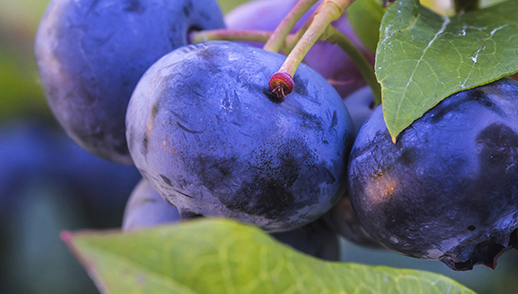
California Blueberry Meets Online for Conference

Blueberry Industry Meets Virtually

By Tim Hammerich, with the Ag Information Network

Two California-based groups this week are holding a joint virtual conference and expo. The U.S. Highbush Blueberry Council and the North American Blueberry Council kicked off the four-day event on Monday.

Kasey Cronquist is president of the North American Blueberry Council

“Typically we would see 200-250 people join us for our in person meetings. This week we have had just about 1,000 people register to engage. That is just incredible,” Cronquist said.

Cronquist says the organizations viewed the inability to meet in person as an opportunity to bring the entire blueberry industry together.

“To kick off this four days of just thinking about the future ahead and inspiring possibilities, the timing couldn’t be better for this discussion. We felt like in unprecedented times for our countries, our communities, and our industry, this really just feels like an important opportunity to talk about vision,” she noted.

The event kicked off on Monday with leadership expert who literally wrote the book on vision, Mr. Michael Hyatt.

“I consider myself a blueberry enthusiast. So I have them almost every day. It’s one of the three fruits that are allowable under the keto diet. I’m just delighted to be with you. Anything I can do to help blueberry growers – awesome,” said Hyatt.


2020-10-01T15:52:31-07:00October 1st, 2020|

USDA To Help Many Affected by Wildfires

Disaster Supplemental Nutrition Assistance Program Available for Those In Need Due Fires

U.S. Secretary of Agriculture Sonny Perdue announced today that low-income California residents dealing with the ongoing wildfires could be eligible for a helping hand from the U.S. Department of Agriculture’s Disaster Supplemental Nutrition Assistance Program (D-SNAP).
Secretary Perdue said that households who may not normally be eligible under regular Supplemental Nutrition Assistance Program (SNAP) rules may qualify for D-SNAP – if they meet the disaster income limits and have qualifying disaster-related expenses.
forests“USDA is committed to ensuring Californians affected by these wildfires have enough to eat and will be here to help throughout their entire recovery. D-SNAP will be a vital part of our ongoing, on-the-ground food assistance,” Secretary Perdue said.
To be eligible for D-SNAP, a household must either live or work in an identified disaster area, have been affected by the disaster, and meet certain D-SNAP eligibility criteria. Eligible households will receive one month of benefits – equal to the maximum amount for a SNAP household of their size – to meet their temporary food needs as they settle back home following the disaster. California will share information about D-SNAP application dates and locations through local media.
The timing of D-SNAP varies with the unique circumstances of each disaster, Secretary Perdue said, but always begins after commercial channels of food distribution have been restored and families are able to purchase and prepare food at home. Before operating a D-SNAP, a state must ensure that the proper public information, staffing and resources are in place.
Although current SNAP (known as CalFresh in the state of California) households are not eligible for D-SNAP, under the Families First Coronavirus Response Act of 2020, USDA previously approved emergency allotments for California in response to the ongoing COVID-19 pandemic. Therefore, ongoing SNAP households have already received the maximum allotment for their household size for the month of September. California will continue to issue replacement benefits to current SNAP households who lost food as a result of the wildfires.
The D-SNAP announcement today is the latest in a battery of USDA actions taken to help California residents cope with the wildfires. These include:
  • Allowing participants to buy hot foods with their SNAP benefits at authorized SNAP retailers in certain counties.
  • Automatic mass replacement of a portion of SNAP benefits for residents of specific counties who may have lost food due to the wildfires and associated power outages.
  • Extending the deadline for school meal program operators in certain counties to submit reimbursement claims for meals served;
  • Providing households in certain counties with more time to request replacement SNAP benefits for food lost; and
  • Retroactively distributing Commodity Supplemental Food Program food packages that The Redwood Empire Food Bank was unable to deliver in August due to wildfire-related road closures and evacuations.
Individuals seeking more information about this and other available aid should dial 2-1-1. For more information about California’s SNAP program, CalFresh, visit www.cdss.ca.gov/food-nutrition/calfresh.
Further, USDA’s Food and Nutrition Service (FNS) continues to provide significant support to California residents as part of its ongoing response to COVID-19. For more information on flexibilities provided to California, visit the FNS California COVID-19 Response webpage.
USDA’s Food and Nutrition Service administers 15 nutrition assistance programs that leverage American’s agricultural abundance to ensure children and low-income individuals and families have nutritious food to eat. FNS also co-develops the Dietary Guidelines for Americans, which provide science-based nutrition recommendations and serve as the cornerstone of federal nutrition policy. Follow us on Twitter at @USDANutrition.
2020-10-01T10:31:12-07:00October 1st, 2020|
Go to Top