About California Ag Today

This author has not yet filled in any details.
So far California Ag Today has created 2014 blog entries.

Hoping Federal Water Allocation Increases

Hoping the 5 percent Water Allocation Increases

By Patrick Cavanaugh, with the AgInformation Network

With all the tree nut growers in the Central Valley, lack of rain, and snow, that 5% water allocation from federal water districts will hurt. We hope it goes bigger.

Ryan Jacobsen is the CEO of the Fresno County Farm Bureau. “If you’re in California, particularly the Valley we’re dependent upon five to seven good storms to make or break a season. And we have not seen that whatsoever,” Jacobsen said. “We’ve really only had one and a half good storms put a little snowpack up in the Sierra Nevada. And so therefore we are in a deficit because of what mother nature has provided.”

“But up in the Delta there, we have our issues in regards to just wielding water through there because of the ESA issues, because of the new biological opinions that does help somewhat based off of the conditions of where the Delta is, is kind of where the pumping takes place. But in years, like this year, we got to have some basic amount of water and that just hasn’t come to fruition yet,” Jacobsen explained.

Jacobsen said on the West Side, farmers may be able to divert water from row crops. to their permanent crops

“They’re permanent plantings are a component of their overall landmass. And so they’ll take water that may have flowed towards those row and field crops and they’ll divert it towards their permanent crops,” he said. “And so, there is a lot of farmers that still rely upon that surface supply.”

“Even at 5%, at least it’s something. We hope that’s going to grow. I mean, even a 10%, 15, 20% puts us in a lot better scenario for those folks to be able to use that surface supply, to go towards their permanent plantings there. And so our hope is, is that it’s going to grow from this point forward,” he said.


2021-05-13T16:01:35-07:00March 22nd, 2021|

Manure Management Get’s a Boost


A Consortia of Microbes Assist in Manure Management in Livestock


Boost is a product utilizing the digestion abilities of special bacteria and natural enzymes cultured for their ability to digest organic matter quickly, efficiently and without odor. These strains will work both in the presence of oxygen as well as in its absence. The natural enzymes quickly break down proteins, starch, carbohydrates, animal, and vegetable fats & oils as well as paper.

The composition of Boost includes a unique micro-nutrient enriched carrier to provide accelerated germination, growth, and superior enzyme production while reducing odor, BOD, COD, suspended solids, turbidity, and ammonia concentrations. Stable bacteria spores enhance shelf life and guarantee microbial concentration.  Spore-form allows it to resist chlorine, disinfectants, and high-water temperatures.

Considering the attributes of Boost in the digestion of organic materials, this consortium of bacteria proves to be a multi-functional/use means of preconditioning livestock manures in advance of field application.  Boost accelerates the transition of raw organics into plant-available nutrients reducing the stress on depleted indigent soil microbial bacteria. This process of preconditioning raw organics is not limited to poultry litter, livestock beddings, forage, and feed wastage.


The organic digestive ability of Boost bacteria has decreased the time required to compost whole livestock carcasses in mass to include the bones, viscera, hide, feathers, and bulking materials.  In the interest of on-farm biosecurity measures, the ability to dispose of animal/poultry carcasses at thermophilic temperatures at accelerated rates of decomposition decreases the exposure to trafficked disease while allowing for a field-ready, rich nutrient by-product.

In terms of poultry health and housing, Boost will reduce the measurable levels of ammonia ppm generated from litter after one application for an entire grow-out season significantly reducing flock mortality.  In the reduction of ammonia, the reduction of chick death loss due to blindness, respiratory infections, and footpad issues are noted.


In terms of swine health, applied to deep or shallow pull-plug pits, the ability of Boost to degrade organic materials reduces the levels of ammonia, hydrogen sulfide, and methane from the pits.  As with poultry, the reduction of pit gasses decreases the damage to ISOwean pig lungs, increases the rate of gain, and lessens effects of heat stress in confined livestock.

2021-05-13T16:03:01-07:00March 19th, 2021|

Explorer Course Offered by Center of Land-based Learning

New Introductory Farming Course to be offered by Center for Land-Based Learning


In response to an unmet need in the region for entry-level beginning farmer courses, the California Farm Academy, a program of the Center for Land-Based Learning, is offering a new program in 2021: the CFA Explorer Course.

The Explorer Course will last for six weeks and accept a small cohort to allow for social distancing while exploring the field of farming firsthand. A combination of online learning classes, farm tours, and hands-on field sessions, the CFA Explorer Course offers adults interested in farming their first introduction to the field. The Explorer Course will be offered for the first time May 22-July 3, 2021 and then again August 21- September 25.

California Farm Academy Director, Dr. Sridharan (Sri) Sethuratnam, said of the program, “The Explorer is the ideal first step for someone who has been dreaming of farming for a while but did not know where to start. The Explorer will provide them with the formative knowledge and guide them to tangible next steps in their farming journey.”

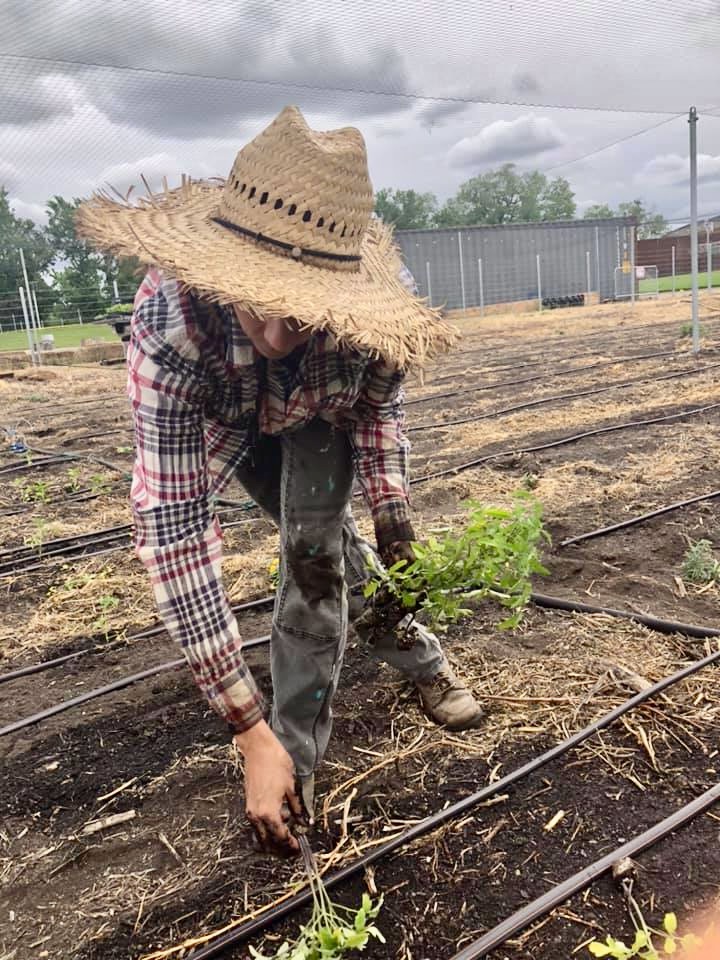
A Beginning Farmer at the Center for Land-Based Learning in Woodland

The California Farm Academy’s 7-month Beginning Farmer Training Program will be taking a hiatus in 2021 to thoughtfully and strategically prepare for its second decade. Be on the lookout for announcements on the 2022 CFA Beginning Farmer Training Program’s application deadlines later this year.

Mary Kimball, CEO of the Center for Land-Based Learning, commented on the program innovation for 2021, “We’re very excited to add the Explorer Course to our CFA Program offering this year. It’s been something we’ve long been evaluating, and it turns out that this year is the perfect year to start it. We know that many people aren’t quite ready to take the full 7-month Training Program plunge, and we hope that the Explorer Course will be something that we can continue to offer in future years as well. There is already a great deal of interest, and we look forward to welcoming new people into the exciting opportunities that farming provides.”

There are limited spots left in the spring Explorer course!​If you are interested, email ​sri@landbasedlearning.org​today. The application portal will open in July for the fall Explorer course.


2021-05-13T16:03:59-07:00March 18th, 2021|

CA Outlook 2021 Conference March 24-25

California Outlook 2021 Agribusiness Conference

March 24-25 | Zoom Webinar


On March 24-25, join the ASFMRA California Chapter for its Outlook 2021 Virtual Agribusiness Conference – “It’s All About California Agriculture.”

The special two-day event will highlight key topics related to agribusiness as well as commodity updates and new regional breakout sessions in a webinar format. In addition, all attendees will receive a PDF copy of the California Chapter’s 2021 Trends® in Agricultural Land & Lease Values report.


Among the topics to be covered are:

  • California Agriculture – Economic Overview
  • Irrigation Water Update
  • Grape Crush Report/Wine Grape Industry Update
  • Tree Nut Industry Update
  • Ag Land Trends® General Session
  • California Legislative Update
  • Berry Industry Update
  • Dairy Industry Update
  • Much More!

View the event flyer here, and use the button below to register! For questions regarding the event, contact the California Chapter office at (209) 368-3672, or via email.

2021-03-16T18:11:16-07:00March 16th, 2021|

Agronomy Scholarships Offered By CCAs

Western Region CCA Offers College Scholarships and Teaching Honorariums to Professors

The Western Region CCA (Certified Crop Advisor) program is excited to announce the second annual scholarship program for students interested in agronomy and obtaining their Certified Crop Advisor credentials. Scholarship recipients are the next generation of leaders in the agriculture industry.

Western Region CCA is offering four $1,000 scholarships to undergraduate students. One from each of the four following regions: Arizona/California desert region (PhoenixàSan Diego/Inland Empire), California coast region (OxnardàSalinasàNapa Valley), California northern valley region (Mercedà Redding), and California southern valley region (MaderaàBakersfield).

The scholarship application features a series of questions and will be scored on the following:

  • Describe your coursework, year in school, GPA, and major
  • Describe any scholarships, awards, and other forms of recognition you have received
  • Describe your leadership involvement at school and in the community
  • Describe your professional commitment to agriculture and work history (if applicable)
  • Describe your pathway to earning the certified crop advisor credential in the near future

Scholarship applications will be submitted online through the scholarship homepage (www.wrcca.org). In September, winners will be honored at the 2021 Crop Consultant Conference.

In addition to the scholarship program, WRCCA will be offering honorariums to professors who teach agronomy related coursework. There are four $500 honorariums available, one for each scholarship region (Coast, Desert, North Valley, South Valley). To apply, write and submit a plan of how you would utilize the funds to help students learn more about agronomy. Plans will be submitted online through the scholarship homepage (www.wrcca.org).

The Western Region CCA program is committed to refining the knowledge and skill of those making important decisions in the field. CCAs work with producers to help make economically and environmentally sound decisions. This counsel is the result of the hours spent gaining knowledge and perspective through requirements to become a certified crop adviser. CCAs play a vital role in working with producers to ensure sustainability and long-term success for agriculturalists.

“With modern agriculture and regulatory hurdles and all of the challenges we face, you need to be broadly trained and the CCA is a great first step.” Karl Wyant, Western Region CCA Vice President

It is the board’s hope that scholarship recipients are the next generation of certified crop advisers leading the way in the agriculture industry.

2021-05-13T16:05:48-07:00March 15th, 2021|

Lawsuit Filed Against Coachella City County on Farm Wage Increase

Agriculture Coalition Files Lawsuit Challenging Coachella Urgency Ordinance

A coalition of agricultural organizations has filed a lawsuit in Riverside Superior Court to block Coachella’s urgency ordinance mandating that farmers and other agricultural employers pay an additional four dollars per hour to their employees for at least 120 days.

In the complaint, plaintiffs Western Growers Association, California Fresh Fruit Association, and Growing Coachella Valley argue, among other claims, that there is no factual justification for the urgency ordinance, that it’s unconstitutionally vague, and that the urgency ordinance will cause irreparable harm to agricultural employers for which they have no adequate remedy.California Fresh Fruit Assocation

“Coachella Valley farmers have made significant investments to comply with local, county, state, and federal guidance on employee health and safety during the COVID-19 pandemic,” said Growing Coachella Valley Executive Director Janell Percy. “Add in these expenses to already-existing regulatory compliance costs, agricultural overtime laws, and the highest minimum wage in the country, our local family farms are buckling under the weight.”

After the Coachella City Council passed the mandate, a Los Angeles Times report relayed a warning from a United Farm Workers organizing coordinator who correctly observed that farmers are already “struggling” with California’s wage and overtime costs and are reducing overtime hours: “Hero pay sounds good in theory, he added, but in practice, it’s possible that ‘the worker ends up losing.’”

“The COVID-19 pandemic continues to be felt by all. The past year has been nothing short of challenging,” said California Fresh Fruit Association President Ian LeMay. “Yet, as we begin to collectively move beyond the darkest days, it is beyond astonishing that the leaders of the City of Coachella decided to impose another burden on agriculture. It is our hope that with time and additional counsel, the City will reverse course and remove this obstacle to economic recovery in the Coachella Valley.”

In a comment letter to the council prior to their adoption of the urgency ordinance, Western Growers President and CEO Dave Puglia noted: “Farmers are price takers, not price setters. Grocery and restaurant buyers have many options for sourcing the types of fresh produce grown in the Coachella Valley and will look elsewhere – likely Mexico – for cheaper sources of fresh bell peppers, lettuce, cabbage, table grapes, dates, citrus and other Coachella-grown produce. While the Coachella City Council can mandate higher wages be paid to farm employees, they cannot mandate that grocery stores and restaurants accept the additional cost and pass it along to consumers.” The full text of that letter is linked here.

According to the Palm Springs Desert Sun, some members of the Coachella City Council acknowledged that they approved the premium pay mandate “without all the data they needed to make an informed decision,” including Coachella Mayor Pro Tem Josie Gonzalez who said, “I do have to admit — I did not understand the impact and I’m worried that in us wanting to do what we believe in our hearts is the right thing, it may even hurt our workers.”[2]

“This ordinance was driven by the simplistic and ultimately false assumption that the basic laws of economics can be ignored without consequence,” said Puglia. “While some council members appear to be reconsidering this action, the ordinance – which hands enforcement to private trial lawyers under California’s job-killing ‘Private Attorney General’ law – is in force now. It is so poorly written that many employers with Coachella ties can’t determine if the ordinance even applies to them. We are taking this drastic step to prevent the economic injuries farmers and thousands of agriculture employees are bound to suffer if this measure is not repealed immediately.”


Click here for the full text of the complaint with exhibits.


2021-05-13T16:06:58-07:00March 12th, 2021|

E-Commerce is Big for Blue Diamond


Blue Diamond Does Big E-Commerce on Amazon


By Patrick Cavanaugh, AgInformation Network

Mark Jansen is CEO of Blue Diamond Growers. “Three years ago, we were in strategic planning and seeing what was happening and realize that we had to get dramatically better at e-commerce,” he said.

“So, I think if we do this right, Amazon can become one of our top five largest customers within five years. And at the time I believe we were, it was w it was still had a nice business, but it was like our 87th largest customer at that time,” Jansen said.

“So what we did is we over-invested to develop our muscle around e-commerce. We hired away a director of e-commerce from ConAgra, which is a much, much bigger food company,” Jansen said. “I think most people don’t realize that being on a scale basis, working in e-commerce requires many changes within your supply chain and customer service and your web presence. It’s not as easy as just hopping on Amazon and selling something,” he noted.

Jansen said Blue Diamond Growers has worked hard over the last couple of years to fully develop its e-commerce offering. Jansen said they were doubling and tripling their business over the year.

“In this past year, we did that. We more than doubled it again, and certainly, the COVID pandemic accelerated those efforts for us and so Amazon—well it didn’t take five years it was just over three years, became a

2021-03-11T18:01:02-08:00March 11th, 2021|

Walnut Board To Credit For Market Promotion Expenses

USDA Announces Results of Walnut Marketing Order Referendum

The U.S. Department of Agriculture (USDA) recently announced amendments to the federal marketing order regulating the handling of walnuts grown in California. These amendments authorize the California Walnut Board to provide credit for market promotion expenses paid by handlers against their annual assessments due under the program.

The amendments were approved in a referendum conducted Nov. 30 through Dec. 11, 2020. They were favored by 80.57% of the growers voting, representing 82.81% of the total volume of walnuts. To gain approval, the amendments needed the support of at least two-thirds of the growers voting in the referendum or at least two-thirds of the volume of walnuts grown by those voting in the referendum. A final rule amending the marketing order will be published in the Federal Register.

USDA’s process for considering this change included an administrative hearing conducted April 20-21, 2020.

The board locally administers the marketing order that maintains minimum grade and size regulations for walnuts grown in California. The marketing order also authorizes promotion, and research and development projects. More information about the marketing order is available on the Agricultural Marketing Service (AMS) 984 California Walnut webpage, the AMS Marketing Orders and Agreements webpage, or by contacting the Marketing Order and Agreement Division at (202) 720-2491.

Authorized by the Agricultural Marketing Agreement Act of 1937, marketing orders are industry-driven programs that help producers and handlers achieve marketing success by leveraging their own funds to design and execute programs that they would not be able to do individually. AMS provides oversight to 29 fruit, vegetable, and specialty crop marketing orders and agreements, which helps ensure fiscal accountability and program integrity.

2021-03-10T16:48:25-08:00March 9th, 2021|

Dirty Dozen List is Unscientific

Despite Significant Criticism, “Dirty Dozen” List Continues

After facing significant criticism in 2020 for the release of its “dirty dozen” list and raising unfounded food safety fears among consumers during the early days of the pandemic, it seems the list authors are again determined to move forward with its release in 2021.

Although the list has been repeatedly discredited by scientists, has been shown to negatively impact the produce purchasing habits of low-income consumers and 94% of registered dietitians surveyed agreed that the “dirty dozen” list messaging hinders their ability to increase fruit and vegetable consumption among their clients and consumers, the Environmental Working Group (EWG) continues to cling to this decades-old tactic.

As we have in previous years, the Alliance for Food and Farming calls on EWG’s leadership to instead prioritize public health and the best interest of consumers by using their considerable resources and connections to advance public and private initiatives that promote increased consumption of fruits and vegetables


Decades of nutritional studies prove that a diet rich in fruits and vegetables can improve immune function, encourages weight loss, prevents diseases and prolongs life span.  However, only one in 10 Americans eat enough each day, according to the Centers for Disease Control.  One such study from Tufts University found that “prescriptions” for fruits and veggies would prevent 1.93 million cardiovascular events (such as heart attacks) and 350,000 deaths, as well as cut healthcare costs by $40 billion.

Further toxicology studies and government sampling data consistently have shown the safety of the very same popular produce items on the “dirty dozen” list.  The United States Department of Agriculture’s Pesticide Data Program report shows that 99% of the foods samples had residue levels well below government safety standards.  And 42% has no detectable residues at all.

And, an analysis by university toxicologists found that a child could eat hundreds to thousands of servings each day of the produce items included on EWG’s list and still not have any health effects from residues because the levels are so minute, if they are present at all.

Faced with the weight of considerable scientific facts, EWG simply cannot continue to disparage the more affordable and accessible fruits and vegetables by calling them “dirty” and promoting false and fear-based messaging.  This tactic runs completely counter to recommendations by health experts and nutritionists everywhere who state that consumers can eat either organic or conventional produce with confidence – both are safe and nutritious.


The pandemic has illustrated the importance of providing consumers with science-based information so they can make the right health and safety choices for themselves and their families.  It has also shown us the harm from repeated misinformation.  Encouraging consumption by supporting and reassuring consumers about their produce choices is the right thing to do. And, it’s time for EWG to do what’s right and what’s best for public health. Click here to like or share this blog.

#NoMoreDirtyDozen, #FactsNotFears, #Eat More Produce

2021-05-13T16:08:09-07:00March 9th, 2021|

Help Needed for Smoky Vineyards


Long Term Solutions for Smoke-Affected Vineyards

By Tim Hammerich, with the Ag Information Network

The fires of this past year have prompted many in the winegrape industry to rethink how they want to handle smoke-affected vineyards. Glenn Proctor is a partner at the Ciatti Company, which brokers wine and grapes based in Navato.

“We can’t afford to go through 2020 again. We need to be better organized in terms of how we do it. And everybody got bruised. I mean, it was a tough year just because of the unknowns and what it meant,” said Proctor. “So we are seeing things go in a place like analysis of baseline numbers. Because we really don’t know what kind of compounds are going to be in the grapes in a year when there are no fires. We haven’t measured that. So let’s say we see Guaiacol at some level when there’s a fire. Well, we really don’t have the numbers that say there was no fire this year, what is the level it’s naturally at? We just don’t have some of that data.”

Proctor says growers and wineries need to work together to come up with solutions that are both fair and equitable.

“The winner in this should not be who has the thickest contract or the biggest clause on smoke, whether grower or winery. I think we need to try to work together on this. Fires are probably going to happen again. Now, you know, for a while there in 2015, I’m like, Oh no, this is just a one in 20 year event. Sure doesn’t look like that’s the case. So I think we’re going to have to adjust expectations,” said Proctor

Proctor is hopeful that buyers and suppliers will find solutions that will maintain their interdependent working relationships.

2021-05-13T16:09:44-07:00March 8th, 2021|
Go to Top