About California Ag Today

This author has not yet filled in any details.
So far California Ag Today has created 2014 blog entries.

California Ag Today Seeks Guest Writers, Story Suggestions

Are you a writer with a passion for agriculture? A student looking for publication experience? An organization that wants to highlight a great project or message?

California Ag Today is looking for guest writers to contribute ag-related content on a volunteer basis. Whether you just have a story idea you want to pitch or you want to write articles on a more regular basis to add to your portfolio, we would love to hear from you!

Please fill out the form below and leave us a brief message about your professional background and any potential topics you would like to write about. We’ll be in touch!

[contact-form-7 id=”21575″ title=”Guest Editorial”]

Feel free to share with your friends by clicking one of the links below!

2021-05-12T11:17:11-07:00December 12th, 2016|

Future Looks Bright with Young Cattlemen’s Club

Cal Poly San Luis Obispo Group Educates Fellow Students About Cattle

By Joanne Lui, Associate Editor

If their attendance at the California Cattlemen’s Association’s 100th Annual Convention was any indication, the future is bright for the next generation of cattlemen and cattlewomen. We spoke to Veronica Staggs, a junior at Cal Poly San Luis Obispo, about why she’s a member of the Young Cattlemen’s Club and what they are doing to educate students about the cattle industry.

Veronica Stacks, member of the Cal Poly San Luis Obisop Young Cattlemen's Club

Veronica Staggs, member of the Cal Poly San Luis Obisop Young Cattlemen’s Club

The club, which is a chapter of the California Young Cattlemen, has about more than 50 members, with both those who grew up on cattle ranches and many who just have a passion for livestock agriculture, Staggs said

Staggs, who is studying animal science at Cal Poly with the goal of becoming a livestock veterinarian, is one of those who doesn’t haven’t a background in cattle.

“I actually love cattle, but it’s a great industry to go into and to be a vet for because the people you work with are just so nice, and so genuine, and they’re so easy to work with,” Staggs said.

The prospect of working with cattle ranchers was a main reason that drew her to studying animal sciences.

“I just think that cattle ranchers are super easy people to work with,” Staggs said. “They’re super genuine. You can work well with them. They treat you like family, so I think being a vet for cattle ranchers would just be a super great job.”

Cal Poly San Luis Obispo is well-known for a great agriculture program in general. The Young Cattlemen’s Club does their part to get to engage fellow ag students about the cattle industry.

“We do a lot of networking with people not a part of agriculture to show them what’s going on,” Staggs said. “And most of them are pretty receptive to it, and actually get interested in what’s going on and seeing how their food reaches their table.

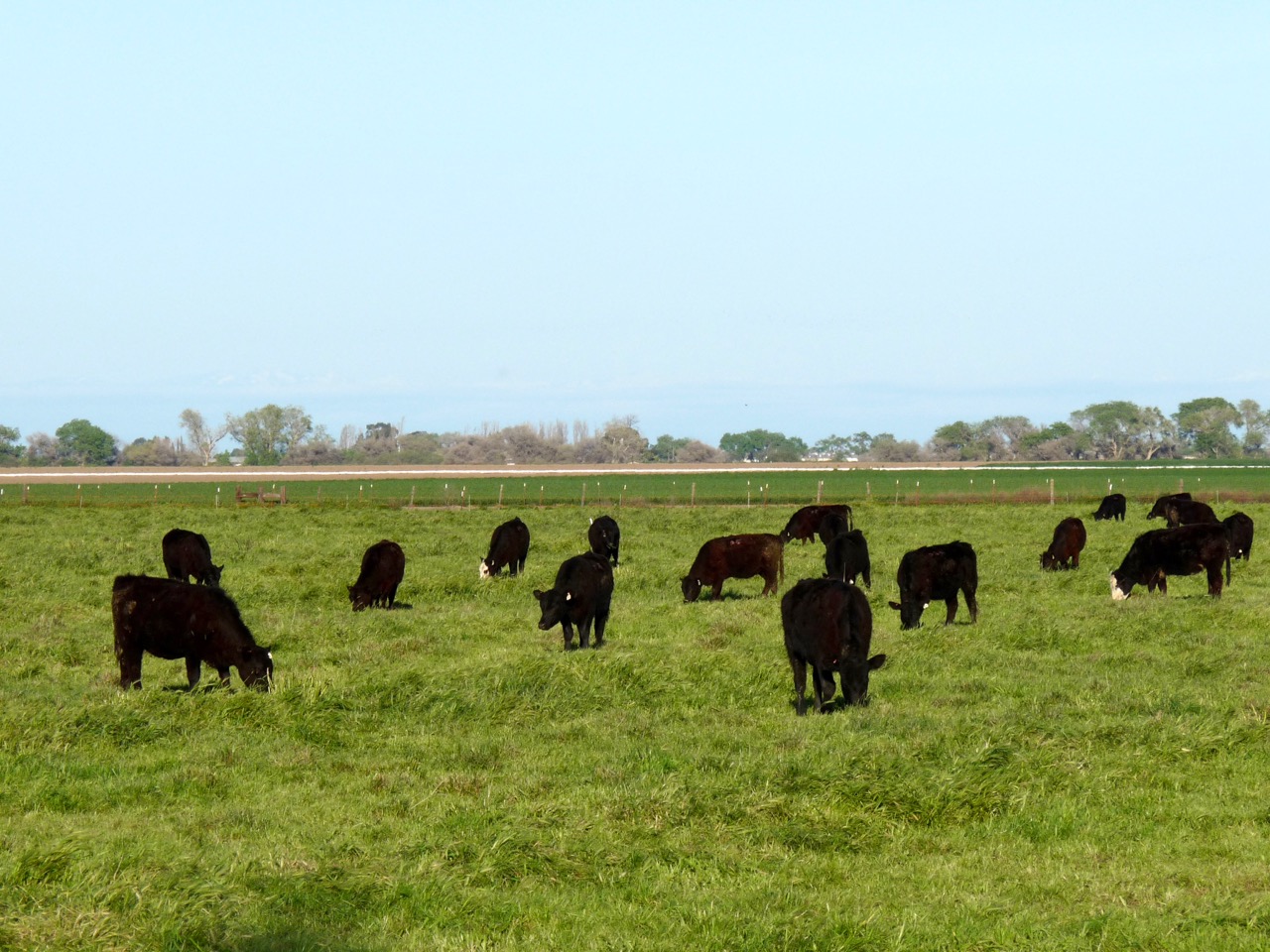
Recently, the club even brought a calf into the student union to let people meet the animal and to educate the public about food animals. The Young Cattlemen also use social media to get their message across.

“We try to put a lot of information out there for them, because we think that it’s important for everyone to understand how food reaches their table and that it’s not just from a super market,” Staggs said.

2021-05-12T11:17:11-07:00December 12th, 2016|

The Latest Buzz in ‘RoboBee’ Research

Thanks to recent headway in RoboBee research and development, these mechanized pollinators could be headed to a greenhouse near you soon.

Guest Editorial By Tim Jennings, President of Custom Case Group, Maker of DroneHangar

My company has been manufacturing custom cases in the drone and unmanned aerial vehicle (UAV) industry for decades. Because we’re involved in so many facets—from the military to the consumer and agricultural segments—my team is often privy to advancements early on. Being a drone enthusiast myself, I try to keep up with the latest developments on my own time, too.

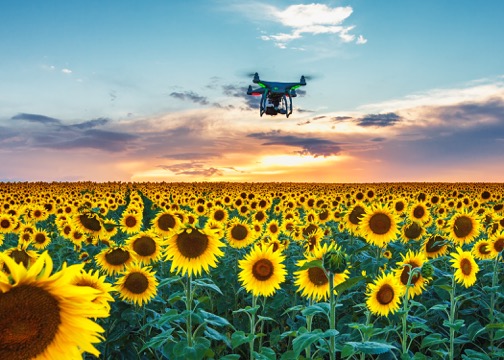
Today, some of the most exciting activity I’m seeing is in the field of agricultural drones, where researchers are making major progress toward mainstreaming RoboBees—tiny drones capable of pollination and other forms of indoor crop maintenance. While open-air agricultural applications, such as crop scouting and pesticide application, are now standard, there’s been little progress in indoor agriculture applications—until now.

New microdrone research in the U.S. and Spain could soon allow RoboBees to run greenhouses and large-scale indoor farms around the globe.

“RoboBees” – The Pollinators of the Future

RoboBees have been on the scene for some time through a collaborative project between teams at Harvard University and Northeastern University. The teams have been working together about 12 years to create “swarms” of tiny worker drones capable of tethered flight. The drones, with wingspans of just 1.2 inches, weigh less than real bees, but, tiny as they are, RoboBees are the result of some intense collaboration among experts in dozens of fields, including neurobiology, computer science and chemical engineering.

The Latest Advancements

Perching & Takeoff. It seems simple: Design a tiny drone that can take off and land easily. However, perching and takeoff have turned out to be among the most critical functions and toughest challenges in RoboBee development. This year, though, the Harvard team may have a breakthrough. The functions of perching and takeoff are critical because they allow the drones to “rest,” protecting them from the mechanical fatigue and power drain of constant flight. The team reported the possible breakthrough in an article in the journal Science titled, “Perching and Takeoff of a Robotic Insect on Overhangs Using Switchable Electrostatic Adhesion,” where they suggest that electrostatic forces allow the small drones to “stick” to different surfaces, such as plant leaves. And the power required to generate those forces is less than what’s needed to keep the RoboBee in flight.

Indoor Environmental Mapping. Large drones that can map and negotiate complex outdoor environments have been around a while; however, small size has been a major limitation in the development of drones capable of indoor mapping. So far, the massive data collection and processing necessary for environmental mapping requires a machine too large for indoor use. But that may be changing.

This year, a research team from the Centre for Automation and Robotics in Spain published a paper titled “Heterogeneous Multi-Robot System for Mapping Environmental Variables of Greenhousesin the journal Sensors, where they describe a heterogeneous robot team capable of monitoring the environmental variables inside greenhouses. They call the drone team, which includes aerial and ground drones, a “system” that understands and negotiates its surroundings by way of a shared multi-sensor application.

The drones within the system, some of which have cameras for visual monitoring, can also measure factors like soil and air temperature, humidity, luminosity and carbon dioxide concentrations in the greenhouse environment.

How Soon?

It could be a couple more years before RoboBee teams will totally manage indoor crops. But advancements like that above ensure this tech is headed to the mainstream fast. What are your thoughts on drone automation for indoor agriculture? Where do you see this tech bringing the industry in the next 20 years?

Feel free to share on the California Ag Today Facebook page; we’re interested in knowing what you think.

2021-05-12T11:05:43-07:00December 12th, 2016|

California Farm Bureau Federation President Decries Water Diversion Plan

Science Shows Increased Water Flow Doesn’t Save Fish, Paul Wenger Says

By Patrick Cavanaugh, Farm News Director

California Ag Today is continuing our coverage of the State Water Resources Control Board’s plan to take 40 percent of the water from the Stanislaus, Tuolumne and Merced Rivers to feed into the San Joaquin River to increase flows for salmon. There is major pushback by affected farmers. We spoke with Paul Wenger, president of the California Farm Bureau Federation, at their 98th annual meeting in Monterey this week. He farms almonds and walnuts in that area, and he and his family would be seriously impacted; they would be forced into more groundwater pumping.

president of the California Farm Bureau Federation

Paul Wenger, President of the California Farm Bureau Federation.

“It just seems the same old adage,” Wenger said. “If we put more water in the rivers, it’s going to be better for the fish. We know that it hasn’t worked with biological opinions. We know it hasn’t worked in the Sacramento, it hasn’t worked in the delta. We need to go after some of these other predatory species: the striped bass. They’re an introduced species.”

Wenger said there’s a lot of data saying that just won’t work. “The studies have been done, the science is out there. Just to say that we’re going to keep adding water to the problem [and] we’re going to get a different result is ridiculous. We have a finite resource of water today. We have growing needs for it for urban [and] foreign environmental flows, but also for farming and manufacturing.”

Wenger believes that the Water Board always makes rules quickly are not invested in the outcome.

“As I tell the folks, you come up with the ideas, but you’re not invested. You’re investing my future. You’re investing my resources, and other farmers’, but when we have these environmental groups say, ‘This is a solution.’ Why don’t you put your money up?”


2016-12-09T15:59:15-08:00December 9th, 2016|

Forging Political Connections Benefits Cattle Industry

Cattle Industry Focuses on Political Advocacy


By Brian German, Associate Broadcaster


At the recent 100th Annual Convention of the California Cattlemen’s Association (CCA) & California CattleWomen, Inc. (CCW) in Sparks, Nevada, just east of Reno, held in conjunction with the Nevada Cattlemen’s Association, more than 900 cattlemen and women traveled to discuss the cattle business and meet up with fellow cattle ranchers for the CCA Centennial Celebration. The CCA Allied Industry Council Trade Show saw one of the largest trade shows in 30 years with nearly 100 booths for attendees to visit over the course of the convention.

One such exhibitor at the trade show, Marvin Kokes, senior vice president, Industry & Member Services, National Cattlemen’s Beef Association (NCBA), the organization of which CCA is a state affiliate, gave a bit of insight about the association he attended the convention to share about. “We work to protect the business climate for producers. Then, as the primary contractor for the beef checkoff program, we work to build demand for beef. It is really being the cattlemen’s voice in Washington D.C.”

Marvin Kokes, senior vice president, Industry & Member Services, National Cattlemen's Beef Association

Marvin Kokes, senior vice president, Industry & Member Services, National Cattlemen’s Beef Association

With offices in Denver and Washington, D.C., NCBA is a consumer-focused, producer-directed organization representing the largest segment of the nation’s food and fiber industry. The NCBA consists of more than 28,000 individual members and 64 state affiliate, breed, and industry organization members. 

Kokes described the robustness of the Washington, D.C. office. “We have around 17 staff in our Washington office. We are there to build relationships with new members of Congress and to help them understand what the priorities are for cattlemen,” he said.

As the primary contact for the NCBA’s Product Council and Allied Industry groups, Kokes understands that the complexity of the cattle industry requires associations like NCBA to bridge the informational gap in Congress. “Most of the people who are elected officials do not come from an agriculture background, so it is very critical that we are there to help explain what goes on America’s farms and ranches,” Kokes said.

NCBA works diligently to advocate on behalf of the cattle industry’s political, economic and social interests. Regarding the recent election, Kokes said, “Every election is important to cattlemen. New people come to Congress and some people leave Congress. Cattlemen have a lot to look forward to; no matter who is sitting in the White House, having good relationships with members of Congress is critical.”

“California range and pasturelands account for 38 million of the state’s 100 million acres of land. Nearly half of those 38 million acres belong to the federal government, meaning many California ranchers are reliant on the availability of federal grazing permits. That’s one of the reasons cultivating beneficial relationships in Congress is so important.”

It follows, according to Kokes, that political action committees (PACs) are important, “because they help get your friends in and tries to get your enemies out of Congress. I am happy to report that 93 percent of the candidates we supported and gave money to in this last cycle were elected.”

“Future priorities will focus on issues of taxes, private property rights, and some serious changes in regulations, such as getting rid of the burdensome regulations of EPA and the WOTUS Rule that was related directly to EPA,” Kokes said.

One of the top five cattle-producing states, California makes up nearly 6 percent of all cattle in the United States. Cattle and calves were also among the top four commodities in the state in terms of production value in 2015, with an overall value of nearly $3.4 billion dollars. Most of California’s ranches are family-owned and operated, and many have been in the same family for multiple generations.

A whole new group of personnel are coming to Washington, making advocacy by Ag organizations even more significant, particularly on trade issues. “We are going to continue to work with the administration on new trade agreements that are beneficial to agriculture. We need good trade agreements and we need to help the administration understand the value of trade,” reported Kokes.

The beef industry is somewhat unique in that cattle are raised in nearly every Congressional district in the country. “There is some level of beef production or beef-related activity in every Congressional district, so having those relationships with our elected officials and helping them understand what is in the hearts and minds of cattlemen is critical,” Kokes said.


Resources

The Beef Checkoff Program

California Cattlemen’s Association (CCA)

California CattleWomen, Inc. (CCW)

2021-05-12T11:17:11-07:00December 8th, 2016|

Borlaug: Innovation is Critical to Scale up Food Production

If  You’re  Anti-Innovation, Bring a Solution!

By Patrick Cavanaugh, Farm News Director

The use of genetically modified organisms, or GMOs, is an important topic to many consumers. We recently talked with Julie Borlaug, granddaughter of Norman Borlaug who earned a Nobel Peace Prize in 1970 for his contributions to world food production and supply, to shine some light on volume of contradictory information available.

Julie Borlaug said, “I think our industry has not done a good job communicating and being transparent. The first [GMO] products we brought were not really for the consumer; they were more for the farmer. We also had scientists doing the speaking, and that is just not great. I mean, to moms, female voices are really more important.”

Julie Borlaug

Julie Borlaug

Borlaug noted the preponderance of public misinformation can be a serious problem. “I saw something a few years ago by the Food Babe where she was telling people not to buy frozen vegetables because they were not healthy. That is totally incorrect. You are telling someone who is low income and who wants to provide vegetables and nutritious food for their child, that the option for frozen food is off the table and they can buy only fresh organic. They don’t have the capacity to do that. That is just false. That is fear, and I have a really big issue with that,” noted Borlaug.

California Wheat, Borlaug

California Wheat

In addition, many non-government organizations (NGOs) condemn the use of GMOs. Nevertheless, the use of genetically modified wheat varieties has helped to transform agricultural production in Mexico, Asia, and Latin America, thanks to Norman Borlaug.

Like her grandfather, who established the World Food Prize thirty years ago, Julie Borlaug supports proactive action, rather than spreading misleading information. “You cannot be anti-hunger and anti-innovation. If you are against innovation, bring a solution to the table,” Borlaug said.

“Quit spending millions and millions of dollars on PR campaigns that sell fear and hate, and create chaos. Come with a solution of your own, because we’re open to any system as long as we can feed people and the food is healthy, sustainable and nutritious,” she said.

2017-07-20T19:45:01-07:00December 7th, 2016|

Record Enrollment at UC Davis College of Agriculture and Environmental Sciences

UC Davis College of Agriculture and Environmental Sciences Really Rocks!

By Patrick Cavanaugh, Farm News Director


Helene Dillard, dean, UC Davis College of Agriculture and Environmental Sciences, is pleased with the big numbers of students attending the top-ranking College of Agricultural and Environmental Sciences.

Helene Dillard, dean, UC Davis College of Agriculture and Environmental Sciences

Helene Dillard, dean, UC Davis College of Agriculture and Environmental Sciences

“It’s really rocking,” said Dillard. “We’re doing very, very well. We have one of the largest numbers of incoming students ever in the entire university. Our College has peaked out its 7,300 undergraduates. We’ve never had that many at one time.”

Why the increased interest in studying agriculture? Dillard said, “We think what’s moving that needle is that everyone is interested in food. They are interested in agriculture.  And they are really interested in that intersection between agriculture and the environment. We have a record number of students that just cannot wait to come on board. We are really thrilled with how smart they are and how eager they are to learn.”

Among the many courses offered by the College, Dillard said Animal Science classes are probably among the most popular. “But of course, beer classes and the coffee class are really popular too. But right now, I’m seeing tremendous interest in agricultural economics and in animal science, to become veterinarians and ranchers, plus specific academic interest in poultry and sheep.”

“Again, those are all things that UC Davis does, so we’re really excited. We’re also seeing a lot of interest in plant sciences, more on that sustainable and food systems and our viticulture and enology program’s growing as well.


Recent Graduate Program Rankings for UC Davis College of Agriculture and Environmental Sciences and related disciplines include:
  • 1st in agricultural sciences (Thomson Reuters ScienceWatch 2011) 
  • 2nd in agriculture and forestry (QS World University Rankings 2016)
  • 2nd in agriculture worldwide (U.S. News & World Report’s “2016 Best Global Universities”)
  • 1st in ecology and the environment (Thomson Reuters ScienceWatch 2011) 
  • 1st in food science and nutrition (Thomson Reuters ScienceWatch 2010)
  • 1st in plant science (U.S. News & World Report’s “2016 Best Global Universities”)
  • 1st in animal science (U.S. News & World Report’s “2016 Best Global Universities”)
  • 1st for veterinary science (QS World University Rankings 2016)
  • 1st among the nation’s veterinary schools (U.S. News & World Report’s “Best Graduate Schools” 2016)
  • Between 1st and 15th among 44 programs in nutritional biology (National Research Council 2010)
  • 4th in environment/ecology (U.S. News & World Report’s “2016 Best Global Universities”)
  • Between 1st and 7th in Entomology among 28 programs (National Research Council 2010)
  • Between 5th and 29th among 116 programs in plant biology (National Research Council 2010) 
  • Between 7th and 42th among 116 programs in plant pathology (National Research Council 2010)
  • 13th in environmental engineering worldwide (QS World University Rankings 2016)
  • 29th in environmental engineering worldwide (2016 Global Ranking of Academic Subjects, ShanghaiRankings)

(Source:  University of California, Davis, Graduate academic program rankings.)


UC Davis College of Agriculture and Environmental Sciences

2021-05-12T11:17:11-07:00December 7th, 2016|

Livestock Economics for Western Producers

Livestock Economics: What Attributes Bring Higher Prices?


By Laurie Greene, Editor


At the 100th Annual California Cattlemen’s Association (CCA) & California CattleWomen’s (CCW) Convention last week in Sparks, Nevada, Tina Saitone, cooperative extension specialist, UC Davis Department of Agricultural and Resource Economics, described her research on rangeland and livestock economics. “Primarily, my focus has been on cattle — beef cattle to date — but I’ve also started some projects recently with sheep producers and the predator interactions they have specifically with coyotes. I am examining whether or not [producers] can use nonlethal depredation methods to mitigate those losses.”

“Right now, I have been concentrating on marketing characteristics of cattle,” she said. “I study those practices employed by producers, such as when they wean their cattle; how many vaccinations they have; whether they market [their cattle] as natural, grass-fed, or organic; and the impact that [these choices] have on their prices.”

Tina Saitone

Tina Saitone, cooperative extension specialist, UC Davis Department of Agricultural and Resource Economics

Interestingly, Saitone and her colleagues have mainly been using satellite video auction data. “Western Video Market Auction actually held their auction this month here in Sparks, Nevada because they can do it at different locations all the time. So, we use that data to figure out cattle characteristics and then determine the marginal impact that each of those characteristics has on price,” said Saitone.

Characteristics such breed, frame score, flesh score, and weight, are definitely controls in Saitone’s research model because those are main drivers of price. “But what we want to do is figure out — holding all those things constant —if a producer raises their cattle natural, what kind of premium does that bring them? We’re really looking for that incremental difference.”

One might expect certain factors such as natural or organic, to deserve a higher price, but there always has to be a buyer. “Right now, when prices are low relative to 2014 and early 2015, ranchers do have some opportunities to get some higher prices in what we would call niche markets. Consumers are increasingly demanding a wider range of characteristics. They want grass-fed. They want organic. They want natural, no hormones. All of these are what we would call credence attributes. If you go to the grocery store and you taste a steak, you probably don’t know if it was raised natural.”

Accordingly, the industry has third-party certification to assure consumers that when they pay a higher price for that product they are actually getting those traits. “Farmers actually have the ability to fill some of those niche markets that consumers have created with their demand and possibly get higher prices than just selling into traditional commercial channels.”

The data that Saitone has been looking at from Western Video is focused on Western states, including California. Certainly, location places Western producers at a persistent disadvantage because the majority of the processing capacity is in the central part of the country, with Nebraska being the hub. Saitone said, “When you think about cattle being raised in California having to be transported all the way to Nebraska, some 1600 or 1700 miles, not only do you have the cost associated with that transportation, but you also have shrink; you have mortality.

California Cattlemen’s Association (CCA)

California CattleWomen

UC Davis Department of Agricultural and Resource Economics

2021-05-12T11:17:11-07:00December 6th, 2016|

Postcard Campaign to Stop Additional Pesticide Regulations Near Schools

Call to Growers: Join Postcard Campaign to Stop Additional Pesticide Regulations Near Schools before Friday, Dec. 9


By Brian German, Associate Broadcaster


Proposed DPR Regulations

“The proposed California Department of Pesticide Regulation (DPR) further restricting growers from applying crop protection products near schools is unnecessary,” noted Kelly Covello, president of the Almond Alliance of California, which advocates and lobbies for the almond industry.

“Basically, this proposed rule is going to add a layer of unnecessary regulation. It proposes restricting pesticide applications within a quarter mile of schools and daycare centers between Mondays and Fridays, 6am to 6pm,” said Covello. She noted there are already regulations in place to protect both the community and the applicator.

Likewise, Colleen Cecil, executive director, Butte County Farm Bureau, said, “We’re very confident in the regulation that currently exists and the responsibility that landowners take when it comes to spraying anywhere. There are rules in place and these rules work.”

“The environmental community has done a bang-em-up job at fear-mongering, period. They believe they can take pictures of kids next to fields and make the farmer the bad guy. Nothing can be further from the truth,” Cecil said.

“Nothing is more important than the health and safety of people,” noted Ceil. “As stewards of the land, farmers already do everything in their power to mitigate risks involved in agriculture and the application of pesticide is no exception.”  Cecil added, “The puzzling part of the proposed regulation is that DPR have stated themselves that they were ‘unable to quantify the benefits’ and that ‘any health benefits of the prohibitions are unknown.'”


Postcard campaign to stop additional pesticide regulation near schools dpr

Postcard campaign to stop additional pesticide regulation near schools

Call for Growers to Take Action

“We have joined California Farm Bureau Federation (CFBF) and other organizations that are working on this issue,” said Covello. “One of the main calls to action for grower engagement with DPR is CFBF’s postcard campaign. If you would like postcards to share with your grower network, please email staff@almondalliance.org or simply print from the Postcard PDF document and mail directly to DPR (contact information is on the last page of the PDF document).   A high volume of input will be critical.

Growers can also sign and share CFBF’s petition. Farm Bureau will deliver the petitions to DPR before the comment period closes on December 9.

“This [proposed regulation] really is unnecessary,” said Covello. “There is no science. There is no injury or illness that has sparked the need for new regulations. We are really hoping we can get our growers engaged by sending in a postcard or sending in comments. Again, growers can contact the Almond Alliance by email at staff@almondalliance.org and by phone at (209) 300-7140.

“We would be happy to get you a postcard,” Covello said. “We can also email it to anyone. So please help us in this fight to stop unnecessary regulation.”


Almond Alliance of California

Butte County Farm Bureau

California Department of Pesticide Regulation

California Farm Bureau Federation

2021-05-12T11:05:43-07:00December 5th, 2016|

Algae in Soils Increases Soil Health, Better Crops

Is Algae in Soils a New Frontier in Plant Health and Yield?


By Patrick Cavanaugh, Farm News Editor


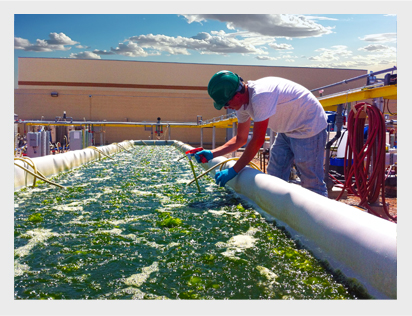
Could applying microalgae to the soil boost yield and strengthen plants? We spoke to Len Smith, chief business office, Heliae Development LLC., based in Gilbert, Arizona, in the southeast Phoenix metropolitan area. “Heliae is a company that is dedicated to unlocking the potential of microalgae,” said Smith. “We’ve been in business now for over eight years. We hope to be able to deliver microalgae products in a lot of areas, including in plant agriculture.”

“While we work with hundreds of algae species, the algae we are currently marketing for plant agriculture is a green algae. It is actually subject to genetic classification so I couldn’t even tell you the exact species at the moment,” noted Smith. “We’re working on several others as well. We have often seen in our early stage testing that many different kinds of microalgae have different positive effects on plant agriculture, so we’re bringing many of them along,” he said.

Unlock the secrets in the soil diversity

Natural Resources Conservation Service (NRCS) Soil Health Campaign

Smith said these algae are among the most common components in healthy soil. “A lot of what we’re doing is actually restoring what is already present in the soil. A lot of the scientists we work with think this is a critical component of the whole plant ecosystem below the soil line.”

Similarly, many university researchers are taking a closer look at algae. “We have about 30 university and contract research studies in, and we are working with growers. We have been selling the product in what I would consider almost a beta launch mode for about two years. So, we probably have about that same number of grower trials—maybe even double that,” said Smith.

Having the algae in the soil not only increased yields, according to Smith, it increased crop quality and strengthened the soil. “Benefits include root mass; in fact, we saw a 20 percent root mass increase in cotton. We have also seen the plant’s ability to grow in stressed environments such as heat stress and drought stress, in some of the work UC Davis did for us. We saw a 25 to 30 percent increase in overall yield in the stressed soils in which the algae was present, as compared to the control,” Smith explained.

Could it be that algae may be the new frontier in plant health and yield? “Yes, we’re very excited about what we’re doing. I would say we are opening a field here that nobody else is really paying attention to. I think that you will be seeing more of these products come to market, hopefully  helping growers get better results in a restorative and natural way,” Smith said.


Heliae Development LLC.

Phycoterra

2021-05-12T11:05:43-07:00December 5th, 2016|
Go to Top