About California Ag Today

This author has not yet filled in any details.
So far California Ag Today has created 2014 blog entries.

Blue Tech Valley Innovation Cluster – Part 1

Blue Tech Valley Funded by California Energy Commission

By Patrick Cavanaugh, Farm News Director

The Blue Tech Valley Central Valley regional innovation cluster represents an expansion and interconnection of multiple incubators in entrepreneurship programs, with services located at each of the seven designated Blue Tech Valley cluster hubs, collectively serving 39 counties and covering two-thirds of California’s geographic area. Funding for the new cluster is provided by a $5 million grant from the California Energy Commission.

The designated hubs for the Blue Tech Valley innovation cluster features Fresno State as the central portion. Other hubs include: CSU Bakersfield, Chico State, Humboldt State University, Cal State University, Monterrey Bay, Sacramento State, and a Sierra small business development center.

California Ag Today recently spoke with Erik Stokes of the California Energy Commission Research and Development Division. Blue Tech Valley was part of a major $60 million initiative the Energy Commission launched about a year ago to really try to create a state-wide ecosystem to support clean energy entrepreneurship across the state.

“As part of this initiative, we created four regional innovation clusters to manage a network of incubator-type services that can encourage clean tech entrepreneurs in the region and really try to help make what can be a very tough road towards commercialization a little bit easier,” Stokes said.

“Blue Tech Valley and their partners were selected to be the Central Valley cluster. A big reason for that was their strength and expertise in the food and agricultural sector,” he explained.

One of the focus areas of the incubator is to find areas in farming to save costs and minimize greenhouse gases.

“We really want to focus on those technologies that can help both reduce water use, as well as energy use,” Stokes said.
2021-05-12T11:05:15-07:00August 30th, 2017|

PowWow Energy Gets Major Funding

The Central Valley Angel Group Invests in PowWow Energy, Inc.

News Release

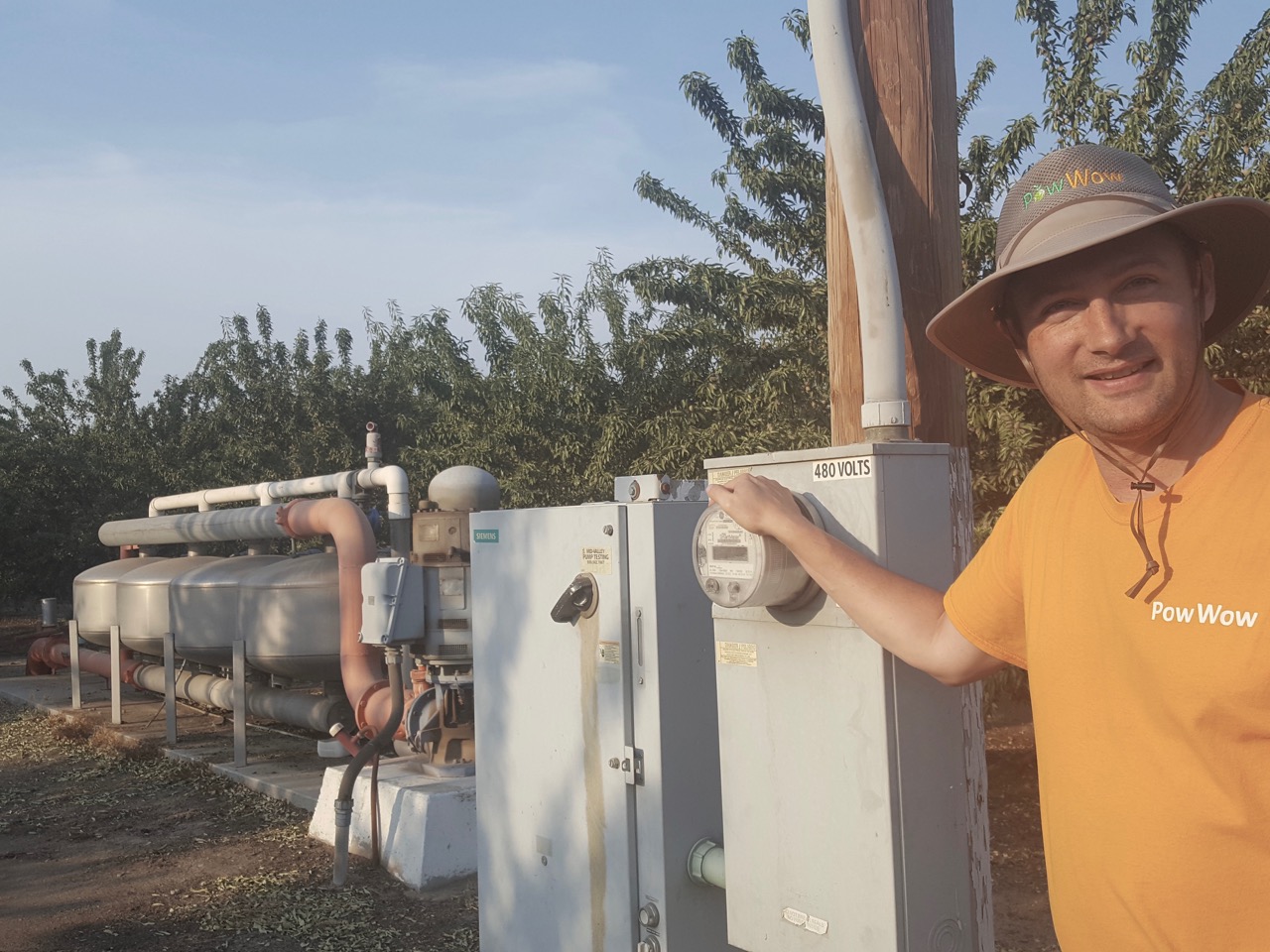
PowWow is applying data science to solve practical problems in agriculture. It provides a simple water compliance solution using a clever algorithm that turns energy data into useful text alerts and water records for growers.

The team of agronomists and computer scientists are extending the data-mining platform with 100 Terabits of aerial images and weather forecasts to identify where farms can recover revenue losses and improve their bottom-line.

Fund Chairman A. Emory Wishon said, “We are thrilled to invest in a company that is passionate about working with farming communities to save water and energy while preserving quality crops.”

PowWow CEO Olivier Jerphagnon added, “Central Valley Angel Group’s investment expands PowWow’s presence in the San Joaquin Valley. We started to work at the Water and Energy Technology incubator in Fresno three years ago, and we’ve taken the time to work closely with growers to understand their needs”.

The local commitment of Central Valley farmers and investors, when combined with the experience of Silicon Valley technology entrepreneurs and investors, strengthens the unique dual culture of PowWow Energy, which is critical to its continued growth and success.

Formed in September 2015, Central Valley Angel Group is a $1 million+ fund whose members are accredited investors. The Central Valley Angel Group invests in high-growth, early-stage companies that are located within the region. In addition to making a return on its investments, the goal is to educate local Angel investors and create ongoing investment capital to help the Central Valley’s start-up economy thereby retaining businesses and supporting job growth.

To learn more about the Central Valley Angel Group or to apply for funding visit www.centralvalleyangels.com

Contact: A. Emory Wishon III, Chair, Central Valley Angel Group, 559-439-4000

2021-05-12T11:05:16-07:00August 29th, 2017|

Maintaining Food Safety – LGMA Part 3

Understanding the Farming Operation

By Jessica Theisman, Associate Editor

California Ag Today met recently with Jon Kimble, and among other topics, he reported on food safety in the state of California. Kimble is the operations business development manager at Safe Food Alliance.

Jon Kimble, Safe Food Allicance

Safety is a big concern for those who work in the agricultural community. Kimble spoke on how it is important that farmers assess those on their property.

“If you see somebody getting out, and getting into your fields, certainly you want to talk to them and make sure they are not going to impact the safety of your products, because that is your financial future.”

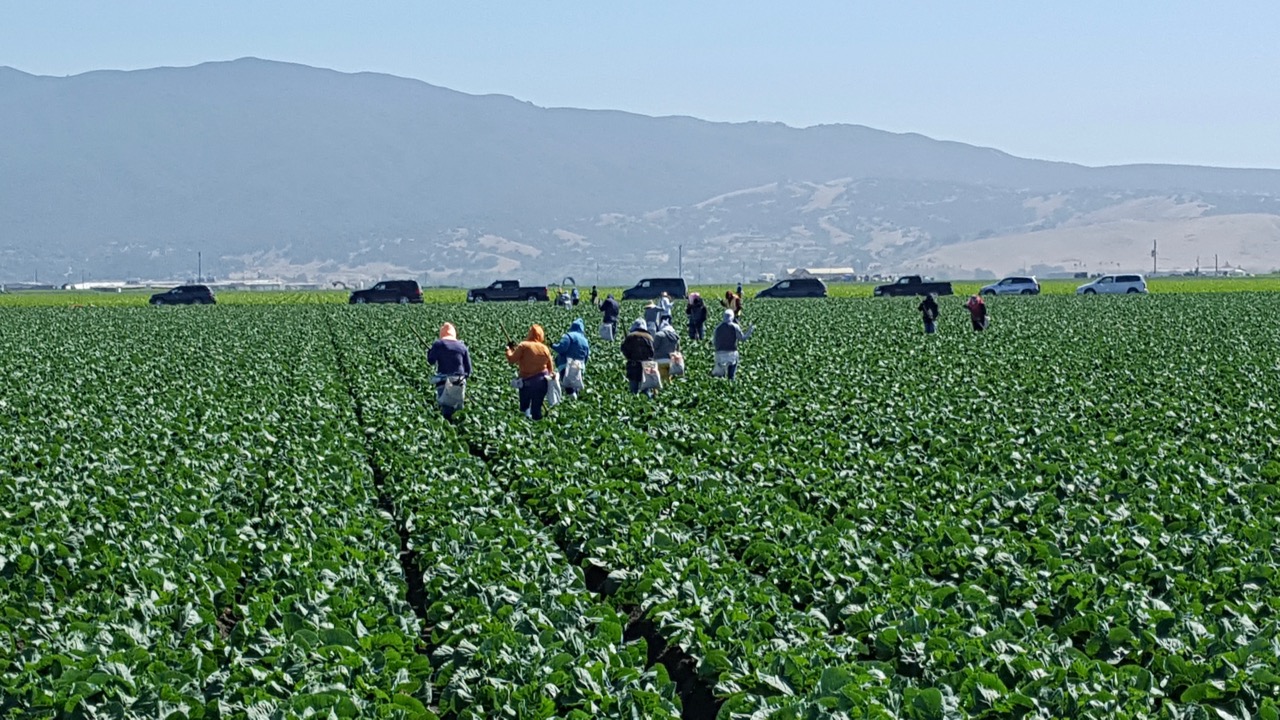
Operations such as U-Pick, people out in the fields, or people part of an activity raise concern. Risks may be managed in terms of providing hand washing, communication, putting up signs, and making sure they understand that they can impact the safety of others when they’re out in the field.

“It really comes down to just practical due diligence, activities, recommendations that come right out of the good agriculture practices that has been developed over the past few decades,” Kimble said.

Kimble also spoke to California Ag Today about the Leafy Green Marketing Agreement (LGMA). This puts standards and measures in place to protect the safety of the crops.

“That is a great example of voluntary activity rising up from within the industry to control risks and control hazards,” he said.

The industry has established the best practices, which have led to a world class food safety program through the LGMA.

“The first compliance dates are coming up in January, and I think a lot of growers do not realize how soon their compliance dates are hitting,” Kimble said.

2021-05-12T11:05:16-07:00August 23rd, 2017|

Expert Talks Protecting Our Food Supply And Industry

Maintaining Food Safety – Part 2

By Patrick Cavanaugh, Farm News Director

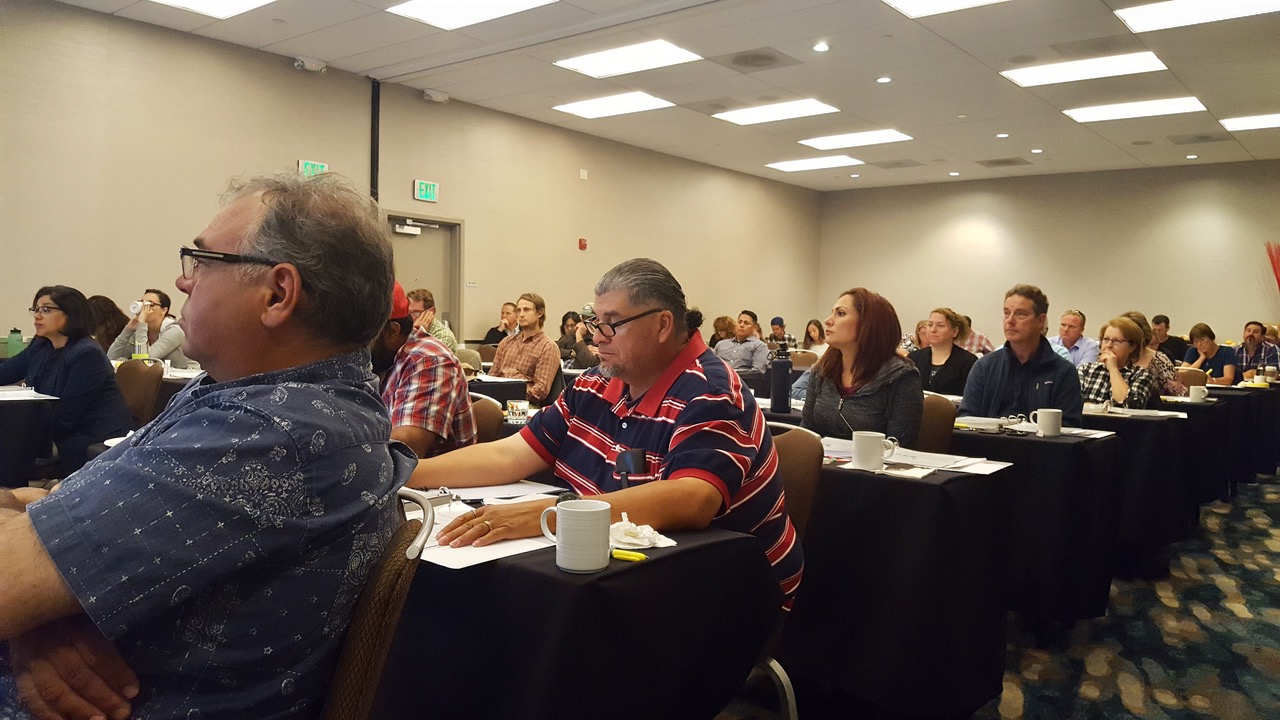
Continuing our series on food safety in the state of California, we spoke with Jon Kimble, Operations Business Development Manager at Safe Food Alliance, and he explained the need for worker awareness when it comes to protecting our food supply.

“Too often, we see these recalls on foods where people are getting ill. Many times, it gets tracked back to an employee. Somebody’s got a virus, somebody’s got a bacteria, they’re sick,” Kimble said. “They come in contact with the food while they’re ill, and that translates back to getting out in the food supply and making people sick.”

“That’s what we’re trying to minimize. In a practical sense, in cases where we’ve observed people getting sick from things, we track that back, see what the source is, and try and share that information with everybody so that they can minimize that from happening in the future,” Kimble explained.

There are economic implications to consider as well.

“It is really paramount to prevent not only economic damage to your own farm and your own business, but also an entire industry,” Kimble said. “We see [that] one bad apple affects the whole industry.”

“We’ve even seen situations, such as a few years ago ,where there were some contaminated peppers, but they suspected tomatoes initially. It impacted an entire year’s harvest of tomatoes,” Kimble said. “We want to minimize the damage to the industry, and how people protect their businesses legally, by doing the right thing.”

Buyers are also setting a higher standard of quality, in light of the new rule.

“The regulation does set a minimum requirement, but buyers, customers, purchasers are setting a higher standard,” Kimble said.

“We’re seeing that trickle down effect as a result of the Food Safety Modernization Act (FSMA), that even folks who aren’t necessarily required to do certain things in their operation are being asked by their customers to do above and beyond what the regulation requires, and even in advance of their compliance dates for the regulation.”

“We’ve seen it both on the processing side and on the growing side, that customers are starting to raise their expectations for growers,” he said.

This is Part 2 of a 3 Part Series.

2017-09-02T23:13:09-07:00August 23rd, 2017|

FSMA Produce Rule – Part 1

Mandatory Training Under Way

By Patrick Cavanaugh, Farm News Director

Jon Kimble, the operations business development manager at Safe Food Alliance in Sacramento, spoke to California Ag Today recently about the Produce Rule of the Food Safety Modernization Act (FSMA)

“The new produce safety rule that FDA has released under FSMA is a rule for growers,” he said. “For part of that rule, certain trainings are required, and the training that we’re conducting has been approved by the FDA. It’s been developed by the Produce Safety Alliance, and meets those requirements that they want to have a supervisor or somebody involved in the operation trained according to this training or equivalent to it.”

“We’re very excited, in that we are working with the California Farm Bureau Federation on many of these trainings. We’re looking forward to working with growers and helping them understand what the regulations say and some practical ways to apply the regulations within their operation,” Kimble said.

Kimble explained that the mandatory training covers every aspect of the operation. “Things that you’re doing before planting, during harvest, and even afterward when the produce is being handled in packing houses,” he said.

The training entails topics such as worker hygiene, water control, soil amendments – the whole gamut of the operation.

“The focus is minimizing potential contamination. We all understand that a farm is not sterile,” Kimble said. “We also understand there are potential sources of contamination that need to be minimize. That’s the focus: minimizing contamination – and the main primary emphasis is really on microbial or biological hazards.”

“Of course, there are chemical and physical hazards, but FSMA is focused on microbiological, including bacteria, viruses and parasites,” he said.

This is Part One of a Three Part Series on Maintaining Food Safety


2017-09-02T23:12:52-07:00August 22nd, 2017|

Chlorpyrifos Under More Scrutiny in California

California Regulators Pursuing Health Protections for Chlorpyrifos

News Release

The California Environmental Protection Agency (CalEPA) announced recently that both the California Department of Pesticide Regulations and the Office of Environmental Health Hazard Assessment are pursuing health protections on one of the most widely used agricultural pesticides in the nation, chlorpyrifos.

The Department of Pesticide Regulation (DPR) released an updated draft risk assessment for public comment. This action marks the start of a public and scientific review of the document, which could lead to increased restrictions on chlorpyrifos statewide. DPR is currently developing interim restrictions on use of the pesticide and recommendations will be made to county agricultural commissioners next month.

In addition, the Office of Environmental Health Hazard Assessment (OEHHA) is referring chlorpyrifos for potential listing as a developmental toxicant under Proposition 65. OEHHA recently posted an announcement that the state’s Developmental and Reproductive Toxicant Identification Committee will consider the listing of chlorpyrifos at its next public meeting.

 “While chlorpyrifos has been protecting crops for more than 50 years, new information in the scientific community leads us to believe the level of risk it poses is greater than previously known,” said CalEPA Secretary Matthew Rodriquez. “We need to better understand the science to ensure our actions protect public health. The actions we are taking today reflect our commitment to the health and safety of all Californians, and the environment.”

Department of Pesticide Regulation

DPR scientists believe chlorpyrifos may pose a public health risk as a toxic air contaminant based on its assessment of the latest studies in the scientific community. However, this new finding, indicated in the updated draft risk assessment has not been peer reviewed and must go through a public comment period and be independently evaluated by other scientists.

On September 15, DPR will hold a public workshop on the updated draft risk assessment at the Pesticide Registration and Evaluation Committee meeting in Sacramento.

After the 45-day written public comment period, which began August 18, DPR’s updated draft risk assessment will go before an independent panel of nine scientists known as the Scientific Review Panel (SRP). The thorough review process, which may ultimately lead to more restrictions on use, may conclude in December 2018.

Next month, DPR will provide county agricultural commissioners with specific interim recommendations, including:

  • Increasing distances between sites where the chemical is applied and sensitive locations, such as homes and schools. These would be specific to each type of application method.
  • New restrictions on methods used to apply chlorpyrifos.

Office of Environmental Health Hazard Assessment

OEHHA will soon open a written public comment period on scientific materials that describe the evidence for the developmental toxicity of chlorpyrifos.  OEHHA will provide the materials and the written public comments to the Developmental and Reproductive Toxicant Identification Committee. The committee is an independent panel of 10 scientific experts that determines whether chemicals are added to the Proposition 65 list as causing birth defects and other reproductive harm. The committee will also consider public comments presented at its November 29 meeting.

If the committee adds chlorpyrifos to the Proposition 65 list as a developmental toxicant, businesses that knowingly cause exposures above minimum levels must provide a Proposition 65 warning.

DPR’s updated draft risk assessment and other documents relating to chlorpyrifos are available at:http://www.cdpr.ca.gov/docs/whs/active_ingredient/chlorpyrifos.htm

OEHHA’s notice of the November 29 meeting of the Developmental and Reproductive Toxicant Identification Committee concerning chlorpyrifos is available at: www.oehha.ca.gov.

2021-05-12T11:05:16-07:00August 21st, 2017|

Raley’s Wants More Fresh Produce

Raley’s Owner Mike Teel On California Farmers

By Patrick Cavanaugh, Farm News Director

California Ag Today recently had an exclusive conversation with Mike Teel, the owner of the Raley’s Supermarket chain, which has 135 locations throughout California and Nevada. We asked him what he’s looking for in terms of the produce produced by farmers in California.

“We’re looking for fresh, and any new products that could be in development, because that’s what differentiates us from the rest of the competitors,” Teel said.

“You know, there are new products coming on, and while most of them are not in the produce and fresh arena, there are interesting ways to combine and bring fresh produce and different combinations for our consumers. We’re a great chain for that, because we’re not too big, but yet not too small,” Teel explained.

Teel told us that Raley’s being based in California does have an advantage in being close to the farming industry. “It does make it easier for us to get it into the market faster,” he said.

And Teel said that consumers want to know more about the produce they’re buying. “Today’s consumer wants to know where their food comes from, and who’s producing it,” Teel said.

“They want to have somewhat of a relationship, even if it’s just the knowledge of who they are, particularly if they’re a family business, and so we try and highlight that,” he continued. “We have great relationships with our producers.”

Teel added that consumers would like to see an image of the farmer on the package. “I think they want to see that. They want to have a connection with the source of their food, and so any way that we can convey that to our consumer, whether it is with photographs or information at point of sale, or highlighting them in an ad, where it be online or on television. I think it resonates with the consumer.”

2017-09-02T23:14:31-07:00August 18th, 2017|

Expert Emphasizes Farm Equipment Safety

Nut Harvest Safety – Part 4

By Jessica Theisman, Associate Editor

On the job injuries are all too common in agriculture when working with tractors and other machinery. We spoke with Paul Williams, a senior loss prevention consultant with the State Compensation Insurance Fund, about the importance of farm equipment safety.

One big safety concern is unguarded PTO shafts and missing guards, which could also lead to a hefty fine. Checking these areas are part of the preseason inspections that should be done at harvest. Farmers should get out there and make sure everything is working properly.

Farm Equipment Safety

Paul Williams

“It is cheaper to repair equipment in the shop than it is trying to make the repairs in the field. Just proper maintenance and making sure things are properly guarded,” Williams said.

According to Williams, wearing seat belts while operating tractors is also extremely important. “Every year we get these fatalities operating tractors. Fifty fatalities a year maybe in tractors; they’re all so preventable,” he said.

“We are all used to driving cars in our California, wearing our seat belt. We get on farm equipment, all of the sudden we don’t know what that seat belt’s for anymore,” Williams said. “There are all kinds of excuses for not wearing a seat belt. At the end of the day, your safety is worth the extra three seconds it takes to put one on.”

Even if your tractor has rollover protection, it is very important to wear a seat belt as well. A lot of safety equipment is the cause of death when a worker does not wear their seat belt.

“They are ejected and tractors roll over and what kills the worker? It is that rollover protection that crushes them into the ground,” Williams explained.

Many workers rush because they think that it makes them more efficient. If you are being rushed, you are putting yourself at risk.

“The whole idea at the end of the day is to go home to your family, safe. Be able to return the next day to your work. You should always work to provide, to live, not live to work,” Williams said.

2017-09-02T23:21:23-07:00August 17th, 2017|

A Challenge Regarding NOW Monitoring

NOW Monitoring Challenged This Season

By Patrick Cavanaugh, Farm News Director

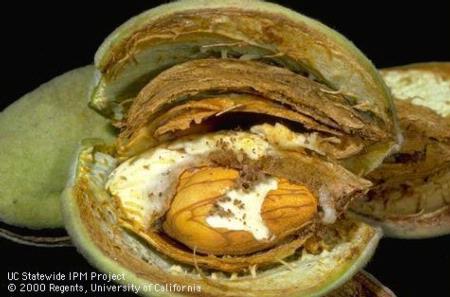
Navel orangeworm (NOW) is the number one pest in almonds and pistachios. There are many tools to monitor and control it, and ironically, one tool is making it difficult for researchers to understand the pressure in the orchards. Joel Siegel, a research entomologist with USDA ARS in Parlier in Fresno County, spoke with California Ag Today about the issues in NOW monitoring.

Joel Siegel on NOW Monitoring

Joel Siegel, research entomologist with USDA ARS in the Parlier office in Fresno County.

“One of the problems now is so many people are using mating disruption that it’s shutting down the pheromone traps, so I don’t have reliable trap data anymore. I have my own traps. Most of them are at zero,” Siegel said. “That could mean no caught navel orangeworm adults.”

“I have some traps that are catching, so I would tell people that the population is on the upswing now. We’re coming up to 2700 degree-days in a lot of locations,” he said.

That degree-day number represents the amount of accumulated heat units, or higher temperatures to push the pest to a new generation. NOW mating disruption is a strategy where the female pheromone is spread through the orchard through special aerosol emitters, and the widespread pheromone confuses the males because of the high pheromone concentration and thus, no mating.

“When you have mating disruption nearby, it interferes with the NOW traps,” he said.

The pheromone trap attracts males to it and gives researchers an idea of the concentration of the males in the orchard. No trapping of males? Then you really don’t know the numbers in the orchard.

“The PCAs are going back to a lot of their traditional methods, such as egg traps instead,” Siegel said. “Time will tell if navel orangeworm pressure is great this year.”

2021-05-12T11:01:58-07:00August 16th, 2017|

Temperance Flat Plan Would Triple Current Storage

Temperance Flat Application Submitted

By Patrick Cavanaugh, Farm News Director

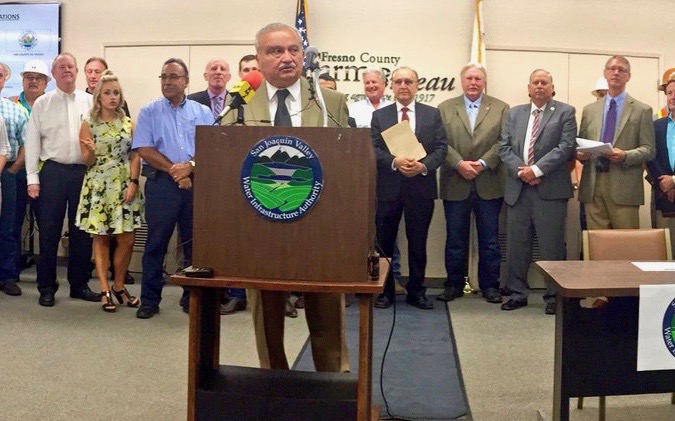
It was an historic day in terms of fixing California’s water infrastructure. The application was signed and submitted to the California Water Commission on Monday for funding, getting one step closer to building the Temperance Flat Dam behind the Friant Dam and Millerton Lake northeast of Fresno. Mario Santoyo is Executive Director of the San Joaquin Water Infrastructure Authority, and they’ve worked mighty hard over the last 10 years to get to this step.

“That came together with support from five counties, Merced, Madera, Fresno, Tulare, and Kings, in putting together an application to the State of California Water Commission under what they call their Water Storage Investment Program,” Santoyo said.

Monday was the official deadline for those requesting funding for construction of projects. The money comes from the 2012 water bond, which allocated $7.12 billion to improve California’s water infrastructure.

Santoyo said that the application they submitted is requesting $1.3 billion.

“That funding would initiate the construction of the Temperance Flat Dam, creating the Temperance Flat Reservoir,” Santoyo explained.

“This would enhance the storage by 1.26 million acre-feet, thereby tripling capacity of the current Millerton Lake Reservoir, saving all this water that’s currently going to the ocean due to Millerton’s lake under supply.

“Temperance Flat Reservoir water will provide surface water deliveries as well as water to recharge groundwater storage. “This will create a much more reliable water supply to the farmers and the cities here in the San Joaquin Valley,” Santoyo said.

The applicants for this and other proposed projects should know sometime in early 2018 if their projects were funded.


2017-09-25T17:20:41-07:00August 15th, 2017|
Go to Top