About California Ag Today

This author has not yet filled in any details.
So far California Ag Today has created 2014 blog entries.

Many Questions Around SGMA Law

SGMA Law is Poorly Written

By Patrick Cavanaugh, Editor

A recent meeting brought farmers and other stakeholders to California State University, Fresno to discuss the possible impacts of the Sustainable Groundwater Management Act (SGMA).

SGMA requires governments and water agencies of high and medium priority groundwater basins to halt overdraft pumping and to bring those basins in equal levels between pumping and recharge. Under SGMA, these basins should reach sustainability within 20 years of implementing their sustainability plans. For critically over drafted basins, that will be 2040. For the remaining high and medium priority basins, 2042 is the deadline.

Don Wright,the publisher of WaterWrights.net, which is the only agriculture water reporting service in the Valley, spoke om the topic.

“SGMA is an overwhelming concept for most people because it’s an overwhelmingly poorly written law,” Wright said. “However, you show me anybody more creative than a farmer trying to get water. Hopefully, people left [the meeting] with the hope that others are looking out for solutions.”

Farmers and other stakeholders attended a recent SGMA meeting at California State University, Fresno.

Wright explained that the meeting helps blunt the impacts, the intended consequences, and the unintended consequences that come from legislation like this.

On the panel were farmers, agronomist, soil engineers, farmers, and a water attorney.

“All of these people are intimately involved in how the junction between water being delivered to the plants and harvest taken place. A lot of questions were answered, more importantly, we started defining the issues that need to be asked. And often that’s often the most critical step,” Wright said.

Lauren Layne, a water law attorney with Baker Manock and Jensen, suggested that farmers take action and put meters on their wells to start collecting data that could be of use to them.

“That’s a double edge sword,” Wright said. “For one it’s, it’s like putting a GPS on your vehicle for the government to follow you around. You don’t want that. You don’t want the government necessarily know how much water you’re using. But on the other side, if you keep that information private, once SGMA starts being implemented, and you can prove that you’ve used X amount of water, you can report your average cost per acre. Also, if a farmer is in an area with surface deliveries, how much does the surface deliveries impact your pumping? That’s a great combination to have.”

Wright said if the industry can get enough information, then they can report that the reason the farming industry needs to repair aquifers is due to cut offs from the deliveries to farmers.

Service providers, product manufacturers, and designers are looking at solutions to SGMA. These products can be seen at Fresno State’s Water Energy and Technology (WET) Center.

“It’s all about how can we keep farmers farming,” Wright said. “I know when a farmer is by himself and your back is against the wall, people are looking out for you.”

Wright also explained that the people that are populating the Groundwater Sustainability Agency (GSA) boards are not the enemy.

“They are men and women like you and I, with a stake in it. They are not the ones trying to cut off the water; they are the ones with boots on the ground dealing with a poorly written law.”
2018-12-05T15:26:30-08:00December 5th, 2018|

Tea: A Potential High-Value Specialty Crop in California

California: The State That Really Grows It All—Even Tea

By Mikenzi Meyers, Associate Editor

New opportunities for California Farmers are on the rise. Jeff Dahlberg, director of the Kearney Ag Research and Extension Center in Parlier, recently gave California Ag Today insight into a new project on growing tea in the state.

“The folks up at Davis have been able to propagate enough tea to get us at least half an acre or a bit more planted, so we’re trying to get that planted this fall,” he explained.

However, this isn’t the first time the idea of growing tea has been introduced to California. In fact, Dahlberg noted that Richard Nixon actually traveled to China to look into bringing it back to the states. Although the idea didn’t progress much further, plants were saved, and the project is being brought back to life.

Dahlberg said that tea has a lot of potential as a high-value specialty crop for those looking to grow it.

“There are a lot of really, really interesting things coming down,” he promised.

For more information on the Global Tea Initiative, visit GlobalTea.UCDavis.Edu.

For more information on the Kearney Ag Research and Extension Center, visit their website at: kare.ucanr.edu

2018-12-04T15:45:20-08:00December 4th, 2018|

Social Media Critical To Reach Consumers

Animal Ag Alliance Promotes Social Media to Bridge the Gap Between Farm and Fork

By Mikenzi Meyers, Associate Editor

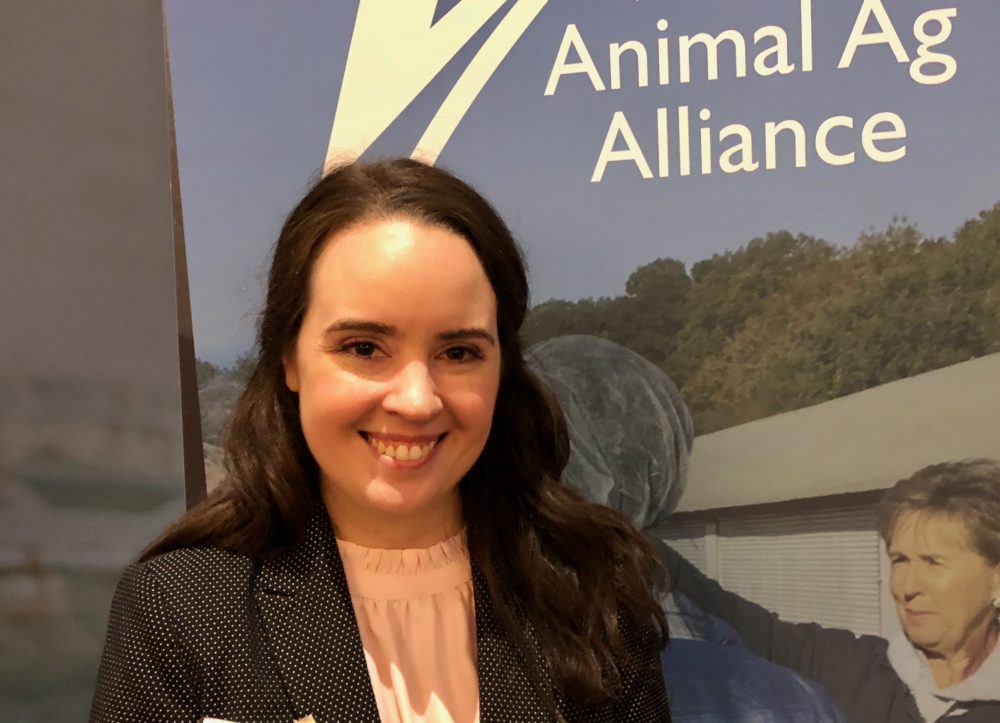
In the age of social media, facilitating the connection between producer and consumer is more accessible than ever. Casey Kinler, Communications Manager with the Animal Ag Alliance based out of Arlington, Virginia, is not only urging farmers to jump on board the social media craze but is also focusing on helping zealous educators develop their message.

“Now more than ever, it is really important for individual farmers and ranchers to be on social media,” Kinler said.

Although this may be foreign territory for some, she recommends beginning with only one platform such as Facebook because it offers the biggest reach of people

produce safety

Bloggers Learning more About California Agriculture

To take it one step further, the Ag Alliance also works with college students, hosting an online scholarship competition where the goal is to teach them how to effectively communicate about animal agriculture. They just celebrated their 10th anniversary of the competition, where over 430 individuals from more than 40 different states participated.

“It’s really important for farmers to get out there and share what they’re doing on their farm and make sure that people in their community know that they are a trusted source.”

2021-05-12T11:17:09-07:00December 3rd, 2018|

Tea: More Than Just a Drink

Rich American History Around Tea

By Mikenzi Meyers, Associate Editor

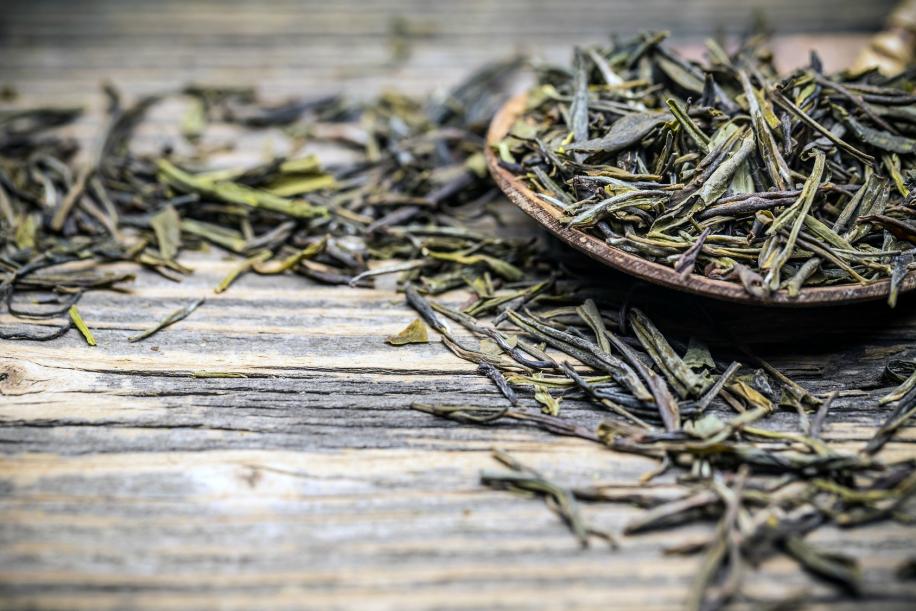
As the weather starts to get colder in California, nothing sounds better than a cup of warm tea on a chilly day. When reaching for what might be your favorite winter drink, Jeff Dahlberg, director of the Kearney Ag Research and Extension Center, urges you to think about the rich history behind it.

Dahlberg explained that, “Americans have been drinking tea for a long time. Back in the 1700s, as I understand it, there used to be tea shops everywhere in the U.S.”

tea

Jeff Dahlberg

He further emphasized the importance of truly educating yourself on the drink, which will only add to your ability to select the teas that best suit your pallet.

Even better, Dalhberg believes that first-class teas can be grown right here in California—an opportunity that the Global Tea Initiative in Davis is already looking into.

“Bottom line, we can actually grow pretty high-quality, high-yielding teas here in the state, and the folks at Davis are really excited about that,” he said.

For more information on the Global Tea Initiative, visit GlobalTea.UCDavis.Edu.

For more information on the Kearney Ag Research and Extension Center, visit their website at: kare.ucanr.edu

2018-11-29T16:21:28-08:00November 29th, 2018|

It’s Past Time to Manage California Forests

Reducing Catastrophic Devastation with Preventive Forest Management

By Patrick Cavanaugh, Editor

In light of the deadly Paradise fire in northern California, along with the other devastating fires in the state over the last 10 years, California Ag Today spoke with Secretary of Agriculture Sonny Perdue and Secretary of the Interior Ryan Zinke about the state’s forests.

Perdue believes that significant losses could have been averted.

“The issue really right now is what are we going to do about it? These are called disasters. Because of the loss of life, wildland fires have been greater than hurricanes this year,” Perdue said. “We’ve had two significant hurricanes, but the death toll is surpassing that. And the interesting thing in this disaster: these are disasters that we can do some things about, and we need to be about doing things … that we can do, but we need the authority to do that.”

Zinke said that officials need to act on good forest management.

“We talked about active forest management for a long time, but you know, talking’s over,” Zinke said. “It’s now time to act.”

Zinke noted common sense forest principles that need to be addressed at once.

“One is to remove the dead and dying trees; to thin and do prescribed burns late in the season rather than midseason,” Zinke explained. “This is fixable. The president’s right, and this is not just one administration—this goes back years of failure to manage our public lands, and it is absolutely a situation that can be mitigated, but we need to act.

Ryan Zinke, Secretary of the Interior

“It is unsustainable and unacceptable that we have the devastation, the loss of life, but we need to prioritize getting back to an active management system. There are other countries that prevent the devastation,” Zinke said. “I spent a lot of time in Germany, which does not have the scale of fire that we experience. There are models of active forest management that are effective, and this is the time to act.”

But Zinke explained that good forest management in California has a big problem: radical environmentalists.

“Take a look at who’s suing. Every time there is a thinning project, who’s suing. Everyone should recognize that the density of dead and dying trees is higher. The density of trees are higher and there are active forest management principles that we should use to mitigate these devastating forest fires,” Zinke said. “However, when there is lawsuit after lawsuit by, yes, the radical environmental groups that would rather burn down the entire forest than cut a single tree or thin the forest. And it’s easy to find who is suing and who has promulgated these destructive policies.”

Zinke said that he does not want to point fingers just at the environmentalists, though.

“There’s a lot of variables: the season’s getting longer, the temperatures are getting hotter. We’ve had historic drought conditions in California, which has lead to dead and dying trees from beetle kill. There is a high density of trees, with enormous underbrush and those things can be mitigated, but we have to get to work,” he explained.

Perdue challenges the radical environmentalists’ desire for an untouched, pristine forest.

“I think that’s been the theory from well-meaning environmentalist over the years: is that a forest that you did nothing to was pristine,” Perdue said. “We know that’s not to be the case. It gets undergrowth. It gets where you don’t have good recreational activity, poor hiking, poor access or wildlife growth and access, water quality, all those kind of things. It’s not pristine, and that’s the issue that we’re trying to bring up. A well managed, well-groomed forest is always better for all of those kinds of issues.”

Sonny Perdue, Secretary of Agriculture

A well-managed forest provides economy and jobs for rural communities as needed, but wildlife, the recreational aspect, the hiking, the water quality, all those also improve with well-managed forests.

“I think some environmentalists are coming around to that to that way of thinking, I think even some environmentalists realize they’ve overreached and [are] keeping management out of these forests, but we need more to come along, and we need the lawsuits to stop,” Perdue said.

Zinke said public land is for the benefit and the enjoyment of all people and not special interest groups.

“And what we’re seeing in the last decade [is] that special interest groups are really exercising their very tight agenda. The result has been a buildup of fuels coupled with droughts, and with increased density of dead and dying trees, as well as beetle kill. And so the condition of our forest as we look at them today, are not healthy—and they are a threat to populations like, like Paradise, and we can do better,” Zinke explained.

“I think the solution is looking at models that are effective, using best science, best practices, and certainly having more authority or we don’t have to go through an entire Environmental Impact Report (EIS) to cut a single tree,” Zinke said.

And that’s exactly what Zinke had to do when he was a congressman in Montana.

“[As] a former congressman, I sponsored the bill to allow a power company to remove vegetation in a prescribed easement. And it took an act of Congress to move the bill through. But is still gave 60 days for a notification before the power company could remove what was called an imminent danger tree. This is a tree that’s going to fall on the power lines, no doubt … it has a potential of starting a forest fire, but it still took 60 days of notification for a power company to have the authority to remove a single tree in a prescribed easement, he said.

Zinke noted that there are a number of legislative fixes, and some of them can be in the Farm Bill.

“We need more authority to have category exclusions, to do the right thing and take a common sense approach so we don’t have to go through year after year of these 100,000-acre-plus fires that are enormously destructive,” Zinke said.

The massive fires put our firefighters and our communities at risk.

“I do think that America is waking up, and sees that we can manage these forest using best practices, and best science,” Zinke said.

“We should be able to manage our forests. And when nature alone takes this course without management .. it has consequences, and those consequences, unfortunately, have led to entire communities being destroyed and a tremendous amount of loss of life. We can do better and we should,” Zinke explained.

2021-05-12T11:05:07-07:00November 28th, 2018|

Sorghum Not Well Known in the U.S.

Sorghum Used in Different Ways in the World

By Mikenzi Meyers, Associate Editor

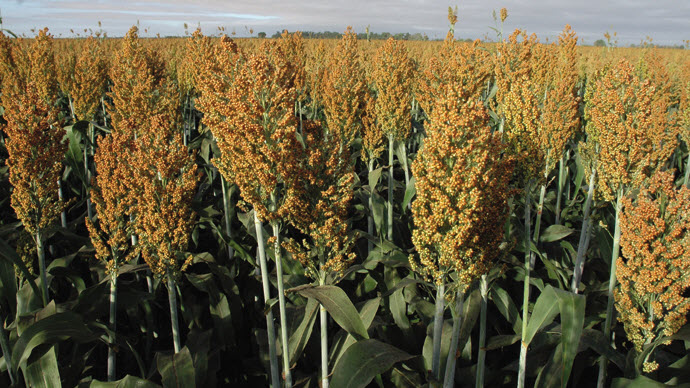
The Kearney Ag Research and Extension Center is currently doing extensive drought tolerant research on sorghum, a plant with a variety of uses. Jeff Dahlberg, director of the Kearny Ag Research and Extension Center in Parlier, knows the complexity of the plant, and the need to educate farmers about it.

Sorghum

Sorghum is used for humans and animal feed around the world.

“The challenge here is that nobody knows very much about sorghum, and I have to kind of retrain our nutrition people about how to use it properly, and how to treat it so that you can get the most use out of it,” Dahlberg said.

He further added that in most parts of the world sorghum is primarily used for human consumption, however, here in the United States, we use it for animal feed. Dahlberg has been looking into introducing the plant to California dairies as an alternative for forages that require more water.

Even though producers that currently use sorghum are pleased with the results, a new problem has been brought to Dahlberg’s attention.

“We had this insect show up called the Sugarcane Aphid. It can be controlled, but it takes a bit of management,” he explained.

Although the aphid presents challenges, Dahlberg knows that with the proper training the issue can be resolved.

For more information on the Kearney Ag Research and Extension Center, visit: kare.ucanr.edu

2021-05-12T11:05:07-07:00November 27th, 2018|

Global Tea Initiative at UC Davis

UC Davis Could Be Center of Global Tea Research

By Jessica Theisman, Associate Editor

Researchers at the Kearney Agricultural Research and Extension Center in Parlier are testing whether or not tea can be grown in California. California Ag Today recently spoke with Jeff Dahlberg, director of the center. He told us about the Global Tea Initiative at UC Davis. The Global Tea Initiative looks to explore the history and cultural importance of tea.

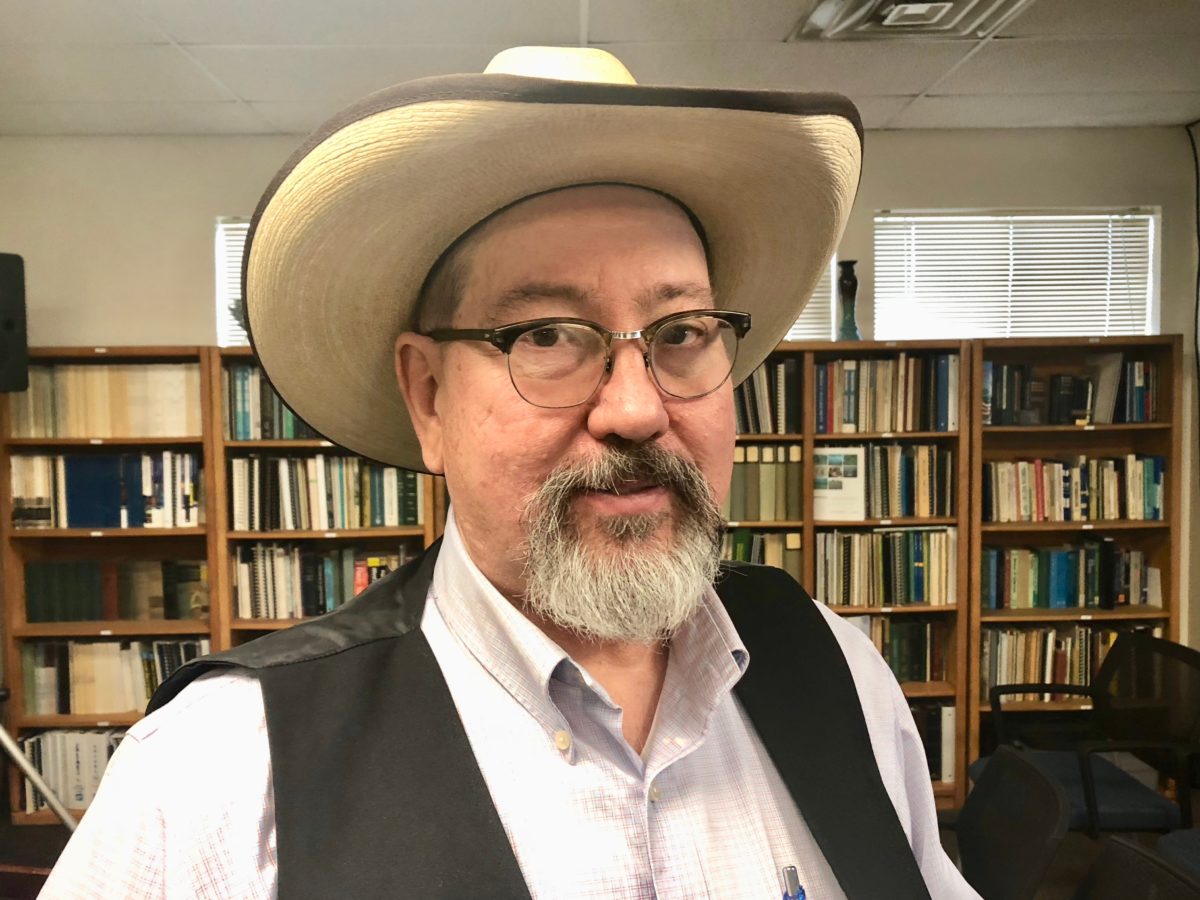
Jeff Dahlberg, director of the Kearney Agriculture Research and Extension Center in Parlier, Fresno County

Jeff Dahlberg, director of the Kearney Agriculture Research and Extension Center in Parlier, Fresno County

“There’s lots of excitement about it, and people are really starting to take to the initiative,” said Dahlberg. “People are starting to look at the Global Tea Initiative as a leader for research in the U.S.

Dahlberg believes that the support exists because of the wide variety of diverse crops in California.

We grow 400 different crops in the state because California is one of the few places in the world that has that kind of diversity.

“I think it’s going to offer some unique opportunities to some farmers who really would like to diversify and perhaps get into something that may be really unique,” Dahlberg said.

For more information on the Global Tea Initiative, visit GlobalTea.UCDavis.Edu.

2021-05-12T11:05:07-07:00November 26th, 2018|

Drought Tolerant Sorghum in CA

California Ideal for Drough Research

By Jessica Theisman, Associate Editor

Research is being done on drought tolerance and sorghum. California Ag Today recently spoke with Jeff Dahlberg, director of the Kearney Agricultural Research and Extension Center in Parlier about the topic.

“The sorghum research has gone pretty well for the drought tolerance; we have just finished publishing our fifth article on their first year of data,” he said.

There is a lot of interest in the research findings developing through all the drought work. California is a unique spot to do drought work on a field scale because it does not rain very often.

“That allows us to basically control the field through our ability to add water whenever we want to. I’m really excited about this,” Dahlberg said.

There are genes that are turned off and on with the application and/or lack of water.

Jeff Dahlberg, director of the Kearney Agriculture Research and Extension Center in Parlier, Fresno County

Jeff Dahlberg, director of the Kearney Agriculture Research and Extension Center in Parlier, Fresno County

“The challenge for us now is to start taking all this data and trying to make some sense out of it,” Dahelberg explained.

It is critical to find out which genes are needed for drought tolerance and how they can get them expressed in plants.

“I think this is long-term basic research but has long-term implications in our ability to produce more drought tolerant crops to help feed the world,” Dahlberg said.

Sorghum has a long-standing history in California. It was grown here in the late 1800s. The USDA brought sorghum to California as a drought-tolerant feed.

“In the 1960s, there were almost 400,000 acres of grain sorghum grown in the state, primarily as a rotation crop for cotton,” Dahlberg said.

This crop is making a come-back with all of the droughts California has been going through.

“It’s a very drought tolerant crop. Probably one of the most drought tolerance cereal crops that we grow worldwide,” Dahlberg explained.

2021-05-12T11:05:07-07:00November 23rd, 2018|

It’s Truly a California Thanksgiving

California Growers and Ranchers Provide Nearly Everything On the Table

By Patrick Cavanaugh, Editor

It’s truly a California Thanksgiving, as most of the products come from the growers and ranchers here.

Turkeys come from several areas of the state, and while California is No. 7 in turkey production, they do supply most of the western United States.

And the famous Mrs. Cubbison’s dressing comes from a California gal, Sophie Cubbison, who as born in 1890 in the San Marcos area of San Diego County. A long interesting story made short: In May of 1920, she graduated from California Polytechnical University with a degree in Home Economics. It was 1948 when she used broken pieces of the popular Melba toast and added seasoning to make stuffing. A factory in Commerce, CA, churns it this time of year.

And farmers in California also produce almonds, walnuts, pistachios, raisins, prunes, figs, dates, apricot, and pomegranates right up the food line.

Celery comes from the Oxnard and Ventura area, and the ingredients for the stuffing mix–carrots, lot of lettuce and fresh spinach–in Salinas now that they have all these greens, already washed and bagged in the produce department. The green beans come from California growers as well. c

You’ve got oranges, kiwi fruit, colorful persimmon fruit, table grapes, strawberries, raspberries, and blueberries that have been freshly harvested from many areas of the state. You’ve got sweet potatoes from the Merced area. This is the major season for them. You’ve got all kinds and colors of potatoes and tomatoes and parsley, onions and garlic–all crops grown in California

Practically all the fruits and vegetables and nuts are part of America’s Thanksgiving, and nearly all of it comes from California. There is often a wide array of cheeses and that wonderful whip cream that comes from the California dairy industry—number one in the industry.

And don’t forget about the great variety of California wine grapes that are grown by California growers and then crafted into great California wine.

You’ve you have apples and those small round watermelons that are a great snack or dessert item as part of a fruit salad. And we have poultry, and even California lamb if you want to go that way.

And of course Martinelli Sparkling Apple or Grape cider from Watsonville. Local growers provide the tree-ripened fruit to the award-winning company, which is more than 140 years old and still family-owned and run by the founder’s grandson and a great-grandson.

In fact, it was 1890 when the company was award the first place at the California State Fair.

And by the way, you know that pop-up turkey timer that indicates when the turkey has reached the correct internal temperature? It was invented by public relations genius Leo Pearlstein, who handled promotions for the California Turkey Advisory Board for 25 years. Each Thanksgiving, hundreds of consumers would call to ask how long it takes to cook a turkey in the oven. In the 1960s, Pearlstein and a turkey producer from Turlock were sitting in a room trying to figure out the solution. They looked up and noticed the fire sprinklers in the ceiling.

Sprinkler water comes on when it is hot enough to melt a metal alloy. The same concept is used in the pop-up timer. Many turkey brands have the special pop-up timer included with them today.

With the exception of cranberries, it’s really a California Thanksgiving.

And we are grateful to all the California farmers and ranchers for providing so much for all of us this holiday and throughout the year.

2018-11-22T03:35:57-08:00November 22nd, 2018|

Preventing the Spread of ACP

Valley Citrus Growers Continue Vigilance

By Jessica Theisman, Associate Editor
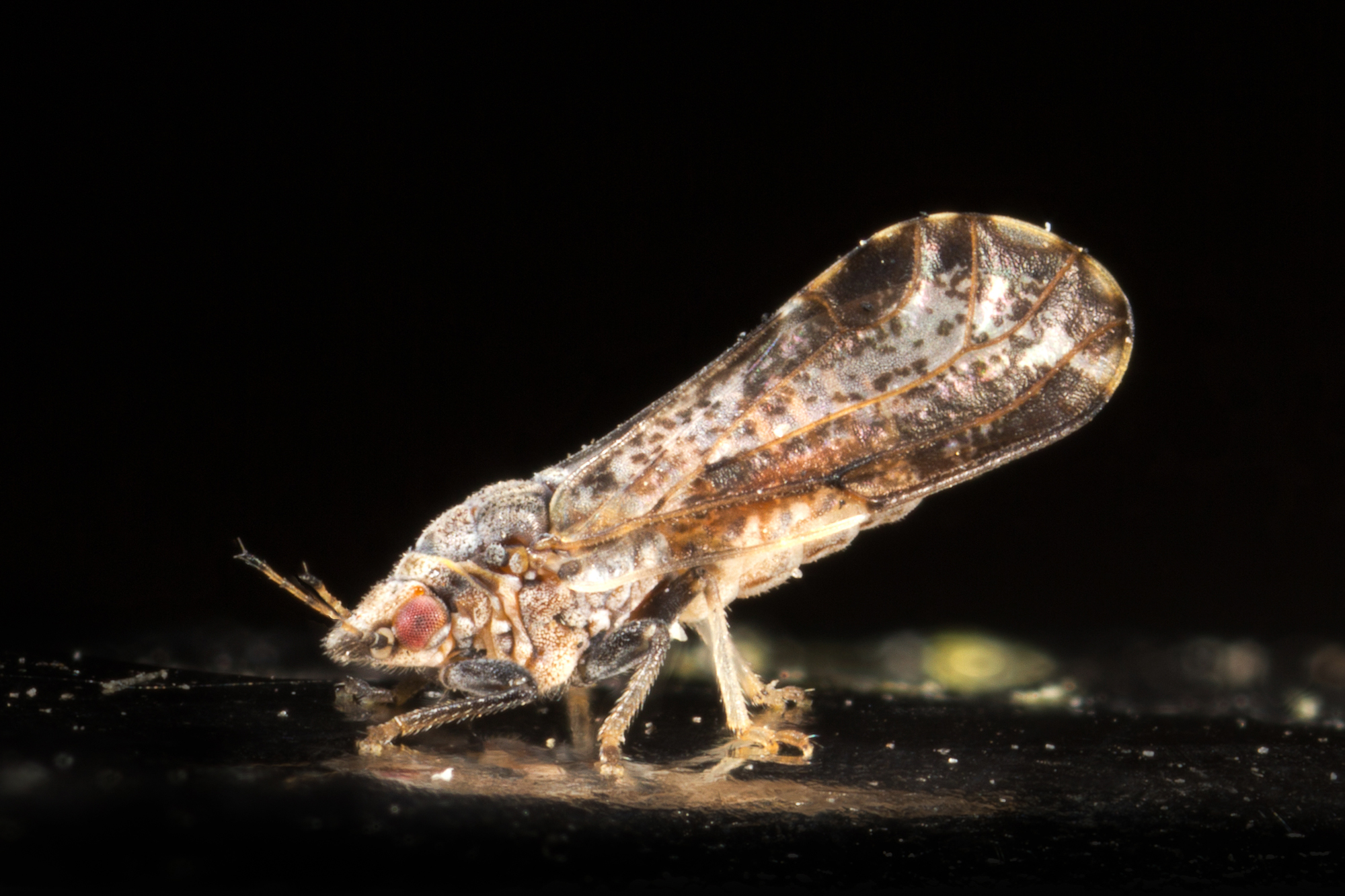
ACP

USDA ACP Cooperative Program Map (Source:
California Citrus Pest & Disease Prevention Program)

The spread of Asian Citrus Psyllid (ACP) continues to be a looming threat for Central Valley citrus growers as it vectors Huanglongbing (HLB), a disease that destroys citrus trees. Greg Douhan, a University of California Cooperative Extension Tulare County citrus farm advisor reported to California Ag Today recently that, “There have been so many people onboard really working at this from multiple angles, and we’re in the eradication mode. We want to make sure the insect doesn’t get established in the San Joaquin Valley.”

“If one were to look at a map of ACP infestation in California [such as CDFA Quarantine Maps and California Citrus Pest & Disease Prevention Program Threat map], they may consider it to be endemic in the Los Angeles area. Rest assured that anytime ACP is found in a trap, the CDFA sprays everything in that area within 400 meters.”

Douhan said the Valley is on high alert to find ACP in traps. “

If researchers discover a cluster of finds in any particular area, we manage some spray programs and try to get all the growers to do a coordinated effort in order to try to combat it,” he said.

SaveOurCitrusIn addition, the SAVE OUR CITRUS app is a free USDA iPhone app to report and identify the four leading citrus diseases: citrus greening, citrus canker, citrus black spot and sweet orange scab. Report your symptoms, upload a photo, and citrus experts will respond.

So far, the practices have been working well.

“I think most of the growers are very well informed,” Douhan said, “and are taking this very seriously because it is this their livelihood.”

2021-05-12T11:01:51-07:00November 21st, 2018|
Go to Top