About California Ag Today

This author has not yet filled in any details.
So far California Ag Today has created 2014 blog entries.

Food Safety in the Field and Post Harvest

Farmers See Food Safety As Critical

By Jessica Theisman, Associate Editor

There was a recent panel discussion at the Safe Food of California Convention on how to keep food safe in the field and post-harvest. Tom Jones, senior director of analytic services with the Safe Food Alliance, stated that microbial food safety is being looked at to see what the key factors are.

The morning session was focused on getting the essential points of microbial food safety, such as what to worry about, key parameters to minimize the chance of contamination, and chemical contaminants.

“California agriculture is involved in growing crops for around the world, and so there are other concerns that we have to think about, such as pesticides or mycotoxins, where regulations might be different in different countries,” Jones said.

The Safe Food Alliance has to think about what products the consumer, customers, and buyers are looking for.

Innovative ideas like Blockchain are being used to keep food safe by tracking information.

“There are alternative treatments to traditional thermal processes that maintain the freshness of the food and its nutritional quantity, but [are] also able to destroy the pathogens,” Jones said.

Experts in Sacramento are advocating for food safety every day. They also advocate for agriculture and the challenges faced both domestically and internationally.

“We talked about everything from the challenges of Immigration and Labor to proposition 65 toxins regulations, the current trade disputes internationally, and how those are impacting California agriculture,” Jones said.
2021-05-12T11:05:03-07:00June 7th, 2019|

FruitsAndVeggies.org Highlights How to Boost Health

FruitsAndVeggies.org Has Been Updated

By Jessica Theisman, Associate Editor

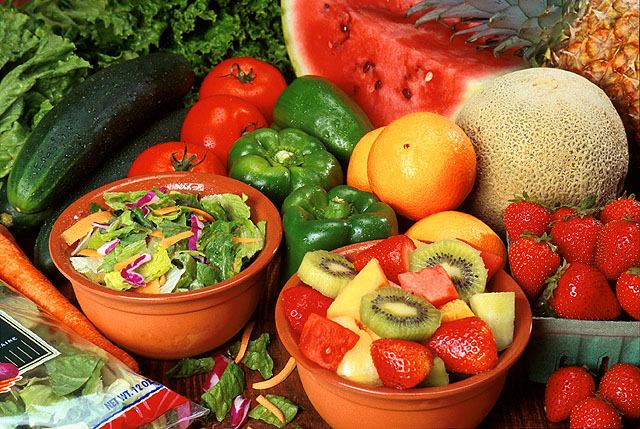
Eating more fruits and vegetables is important. California Ag Today recently spoke with Teresa Thorne executive director of the Alliance for Food and Farming, based in Watsonville She expressed the need to eat more fruits and vegetables and discussed how the website FruitsAndVeggies.org has been updated.

“Whether you choose organic or conventional, choose either with confidence,” Thorne said.

Both organic and conventional fruits and vegetables are safe.

“Experts everywhere agree that we should buy even more,” Thorne said.

Teresa Thorne

“Our website was getting a little bit old and rickety,” she explained.

The website, FruitsAndVeggies.org, was launched back in 2010. New sections on the website help readers understand the necessity of eating more fruits and vegetables.

“These new sections are kind of a fun take on our more traditional nutrition information,” Thorne said.

They also have fun facts such as how eating a lot of strawberries can help whiten teeth. And eating leafy Greens like spinach can lead to healthier hair.

“Things along those lines are just kind of fun little tidbits,” Thorne said.

“It is proven that consuming more foods and vegetables improve your mood, they’re great for you and you can be happier too if you eat more,” Thorne said.

The facts section also clarifies safety and prevention information.

“We also have another section about produce safety,” she said.

This was based on a popular blog that was published approximately one year ago. The information was consolidated it into one quick and easy section for viewers to easily read some interesting facts.

“One being that if we increased our serving by one serving of a fruit and vegetable in a day, 20,000 cancer cases could be prevented annually,” Thorne said.

2019-06-06T15:34:47-07:00June 6th, 2019|

Electric Tractors Will Soon Be Available

With So Many Electric Cars, Why Not Electric Tractors?

By Patrick Cavanaugh, Editor

There are many different models of electric cars—they are even mainstream in most  U.S. cities and other countries—and now farmers may soon have electric tractors to use in specialty crops in California.

Bakur Kvezereli is president and CEO of Ztractor, the first autonomous electric tractor for specialty crops. Kvezereli, who is based in Palo Alto, explained why the tractor is being developed in California.

“First, California is our market. Second, we teamed up with some great engineers, who graduated from Stanford, and my school, which was MIT. We were friends, and we wanted to look into this technology looking to replace the 25 or 30 HP diesel motor as well as the 30-gallon diesel,” he said.

“And we started as an electric tractor company in September 2017. And in two months, we realized that to achieve an electric tractor, you have to find a solution for making it autonomous,” Kvezereli explained.

“We now have three models in our manufacturing pipeline. One 24 horsepower will be available to the farmers this year. The next model will be a bigger tractor, 45 horsepower, which will be available 2020, and a 125 horsepower will be available in 2021.”

“Our basic tractor will have all the usual features found in most other tractors. The premium model line will have more features, especially on the software and hardware area. The zTractors will have no emissions and no hydraulics—just strong torque power.”

A four-hour charge will provide 6 to 10 hours of work in the field. “It requires only level two charging similar to car charging.  “We are exploring a better battery, however currently it is the nickel ion technology,” Kvezereli said

“Horsepower is where we estimate the metrics for a tractor. What we think farmers care about is torque. In electric, to achieve higher torque is much easier than to achieve it with diesel power, and electric technology in general is very reliable for many types of tasks,” said Kvezereli.

The electric tractors keep the same three-point hitch as well as a PTO, both electrically operated.

“We build everything based on the requirements for the PTO and three-point hitch, and I think that’s what makes the Ztractor different from any other robotics companies that will provide a better tractor. It’s a general purpose and can replace a regular traditional tractor,” he said.

The main farming operations will be strawberry  vineyards and vegetable operations. The tasks will include soil preparation and crop management. Harvest tasks are not yet available.

The prices for the tractors, calculated at $1,000 per horsepower, are similar to traditional tractors.

2019-06-05T15:01:14-07:00June 5th, 2019|

CA Citrus Growers Work Hard to Prevent HLB Devastation

Learning From the Florida Industry as to How Bad it Can Be

By Mikenzi Meyers, Associate Editor

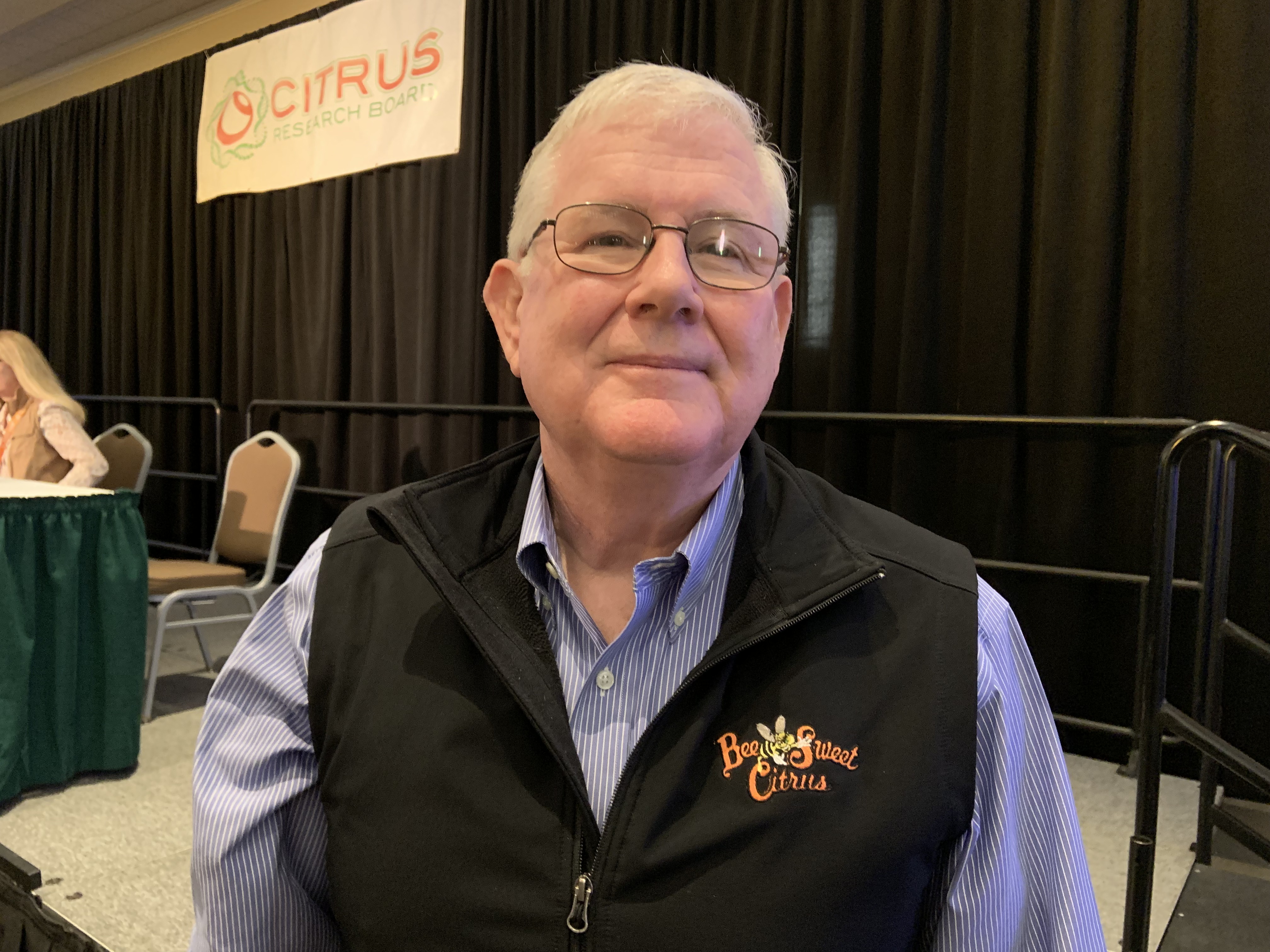
The severe effects of the Huanglongbing (HLB) disease on Florida citrus is cause for California growers to take important preventative measures to ensure the safety of their trees. Keith Watkins, vice president of outside operations for Bee Sweet Citrus, has seen the damage firsthand and has been hard at work to protect his trees.

“I’ve been to Florida, and I’ve seen how devastating the disease can be,” he said. “We have to spend money now to basically prevent that from happening to us.”

There are currently around 1100 trees that have tested positive for HLB in the Orange County and Anaheim-Garden Grove areas, but they are mainly backyard citrus trees. Luckily, Watkins said that the disease has not yet been traced in commercial operations.

Keeping HLB out of commercial growth is the biggest challenge growers face. There is not yet a cure for the disease, but according to Watkins, growers can help prevent it from reaching their crops by staying on top of killing psyllids when spotted. “We have to stay diligent. Our future really is maintaining a psyllid free population,” he said.

2021-05-12T11:01:47-07:00June 4th, 2019|

Almond Growers Helped In Trade Dispute

Almond Grower and Board Chair Holly King Attends White House Briefing with President

News Release

U.S. Secretary of Agriculture Sonny Perdue announced almonds will be included in the administration’s new trade mitigation package. This package aims to continue the support of farmers and ranchers impacted by delayed negotiations and trade disruption with China.

Almond Board Chair Holly A. King attended a briefing at the White House recently with President Donald J. Trump and representatives from other major farm groups to discuss the trade mitigation package.trade

“It is an honor to represent the California almond industry at the White House briefing with President Trump and express appreciation for his efforts to ease the burden of the trade tariffs on California almond growers,” King said. “We have invested heavily in developing the market for California almonds in China for more than 20 years and hope the Administration is successful in negotiating a new trade deal soon so we can get back to business as usual.”

The $16 billion package includes $14.5 billion for the Market Facilitation Program, $1.4 billion in surplus commodity purchases through the Food Purchase and Distribution Program and $100 million in Agricultural Trade Promotion funding. Almonds will be included in the Marketing Facilitation Program. According to the USDA release, “Tree nut producers, fresh sweet cherry producers, cranberry producers and fresh grape producers will receive a payment based on 2019 acres of production.”

The Almond Board has worked closely with the Almond Alliance of California throughout the developing tariff situation to ensure the voice of the California almond industry is heard.

“The Almond Board and Almond Alliance have been actively engaged with USDA, the US Trade Representative and Congress regarding the impact of this trade disruption on almonds. The Alliance has led efforts ensuring almonds are included in the second mitigation package,” said Julie Adams, Vice President of Global, Technical and Regulatory Affairs at the Almond Board. “We look forward to working with USDA in leveraging these funds to best benefit the entire almond industry and our grower communities.”

Overall, trade disputes have underscored the importance of having diverse, healthy export markets, a position of strength that the California almond industry has long enjoyed. For decades, ABC has supported the industry by making significant investments in foreign market development and expansion. Recently, the Almond Board started marketing programs in Italy, Mexico, Germany and re-entered Japan. ABC also ramped up marketing activity in Germany and India. 

“While we appreciate almonds’ inclusion in the second package, almonds continue to be impacted by the increase in tariffs, and we’ve seen a significant decline in shipments to China, our third-largest export market,” said Adams. “Getting back to normal trade is critical.”

2019-06-03T16:53:20-07:00June 3rd, 2019|

The Key to Healthy Living

Eat Your Fruits and Vegetables with Dr. Joan Salge Blake

By Mikenzi Meyers, Associate Editor

“Eat your fruits and vegetables!” is a phrase all too often heard by children as their parents’ attempt to instill healthy living and the importance of a balanced diet from a young age. However, as they mature, it becomes just as important to make sure they stay true to the mantra. Dr. Joan Salge Blake—clinical associate professor at Boston University’s Department of Health Sciences program, registered dietitian, published author, and host of the health and wellness podcast “Spot On!”—is continuing to advocate for this message in an era surrounded by food trends and alternatives.

Joan Salge Blake

“The recommendation is to have a minimum of two-and-a-half cups of vegetables a day and two cups of fruit a day for a combination of four-and-a-half cups … and [people] are not meeting those minimum requirements,” Blake said.

The biggest reason that most miss their opportunity to complete their daily balanced diet is due to their meal group priorities throughout the day. According to Blake, “The issue is that a lot of people wait until nighttime, and if you do that, it’s going to be really hard for you to have two and a half cups of vegetables at dinner … so I think that people just forget that we need to incorporate these throughout the day.”

Aside from vegetables, she stresses the importance of incorporating all five food groups throughout your day. “What we want to do is make sure that the diet is balanced,” Blake explained. “What you don’t want to do is just eat fruits and vegetables all day long, because then you don’t have a balanced diet. Ensuring that you receive protein or calcium from dairy products is key to maintaining a diet that is balanced and proportional.”

For more science-based, useful information about health and wellness, join the already 9,000 listeners of Blake’s podcast “Spot On!”

2019-05-31T16:34:45-07:00May 31st, 2019|

Digital Technology in Agriculture Will Grow Faster

Digital Technology is Making Huge Leaps in Ag

By Jessica Theisman, Associate Editor

Digital technology is making huge leaps in agriculture. California Ag Today recently spoke with Kirk Haney, CEO of Radicle Growth, a venture capitalist fund concentrated on developing new, innovative companies focused on food, agriculture, health, and sustainability. Agriculture and construction are considered the least digitized industries in the world.

“Everything is digital, everything is being managed, measured, and it is going to happen in agriculture in the same way not only as digital is coming but it brings competition with data sharing,” Haney said.

According to him, if you do not start capturing your data and then sharing it in a way that is going to make you more competitive, your business is going to struggle.

“In terms of the incredible entrepreneurship that we are seeing, the speed at which technology is changing, processing power, chips, the power of iPhones—we are talking about the power of cloud computing and [in] another two years, the power of cloud computing will be in the palm of your hand … on the 5G network,” he said.

The cloud computing will change the way that farmers run their operations. The data stored on these devices will only help farmers increase their precision and improve their farming practices.

Truly, ag is the last frontier, and Haney believes that satellites will soon be used to detect bugs in fields.

“New camera vision technologies can actually, through thermal infrared, spot early pest detection to check out and treat whatever you need to do,” Haney said.

2021-05-12T11:00:36-07:00May 30th, 2019|

Delta Smelt Are Poor Swimmers, Unlikely to Reach Pumps

How Many Smelt Are Actually At the Pumps?

By Kristi Diener, Fourth Generation San Joaquin Valley Farmer

Delta smelt are poor swimmers. When they have to swim against voluminous outflows, they struggle. They also lack endurance for distance and swimming against currents. This was the result of the taxpayer-funded swim performance test conducted more than 20 years ago. Why is this important?

Delta smelt live in the freshwater/saltwater mixing zone made up of outflow from the fresh waters of the Sacramento and San Joaquin Rivers, and the inflow of saltwater pushed towards that freshwater from the ocean tides. Smelt leave this mixing zone in search of freshwater to spawn, in the late winter to early spring. It is the same time of year when the outflows from the Sacramento and San Joaquin Rivers are at their peak. Recently, water surging out from the rivers was equal to 104,900 basketballs per second!

If the smelt are able to swim against these powerful outflows, they don’t go too far, and generally spawn pretty close to the nearest region of freshwater they can find in the delta. However, most smelt being surveyed during spawning are not in the delta at all, rather, in the much smaller waterways to the north where there is a fraction of the freshwater outflow. Twenty-one years ago, UC Davis acknowledged outflows from the Sacramento and San Joaquin rivers are actually too high for the endangered smelt!

Delta smelt by metric ruler Photo: USFWS

Delta smelt by metric ruler
Photo: USFWS

Let’s jump to the “pumps.” They are about 60 miles away from where smelt live in the mixing zone of the Suisun and San Pablo Bays. The pumps capture water at the south end of the delta, where it later flows into storage at San Luis Reservoir. Eventually, it is conveyed south to 2/3 of the state.

Water that is not captured by pumping surges out from the Sacramento and San Joaquin Rivers into that mixing zone. These pumps are routinely throttled back because, according to the Smelt Biological Opinion, smelt are in danger of getting sucked-in and killed. The result of not pumping is huge losses of water for human use and huge increases of outflow from these two rivers into the ocean.

So how many smelt, who lack endurance for long swims according to the swim performance test, are actually surveyed near the pumps and at risk of being liquidated? Every month, a trawl survey is conducted to count smelt and find out where they’re hanging out. I pulled up the fish distribution maps for every monthly trawl over a 10-year period. The closest a smelt has been surveyed near the pumps is about 30 miles away from them, seven years ago.

Still, in spite of their own swim performance tests, the opinion is that smelt swim about a 60 mile, squiggly endurance course, destined for the pumps. Remember, they spawn in freshwater, but actually, live back in the mixing zone where they must return. Nonetheless, this opinion is the very hypothesis that ratchets back pumping at full capacity and prevents the securing of water for humans. There are many other facets of the opinion that are questionable as well. Incidentally, just two smelt have been surveyed anywhere in the last 10 months.

Here’s the good news. President Trump signed an executive memo in October, requiring the Biological Opinions to be reviewed and updated. The science is well over a decade old. Please notice it is called an “opinion”, not a fact. Trump set a timeline and a deadline to get it done too. The assessment phase had to be completed by January 31, and it was. The deadline for the new Opinions to be issued is 135 days after the assessment, which I calculate to be around June 15th. I’m counting.

In the next couple of months, we’ll likely be hearing a whole bunch of malarkey coming from the folks favoring water for the sea in the name of fish, instead of for humans and the earth. There will be an uproar when the Biological Opinions are revised to actually help endangered fish, instead of being used as a vehicle to implement an agenda of man-made water shortages, more regulations, increased fees, and new taxes. You will hear misinformation, but you will know the truth.

Delta Smelt Performance Test can be found here.

2021-05-12T11:05:03-07:00May 29th, 2019|

Don’t Be Fooled, High Heat Will Return

Farm Employees Must Be Protected During High Temps

By Patrick Cavanaugh, Editor

The cool and rainy weather will eventually turn to higher temperature days, and when high heat returns to the Central Valley, it’s essential that farm employees are getting enough water, rest, and shade. Manuel Cunha, the President of the Nisei Farmers League in Fresno told California Ag Today that during hot days, we’ve got to protect employees.

“Training is the first important step to prevent heat illness,” Cunha said. “All employees and supervisors must know about heat illness prevention.”

Water is the next important step in preventing heat stress.

“Employers or supervisors must provide enough fresh water so that each employee can drink at least one quart per hour—or four 8 ounces glasses per hour—and encourage them to do so,” Cunha said.

Manuel Cunha, President of the Nisei Farmers League, Fresno

Shade is the next critical step to prevent heat illness.

“Employees should have access to shade, and they should be encouraged to take a cool-down rest in the shade for at least 5 minutes,” Cunha explained. “And employees should not wait until they feel sick to cool down.”

Finally, all ag employers must develop and implement written procedures for complying with the Cal/OSHA Heat Illness Prevention Standard.

 Temperature Triggers

Shade shall be present when the temperature exceeds 80 degrees Fahrenheit. The employer must maintain one or more areas with shade at all times while employees are present that are either open to the air or provided with ventilation or cooling.

The amount of shade present shall be at least enough to accommodate the number of employees on recovery or rest periods so that they can sit in a healthy posture fully in the shade without having to be in physical contact with each other.

The amount of shade present during meal periods shall be at least enough to accommodate the number of employees on the meal period who remain onsite.

The high-heat hazard temperature is 95 degrees or higher. This is when the employees must take a ten-minute preventative cool-down rest period every two hours. Often, farm operations will cease for the day and restart in the morning.

“Farmers, supervisors, packinghouses, farm labor contractors, all of these folks should have their Heat Action Plan ready, and all employers should be aware of it,” Cunha said. “They have to be ready to go, and that crew bosses, managers, foremen are making sure that the workers are getting shade and drinking plenty of water.”

If farm operations need to change their time schedules to accommodate the high temperatures, they need to implement that, as well as making sure that the workers take their proper breaks, and they have a meal.

“Lunchtime is very important for the workers to be nourished and strong,” Cunha said.

When employees are acclimating to the higher temperatures, a buddy system is essential.

“You want to make sure somebody isn’t sweating a lot or beginning to feel nauseated. As workers, they need to be looking out for each other as well. You cannot always depend on the crew boss seeing a problem,” Cunha explained.

Emergency Contacts

In some places, cell phones don’t work, so workers may have to have a two-way radio. Make sure there is a way to call 911 during an emergency. Make sure you have maps posted to where the employees are working, and all the workers know where they’re at.

“If something goes down, they need to call 911, the worker or crew boss needs to say where they’re at—the address, the location, the cross streets,” Cunha stressed.

“The location should be posted on a clipboard to make sure that you have the information there for those employees,” Cunha continued. “That’s very important, to know the procedures.”

“We want all employees to go home safe to their families every night. So farming operations must have heat illness prevention plans in place,” Cunha said.

Farm operations should be sure that a supervisor is in place in all fieldwork and that supervisor must have first aid and CPR training. And if the supervisor leaves the crew for any reason, they must make sure someone is in charge.

First aid and CPR are vital with our farm crews working in the fields or even in the construction industry. Farm labor contractors must be sure that field supervisors are licensed for first aid and CPR.

2019-05-28T17:20:06-07:00May 28th, 2019|

SGMA Survival Meeting, Exeter May 30

Farmers: Learn What Needs to Be Done When SGMA is Implemented in 2020

Don Wright with waterwrights.net along with the Tulare County Farm Bureau and the WET Center at Fresno State will present the second SGMA Survival Tool Kit. Thursday, May 30th from 3:00-6:00 pm at the Exeter Memorial Building 324 N. Kaweah Ave, Exeter, CA 93221.

There is no charge and Gar Tootelian will be providing BBQ beef sandwiches, the American Pistachio Growers Association will provide pistachios,  Don Wright’s 81-year old mother baked 300 homemade cookies and the Tulare Farm Bureau is bringing bottled water.

Don Wright with WaterWrights.net

“This is not a GSA meeting or a DWR or State or Regional Board meeting; there will be some DWR folks to help with the interpretation of the law but not to tell us what to do,” said Wright. “And of course GSAs will be a topic but the message about them will be – they are our neighbors doing some heavy lifting. They are not the enemy and are in need of our support and input.”

This meeting is about what farmers can do to prepare for SGMA before it’s implemented next year. Are wells and irrigation systems operating optimally? Is monitoring and record keeping up to speed? Do they have their legal and real estate ducks in a row? There are experts speaking on these subjects but we will be encouraging growers to speak as well.

2019-05-25T13:48:49-07:00May 25th, 2019|
Go to Top