Raising Shasta Dam Hit’s Snag
|
|


|
|

California Citrus Mutual Applauds Agreement with Japan |
| The announcement by the Administration regarding the market access agreement with Japan is excellent news for the California citrus industry.
“The California citrus industry has faced a 32% Japanese tariff rate for far too long,” states CCM President Casey Creamer. “As Japan entered into agreements with other citrus producing trading partners the California citrus industry was put at a competitive disadvantage. The new market access agreement immediately puts California fresh citrus in a position equal to the agreement reached previously between Japan and other nations,” continues Creamer. In 2016 the U.S. citrus industry exported 70,366 metric tons to Japan, the majority originated from California. In 2018 the tonnage slipped to 48,060 metric tons. Creamer notes, “The agreement does not require Congressional approval, but the Japanese National Diet must vote to concur. We trust the Japanese government will fully support their leadership and by January 2020, the agreement will be implemented at the peak of California’s export opportunity.” |

Today, U.S. Environmental Protection Agency (EPA) Administrator Andrew Wheeler sent a letter to California Governor Gavin Newsom raising several issues with the state’s failure to protect Californians from degraded water, outlining deficiencies that have led to significant public health concerns in California and the steps the state must take to address them.
“California needs to fulfill its obligation to protect its water bodies and, more importantly, public health, and it should take this letter as notice that EPA is going to insist that it meets its environmental obligations,” said EPA Administrator Andrew Wheeler. “If California does not step up to its delegated responsibilities, then EPA will be forced to take action.”
For years, California has pushed policies that have resulted in a homelessness crisis that now threatens human health and the environment, with potential water quality impacts from pathogens and other contaminants from untreated human waste entering nearby waters. California has been responsible for implementing the water discharge permitting program under the Clean Water Act since 1973; however, the state’s recent lack of urgency addressing serious issues in San Francisco resulting from lack of proper oversight and enforcement is concerning. This, among other issues identified in the administrator’s letter, is a failure to properly implement federal programs and has resulted in the subsequent need for more direct EPA oversight to ensure human health and environmental protection.
Administrator Wheeler also raised concerns about the state’s years long approval of the discharges of over 1 billion gallons per year of combined sewage and stormwater into San Francisco Bay and the Pacific Ocean. Despite California having abundant financial resources – which includes a significant tax base and EPA providing over $1 billion in federal grants and a $699 million loan through the Water Infrastructure Finance and Innovation Act – San Francisco has not come into compliance with federal clean water standards and must still invest billions of additional dollars to modernize its sewer system.
California has 30 days to provide a written response to EPA outlining in detail how it intends to address the concerns and deficiencies identified in the letter.
To read the full letter, click here.
Farmers, restaurants and their customers will all benefit from improved trade among the United States, Canada and Mexico, according to a coalition of California agricultural groups, restaurants and chefs. In a letter sent today to the California congressional delegation, the coalition urged approval for the U.S.-Mexico-Canada Agreement (USMCA).
The USMCA would replace the North American Free Trade Agreement and enhance the movement of food products on the continent. The coalition letter says the new agreement would benefit California farmers by improving market access in Mexico and Canada, and would benefit restaurants by assuring availability of high-quality ingredients and affordable dining experiences made possible through trade with the neighboring countries.
“Restaurants and farmers need each other, and we all need the USMCA to assure the continued strength of the food chain,” California Farm Bureau Federation President Jamie Johansson said. “By helping California farmers and agricultural businesses, and by enhancing North American trade in food and farm products, the USMCA will keep agricultural products affordable for all of us who eat.”
Patrick Mulvaney, chef-owner of Mulvaney’s B&L in Sacramento, urged Congress to support what he called a “vital piece of legislation.”
“Our success in California food is directly related to the hard work and diligence of our farmers,” Mulvaney said. “The USMCA will ensure that their efforts will pay off, for their families, workforce and consumers.”
The California Farm Bureau Federation works to protect family farms and ranches on behalf of nearly 36,000 members statewide and as part of a nationwide network of nearly 5.6 million Farm Bureau members.

The California Department of Food and Agriculture (CDFA) is pleased to announce the availability of the new Farmer Resource Portal designed to assist farmers and ranchers by increasing access to information to help farming operations. The portal is available here: https://www.cdfa.ca.gov/farmerresources/
This webpage is a “one-stop shop” for farmers and ranchers to find information about available grants and loans including programs that prioritize funding for socially disadvantaged farmers, beginning farmers, female farmers, veteran farmers, and urban farmers. Additionally, there is a list of quick links to information to help farmers and ranchers better understand CDFA regulations and policies.
According to CDFA secretary Karen Ross the information was already available, but she this portal makes it simple and easy to navigate, and it keeps all of the key information in one place.”
The Farmer Resource portal was developed under the tenets of Assembly Bill 1348 (Aguilar-Curry), the Farmer Equity Act of 2017. This law requires CDFA to ensure the inclusion of socially-disadvantaged farmers and ranchers in the development, adoption, implementation, and enforcement of food and agriculture laws, regulations, policies, and programs.
The Farmer Equity Act defines a socially-disadvantaged group as one composed of individuals that have been subjected to racial, ethnic, or gender prejudice because of their identity as members of a group without regard to their individual qualities.
There are a growing number of socially-disadvantaged farmers and ranchers in rural and urban areas, and CDFA’s Farmer Equity Advisor is working to ensure that these farmers have a voice in policies and programs that affect their livelihoods, as well as increased access to information and resources for their farm operations.
The webpage includes links to new Spanish-language CDFA social media handles, press releases in English and Spanish, and in the future will also have an interactive California map of technical assistance providers who can assist farmers, including assistance in various languages. This will be a valuable resource for farmers who need assistance in languages other than English.
This webpage is just one way that the Farmer Equity Act is being implemented at CDFA. In January 2020, CDFA will submit a report to the Governor and Legislature on efforts to serve socially disadvantaged farmers and ranchers and female farmers and ranchers in California.
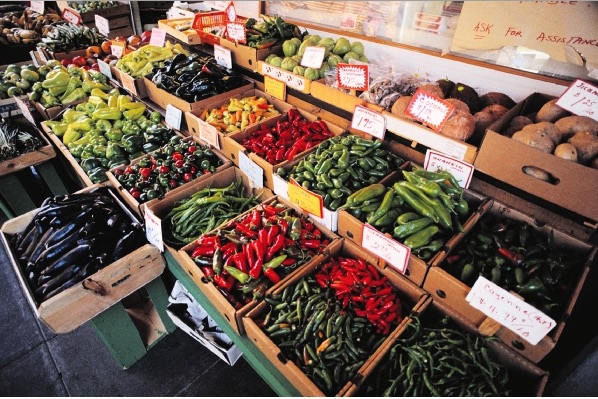
Last week the Federal Food and Drug Administration (FDA) released its 2017 pesticide residue sampling data results. FDA concluded: “The latest set of results demonstrate once again that the majority of the foods we test are well below the federal limits set by the Environmental Protection Agency.”
Note the term “once again” in FDA’s statement. They used it because government residue sampling data year after year reaffirms the safety of our food and the exceptionally high level of compliance among farmers with laws and regulations covering the use of organic and conventional pesticides.
Let’s get a little technical for a moment and focus on how FDA residue sampling is protective of consumers. FDA employs a three-fold strategy to enforce the Environmental Protection Agency’s (EPA) tolerances or safety standards for pesticide residues.
If you haven’t heard – September is National Fruit and Vegetable month. Yes, it is time to celebrate the only food group health experts and nutritionists agree we should all eat more of every day for better health and a longer life.
While decades of studies have shown the nutritional benefits of fruits and vegetables are overwhelming and significant, the safety of both organic and conventional produce is also impressive. Government sampling data shows an over 99% compliance rate among farmers with the laws and regulations required for pesticide applications on organic and conventional fruit and vegetable crops. This led the United States Department of Agriculture to state that: “The U.S. food supply is among the safest in the world.”
Many health organizations are promoting National Fruit and Vegetable month to remind consumers about the importance of increasing consumption – only one in 10 of us eat enough of these nutrient-packed foods each day.
However, studies show a growing barrier to consumption is fear-based messaging which inaccurately calls into question the safety of the more affordable and accessible fruits and veggies. This messaging is predominantly carried by the same activist groups year after year despite studies which show that “prescriptions” for fruits and veggies could reduce health care costs by $40 billion annually. Or that 20,000 cancer cases could be prevented each year.

The new academics are:

Top Row from Left: Kamyar Aram, Marisa Coyne, Amer Fayad, and Joy Hollingsworth. Bottom row from left: Susana Matias, Joji Muramoto, Mohamed Nouri, and Kosana Suvocarev.
Kamyar Aram
UCCE specialty crops advisor
Contra Costa County
Kamyar Aram joined UC ANR in August 2019 as UCCE advisor in specialty crops. He serves Contra Costa and Alameda counties. Previously, Aram was a post-doctoral scholar at UC Davis working on research and outreach for management of vectored grapevine diseases. He has bachelor’s degrees in plant biology and Latin from Ohio State University, a master’s degree in horticulture from Cornell University and a doctorate degree in plant pathology from UC Davis. His doctoral research focused on the life cycle of the Sudden Oak Death pathogen in aquatic environments. For his master’s thesis, Aram studied the use of compost as a source of nitrogen and to suppress soilborne diseases in vegetable production.
Aram can be reached at (925) 608-6692, kamaram@ucanr.edu.
Marisa Coyne
Academic Coordinator for Volunteer Engagement
Master Gardener statewide program
Marisa Coyne was named academic coordinator of volunteer engagement in the UC Master Gardener Statewide Program in April 2019. Previously, Coyne was a community education specialist at the UCCE office in Marin County, where she managed the 4-H Youth Development Program. Originally from Philadelphia, Coyne has worked in rural and urban communities and in food, agriculture and wilderness spaces, providing interdisciplinary, inquiry-based educational opportunities for learners of all ages. Coyne holds a bachelor’s degree in communications at Temple University and a master’s degree in community development at UC Davis.
Coyne can be reached at (530) 750-1394, macoyne@ucanr.edu.
Amer Fayad
Director, Western IPM Center
UC ANR headquarters
Amer Fayad joined UC ANR as director of the Western Integrated Pest Management Center in July 2019. He is a plant pathologist with research experience on the identification, epidemiology, biological and molecular diversity of viruses. Prior to joining UC ANR, Fayad served in several capacities at Virginia Tech, most recently as associate director and Africa program manager of the Feed the Future Innovation Lab for IPM. Fayad has a bachelor’s degree in agriculture and a master’s degree in crop production from the American University of Beirut. He earned a doctorate degree in plant pathology, physiology and weed science from Virginia Tech.
Fayad can be reached at (530) 750-1271, afayad@ucanr.edu.
Joy Hollingsworth
UCCE nutrient management and soil quality advisor
Fresno County
Joy Hollingsworth was appointed nutrient management and soil quality advisor, serving Fresno, Kings, Madera and Tulare counties, in April 2019. Before taking her new position, she served as a staff research associate at the UC Kearney Agricultural Research and Extension Center in Parlier. Previous to that, Hollingsworth was a junior specialist in the UC Davis Department of Plant Sciences, where she designed and implemented agronomic field trials for canola, camelina, sugar beets and castor. Hollingsworth has a bachelor’s degree in communications and a master’s degree in plant science from Fresno State.
Hollingsworth can be reached at (559) 241-7527, joyhollingsworth@ucanr.edu.
Susana Matias
UCCE nutrition specialist
Statewide position, based at UC Davis
Susan Matias joined UC ANR in July 2019 as a UCCE specialist in the Department of Nutritional Sciences and Toxicology at UC Davis. Before coming to UCANR, Matias was a research scientist with the California Department of Public Health and a specialist at UC San Francisco. From 2013-18, she was an assistant project scientist in the Department of Nutrition at UC Davis. Matias has a bachelor’s degree in psychology and a master’s degree in educational psychology from Pontificia Universidad Católica del Perú. She earned a doctorate degree in epidemiology from UC Davis, with an emphasis in international and community nutrition. Her research interests include maternal and child nutrition, immigrant health, food security, obesity and diabetes prevention.
Matias can be reached at (510) 642-0980, slmatias@berkeley.edu.
Joji Muramoto
UCCE organic production specialist
Statewide position, based at UC Santa Cruz
Joji Muramoto became UC ANR’s first organic production specialist in May 2019. He has a joint affiliation with UCCE and the Center for Agroecology and Sustainable Food Systems at UC Santa Cruz. In his new role, Muramoto will coordinate a statewide program focused on fertility and pest management in organic production systems across the state. Muramoto has bachelor’s, master’s and doctorate degrees in soil chemistry from Tokyo University of Agriculture. He has conducted research and extension on fertility and soil-borne disease management in organic and conventional strawberry and vegetable production since 1996.
Muramoto can be reached at (831) 459-2178, jmuramoto@ucanr.edu.
Mohamed Nouri
Area UCCE orchard systems advisor
San Joaquin County
Mohamed Nouri joined UC ANR in April 2019 as an area orchard systems advisor serving San Joaquin County. He will conduct a research and extension program to address high-priority production and pest management issues in walnuts, sweet cherries, apples, oil olives and other crops. Because San Joaquin County is the statewide leader in cherry and walnut production, Nouri will be a regional and statewide leader, facilitating interaction among campus-based academics, UCCE advisors and community stakeholders. Previously, Nouri worked at the UC Kearney Agricultural Research and Extension Center as a graduate student and post-doctoral researcher. He performed research on fungal diseases of major fruit and nut crops. Nouri has a bachelor’s degree in life and earth sciences, a masters in microbiology and plant pathology and a doctorate degree in plant pathology, all from Tunis ElManar University.
Nouri can be reached at (209) 953-6115, mnouri@ucanr.edu.
Kosana Suvocarev
UCCE biometeorology specialist
Department of Land, Air and Water Resources, UC Davis
Kosana Suvocarev joined UC ANR as a UCCE biometeorology specialist in March 2019. Before taking this position, she was a postdoctoral fellow at the University of Arkansas, where she was part of a team effort focused on rice farming, water conservation and greenhouse gas emission reduction practices in the area of the Mississippi Alluvial Aquifer. Suvocarev earned bachelor’s and master’s degrees at the University of Novi Sad in Serbia, and a doctorate degree at the University of Zaragoza, Spain.
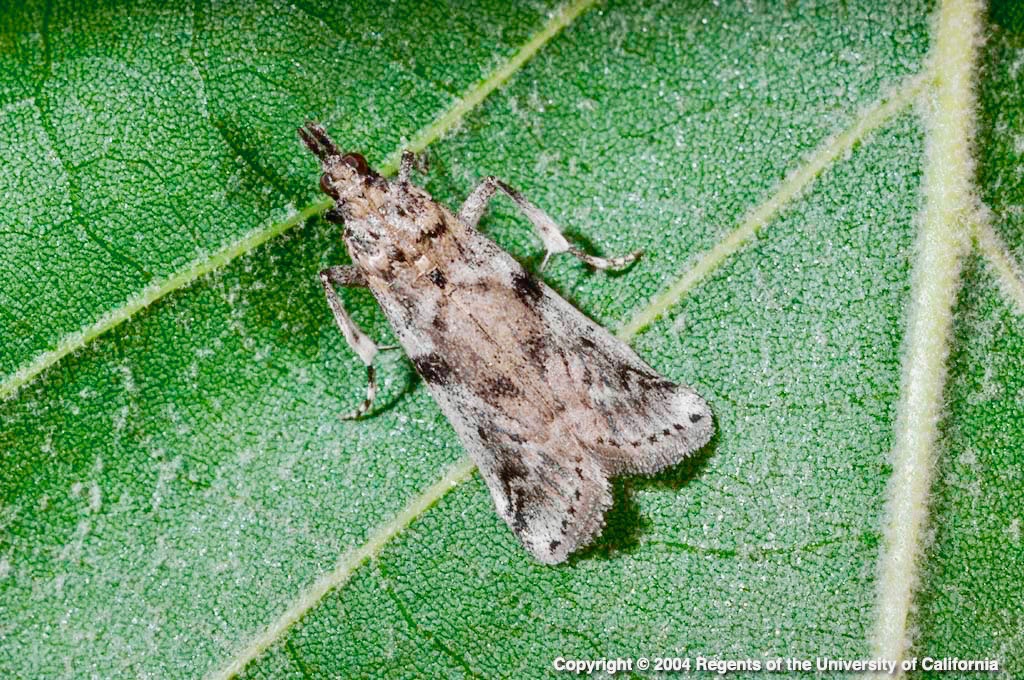
American Pistachio Growers (APG) has been integrally involved in obtaining federally funding for the Center for Health Science & Technology Laboratory in Phoenix, AZ. The facility was originally commissioned by the cotton industry to raise sterile pink bollworm for area-wide releases in an effort to suppress the pest.
The program was even more successful than planned and the cotton industry was recently able to declare pink bollworm eradicated. Now that the facility has excess capacity, pistachio, almond, and walnut industry leaders have made a push to start breeding sterile navel orangeworm (NOW) for aerial release in California. Unfortunately, at the end of this Federal Fiscal Year, federal funding for the facility ends, and unless a new funding appropriation can be made by Congress, the facility will close.
Many pistachio growers have asked how they can help in APG’s efforts to obtain federal funding. With current efforts being focused on the U.S. Senate, growers are encouraged to write a letter to Senator Dianne Feinstein (CA) for her support. Sen. Feinstein sits on the Senate Appropriations Subcommittee on Agriculture, Rural Development, Food and Drug Administration, & Related Agencies, which is where APG is advocating for funding.
Here is a sample letter that can be used, or you can draft your own letter that incorporates the following talking points:
Letters can be faxed to 202-228-3954, emailed to joe_petrzelka@feinstein.
Sen. Dianne Feinstein
303 Senate Hart Office Building
Washington, D.C. 20510

Glenda Humiston, University of California vice president for agriculture and natural resources, issued the following statement on Wednesday:
Earlier today (Sept. 18), UC President Janet Napolitano announced that she will be stepping down as president of the University in August 2020. President Napolitano joined UC as the first woman to lead the university in 2013.
We are thankful for President Napolitano’s leadership and vision to address critical issues that affect California, the rest of the country and the world.
Recognizing the challenge of feeding a growing worldwide population, Napolitano launched the Global Food Initiative to inspire more collaboration and draw from the collective resources of all 10 UC campuses, UC Agriculture and Natural Resources and Lawrence Berkeley National Laboratory to develop solutions for food security, health and sustainability.
To address the threat of climate change, she created the Carbon Neutrality Initiative, which marshals resources from across the UC system to research and develop ways to reduce greenhouse gas emissions.
To attract and retain top-flight academics, she created the Presidential Match for Endowed Chairs to help UC campuses and UC ANR encourage donors to establish endowed chairs to fund research. The Presidential Match has enabled UC ANR to fill five endowed positions in UC Cooperative Extension, ensuring the scientists will have a dedicated source of funding for their ongoing agricultural research.
Finally, she emphasized the university’s commitment to diversity by taking actions to let immigrant and LGBTQ members of the UC community know they are welcome and supported.
The UC Board of Regents will soon appoint a search committee to start a national search for the next president of the University. Per policy, the search committee will include student, academic and alumni representatives who will seek input from the UC community and the public.
More information, including highlights of President Napolitano’s tenure at the University, can be found at https://www.

This year, the Pest Management Research Grant Program will allocate:
1- $2,100,000 to fund projects that identify, develop, and implement safer, practical, and sustainable pest management alternatives to Chlorpyrifos. DPR will consider proposals requesting $150,000 to $500,000.
2- $500,000 to fund projects that develop methods or practices to reduce risks associated with pesticides of high regulatory concern and/or are considered to high-risk and which can be incorporated into an IPM system. DPR will consider proposals requesting $50,000 to $500,000.
Concept proposals must be submitted by 5:00 PM PST on Monday, October 7, 2019.
Concept application must be downloaded from DPR’s Research Grants webpage, here:
https://www.cdpr.ca.gov/docs/
A Proposal Package will be provided to applicants invited to submit full proposals.
Completed Concept and full Proposal applications must be submitted to the following email address: dprpmgrants@cdpr.ca.gov
If you know groups or individuals who may be interested in applying for a Pest Management Research Grant, we encourage you to pass on this information.
For additional information on the Pest Management Research Grant Program, please visit http://www.cdpr.ca.gov/docs/
If you have any questions, please contact Atefeh Nik at 916-445-2509 or Atefeh.nik@cdpr.ca.gov or John Gerlach at 916-445-3909 or John.Gerlach@cdpr.ca.gov.
California Ag News…
At Your Fingertips!
Copyright 2021 California Ag Today | CaliforniaAgToday.com owned and operated by Californians.
Copyright 2021 California Ag Today | CaliforniaAgToday.com owned and operated by Californians.
