About California Ag Today

This author has not yet filled in any details.
So far California Ag Today has created 2014 blog entries.

New Computer App To Help Fight HLB Disease

Computer App Available To Aid In HLB Fight in Southern California

 By Patrick Cavanaugh, Editor

A computer app is now available to anyone curious about how close a HLB infected tree was found near his or her home.

The fight to reduce the incidence of Southern California trees infected with the fatal Huanglongbing disease takes many different strategies, in Southern California, particularly in Orange and LA Counties, where the disease continues to spread in trees in the yards of residents.

UC Scientist and others in the citrus industry are suggesting that homeowners remove citrus trees in their yards and replace them with non-citrus trees.

Beth Grafton-Cardwell

“One of the things we’re suggesting that homeowners do is if they’re near where a tree has been removed because it’s been declared positive, that, the homeowner consider removing their citrus trees proactively implanting non citrus,” said Beth Grafton-Cardwell a UCANR Entomologist based at the Lindcove Research and Extension Center.

And if homeowners want to know how close a positive has been found to their home, they can now find out. The information can be found by going to ucanr.edu/hlbapp. By zooming in, the site gives recommendations as to whether a homeowner should replace a tree or not.

It’s not a downloadable app for a smart phone but the web address can be access on the phone and be bookmarked.

“The point of this is because we can’t tell in an early infection which trees are infected,” said Grafton-Cardwell. “If a homeowner is near a known infected tree, there is a good chance that your trees are already infected and we just can’t tell yet.”

“So you help your neighbors and the industry by just taking those trees out and then you don’t have to have CDFA knocking on your door to spray pesticides or to ask to test your tree, if you just get the tree out,” she said.

Already more then 1,600 citrus trees in Southern California have been tested positive for HLB disease, and those trees have been removed.

2021-05-12T11:01:46-07:00October 21st, 2019|

Another CA Wheat Farmer Being Sued By EPA

From The Pacific Legal Foundation

Jack LaPant, A Wheat Farmer Sued for Plowing his Land

When most people think about preventing water pollution, they probably picture sewage plants and factories, spilling gunk into a river or lake right?  But according to the Environmental Protection Agency (EPA) and the Clean Water Act (CWA), overturned dirt in a farmer’s field is technically the same thing as that noxious gunk: pollution.

Jack LaPant’s wheat crop, growing in March 2012, for which our federal government is threatening him with millions in penalties.

Yet one major side effect of considering dirt a pollutant is that doing so allows the government to regulate a farmer’s field in the same way that it would regulate chemicals being dumped in a river. This means that many farmers across the country have been forced to pay exorbitant fines and go through years of court battles simply for plowing their fields.

For example, Northern  California farmer Jack LaPant is currently being sued by the EPA for plowing his property to grow wheat on it. He faces millions in penalties for plowing the dirt on his farm. His neighbor John Duarte had to pay $1.1 million to settle similar charges for which EPA officials threatened him with over $40 million in liability.

All in the name of “fighting pollution.”

The EPA treats small family farmers or someone building a home the same as massive cases of pollution. The reality is that they’re not the same, and treating them as such violates people’s property rights while harming the mission of protecting the environment. Yet there are solutions to this problem. Federal courts can clarify that plowing a farm does not pollute that farm, such as in Jack LaPant’s case. For its part, Congress could clarify that plowing dirt to make it grow plants better is not “pollution.” And the Trump administration could live up to its reputation for regulatory reform by not suing farmers for millions of dollars for plowing their farms.

We all want clean water. The EPA should stick to preventing actual water pollution, stop pretending that farm dirt pollutes farms, and leave the farmers alone.  This is a national problem.

Pacific Legal Foundation is representing Farmer Jack LaPant

2019-10-17T14:22:37-07:00October 18th, 2019|

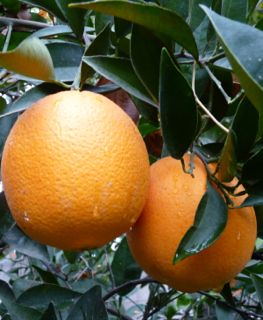
Navel Crop Fruit Has Good Size This Season

Following Small Fruit Last Year, Navel Crop is Back to Good Size

The California navel orange crop looks better this year than it did in 2018 when so much of the crop was never harvested due to poor sizing.

Craig Kallsen is a UCANR Kern County Cooperative Extension Farm Advisor focused on citrus and tropical fruits. “Last year the navel orange industry was plagued with very small fruit sizes and a lot of people didn’t even harvest it,” said Kallsen. “It looks much better this year, so growers are happier. And while the fruit size is up, it can also mean that the number of fruit per tree is down.”

The small fruit in 2018 may have been due to a big crop in 2017. Last year, the trees only had enough stored energy to devote to smaller fruit. But this year, the industry is back to bigger fruit, and probably less crop.

“We also had a lot of hot dry winds in the 2018 summer which caused a lot of fruit to drop,” noted Kallsen


2019-10-16T12:57:46-07:00October 17th, 2019|

Dave Puglia Selected to Head Western Growers Association


Western Growers Board Selects Dave Puglia as Next President and CEO

The Western Growers Board of Directors has unanimously selected Dave Puglia as the organization’s next President and Chief Executive Officer. Puglia will succeed current President and CEO Tom Nassif, who is retiring after 18 years as a forceful and effective leader in the nation’s agriculture industry, on February 1, 2020.

“Fifteen years ago, Dave came to Western Growers with an extraordinary pedigree in California politics, having served in senior roles on statewide political campaigns and in public service in addition to private sector experience,” said Ratto Bros. President and Western Growers Chairman of the Board, Ron Ratto. “Since joining our organization, Dave has demonstrated an unyielding passion for our members, a deep understanding of the issues facing Western agriculture – water policy, in particular – and an unrivaled capacity for leading our association and industry into the next decade and beyond.”

“Words are not adequate to express how deeply honored I am to be entrusted with this great opportunity and responsibility,” stated Puglia. “The people of this industry welcomed me into their hearts from the first day on the job, rain or shine. As their advocate, I am as energized and optimistic as ever about the opportunities and challenges ahead.”

The Western Growers Board of Directors engaged in an extensive nationwide search to ensure that Western Growers’ leadership in federal and state public policy would carry forward and grow while continuing to provide innovative business services to the association’s members. The Western Growers Family of Companies is built on the strength of 445 dedicated employees providing expert advocacy and services across multiple business lines.

“The mentoring and support I have received from Tom Nassif and so many current and past directors has been amazing,” continued Puglia. “My talented and dedicated Western Growers colleagues have also helped propel me on this journey, and there is no better professional staff in the entire agriculture industry. We are ready to go.”

Puglia will inherit an association that experienced a renaissance under Nassif’s leadership. Over the course of nearly two decades, Nassif elevated the national prominence of Western Growers and established the organization as a recognized leader in food safety, labor and immigration, water, technology and innovation, international trade and many other areas impacting the viability of Western Growers members.

“Tom Nassif was the right leader at the right time for our organization and the industry,” said Ratto. “The strength and influence our association enjoys today is a credit to his intelligence, work ethic and personal charm. Our membership owes Tom a debt of gratitude for employing his fierce devotion and incomparable talents on our collective behalf.”

“My service to Western Growers and the fresh produce industry has been a fulfilling culmination to my career,” stated Nassif. “Every day since 2002, my inspiration has been derived from the hard-working, innovative and ethical family farmers who comprise our membership. I am proud of the major strides we have taken as an industry during my tenure, and it brings me great satisfaction knowing that the future of our association is secure in the hands of Dave Puglia.”

Puglia joined Western Growers in 2005 and currently serves as Executive Vice President, overseeing four departments in addition to the organization’s non-profit charitable foundation and its political action committees. He is also intimately involved in the internal operations of the organization. Prior to joining Western Growers, he was Vice President of APCO Worldwide, a global public affairs consulting firm, and previously served for seven years in the California Attorney General’s Office, first as Press Secretary and later as Director of Public Affairs and Communications.


2019-10-16T12:13:28-07:00October 16th, 2019|

New DPR Chief Along with Other Directors

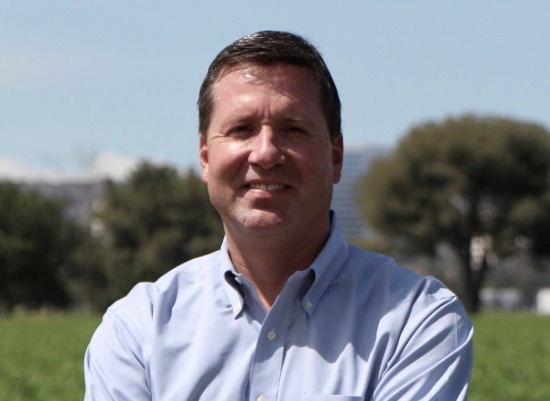
Val Dolcini is New DPR Chief

Other DPR Directors Announced

Val Dolcini, 56, of Sacramento, has been appointed director at the Department of Pesticide Regulation, where he has served as acting director since June 2019. Dolcini has been deputy secretary for agriculture at the California Environmental Protection Agency since 2019.

He was president and chief executive officer at Pollinator Partnership from 2017 to 2019. He was an administrator for the Farm Service Agency at the U.S. Department of Agriculture from 2014 to 2017, and state executive director for California for the Farm Service Agency from 2009 to 2014.

Dolcini was a senior manager at Accenture LLC from 2004 to 2009, director of policy in the Office of Lieutenant Governor Cruz Bustamante from 2003 to 2004 and deputy legislative secretary in the Office of Governor Gray Davis from 2001 to 2002. He held several positions in the Office of Congressman Vic Fazio from 1995 to 1999, including legislative assistant and district chief of staff, and was legislative assistant in the Office of Congresswoman Nancy Pelosi from 1994 to 1995. He earned a Juris Doctor degree from the Golden Gate University School of Law. This position requires Senate confirmation and the compensation is $177,516.

Jesse Cuevas, 32, of Sacramento, has been appointed chief deputy director at the Department of Pesticide Regulation, where he has been assistant director in the Pesticide Programs Division since 2017. He was director of legislation and policy at the Department of Pesticide Regulation from 2015 to 2017 and legislative director in the Office of California State Assemblymember Henry T. Perea from 2010 to 2015. This position does not require Senate confirmation and the compensation is $179,868.

Raybon Johnson, 53, of Tehachapi, has been appointed warden of California State Prison, Lancaster, where he has been acting warden since 2018 and was chief deputy warden from 2017 to 2018. He served in multiple positions at the California City Correctional Facility from 2013 to 2017, including associate warden, correctional administrator and correctional captain. He held multiple positions at California Correctional Institution, Tehachapi from 1993 to 2013, including lieutenant, sergeant and correctional officer. This position does not require Senate confirmation and the compensation is $162,024.

Jared Lozano, 44, of El Dorado Hills, has been appointed warden of California Medical Facility, Vacaville, where he has been acting warden since 2018. Lozano was chief deputy warden at Folsom State Prison from 2015 to 2018 and a correctional administrator at the California Department of Corrections and Rehabilitation Headquarters in 2015 and from 2012 to 2013.

Lozano was acting chief deputy warden at California Health Care Facility, Stockton from 2013 to 2015 and acting correctional administrator and facility captain at Deuel Vocational Institution from 2014 to 2015 and from 2008 to 2012. He was a lieutenant and captain at California Department of Corrections and Rehabilitation Headquarters from 2006 to 2008, a lieutenant at California State Prison, Solano from 2004 to 2006, a sergeant at Deuel Vocational Institution from 2000 to 2004 and a correctional officer at California State Prison, Solano from 1997 to 2000. This position does not require Senate confirmation and the compensation is $162,024. Lozano is a Republican.

Marion Spearman, 56, of Janesville, has been appointed associate director of general population male facilities in the Division of Adult Institutions at the California Department of Corrections and Rehabilitation. Spearman has been warden of High Desert State Prison since 2016. He was warden at Correctional Training Facility, Soledad from 2012 to 2016, where he was chief deputy warden from 2011 to 2012.

Spearman held multiple positions at Pleasant Valley State Prison from 1994 to 2011, including the associate warden, correctional administrator, facility captain, lieutenant and sergeant. He was a correctional officer at Mule Creek State Prison from 1987 to1994. Spearman earned a Master of Science degree in criminology from California State University, Fresno. This position requires Senate confirmation and the compensation is $170,004. Spearman is registered without party preference.

Tammatha Foss, 50, of Soledad, has been appointed associate director of reception centers in the Division of Adult Institutions at the California Department of Corrections and Rehabilitation. She has been acting warden at Salinas Valley State Prison since 2018, where she was chief deputy warden in 2018.

Foss was chief deputy warden at High Desert State Prison from 2016 to 2018. She was a chief in the Program Support Unit at the California Department of Corrections and Rehabilitation Headquarters from 2014 to 2016 and correctional administrator in the Division of Adult Institutions from 2013 to 2014. Foss was a business manager and community resource manager at San Quentin State Prison from 2009 to 2013. She served in multiple positions at Pelican Bay State Prison, including procurement officer, budget analyst and correctional officer from 1996 to 2009. This position requires Senate confirmation and the compensation is $170,004.

2021-05-12T11:01:46-07:00October 16th, 2019|

UC Offers Almond Production Short Course Nov. 5–7

Almond Short Course For Growers To Learn More

By Pam Kan-Rice UCANR News and Information Outreach

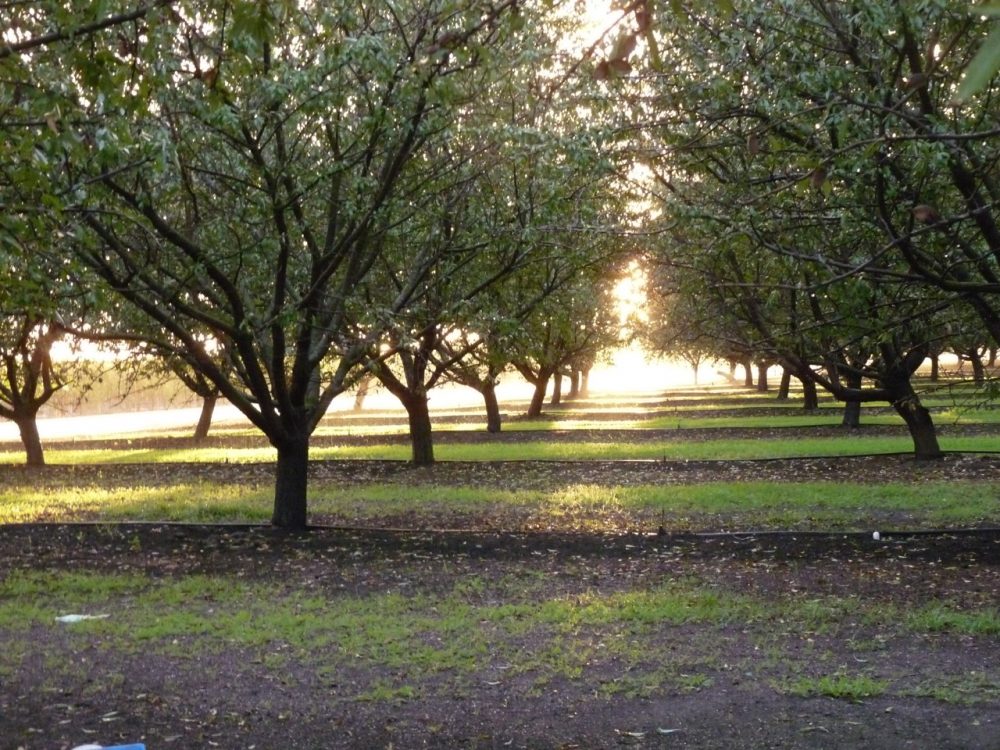
UC Agriculture and Natural Resources will host the UC Almond Short Course Nov. 5-7, 2019, at the Visalia Convention Center.

UC faculty, UC Cooperative Extension specialists and farm advisors and USDA researchers who will provide in-depth, comprehensive presentations of all phases of almond culture and production. An optional field tour will be offered on Nov. 8 in Parlier.

The program is based on the latest information and research and will cover the fundamental principles that form the basis for practical decisions. Each session will include Q&A, quality time with instructors and networking opportunities. The full agenda is at https://ucanr.edu/sites/almondshortcourse/2019_Agenda.

This year’s short course offers an in-depth field tour at the Kearney Agricultural Research and Extension Center on Friday, Nov. 8. For an additional fee, participants can learn firsthand about topics ranging from orchard establishment and management to integrated pest management. See the tour agenda at https://ucanr.edu/sites/almondshortcourse/2019_Field_Tour.

Registration is $900, discounts are available until Oct. 21. On-site registration will be $1,000.

Registration includes:

  • Three full days of instruction with more than 35 presentations
  • Binders containing presentations
  • Three lunches and two receptions
  • DPR (PCA) & CCA continuing education credits (pending approval)
  • Option to add Field Tour for $65
2021-05-12T11:01:46-07:00October 15th, 2019|

New Water Year Brings Surplus!

Surplus for New Water Year Will Help Farmers in 2020

By Patrick Cavanaugh, Editor

The Oct. 1 new water year, has brought the state a surplus— with statewide reservoir storage 128% of average.

“The wet 2017 was needed for our reservoirs to refill after an extended drought, and we’re hopeful that the upcoming water year will be generous,” said Mike Wade, Executive Director of the California Farm Water Coalition based in Sacramento.

The coalition educates consumers and others in the state about the importance of water for farms

“One of the things that we’re concerned about is allocations that have not seemed to keep up with the water supply, but we do understand there’s some question about environmental practices and enough water held over for stream flows, and those questions are something that we’ll have to contend with in the future,” said Wade.

With the carryover water that we have, we know that we’ll be in better shape going into this coming year than we have in some years in the past. But one of the things that are going to be helpful is if the Governor’s voluntary agreements get implemented regarding the State Water Resources Control Board’s Bay-Delta Plan on the Tuolumne River. “We have more reliability and understanding about how water is going to be used from year to year and how much will be available for water supply reliability, as well as the important environmental projects that are going on around the state,” he said.

“In December 2018, when the state Water Board adopted their Unimpaired Flow Plan, there was a lot of concern that that was going to take a lot of water. It would have taken a million or 2 million acre-feet of water potentially out of the available water that we have from year to year,” said Wade.

“The voluntary agreements represent a generational change in how we manage water and environmental projects in the state. I will provide more local control, more input from water users, and the ability to build the kinds of projects and do the kinds of stream restoration that not only help restore our ecosystem, but it makes water supply more reliable for farms, homes, and businesses around the state,” he said.


2019-10-10T19:42:02-07:00October 14th, 2019|

Two Cal Berkeley Students Honored

Two Cal students selected as UC ANR Global Food Initiative fellows

By Pam Kan-Rice, UCANR News and Information Outreach

Two graduate students from the University of California Berkeley School of Public Health have been selected by UC Agriculture and Natural Resources as the Global Food Initiative (GFI) Fellows for 2019-2020. Elsa Esparza and Andrea Jacobo will focus on community-based initiatives and programs related to food access, food insecurity, addressing the needs of the Supplemental Nutrition Assistance Program (SNAP) and highlighting the work of the local UC Cooperative Extension offices.

Elsa Esparza

Esparza, second-year Masters of Public Health student, will work with UC Nutrition Policy Institute researchers on the CDFA Healthy Stores Refrigeration Grant Program Evaluation to assess the effects of neighborhood stores obtaining refrigeration units on store environments, store owner perceptions, and consumer perceptions. As an undergraduate at UC Davis, Esparza admired the GFI Fellows’ work and aspired to be a part of the program for professional and academic opportunities.

“I hope to grow as a researcher and advocate,” Esparza said. “I hope to branch the two roles – advocacy and research – in my work at NPI. This will be possible through my work in other projects, including creating public-facing materials for policymakers. I want to learn how to frame issues and research appropriately in order to target and educate folks who are in positions of political power.”

Jacobo, the first-year Doctor of Public Health student, will work with the UC ANR strategic communications team to highlight the work of the local Cooperative Extension offices to improve food security in the community.

As a former community health extension agent at the University of Tennessee, Jacobo saw the impact Extension programs have on the community’s ability to manage their food dollars, cook healthy and nutritious meals, develop good agricultural practices, and develop their children’s leadership skills through 4-H. Jacobo, who is fluent in Spanish as well as English, hopes to connect California’s diverse community members to nutrition education, gardening, and other programs to enhance their access to nutritious food.

Andrea Jacobo

“I am deeply invested in making sure every person in the community, from child to senior citizen, has access to healthy and affordable foods and resources that improve their quality of life,” Jacobo said. “I am excited to be a GFI fellow because it will allow me to pursue what I am most passionate about, community and healthy food.”

The UC Global Food Initiative was launched by UC President Janet Napolitano in 2014 with the aim of putting UC, California and the world on a pathway to sustainability. The GFI fellows are part of a group of UC graduate and undergraduate students working on food-related projects at all 10 UC campuses, UC Office of the President, the Lawrence Berkeley National Laboratory and UC ANR.

Each participant receives a $3,000 award to help fund student-generated research, projects or internships that support the initiative’s efforts to address the issue of how to sustainably and nutritiously feed a world population expected to reach 8 billion by 2025.

In addition to their individual projects, GFI fellows are invited to participate in systemwide activities designed to enhance their leadership skills and enrich their understanding of the food system in California.


2019-10-11T16:55:30-07:00October 11th, 2019|

Almond Growers Say Yes to their Board

California Almond Growers Vote to Continue Almond Board of California


The Almond Board of California (ABC) is pleased to announce that California almond growers recently voted to continue their almond federal marketing order program for five more years. The vote, held from August 5-16, 2019, resulted in 95 percent of eligible growers who voted, and 97 percent of the volume represented by those voting in the referendum, favoring the continuation of the marketing order.almond crop

The U.S. Department of Agriculture (USDA) is required to conduct a continuance referendum every five years (see USDA release). The last referendum was completed in 2014 and resulted in 91 percent of eligible growers who voted, and 94 percent of the volume represented, favoring a continuation of the marketing order.

The vote represents the California almond industry’s confidence in the Almond Board and the many programs it administers and funds with industry assessment dollars. Those programs include an extensive production and environmental research program coupled with education and outreach that has been funded to help growers continue to meet the challenges facing agriculture. This research was also fundamental to the launching of the Almond Orchard 2025 Goals, which demonstrate the California almond industry’s commitment to continuous improvement in four areas: reduce the amount of water used to grow a pound of almonds by 20%, increase adoption of environmentally friendly pest management tools by 25%, achieve zero waste in orchards by putting everything grown to optimal use and reduce dust during harvest by 50%. 

The 2025 Goals are only one of the innovative programs undertaken by ABC. The Honey Bee Best Management Practices, released in 2014, continue to educate industry members and affiliates on how to best protect and improve honey bee health. ABC has funded more than 120 research projects supporting honey bees since 1995. And, speaking of health, ABC’s commitment to human health and nutrition remains strong and is demonstrated through its over 100 projects funded to investigate almonds in relation to heart health, diabetes and metabolic syndrome, weight management, satiety and gut health, and even skin health and cognition.  

Other key program areas for ABC include domestic and international marketing, the collection and dissemination of industry statistics, and food quality and safety programs. The Almond Board, along with the growers and handlers who fund and support ABC through assessment dollars and by participating in committees and workgroups, has enabled the industry to develop the tools needed to assist growers, to build demand ahead of supply and to achieve the considerable success experienced over the years.

Industry members with questions about the Almond Board’s programs or how assessment dollars are spent are encouraged to attend one of ABC’s many public committees and Board of Directors meetings held throughout the year. A meeting schedule may be found at Almonds.com/Events. Also, all industry and allied industry members are invited to join ABC at The Almond Conference 2019, held this year at Cal Expo in Sacramento on December 10-12. Register today and book your hotel at AlmondConference.com.

2019-10-10T15:05:50-07:00October 10th, 2019|

How to Read a Groundwater Sustainability Plan (GSP)

GSP Are Important to Understand

By Don A. Wright
www.WaterWrights.net

The following will have a lot of abbreviations so buckle up. The California Department of Water Resources – DWR – had divided the southern San Joaquin Valley into nine hydrologic sub-basins. Under the Sustainable Groundwater Management Act – SGMA – each sub-basin must have one or more Groundwater Sustainability Agency – GSA. These GSAs are required to submit a Groundwater Sustainability Plan – GSP – to DWR for review no later than January 2020.

DWR will only accept one GSP per sub-basin and most sub-basins have multiple GSAs. Most GSAs overlie an irrigation or water district, municipality or county line.

Don Wright

In order to ensure the expert knowledge and interests of the area are well represented most GSAs have opted to write their own GSP. These individual GSPs will be combined as chapters for the overarching sub-basin GSP; so DWR will only have to review the one plan per sub-basin. For instance, the Kings River sub-basin has seven GSAs. The North Kings GSA’s GSP would be more than a foot thick if printed on paper. Stacked on top of one another all seven GSP chapters of the Kings River Sub Basin would be about five feet high.

The taxpayers of California pay the state to hire trained employees at DWR to read these plans. Most folks don’t have the luxury to hire someone to read the plans or the time and patience to do so themselves.

However, there is good news. Much of each chapter is redundant to the other chapter. For example; within the same sub-basin each GSA is required to use the same methodology to arrive at its GSP findings. This helps with uniformity in style – one chapter won’t be in acre-feet while another uses liters. In other words, you read one methodology you’ve read them all. To further refine your reading task each GSP has an executive summary. This passage sums up most of the information in the overall GSP and will save a lot of time, eyestrain and stifled yawns.

Under SGMA GSAs are required to release drafts of the GSPs for review to only counties and cities. However, most if not all of the GSAs in the San Joaquin Valley have opted to release public drafts of their GSP for comment. Not all GSPs have yet to be released but most have and the remainder will soon follow. They are available online.

In the Southern San Joaquin Valley from north to south the sub-basins are:

Delta Mendota –  http://deltamendota.org/,

Chowchilla – https://www.maderacountywater.com/subbasins/,

Madera – https://www.maderacountywater.com/subbasins/

Westside – https://www.countyofkings.com/departments/administration/county-counsel/waterfaq,

Kings River – http://kingsgroundwater.info/sgma-legislation/groundwater-sustainability-agencies/,

Tulare Lake – https://www.countyofkings.com/departments/administration/county-counsel/waterfaq

Kaweah River – https://tularelakebasin.com/alliance/index.cfm/sustainable-groundwater-management-act-sgma/kaweah-sub-basin/,

Tule River – https://tulesgma.com/,

Kern – http://www.kerngwa.com/

2019-10-04T21:27:43-07:00October 10th, 2019|
Go to Top