Imperial Irrigation District Files Legal Brief in Abatti Case Appeal

IID Files Appeal of a Local Court’s Decision Challenging District’s Water Rights

News Release

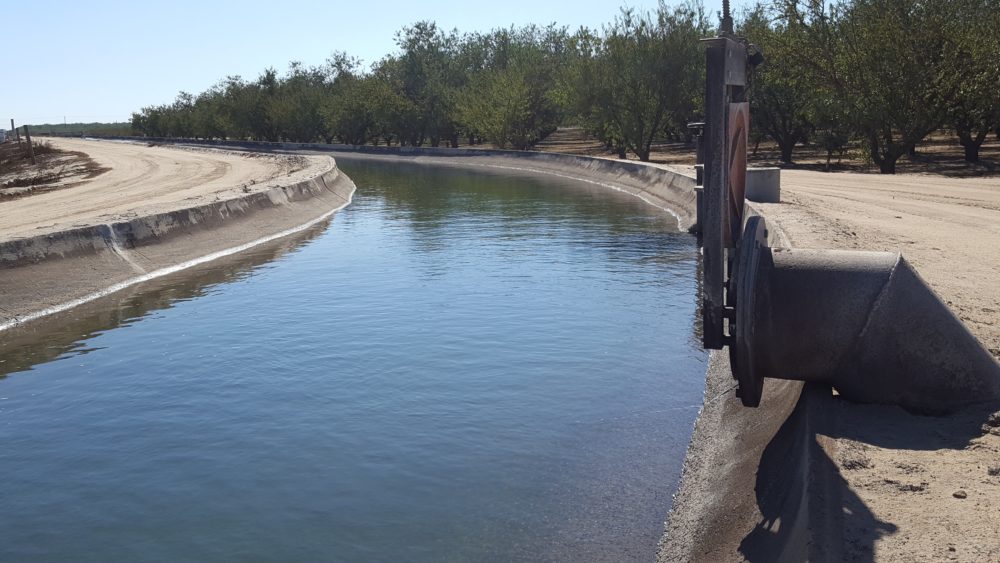
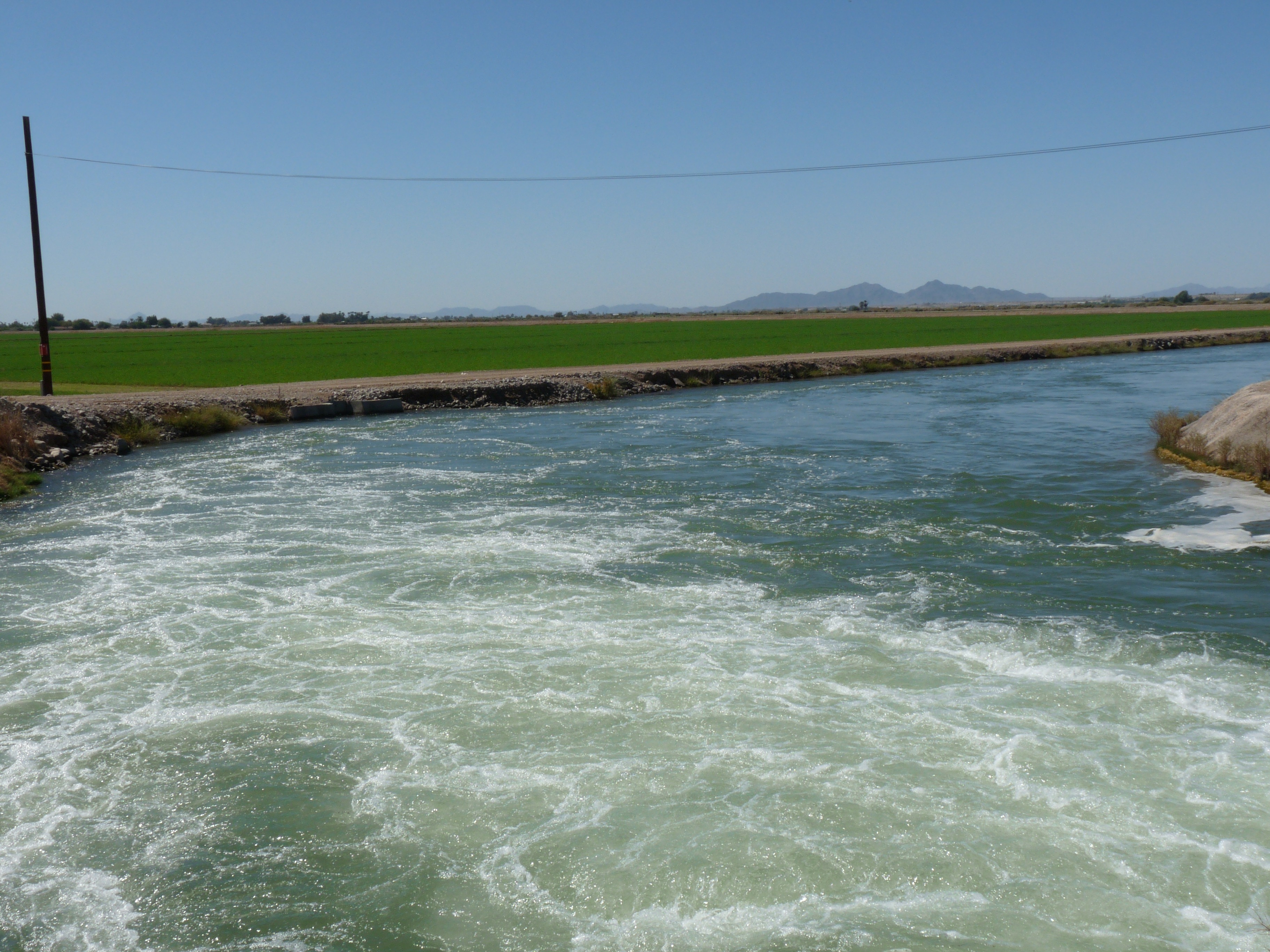
On Friday, the Imperial Irrigation District filed a legal brief with California’s Fourth Appellate District Court in its appeal of a local court’s decision challenging the district’s water rights.

The appeal is in response to the August 2017 decision by an Imperial County Superior Court judge against the district that invalidated IID’s method of apportioning water, known as the Equitable Distribution Plan.

That judgement also encompassed other provisions of great concern to IID, including a fundamental misunderstanding of the nature of the water rights held by IID and other legal errors that could jeopardize the Imperial Valley’s historic water rights and restrict the district’s ability to provide reliable water supplies to all of its customers in the future.

In its combined reply and response brief, the district argues that IID “legally acquired and owns the water rights to the Colorado River water that it diverts and delivers to the Imperial Valley,” and that those rights are held by IID “in trust for its uses and purposes” under irrigation district law.

IID was therefore, “well within” its powers when it adopted the EDP to apportion water to all its water users.

“The outcome of this case will dictate the future of the Imperial Valley’s water rights and who controls them,” said IID Board President Erik Ortega. “For the IID, this case is about many things but none more important than protecting and managing this resource for the benefit of all water users.”

The IID Board of Directors is expected to address the brief in open session during its meeting next Tuesday.

More information about the suit can be found at:

https://www.iid.com/water/rules-and-regulations/equitable-distribution
2019-02-19T17:16:37-08:00February 19th, 2019|

Groundwater Agencies Formulating Plans for SGMA

Groundwater Sustainability Will Be Focus of New Rules

By Jessica Theisman, Associate Editor

Groundwater agencies up and down the state are formulating initial plans for growers in their areas to reduce overdraft pumping of groundwater as they prepare for the Sustainable Groundwater Management Act regulations that will kick in around 2040. Ron Samuelian is a civil engineer with Provost and Pritchard consulting group, with offices around the state. He spoke with California Ag Today about their role as an engineering firm regarding helping growers with SGMA.

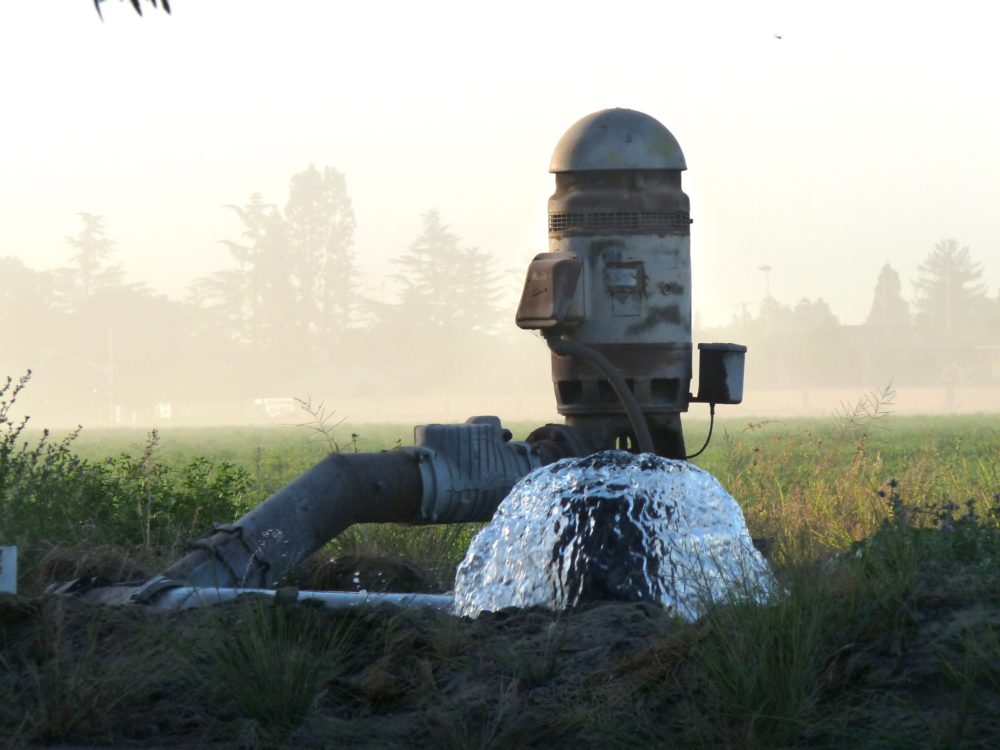
Ground Water Pumps

At the moment, a lot of the work is related to a plan. Using hydrogeology, they are figuring out the water budget, its impact, the amount of overdraft occurred, and how to monitor this in the future.

“But maybe most importantly, how are we going to fix it and what are we going to do about it? I think that is where we really come in. We understand not only ag but, urban and all of the other uses,” Samuelian said.

The goal of SGMA is to be in balance in 2040.

“In terms of sustainability over time, we have seen a decline in our water table. At a given well, the water level might bounce up and down, but the general trend has been to decline a 1 to 5 feet a year, depending on location,” Samuelian explained.

In 2040, the trend is supposed to be flat.

2019-02-15T15:54:21-08:00February 15th, 2019|

California Farm Bureau Sues Water Board on Proposed Water Grab

Farm Bureau Sues to Block Flows Plan for Lower San Joaquin River

By David Kranz, Manager, Communications, California Farm Bureau Federation

A plan for lower San Joaquin River flows misrepresents and underestimates the harm it would cause to agricultural resources in the Central Valley, according to the California Farm Bureau Federation, which filed suit recently to block the plan.

Adopted last December by the State Water Resources Control Board, the plan would redirect 30 to 50 percent of “unimpaired flows” in three San Joaquin River tributaries—the Stanislaus, Tuolumne, and Merced rivers—in the name of increasing fish populations in the rivers. The flows plan would sharply reduce the amount of water available to irrigate crops in regions served by the rivers.

In its lawsuit, filed in Sacramento County Superior Court, the Farm Bureau said the flows plan would have “far-reaching environmental impacts to the agricultural landscape in the Central Valley,” and that those impacts had been “insufficiently analyzed, insufficiently avoided, and insufficiently mitigated” in the board’s final plan.Tuolumne River-Modesto Irrigation District

“The water board brushed off warnings about the significant damage its plan would cause to agricultural resources in the Central Valley, labeling it ‘unavoidable,’” CFBF President Jamie Johansson said. “But that damage can be avoided, by following a different approach that would be better for fish and people alike.”

The Farm Bureau lawsuit says the water board failed to consider reasonable alternatives to its flows-dominated approach, including non-flow measures such as predator control, food supply and habitat projects for protected fish, and said it ignored “overwhelming evidence” that ocean conditions, predation and lack of habitat—rather than river flows—have been chief contributors to reducing fish populations.

The water board’s analysis of impacts on agricultural resources “is inadequate in several respects,” the Farm Bureau said. The lawsuit says the board plan fails to appropriately analyze its impact on surface water supplies and, in turn, how cutting surface water would affect attempts to improve groundwater under the Sustainable Groundwater Management Act—all of which would cause direct, indirect, and cumulative effects on agricultural resources.

“California farmland is a significant environmental resource, providing food, farm products and jobs for people throughout the state, nation and world,” Johansson said. “Before cutting water to thousands of acres of farmland for dubious benefit, the state must do more to analyze alternatives that would avoid this environmental harm.”

The California Farm Bureau Federation works to protect family farms and ranches on behalf of nearly 36,000 members statewide and as part of a nationwide network of nearly 5.6 million Farm Bureau members.

2019-02-08T17:06:50-08:00February 8th, 2019|

Surface Water is the Key to SJV Farming Future

Water Projects Were Built to Deliver Surface Water to Farmers

By Patrick Cavanaugh, Editor

Water is always a concern while farming on the west side of the San Joaquin Valley. Daniel Hartwig is the resource manager of Huron-based Woolf Farming and Processing. The company is a multi-generation and multi-crop farming business. Hartwig explains how monitoring and being proactive helps them stay ahead of some of the water issues.

Like everybody, we’re concerned that there’s not going to be enough water to do everything we’re currently doing,” Hartwig said. I think we’re just waiting to see and trying to be proactive and get ahead of a lot of these water issues, but at the same time, we’re monitoring it and hopeful that there will be more surface water to make up for what we might be stopped from pumping.”

Not having surface water is a big problem on the west side.

The entire reason the California Aqueduct and other canals were built was to have surface water to mitigate against the issues they had back in the twenties, thirties, and forties. Back before there was surface water available,” Hartwig explained.water

Hartwig said he thinks that President Trump’s memorandum could be helpful.

“Anything that’s going to help give us water and allow it to be more reliable is very helpful. However, the issue is timing and … anything that’s going to take more time is more water loss, and that creates a struggle for all of us, he explained.

“Regarding pump drilling, there are always discussions going on, but I don’t think we’re at the point yet where we can make any of those decisions just because we don’t know for sure what’s … going to come down the pipeline,” Hartwig said. We’re evaluating, and we’re monitoring, and trying to be involved in these groundwater sustainability plan (GSP) discussions.”

Again, having surface water is the key to the future, noted Hartwig.

“The lack of surface water is a huge problem. I mean, we would not have to pump as much groundwater if we were able to get as much water as we are supposed to be receiving from the state and federal water projects,” Hartwig said.

2019-01-31T15:08:30-08:00January 31st, 2019|

William Bourdeau Speaks Out About SGMA

William Bourdeau: Surface Water Must Be Tied to SGMA

By Patrick Cavanaugh, Editor

William Bourdeau is Vice President of Harris Farms, a Director of Westlands Water District, and Chairman of the Board of the California Water Alliance. Bourdeau recently talked to California Ag Today about the Sustainable Groundwater Management Act (SGMA), which will force growers in 2040 to keep the water levels in their wells in balance and not allow over-drafting.

William Bourdeau

“It’s mostly about living and growing up in the community and hearing about what the people did when I was still young,” Bourdeau said. “I understand that we were over-drafting the aquifer in the early days of agriculture on the west side of the valley and some very innovative, pioneering individuals figured out how to solve the problem. They built the Central Valley Project and delivered surface water. And if you look at the statistics, the problem was nearly solved. It’s only started to become a problem when the surface water deliveries have been cut off as a result of the biological opinions.”

“I can’t understand why that we can’t solve this problem. And I do think surface deliveries need to be tied into SGMA,” he said.

Bourdeau said he believes that the problem can be solved and not be detrimental to the environment.

“But any solution must consider humans and our needs … surface deliveries need to be incorporated into the plan,” Bourdeau added. “We need to use sound science, and it needs to be peer-reviewed.

“We need to make sure that we’re doing everything we can to preserve a domestic food supply capability. I think it’s in our national interest. … It’s a national security issue,” he said.

Bourdeau believes that we need to get away from looking at these very narrow issues and look at the big picture.

“We must find a way to do what’s best, and not all the decisions are going to be desirable, but I do think we can. We can make decisions that solve the problem and don’t take this wonderful resource out of production.

As a director for Westlands Water District, Bourdeau said no stones will be unturned for compliance to SGMA.

“We’re doing everything we can to try to make sure that we manage this situation to the best of our ability and our growers are represented in a way that they will succeed in the long term,” he said.

2019-01-22T16:43:33-08:00January 22nd, 2019|

Modesto Irrigation District Files Legal Action Against State Water Board

MID Lawsuit Challenges CA Water Board On Misguided Plan

News Release from Modesto Irrigation District

Modesto Irrigation District (MID) filed a lawsuit on Jan. 10 against the California State Water Resources Control Board in response to their vote to approve Phase 1 of the Bay-Delta Water Quality Control Plan.

MID’s lawsuit primarily challenges the State Water Board for failing to comply with both the United States and California Constitutions and the California Environmental Quality Act.

MID is among many parties—including our partners in the San Joaquin Tributaries Authority—who are pursuing independent legal action against the State Water Board.turlock irrigation canal

“The State Water Board misused its power to adopt a misguided and devastating plan,” said MID Board President Paul Campbell. “Given their current plan, we’re left with no choice but to pursue legal action. We must protect our more than 130-year old water rights, our water supplies, and the communities we serve.”

To balance the needs of our environment and customers, MID continues to advocate with our Tuolumne River partners for a durable solution composed of both flow and non-flow measures. Parallel to filing this lawsuit and consistent with the State Water Board’s direction, we’re working collaboratively to present a voluntary agreement for the State Water Board’s consideration in the coming months.

“Our voluntary agreement will ensure water security and reliability, includes environmental improvements, enhances fish populations far beyond what is projected in the state’s current plan and most importantly, guarantees timely implementation,” said MID Board Vice President John Mensinger. “Their plan threatens not only Central Valley ag and urban water users, but also the water supply of more than two million people living in the Bay Area.”

MID’s legal action reinforces our commitment to protect the environment, our customers, our region, and our water supply. For more information and to read MID’s full filing, visit www.mid.org.

2019-01-14T16:29:45-08:00January 14th, 2019|

Water Board Proceeds With Water Grab for Environment

40 Percent Water Grab for Environment Moves Forward

By Patrick Cavanaugh, Editor

The board members of the State Water Resource Control Board voted Dec. 12  to proceed with their unimpaired flows proposal on the Tuolumne, Stanislaus, and Merced Rivers—putting farmers and communities in peril of losing a big part of their water resources because of this water grab.

They’re calling for upwards of 40 percent unimpaired flows from the three tributary rivers flowing into the San Joaquin River flowing into the Delta to increase flows for salmon and other species.

“It’s going to have devastating and unavoidable consequences to our customers,” said Melissa Williams, Public Affairs spokeswomen for Modesto Irrigation District. “It’ll affect not only our farmers but also our urban community.”

Melissa Williams, Public Affairs for Modesto Irrigation District

Modesto Irrigation District treats and delivers and wholesales water to the city of Modesto, so homes and businesses will also be affected.

“We’re still evaluating the possible impacts and what that means for different supplies and rates,” Williams said.

“We’re disappointed in the State Water Resources Control Board’s action because at the direction of the governor and also the State Water Board, there was strong encouragement of voluntary agreement discussions. Modesto Irrigation District, together with our partners Turlock Irrigation District in the city and county of San Francisco, engaged in good faith, voluntary agreement discussions the last couple of months,” Williams explained.

The water districts have worked collaboratively to develop a framework for the Tuolumne River that not only would balance the needs of customers and the environment but also included an offer of early implementation of river flow and non-flow measures, such as habitat restoration and predation suppression measures.

“Despite our significant progress in putting this voluntary agreement framework together and presenting it to the State Water Board, they still decided to move forward with their plan,” Williams said.

Of course, the water districts plan to continue to fight the proposal and will take all measures to protect their water supply in those communities that are served.

“We’re still evaluating the State Water Board’s approved resolution, and the action they took and the impacts it will have. We continue to advocate for a durable solution that can achieve sustainability and reliability for our environment, our customers, and overall communities,” Williams said.

The Water Districts are frustrated with the State Water Board because the board ignored all suggestions to help the environment without taking so much water from the rivers.

“We have approximately 30 days to challenge their decision after they file what they call a notice of determination. So over the next month, we’ll be analyzing what they agreed to … and taking the appropriate actions necessary, including litigation,” Williams explained.

The State Water Board did include language in their approved resolution that directed their staff to evaluate the Tuolumne River and voluntary agreement framework and come back with an analysis by March 1, 2019.

“But again, we’re prepared to take any appropriate actions necessary to protect our water supply in our communities for our customers,” Williams said.

The economic impacts are devastating in Stanislaus County alone.

“Through various studies that we’ve done, our water supply supports close to $4 billion worth of economics, in the region. And of course, the Stanislaus and Merced River areas will have similar devastating impacts,” Williams said.

And even San Francisco consumers are impacted. Because a significant source of their water comes from the Tuolumne River, any cutbacks in water supply will affect two million people in the Bay Area.

2018-12-19T16:37:22-08:00December 19th, 2018|

Jeff Mitchell: Conservation No-Till Is One Option For Water Conservation

Jeff Mitchell Has Devoted Career to Conservation No-Till

By Patrick Cavanaugh, Editor

Jeff Mitchell is a Cropping Systems Specialist at UC Davis, based at the Kearney Agricultural Research and Extension Center in Parlier. He has devoted 19 years to improving nitrogen and water use efficiencies in food, feed, fuel and fiber in no-till cropping systems.

Mitchell’s passion helped found Conservation Agriculture Systems Innovation Center (CASI) in 1998. CASI operates under the auspices of the University of California Division of Agriculture & Natural Resources.

His no-till research focuses on soil quality management and potential roles of cover crops and compost in intensive row crop production systems, and the use of cover crop mulches as a means of conserving soil water, suppressing weeds and increasing organic matter in no-till production systems.

He often cites a book called Plowman’s Folly by Edward H. Faulkner, published following the ruinous Dust Bowl. Faulkner dropped an agricultural bombshell when he blamed the then universally used moldboard plow for disastrous pillage of the soil.

This book is the 11th all-time cited, read, or acknowledged a piece of work related to the soil in the history of scientific literature.

“When it was written in 1943, it caused great arguments. The government got involved with the USDA trying to defend the science of the day,” Mitchell said.

The reason the book was so controversial is that it proved that there had been no scientific reason for plowing.

“He was getting in people’s faces by saying, ‘This might not be the way to do it,’ ” Mitchell said. “Faulkner’s stance was embroiling people.”

Mitchell’s work centers on conservation, no-till production of vegetable and cotton crops. The idea is to plant in the crops’ residue, which builds up a rather thick layer of mulch on the bed—leading to reduced water and nitrogen, as well as minimizing weeds.

Mitchell cited several growers in the Midwest and in California that are successfully practicing conservation no-till agriculture. And there is much more recent attention on soils with the Healthy Soils Program (HSP)—stemming from the California Healthy Soils Initiative, a collaboration of state agencies and departments to promote the development of healthy soils on California’s farmlands and ranch lands.

Jeff Mitchell describing the no-till soil that he has been working with for 19 years.

The HSP has two components: the HSP Incentives Program and the HSP Demonstration Projects. The HSP Incentives Program provides financial assistance for the implementation of conservation management that improves soil health, sequester carbon and reduce greenhouse gas (GHG) emissions. The HSP Demonstration Projects showcase California farmers’ and ranchers’ implementation of HSP practices.

“The principles that we are pursuing are allowing growers to keep excellent yields and maybe increase sometimes, cut out some inputs like fertilizers to save money, and to do it with less—less disturbance and fewer operations,” Mitchell explained. “None of this is new. It was 90 years ago when the Natural Resources Conservation Service established the principles of good soil management

  1. Healthy soil holds more water (by binding it to organic matter), and loses less water to runoff and evaporation.
  2.  Organic matter builds as tillage declines and plants and residue cover the soil. Organic matter holds 18 to 20 times its weight in water and recycles nutrients for plants to use.
  3. One percent of organic matter in the top six inches of soil would hold approximately 27,000 gallons of water per acre!
  4. Most farmers can increase their soil organic matter in three to 10 years if they are motivated about adopting conservation practices to achieve this goal.

“In 2013, a group of 30 farmers came up with a similar kind of a list,” Mitchell said. “They brainstormed on what would be good soil management, and they came up [with] feed the soil organic matter, reduced disturbance, increased diversity—the same as the NRCS list.”

Mitchell cited a newspaper article published in 1931. “People were finding benefits of cover crops in San Joaquin Valley farming systems. Now with the Healthy Soils Initiative, farmers are trying these techniques and evaluating it. There’s a lot of activity that is going on at many different sites in the state.”

Mitchell’s work at the West Side Research and Extension Center in Five Points on the conservation no-till approach has been with scientific protocol and replicated over 19 years.

“Initially, we would have several systems. In the no-till system, rotations of cotton, transplanted tomato, and a forage crops would grow back to back in a no-till system,” he explained. “Each crop would be planted in the residue of the previous crop. Over the years, the no-till plots have grey residue from last year plantings.”

A cover crop has been planted in a no-till field of cotton that followed tomatoes.

“Cover crops can also be part of the no-till system, which over the last 18 years have added 34 tons of biomass, which includes 13 tons of carbon per acre to the system, which is a good thing,” Mitchell said. “It adds fuel to the soil biology, but it’s not perfect.”

“My supposition would be that growing cover crops is more completed than people think. I have been at meetings where growers say: ‘are you kidding, I’m not going to grow cover crops because I do not have the water,’” Mitchell noted.

He said he understands the situation in not having enough water. But he explained, “In the winter time, yes there will be evaporation from the soil service every day. Radiation is beating down, and there will be evaporation.”

Evaporation in the cover crop field could be more nuanced. Maybe because the soil surface is shaded out, which would cool the soil, there may not be that much evaporation. The cover crops may increase infiltration of water in the ground, instead of it ponding on the soil surface.

“Yes, there will be some inevitable use of water by growing vegetation in the field in the winter, but it could be less than we think,” Mitchell said.

Mitchell then showed two large aluminum pans of soil. One showed soil dug up in an open field that has been tilled. The other container is soil with crop residue from the non-tilled plots.

He takes a handful of each and drops them into two individual gallon jars within an open metal grid with a few inches of water. This what Mitchell sees every time he does this. The large jar with tilled soil breaks up rapidly with soil particles dropping to the bottom. Within the no-tilled soil jar, the chunk of soil is very stable, with no soil particles breaking off.

“One thing that we are not doing now is looking at the potential benefits of these no-till systems and practices for conserving water and making better use of water that has been achieved in other areas of the world such as South America and the Great Plains and other regions of the United States. They do not have irrigation systems that California has; they have to wait for rainfall.”

“When we do the no-tilled system with lots of residue from back-to-back crops, with cover crops and with no disturbances, you may be able to keep 4 to 5 inches of water in the soil each year compared to a tilled crop.

More information on the Conservation No-Till system can be found here.

2021-05-12T11:05:07-07:00December 10th, 2018|

Many Questions Around SGMA Law

SGMA Law is Poorly Written

By Patrick Cavanaugh, Editor

A recent meeting brought farmers and other stakeholders to California State University, Fresno to discuss the possible impacts of the Sustainable Groundwater Management Act (SGMA).

SGMA requires governments and water agencies of high and medium priority groundwater basins to halt overdraft pumping and to bring those basins in equal levels between pumping and recharge. Under SGMA, these basins should reach sustainability within 20 years of implementing their sustainability plans. For critically over drafted basins, that will be 2040. For the remaining high and medium priority basins, 2042 is the deadline.

Don Wright,the publisher of WaterWrights.net, which is the only agriculture water reporting service in the Valley, spoke om the topic.

“SGMA is an overwhelming concept for most people because it’s an overwhelmingly poorly written law,” Wright said. “However, you show me anybody more creative than a farmer trying to get water. Hopefully, people left [the meeting] with the hope that others are looking out for solutions.”

Farmers and other stakeholders attended a recent SGMA meeting at California State University, Fresno.

Wright explained that the meeting helps blunt the impacts, the intended consequences, and the unintended consequences that come from legislation like this.

On the panel were farmers, agronomist, soil engineers, farmers, and a water attorney.

“All of these people are intimately involved in how the junction between water being delivered to the plants and harvest taken place. A lot of questions were answered, more importantly, we started defining the issues that need to be asked. And often that’s often the most critical step,” Wright said.

Lauren Layne, a water law attorney with Baker Manock and Jensen, suggested that farmers take action and put meters on their wells to start collecting data that could be of use to them.

“That’s a double edge sword,” Wright said. “For one it’s, it’s like putting a GPS on your vehicle for the government to follow you around. You don’t want that. You don’t want the government necessarily know how much water you’re using. But on the other side, if you keep that information private, once SGMA starts being implemented, and you can prove that you’ve used X amount of water, you can report your average cost per acre. Also, if a farmer is in an area with surface deliveries, how much does the surface deliveries impact your pumping? That’s a great combination to have.”

Wright said if the industry can get enough information, then they can report that the reason the farming industry needs to repair aquifers is due to cut offs from the deliveries to farmers.

Service providers, product manufacturers, and designers are looking at solutions to SGMA. These products can be seen at Fresno State’s Water Energy and Technology (WET) Center.

“It’s all about how can we keep farmers farming,” Wright said. “I know when a farmer is by himself and your back is against the wall, people are looking out for you.”

Wright also explained that the people that are populating the Groundwater Sustainability Agency (GSA) boards are not the enemy.

“They are men and women like you and I, with a stake in it. They are not the ones trying to cut off the water; they are the ones with boots on the ground dealing with a poorly written law.”

2018-12-05T15:26:30-08:00December 5th, 2018|

EPA Blasts State’s Water Grab

EPA’s Acting Secretary Andrew Wheeler Visits The Valley With Congressman Denham

News Release Edited by Patrick Cavanaugh

Following his recent visit to the Valley, U.S. Environmental Protection Agency (EPA) Acting Administrator Andrew Wheeler sent a letter to the State Water Resources Control Board (SWRCB) in Sacramento, expressing concern over several aspects of the proposed Bay-Delta plan. A copy of the letter is available here.

In the letter, Wheeler questions the effectiveness of drastically increasing flows to improve native fish species when studies show several additional factors contribute to their dwindling populations—including predation from non-native species, which the Bay-Delta plan does not address.

“I’m pulling every available resource to stop the state’s dangerous water grab,” said U.S. Representative Jeff Denham (R-Turlock). “Both the Department of Interior and EPA have now directly weighed in against Sacramento’s plan to steal our water.”

Oakdale Irrigation District General Manager Steve Knell said: “Finally, EPA Administrator Wheeler’s letter has put common sense back on the table in addressing the State’s draconian Water Plan. Thank you Congressman Denham for your efforts in bringing Mr. Wheeler to our area to hear our concerns.”

“This State Water Plan will devastate water storage in our dams, drive river temperatures to lethal levels and destroy the very fish species we at the local level are trying to protect. Our rivers deserve better. We have the science to show this, we have provided it to the State, and they have ignored it. We continued to advocate that sending more water down the river and not addressing other stressors is not an answer, and the State has ignored that too.”

South San Joaquin Irrigation District General Manager Peter Rietkerk said: “On behalf of the South San Joaquin Irrigation District, I would like to thank you and your staff for bringing Acting EPA Administrator Andrew Wheeler to our region on October 11, 2018. The meeting was a success, and our message was clearly heard, evidenced by today’s letter from the EPA to the State Water Board. We’ve continued to lament the devastating impacts of State’s plan to local drinking and irrigation water supplies, and to protected fish species within our rivers, and it is great to know that the EPA has listened and will be looking for balance and accountability from the State Water Board if they choose to approve this outrageous plan.”

At Denham’s request, several key administration officials have visited the Central Valley and have been actively engaged in policies to fight Sacramento’s water grab and increase water storage for our farmers and residents. This is the latest result of many such actions.

On July 27, Bureau of Reclamation Commissioner Brenda Burman submitted a strongly worded comment expressing serious legal concerns with the latest Bay-Delta amendment. The comment followed a visit by U.S. Department of Interior (DOI) Secretary Ryan Zinke to our impacted reservoirs at request of Denham on July 20. Additionally, Zinke sent an internal memo to DOI agencies on August 17 requesting all Central Valley Project authorities be provided to him for disposal to combat the state’s plan.

Following Denham’s September 28 letter requesting executive action, the President signed a memorandum to bring more storage to the Valley and address hydroelectric relicensing at Don Pedro, requiring agencies to consider local plans like the Tuolumne River Management Plan developed by Modesto and Turlock Irrigation Districts. Denham previously released an animated video on NMFS Sacramento’s dangerous water grab.

As a follow-up to the presidential memorandum, Denham recently hosted a call with senior administration officials from the Bureau of Reclamation to discuss the details of the memorandum, next steps in the process, and allow irrigation districts and farm bureaus an opportunity to ask questions.

The president’s order supplements legislation authored by Denham to support innovative financing opportunities for water projects throughout the western United States. Denham’s New WATER Act (H.R. 434) passed and was signed into law as part of America’s Water Infrastructure Act of 2018 (WRDA). Eligible projects include new reservoirs, below ground storage projects, recycling and desalination projects. This legislation supports large projects like enlargement of Shasta Dam, construction of Sites Reservoir and Temperance Flat Dam, and expanding Los Vaqueros Reservoir.

2021-05-12T11:05:08-07:00November 5th, 2018|
Go to Top