Bountiful Plant Transpiration

Guy Kyser on Plant Transpiration, Phytoremediation

By Patrick Cavanaugh, Deputy Editor

When plants get irrigated, not only do they provide food, but all plants transpire. Guy Kyser, a specialist at the UC Davis Plant Sciences Department, explained how plant transpiration transforms carbon dioxide into “food” for plants to grow.

“Water in the shallow soil is either going to evaporate, or it’s going to be transpired,” Kyser said, “which means it’s going to pass through a plant from the soil to the atmosphere. The transpiration process helps the plant fix CO2 and convert it into food or plant material. The plant is really a little solar powered machine that catches CO2 out of the atmosphere and turns it into something solid so it’s not a greenhouse gas anymore.”

Kyser also explained the phytoremediation* process that occurs in plants grown in less-than-ideal soil and water conditions, in which these plants take up polluted water from its roots while removing impurities from the soil, retain the impurities, and release pure water into the atmosphere. Kyser said, “So, with phytoremediation, you can use the plants to purify poor soil or water situations, then mow off the plant material when the process is done. All the toxins stay in the plant, and only the pure water goes through.” Despite being a slow process, phytoremediation is effective in toxin removal, environmentally friendly, and does not harm soil health.

*Phytoremediation: Ancient Greek for “plant” and Latin for “restoring balance”

2016-05-31T19:28:07-07:00August 13th, 2015|

“My Job Depends on Ag” is Growing

Steve Malanca on the Future of “My Job Depends on Ag”

By Charmayne Hefley, Associate Editor

Three months ago, a grassroots effort to spread the word of agriculturalists began in the form of the movement, My Job Depends on Ag. The organization held its first meeting this week at Harris Ranch in Coalinga with 50 members in attendance to discuss the future of the group.

Steve Malanca, co-founder of the movement, said his hope for the organization is to educate the consumer, as well as to unite the ag community. Malanca also sells agriculture equipment for AGCO.

“We really feel that educating the non-ag community about who we are and where our food comes from is very important,” Malanca said.

“We want to unite the ag community so that we all are represented together,” Malanca continued. “We want to encompass everybody—the organic farmer, the commercial farmer, the trucking company, the logging industry. But everybody that’s involved in ag we want them to know that we all have a stake in this, and if we can all come together and be as one, I think that we’ll be able to hopefully give a message to the general public that we have a need for people knowing where their food comes from.”

Malanca hopes to host a My Job Depends on Ag Festival in the future. The group is considering Los Banos as a location for the potential festival due to its accessibility with an airport, several hotels and a nearby fairgrounds for the event.

“We’re considering a festival in order to bring everybody together,” Malanca said, “and we’re considering combining the Salinas Valley growers with the San Joaquin Valley growers in a town for example like Los Banos.”

“We want to, perhaps, have ag tours around the city of Los Banos,” Malanca suggested, “and have buses available for people who aren’t familiar with ag to take a ride and come see what kind of crops are grown and how they’re done.”

“An historical pavilion would be nice to show people the history of agriculture, and California—not just central California, but the entire state,” Malanca stated, “and we’d bring in some big time entertainment and food, of course. And we’d have a way for everybody to be proud of what they do and to show people where their food comes from.”

Malanca said he hoped the group’s decal could be an icon that symbolized the importance of agriculture.

“We’re grateful for the response we’ve had with our decals,” Malanca said. “We hope that little decal being shown on people’s vehicles and equipment will be a sign or a vision for people to see where they’re food comes from and know that we are a huge community and that we are good people. Ag is good, and ag is where you’re food comes from.”

2016-05-31T19:28:08-07:00August 7th, 2015|

Senate Water Bill Hopeful

Senate Water Bill Introduction is a Glimmer of Hope for Water Agencies

FRESNO, CA – Last week’s introduction of Senator Dianne Feinstein’s legislation, the California Emergency Drought Relief Act of 2015, is welcome news for the people of the State of California and the Central Valley enduring another devastatingly dry year. Once again, multiple Central Valley water agencies joined together to express their unified voice in support of an expeditious passage of this Senate water bill. This bill comes on the heels of the introduction and passage by the House of Representatives of H.R. 2898, the Western Water and American Food Security Act of 2015.

 “We are encouraged by Senator Feinstein’s actions with the introduction of this legislation. There is no time to lose as the damaging effects of the drought continue to wreak havoc on local communities, businesses, farms and farmworkers in the San Joaquin Valley and other regions of the State. Immediate solutions are needed, and the District looks forward to working with Members of both the House and Senate to find a reasonable solution that will benefit our great State.”

–Don Peracchi, Chairman of the Board, Westlands Water District


“The South Valley Water Association thanks Senator Feinstein for introducing the California Emergency Drought Relief Act of 2015 and encourages the balance of the Senate to make quick work in passing the bill immediately upon return from the August recess. This is a further important step to get legislation that will help those many farms and communities in California who are going without water. We look forward to the members of Congress resolving key differences between the California Emergency Drought Relief Act and H.R. 2898, the Western Water and American Food Security Act of 2015, and finding real water supply solutions. The members of the South Valley Water Association stand ready to assist in any way we can.”

–Dan Vink, Executive Director, South Valley Water Association


“The San Joaquin River Exchange Contractors Water Authority thanks Senator Feinstein for the introduction of the California Emergency Drought Relief Act of 2015. We realize this is another important step to passing a bill out of the Senate later this year that provides a meaningful legislative solution to the long-standing water supply shortages that is crippling the state. We are optimistic that members of Congress and the Senate can resolve the key differences in this bill, and the previously passed House Bill H.R. 2898, the Western Water and American Food Security Act of 2015. The Authority looks forward to working with our legislative leaders to pass legislation that benefits all of California.”

–Steve Chedester, Executive Director, San Joaquin River Exchange Contractors Water Authority


“There is no more important issue facing the Valley than the drought. It is a statewide crisis with the most direct and severe impacts in the Valley. The Kern County Water Agency appreciates Senator Feinstein’s and Senator Boxer’s efforts to help reduce the drought’s terrible impacts by introducing a bill in the Senate that can improve water supplies for farms and cities. We are anxious for the House and Senate to start working on a compromise between Congressman Valadao’s bill and the bill in the Senate, and we encourage the Senate to take swift action on the Feinstein/Boxer bill so that process can begin.”

–Ted R. Page, Board President, Kern County Water Agency


“No area of the State, and perhaps the nation, has suffered more disproportionately the harmful stress of chronic water supply shortages. The San Luis & Delta-Mendota Water Authority is appreciative of the effort of Senators Feinstein and Boxer on the recently introduced California Emergency Drought Relief Act of 2015 bill in the Senate. This bill is not only important to the San Joaquin Valley, but it is also vital for the entire state of California. We encourage the Senate to act swiftly, and encourage both the House and Senate legislators to begin work immediately on a meaningful compromise bill to ensure that long-awaited and much-needed relief is realized.”

–Dan Nelson, Executive Director, San Luis & Delta-Mendota Water Authority


 “Friant Water Authority welcomes the introduction of Senate Bill 1894, the California Emergency Drought Relief Act of 2015, and we thank Senator Feinstein and her staff for all their efforts in bringing this bill forward. The immediate task is to pass Senate legislation so that work can begin to craft a compromise with the House-passed legislation. Our farms and communities have suffered more under these water cutbacks than any other area in the nation. Our people are desperate for solutions that will provide real water for our area. This bill is a critically important step in the process of developing compromise legislation that can be signed into law by the President this year. As the bill advances, Friant looks forward to working with our representatives on both sides of the aisle to achieve drought legislation that will provide real relief for the 2016 water year and beyond.”

–Eric Borba, Chair, Friant Water Authority

2016-05-31T19:28:08-07:00August 6th, 2015|

Farmer Mac Admires California Farmers

Farmer Mac Knows the Strength of California Farmers

By Patrick Cavanaugh, Deputy Editor

Curt Covington, senior vice president, agricultural finance for the Federal Agricultural Mortgage Corporation or ‘Farmer Mac,’ knows a lot about the California farmer, and the Central San Joaquin Valley farmer in particular. Covington said, “This grower has experienced “an ‘us’ versus ‘them’ mentality for a number of years.”

“The voting block in this state resides in Los Angeles and the Bay Area. There has been, particularly over the past ten years, this view that the American farmer–the California Farmer particularly given the drought–has not been a good steward of resources. The facts have proved otherwise. And despite everything that has been thrown at us by the uninformed consumer in Los Angeles and San Francisco, Central California farmers continue to thrive, and will find their way out of this problem. I am convinced of that,” said Covington.

Covington also has a lot of respect for the farmers’ management strategies in all parts of their businesses and lives. “Farmers are price takers; they do not set the price for their commodities. This forces them to be good managers of their expenses, good managers of their balance sheet, good managers of their assets and good managers of their labor,” Covington said.

“And no where else in this country, in my opinion, do you have a group of farmers who have dealt with more problems and come out on top than the California farmer. It is not only an honor, but a pleasure to work with many of them. They are just an incredible group of people,” Covington said.

2016-05-31T19:28:08-07:00August 6th, 2015|

Subsurface Drip in Alfalfa

Subsurface Drip in Alfalfa–A Growing Interest

By Laurie Greene, Editor

Dan Putnam is a faculty member and Cooperative Extension specialist at UC Davis with a statewide responsibility for alfalfa and forage crops. He said there has been an increased interest in subsurface drip irrigation in alfalfa, which is usually flood-irrigated. Alfalfa is a key forage source for the state’s top agricultural product, dairy, to the tune of more than $7 billion per year.

“It does come with some challenges,” but he said, “the growers who have really treated this as an educational experience are continually learning how to manage this system; not only the gophers, but the irrigation management component as well. To establish a crop with drip irrigation, growers need to plant in early fall and use sprinklers to germinate the seeds. A lot of growers fail on agronomic issues, like not planting at the right time of year rather than on drip irrigation issues,” Putnam said.

Putnam noted that growers are more interested in learning about subsurface drip irrigation because of increased yields. “I think over time, we are going to see a greater adaptation of this technology in California,” Putnam explained, “particularly in areas that have very high yield potential. For example, in the San Joaquin Valley and the Imperial low desert areas where the crop is actually capable of 12-16 ton yields, our yields average about 7-8 tons per acre. And so,” he added, “we do have a yield potential that we are unable to achieve, and part of that is in the limitation of surface irrigation.”

Putnam also noted one advantage of drip irrigation is efficient nutrient delivery, which in turn fosters increased uniformity across the system. “Growers can ‘spoon-feed’ the crop rather than inefficiently apply it on the surface,” stated Putnam. “I think a lot of growers have figured this out, although alfalfa does not have a nitrogen issue. Nevertheless, we have to apply significant phosphorous, potassium and several other nutrients in some deficient soils.”

As with most things, there are drawbacks, and Putnam outlined two. “One is an increased cost of the drip line and filtration system,” Putnam said. “Growers who are considering subsurface drip need to wrestle with the cost to be sure they can increase yields enough to justify the cost. In most cases, growers have been able to substantially increase yields in their systems to pay for the $1500-2500 per acre upfront investment in the technology,” he said.

“The other drawback is maintenance,” Putnam continued, “particularly with regard to rodent infestations. We’ve seen gophers, in particular, ground squirrels and meadow voles absolutely devastate drip-irrigation fields. As our vertebrate pest specialist at UC Davis says, ‘It is essentially an ideal habitat for gophers as they have plenty of food, plenty of shelter, plenty of water, and they are able to reproduce pretty readily.’ ”

“You should consider this system only if you are willing to accept a very high level of maintenance and no tolerance for rodent infestation because, if left unchecked, they will chew on the tapes and ruin the system,” he said.

Putnam reported there are strategies to get around gophers and other rodent issues, “You have start clean and do some deep tillage. We also recommend  retaining the capability of flood irrigation in those fields to use once in a while because it reaches the furrows very effectively,” he noted.

For those gophers, Putnam recommends every trick in the book. “There are traps organic farmers are able to use, flood irrigation, and boxes to help control the population,” Putnam said. “There are products available for baiting and other types of control measures that should be used. It is really too expensive a system to allow the gophers to have their way with it, so we need to have a high level of management,” he concluded.

2016-07-30T21:43:15-07:00August 3rd, 2015|

Westlands on Drought Relief Act

Westlands Water District Statement on the Introduction of the California Emergency Drought Relief Act of 2015

FRESNO, CA – Westlands Water District is encouraged TODAY by the introduction by Senator Dianne Feinstein of the California Emergency Drought Relief Act of 2015. The State is facing unprecedented drought conditions, and the water supply shortages caused by four years of extraordinary dry conditions have been exacerbated by the restrictions imposed on the operations of the federal Central Valley Project and the California State Water Project under federal law.

The introduction of the California Emergency Drought Relief Act of 2015 is an important step in the enactment of legislation to provide much-needed relief for the public water agencies that receive water from these projects and for the people, farms, and businesses they serve. There are great similarities between this bill and H.R. 2898, the Western Water and American Food Security Act of 2015, which passed in the House of Representatives on July 16, 2015. However, there are also great differences.

Westlands looks forward to quick passage of the California Emergency Drought Relief Act of 2015 by the Senate and to subsequent discussions in conference to reconcile the two bills. Through its work with Senator Feinstein and Members of the House of Representatives, Westlands knows that these policymakers are genuinely interested in working together with the District and other interested entities (a) to find a meaningful legislative solution to the chronic water supply shortages that have devastated the San Joaquin Valley and other regions of the State and (b) to provide effective means of protecting at-risk species. The District looks forward to working with them to find common-sense solutions that serve the interests of all Californians.

2016-05-31T19:28:09-07:00July 29th, 2015|

We are being lied to!

Assembly Member Patterson Accuses NRDC and Governor’s Office of Bias

By Laurie Greene, Editor


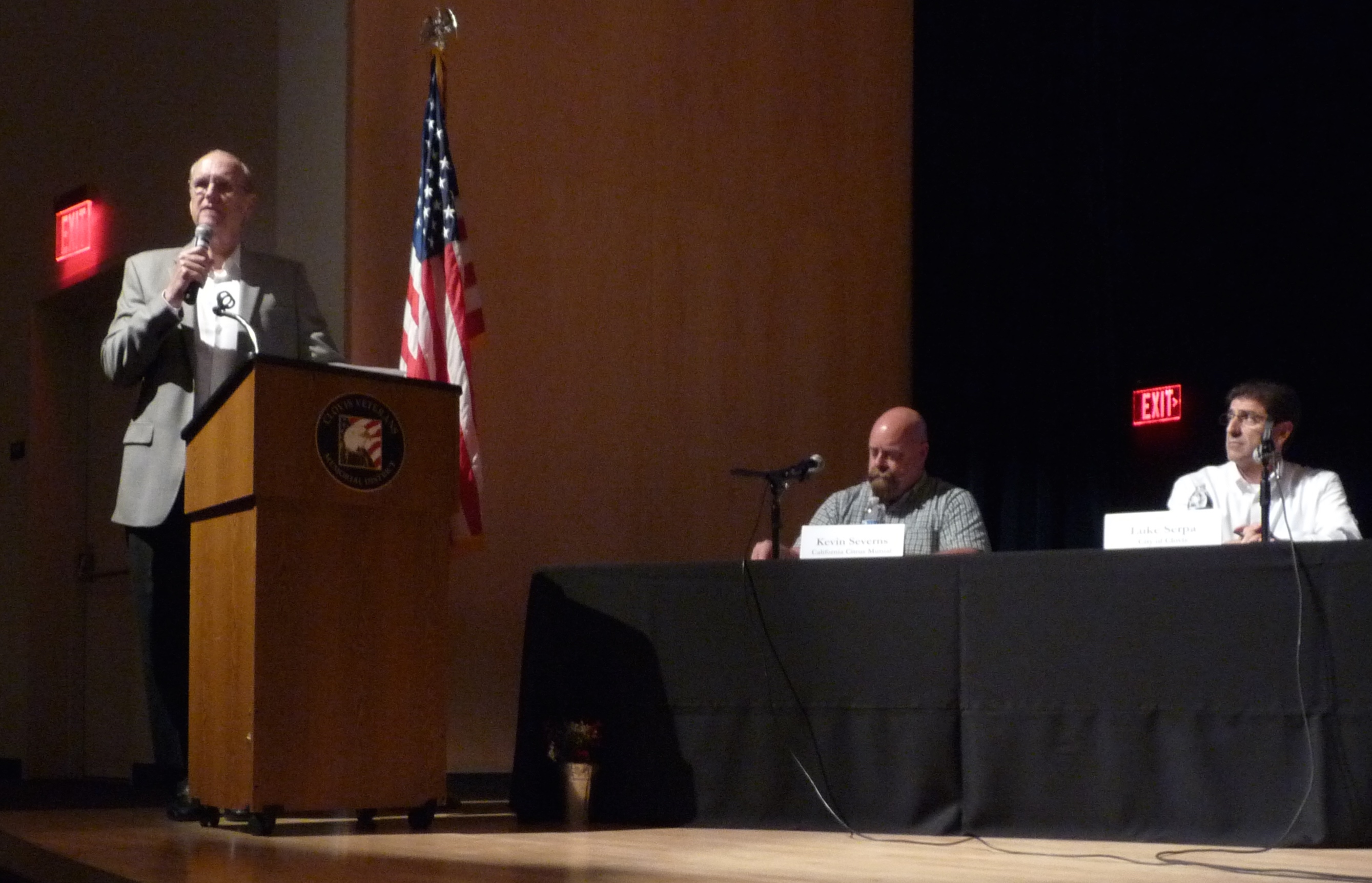
We are being lied to,” declared Jim Patterson, who represents the 23rd Assembly District in the California State Assembly since 2012, at his recent drought forum in Clovis.

“I have come to the conclusion there is a power structure led by the Natural Resources Defense Council (NRDC), the governor’s office and in the bureaucracies,” Patterson explained. “They are not telling us the truth. They do not abide by their own agreements, and they have a bias against the very water technology and the water systems that have made California a ‘Golden State’. They are biased against dams, reservoirs and conveyance, and every time I turn around, I find another example.”

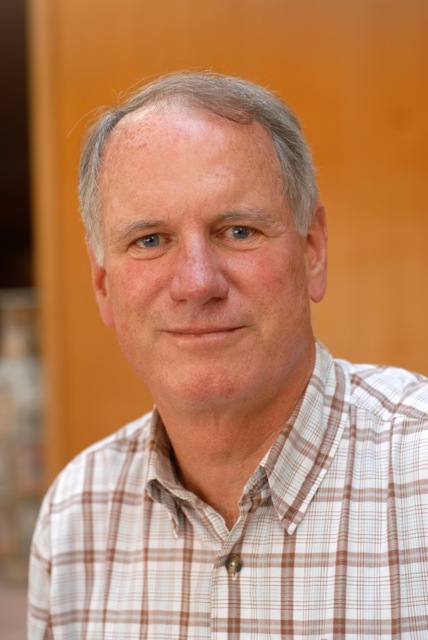
Jim Patterson, California Assembly Member

Jim Patterson, California State Assembly Member

“We need to have regulatory relief from the State of California in order to build Temperance Flat (a proposed dam project on the San Joaquin River) and its conveyance systems and to build the improvements at Shasta Dam and Reservoir and at Sites Reservoir,” said Patterson.

“And yet,” he continued, “I know for a fact that we are not going to get that regulatory relief. Nevertheless, the governor and this legislature have given that very same regulatory relief to the Kings’ Basketball Stadium in Sacramento (Golden 1 Center) and to two big NFL football stadiums in the state.”

To build water saving and conveyance systems, Patterson expects to face a gauntlet of litigation from the NRDC. “Though we have tried over and over again, unsuccessfully, to get the California Environmental Quality Act (CEQA) reformed,” he stated, “the Democrats will do it for basketball and football, but they won’t do it for water. That demonstrates to me they are absolutely disingenuous.”Map_of_proposed_Temperance_Flat_Dam_and_reservoir

“Secondly, we were promised money in this budget for the Central California InterConnect,” Patterson said. “Putting an interconnect between the federal Central Valley Project (CVP), best illustrated by the Kings River and San Joaquin River Watersheds in the Central Valley, and the state’s California State Water Project (SWP), exemplified by the San Luis Reservoir system, is critically important. We need to connect those projects so we have water conveyance alternatives to improve water reliability and to save us from the kinds of hard decisions that we’ve had to reach now—to starve a portion of the Valley. Because we can’t get water between the two systems, the situation is real and dire.”

“The governor promised those of us who negotiated the bond the budget would include appropriations for the InterConnect,” Patterson reported. There is no such thing. It doesn’t exist, and it didn’t show up in this budget. The governor didn’t come through on his promises.”

“I have tried repeatedly to talk with the water bureaucracies—appointees of the governor—and ask how I could help them understand the importance of giving us back the water,” Patterson commented. “For example, the water behind Shasta Dam right now has been paid for and banked by our farmers. I’ve asked repeatedly, ‘Why can’t we get the InterConnect funded? You promised us that you would do that.’ I’ve asked, ‘What is it going to take for you to understand the importance of storage in the San Joaquin River Watershed?’ It’s like talking to a wall; I get no answer.”

“So, I have had to come to the conclusion that we’re being misled, and it’s on purpose,” he said. “I just don’t believe this governor anymore. That’s a sad conclusion to have to come to, but I think we are seeing a ‘behind-the-scenes hand of power’ called the NRDC, that runs the governor’s office and the state legislature.

When asked what concerned citizens can do, Patterson answered, “Today we heard a lot of passion. I think we need to turn that passion into significant efforts, politically and organizationally. We have to make a real nuisance of ourselves to the governor and to the legislature until they pay attention to us. I have learned in public life, as mayor and now in the legislature, that those people who stand up and are persistent and persuasive get heard. We have got to continue to step up in ever-increasing numbers and be heard.”

Sign of drought Westlands Water District Turnout“We also have win some elections,” he emphasized. “We are under a one party-dictatorial rule right now. And I would be saying this even if Republicans were the party in rule. Our founders believed there should be separated powers in government and people in office from all walks of life. These kinds of checks and balances get us to good policy for most people, most of the time.”

“You can’t do that in a dictatorship,” Patterson explained, “and that’s really what we have—one party that has all the levels of power and is using them all against us in Central California. And we’re seeing the result of it.”

Patterson tells other members of the legislature on the committees he serves, “You are literally putting a bait fish that striped bass are eating, ahead of the lives and the wellbeing of people and their property, and you’re blaming us for it. The reality is you’re making a drought that is bad into a drought that is a nightmare.”

“If this were to be compared, for example, to a forest fire,” Patterson conjectured, “and the firefighters were told by the governor, ‘Stop trying to save lives and stop trying to save property; go make sure you save that tree over there because there’s a spotted owl in it,’ people would very quickly tell the governor where to go and what to do.”

2016-05-31T19:28:09-07:00July 21st, 2015|

Phone Calls Needed Now

STOP WHAT YOU’RE DOING AND MAKE AS MANY CALLS AS YOU CAN!

CALL all Senators to support the WESTERN WATER AND AMERICAN FOOD SECURITY ACT OF 2015

WE ARE DEDICATING THE REST OF THE DAY TO MAKE THESE CALLS.

OUR LIVES DEPEND ON THIS!


H.R.2898, the Western Water and American Food Security Act of 2015 has passed the House and is on the way to the Senate.

MY JOB Depends on Ag urges each and every one of us to call all U.S. Senators and tell them we want a YES vote.

  • Here’s a template letter to email.
  • Call these Senators, starting with CA and moving onward.
  • Say you are calling regarding HR 2898 and want the Senator to vote YES!! They may ask for your zip code and say they will pass along your concern.


Senator Dianne Feinstein (D-Calif.) TODAY released the following statement after the House of Representatives passed the Western Water and American Food Security Act:

“The House today passed a drought bill that included some useful short-term provisions as well as some provisions that would violate environmental law. While I cannot support the bill as passed, I remain hopeful we can come to an agreement that can advance through both chambers.

“House Republicans are right that we need to increase the flexibility of the state’s water delivery infrastructure. We need to facilitate water transfers and maximize water pumping without violating environmental laws like the Endangered Species Act or biological opinions, and we must do this using updated science and real-time monitoring. Provisions to accomplish this were in the bill the Senate unanimously passed last year, and I plan to include them again this year with added environmental protections.

“I also believe we must look closely at ways to support water recycling, storage, desalination and groundwater replenishment projects. There are already 15 ocean desalination projects and 65 water recycling projects being considered throughout California. These types of projects—as well as building or increasing reservoir capacity—must be a part of any long-term solution.

“To get a bill through the Senate and the House we’ll need to include provisions that benefit the entire West and help support the development of alternative water infrastructure. If the climate continues to warm, as I believe it will, these alternatives will be key.”

2016-05-31T19:28:10-07:00July 16th, 2015|

False Data Abounds

California Drought Information Game:

False Data Out-Markets Ag

By Laurie Greene, Editor and Producer


At “The Truth About the Drought” forum, organized by Assemblymember Jim Patterson recently in Clovis, CA, moderator John Broeske, executive director of Families Protecting The Valley, said he thinks Ag is doing really badly on the information game.

“I think that we are getting out-marketed in messaging in the state of California,” said Broeske. “I think a lot of the people in the Central Valley know things that the people in Southern California and in the Bay Area, don’t know.”

Broeske continued, “I don’t blame those people for not knowing because they’re being told over and over again about the ‘80% number’ for Ag water use; and the ‘2%’ Ag contributes to the economy’. These are not real numbers, but people hear them repeatedly, so it’s not hard to understand they believe it.”

“I think the environmentalists want people to believe the 80% figure,” Broeske stated, “because it’s a lot easier to demand water from us if it appears we are using it all. But we’re not, and it’s hard for us to get the message out that these numbers aren’t true.”

Broeske did not know the best way to get the message out, but said he tries to correct people when they get it wrong. He suggested correcting online articles in the comment section to empower more people with the right numbers as ammunition for when they get into conversations. “You’ve got to fight back; if you let people use these false numbers over and over again, nothing is ever going to change.”

As false data out-markets ag in messaging, Broeske said water usage accountability is unequivalent. “Farmers are getting blasted for raising almonds and using too many gallons per almond,” said Broeske. “But, there’s no article about how many gallons it takes to raise a smelt. How many acre-feet for salmon? How many is too many? I think those questions have to be asked.”

“California is spending four million dollars of water per salmon!” Broeske declared. “Should there be some accountability there? How much water are we going to spend on one salmon? At least we get almonds at the end of the farming process. That’s what accountability means; we’ve got to create some rules about how much water is too much to save one fish.”

“I think the only way the public can demand accountability from the government and the scientists is to win elections,” he conjectured. “We are not winning the marketing war on these water usage numbers, so voters keep electing the same people who tell them the wrong numbers, and there’s nothing we can do if they keep getting elected. It’s a tough battle.”

“We are outnumbered,” Broeske said, “and I don’t know how we can overcome their marketing. They’re not even buying marketing, like billboards or advertising—just newspaper articles and news stories they are quoted in—so their marketing costs them nothing.”

“For us to win the market,” Broeske concluded, “we have to buy billboards and ads, and have enough money to do so.”

2016-09-13T14:11:41-07:00July 16th, 2015|

Permission to farm?

Must We Ask Permission to Farm What Consumers Want?

By Patrick Cavanaugh, Associate Editor, California Ag Today

Richard Waycott, president and CEO of the Almond Board of California, discussed the availability of land to grow the crops that consumers want to eat with California Ag Today.

“It’s interesting,” said Waycott, “because we have our current population, plus the anticipated growth in population–not just in the US–but globally. And to the extent we all foresee a future in which people are eating a sufficient number of calories and enjoying a decent standard of living, we must be supportive and understand that land and natural resources will have to be employed judiciously to do that,” said Waycott.

“All crops can’t be grown everywhere,” Waycott noted. “First, the percentage of total land that is arable is pretty small, so you can’t grow anything anywhere. And many times, water availability affects which crops you can grow.”

“With so many people taking issue with irrigating almonds, should we have to ask permission to farm?” asked Waycott.

“There has to be a better understanding that permission to farm is critical so we can meet the dietary and lifestyle needs of generations to come,” he said.

2016-05-31T19:28:10-07:00July 16th, 2015|
Go to Top