Farmers Willing to Adapt

Farmers Willing to Adapt Farming Practices for Regulators

By Laurie Greene, Editor


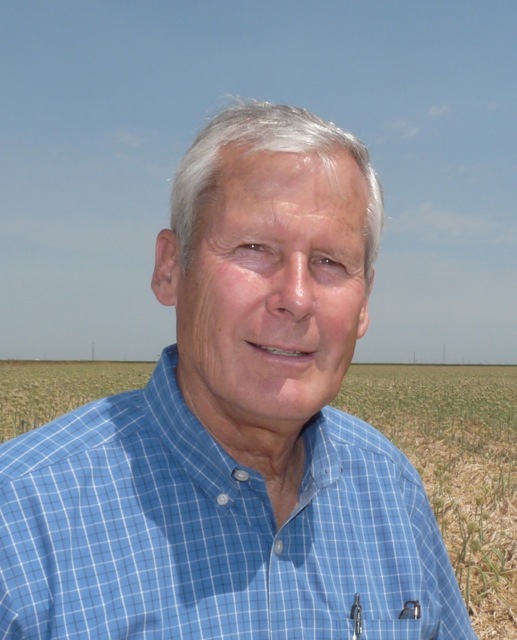
With increased scrutiny of the agriculture industry’s use of resources, growers must be proactive about their farming practices, and according to Roger Isom, president and ceo of Western Agricultural Processors Association, farmers are willing to adapt.

Isom noted how receptive growers are to improving their farming techniques. “One of the best examples I have for conservation management practices addresses air quality. Air quality regulators say we’ve got to put water on the back of tillage disks to suppress dust and to schedule no-farming days,” he said. “Wait a minute,” he added, “let’s get in a room and talk about what you want to do! You want to lower emissions? Well, farmers can combine practices and thereby lower emissions and save fuel and labor. And, we’ll do it!”

Isom said farmers appreciate incentive programs. “If I can get some money to help pay for it,” said Isom, “I’ll do it much sooner. There is nobody out there who doesn’t want a new tractor or truck to meet the mandated specifications; but if you provide some help, they will do it much sooner.”

“Growers and consumers each want the same things—a healthy environment and good produce,” he said. “You just have to sit down together and find solutions. The last thing we want is a food recall. Again, if we sit down in a room with scientists and the U.S. Food and Drug Administration, and develop agricultural guidance specific to each crop, farmers will be more amenable to adapt recommendations into practice,” Isom said.

2016-05-31T19:27:10-07:00September 16th, 2015|

Monterey County Rules Lettuce Market

Diversity Keeps Monterey County Going Strong

By Patrick Cavanaugh, Deputy Editor

Monterey County Ag Commissioner Eric Lauritzen talked about the success of local farmers in setting new crop production records, “Despite the water and labor shortages, crop values were up in 11 commodities that exceeded $100 million and 26 that surpassed $10 million. So, the diversity of the economic engine here in Monterey County remains strong despite adversity.”Monterey County Ag Comm Logo

The overall agricultural value of Monterey County is nearly $4.5 billion. Lauritzen noted, “Commodity by commodity, among our top crops, we saw leaf-lettuce surpass strawberries as the number one commodity again. Strawberries are still over $709 million, and the lettuces combined were about $1.4 billion. It is pretty amazing to see those kinds of numbers coming out of one county.

In addition to water and labor shortages, Lauritzen noted, “We have dealt with the impact of food safety issues with spinach. And though production levels continue to climb back, they have not reached levels achieved since the E. Coli outbreak back in 2010. Anyway, we are still thrilled to see the numbers so strong and this speaks to the economic engine of the County.”

Other achievements include:

-$8.1 billion generated for the local economy, including:

-$5.7 billion in direct economic output, nearly 20% of the county’s total direct economic output.

-$2.4 billion in additional economic output in the form of expenditures by agriculture companies and their employees

-76,054 jobs in Monterey County, including:

-55,702 direct employees, or nearly one quarter of all jobs in the county

-20,352 additional jobs made possible through expenditures by agricultural companies and their employees

-investments in ambitious new technology.

2016-05-31T19:28:04-07:00September 15th, 2015|

Citrus Growers Determined to Succeed

Frustrated Citrus Growers Are Determined to Succeed

By Patrick Cavanaugh, Deputy Editor

While farmers have been dealing with some tough times, Bob Blakely, vice president of California Citrus Mutual is optimistic about future generations of citrus growers, “Perceptions and attitudes are really all over the board; we’ve got growers who are really frustrated and ready to throw it in. But most growers are staying in, thinking they can still makeSaveOurCitrus it in the citrus industry.”

“California growers are known for their tenacity in the face of challenges,” Blakely commented.  “It’s exciting to see young farmers come on, even though they continue to fight the regulatory battles and higher farming costs. But these young guys have the same determination the prior generation had when they started. So, I am optimistic about the future of the citrus industry in California.”

One of the major threats to citrus is the Asian Citrus Psyllid (ACP) and its potential to spread the disease Huanglongbing (HLB), as it has in Florida and Texas. “We are very concerned about the recent HLB finds. Here again, they have been discovered in residential areas, which is no iPhone Save Our Citrus Appsurprise to us. That is typically where diseases first show up. At the present time, the ACP are contained. We are starting to delimit that area, and residents are very cooperative in allowing those trees to be removed.”

Download the Save Our Citrus App

There is now an iPhone app to help California residents identify signs of the Asian citrus psyllid and HLB, and easily report findings to agriculture officials. Download the free app in the iTunes store.

2016-05-31T19:28:04-07:00September 11th, 2015|

Super PAC Needed to Fight Extreme Enviromentalists, Part 3

Rachel Martin on Need for Super PAC to Fight Extreme Environmentalists

By Charmayne Hefley, Associate Editor

Part 3:

This is the third and final part of a three-part series with Rachel Martin, the national chairperson of Homeland Security for the National Federation of Republican Women, on the importance of creating a political action committee (super PAC) to combat extreme environmentalists in order to save forests, wildlife, and ag suffering from limited water allocations during this extensive drought.

Martin discussed how groups in addition to agriculture are suffering due to the limited water allocations and environmental regulations that prevent forest maintenance, such as logging, thinning of the forests and controlled burns, the lack of which leaves forests vulnerable to wildfires that burn thousands of acres and kill protected animals annually. “The Super PAC that I’ve been putting together since February is bringing together law enforcement and fire fighting agencies,” Martin explained. “We’re also bringing in animal organizations; we’re just waiting for their board approval.”

Through combined funding, Martin hopes the Super Pac will  begin to rival the environmentalists who have already joined together to lobby for what they want. “We’re looking for associations and unions to get together and pool their money,” Martin said, “because that is what has helped the environmentalists get to this point–which is having almost total control of California. It’s lobbying, having the money, and joining forces to fight and pave their way through Sacramento and Washington to get their laws and their amendments approved. Yet we have a lot more people who are suffering, a lot more groups, organizations and animals that are suffering and dying because of the lack of water.”

Martin said she has been appealing first to those outside of agriculture to form her Super PAC and hopes the ag community will join in. “I figured ag is already in the fight,” Martin stated, anticipating strength in combined numbers and funds.


2016-05-31T19:28:05-07:00September 8th, 2015|

Super PAC to Save Animals that Die in Wildfires, Part 2

Rachel Martin on Need for Super PAC to Save Forests, Wildlife, Ag

By Charmayne Hefley, Assistant Editor

Part 2:  Animals Needlessly Die in Fires

We are continuing our three-part series with Rachel Martin, the national chairperson of Homeland Security for the National Federation of Republican Women (NFRW), who is urging the creation of a political action committee (super PAC) to save forests, wildlife, and ag suffering from limited water allocations during this extensive drought.

“Agricultural agencies aren’t the only entities suffering from the lack of water allocations,” Martin explained. “Other agencies are also suffering due to the environmental regulations that prevent forest maintenance, such as logging, thinning of the forests and controlled burns. Curtailment of forest maintenance leaves thousands of acres of forest, as well as wildlife, vulnerable to larger, more numerous, and containment-resistant wildfires each year.

“When law enforcement evacuates homes, they have to force people out,” Martin said. “People fight to come back into get their pets—their dogs, their cats, their horses, livestock and any other animals they may have. But, oftentimes, residents don’t have the means to haul their animals with them; they may not have horse trailers. Sometimes, animals actually run free up into the mountains and can’t readily be caught. As I was specifically told by some law enforcement officials, those animals end up dying in the fires.”

Martin realized that once animal lovers learn of the suffering caused by the environmental regulations, they might consider joining the fight against the environmentalists. “I’ve been working with animal organizations and animal lovers. I’m one myself. I have quite a few pets, and I grew up around horses. Animal organizations and animal lovers alike can get in on this fight against the environmentalists.”

“Environmentalists are trying to protect species that actually aren’t even on the protected list yet; they’re almost on the protected list,” Martin stated. “Yet, in doing so, they just keep getting further and further away with from their original goal of protecting endangered species and pristine forests. They’re getting away with a lot more through politicians, too.”

2016-05-31T19:28:05-07:00September 8th, 2015|

Super PAC Needed to Save Forests, Wildlife, Ag, Part 1

Rachel Martin on Need for Super PAC to Save Forests, Wildlife, Ag

By Charmayne Hefley, Associate Editor

Part 1:

This is part one of a three-part series with Rachel Martin, the national chairperson of Homeland Security for the National Federation of Republican Women (NFRW), on the importance of creating a political action committee (super PAC) to save forests, wildlife, and ag suffering from limited water allocations during this extensive drought.

Martin said a super PAC must be created to combat the environmentalists who have been lobbying in Washington and Sacramento for years and to improve conditions for all constituencies. The resulting environmental regulations have prevented forest maintenance, such as logging, thinning of the forests, and controlled burns, which has increased the likelihood and severity of wildfires that burn thousands of acres each year and kill the animals environmentalists are trying to protect.

“I’ve been working with public safety as well as a lot of animal activists since ’99,” Martin said, “and I know that with ag, it’s been a fight for the last 30-plus years with the environmentalists and the Environmental Protection Act. Ag alone is not the only affected group of agencies or businesses. People don’t often think about how the lack of water significantly affects California Department of Forestry and Fire Protection (CAL FIRE), the U.S. Forest Service, and law enforcement agencies as well. We need to come together.”

“Law enforcement agencies and the U.S. Forest Service have told me the environmentalists are actually hurting and killing a lot of the creatures they stand to protect,” Martin said. “Other animals die during those fires, and they’re dying the most horrible deaths—which is death by fire.”

2016-05-31T19:28:06-07:00August 31st, 2015|

Gladwin’s Final Year As A Farmer

Tonetta Simone Gladwin on Final Year as a Farmer

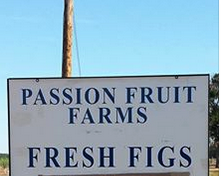
As the fourth-year drought continues, some farmers have conceded to the elements and the limited water allocations and have made the decision to make their final year in the farming business. Tonetta Simone Gladwin, the third generation owner of Passion Fruit Farms, a fig operation in Merced, Calif., said this year would be her last.

“As a third generation, I’m the last generation in my family. We’ve all farmed figs,” Gladwin said. “I don’t think Grandpa had any idea of the challenges we have to face today. Never did he think we’d have $10 per hour in labor wages, no water deliveries and some of the regulations we’ve had to face and overcome. These challenges are so different from those in his day.”


Passion Fruit Farms FBPassion Fruit Farms

2016-05-31T19:28:06-07:00August 18th, 2015|

2015 Drought Costs Ag Nearly Two Billion!

DROUGHT COSTS CALIFORNIA AGRICULTURE $1.84B AND 10,100 JOBS IN 2015

The drought is tightening its grip on California agriculture, squeezing about 30 percent more workers and cropland out of production than in 2014, according to the latest drought impact report by the UC Davis Center for Watershed Sciences.

In 2015, the drought costs to the state’s agricultural economy will reach about $1.84 billion and 10,100 seasonal jobs, the report estimated, with the Central Valley hardest hit.

The analysis also forecasts how the industry will fare if the drought persists through 2017.

‘NOT A FREE LUNCH’

Currently, the industry overall remains robust. The agricultural economy continues to grow in this fourth year of severe drought, thanks mostly to the state’s vast but declining reserves of groundwater, which will offset about 70 percent of the surface water shortage this year, the researchers said.

California is the world’s richest food-producing region. Continued strong global demand and prices for many of its fruits, nuts and vegetables has helped sustain the farm economy along with intrastate water transfers and shifts in growing locations.

“We’re getting by remarkably well this year — much better than many had predicted — but it’s not a free lunch,” said lead author Richard Howitt, a UC Davis professor emeritus of agricultural and resource economics.

The heavy reliance on groundwater comes at ever-increasing energy costs as farmers pump deeper and drill more wells. Some of the heavy pumping is in basins already in severe overdraft — where groundwater use greatly exceeds replenishment of aquifers — inviting further land subsidence, water quality problems and diminishing reserves needed for future droughts.

Further, several small rural communities continue to suffer from high unemployment and drying up of domestic wells because of the drought, particularly in the Tulare Basin.

“If a drought of this intensity persists beyond 2015, California’s agricultural production and employment will continue to erode,” said co-author Josue Medellin-Azuara, a water economist with the UC Davis Center for Watershed Sciences.

MAJOR CONCLUSIONS

The UC Davis team used computer models and the latest estimates of surface water availability from state and federal water projects and local water districts. They forecast several drought-related impacts in the state’s major agricultural regions for the current growing season, including:

  • The direct costs of drought to agriculture will be $1.84 billion for 2015. The total impact to all economic sectors is an estimated $2.74 billion, compared with $2.2 billion in 2014. The state’s farmers and ranchers currently receive more than $46 billion annually in gross revenues, a small fraction of California’s $1.9 trillion-a-year economy.
  • The loss of about 10,100 seasonal jobs directly related to farm production, compared with the researchers’ 2014 drought estimate of 7,500 jobs. When considering the spillover effects of the farm losses on all other economic sectors, the employment impact of the 2015 drought more than doubles to 21,000 lost jobs.
  • Surface water shortages will reach nearly 8.7 million acre-feet, which will be offset mostly by increased groundwater pumping of 6 million acre-feet.
  • Net water shortages of 2.7 million acre-feet will cause roughly 542,000 acres to be idled — 114,000 more acres than the researchers’ 2014 drought estimate. Most idled land is in the Tulare Basin.

The effects of continued drought through 2017 (assuming continued 2014 water supplies) will likely be 6 percent worse than in 2015, with the net water shortage increasing to 2.9 million acre-feet a year. Gradual decline in groundwater pumping capacity and water elevations will add to the incremental costs of a prolonged drought.

GROUNDWATER LAWS COULD HELP

The scientists noted that new state groundwater laws requiring local agencies to attain sustainable yields could eventually reverse the depletion of underground reserves.

“The transition will cause some increased fallowing of cropland or longer crop rotations but will help preserve California’s ability to support more profitable permanent and vegetable crops during drought,” said co-author Jay Lund, director of the UC Davis Center for Watershed Sciences.

The report was primarily funded by the California Department of Food and Agriculture.

Other authors on the report include Daniel Sumner, a UC Davis professor of agricultural and resource economics and director of the UC Agricultural Issues Center, and Duncan MacEwan of the ERA Economics consulting firm in Davis.

2016-05-31T19:28:07-07:00August 18th, 2015|

Drip Irrigation is King During Drought

Terranova Ranch Surviving the Drought: Drip Irrigation

By Patrick Cavanaugh, Deputy Editor

As the drought continues to preside, farmers persist in their efforts to improve farming techniques to make the most out of what little water they have available. Don Cameron, general manager of Terra Nova Ranch, Inc., said the 7000-acre ranch in Helm, in Fresno County has managed to keep its 30 crops viable in the middle of the drought by changing its irrigation methods.

“We’ve been able to continue farming the acreage that we have, even in the fourth year of a drought,” Cameron said, “because we’ve changed all of our row crops irrigation to buried drip irrigation. We use every drop of water that we have.”

“We’ve also put in drip irrigation systems on all our trees and vines,” Cameron said. “We have irrigation scheduling. We use evapotranspiration data—we’re not putting on anything more than what we’re actually using.”

“So we’re able to find a solution just to get through these tough times,” Cameron said, “and we hope to have a wet winter and get a good snowpack so next year we’ll have more water. We’re farming like we’re in a drought every year. We’re never really going to go back to the ways that we used to farm.”

2016-05-31T19:28:07-07:00August 17th, 2015|

Big Water Rally at Grizzlies Stadium Aug. 21

Water Rally August 21 to Fill Grizzlies Stadium for #moreDAMstorage

Valley Ag Retailer gives away thousands of complimentary tickets in effort to promote #moreDAMstorage as a long-term solution to California’s water woes.

Gar Tootelian, Inc. (GAR) has invited Central Valley growers and businesses to rally around the backdrop of a Fresno Grizzlies Game on Friday, August 21, 2015 in support of #moreDAM storage.

“California’s Central Valley depends on reliable, clean water to survive and thrive. The rally’s goal is to fill the stands with those who support #moreDAMstorage as a solution to California’s water woes” said Greg Musson, president of Gar Tootelian, Inc. “For too long now, Sacramento has delivered nothing but lip service to valley water needs. It is time for the people of this valley to rise up and be heard.”

The Rally is an opportunity to learn more about the organizations working together on California’s long term water storage solutions. The Rally and fireworks will be highlights of the Fresno Grizzlies game on Friday, August 21, 2015 at Chukchansi Park, Downtown Fresno. Gates open at 6:05 pm. The game start time is 7:05 pm. GAR is giving away thousands of complimentary tickets which are limited and will be available on a first come first serve basis. You may pick up your tickets at the GAR booth located on the corner of Inyo and “H” Street the night of the game beginning at 5:00 pm.

“GAR takes great pride in supporting long term water storage solutions for the health and sustainability of our Valley,” said Musson, “I personally look forward to welcoming you to the Central Valley Water Rally at Fresno Grizzlies Stadium!”

GAR is committed to supporting long term water storage solutions for California’s greater tomorrow. The company provides water, nutrition, regulatory and crop care advice and products to more than 1,500 growers throughout the Central Valley.


2016-05-31T19:28:07-07:00August 14th, 2015|
Go to Top