Westands Water District Scholarships

Westands Water District Awards Agricultural Scholarships

By Patrick Cavanaugh, Farm News Director

Gayle Holman

Gayle Holman, Westlands Water District

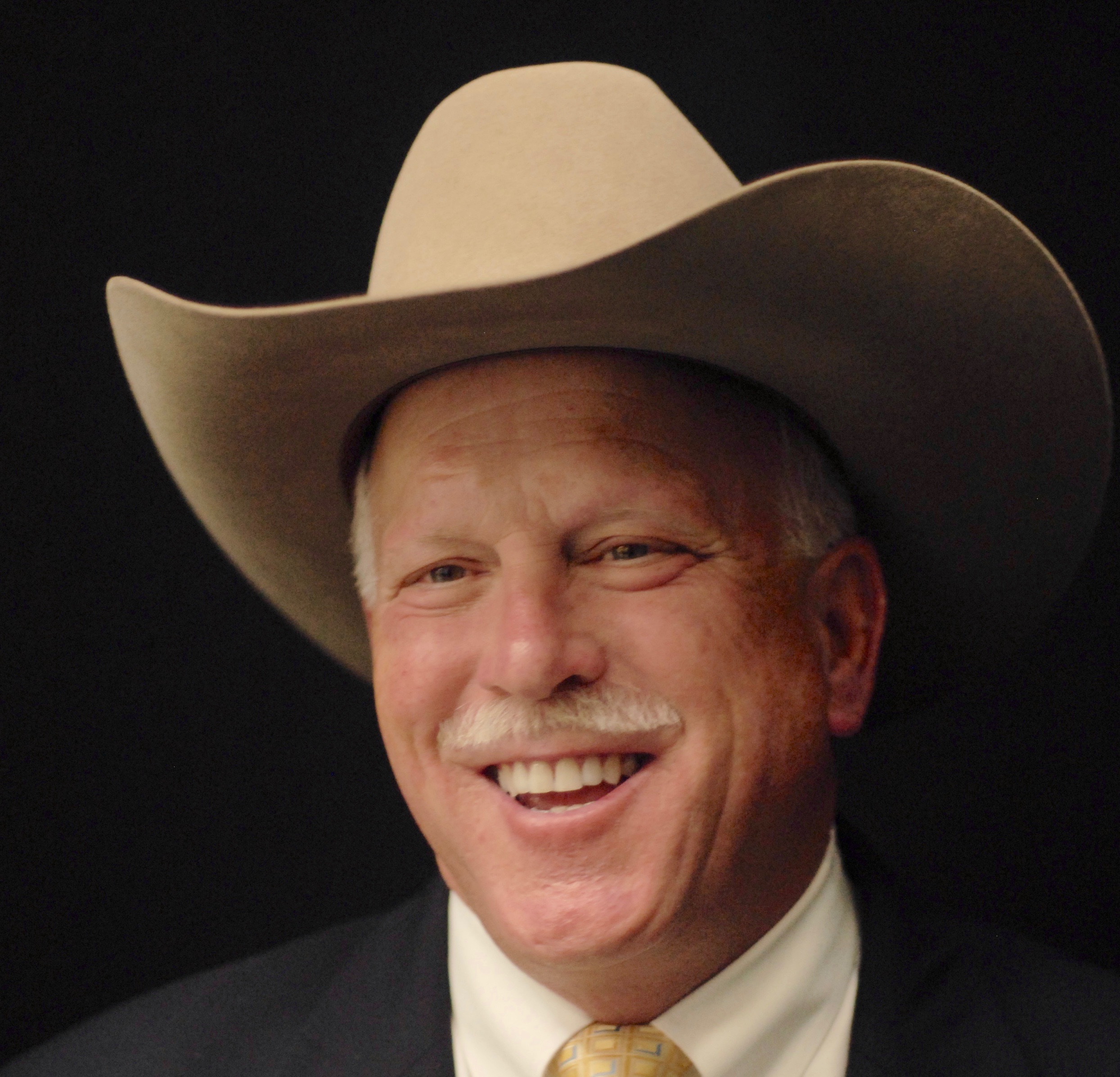
As part of their educational outreach to the community to raise awareness about agricultural issues and to reward exceptional academic achievement and leadership, the Westlands Water District awarded six scholarships to local high school graduates who are on their way to college. Gayle Holman, public affairs representative for the district, offered some insight about the scholarship application process.

“We go out to each of the six area high schools each year,” said Holman. “We provide them with information, the application, and instructions, and they provide us with an essay on an agricultural-related topic, letters of reference and their transcripts by our deadline. We work with the guidance counselors at each of the schools to make sure those materials are received,” she added.

“A scholarship review committee goes through the applications and selects one person per school based on their academic performance, school activities and community leadership,” Holman said. “Each award recipient is an incredibly highly motivated student, who, we are hopeful, will take that education, bring it back, and apply it to their community in the future,” she said.

Tom Birmingham, general manager of the Westlands Water District noted, “Westlands is honored to provide this assistance for these outstanding student leaders. These scholarships represent a small gesture of thanks and support to the communities on the west side of the San Joaquin Valley that make our region such a productive and vibrant place.”

Holman continued, “Each scholarship recipient will receive $1,000 to be used for community college or university expenses. In addition, many local elected offices will send them congratulatory letters, or certificates. This really emphasizes to the students how important their academic endeavors are.” 
The 2016 scholarship recipients are:
 
Kristina Raulino, a Lemoore High School graduating honors student who plans to attend West Hills Community College to pursue a degree in Psychology,  has been actively involved in tennis and the Future Farmers of America and has served as the Club Secretary for the California Scholarship Federation.
Jonathan Sanchez, a Riverdale High School graduate who will attend California Polytechnic State University to pursue a degree in Agricultural Engineering, has received awards for honor roll and student of the month, and is heavily involved in soccer, cross country, baseball and football. Additionally, he is a member of the California Scholarship Federation and AVID.
Delaney Walker, a graduating senior from Coalinga High School, will attend University of California, Los Angeles to pursue a degree in Education/English. She has been actively involved in basketball and tennis and received awards for honor roll and mock trial. She is also a member of the California Scholarship Federation.
Jonathan Guzman, a graduate of Tranquillity High School, plans to attend the University of California, Irvine to pursue a degree in Business and Finance. He is an honors student actively involved in football and basketball and has received awards for bi-literacy and the Principal’s Honor Roll for all four high school years.
Savannah Rodriguez, a graduating honors student at Mendota High School, plans to attend University of California, Santa Cruz to pursue a degree in Feminist Studies. She has been involved in softball and badminton and received awards for perfect attendance, leadership and MESA.
Fatima Gamino, a Firebaugh High School graduate, will attend University of California, Merced to pursue a degree in Chemical Sciences. She has received several awards including Senior of the Month, Top Academic Athlete and Superintendent’s List. Additionally, she has been involved in the Spanish Club, cross country and Academic Decathlon.
 
2016-08-03T21:12:44-07:00June 20th, 2016|

Recycled Water Project for Water Stability, Part 1

North Valley Regional Recycled Water Program: A New Water Source for Valley Farmers

Part One of a Five-Part Series

By Brian German, Associate Editor

Anthea Hansen, general manager of the Patterson, Calif.-based Del Puerto Water District, described the exciting work to bring more water stability in the form of recycled water to multiple Central Valley cities—in our five-part series on the North Valley Regional Recycled Water Program (NVRRWP)

“After six and a half years of effort,” Hansen said, “we have fully completed all of our environmental documentation, and most of the permitting is in hand.” Recently, the partners have interviewed and selected the preferred firm to construct the Modesto component of the project, so that process is underway.”

cropped-cropped-SLDMWA200x200Logo101714NVRRWP is a collaborative partnership that includes the cities of Modesto, Turlock and Ceres along with the Del Puerto Water District and Stanislaus County to solve the region’s water supply and reliability problemsThe program will provide a new source of water for agricultural customers in the Del Puerto Water District (DPWD), whose supplies have been severely impacted by drought and by environmental restrictions on pumping water from the Delta. Hansen noted the collaboration was the largest obstacle they were able to overcome.

“One of the biggest things that happened recently, a day we were all looking forward to,” noted Hansen, “is when the United States Department of the Interior, Bureau of Reclamation (Reclamation) executed the record of decision for our project, a document that supports not only the federal National Environmental Policy Act (NEPA) documentation but also the signing of a long-term contract. It will allow us to convey and store the recycled water in federal facilities,” she said, “and it will also support the sharing of a portion of the water with the wildlife refugees south of the Delta. That was a big milestone for our project.”

The cities of Turlock and Modesto will provide treated, recycled water to the Del Puerto Water District through a direct pipeline into the Delta-Mendota Canal. The district will then distribute that water to the agricultural customers within its service area.

After so many years already invested in the project, Hansen is excited the plan is coming together. “We worked lockstep with Reclamation for over three years,” Hansen said, “and we did some very extensive and thorough analysis. We had a great team and a good working relationship, and it looks like we are nearing the end of assembling all of the different pieces of this very complicated puzzle.”

_______________________

Resources:

Del Puerto Water District

North Valley Regional Recycled Water Program Map

Recycled Water Uses Allowed in California 

The Citizen’s Guide to the National Environmental Policy Act

San Luis & Delta-Mendota Water Authority Member Agencies Map

_______________________

See also, “Recycled Wastewater Could Help Growers in Del Puerto Water District, June 9, 2015.

2016-07-05T03:41:21-07:00June 14th, 2016|

VIDEO: Other Stressors, Not Pumps, Leading to Delta Smelt Decline

VIDEO: Wasted Freshwater in Failed Attempt to Save Delta Smelt and Salmon

By Laurie Greene, Editor

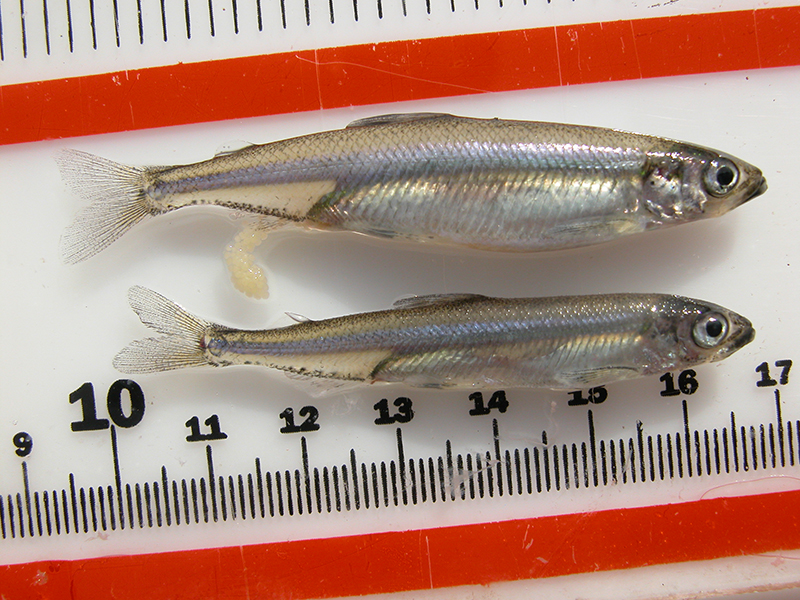
Other Stressors, Not Pumps, Leading to Delta Smelt Decline,” a video produced by Western Growers, explains why the communities, business, and farmland in the Central Valley and southward still experience regulatory water cutbacks that are extreme in some cases, while 3 billion gallons of extra freshwater flow out to sea in the failing effort to save the Delta Smelt from extinction.Western Growers logo

The VIDEO addresses this loss of freshwater unused by California residents and businesses still suffering from both drought conditions and environmental water cutbacks and that could have gone into water storage.

Decline in California Fish Population and Delta Smelt, Salmon

Western Growers accuses government agencies in charge of managing California’s water of restricting the Delta pumps far beyond what is required by the law. “As a result,” the association said, “billions of gallons of El Niño water have been flushed out to sea. Shutting down the pumps has not helped the Delta smelt and salmon recover, and government regulators are ignoring other stressors such as predation, invasive species and wastewater discharges.”

Delta Smelt Troll 2016

Delta Smelt Troll, Survey 6, 2016: “There were no Delta Smelt collected.”

______________________

Western Growers, founded in 1926, is a trade association of California, Arizona and Colorado farmers who grow, pack and ship almost 50% of our nation’s produce. Their mission is to enhance members’ competitiveness and profitability by providing products and services with agriculture in mind. Services include Affordable Care Act (ACA) compliant health benefits for farmworkers, cost-saving and environmentally-focused logistics, food safety initiatives and advocacy for members. 

They ask, “If you enjoy fruits, vegetables and nuts, support our members and the produce industry.”

Featured Photo: Delta smelt by metric ruler (Source: USFWS)

2021-05-12T11:05:55-07:00June 10th, 2016|

Drone Technology Benefits Agriculture

Drone Technology Useful for Calif. Ranchers and Growers

by Laurie Greene, Editor

Fifth-generation Parkfield rancher in southern Monterey County and 2016 Vice President of the National Cattlemen’s Beef AssociationKevin Kester, was introduced to the viability of potentially beneficial uses of owning and using a drone on his ranch for agricultural purposes.

Yamaha Drone

As owner and operator of Bear Valley Ranch & Vineyards, the family’s cattle and winegrape operations, Kester anticipated the biggest benefits of drone ownership would be the capability to check on cattle and ensure their safety from a bird’s eye view, and to determine water levels in reservoirs—a task that in the past could be completed only on foot or by vehicle. Cattle safety is especially important for ranchers, according to Kester, as the cattle industry has been experiencing stagnation in production.

Kester said having a drone would also helpful for security issues. He wants to detect human intrusion on his land, a problem that he experienced recently. “There have been some hunter-related trespass issues and people coming onto the ranch,” he said. “We’ve actually had cattle and horses shot.”

Kester, who is also a member of the California Association of Winegrape Growers, Paso Robles Wine Country Alliance and the Central Coast Vineyard Team, will purchase a commercial drone package and believes this modern technology will give not only cattlemen, but growers in California, a new way of assessing safety, production and maintenance.

2021-05-12T11:05:56-07:00June 9th, 2016|

Dry Weather Affecting Cattle Ranchers

Cattle Ranchers Hit Hard in the South Valley, Move to Greener Pastures

by Emily McKay Johnson, Associate Editor


Josh Davy, a University of California, Division of Agriculture and Natural Resources, Cooperative Extension livestock, range and natural resources advisor in Tehama County reported good news for the cattle industry despite dry weather conditions around the state.

Josh Davy, UCCE Tehama County

Josh Davy, UCCE Tehama County livestock, range and natural resources advisor (Source: UCCE Tehama)

Heading into last fall, the feed year started off relatively dry, according to Davy; however the end-of-season crops produced a better forage than the year before. Though prices slid for the cattle farmer, Davy said optimisticly, “We’re happier on our range conditions—as compared to the previous years that we’ve had—by a long shot.” he said.  

The drought that plagues California still directly impacts cattle ranges, and ranchers are not quite out of trouble. Davy had to resort to feed supplementation through the month of December. “We didn’t have to supplement as much as in the previous few years,” he said, “but we definitely did this fall.” Fortunately the winter months were short and the spring rainfall produced good growth—good assurances that will help Davy and his team make it through next year.

Cattle-on-I5Davy has fortunately sidestepped hardship with a tinge of luck, but it hasn’t been as easy for ranchers in the south of the state. When cattle lack enough sustenance, a domino effect is felt all across the state of California; a lactating cow may not produce enough milk to feed her calves.

The cows like lush grass, a rarity in the Central and South Valley summer months. Winter options for cattle are either winter range ground or mountain meadow ground where greenery is still prevalent. Some ranchers haul their cattle to summer pasture feedlots to graze, while some prefer Oregon instead.

“We’re dried off here to where you might find a swell with a little rye grass in it that’s still green,”Davy said regarding the disappearance of lush land, “but pretty much everything else, the oats and all that stuff, they’re done here.”

Looking forward, Josh Davy is hoping irrigation water will sustain not only the beef cattle, but the pastures as well, to keep the herds stationary and munching on green grass.


2021-05-12T11:17:13-07:00June 8th, 2016|

RAIN Damages Alfalfa; Benefits Wheat

Above-Average California Rain Affects Larry Hunn’s Crops

by Emily McKay Johnson, Associate Editor

For fourth-generation farmer Larry Hunn of Hunn & Merwin & Merwin, Inc., based out of Clarksburg, Calif., the price of alfalfa is low this year due to water damage from late rains. Nevertheless, cannery tomatoes, cucumbers, safflower and wheat are looking pretty hopeful.

Larry Hunn

Larry Hunn

Mold from rainfall is a big issue in growing alfalfa; it not only reduces the quality of the perennial grass, but it reduces the nutritional value as well. Dairy farmers won’t buy it. “It has really depressed our alfalfa prices.” said Hunn.

On the bright side, rainfall has been beneficial for Hunn’s above-average winter wheat and safflower crops this year. “We had nice rainfall spread out through the whole winter,” he said. “It didn’t come all at one time and flood us out, so that was good.”

Hunn’s hard red winter wheat is drying down in the field, and will be harvested mid-June and sent mainly to flour mills for bread making. The safflower is still growing and looking healthy on a few hundred acres—acres that have been in his family for four generations—and won’t “come off” until late August or September.

Beginning in South Sacramento on 47th Avenue, Larry Hunn’s great-grandfather started farming in the late 1800s, and his grandfather moved to the Delta in the early 1920s, where they’ve been farming ever since. Hunn & Merwin & Merwin Inc. now operates on close to 3,000 acres in Yolo and Sacramento Counties.

Hunn’s other crops have already been contracted with a buyer. “All the cannery tomatoes are in the ground growing, and they look pretty good. We’re in the process of planting cucumbers, that’s just a continuous until the first of August,” mentioned Hunn.

The only disadvantage are the cool breezes from snow atop the Sierra Mountain range that is keeping temperatures low on the cucumbers and tomatoes. Hunn remarked, “I wish it would warm up a little bit. We’re only in the mid-seventies, low eighties, and it would be nice to be up in the mid-eighties or low nineties.”

Overall it’s been a decent year for the veteran Clarksburg grower.

(Featured photo: Alfalfa on edge of field of Larry Hunn, Hunn & Merwin & Merwin, California Ag Today)

2021-05-12T11:03:02-07:00June 6th, 2016|

It’s Avocado Month!

Celebrate the Magic of California Avocados.

By Emily McKay Johnson, Associate Editor


Chefs and foodies alike, get ready for California Avocado Month which begins TODAY, June 1st. Menus across California are celebrating this magical fruit, not only for its postive health benefits as a source of Omega-3 and Vitamin E, but also for its resiliency to thrive in spite of the prolonged drought.

california-avocados-logo


“Avocados are at their peak of the season,” said Jan DeLyser, vice president of marketing for the California Avocado Commission (CAC), “so we’re in very good supply and their eating quality is just second to none.”


Avocados are so diverse, they can be incorporated into daily menus for breakfast, lunch, dinner, snacks, beverages and even desserts. Consider celebrating summer gatherings with chocolate avocado pudding, avocado ice cream or, perhaps, even an avocado cake. Links to recipes are included at the end of the article.


Would you believe California avocados can be used as a butter alternative—with 300 fewer calories per quarter cup serving?


Despite entering year five of the drought, California and its farming industry received enough rain in the northern part of the state this year to replenish reservoirs and actually increase this year’s avocado harvest. Roughly 4,000 growers on approximately 53,000 acres have harvested 392 million pounds of avocados.


“We actually have more fruit this year than we had last year,” acknowledged DeLyser. “Our growers are continuing to be good stewards of the resources that are available to them and able to produce avocados for us all to enjoy throughout the summer months.”


The CAC’s collaboration with chefs around the country to feature California avocado items, helps support growers of the tree-bearing fruit in the state. Approximately 90 percent of the nation’s avocado crop comes from fertile, California soil, mostly on small family farms, which can ensure the avocados are carefully handled and inspected.


Recipes incorporating delectable avocados:  Chocolate Avocado CakeAvocado Ice Cream

2021-05-12T11:05:56-07:00June 2nd, 2016|

A Positive View of Agriculture

Use Buzzwords to Convey Positive View of Agriculture

By Charmayne Hefley, Associate Editor


While it may not always seem that consumers view agriculture favorably, David Spady, Americans for Prosperity of California state director, said agriculture is actually viewed positively, as demonstrated through the “So God Made a Farmer” Ram 2013 Super Bowl ad, an extended version of the “So God Made a Farmer” video based on the speech authored and narrated by legendary radio broadcaster Paul Harvey and produced by the truck manufacturer to commemorate Ram’s “Year of the Farmer.” Spady also included FarmersOnly, the online dating site, as portraying a positive view of agriculture, among other programs and outreach.

“How you present farming to the public is very important,” Spady said, “ to make sure you’re hitting those values that people do see in farming.”

Spady suggested one way farmers can maintain the value placed on agriculture is by using the buzzwords that anti-agricultural groups have used against agriculturein favor of agriculture. “Sustainability has become a very common buzzword,” Spady said, “but it’s very important to project [sustainability] with the idea of farming because farming is sustainable—sustainable for not just our food production but also for the environment,” he affirmed.

“[Farmers] are really growing large-scale gardens, not just planting rows of crops. But, ultimately, that’s what people are doing even in their backyards. So, giving people an image they can relate to that has a values-connection is a really important message for projecting who farmers are.”

_________________

The mission Americans for Prosperity (AFP) California, as reported on their website, is:

  • to educate citizens about limited government, lower taxation, and free market principles
  • to advocate for public policies that champion the principles of entrepreneurship as well as regulatory and fiscal restraint.
  • to mobilize citizens to advocate for policies that cut red tape and increase opportunity and get the economy working for hard workers–not special interests.

What we do:

  • AFP mobilizes citizens to effectively make their voices heard in public policy campaigns.
  • We build coalitions of like-minded organizations in California fighting for the common cause of lower taxation and free market principles.
  • AFP California educates citizens about where their elected officials stand on our issues.
  • AFP combines state-of-the-art national capabilities with local on-the-ground armies to create Grassroots operations that win.
  • Through its Grassroots Training Schools, AFP Foundation has recruited and educated thousands of citizens on how to promote greater economic prosperity.
2016-06-03T10:01:25-07:00May 13th, 2016|

ILRP Changes Target All Calif. Farmers

Proposed Changes to Irrigated Lands Regulatory Program (ILRP) Could Impact Farmers Statewide

By Patrick Cavanaugh, Deputy Editor


Kings River Water Quality Coalition LogoThe recently proposed changes to the Irrigated Lands Regulatory Program (ILRP), open for public comment until Wednesday, May 18, could significantly impact farmers, according to Casey Creamer, coordinator for the Kings River Water Quality Coalition“The proposed modifications concern the east San Joaquin Region, within Madera, Merced and Stanislaus Counties,” Creamer said. “That’s the scope of it.”

According to the State Water Resources Control Board’s (SWRCB) website, ILRP “regulates discharges from irrigated agricultural lands. This is done by issuing waste discharge requirements (WDRs) or conditional waivers of WDRs (Orders) to growers.” Discharges include irrigation runoff, flows from tile drains and storm water runoff, which can transport “pollutants including pesticides, sediment, nutrients, salts (including selenium and boron), pathogens, and heavy metals, from cultivated fields into surface waters. Orders contain conditions requiring water quality monitoring of receiving waters and corrective actions when impairments are found.”

While ILRP currently targets only the east San Joaquin region, Creamer said, “It’s a precedent-setting deal, so everything in there is going to affect not only the entire Central Valley, but the Central Coast and the Imperial Valley—that may not have near the issues or the current regulatory programs that we have here in the Central Valley. So, its very important statewide.”

Creamer emphasized, “Farmers need to know that this is not a minor issue; this is a big issue that affects their livelihoods and their ability to operate. They need to get involved. They need to communicate with their other growers, communicate with their associations, get involved and have their voices heard.”

__________________

The State Water Board is hosting a public workshop on the proposed order on Tuesday, May 17, in Fresno—one day prior to the closing of the ILRP public comment period. The workshop will be held at 9:00 a.m. in the San Joaquin Valley Air Pollution Control District, Central Region, 1990 E. Gettysburg Avenue, Fresno.

The SWRCB is also soliciting written comments on the proposed order. Written comments must be received by 5:00 p.m., Wednesday, May 18, 2016. Please indicate in the subject line, “Comments to A-2239(a)-(c).” Electronic submission of written comments is encouraged. Written comments must be addressed to:

Ms. Jeanine Townsend

Clerk to the BoardSWRCB-logo-water-boards

State Water Resources Control Board

1001 I Street, 24th Floor [95814]

P.O. Box 100

Sacramento, CA 95812-0100

(tel) 916-341-5600

(fax) 916-341-5620

(email) commentletters@waterboards.ca.gov

  __________________

The Kings River Water Quality Coalition is a non-profit joint powers agency established by the irrigation districts in the Kings River service area. It is governed by a board of directors of landowners from each of the districts. Staffing of the Coalition is administered through an agreement with the Kings River Conservation District located in Fresno. The Coalition was formed in 2009 in order to allow growers within the region a cost-effective avenue to comply with the regulations developed by the Central Valley Regional Water Quality Control Board. The Coalition conducts regional monitoring and reporting and assists members in compliance with regulations. The Coalition is not a regulatory agency. Enforcement of the ILRP is handled by the Regional Water Quality Control Board.

2016-05-31T19:24:04-07:00May 4th, 2016|

Talk, Merely Talk

Farmer Hears Plenty of Talk But Sees No Action on Water Management

Erik Hansen

Erik Hansen, Legacy Farmer in Kings County

By Patrick Cavanaugh, Deputy Editor

Erik Hansen, a big legacy farmer down in the Tulare Lake Basin in Kings County, is quite frustrated by how the state’s freshwater has been managed this year. “The most important thing,” he said, “is that people realize politicians in this state do not have your best interests in mind when it comes to how the water is run. We have infrastructure that is out of date and needs to be improved, but they are not even using the existing infrastructure at the full capacity it should be used, even though we are in a water emergency.”

“Now there is just nobody who can tell me that that’s OK,” stated Hansen. “Plenty of people can talk around it; they can say, ‘environmental this’ and ‘environmental that.’ But in the end, we need to take a very hard look at how these decisions are being made at the top levels—where people should be losing their jobs in a big way. ‘Starting from the governor having to explain—How do you have a water emergency; yet your appointments at the State Water Resources Control Board are not running the water as they should?

Hansen expects water mismanagement will continue and worsen until the California public holds their feet to the fire. “It is a power move,” Hansen declared.”They are able to hold off one of our most precious resources in the state, and currently two thirds of the state is suffering for it. Northern California has plenty of water, and that is where all the votes are. They forgot about the southern two thirds, and there are plenty of people here who are not happy about it.”

Hansen recounted, “There are higher bills in just about every municipality. Wells are running dry. Certain areas of the state are completely dry to the point where they require 250 gallon totes of water by truck delivery. This is unsustainable, and hopefully the politicians in Northern California can understand that word.”

2016-05-31T19:24:05-07:00May 2nd, 2016|
Go to Top