Temperance Flat Awarded $171 Million in State Water Bond Funding

$171 Million is Far Less than $1 Billion Sought

News Release Edited by Patrick Cavanaugh

The California Water Commission has granted state water bond funding of $171 million to the central San Joaquin Valley’s proposed Temperance Flat Dam and Reservoir project. The action came during a Water Commission hearing recently in Sacramento.

The $171 million award under the state’s Water Storage Investment Program is well short of the $1 billion in funding that had been sought when the application process was launched by the project’s lead agency, the San Joaquin Valley Water Infrastructure Authority (SJVWIA), but is still very welcomed.

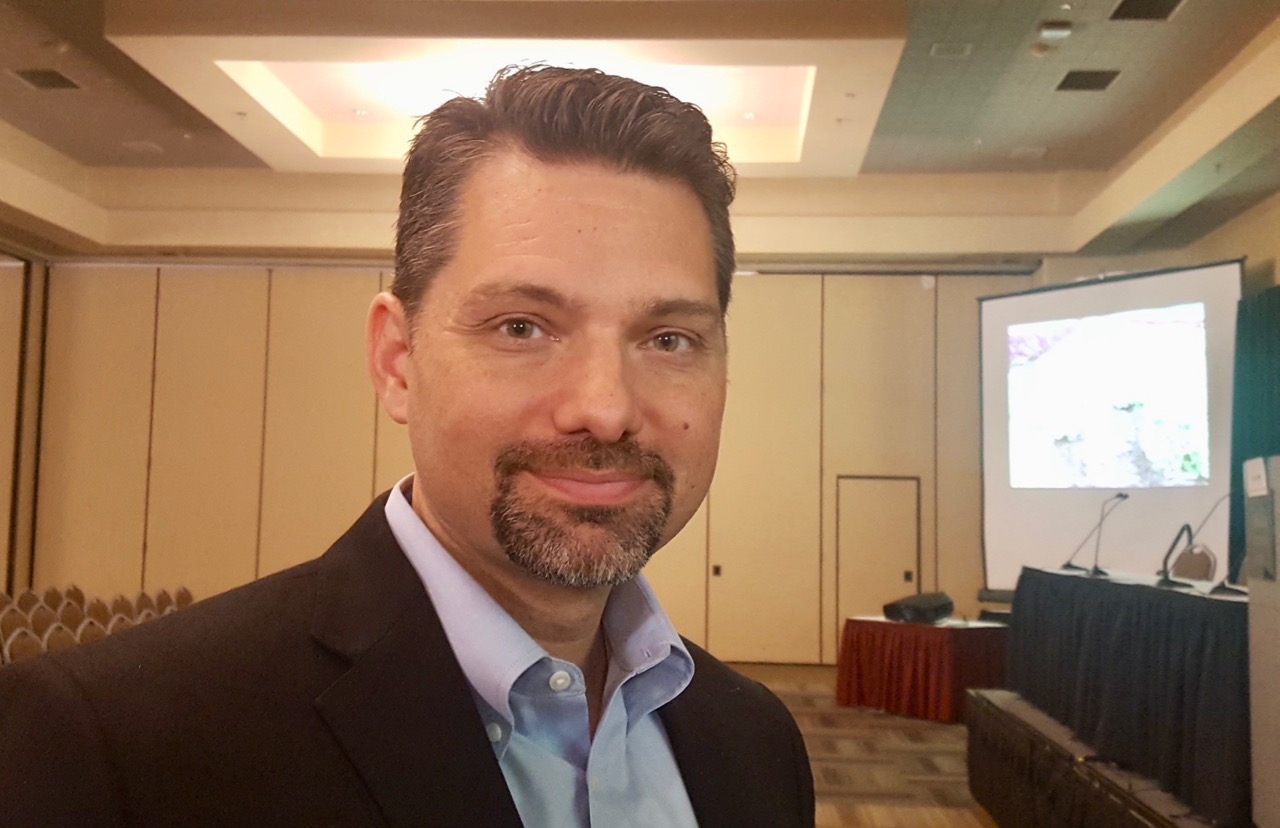
Mario Santoyo

“It is far less than what we originally asked for,” said Mario Santoyo, SJVWIA Executive Director, “but these state funds remain an important part of Temperance Flat’s financing that we have long looked toward along with federal and local investor funding. We have continued to move steadily forward working with the U.S. Bureau of Reclamation, Interior Department and the investor’s group that has taken shape.”

Project proponents were disappointed by a May 4 Water Commission action that turned down Temperance Flat public benefits scoring the project needed to achieve all the state project funding the SJVWIA had sought. They were also surprised by another Water Commission decision to not make available early funding to the SJVWIA for predevelopment environmental and permitting work.

Santoyo said reconsideration of that action may be sought.

“We’re still moving forward and are not giving up,” said Steve Worthley, SJVWIA president and Tulare County Board of Supervisors chairman. “We’re pushing ahead because this project would be a major valley tool in complying with the state’s Sustainable Groundwater Management Act along with improving water supply availability and reliability and flood control. Temperance Flat would improve water supplies for disadvantaged communities and urban areas, and create tremendous water management flexibility, not to mention significant benefits for the environment.”

A number of interested water agencies from many parts of the valley are exploring project financing options. The Bureau of Reclamation is pursuing completion of an updated Temperance Flat feasibility study.

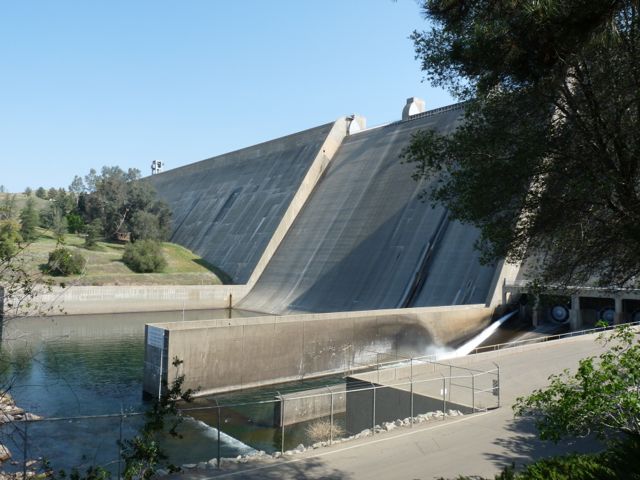
Temperance Flat would be located on the San Joaquin Valley above Millerton Lake, northeast of Fresno. The new reservoir would contain 1.3 million acre-feet of water storage space, 2½ times the capacity of Millerton Lake behind Friant Dam.

Temperance Flat is viewed as a vitally-needed means of capturing and storing high flows of water generated in big water supply years. Much of that water is currently being lost to flood releases from Friant Dam due to Millerton Lake’s small storage capacity.
2018-07-30T14:17:33-07:00July 30th, 2018|

UC and Israel Sign Agricultural Research Agreement

California and Israel Face Similar Challenges

By Pam Kan-Rice, UC ANR News

From left, Ermias Kebreab, Eli Feinerman, and Mark Bell sign the agreement for Israel and California scientists to collaborate more on water-related research and education.

Pledging to work together to solve water scarcity issues, Israel’s Agricultural Research Organization signed a memorandum of understanding with the University of California Division of Agriculture and Natural Resources and UC Davis recently. The signing ceremony kicked off the 2018 Future of Water for Irrigation in California and Israel Workshop at the UC ANR building in Davis.

“Israel and California agriculture face similar challenges, including drought and climate change,” said Doug Parker, director of UC ANR’s California Institute for Water Resources. “In the memorandum of understanding, Israel’s Agricultural Research Organization, UC Davis and UC ANR pledge to work together more on research involving water, irrigation, technology and related topics that are important to both water-deficit countries.”

The agreement will enhance collaboration on research and extension for natural resources management in agriculture, with an emphasis on soil, irrigation and water resources, horticulture, food security and food safety.

“It’s a huge pleasure for us to sign an MOU with the world leaders in agricultural research like UC Davis and UC ANR,” said Eli Feinerman, director of Agricultural Research Organization of Israel. “When good people, smart people collaborate, the sky is the limit.”

Feinerman, Mark Bell (UC ANR vice provost) and Ermias Kebreab (UC Davis professor and associate vice provost of academic programs and global affairs) represented their respective institutions for the signing. Karen Ross (California Department of Food and Agriculture secretary) and Shlomi Kofman (Israel’s consul general to the Pacific Northwest) joined in celebrating the partnership.

“The important thing is to keep working together and develop additional frameworks that can bring the people of California and Israel together as researchers,” Kofman said. “But also to work together to make the world a better place.”

Ross said, “It’s so important for us to find ways and create forums to work together because water is the issue in this century and will continue to be.”

She explained that earlier this year, the World Bank and United Nations reported that 40 percent of the world population is living with water scarcity. 

“Over 700,000 people are at risk of relocation due to water scarcity,” Ross said. “We’re already seeing the refugee issues that are starting to happen because of drought, food insecurity and the lack of water.”

Ross touted the progress stemming from CDFA’s Healthy Soils Program to promote healthy soils on California’s farmlands and ranchlands and SWEEP, the State Water Efficiency and Enhancement Program, which has provided California farmers $62.7 million in grants for irrigation systems that reduce greenhouse gases and save water on agricultural operations.

“We need the answers of best practices that come from academia, through demonstration projects so that our farmers know what will really work,” Ross said.

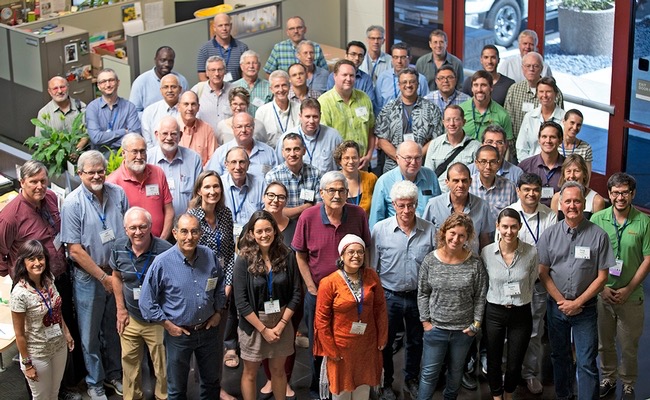
As Parker opened the water workshop, sponsored by the U.S./Israel Binational Agricultural Research and Development (BARD) Program, Israel Agricultural Research Organization and UC ANR, he told the scientists, “The goal of this workshop is really to be creating new partnerships, meeting new people, networking and finding ways to work together in California with Israel, in Israel, with other parts of the world as well.”

Drawing on current events, Bell told the attendees, “If you look at the World Cup, it’s about effort, it’s about teamwork, it’s about diversity of skills, and I think that’s what this event does. It brings together those things.”

2021-05-12T11:05:10-07:00July 24th, 2018|

Letter to California Water Commission on Failure to Approve Temperance Dam

CWC Decision is a Black Eye to State

Editor’s note: Valley legislators sent the attached letter to the CWC last week, reflecting both disappointment and concern over the CWC WSIP process as it relates to the Temperance Flat Reservoir Project. The letter asks for a reconsideration for the TFR ecosystem evaluation.

Clearly, we appreciate all our Valley legislators who have fought so hard for this project for many years. This letter at a minimum puts on the record their thoughts on how the CWC handled the TFR project.

May 17, 2018

California Water Commission: Mr. Armando Quintero, Chair, & Mr. Joe Yun, Executive Officer

P.O. Box 942836, Sacramento, California 94236-000

Dear Mr. Quintero, Mr. Yun and Commission  Members:

On May 3, 2018, The California Water Commission took action, perhaps the most definitive and historic action with regard to the Water Storage Investment Program (WSIP) state bond funding applications.

As members of the California Legislature, we have watched and participated in this entire application process. All Californians would benefit from water storage projects this money is intended to fund. However, this investment has been stymied by the commission staff’s narrow determination. The people we represent have expected a great deal of positive leadership from the Water Commission and we echo the public’s disappointment in how the review process has unfolded.

During the initial review of WSIP project applications, many of us joined in calling into question the policy and procedures of the application review process. From the beginning, we had concerns that the process developed by commission staff and the information provided would not adequately account the benefits of water storage projects throughout the state. Despite our concerns, little was done to address the problem resulting in six of the project scores receiving “O” benefits.

Temperance Dam

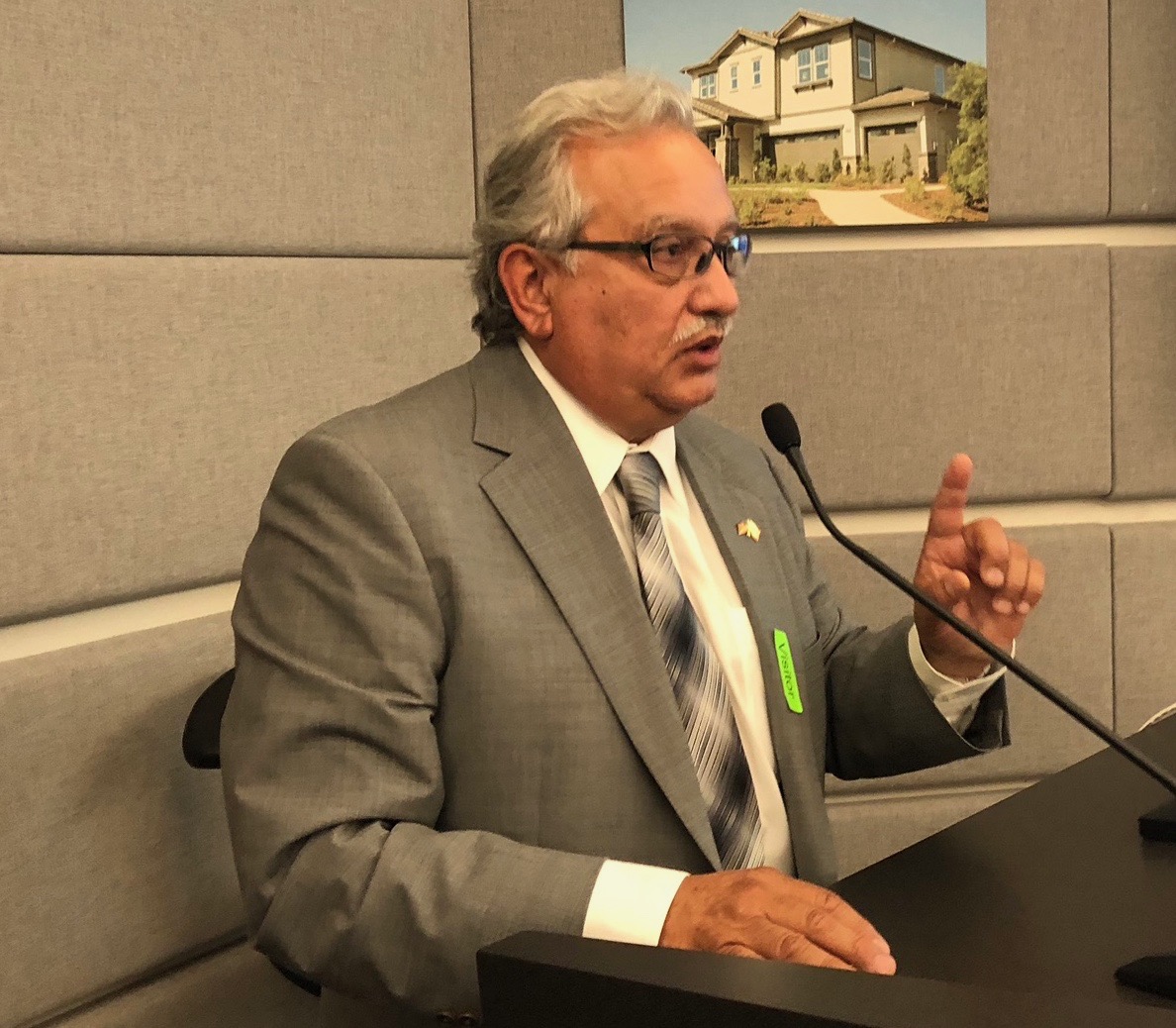
Mario Santoyo is Executive Director of the SJV Water Infrastructure Authority, which presented the Temperance Flat Dam Proposal to the California Water Commission​.

In 2008, the EDT model was selected by the state and federal agencies responsible for implementation of the San Joaquin River Restoration Program (SJRRP)—namely the U.S. Bureau of Reclamation, the U.S. Fish and Wildlife Service, the U.S. National Marine Fisheries Service, and the California Department of Fish and Wildlife (CDFW). In the Quantitative Fisheries Model Selection Recommendation Process, 2008, the SJRRP agencies state that EDT was rated ” … as the most appropriate quantitative fish population model for the SJRRP.” This report also states that “the EDT model is a framework that views salmon as the indicator or diagnostic species for the ecosystem. The salmon’s perspective (i.e., its perception of the environment) becomes a filtered view of the system as a whole.

The EDT framework was designed so that analysis made at different scales (i.e., from tributary watersheds to successively larger watersheds) might be related and linked. Biological performance is a central feature of the framework and is defined in terms of three elements: life history diversity, productivity, and capacity. These elements of performance are characteristics of the ecosystem that describe persistence, abundance, and distribution potential of a population. This analytical model is the tool used to analyze environmental information and draw conclusions about the ecosystem. The model incorporates an environmental attributes database and a set of mathematical algorithms that compute productivity and capacity parameters for the diagnostic species. …”

In 2014, the U.S. Bureau of Reclamation selected the EDT model for application to the Upper San Joaquin River Basin Storage Investigation—the federal feasibility study of Temperance Flat Reservoir—to quantify benefits. Prior to its application, Reclamation commissioned a scientific peer review of the EDT model to confirm the suitability of its use for quantifying benefits. It is our understanding that when the SJVWIA team asked if there were any models that could be used in place of the EDT, the CWC staff declined to respond. This is of clear concern and demonstrates the inconsistencies within the information provided by commission staff.

From the San Joaquin Valley’s perspective, the outcome of this process is a black eye for the state. The two-thirds threshold for Proposition 1 in 2014 would not have been met without the support of the San Joaquin Valley. Despite the bias by some opponents against large-scale storage projects, the language in AB 1471intentionally included Chapter 8 (Provision (a), section 797.1, page 22) to clarify that the Legislature’s intent for the $2.7 billion allocation was for  surface water storage projects with an emphasis on Sites and Temperance Flat Reservoir based on the CALFED Bay-Delta Program Record of Decision, dated August 28, 2000 (Section 2. Decision, 2.2 Plan for Action, 2.2.5 Storage, pages 42 through 45). We the members of the Legislature believed that by voting for Prop 1 funding that all projects including controversial storage projects in the CALFED Bay Delta Program would be given a fair and accurate evaluation in order to meet the overall water management strategy for the state.

In closing, we insist that the Water Commission reconsider its acceptance of the staff recommendation on the Temperance Flat Project’s ecosystem scoring or at the minimum direct the staff to go back and re-evaluate the application’s ecosystem public benefit utilizing the Ecosystem Diagnosis and Treatment (EDT) model cited in the Water Commission’s Technical Reference Document as being acceptable for use in the analysis required by the application.

Sincerely,

(Letter was signed by nine Valley state senators and assembly persons.)

2018-05-29T16:59:53-07:00May 29th, 2018|

Temperance Flat Dam Fallout Continues

Even Growers Not Benefitting are Unhappy

By Patrick Cavanaugh, Editor

Even growers who were not going to benefit from the proposed Temperance Flat Dam are upset by the denial of funding for the project by the California Water Commission.

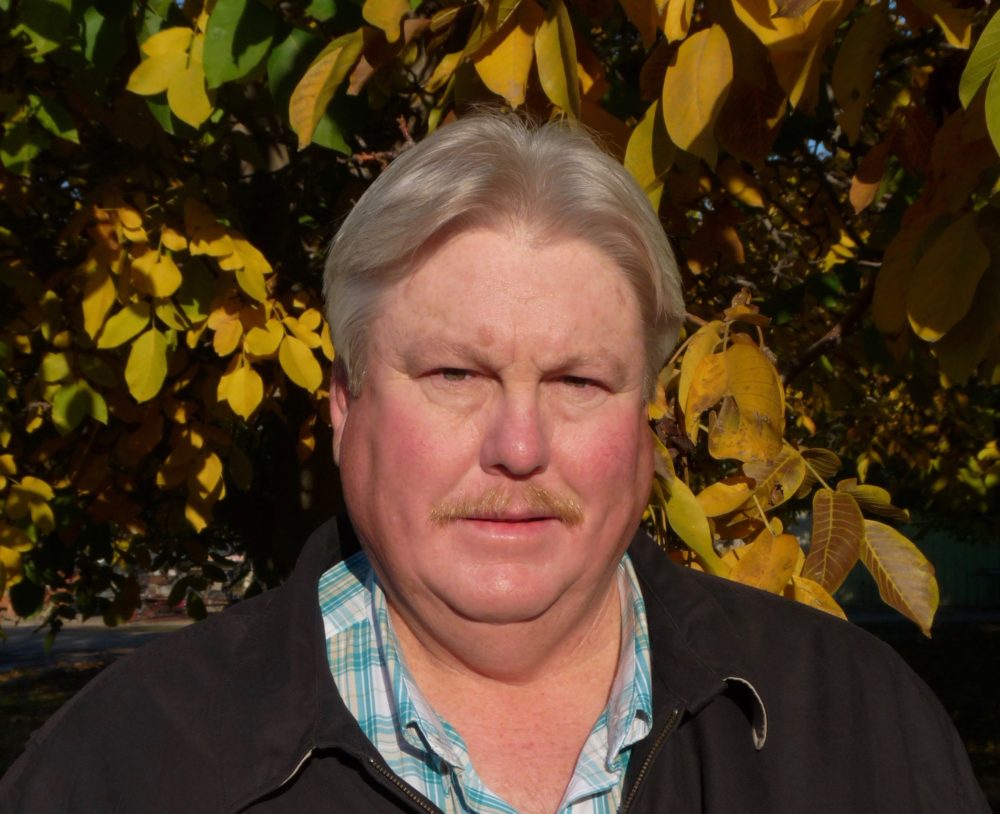
Doug Verboon is a walnut grower as well as County Supervisor in Kings County. He said Kings County was not going to get anything from Temperance Flat, but still he was all for it.

“We’re actually in the middle. We weren’t going to get any water from the project, but we want our neighbors to be happy as well, so it hurts to see them hurt and we’re getting tired of the do as I say and not do as I do, attitude from … Sacramento,” Verboon said.

“We need someone to stick up for our rights. We feel that the opinions that the Water Commission pushed upon us were somebody else’s opinion. The Water Commission did not take time to listen to our projects plans, or listen to our comments. They already had their mind made up before the 2014 Water bond went to the voters,” Verboon said.

Ryan Jacobsen, Executive Director, Fresno County Farm Bureau

Ryan Jacobsen,the executive director of the Fresno County Farm Bureau representing farmers who would have definitely benefited from Temperance Flat Dam if it was approved by the California Water Commission, also had a lot to say on the topic.

“First and foremost, there is obvious frustration. I mean, I think that’s the expression of what everybody had here to say. We are all left bewildered as to why, how a decision like this with as much work that’s gone into it. We had science that backed it up and all of the sudden the commission came back and said that it wasn’t even close enough to be good and that they could not help us get there.”

Jacobsen noted that the commission could not explain why the project was not good. “They just said it was not good. It really smells of politics, and sounds as though things were done inappropriately and at this point, it’s just a frustration and it’s time to reorganize and figure out how the fight continues to build that very important project to this Valley,” he said.

2018-05-18T18:00:49-07:00May 18th, 2018|

Officials Angered Over Temperance Flat Lack of Funding

The Will of The People Was Ignored

By Patrick Cavanaugh, Editor

Agricultural leaders from cities, along with state and federal officials representing the Central San Joaquin Valley, are reeling with anger and disappointment with the California Water Commission’s failure to fund the Temperance Flat Dam storage project.

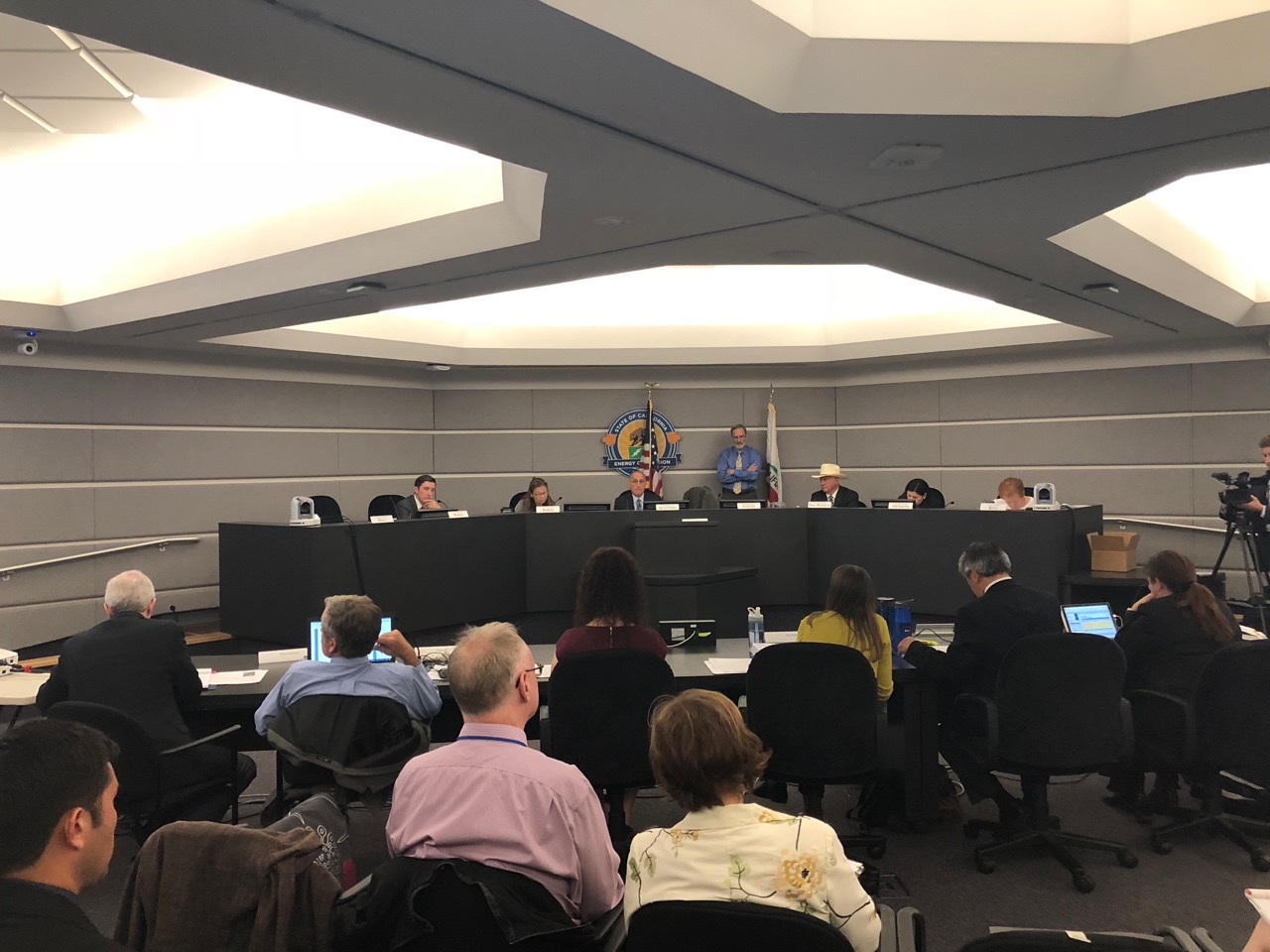
California Water Commission members facing the room, with staff at table in front of them. The staff made all decisions based on NRDC and CA Fish and Wildlife recommendations, killing Temperance Flat funding.

“The California Water Commission have ignored the facts and their own guidelines and have ignored the will of the people,” said Lee Brand, mayor of Fresno. “We believe the voters, especially those in the Central Valley, overwhelmingly passed Proposition 1 where there was an expectation that their hard-earned money would be spent to help build water storage.”

“We desperately needed the Temperance Flat project. It will help us secure our water supplies against the droughts we know surely come,” Brand said.

The push to get funding for Temperance Flat dam was truly a valley-wide effort, with supervisors from Fresno, Kings, Madera and Merced counties, along with many cities and water agencies.

“Voters not just in the Valley but across the entire state should be upset over this decision. It is unthinkable that the Water Commission did not understand the benefits of the temperance flat project,” Brand said.

“Clearly all of us … are disappointed and clearly many of the voters in this valley are angered because we have been overlooked in terms of the water needs that are so essential for our valley,” said Jim Costa, D-CA 16th District, which includes Fresno.

“The Valley needs a reliable supply of water, and we supported this initiative on the basis that we would gain a more reliable supply of water. And clearly the recommendations of the Water Commission who took their staff’s lead was a very, very big disappointment for me. And I think all of us,” Costa continued.

“We’re not given up. That’s the bottom line. We’re not giving up,” he said.

2018-05-17T15:11:28-07:00May 16th, 2018|

Denouncing Non-Funding of Temperance Flat Dam Project

Officials Not Happy About Decision

By Patrick Cavanaugh, Editor

Steve Worthley is a Tulare County Supervisor and president of the San Joaquin Valley Water Infrastructure Authority, the applicant of the Temperance Flat Dam project.

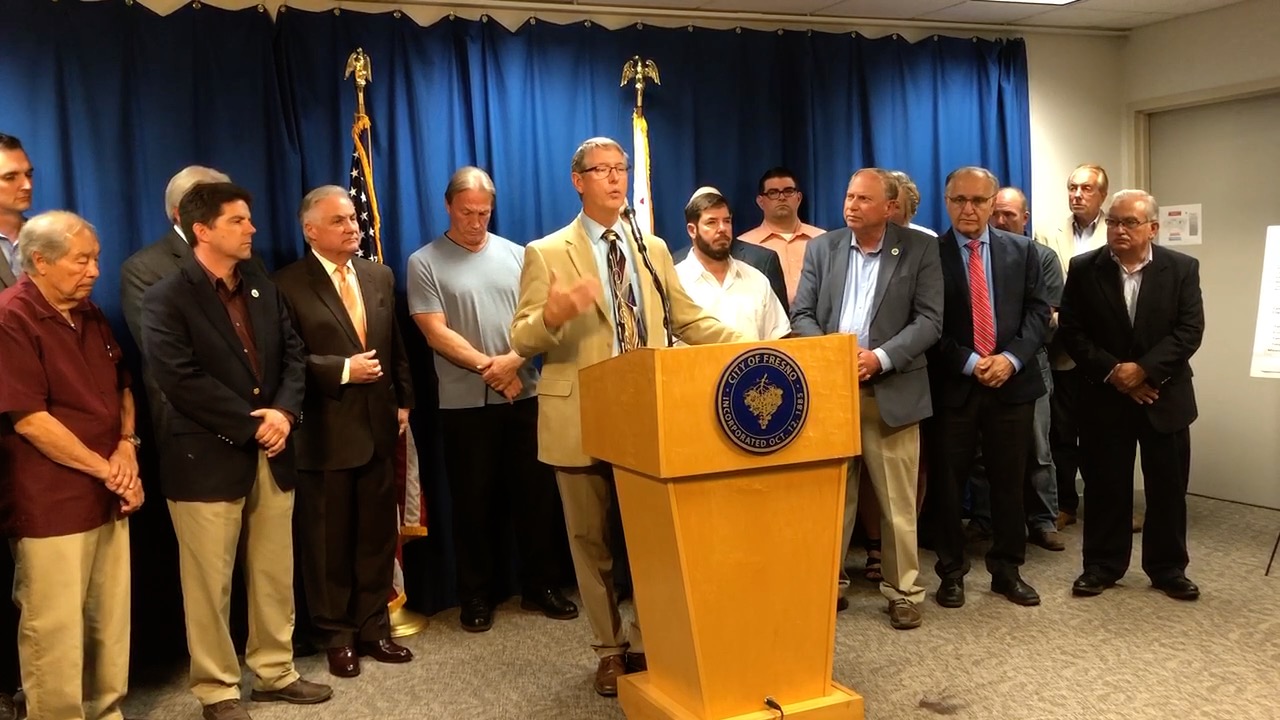
“We are five counties, but when you include the water districts and the cities that are a part of our JPA, we truly cover the entire San Joaquin, and it’s four million people,” Worthley said. “The four million people of the San Joaquin Valley needs to be heard not only in Sacramento but throughout the state. We are important and what we produce in this valley is important not only to our valley, to the state, but to the world. We cannot afford to stop this process. We must go forward. We look forward to working with our federal partners, our private investors, but this project will proceed.”

Buddy Mendes Speaking at Press Conference

Buddy Mendes is a Fresno County Supervisor and a farmer of various crops in Fresno County. He is also a member of the San Joaquin Valley Water Infrastructure Authority, who said, “I have witnessed a mugging by the commission. They mugged the people of the valley in a criminal act. They’ve virtually given away their responsibility to the Fish and Wildlife Service, who had a license to steal from the four million people in the valley. They took from them. There’s no ifs, ands, or buts about it. ”

Former Fresno Mayor Alan Autry Speaking.

The former mayor of Fresno, Alan Autry, who worked early on regarding the Temperance Flat Dam Project, said,“I want to see emails, and I want to see meeting schedules between those commissioners. We have a right to see those. Who came into those offices? What was discussed right before that vote? We will show you ours. If there’s legal recourse to do that, I would urge it to be done. Because the light of day is their worst enemy.

And the big area where the water commission staff says where Temperance Flat project fell short was on the ecosystem restoration, and it came down to a model, and the model that the applicants followed was the same model used by the Bureau of Reclamation and state, explained Mario Santoyo the executive director of the Water Infrastructure Authority. “And we asked them, ‘If you do not like the model we were using, then give us a model to use.’ And they did not have an answer.”

Santoyo said that he did not think that the Water Commission’s staff even used a model to make a determination.

“I do not think so. From my perspective, they were already fixed. They knew the answers and whatever we produced wasn’t going to be the answers that they wanted,” Santoyo said.

Mario Santoyo, has been working on the Temperance Flat Project for nearly 20 years.

And it was determined that California Fish and Wildlife was doing all the science based on the numbers that the Temperance Flat applicants gave to the California Water commissioners.

“Fish and Wildlife were only supposed to be consulted. That’s what the legislation says, “ Santoyo said. “They were given the complete authority to make the decision. That’s where the problem is, is that they were only supposed to be consulted but not given ultimate power.”

California Assemblymember Jim Patterson speaking.

And the California Fish and Wildlife has never been a friend to agriculture, Santoyo said. “Given all the actions that have occurred regarding all the shortages of water that now are hitting us, whether it’s in the Delta where there are the tributaries. Yeah, it would be difficult to say they’ve been our friends.”

California Assemblymember, Jim Patterson said in the words of Winston Churchill to a graduating class. “‘It was probably one of the shortest commencement addresses in history,’ I think is our rally and cry. Never, never, never, never, ever give up. We’re not giving up because our future is dependent upon this and this is a once in a lifetime opportunity to do the very best we can to save, store, move and use water, in one of the most effective and efficient way possible.”

2018-05-16T13:51:46-07:00May 11th, 2018|

Travis Allen’s Plan for Agriculture

Allen Says Regs Hurting Farmers

By Jessica Theisman, Associate Editor

California has general elections coming up on November 6th, and campaigning is already underway for the June 5th primary. California Ag Today recently met with Travis Allen, a state assemblyman running to be the next governor of California.

“One of my 5 point plans is very simple: to complete the California state water project,” Allen said.

One of his goals is to help complete the water project with more water storage in California. (Editor’s Note: We were not able to reach Travis Allen regarding the failure of the California Water Commission in funding Temperance Flat Dam.)

Califonia Assemblyman Travis Allen is Running for Governor

Allen wants to, “cut California’s taxes, get tough on crime and repeal the soft-on-crime laws of Gov. Jerry Brown.” Other goals include fixing the roads, expanding freeways, and repealing the gas tax without any new taxes.

“We are going to fix our broken education system,” he also said.

Allen wants to ensure there is enough water for the Central Valley.

“We have all of these extreme environmental regulations that are literally regulating our farmers out of business,” he said.

The State Water Resources Control Board has taken a heavy-handed approach in the valley and it affects everyone across California, not just the people who live in the Central Valley.

“Remember, the fruit and vegetables that are grown right here in the Central Valley are enjoyed not only throughout California but throughout the country and throughout the world,” Allen said.

2018-05-09T16:33:38-07:00May 9th, 2018|

“The Fight For Water” Film On Amazon Prime

Award-Winning film by Juan Carlos Oseguera Expands

By Patrick Cavanaugh, Editor

An award-winning documentary film on the California water crisis, The Fight for Water, has made its debut this week on Amazon Prime. This is its largest release, as Amazon has over 90 million Prime members in the U.S. alone.

Since its release in 2012, the documentary film has gone on to screen at numerous national and international film festivals, where it also won awards, and has continued to hold numerous community, library and college screenings around the nation. Because of this ongoing success, the film’s distributor, Passion River Films, felt the film could still find a greater audience through this online venue as well.

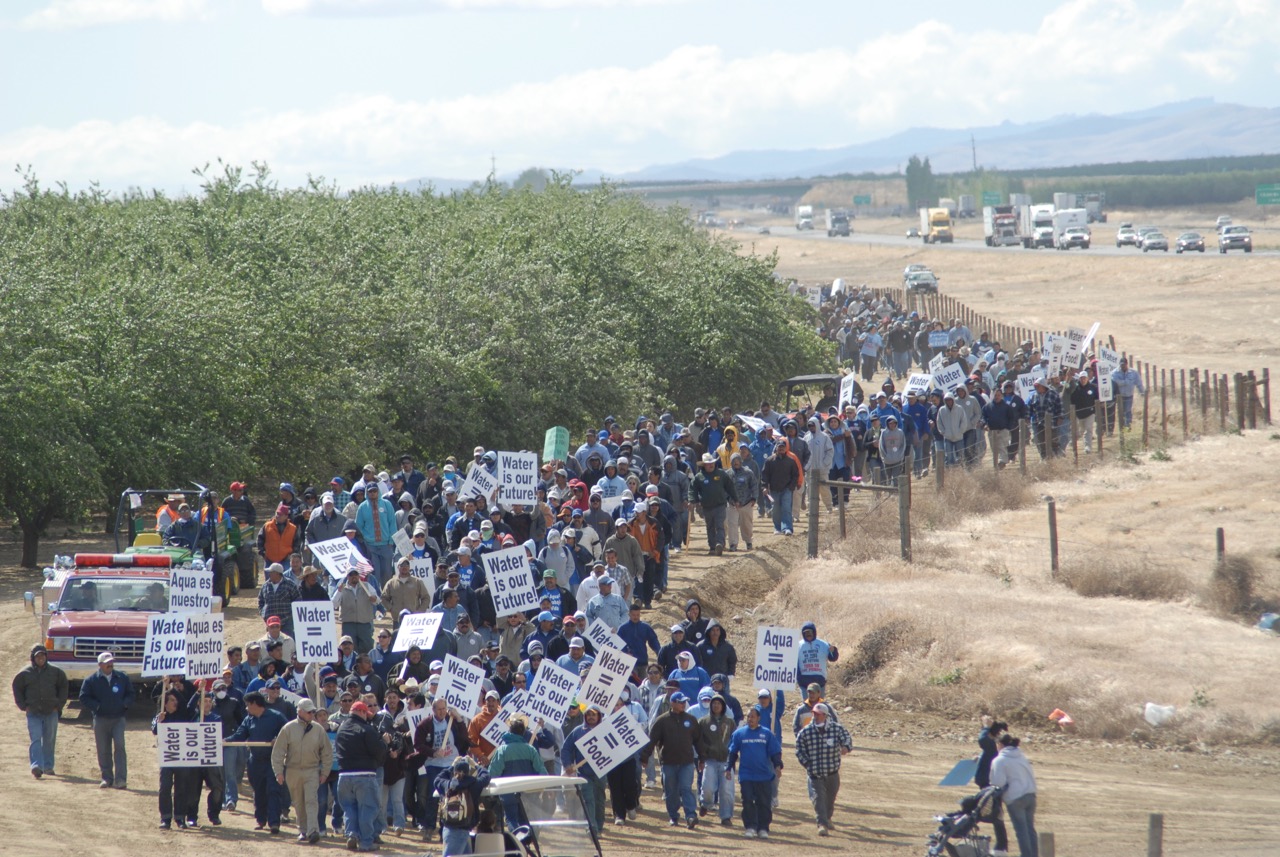
The 78-minute long movie features interviews with farmworkers and farmers, many who were members of the Latino Water Coalition. The Fight for Water film spotlights the 2009 historic Water March from Mendota to the San Luis Reservoir, as well as telling the stories of two central San Joaquin Valley farmers, Joe Del Bosque and George Delgado.

“Understanding water issues have captured the attention of many, not only in California but also around the nation and the world, the documentary serves not only as an educational film on water, but also offers a historical perspective on environmental issues,” said filmmaker Juan Carlos Oseguera.

The film specifically chronicles an environmental decision that affected a community, united an entire region and galvanized the entire state into action, all to fight for their right to water.

For more on the film, visit www.thefightforwaterfilm.com now.

2018-04-27T22:18:30-07:00April 27th, 2018|

To Feed the Nation, Farmers Need Water

California Water Alliance is Good for All

By Patrick Cavanaugh, Editor

Founded in 2009, the California Water Alliance is the leading educational voice and authority on California water. The Alliance is a 501c4 nonprofit, nonpartisan organization that advocates for the water needs of California families, cities, businesses, farms, and the environment. The California Water Alliance is working to assist the farming community in multiple ways. Being transparent is at the forefront.

William Bourdeau

William Bourdeau is executive VP of Harris Farms and a board member of the Alliance. The alliance is telling the truth and being transparent, and that is very important, he said.

Bourdeau explained that California farmers, need water to feed the nation, and it is important to take an interest in the agricultural industry.

“The farmers in the San Joaquin Valley are the most regulated, the most skilled, and the hardest working people I’ve ever met in my life,” he said. “Water and food are critical to any nation, and it’s not only important so we can provide the food for our children, but it’s important for national security reasons.”

“And this is not a California-centric issue. We grow food that people eat all across the country, and so everybody needs to take an interest in this and understand that it’s important that we have a vibrant agricultural industry because, without it, we will become vulnerable,” Bourdeau said.

The understanding of what factors are associated with farming in California is important for the general public to be educated. Anyone that is consuming safe, affordable, nutritious food needs to better understand where that food comes from and what effort is required to produce it.

“This isn’t easy. There are many, many factors that increase the challenge and risk associated with growing food. It’s capital intensive. It requires water. There are many, many opportunities to fail and we’re underappreciated and over-regulated,” Bourdeau said.

2018-04-25T16:45:32-07:00April 25th, 2018|

Jason Phillips Talks Water Issues

Jason Phillips on Groundwater Recharge, Water Bond, and Subsidence

Editor’s Note: Jason Phillips is the CEO of the Friant Water Authority, as well as a member of the Board of Directors with the San Joaquin Water Infrastructure Authority (SJWIA), which is behind the building of Temperance Flat Dam. Editor Patrick Cavanaugh sat down with Jason Phillips, and this interview reflects the topics discussed.

Cavanaugh: The California Water Commission rejected all of the storage proposals for Prop 1 money due to all applicants not showing enough in the public benefit ratio. They have all appealed to the Commission, and their decision will be at the end of July. It’s extraordinary that the California Water Commission does not see groundwater recharge as a public benefit.

Phillips: The law was written in such a way that groundwater recharge, which is what we desperately need, is not considered a public benefit. But I must say that the SJWIA team putting together the application did a great job of using water out of Temperance for multiple benefits, including salmon and keeping water in the valley for groundwater recharge, and I hope the Water Commission can see that.

Cavanaugh: The Commission requires a 1:1 ratio, meaning for every $1 spent on the project, it must benefit the public by $1. Temperance Flat Dam was shown that for each $1 spent, it would give back $3.

Phillips: That’s right, and that’s what is necessary. Anybody who looks into what salmon requires surviving—well, it’s cold water. So the ability to generate more cold water in the upper San Joaquin River is nearly impossible. So if you can get a new reservoir over 600 feet high and have a cold water pool, that would provide a benefit. And that’s what the consultant looked at. The commission in their initial analysis assigned zero benefits to salmon, so that’s why we got such a low score.

But if you look at alternatives to trying to provide that salmon benefit in the river, there aren’t a lot of other options, which is why it’s such a significant benefit for Temperance. And again, it’s not sending the water out of the valley by sending it to the San Joaquin River and recirculating it back to growers and cities … so that we can get the groundwater recharge.

Cavanaugh: Of course, Temperance Flat Dam will triple the current storage of Millerton Lake, and a significant benefit will be groundwater storage?

Phillips: It would almost exclusively help groundwater storage because the surface supplies that are generated in Temperance would be used to supplement what’s being pumped, so people can put that water in groundwater recharge basins or they’re able to use the water and not have their groundwater pumps running. That is the absolute best form of recharging, is somewhat able to shut their groundwater pump off, have a delivery of surface water instead of that, and let the natural recharge take place.

Cavanaugh: Let’s talk about the new $8.9 billion water bond that will be on the November 2018 ballot and written by Jerry Merel, a former deputy director of the California Department of Water Resources and a longtime water-project advocate.

Phillips: About 18 months, Jerry had a conversation with me about what would the San Joaquin Valley need in a water bond to help get it out of the problem that … it’s in with groundwater overdraft? And recognizing that Prop 1 was the state’s path for Temperance Flat and that there’s a different path for the tunnels, north of the Delta. So those two are not part of this November 2018 bond.

And I told Dr. Merel at the time that we needed to fix our canal system. We have to be able to move water when it’s available to the growers, into the cities, and never miss a drop of available surface water. And to do that, we have to fix the Friant–Kern canal and the Madera canal. We have to expand the conveyance between the existing canals. And he thought that was a great idea. It’s something that should have broad statewide support. It has support from conservation groups up and down the valley.

Cavanaugh: Is this specifically for canal infrastructure repair?

Phillips: It is specifically for infrastructure for conveyance projects that would help recharge the groundwater aquifer.

Cavanaugh: The $9 Billion has a lot of water for all regions of state?

Phillips: it’s broader than just infrastructure. It targets the different regions of the state for what they need most. Recycling and desalination are huge for the southern California coastal community. So it targets cost sharing money there. If you go to northern California, there are things that Sacramento rice growers really need to support their water needs. In the central valley, it’s more water infrastructure for conveyance that can complement new storage and water conveyance in the Delta. It also includes a lot of money to help the groundwater sustainability agencies fund their plans that are required under the groundwater law.

Water in Friant-Kern Canal

Water in Friant-Kern Canal

Cavanaugh: Prop 1 was $2.7 billion, and this one is nearly $9 billion.

Phillips: That is… it is real money. And I think what California will realize is that there’s a real need for that. And when you look at the size of California, and it’s projected that the bond money will be used as far south as San Diego and the Salton Sea and as far north for repairs at Oroville.

When you look at the scope of the state of California … you see that the need is much bigger than that, when it comes to the state’s water infrastructure.

And regarding the $2.7 for storage—on top of that, the projects will require substantial private investment. And we are all looking at that, and I think there’s a lot of interest. There’s still a need for more storage to the extent that even the water agencies themselves and the growers that are part of those agencies are willing to fund. And we’re still looking at whether the state or federal governments will help cost share it.

Cavanaugh: if the California Water Commission never funds Temperance Flat, is it possible to get it privately funded?

Phillips: Friant Water Authority and other water agencies in the valley are actively and aggressively looking at that right now, doing our feasibility studies to look at whether privately financing the reservoir would make sense. I think it probably will, but it’s a very complicated analysis that we have to do. So by the end of the summer, we’ll hear from the Water Commission, and we should know more about the feasibility of private financing will be available.

Cavanaugh: Regarding the Jerry Merel water bond, where can people go to get more information?

Phillips: People can go to waterbond.org. You can see whether you want to look at it in one page or whether you want to look at the actual text of the bond. It’s straightforward on that website.

Cavanaugh: From where would the investment for the new water bond come?

Phillips: It will all be state dollars and depending on the different categories of where the funding goes. Some of it is for cost-shared work, in the San Joaquin Valley on infrastructure, where it would 100 percent bond funded. No reimbursement required and the money would come straight to the Friant Water Authority for immediate use. We’ve already worked with Department of Water Resources to make sure that, that when the bond passes, we could start submitting requests for some of that funding immediately to begin working on the canal, as early as November 2018.

Cavanaugh: How bad is the subsidence along the Friant Kern Canal?

Phillips: It’s a big problem, and it’s growing. The worst part of it is near the middle of the 152-mile canal, where it has subsided three feet and continues to subside. That subsidence is since 2015. The capacity of the canal has been reduced by about 60%, due to subsidence.

To pass the same amount of flow through that section, the elevation of the water in the canal is very near the top of the canal. And five bridges are impacted by that section where the water comes right up to the bridge, and we’re only at 40 percent of the design capacity there.

2018-04-20T20:49:34-07:00April 19th, 2018|
Go to Top