Doug Mederos to be Named Tulare’s 57th Farmer of the Year

Doug Mederos to be Tulare’s Farmer of the Year

By Patrick Cavanaugh, Farm News Director

On March 29, the Kiwanis Club of Tulare County will recognize Doug Mederos as the 57th Farmer of the Year. Mederos – a diversified farmer and owner of Doug Les Farms in Tulare County – grows almonds, pistachios, cotton, silage corn and black-eyed peas. Mederos farms 600 acres and manages another 300 acres for his brother.

Mederos told California Ag Today the award caught him by surprise. “It is pretty humbling,” he said, “especially when you see the list of growers they picked [in prior years], and you always wonder, ‘Do I fit in this list or not?’”

Mederos’ family has been farming for several generations. “My grandfather came over in 1920 and started a dairy, P & M Farms, with his brother. When my father got out of the military, he joined the partnership with my grandfather and my uncle and my uncle’s son, Larry Pires.

“Along the way, my two brothers and my cousin’s sister, Loretta, all worked at the farm. My cousin Larry and I eventually became partners in the Pires and Mederos Dairy operation after we graduated from college.

The partners decided to move the dairy out of California and chose South Dakota. Mederos explained, “I stayed here farming in California, and I’ve been pretty fortunate over the years. We’ve had good years and bad years, but the majority of them have been good. Hopefully continuing on so that at some point I get to retire.”

Mederos’ children may continue their family’s legacy of farming in the Central Valley. “Probably my son or somebody will take over,” Mederos said. “He’s going to go off to Fresno State and to major in Ag business, so hopefully in a few years, he’ll be back here. Who knows, maybe it will be my daughter who comes around and ends up running the farm. You never know.”

2017-04-20T13:11:02-07:00March 27th, 2017|

Recharging Aquifers Using Floodwaters


Floodwaters Could Recharge Aquifer

By Brian German, Associate Broadcaster

Last October, the Almond Board of California announced new partnerships with Sustainable Conservation, Land IQ and UC Davis researchers to look at ways floodwaters could recharge Central Valley groundwater aquifers. Daniel Mountjoy is the Director of Resource Stewardship for Sustainable Conservation, an organization helping to solve some of the challenges facing our land, air and, most importantly, water.

Mountjoy explained the idea behind the partnership: “The concept is, ‘Can we capture the available peak flows when they’re available from surface supply and recharge the groundwater so that it’s available during dry years when surface flows are under stress from environmental needs and other demands for it?’ ”

The thought is to use surface irrigation water during times of availability in order to flood almond orchards to recharge the aquifers.  This would not only help growers during times of drought, but also benefit those with limited access to surface irrigation.  Mountjoy has found some success in their research.  The initial focus will be on sandy soils, where the infiltration is really fast.

The concept behind the effort has already shown a level of success on a smaller scale.  “In 2011, Don Cameron at Terranova Farms in Western Fresno County captured 3,000 acre feet of water on 1,000 acres of sandy farm land. He infiltrated on pistachios, grapes and alfalfa fields in some fallow land during winter, as well as well into June and July on some of those crops,” Mountjoy said.

Partnerships like these are needed as California begins to fall under the full implementation of the Sustainable Groundwater Management Act.  “What we’re doing with the Almond Board right now is looking for sites in the Sacramento Valley, because there’s more likelihood that we’re going to have water supply there to test the concept. Both UC Davis and Sustainable Conservation are out working with growers,” Mountjoy said.

UC Davis will be working on the crop health aspect, while Sustainable Conservation will be looking into how much water can be put on different crops and what types of management compatibility there is with the crop.  Once a significant amount of data is collected, the next step in the process will be looking towards how to further incentivize the method for growers.  “Any time you recharge an aquifer, it becomes everyone’s aquifer. There’s still not a system in place to credit landowners for the benefit they are providing to their neighbors and to other irrigation pumpers,” Mountjoy said.

There are over one million acres of almonds stretching roughly 500 miles from Red Bluff to the south end of the San Joaquin Valley. Nearly two-thirds of that land is considered moderately good or better in its ability to percolate water into the underlying aquifers.  “We have to prove the viability that you can actually do this on farm land across extensive acres, because that’s really the cheapest solution, rather than buying land, dedicating it to recharge basins and managing it that way without production of crops,” Mountjoy said.

2017-01-24T15:09:38-08:00January 24th, 2017|

Almond Sustainability a Priority

Documenting Almond Sustainability

By Jessie Theisman, Associate Editor

Sustainable almond farming utilizes production practices that are economically viable and are based upon scientific research, common sense, respect for the environment, neighbors and employees. The result is a plentiful, nutritious and safe food. That’s what the Almond Board of California is working to achieve along with Joe Browde from SureHarvest.

Joe Browde, of Sure Harvest, Heads up the Almond Sustainability Program for the Almond Board of California

Joe Browde, of Sure Harvest, Heads up the Almond Sustainability Program for the Almond Board of California

The almond sustainability program uses grower submitted production information to demonstrate the sustainability of the almond industry.

“Some of the benefits have been consistent over time. At the ease of the program, folks can more readily participate in a user-friendly mechanism,” Browde said. “They’ll be able to look at the practices, how they compare to their peers around the state, and see what they can do to improve their performance. Mostly economically, as well as for the environment. The more participation, the more value for the almond board that can tell the industry story.”

“What we want to do is get folks engaged. We want to let them ensure that they see the value individually as well as see the greater value for the whole industry across the state” Browde said.

“Documentation is the name of the game going forward. They just have to get out there and tell their story,” said Browde, who also touched on how sustainability in California isn’t the exception. “It is the rule, and we find the more we look at practices, we’re actually amazed at times at the performance of almond growers across the state.”

“We want to make it as easy as possible, but we also want to make it valid at the end of the day and ground-truth things. It’s going in the right direction. We’re pleased, the almond board’s pleased and we’re going to make a difference,” Browde said.

2017-01-19T16:22:52-08:00January 19th, 2017|

Almond Board’s Sustainability Program Gets Even Better

Almond Board Program Streamlined

By Jessica Theisman, Associate Editor

The Almond Board has set a new standard for the Ag industry, according to Joe Browde, a senior research associate for Sure Harvest, which is working with the Almond Board towards sustainability.

It isn’t news that best management practices is the goal of the almond sustainability program, which has been in place since 2010. According to Sure Harvest, “sustainable almond farming utilizes production practices that are economically viable and are based upon scientific research, common sense, a respect for the environment, neighbors and employees.” The result is a plentiful, nutritious and safe food.

Browde gave California Ag Today some insight on this well-known program. “What we’ve done is try to make it more user-friendly, streamline the whole process to ensure the value.” He explained that they wanted to “improve the value of the program so growers can see it more clearly, and handlers, too, as they increasingly assess their practices.”

Sure Harvest made the process more adaptable for all to use. “We’ve made it adaptable to various platforms. Obviously the traditional computer itself, the laptop, but now also well adapted even to smart phones and, of course, other mechanisms as well,” Browde said.

Sure Harvest has created a brand new program to simplify the process. “So if you answer a practice once, it’s auto-populated elsewhere where a similar practice is asked, so it’s all about making life easier for the assessor so they can enjoy the experience more” he said. “They will feel the value at the end of the day.”

Joe Browde also explained the Almond Board of California’s new bee and pollination module. “Brand new one. The bee health and pollination module is specifically desired by ABC … to go with their best management practices guide for bees, and they want to make a big deal on what they’re doing in that realm.”

The main goal of the Almond Board of California and their bee and pollination module is to help consumers understand the value in bees and their importance to the world supply chain of food. “We have developed a new module for that to help them answer those questions and folks can assess. They can use it perhaps even in a verification scheme one day with suppliers” Browde said.

Sure Harvest and the Almond Board are both researching the module. “We’re talking about various ways to help folks throughout the supply chain see the value and to be able to address their various customers” Browde said. Although these studies may still be in their infancies, “we’re trying to figure out the best strategic direction forward with ABC leadership.”

2017-01-03T14:10:43-08:00January 3rd, 2017|

Almond Irrigation Tips

 Leverage Winter Rain To Almond Irrigation

By Brian German, Associate Broadcaster

Earlier this month in Sacramento, the California Almond Board hosted their 44th annual Almond Conference.  As the largest event in the world for almond industry professionals, the conference offers the chance to connect with the people, the science and the products at the forefront of the global almond industry.

Terry Prichard is a retired Cooperative Extension Irrigation Water Management Specialist from UC Davis.  He was one of the speakers involved in the “Good Irrigation Water Management Practices” discussion.  Prichard noted the significance of choosing when to start irrigating in almond orchards.  “Irrigating too early when the soil profile is full can lead to all sorts of problems with saturated soils, disease problems and, in general, potential to lower production.” Prichard said.

The conference offered an opportunity to witness a live demo of a free tool available to all California almond growers that generates irrigation run-time schedules based on local evapotranspiration and information about your individual orchard and irrigation system.

Prichard mentioned that they have simplified the process into a single sheet of information for growers.  “What we’ve done is prepare a one-sheet method for utilizing your soil’s capabilities and then crossing that with the effective rainfall during the winter and how well it fills that profile, as well as how much effective rainfall falls in the spring,” Prichard said.

The one-sheet method essentially allows growers to delay irrigation by utilizing soil moisture that is stored, along with any effective rainfall in the spring, so growers can adjust their irrigation volume. “There are other ways to determine when to irrigate, but this was a method that is easy to use, requires no new technology and purchase, such as with a pressure chamber, which, that can be done. We intend to put another one pager together on using the pressure bomb,” Prichard said.

The one-sheet method Prichard and his team are continuing to develop should be applicable to growers throughout the state.  However, geography will play a significant role in how the method will be utilized.  “In areas of the state which receive a substantial amount of rainfall, it’s going to fill the profile. However, as you move farther south, that’s not the situation, and often times we do not fill the profile.  This is where we’re applying water during the off-season to charge the profile for the next season to start with the profile full of water, ” Prichard said.

The one-sheet method can also be used to accomplish leaching if there is excess salts contained in the water.  “You can leverage the winter’s rainfall and drip by irrigating when the trees are dormant so as to fill the wetted zone of the root zone so that any rainfall that occurs then the salts tend to move away from that root ball area that’s wetted and out away from the roots farther. That’s a very effective strategy when using drip irrigation,” Prichard said.

Prichard has an extensive background in soil salinity issues, crop response to limited water supplies and irrigation water management.  “No one wants to be behind on irrigation, but the goal of this particular one-pager is to keep that in check a bit until the soil has enough room in it to support the irrigation water that you’re applying without saturation,” Prichard said.


2016-12-30T13:00:22-08:00December 30th, 2016|

Better Navel Orangeworm Spray Coverage

Navel Orangeworm Sprays Tough to Target

By Patrick Cavanaugh, Farm News Director

Naval orangeworm is the number one pest in almonds and pistachios, and there’s a lot of research going on to find ways to manage this pest. One important strategy is timely sprays, but Joel Siegel, a research entomologist with USDA Ag Research Service in Parlier, CA, said that it’s tough to get that spray on target.

Joel Siegel Navel Orangeworm Expert

Joel Siegel

“Spraying for naval orangeworm is learning to live with loss. Many years ago, my professor told me to assume that 90 percent of what you put out never goes where you want it to go. I didn’t know that he was being an optimist when he told me that,” he said.

To confirm this, Siegel set up a controlled experiment sponsored by DuPont.  “Using the best setup of spray rigs at two miles per hour, we’re basically getting 10 percent of what we calculated in the tank was actually getting on the nut,” he said.  “Then if you add the difficulty of saying, you want to get it in the suture on an early split almond, you’re probably getting about  two percent of what’s in your tank actually on that suture zone, so you’re dealing with a 98 percent loss.”

Siegel said the spray is getting in the tree, but not on the nut or the suture of the nut. “I’m talking about just getting on target. It’s getting on the leaves, it’s getting on the bark, it might be getting on the ground.”

Siegel noted that it’s actually better to spray at night, when the naval orange worm adults are flying. “That way, some of the drift can actually contact the adults. The other advantage of night spraying is that the humidity is higher, so you’re not getting that loss of having the droplets evaporate.”

2021-05-12T11:02:00-07:00December 29th, 2016|

Farm Advisor Culumber is in Awe

Catherine Culumber is Impressed by Big Production

By Patrick Cavanaugh, Farm News Director

Catherine Culumber is a UC Cooperative Extension Orchard Crops Farm Advisor in Fresno County. She has been on the job since June 30, and we wanted to catch up with her since she’s gotten her feet on the ground.

catherine_culumber

Catherine Culumber, UC Cooperative Extension Farm Advisor, Fresno County.

She came to the position with a Masters in Plant Science and a PhD in Soil Science.

“I’m so happy to be here, and it’s been great to get to know the network of people working in the University of California Cooperative Extension.  There is endless amounts of resources and wealth of knowledge that I feel really fortunate to have.”

She is working with almond, walnut and pistachio growers, with the majority of her calls from almond producers.

Culumber was surprised with the vastness of Fresno County and all the production here. “My PhD research was in orchard systems at Utah State University, and it didn’t nearly prepare me for the infinite acreage that I saw upon arriving here,” she said.

She said that she has met some very innovative growers, and they all seem to be doing the best they can for the family farm.

“I think that farmers are very adaptable, and I can see that in recent years with the decrease in water availability, most people have adapted and gone to different micro-irrigation systems to increase their water use efficiency,” Culumber said.  “The farmers are working hard to not only be sustainable, but they’re smart business people as well.”

2016-12-27T12:38:59-08:00December 27th, 2016|

Postcard Campaign to Stop Additional Pesticide Regulations Near Schools

Call to Growers: Join Postcard Campaign to Stop Additional Pesticide Regulations Near Schools before Friday, Dec. 9


By Brian German, Associate Broadcaster


Proposed DPR Regulations

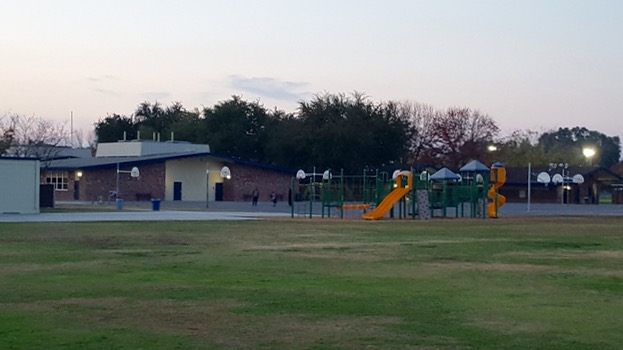
“The proposed California Department of Pesticide Regulation (DPR) further restricting growers from applying crop protection products near schools is unnecessary,” noted Kelly Covello, president of the Almond Alliance of California, which advocates and lobbies for the almond industry.

“Basically, this proposed rule is going to add a layer of unnecessary regulation. It proposes restricting pesticide applications within a quarter mile of schools and daycare centers between Mondays and Fridays, 6am to 6pm,” said Covello. She noted there are already regulations in place to protect both the community and the applicator.

Likewise, Colleen Cecil, executive director, Butte County Farm Bureau, said, “We’re very confident in the regulation that currently exists and the responsibility that landowners take when it comes to spraying anywhere. There are rules in place and these rules work.”

“The environmental community has done a bang-em-up job at fear-mongering, period. They believe they can take pictures of kids next to fields and make the farmer the bad guy. Nothing can be further from the truth,” Cecil said.

“Nothing is more important than the health and safety of people,” noted Ceil. “As stewards of the land, farmers already do everything in their power to mitigate risks involved in agriculture and the application of pesticide is no exception.”  Cecil added, “The puzzling part of the proposed regulation is that DPR have stated themselves that they were ‘unable to quantify the benefits’ and that ‘any health benefits of the prohibitions are unknown.'”


Postcard campaign to stop additional pesticide regulation near schools dpr

Postcard campaign to stop additional pesticide regulation near schools

Call for Growers to Take Action

“We have joined California Farm Bureau Federation (CFBF) and other organizations that are working on this issue,” said Covello. “One of the main calls to action for grower engagement with DPR is CFBF’s postcard campaign. If you would like postcards to share with your grower network, please email staff@almondalliance.org or simply print from the Postcard PDF document and mail directly to DPR (contact information is on the last page of the PDF document).   A high volume of input will be critical.

Growers can also sign and share CFBF’s petition. Farm Bureau will deliver the petitions to DPR before the comment period closes on December 9.

“This [proposed regulation] really is unnecessary,” said Covello. “There is no science. There is no injury or illness that has sparked the need for new regulations. We are really hoping we can get our growers engaged by sending in a postcard or sending in comments. Again, growers can contact the Almond Alliance by email at staff@almondalliance.org and by phone at (209) 300-7140.

“We would be happy to get you a postcard,” Covello said. “We can also email it to anyone. So please help us in this fight to stop unnecessary regulation.”


Almond Alliance of California

Butte County Farm Bureau

California Department of Pesticide Regulation

California Farm Bureau Federation

2021-05-12T11:05:43-07:00December 5th, 2016|

Early Rain Caused Concern for Butte County Rice Growers

Butte County Rice Growers Respond to Early Rain


By Brian German, Associate Broadcaster


The Butte County Farm Bureau has been working to protect agriculture’s interests since 1917, thanks in large part to the continued hard work of their members. With continued support, the Bureau is able to advocate for growers on important issues in the community and fund educational opportunities.

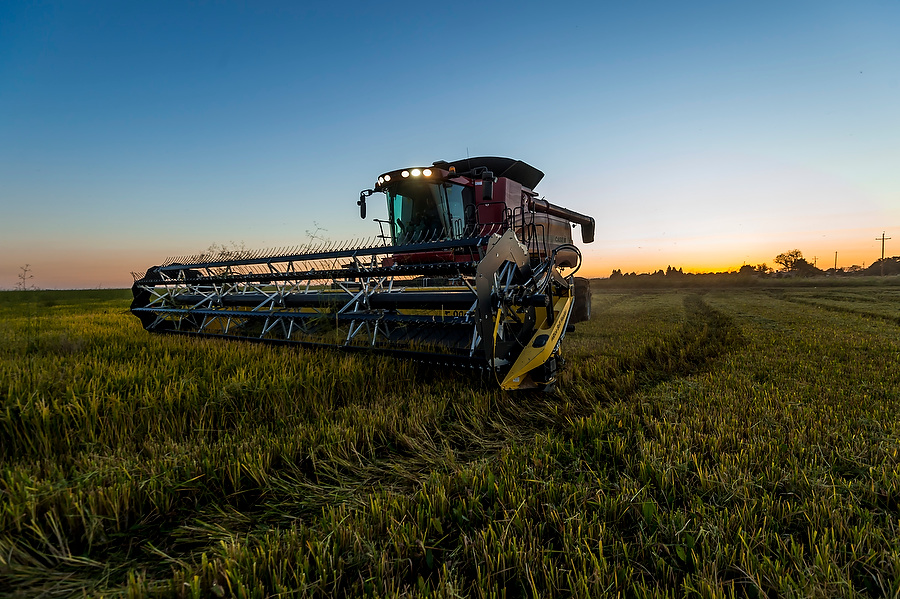
Colleen Cecil, executive director of the Bureau, observed the rice harvest looks strong for Butte County rice growers, but a weather-related issue caused a bit of a problem during harvest. “We had some wet weather and then we had a break. Then it was, ‘Hurry up and get it done before the next storm comes in,’” said Cecil.

While the weather was an issue for growers, its impact was minimal. “There was a percentage, somewhere in the teens likely, of rice that was still left out in the field after the last wet weather event [in which] we just got pounded with rain,” Cecil noted.

“Water shortages over the past couple of years had forced many rice growers in Northern California to cut back on overall production. However earlier this year, as a result of improved rainfall last winter, growers went back to planting a more average level of rice. Those fields that had been taken out of production had a good amount of rest, and are now producing nicely once again.”

Though not uncommon, growers may have adjusted their harvest schedule in response to the early winter rain. “While it does happen on occasion, it is not ideal for farmers to harvest rice after wet weather all the time. It goes more slowly, it becomes a little messier, and it requires a transition from tires to tracks on their harvesting equipment. Again, it slows it down,” Cecil said.

“In 2013, the average rice grower in Butte County was producing just under 90 sacks per acre, with each sack weighing the [approximately] 100 pounds. Butte County has close to 88 thousand bearing acres of rice. While the local industry remains strong, early rainy weather can put a dent in production.”

Cecil explained, “It wasn’t that they couldn’t get [the rice] out, it was that the crop wasn’t ready to come out. There was still a tremendous amount of moisture in it and it wasn’t at the right percentage of moisture to take out of the field, so they had to wait.”

Last year’s crop report shows that Butte County’s five most valuable crops were walnuts, almonds, rice, prunes and peaches. The area’s walnut crop alone was valued at just under $241 million dollars. Cecil said this year’s harvest, “the almonds came off without a hitch. The walnuts got tagged at the end with the wet weather, but I don’t think it slowed everybody down,” Cecil said.


Featured Photo: Richard and Laurel Nelson’s Farm, Twin Creek Ranch, on Pleasant Grove Road and Marcum, Thursday, September 29, 2016.
Photo Courtesy of California Rice Commission/Brian Baer Photography

Butte County Rice Growers Association (BUCRA)

2016-12-01T12:56:49-08:00December 1st, 2016|

Safe Food Alliance Helps Farmers Cope with MRL Disharmony

California Farmers Cope with MRL Disharmony


By Patrick Cavanaugh, Farm News Director


California farmers are careful with crop protection products because they know the importance of producing safe and wholesome food for their customers across the nation and in their export markets. “However, I think that there are some real challenges facing growers in California today,” said Thomas Jones, senior analytical services director for the Fresno-based Safe Food Alliance.

“As growers send their commodities around the world, they’re facing increasing challenges of knowing the right chemicals to apply and at what levels. We have our own strict regulations within California, if needed, [that govern] not only the application but also the maximum residue levels (MRL) or tolerances allowed for various crops,” said Jones.

Thomas Jones, senior analytical services director, Safe Food Alliance, MRL Disharmony

Thomas Jones, senior analytical services director, Safe Food Alliance

“That’s also carried onto the federal level; we have very strict EPA regulations. But as we [export] into other countries, they may have entirely different regulations,” said Jones. He noted this could be confusing not only to farmers, but also to registrants of crop protection materials because there is a lack of standardization of MRLs in different countries.

“Historically, there was the CODEX system, a UN-based system geared towards a more international standard for pesticide residues. It was very thought out, and very scientifically based,” Jones said.

However, as Jones explained, many countries do not want to follow the important scientific standard. “Increasingly, we are seeing countries want to establish their own systems, their own tolerances. They may be responding to their own political pressures within their countries.”

“We are seeing a process called ‘deharmonization’ in which every country wants to establish its own positive list of what is allowed and what is not allowed in [farm] products. Sometimes, those are in agreement with U.S. regulations and California state regulations; sometimes they are not. So it is important that [our] growers know not only what is legal in this country and in our state, but also what is allowed in their target [export] markets.”

Jones commented it is now known that some of these marketers [apply] random low MRLs and keep other MRLs high on some of their own products in order to get a marketing edge. “Some of those MRLs may or may not be based on any scientific standards.”

“There are a number of great tools out there,” he said. “There are a number of great software programs. Obviously, anything that [information growers] can get out of the print media or any educational courses are really essential. It is important to work with your Pest Control Adviser (PCA), as well. It’s important that [farmers] know what they are up against, as far as growing these crops,” said Jones.

The Safe Food Alliance is available to growers to help them qualify to meet the standards in the U.S. and abroad. “We [provide] training twice a year on fumigation safety for the various processors of dried fruits and tree nuts. We focus particularly on commodity fumigations and on what treatments are allowed and not allowed. We also have a full-service pesticide-testing laboratory and are very aware of the requirements in these other countries, so we’re happy to help both processors and growers with our monitoring efforts,” noted Jones.


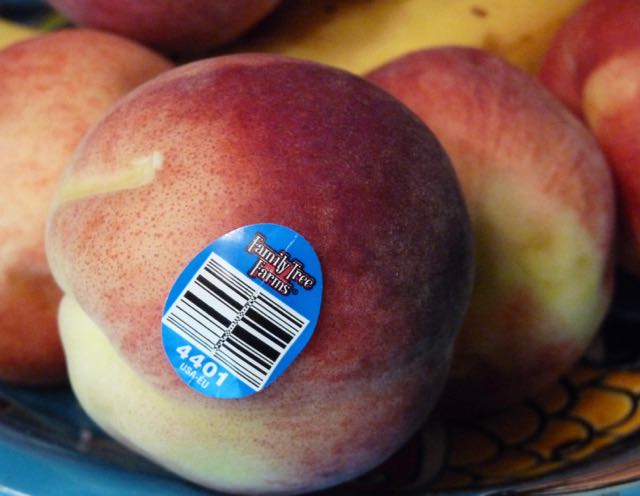
Featured Photo: For these California-grown peaches to be shippable to any out-of-state U.S. consumers or international export markets, they must meet scientific Maximum Residue Levels (MRLs).

C O D E X  A L I M E N T A R I U S, the international food standards, guidelines and codes of practice contribute to the safety, quality and fairness of the international food trade. Begun in 1963, Codex standards are based on the best available science assisted by independent international risk assessment bodies or ad-hoc consultations organized by Food and Agricultural Organization of the United Nations (FAO) and World Health Organization (WHO). Consumers can trust the safety and quality of the food products they buy and importers can trust that the food they ordered will be in accordance with their specifications.

2021-05-12T11:05:44-07:00November 28th, 2016|
Go to Top