Almonds

Almond Alliance Advances Almond Issues

Alliance Advocates for Almond Industry

By Patrick Cavanaugh, Farm News Director


The Almond Board of California does many great things for the California almond industry, most notably marketing annually about two billion pounds of almonds—both domestically and internationally. But there is one thing the Almond Board cannot do, and that is lobby on behalf of this big industry.

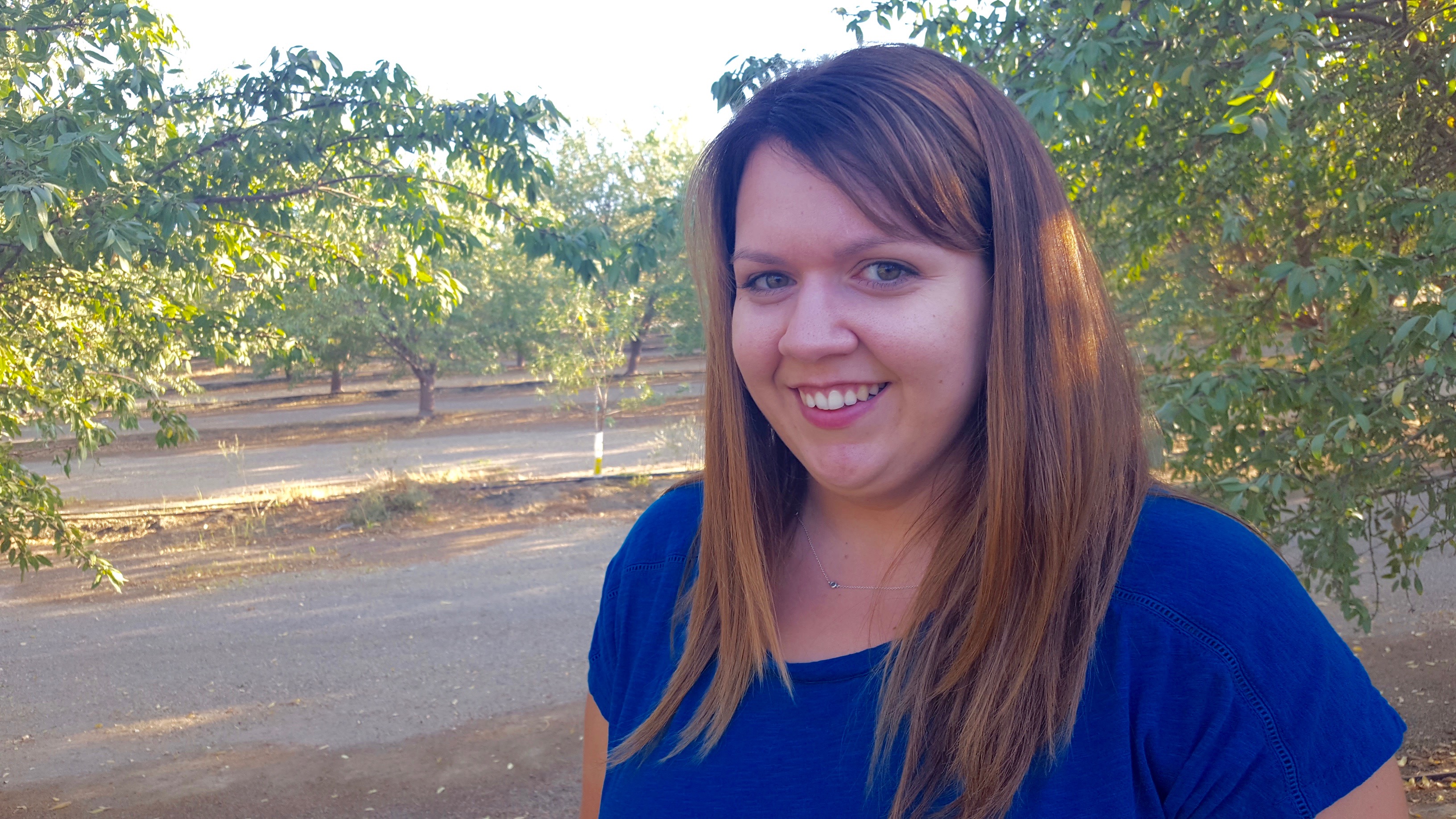
Kelly Covello, president of the Almond Alliance

Kelly Covello, president of the Almond Alliance

Enter the Almond Alliance of California (AAC) on August 1, 2016. Formerly known as the Almond Hullers and Processors Association (AHPA) and established in 1980, this renamed and revitalized trade organization is the only trade association fully dedicated to advocating for and protecting members’ investment in the almond industry. The AAC will represent and serve growers, hullers/shellers, handlers, processors and allied industry partners.

Kelly Covello, president of the Almond Alliance, said, “Over the last year, we’ve done some strategic planning with the Almond Board so that we can complement one another’s activities. The Almond Board cannot lobby or advocate, and the trade association—the Almond Alliance—can.” Nevertheless, Covello said, “the industry has invested in the Almond Board through their assessment and has great resources available in terms of expertise, data [and] research that we can use to support our policy positions.”

For nearly 100 years, the almond industry has been active in California without a dedicated political voice. “The trade association has always been able to advocate on issues when necessary. The industry has grown; we’re over a million acres now. With the increase in acreage, the number of issues, the visibility and the scrutiny of our industry has dramatically increased,” Covello said.

Ms. Covello currently serves on the Board of Directors for the Agricultural Council of California and serves on two Almond Board of California (ABC) committees: the Almond Quality & Food Safety Committee and the Technical and Regulatory Affairs Committee.
2016-11-23T17:02:09-08:00November 23rd, 2016|

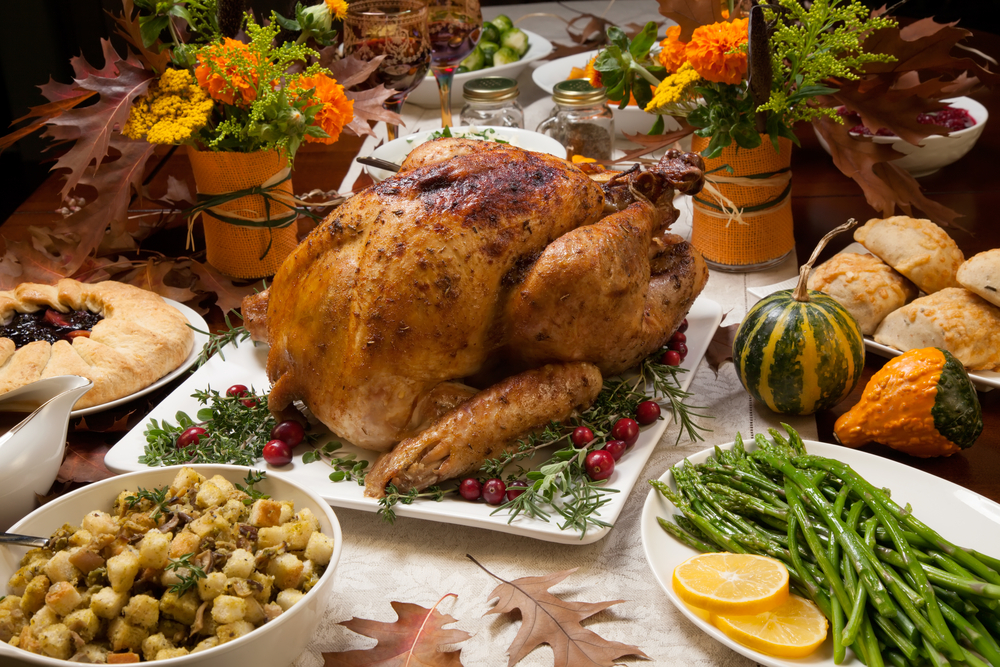
California Proudly Provides Most of Thanksgiving Feast to America

Enjoy Your Thanksgiving Feast

From California’s Farms to Your Table


By Patrick Cavanaugh, Farm News Director


Turkeys come from several areas of the state, and while California is ranked No. 7 in turkey production, we do supply most of the western United States.

The famous Mrs. Cubbison’s dressing comes from Sophie Cubbison, a California entrepreneur who was born in 1890 in the San Marcos area of San Diego County. A longer fascinating story made short: In May 1920, she graduated from California Polytechnical University with a degree in Home Economics. In 1948, she added seasoning to broken pieces of the popular Melba toast to make stuffing. A factory in Commerce, California churns it out this time of year.

Farmers and farmworkers in California produce almonds, raisins, walnuts, prunes, pistachios, figs and dates, apricots, pumpkins, pecans and pomegranates. . . right on up the food line.

These are all part of the American Thanksgiving feast.

Celery from the Oxnard and Ventura area, and the rest of the ingredients for the stuffing mix, plus carrots, lots of crisp lettuce and fresh spinach from Salinas — all these greens waiting for you, already washed and bagged in the produce department. The green beans in your casserole come from California growers.

You’ve got oranges and kiwi fruit, table grapes, strawberries, raspberries freshly harvested from the Salinas and the San Joaquin Valleys. You’ve got sweet potatoes from Merced County — this is their pinnacle season. You’ve got all kinds, colors and sizes of potatoes and tomatoes, plus parsley, onions and garlic. . .  all grown in California.

Practically all the fruits, vegetables and nuts make America’s Thanksgiving celebrations festive, and nearly all of them come from California.

And don’t forget about the great variety of California winegrapes cultivated by California growers and then crafted with great care into great California vintage.

Wait! We grow firm, juicy apples and those small round watermelons that are a great snack or accent to a flavorful dessert fruit salad. And besides poultry, we even have California lamb, beef, rice or pasta—if you want to go that way.

Of course, you’ve got Martinelli’s sparkling apple or grape cider from Watsonville, near the Monterey Bay area. Local growers provide the tree-ripened fruit to the award-winning company, which is still family-owned and is run by the founder’s grandson and great-grandson.

At more than 140 years old, Martinelli’s is merely one century younger than our nation. In fact, the company received a first place award at the California State Fair in 1890.

By the way, do you know that little pop-up turkey timer that indicates when the turkey has reached the correct internal temperature? Food public relations genius Leo Pearlstein¹, along with a turkey producer from Turlock, invented that gizmo. Pearlstein, who handled the promotions for the California Turkey Advisory Board, was contemplating the enduring Thanksgiving conundrum—how long to cook the turkey and how to figure out when it is done?

Pearlstein said he and the turkey rancher were sitting in Pearlstein’s test kitchen mulling over ways consumers could determine when the turkey was done. They noticed the fire sprinkler system overhead. When the kitchen gets too hot, the fire sprinkler turns on. A metal alloy in the sprinkler is activated or melted when subjected to the high temperature of a fire in the room (185 degrees Fahrenheit). They applied that concept to the pop-up timer.

Officially, the National Turkey Federation advises consumers also use a conventional meat thermometer to verify that the cooked turkey’s internal temperature reaches:

165 degrees F to 170 degrees F in the breast or
175 degrees F to 180 degrees F in the thigh and
165 degrees F in the center of the stuffing
.

Except for cranberries, it is really a California Thanksgiving.


¹Leo Pearlstein is founder and president of Lee & Associates, Inc., a full-service public relations and advertising firm, which he opened in 1950. According to the company website, he currently runs the company with his partners, two of his sons, Howard and Frank Pearlstein. He is also founder and director of Western Research Kitchens, the food and beverage division of his agencyHe is considered a pioneer food consultant and his agency was recently named as one of the top agencies in the country that specializes in food and beverage clients.

For more food safety guidelines, the United States Department of Agriculture (USDA) Food Safety and Inspection Service (FSIS) provides this portal.

2021-05-12T11:17:11-07:00November 23rd, 2016|

Almond and Pistachio NOW Sanitation Critical This Winter

Joel Siegel on NOW Sanitation

By Patrick Cavanaugh, Farm News Director

Last year was a bad year for navel orangeworm (NOW) mainly in pistachios, but also in almonds. If left in the trees, infested nuts become a great reservoir for more NOW to inhabit them.

Joel Siegel, NOW research entomologist, USDA Agricultural Research Service

Joel Siegel, research entomologist, USDA Agricultural Research Service

Joel Siegel, a research entomologist for the USDA Agricultural Research Service based in Parlier, stresses the importance of having a good sanitation plan in place to remove those NOW mummy nuts. “When we talk about sanitation, it should be the foundation for everyone’s nut program. That’s something that you control.”

“In almonds, it’s absolutely essential. Where we’ve taken a look at it in the south, every infected mummy per tree is good for 1 percent damage. So going from one mummy to two mummies, your damage on average increases another 1 percent.”

“It’s also important to destroy the mummies on the ground. You figure, for every eight or nine mummies on the ground, that’s good for about a half a percent increase in damage. Get them off the tree and shred the almonds.”

Siegel noted that while pistachio growers can clear mummy nuts off the tree, the industry has not been able to shred the fallen pistachios effectively. The hard, rounded pistachio shells just bounce around in the shredder machine.

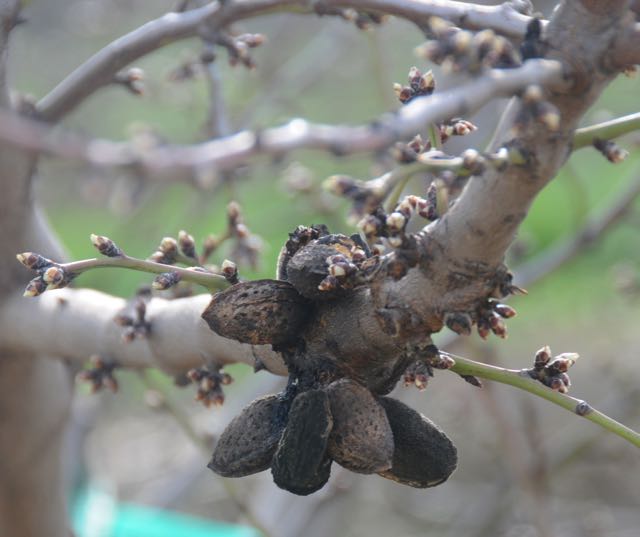
almond_mummies

Almond Mummies

“What you can do is shake them off the tree as soon as possible so they’re on the ground where they can start rotting. You get those weeds growing around them. It has been shown that they break down faster in the weeds,” said Siegel.

“Growers disc them in. But if you’re going to disc them in, you have to disc them twice. Again, you’re not destroying the nuts, you are burying them so that NOW cannot lay eggs in the spring,” he said.

The risk of poor sanitation is high. Considerable NOW damage can prevent pistachio and almond growers from earning the premium paid for nuts that are pest-free.

2021-05-12T11:05:44-07:00November 22nd, 2016|

Another Record Season for Walnuts

Walnut Yield Could Continue to Increase Over Next Few Years

By Brian German, Associate Broadcaster

October was the peak of harvest for the state’s biggest tree nut crops: almonds, pistachios and walnuts. California growers have completed this year’s walnut harvest, and so far growers are pleased with the yields. Final statistics for California walnut production in 2016 will not be available until mid- to late-January 2017.

The USDA National Agricultural Statistics Service (NASS)’s 2015 estimate of 365 thousand walnut acres in California (of which 300 thousand were bearing acres), represents a 50 percent increase versus a decade ago, according to Dennis Balint. Balint, who just retired as longtime executive director of the Folsom-based California Walnut Board and CEO of the California Walnut Commission since 1995, became the new special assistant to the California Walnut Board on November 1, 2016.

Dennis-Balint, California Walnuts

Dennis-Balint, California Walnuts

Growers had a record walnut harvest last year, and this year looks even more promising. “This year’s crop estimate from USDA’s California Agricultural Statistic Service (CASS) is 670 thousand tons, an 11 percent increase over last year’s 603,000 tons. 

The NASS office in Sacramento, as relayed by Balint, reported this year’s walnut season began with a significant amount of winter moisture, along with an ample amount of chilling hours and average weather conditions during walnut bloom.  Springtime rain concerned some growers because of the increased chances of blight and any resulting damage is under assessment.

While overall weather conditions were advantageous for growers, results were varied. “If you’re in Reading or Modesto, or Visalia, different factors affected you: climates, your own horticultural practices, what varieties you’re growing, etc.,” said Balint.

The estimate of this year’s harvest is good news for growers who, not many years ago, were fortunate to harvest merely 300,000 tons. Even with the estimated record harvest, there are still close to 80,000 acres of younger, nonbearing walnut trees in the state. Balint commented, “As those acres mature and come into production over the next few years—all things being equal—California’s walnut harvest could potentially increase by another 30 to 40 thousand tons per year.”

california-walnut-boardBalint also reported the Walnut Board has four tests in the grocery marketplace to determine how to increase stores’ holiday inventory of walnuts. [EDITOR’S NOTE: For fans of inshell walnuts, buy your supply early and often. Inventory of inshell walnuts is not expected to extend beyond the holidays.]

As of November 1, 2016, board members of the California Walnut Industry appointed Michelle Mcneil Connelly, former senior marketing director, as executive director of the California Walnut Board and as CEO of the California Walnut Commission.


Links:

The California Walnut Board was established in 1948 to represent the walnut growers and handlers of California. The Board is funded by mandatory assessments of the handlers. The California Walnut Commission, established in 1987, is funded by mandatory assessments of the growers.

USDA’s National Agricultural Statistics Service California Field Office is operated in cooperation with the California Department of Food and Agriculture.

2016-11-17T13:33:58-08:00November 16th, 2016|

Raisins: Quality Is Up, Tonnage Is Down

Fewer but Sweeter Raisins this Year 


By Brian German, Associate Broadcaster


After last year’s tremendously successful raisin harvest, Steve Spate a fourth generation farmer, said it is understandable to see a bit of a decline in tonnage this year. Spate, who is also grower representative for the Raisin Bargaining Association (RBA), which has been representing the raisin industry for nearly 50 years, said, “Just by nature, the year following a high crop year could potentially be down—especially for Thompson Seedless Grapes,” noted Spate.

Steve Spate, grower representative, Raisin Bargaining Association (RBA)

Steve Spate, grower representative, Raisin Bargaining Association (RBA)

Raisin grape harvest in the central San Joaquin Valley is a two-month process for growers, typically running from late August to mid-to-late October, depending on crop maturity. Hard numbers on this year’s overall crop won’t be available for a few more months, but growers are reporting a significant decline from last year’s harvest. “Last year was a large crop,” said Spate,” so definitely we were considering that this year would be down—but not as severely as some growers have reported. We have people reporting differences in yield from 10% to as high as almost 50%.”

There are various possible reasons for this year’s drop in yield, aside from the cyclical nature of grapevines. “I think drought conditions last year may have played a big role, while the buds were setting basically for this year,” said Spate. He also suggested water was a significant factor this year as well, particularly if growers lacked enough surface water deliveries or a grower had a pump issue and there was a critical time where he or she didn’t get water on the field.

The overall reduction in acreage of this year’s harvest is yet another factor to consider. Industry experts report approximately 10K to 15K fewer raisin grape acres compared to last year. This shrinkage is attributed to growers replacing raisin crops with higher-value crops such as almonds.

Sun-Dried Raisins

Sun-Dried Raisins

As many industries struggled with the cost and availability of labor, Spate commented that it wasn’t too difficult to fill their labor needs this year. “Going into the year growers made different decisions and chose more mechanized harvests. The handpicking crews were much larger and seemed to be readily available,” Spate said.

While grape growers were thankful for the amount of available labor this year, they have some serious concerns regarding the cost of labor in the next few years. Between a minimum wage that will incrementally climb to $15 an hour in a couple of years and the newly established shorter workday for farmworkers [before reaching the overtime threshold of 8 hours, as opposed to 10 hours], growers consider the investment in mechanization as being more cost effective in the long run.

“I think we will continue to see shifts towards any type of mechanization possible due to some of those minimum wage [increases].” Before the governor signed the overtime bill, Spate said, “We used to have the ability to have workers work longer hours before overtime kicked in.”

Raisin grape growers will still be harvesting for the next few weeks. Although it appears overall tonnage is down a bit, sugar levels seem to be higher than last year, resulting in better quality raisins.

2016-11-02T17:12:31-07:00November 2nd, 2016|

@AlmondGirlJenny AgVocates on Social Media

@AlmondGirlJenny Urges Everyone in Ag to AgVocate on Social Media


By Laurie Greene, Editor


Digital platforms—not newsprintlead the information superhighway-world we live in. Beyond news websites, everyone in the agricultural industry who is able should engage and agvocate on a few social media platforms such a Twitter, Facebook, Instagram or blogs, according to @AlmondGirlJenny.


Jenny Holtermann, aka @AlmondGirlJenny, fourth-generation almond farmer in Kern County, is fully engaged with social media. Social media has become the news source for her, her friends and her generation. “I think it’s important to be involved in social media to tell your story,” Holtermann explained. “That’s how people are getting their news; that’s how people are getting their information these days.”

@AlmondGirlJenny is engaged on such social media platforms as FacebookInstagram, Twitter and YouTube.

Tim Holtermann and son, Henry, @AlmondGirlJenny

Tim Holtermann and son, Henry


“It’s critical for us to be out there,” she added, “showcasing what we’re doing and highlighting the benefits of agriculture and how it’s multi-generational, how it’s family oriented. Get people to relate to it and become engrossed in it,” Holtermann said.

Last year a reporter from the Los Angeles Times asked Holtermann about water use in farming almonds. “I was able to set the reporter straight regarding all the myths about almonds and water use,” she commented. “I told her that over the last 10 years, almond growers have reduced their water use by 30 percent and we are working on saving even more.”

Jenny and her husband, Tim Holtermann, have a big story to tell. “I’m a fourth generation California farmer” she began. “My family farms almonds and walnuts in northern California. Then I married a fourth generation California farmer as well.

“We farm together with my husband’s family in the Wasco area. It’s very important to us to care for our land and treat it as best as we can so that it can be passed down to future generations. We’re raising the fifth generation, and we hope that someday, if he so chooses, our son has the opportunity to farm here as well,” she said.

“All of us in agriculture should tell our story,” Holtermann said, so others who are not involved with Ag can learn. “If social media is not your game, hire someone to help you get started.”


Resources:

Bayer CropScience AgVocate

2016-10-19T16:21:47-07:00October 19th, 2016|

California Growers Confront Labor Issues

Labor Issues—Costs and Farmworker Shortages—Challenge Growers

By Brian German, Associate Broadcaster


This year, farmers grappled with labor issues such as shortages and increased labor costs. Some growers had more than enough workers available, while others experienced difficulty in meeting their labor needs. Dave Phippen, co-owner of Travaille & Phippen Inc., a vertically integrated company that grows, packs and ships their own almonds, described some of their struggles with labor this year. “We employ a little more than 50 people year-round, but for harvest we ramp up an extra 15-20 people. There was a squeeze on the availability of the labor and a challenge with what we thought was an acceptable rate of pay,” said Phippen.

almond assessment increaseAs minimum wage increases incrementally every year, growers will struggle to keep up with the higher wages. “There was a new reality in the typical forklift driver, people working in receiving, people sampling,” Phippen elaborated. “We’re paying a little bit more for all of those tasks this year, and because there were more employment [opportunities], it was harder to find people who were available and willing to work.” Phippen also noted that employees “were requiring a greater compensation rate than last year for the same job.”

Travaille & Phippen’s operation has had to reevaluate employee compensation. Phippen explained the principle that as minimum wage increases, compensation rates compress, such that a person who was earning $15 used to be $5 above minimum wage, but is now is only $4 above minimum wage,” Phippen said.

The current federal minimum wage, established in 2009, is $7.25 per hour, up from $5.85 just two years prior. Of the top 10 agricultural producing states in the country, only 4 have minimum wage rates higher than the federal level. California and Massachusetts have the highest minimum wage levels of any other states.

Travaille & Phippen was already compensating a great deal of their labor force above minimum wage; however, to stay competitive and retain their workers, they increased their compensation rates, which caused a ripple effect throughout the supply chain. As their labor costs increased, they had to charge growers more for processing. “It had a big impact on them,” said Phippen, “particularly because those growers are receiving less revenue for their crop this year than they did last year. It was quite a squeeze for our growers and we were caught in the middle of that squeeze,” Phippen explained.

almond-tree-shaking-harvestingLabor issues have also been a significant concern for Mark Van Klaveren, a diversified farmer in Madera who grows almonds, watermelons and Thompson seedless grapes. Van Klaveren noted that timing plays a big role in their labor situation. “Since we tend to pick our Thompson seedless late, when there is a lot of sugar, we were able to get plenty of labor because most of the other vineyards were finished. Their farmworkers were looking for someplace to work.”

Van Klaveren reported that labor proved more challenging for their other crops. “I have a steady crew for watermelons, although with the new laws coming into effect, we are going to have to make some changes and mechanize a lot more of that harvest,” Van Klaveren noted.

Labor costs will become further complicated in the years ahead as overtime limitations established in AB 1066 phase in, beginning in 2019, with all agricultural operations expected to be in compliance by 2025. The combination of increased wages and the limitation of hours will change the way many farms operate. Some growers will increase mechanization. Others growers of labor-intensive crops may replace their crops with commodities that require fewer hours to harvest.

Van Klavern noted, “The only options we have are to mechanize or get out—one of the two. We can’t afford to produce at the same prices we’re getting right now with much higher labor costs. Some machinery out there can do what we need to do and we will look real hard to get some of that in our operation,” said Van Klavern.

An economic analysis conducted by the Highland Economics firm, shows AB 1066 having significant consequences for California agriculture. The study found the policy would reduce farm production as well as farmworker income, and the new time constraints on farmworkers would negatively impact California’s overall economy.

Van Klaveren is skeptical the new legislation will create any positive outcomes. “Workers want to put in the hours. They want to work. If we’ve got to pay them higher wages to start with, and then overtime on top of that after eight hours? There are certain jobs that won’t sustain the higher wages,” Van Klavern said.

In addition to increased costs for employers, increased minimum wage negatively affects workers who are trying to get their foot in the door of a farming operation. When the government raises the entry-level wage so high that people really have to produce a lot per hour, Van Klavern clarified, inexperienced applicants will suffer. “If you cannot produce a volume of work that is worth $15 an hour or more, you cannot work because nobody is going to hire you to lose money,” noted Van Klaveren.

Collectively, farmers are looking at overall labor cost increases between 5 and 15% over the next few years, depending on the crop. Van Klavern expressed a widely-held view that continued government intervention, particularly in the area of wages, is making farming in California unnecessarily difficult. “The whole issue of employment is a private agreement between an employee and employer, as in, ‘I will work for you for so much an hour and try to produce to your expectations.’ In other words, if somebody is willing to work for $8 an hour, why not let them work for $8 an hour? If it is fine with them and fine with the employer, then why not?” said Van Klavern.

The costs of labor and limitations on farmworker hours, combined with the costs of water and increasing environmental regulations, may prove insurmountable for California agriculture. “The economics is all simple, but the government steps in and complicates everything. I guess that leaves it to us to have to figure out how to swerve between all the regulations and stay in business,” noted Van Klavern.

2016-10-07T10:51:51-07:00October 7th, 2016|

Celebrating California Agriculture . . .  An Ongoing Series: Marketing

Marketing, Almond Board Style

A Rallying Cry for Ag PR on Billboards

By Laurie Greene, Editor


Celebrating California Agriculture is a refreshing perspective. In an ongoing series on CaliforniaAgToday.comPeterangelo Vallis, executive director of the Fresno-based San Joaquin Valley Winegrowers Association (SJVWA), shares his optimistic viewpoint on California agriculture. In our original article, “Celebrating California Agriculture . . .  An Ongoing Series,” published on September 13, 2016, Vallis offered this goal:

SAN Joaquin Valley  Winegrowers Association, (sjvwa) logo“This is basic, basic stuff because, realistically, we’re marketing the fact that we need help to make more food,” Vallis noted. “We’re making safe domestic food, but if we don’t engage with the people that are our customers, we’re never going to be able to get our ideas and our needs across, because we’re just not talking to the right audience.”

“They’re not enough people here in the valley to move the needle. We’ve got to figure out a way to get San Francisco and L.A. appreciating our position, loving what we do, and trusting that we’re doing the very best job possible,” said Vallis.

Vallis is urging California agriculture “to put some dollars together for a major billboard campaign in Los Angeles and in the Bay Area, celebrating our agricultural industry as part of a big PR campaign.”

Almond Board of California, marketing almond board style“Just imagine,” Vallis suggested, “the power of billboards with California farmers and the fruits, nuts or vegetables they produce. The billboard could be up in prime city areas for several months for less than a few million dollars.”

Vallis commended the Almond Board of California for their example of a great starting point. “You know, the Almond Board of California (Board), I think, represents the most progressive part of California agriculture today because the Board understands how much money it takes to penetrate the market. We’re not living in 1932; we need to spend money on this stuff. I mean what does a Super Bowl commercial cost—6-7 million dollars for 30 seconds? It’s an insane amount of money, but that’s what it takes to really move the needle.”

“Billboards around the California’s urban centers or even across the nation, could carry the message of the importance of the California

ALMOND SUSTAINABILITY ECOSYSTEM (Almond Board of California, AlmondSustainability.org), Celebrating California Agriculture

ALMOND SUSTAINABILITY ECOSYSTEM (Almond Board of California, AlmondSustainability.org)

farmer,” Vallis proposed. “We could campaign on every billboard in America for one month and call it, ‘Hey, We Like to Eat Month’ or ‘Your Stomach Depends On Ag,’” noted Vallis.

“The message must connect with people,” Vallis insisted. “It would probably cost 20 or 30 million just to make that happen, but if you look at the success the Almond Board has had, that is a perfect pathway—a perfect roadmap—for what all of us in California can do at pennies per pound,” he said.

“There are some commodities that don’t make pennies per pound; but on the whole, a couple pennies per pound, put in the right space and put in front of people … Guess what? They’re going to go nuts over the product. Look what almonds have done. If that isn’t a rallying cry for what could happen. . . it would be killer! And it would be killer for our industry,” Vallis said.

2016-10-04T18:38:02-07:00October 4th, 2016|

Almond Assessment Increase Comment Period Reopened

Comment Period Reopened for Almond Assessment Increase Through October 12.


Julie Adams, vice president global, technical, and regulatory affairs with the Almond Board of California, commented in an exclusive interview with California Ag Today on the proposed additional one cent almond assessment increase from 3 cents to 4 cents a pound by the Board of Directors to use in marketing the anticipated crop increases over the next three years, starting this season.

The proposed rule change was first published in the Federal Register on July 18, 2016. The comment period was reopened on Sept. 12 with an announcement in the Federal Register. The comment period is open for 30 days, ending Oct. 12, 2016, at midnight, Pacific Standard Time (PST).

California Ag Today (CAT): Where do almond growers go to make comments about the increased almond assessment?

Adams: Growers can go to www. regulations.gov and search for almonds.

Click here for the direct link to the Assessment entitled, Almonds Grown in California: Increased Assessment Rate.

CAT: The first comment period in August was only two weeks. How long will this one last?almond assessment increase

Adams: The new comment period is now open and will be stay open until Oct. 12. We have also sent out notifications to handlers and we’ve included it in our communication to growers. 

CAT: Why did the comment period reopen?

Adams: Basically this discussion has been going on for quite some time, actually, and started with planning and strategic meetings within the production and environmental research committees. Some of this discussion also started back a year ago when we were talking about all of the challenges facing the industry related to environmental issues, water requirements, and sustainability issues. And then, of course, with the anticipated increase in crop size, what was that going to mean in terms of keeping demand growing ahead of supply?

Discussions at strategic planning meetings underway and within our global market development committees, started feeding up to the Board recommendations that we really needed to get ready both for the challenges facing growers as well as building that [market] demand. It was at that time that the Board started talking about an increase in the assessment for a specific period of time.

We recognized that crops were increasing, and to get us through this period, we really needed to accelerate our activities. The increased assessment was approved by the Board several months ago and was published in the Federal Register. It was, at that point, a two-week comment period. While there had been a lot of communication out to the industry, the comment notification had not been sent out in a timely fashion as it needed to be since it was such a short comment period.

Based on that, as you’ll see from the reopened comment period, USDA determined that they would go ahead and reopen the period for 30 additional days. That’s the process we’re in right now.

Almond Board of California CAT: One argument against the assessment is that the almond industry is heading into big record crop, and the 150,000 to 200,000 non-bearing acreage will soon be bearing—and that alone is sure to increase the Almond Board’s marketing budget.

Adams: It does. What we have found throughout our programs is that the more we can start building consumer awareness and demand for the product, it’s going to be ready as those crop sizes increase. We really want to be ahead of that supply situation so that we’re not trying to chase the opportunities in the market. We want to make sure there’s a strong foundation. As crops are more available, customers are ready to take in that product, really ready to put more on the shelf for consumers, and hopefully [meet] increased demand from consumers.

I think the other part of this assessment increase is about what’s happening on the production side. Research takes time and growers are facing more challenges now in terms of water availability, water quality, production issues, and environmental concerns. There’s more pressure on growers now than ever before. Part of this assessment increase for this three-year period is really to accelerate a lot of the research and work that’s underway on irrigation practices and harvesting practices, and to ramp up our food safety education. We’ve got the Food Safety Modernization Act (FSMA) coming on board now—a  requirement starting to put additional burdens on the industry.

With all of that happening, the concern is that we really need to get in front of all of this. The idea is to do that with some additional funding, so while we’re keeping up our ongoing programs, accelerating some of this research over the next three years will put us in a position, when we do come into those larger crops, where we will already have a lot of those programs in place and we will have accelerated the research so we can continue to meet a very demanding market.

California AlmondsCAT: We can see the need to increase our momentum in research and marketing. Of course, the vast majority of the Almond Board’s budget is for marketing right? Will the vast majority of this extra assessment go toward global marketing?

Adams: The global marketing demand portion of the budget is over 70%. That includes more than just market development. It includes a lot of consumer research, attitudes and awareness research It also includes a lot of the investment we’ve made lately on reputation management—how consumers really perceive almonds and how we need to best communicate back to consumers about what our industry is doing.

CAT: Obviously there is not going to be a vote on the added assessment. There is going to be a comment period, and if the USDA approves the assessment, it will go forward.

Adams: It was a unanimous recommendation coming forward from the Board of Directors and from a number of committees that included industry members that made recommendations to the Board of Directors. Obviously the Board is responding to the strategies and recommendations coming through the committee process. That’s what the Board unanimously endorsed and put forward in a recommendation to the Agricultural Marketing Service (AMS), and USDA. Now based on the comments that start to come forward through this period, then USDA will assess all of that and publish a final rule, a final determination, after the comment period closes.

CAT: If the added assessment is for this season, the USDA will have to turn it around very quickly?

Adams: They would. Obviously the USDA is monitoring this comment period and will respond to the comments and the issues expressed by individuals who are commenting on the rule. They will reflect their thinking as they come forward.

CAT: If there is a big mixture of No and Yes comments, is it possible that the comment period will stay open past the 30 days to get a consensus?

Adams: I think the USDA will look at the issues and the context of the comments. If the comments are more about clarifications and they feel what has been proposed will deal with those concerns or areas of focus, then they will look at that and make a determination. I really couldn’t say whether they would go forward with an additional comment period.

CAT: And the additional assessment will automatically sunset in crop year 2018/2019?

 Adams: Exactly, and it would go back to the current 3 cent assessment. Really nothing has to be done for that to happen and that’s why the industry put in that sunset period. The Board does not have to vote on it; there does not have to be any further consultation. It will automatically go back to the 3 cent assessment.


2016-09-22T12:30:01-07:00September 22nd, 2016|

Spider Mites Gave Almond Industry Reprieve in 2016

Spider Mites Showed up Late This Season

By Lauren Dutra, Associate Editor


This year, near-perennial spider mite pressure on almonds was delayed until hull-split. “That’s the big story this year,” said David Haviland, UC Cooperative Extension entomology farm advisor, Kern County. “The orchards of people who did early management programs well their fields looked great until hull-split. And the orchards of people who did not do anything well their fields looked great at hull-split as well—when the mites showed up,” he said.

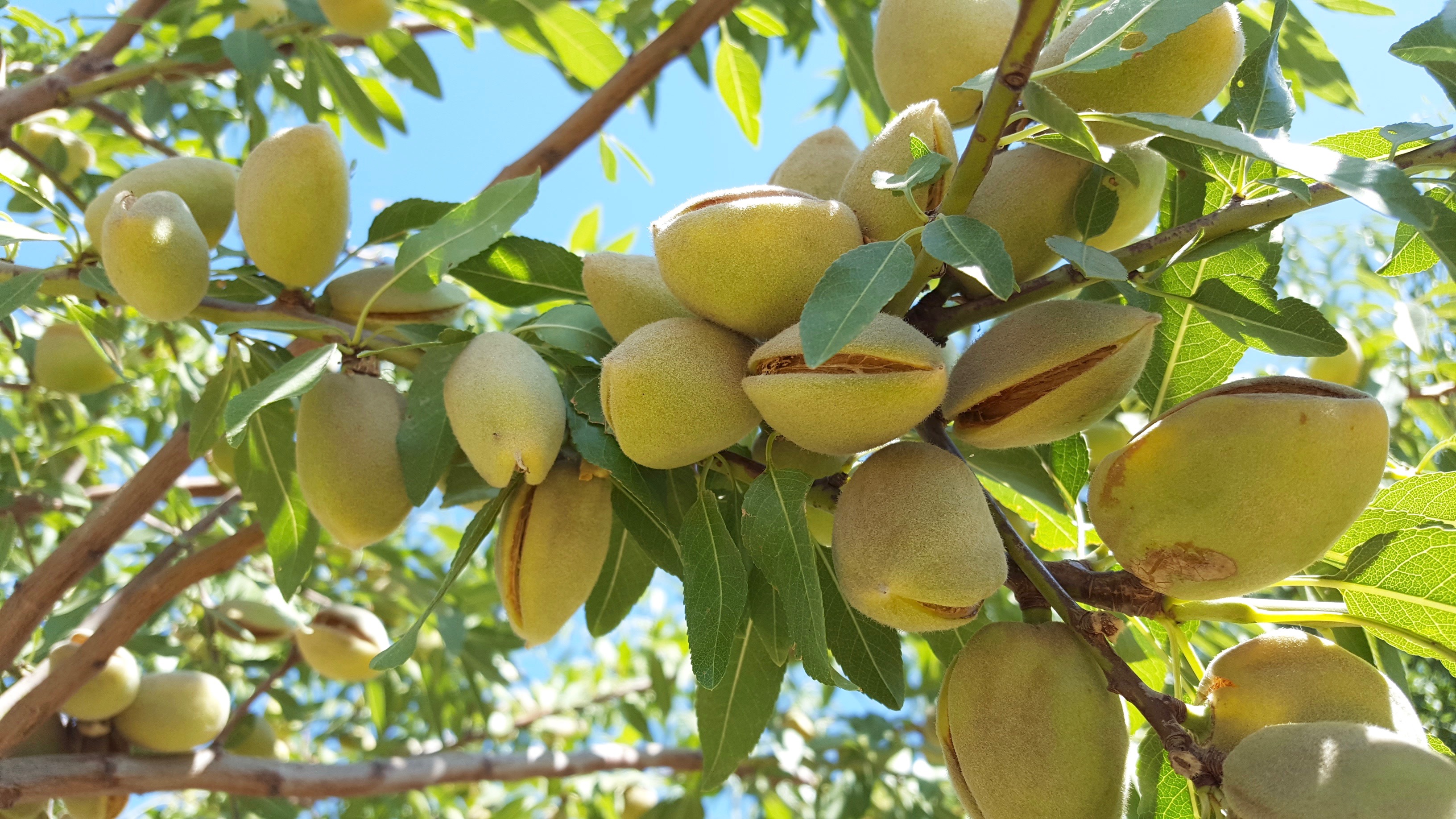
Almond hull-split

Almond hull-split

“And a good population of them arrived,” Haviland continued.  “People sprayed, but now we’re at the beginning of September, and everyone I have talked to in the Southern San Joaquin Valley have reported the arrival of the sixspotted thrip, a beneficial spider mite predator. The thrips came in fierce, cleaning out anything that didn’t get controlled prior to Nonpareil harvest,” said Haviland.

“We are on the tail end of the season in Kern County, and mites ought to be going away in a couple of weeks,” he said.

almond-tree-shaking-harvesting

Haviland also explained the appearance of navel orangeworm this year is about average. “As far as navel orangeworm goes, things are looking good. They are certainly out there. They’re certainly in some nuts, but trap captures have been about normal, so—nothing really alarming in terms of numbers,” Haviland noted. “I haven’t heard of anybody really getting hit hard this year, other than some orchard edges here and there.”

“Growers seem to be happy. We are about halfway through the harvest, hoping the second half of almond-shaking goes just as well as the first,” said Haviland.

2021-05-12T11:02:58-07:00September 9th, 2016|
Go to Top