Citrus Trucks Will be Tarped

Tarped Citrus Trucks Will Fight ACP 

By Melissa Moe, Associate Editor

In the ongoing battle against Asian Citrus Psyllids, an insect that is known to vector the fatal Huanglongbing disease in citrus, the California Department of Food & Agriculture has issued a new regulation to require trucks to be tarped when moving citrus.  This regulation will be phased in and permit holders will be notified by CDFA.

Joel Nelsen, president of the California Citrus Mutual, explained that the regulation will prevent the spread of this vector-transmitted pathogen. “What we discovered is that psyllids were flying towards fruit sitting in trucks and bins as they were being transited from Southern California to the San Joaquin Valley, because of the aromas that the fruit gives off,” he said.

Fruit is not considered to be a vector of Huanglongbing since ACP can only vector the disease through leaves and twigs. However, these pests are catching rides on trucks all over the state on the fruit that was considered to be relatively safe.

“What happens is the Asian Citrus Psyllid is attracted to the aroma coming off of the orange, and it flies towards it thinking it’s going to find a food source,” Nelsen said. “Well, it rides around on the orange for a couple of hours, until it figures out that there’s no green waste or twigs attached to that fruit, and then it flies off.”

Fruit that is being transported from Bakersfield to Fresno could be taking these hitchhiking pests anywhere along Highway 99. While on this joyride, they could go up and down 5, across 126, or across 10 from Southern California into the San Joaquin Valley. News of new ACP finds have been right along these traveling corridors.

“We discovered that we may be part of the problem in helping Asian Citrus Psyllids spread, or have a hitchhiker role,” Nelsen said. “We made that determination as a result of some research done by the University of California. We ended up talking to growers at seven different grower meetings; several hundred in total were participating in the discussions. We all came to the conclusion that it’s going to cost us some money now, but it’s better than costing us the industry later.”
2021-05-12T11:00:46-07:00January 9th, 2017|

Modifying Rootstocks to Fight, Prevent Pierce’s Disease

Scientists Help Grapevines Double-team Pierce’s Disease

By Patrick Cavanaugh, Farm News Director


The glassy-winged sharpshooter is a flying insect that vectors a fatal grapevine malady known as Pierce’s Disease. Scientists are conducting volumes of research to fight this insect and reduce disease infection on vines. Moreover, scientists are studying methods to prevent the spread of Pierce’s Disease on winegrapes in California entirely.

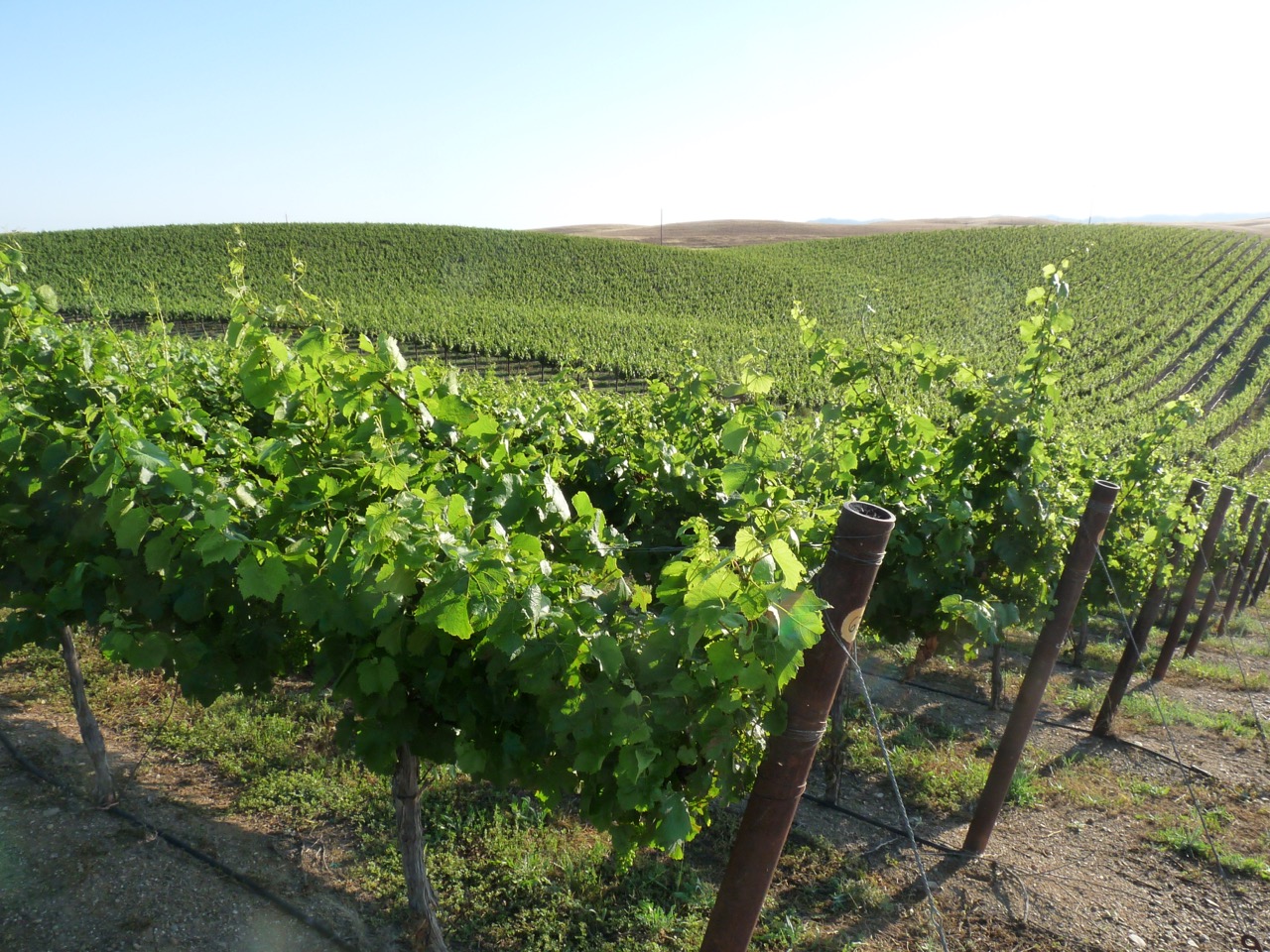
California grapevine rootstock

California grapevine

Ken Freeze is the outreach coordinator for the California Department of Food and Agriculture (CDFA) Pierce’s Disease Glassy-winged Sharpshooter Board (PD/GWSS) as well as an account director at Brown-Miller Communications. On behalf of the PD/GWSS Board, Freeze communicates with winegrape growers who pay the Board an assessment to conduct research. Freeze explained ongoing research and how research funds are being spent.

FIGHTING PIERCE’S DISEASE

Could introducing pectin into grapevines, help prevent that bacteria, Xylella fastidiosa, from entering the vine? Freeze said, in a recent field trial, “scientists found five different genes that when placed in a rootstock, put either a molecule or a protein up into an unmodified scion that in one way basically stops the bacteria from moving around,” he said.

“For instance, one of the genes comes from the pear,” said Freeze. “I think we’re all familiar with pectin. A lot of plants produce pectin naturally; grapevines are not one of them. By modifying a rootstock with this pear gene, when the bug comes and injects the bacteria into the plant, the pectin literally gums it up and it can’t move around.”

An unmodified plant injected with bacteria by the glassy-winged sharpshooter, turns to another strategy. “When the bacteria population reaches a certain point, [the plant] releases a protein that causes the bad bacteria to stop moving around. However, in grapevines, it is too late when that signal comes; the plant is already dead. By modifying the rootstock to automatically generate that same protein when the bacteria enters the plant, the bacteria shuts down,” said Freeze.

winegrapes fight Pierce's Disease

Winegrapes

Freeze said scientists are seeing that these strategies are working quite well. “What scientists are actually doing now is stacking these genes, two by two, in the rootstock. Now each root will produce two different ways to shut down the bacteria. If for some reason in the future the bacteria figures out a way to overcome one of those ways, chances are it won’t figure out how to overcome both of them.”

PREVENTING PIERCE’S DISEASE

Dr. Andy Walker, a UC Davis professor and geneticist in the Department of Viticulture and Enology, has been working for years on rootstock that could block Pierce’s Disease from entering the vine. “He’s already released 14 different varieties to the Foundation Plant Services as well as three different rootstock that are resistant to Pierce’s Disease,” said Freeze. “The best varieties will be released to nurseries probably next year. Then from there [nurseries will] basically start growing them and taking orders from winegrowers.”

Freeze noted that other field trials are continuing. “We have field trials for a benign strain of Pierce’s Disease. It is like giving plants a smallpox vaccination, only it is the bacteria. That is on its way to commercialization. In the future, you might actually order your new vines from the nursery pre-infected with the bacteria that would normally cause [Pierce’s Disease]. But in this case, it will not cause it,” said Freeze.


CDFA Pierce’s Disease Glassy-winged Sharpshooter Board (PD/GWSS)

CDFA Pierce’s Disease Glassy-winged Sharpshooter Board (PD/GWSS) Interactive Forum

CDFA Pierce’s Disease Control Program

UC Davis Department of Viticulture and Enology

UC Davis Foundation Plant Services

2021-05-12T11:02:00-07:00December 2nd, 2016|

Early Rain Caused Concern for Butte County Rice Growers

Butte County Rice Growers Respond to Early Rain


By Brian German, Associate Broadcaster


The Butte County Farm Bureau has been working to protect agriculture’s interests since 1917, thanks in large part to the continued hard work of their members. With continued support, the Bureau is able to advocate for growers on important issues in the community and fund educational opportunities.

Colleen Cecil, executive director of the Bureau, observed the rice harvest looks strong for Butte County rice growers, but a weather-related issue caused a bit of a problem during harvest. “We had some wet weather and then we had a break. Then it was, ‘Hurry up and get it done before the next storm comes in,’” said Cecil.

While the weather was an issue for growers, its impact was minimal. “There was a percentage, somewhere in the teens likely, of rice that was still left out in the field after the last wet weather event [in which] we just got pounded with rain,” Cecil noted.

“Water shortages over the past couple of years had forced many rice growers in Northern California to cut back on overall production. However earlier this year, as a result of improved rainfall last winter, growers went back to planting a more average level of rice. Those fields that had been taken out of production had a good amount of rest, and are now producing nicely once again.”

Though not uncommon, growers may have adjusted their harvest schedule in response to the early winter rain. “While it does happen on occasion, it is not ideal for farmers to harvest rice after wet weather all the time. It goes more slowly, it becomes a little messier, and it requires a transition from tires to tracks on their harvesting equipment. Again, it slows it down,” Cecil said.

“In 2013, the average rice grower in Butte County was producing just under 90 sacks per acre, with each sack weighing the [approximately] 100 pounds. Butte County has close to 88 thousand bearing acres of rice. While the local industry remains strong, early rainy weather can put a dent in production.”

Cecil explained, “It wasn’t that they couldn’t get [the rice] out, it was that the crop wasn’t ready to come out. There was still a tremendous amount of moisture in it and it wasn’t at the right percentage of moisture to take out of the field, so they had to wait.”

Last year’s crop report shows that Butte County’s five most valuable crops were walnuts, almonds, rice, prunes and peaches. The area’s walnut crop alone was valued at just under $241 million dollars. Cecil said this year’s harvest, “the almonds came off without a hitch. The walnuts got tagged at the end with the wet weather, but I don’t think it slowed everybody down,” Cecil said.


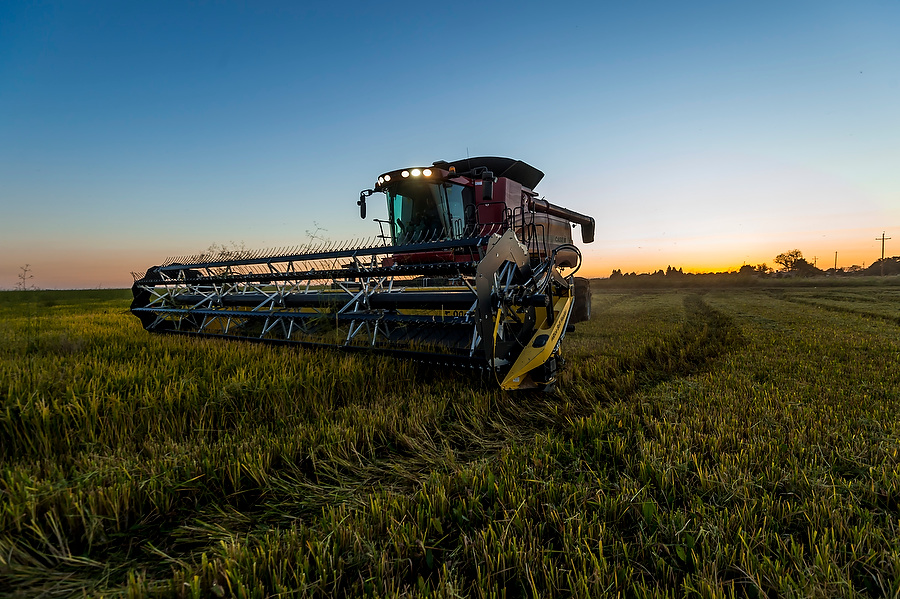
Featured Photo: Richard and Laurel Nelson’s Farm, Twin Creek Ranch, on Pleasant Grove Road and Marcum, Thursday, September 29, 2016.
Photo Courtesy of California Rice Commission/Brian Baer Photography

Butte County Rice Growers Association (BUCRA)

2016-12-01T12:56:49-08:00December 1st, 2016|

Safe Food Alliance Helps Farmers Cope with MRL Disharmony

California Farmers Cope with MRL Disharmony


By Patrick Cavanaugh, Farm News Director


California farmers are careful with crop protection products because they know the importance of producing safe and wholesome food for their customers across the nation and in their export markets. “However, I think that there are some real challenges facing growers in California today,” said Thomas Jones, senior analytical services director for the Fresno-based Safe Food Alliance.

“As growers send their commodities around the world, they’re facing increasing challenges of knowing the right chemicals to apply and at what levels. We have our own strict regulations within California, if needed, [that govern] not only the application but also the maximum residue levels (MRL) or tolerances allowed for various crops,” said Jones.

Thomas Jones, senior analytical services director, Safe Food Alliance, MRL Disharmony

Thomas Jones, senior analytical services director, Safe Food Alliance

“That’s also carried onto the federal level; we have very strict EPA regulations. But as we [export] into other countries, they may have entirely different regulations,” said Jones. He noted this could be confusing not only to farmers, but also to registrants of crop protection materials because there is a lack of standardization of MRLs in different countries.

“Historically, there was the CODEX system, a UN-based system geared towards a more international standard for pesticide residues. It was very thought out, and very scientifically based,” Jones said.

However, as Jones explained, many countries do not want to follow the important scientific standard. “Increasingly, we are seeing countries want to establish their own systems, their own tolerances. They may be responding to their own political pressures within their countries.”

“We are seeing a process called ‘deharmonization’ in which every country wants to establish its own positive list of what is allowed and what is not allowed in [farm] products. Sometimes, those are in agreement with U.S. regulations and California state regulations; sometimes they are not. So it is important that [our] growers know not only what is legal in this country and in our state, but also what is allowed in their target [export] markets.”

Jones commented it is now known that some of these marketers [apply] random low MRLs and keep other MRLs high on some of their own products in order to get a marketing edge. “Some of those MRLs may or may not be based on any scientific standards.”

“There are a number of great tools out there,” he said. “There are a number of great software programs. Obviously, anything that [information growers] can get out of the print media or any educational courses are really essential. It is important to work with your Pest Control Adviser (PCA), as well. It’s important that [farmers] know what they are up against, as far as growing these crops,” said Jones.

The Safe Food Alliance is available to growers to help them qualify to meet the standards in the U.S. and abroad. “We [provide] training twice a year on fumigation safety for the various processors of dried fruits and tree nuts. We focus particularly on commodity fumigations and on what treatments are allowed and not allowed. We also have a full-service pesticide-testing laboratory and are very aware of the requirements in these other countries, so we’re happy to help both processors and growers with our monitoring efforts,” noted Jones.


Featured Photo: For these California-grown peaches to be shippable to any out-of-state U.S. consumers or international export markets, they must meet scientific Maximum Residue Levels (MRLs).

C O D E X  A L I M E N T A R I U S, the international food standards, guidelines and codes of practice contribute to the safety, quality and fairness of the international food trade. Begun in 1963, Codex standards are based on the best available science assisted by independent international risk assessment bodies or ad-hoc consultations organized by Food and Agricultural Organization of the United Nations (FAO) and World Health Organization (WHO). Consumers can trust the safety and quality of the food products they buy and importers can trust that the food they ordered will be in accordance with their specifications.

2021-05-12T11:05:44-07:00November 28th, 2016|

California Proudly Provides Most of Thanksgiving Feast to America

Enjoy Your Thanksgiving Feast

From California’s Farms to Your Table


By Patrick Cavanaugh, Farm News Director


Turkeys come from several areas of the state, and while California is ranked No. 7 in turkey production, we do supply most of the western United States.

The famous Mrs. Cubbison’s dressing comes from Sophie Cubbison, a California entrepreneur who was born in 1890 in the San Marcos area of San Diego County. A longer fascinating story made short: In May 1920, she graduated from California Polytechnical University with a degree in Home Economics. In 1948, she added seasoning to broken pieces of the popular Melba toast to make stuffing. A factory in Commerce, California churns it out this time of year.

Farmers and farmworkers in California produce almonds, raisins, walnuts, prunes, pistachios, figs and dates, apricots, pumpkins, pecans and pomegranates. . . right on up the food line.

These are all part of the American Thanksgiving feast.

Celery from the Oxnard and Ventura area, and the rest of the ingredients for the stuffing mix, plus carrots, lots of crisp lettuce and fresh spinach from Salinas — all these greens waiting for you, already washed and bagged in the produce department. The green beans in your casserole come from California growers.

You’ve got oranges and kiwi fruit, table grapes, strawberries, raspberries freshly harvested from the Salinas and the San Joaquin Valleys. You’ve got sweet potatoes from Merced County — this is their pinnacle season. You’ve got all kinds, colors and sizes of potatoes and tomatoes, plus parsley, onions and garlic. . .  all grown in California.

Practically all the fruits, vegetables and nuts make America’s Thanksgiving celebrations festive, and nearly all of them come from California.

And don’t forget about the great variety of California winegrapes cultivated by California growers and then crafted with great care into great California vintage.

Wait! We grow firm, juicy apples and those small round watermelons that are a great snack or accent to a flavorful dessert fruit salad. And besides poultry, we even have California lamb, beef, rice or pasta—if you want to go that way.

Of course, you’ve got Martinelli’s sparkling apple or grape cider from Watsonville, near the Monterey Bay area. Local growers provide the tree-ripened fruit to the award-winning company, which is still family-owned and is run by the founder’s grandson and great-grandson.

At more than 140 years old, Martinelli’s is merely one century younger than our nation. In fact, the company received a first place award at the California State Fair in 1890.

By the way, do you know that little pop-up turkey timer that indicates when the turkey has reached the correct internal temperature? Food public relations genius Leo Pearlstein¹, along with a turkey producer from Turlock, invented that gizmo. Pearlstein, who handled the promotions for the California Turkey Advisory Board, was contemplating the enduring Thanksgiving conundrum—how long to cook the turkey and how to figure out when it is done?

Pearlstein said he and the turkey rancher were sitting in Pearlstein’s test kitchen mulling over ways consumers could determine when the turkey was done. They noticed the fire sprinkler system overhead. When the kitchen gets too hot, the fire sprinkler turns on. A metal alloy in the sprinkler is activated or melted when subjected to the high temperature of a fire in the room (185 degrees Fahrenheit). They applied that concept to the pop-up timer.

Officially, the National Turkey Federation advises consumers also use a conventional meat thermometer to verify that the cooked turkey’s internal temperature reaches:

165 degrees F to 170 degrees F in the breast or
175 degrees F to 180 degrees F in the thigh and
165 degrees F in the center of the stuffing
.

Except for cranberries, it is really a California Thanksgiving.


¹Leo Pearlstein is founder and president of Lee & Associates, Inc., a full-service public relations and advertising firm, which he opened in 1950. According to the company website, he currently runs the company with his partners, two of his sons, Howard and Frank Pearlstein. He is also founder and director of Western Research Kitchens, the food and beverage division of his agencyHe is considered a pioneer food consultant and his agency was recently named as one of the top agencies in the country that specializes in food and beverage clients.

For more food safety guidelines, the United States Department of Agriculture (USDA) Food Safety and Inspection Service (FSIS) provides this portal.

2021-05-12T11:17:11-07:00November 23rd, 2016|

Gary Schulz Gives California Citrus ACP and HLB Update

California Citrus ACP and HLB Update from Gary Schulz

By Brian German, Associate Broadcaster


The Citrus Research Board (CRB) recently held their annual California Citrus Conference in Exeter, bringing together a variety of guest speakers and research presentations. The Conference focused on pressing Asian Citrus Psyllid (ACP) and Huanglongbing (HLB) issues, along with political action updates and current projects that are important to the citrus industry. Gary Schulz, president of the CRB, said “We have a 21-member board and we’ve been planning this event for the last 12 months. It’s been 4 years since we held the last conference,” noted Schulz.

Gary Schulz, president, Citrus Research Board

Gary Schulz, president, Citrus Research Board

The CRB is responsible for overseeing the California Citrus Research Program (CCRP), a grower-funded and grower-directed program created in 1968 under the California Marketing Act. The CCRP’s purpose to enable California’s citrus producers to sponsor and support research that furthers the overall industry. Therefore, close to 70 percent of the CRB’s overall budget is allocated to research.

Schulz said the Conference “was a great, great day to have a good update on some of the dollars the Citrus Research Board has been spending on the growers’ behalf on research.” Schulz explained HLB represents the single greatest threat that citrus growers have faced worldwide.

For the past seven years, the USDA and Congress have allocated between $10 and $12 million dollars annually for ACP and HLB research operations.  Advocacy groups and other supportive ag organizations have contributed the difference to reach an annual ACP and HLB research budget of close to $90 million dollars a year. We fund a lot of UC Riverside and USDA agricultural research, service researchers, plus research at UC Davis and the University of Arizona,” Schulz noted.

Schulz, who has many years of experience in California agriculture, having served as general manager of the Raisin Administrative Committee and CEO of the California Raisin Marketing Board, stated that CRB has a great working relationship with California Citrus Mutual (CCM). “Joel Nelson and CCM have worked very hard with the packers to assess themselves, put together a private foundation, and work with the university,” Schulz said.

Featured Photo:  Adult Asian Citrus Psyllid (Source: The Citrus Pest & Disease Prevention Program)


Resources

California Marketing Act

Citrus Research Board (CRB)

California Citrus Mutual

2021-05-12T11:05:44-07:00November 18th, 2016|

Interesting Forecast: Wetter Winter, with Possible Deep Frost?

Weather Pattern in California Could Hurt Citrus, Predictions Say

By Patrick Cavanaugh, Farm News Director


Some meteorologists are seeing evidence of  weather data on the North Pole that could point to more rain and snow this winter. However it could come with several freeze events, which could hurt crops, especially citrus.

The Global Forecast Center is a group of meteorologists in Northern Idaho that conducts weather forecasting for agricultural interests throughout  Florida, California and portions of Texas. In fact, they work closely with California Citrus Mutual.

Tom Dunklee, president and chief atmospheric scientist, Global Forecast Center and its associated “WeatherWatch” service, said, “What we see in our frost outlook is a cold year coming up and a bit of an increase in rainfall, which will make everybody happy. But we may have to pay the price with some very cold temperatures following these fronts.”

meteorologist Tom Dunklee of the Global Forecast Center

Tom Dunklee, president and chief atmospheric scientist, Global Forecast Center

“The rains may be more frequent, but they will not be real big rain producers. They won’t be like El Niño years, where you get an inch and a half of rain or more. They will be cold, wet weather systems that come through, one half inch of rain at a time, followed by a possibility of frost,” Dunklee said.

Dunklee predicts the rain events may be followed by some dry weather for three or four days, then by another front coming through, doing the same thing. “What we are seeing is the type of weather pattern we saw in the late 1960s. It’s been quite a while since we’ve had one of these years shape up,” he said.

“I don’t think we are going to have a “Miracle March.” Instead, we are going to have a warm and drier than average spring. Most of the moisture is going to come in December, January and February, comprising those frequent frontal systems. Most of them will be followed by cool air and showery weather. Then the weather will dry out for three or four days, and the wet weather will return.”

Dunklee spoke of the intrusions of the cold arctic air that could arrive. “We think the intrusions will be from the North and Northeast—from Montana coming down through Nevada, then through the San Joaquin river drainage bringing quite a bit of cold air filtering into the [Central] Valley, and we’ll get the possibility of a hard frost, and maybe a freeze sometime in late December,” Dunklee said.

Dunklee also spoke about an increase in snowpack. “At the 7,000 foot level this year we may see higher than average, about 120% to 130% of average snow fall. It will be on the average of about six or seven feet. It may not actually get that deep at one time, but the potential is there for that,” he said.

“Most of the time it’s going to be about two, three feet of snowfall during the real cold months. Then in the spring it will melt fairly quickly, but it potentially is  going to be a good snow pack, a little bit higher than average,” Dunklee said.

2016-12-12T09:19:13-08:00November 14th, 2016|

US Citrus Industry Working Together on ACP, HLB Funding

Critical ACP, HLB Funding Comes Only After Industry Helps Itself

By Patrick Cavanaugh, Farm News Director


State Citrus Mutuals in California, Texas and Florida are diligently working in Washington, D.C., for $10 to 12 million in annual funding to help their citrus regions fight Asian Citrus Psyllid (ACP) infestation and Huanglongbing (HLB), the disease that ACPs vector.

The three Citrus Mutuals have collaborated well for the half dozen years of the American ACP invasion. Initially, the Florida Citrus Mutual team developed the Citrus Health Response Program (CHRP),” said Joel Nelsen, president of California Citrus Mutual.

Joel Nelsen, president of California Citrus Mutual, acp and hlb funding

Joel Nelsen, president of California Citrus Mutual

“They initiated it at a very minor funding level. However we sat down with them and said, ‘Look, this is an opportunity to ensure that all of the U.S. citrus industry can work together to protect itself from Huanglongbing.’ They were gracious enough to say okay. We exerted our leadership because we had people in positions in Washington who could be very beneficial to this,” Nelsen said.

“Initially it was a Florida/California effort. We said we need to double the size of the CHRP program and allocate more dollars to California, some to Texas, and some to Arizona. Now everybody is participating to the extent that they can. Today, it is still a Florida/California effort and a Florida/California-run program in partnership with USDA.

Nelsen said those involved are working hard to protect the citrus industry, and not just chasing a problem. Funding has been helpful to California. Only after the industry does all it can, will the state expect the federal government to help.

“It’s true for all three states’ industries,” Nelsen said. Unfortunately, Texas made a mistake. They did not have a policy in place to immediately remove an HLB-infected tree. As a result, they have an HLB infection spreading.”

“Texas is being adversely impacted on the dollar level. We don’t want to see that industry die, so there is a partnership that does exist on behalf of our colleagues,” Nelsen said. “We can’t afford to make mistakes like that.”

“In order to justify the continued progress of funding on an annual basis we are going to have to continue looking ahead, taking the steps necessary and doing what is needed to protect the citrus industry from the spread of Asian Citrus Psyllid and Huanglongbing.”

“We definitely have to show progress. We can’t ask homeowners to spray their trees if in fact we are not spraying ours. We can’t ask the federal government to continue helping us looking for ACPs if we are not willing to tarp our trucks to stop the spread of it. If we’re not willing to do a coordinated spray program then why should the government help us in finding HLB? If we are allowing snake oil merchants to conduct research projects, why should the federal government fund those?

2021-05-12T11:05:44-07:00November 9th, 2016|

Nov 9 Annual Ag Awards Luncheon Honors Manuel Cunha, Booth Ranches

Manuel Cunha, Agriculturist of the Year

By Laurie Greene, Editor


On Wednesday afternoon, November 9, the Who’s Who of Agriculture will gather at the long-standing celebratory Annual Ag Awards Luncheon in Valdez Hall at the Fresno Convention Center to commemorate the achievements of an individual and a company in the County’s agricultural industry.


Fresno Chamber of Commerce logoNathan Ahle, president and CEO of the Fresno Chamber of Commerce, said, “We are very excited about this. This is the 33rd time the Fresno Chamber has presented the Agriculturist of the Year Award, and the 21st time the Fresno-based CPA firm Baker, Peterson and Franklin has presented the Ag Business of the Year Award. We recognize that Ag is really the life-blood of our economy. This event is an honor to do and something we take great pride in.”


This year’s Agriculturist of the Year Award recipient is Manuel Cunha, president of the Fresno-based Nisei Farmers League. “Everybody knows Manuel Cunha—a legend in Valley Ag as president of the Nisei Farmers League for two decades,” Ahle said. “ This gentleman is a force to be recognized with when it comes to fighting for our farmers, fighting for water, fighting for anything and everything that has to do with agriculture in the Central Valley.”

2016 Fresno Chamber of Commerce Agriculturist of the Year recipient, Manuel Cunha, president, Nisei Farmers League.

2016 Fresno Chamber of Commerce Agriculturist of the Year recipient, Manuel Cunha, president, Nisei Farmers League.


Nisei Farmers League, established in 1971, informs grower members about ever-changing regulations and policies and provides legal assistance for labor and workplace-related issues. The league’s leadership and staff maintain a close working relationship with local, state and federal agencies and legislators to assure grower interests are adequately understood and defended.


The League also collaborates with other grower and agricultural organizations in California and other states to help provide a powerful and unified voice for the agricultural community.  The Nisei Farmers League is all about strength, clear focus and growers looking out for growers and farmworkers.


This year’s Ag Business Award recipient, Booth Ranches, is a premium San Joaquin Valley citrus grower. Otis Booth, Jr. founded Booth Ranches in 1957 on 40 acres by the foothills of the Sierra Nevada Range near Orange Cove.

booth ranches logo


Today, Booth Ranches is still family owned and operated on acreage from Orange Cove in the Northern San Joaquin Valley to Maricopa in Kern County to the South. Pasadena-born, fifth-generation farmer Loren Booth currently manages Booth Ranches which boasts premium Navel oranges, Valencia oranges, Cara-Caras, Minneolas and W. Murcott Mandarins that are distributed worldwide.


The selection panel went through a tough selection process, according to Ahle. “Those who have been in the Valley longer than I have tell me this is the strongest group of candidates for the award that we have ever had. I think it just speaks to the great passion that we have for Ag in this community, and Manuel Cunha and the team at Booth Ranches are great, great recipients.”

2016-11-10T10:50:56-08:00November 7th, 2016|

Clinton’s Backdoor UFW Endorsement Deal Trumps Farmworkers’ Rights

Assemblyman Patterson Comments on Clinton’s UFW Endorsement vs. Farmworkers’ Rights


By Laurie Greene, Editor


As reported in, “Leaked Clinton emails include pledge to help UFW in fight with Gerawan Farming,” published by the Fresno Bee last Friday, presidential candidate Hillary Clinton, traded support for the United Farm Workers Union (UFW) endorsement and then conspired to undermine Fresno County-based Gerawan Farming and its farmworkers’ rights.

Jim Patterson

Assemblyman Jim Patterson (R-Fresno)


Assemblyman Jim Patterson (R-Fresno) has been supportive of the constitutional rights of farmworkers at Gerawan Farming whose votes cast in a sanctioned 2013 election to decertify UFW representation have never been counted. Under the jurisdiction of the California Agricultural Labor Relations Board (ALRB), the ballots were collected, sealed, and locked away. To date, election results and the location of the ballots are unknown.


In an exclusive interview, Assemblyman Patterson stated:

I think it’s the height of hypocrisy when a candidate for president of the United States goes behind closed doors and makes a backroom deal with an institution that is trying to deny the very privilege of having a free election to decide whether or not [farmworkers] want to be a part of the UFW.

Not supporting or recognizing the Gerawan workers’ right to an election to determine their own future—how they wish to organize, how they wish to value their labor and how they wish to conduct the relationship with their employer through elections—is to me, a slap in the face of the electoral process, of the fundamental constitutional right of everyone to be able to vote and to have a say in their labor and in their future.

alrb_ufw_fwr_logo_frIt also demonstrates just how deep and wide this intertwining web of deceitfulness really is. Of all things, for the democratic nominee for President of the United States to make a deal over something that is happening in Central California, with 3,000 workers who decided that they wanted to have elections?”

After the election, the ALRB took and hid the ballots. The ballots were never counted. Election results were never announced. The election was not the expression of individual farmworkers exercising their right to vote, but considered [by the ALRB] an unfair labor practice.

 [The Democratic nominee] decided to make a deal with the UFW over this. It tells me in no uncertain terms that the revolution that is happening with Silvia Lopez and the Gerawan workers—the independence, the thinking for themselves, the willingness to chart their own course with their employer—is frightening the UFW and the ALRB to its foundations.

To the degree that [the UFW] would literally go into a back room and get a pledge from the democratic nominee. . . Notwithstanding the facts—information about the election, the efforts of the ALRB and UFW to suppress [decertification] elections, and their choices for making decisions themselves. . . but to just simply decide to go low . . . and in this instance, go so low that she would be making a deal to abridgedestroythe fundamental right of an election. That is just unconscionable.

2017-05-10T16:28:50-07:00October 18th, 2016|
Go to Top