Citrus Psyllid Control Strategy Changes

Reducing Sprays in Areas, and Border Nets

By Jessica Theisman, Associate Editor
beth_grafton-cardwell

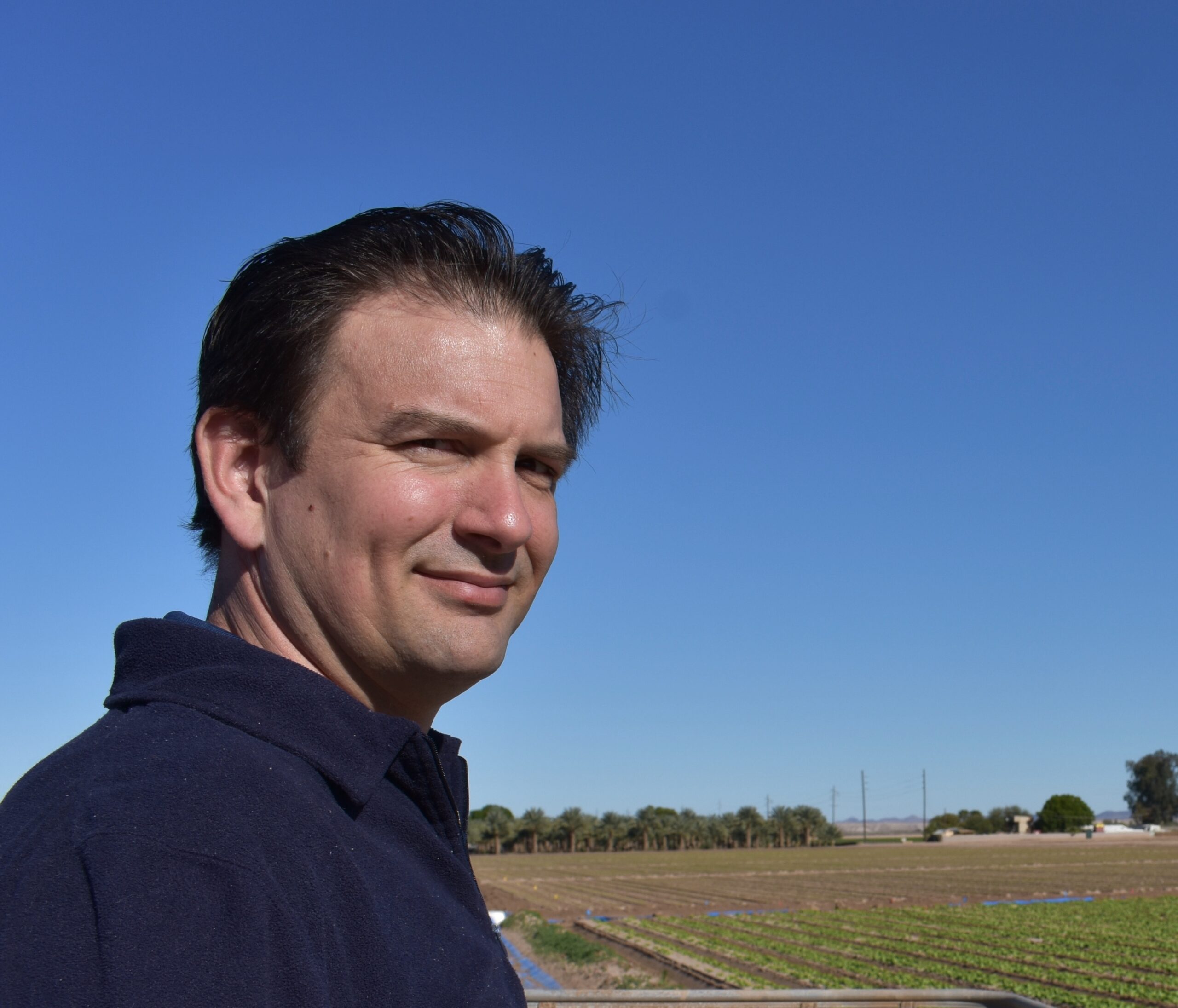
Entomologist Beth Grafton-Cardwell

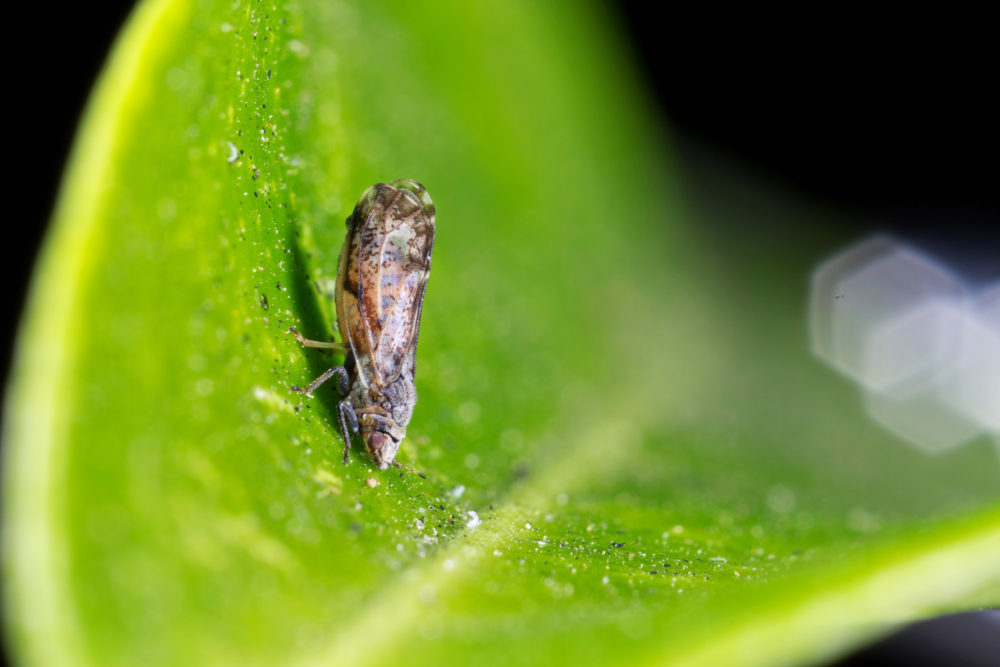
Huanglongbing, vectored by the Asian Citrus Psyllid, (ACP) is the dreaded disease that has nearly wiped out the Florida citrus industry and is a potential problem for citrus growers in California. California Ag Today recently met with Beth Grafton-Cardwell, a UC Cooperative Extension Specialist. She specializes in integrated pest management; she discussed new strategies for the control of HLB.

“We have been surveying grower orchards in southern California and following how pesticide sprays are working, and I’m going to make some new recommendations on how to handle the populations down there,” said Grafton-Cardwell, who is also the director of the Lindcove Research and Extension Center. “Some regions of Southern California are easier to control psyllids than others. The pesticide treatment is less intensive due to the desert climate. San Diego is one of the areas that is less intensive due to the drier trees making them more hardened off, with less new flushes, where ACP is attracted.”

“There are other areas of southern California where the trees flush continually, providing great places for the psyllids to lay eggs, and that is where treatments are going to have to intensify,” she explained.

Areas such as Ventura, Riverside, and San Bernardino have to increase their treatments in the fall for better control.

And researchers are currently studying new prevention and control methods.

“Texas A & M has been looking at erecting net-like borders around the orchards because the psyllid tends to go to the edges,” Grafton-Cardwell said.

They want to treat the netting with yellow strips of sticky paper that would attract and/or apply insecticides to kill the psyllid.

“Our research is showing that often the infestation starts on the borders. Growers may have to intensify the number of treatments, but they don’t have to treat the entire orchard,” Grafton-Cardwell said. “Growers might be able to fight the psyllid with only treating the trees on the outer edges.”

2021-05-12T11:05:12-07:00May 10th, 2018|

Additional Chinese Tariff on Ag is Disruptive

Growers Concerned Over Added Tariff into China

By Patrick Cavanaugh, Editor

Trade to China is so important to California, and for that reason, the 15 percent added Chinese tariff on ag products is devastating. It’s due to the retaliation of the Trump administration tariff, which he put on steel and aluminum exported by China.

Jeff Colombini with Lodi Farming Co.

It’s worrisome for growers such as Jeff Colombini, the president of Lodi Farming, with partners that grow cherries, apples, walnuts, and olives. He noted that apples and walnuts are an essential crop to China and he’s concerned.

“Trade is significant to the apple crop for California apples, but particularly for Washington state. Apples in Washington state is the largest producer of apples. They export greater than 25 percent of their crop,” Colombini said.

“Both China and Mexico take apple varieties that have fallen out of favor for U.S. consumers. So really, it’s a match made in heaven,” he said.

Colombini said growers have made decisions over the last 10 to 15 years on planting orchards based on these growing export markets.

“Then when the markets slam shut, what do we do with all this excess production/ This becomes disruptive to the markets … not to mention it significantly affects the farmer’s bottom line,” he explained.

Colombini said apples require a lot of labor—a big economic boost to many communities—and disruption in getting that crop to China is not good.

There’s a lot of people employed in the apple industry throughout the United States, and so a trade war can have a significant impact on many thousands of families.

Colombini said it took many years to get that China market open, and when it finally got opened in 2015, it has grown to be their sixth largest export market.

“Similarly, the export disruptions for walnuts is extremely concerning to that industry,” he said.

2018-05-04T14:42:44-07:00May 4th, 2018|

15 Percent Chinese Tariff will Harm Farmers

CCM President Issues Statement Regarding Chinese Tariff Announcement

News Release from California Citrus Mutual

While the proposed 15% Chinese tariff increase will affect all fruits, nuts and vegetables shipped to China, California Citrus Mutual (CCM) President Joel Nelsen issued the following statement regarding the tariff increase on  California citrus as a retaliatory counter to President Donald Trump’s new tariffs on steel and aluminum:

The decision by the Chinese government to levy exorbitant tariff increases on U.S. produce will surely have a direct impact on California citrus producers. Maintaining access to foreign markets and having the ability to compete in a global market place are critical to the success of the citrus industry.

The retaliatory tariffs imposed by China hinders our ability to be competitive by increasing costs for Chinese consumers, an important market for California citrus. Family farmers in our industry will suffer from the economic fallout unless we can find alternative markets for California’s While our Administration focuses on those business sectors requiring attention, the Chinese Administration has chosen to expand the discussion to include the agricultural industry. In fact, the Chinese indicated last week in a statement that constructive talks could alleviate the real issues, yet insufficient time was given to accomplish that objective. Now Chinese consumers and California citrus producers are innocent parties to a trade debate.

Nelsen, CCM Executive Vice President Casey Creamer, and Board Chairman Curt Holmes have traveled to Washington, D.C. recently for meetings with Congress and the Administration regarding trade and other important issues affecting the California citrus industry.

2018-04-04T17:00:22-07:00April 4th, 2018|

Relentless Search for ACP and HLB Trees

Intense Inspections of Urban Citrus Trees Continue

By Patrick Cavanaugh, Editor

Joel Nelsen is president and CEO of California Citrus Mutual, based in Exeter. He told California Ag Today recently that there is an “active plan to look for trees harboring Asian Citrus Psyllids (ACP) infected Huanglongbing (HLB) trees in urban areas because we’re looking for nobody else across this country, let alone in the southern hemisphere, to look for infected trees in the urban area. Mexico and Brazil didn’t do it. We’re doing it.”

Huanglongbing

Joel Nelsen

The hope is that they find HLB and stop it there.

“Commercial growers are under tight testing programs to combat the Asian Citrus Psyllid. As far as it relates to commercial growers, we’re doing enough trapping that we’re not finding what we call hot spots of Asian Citrus Psyllids,” Nelsen said. “Secondarily and most importantly, we have a very strict clonal protection program, so growers are only allowed to access trees after they’ve gone through a rigorous testing program at both the nursery and the rootstock from the university.”

Nelsen said that the chances of a grower introducing the insect into an area is rather slim; it’s more often likely that the disease will be introduced to a grove.

Testing is random and more lab space is needed.

“Most of it’s been random because it is an intensive program. We’re analyzing roughly 20,000 leaves and twigs every month,” Nelsen explained. “We’re analyzing several thousand ACP every month. In fact, our lab capacity is capped, and one of the discussions that we’re having is to identify what labs can do what and whether or not we need to expand the number of labs doing business.”

“So we are looking at additional lab space, and in fact, we have already contracted with the University of Arizona Lab in Tucson  and maybe we’ll consider using private labs to do the initial work,” Nelsen said. “Now, they’re not going to be able to confirm whether or not an ACP is there, but they go in and evaluate that twig or green waste waste and if in fact there is a suspicion, then you send in the California Department of Food and Agriculture folks.”

2021-05-12T11:01:55-07:00March 19th, 2018|

More Cooperation Regarding Citrus Health and HLB Disease

Citrus Health Response Program Discussed at UC Riverside

By Patrick Cavanaugh, Editor

California Ag Today recently interviewed Joel Nelsen, president and CEO of the California Citrus Mutual. He spoke on his recent trip to UC Riverside about the Citrus Health Response Program. While speaking with USDA, they discussed the game plans that will be used to battle Huanglongbing (HLB) disease, which is vectored by an invasive insect called Asian Citrus Psyllid.

“We got into it, which I thought was an interesting discussion. What would growers do if in fact HLB was discovered in a grower’s orchard and what would the be obligated to do,” Nelsen said.

“And what came out of that discussion is that we are going to work with the USDA. We’re going to develop a war game scenario. We’re going to bring people into a room and start talking about it, just to see what the reactions were, and we’re going to challenge these individuals to do what needs to be done,” Nelsen explained. “We’re just going to have to figure out how best to address the industry and areas like this.”

Nelsen said that they discussed whether or not there was enough being done in that partnership with the homeowner. “We came to the conclusion that no, quite frankly the industry has been carrying that ball and that USDA and CDFA can do a little bit more in their role as government”

Tree removal and beneficial insects were also discussed.

“We talked about the continued trees being removed, and everybody was satisfied about that. We talked about whether or not beneficial insects can help in this situation. Surprisingly, the answer was pretty much no,” Nelsen explained. “Beneficial releases may help in an urban environment to a small extent, but from a commercial standpoint, it doesn’t help. So there were a lot of discussions, some debate, and most of all, some camaraderie that was developed as far as going forward.”

Nearly 400 trees in front and back yards of homes have been destroyed due to testing positive to HLB disease.

“They’re all in a clearly defined geographical area in Southern California,” Nelsen said. “So what we have is a lot of backyard adventures that bring in rootstock that unfortunately was diseased, and as a result of that, those individuals are the ones that are seeing problems associated with their own trees.”

2021-05-12T11:01:56-07:00March 15th, 2018|

Pedestrian Orchards Will Reduce Injuries

Pedestrian Orchards in the Making

By Jessica Theisman, Associate Editor

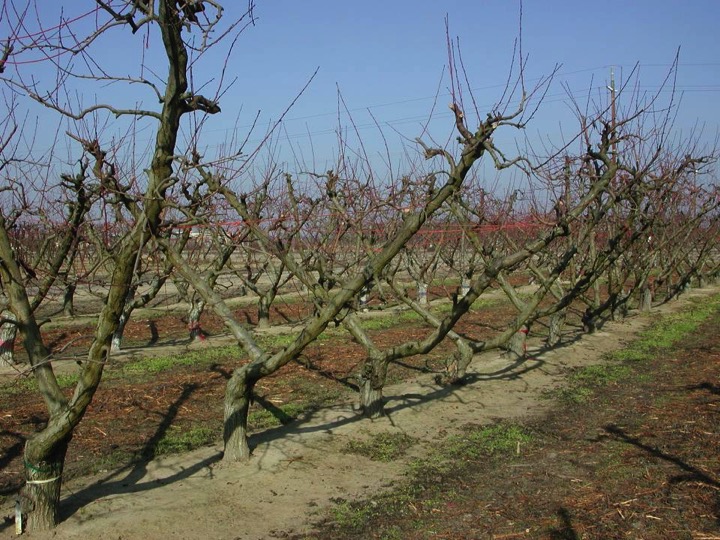
California Ag Today recently spoke with Becky Phene with the University of California out of the Kearney ag center. She’s working alongside Kevin Day, UC tree fruit advisor in Tulare County, on development of pedestrian orchards.

“My background is irrigation. I got asked to participate in the pedestrian orchard with Kevin because he wanted to demonstrate multiple technologies that would be beneficial not just now, but in the future,” Phene said.

Day has combined his pedestrian orchard with subsurface drip irrigation. The pedestrian orchards are by design kept short so that there is no usage of ladders. Eliminating the usage of ladders can help prevent on the job accidents.

“The pruning lets the tree grow quickly and fill in as quickly as possible in the first couple of years, and then he develops the shape of the canopy and the shape of the leaders,” Phene said.

Photo by Kevin Day, UCANR Cooperative Extension Farm Advisor, based in Tulare County.

2021-05-12T11:05:13-07:00March 14th, 2018|

Freeze Damage Could Be Wide Spread

Deep Freeze May Have Caused Significant Damage to Almonds, Tree Fruit

By Patrick Cavanaugh, Farm News Director

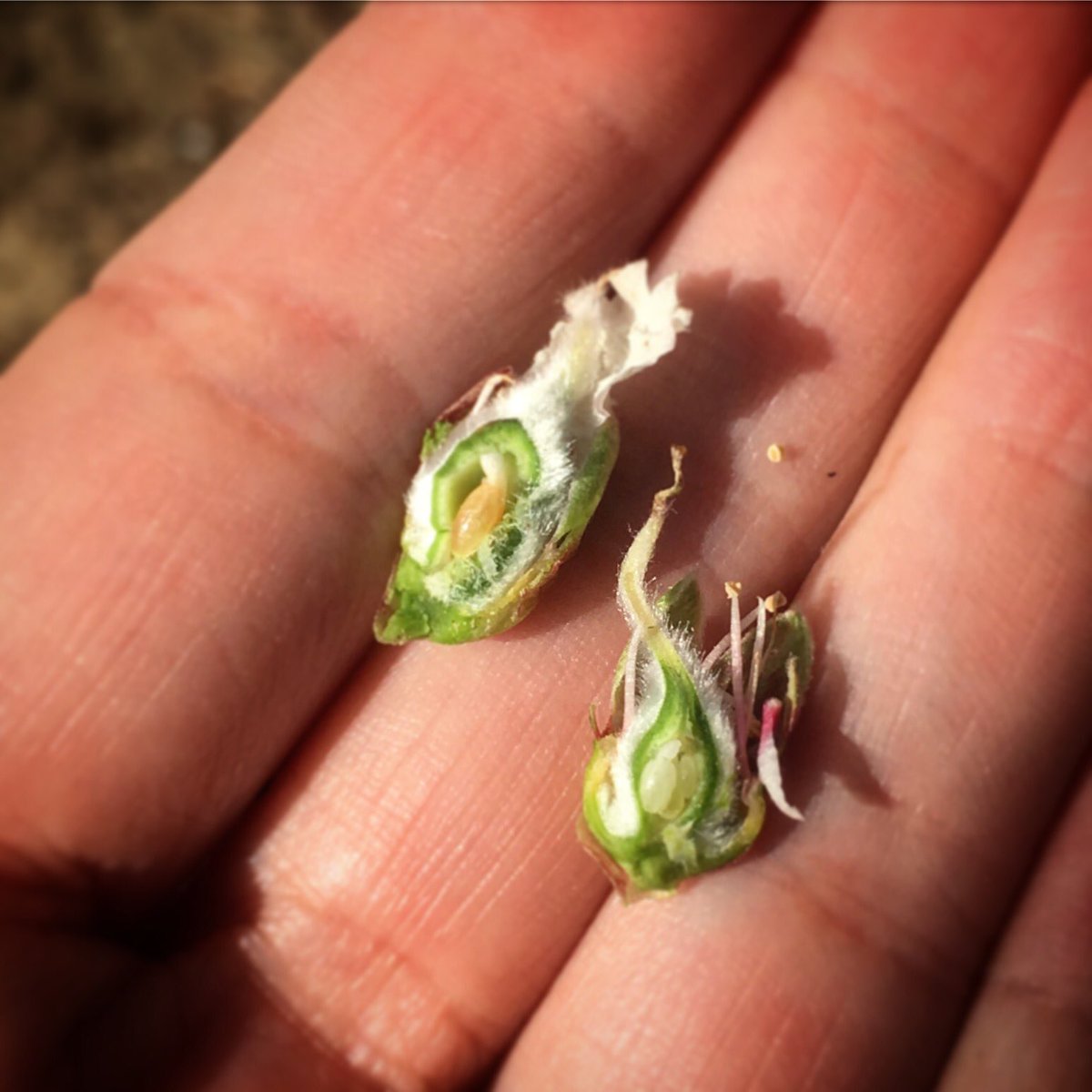
Editor’s note: Photo shows freeze damage to almonds ovule. On right is healthy ovule. On left, ovule died due to deep freeze. (Photo: Kern County Farm Bureau.)

While possible  freeze damage is still being calculated, we know that many areas of almonds and tree fruit have been damaged from recent hard freeze across the state, with temperatures as low as 23 degrees.

Daniel Jackson of Family Tree Farms, based in Reedley, reported that at least one block of peaches on sandy ground was lost.

“The sandy ground could not hold water to protect the roots from the freeze,” he said.

Jackson explained that the five-generation operation is waiting to see if more damage was suffered by the trees.

Significant almond damage could be widespread as the freezing temperatures struck the trees in full bloom.  If there is significant losses, it could result in higher almond prices around the world.

A report from Joel Nelsen, President 0f California Citrus Mutual, based in Exeter, noted no damage to the state’s citrus crops.

With California growers, ranchers, producers, and rural landowners experiencing recent freezing temperatures sweeping the state, the U.S. Department of Agriculture has multiple agencies that provide financial and/ or technical assistance to recover from natural disasters, such as freeze.

Listed below is an overview of applicable programs provided by the Farm Service Agency (FSA).

  • Tree Assistance Program: Provides financial assistance to replant or rehabilitate eligible trees, bushes and vines damaged by natural disasters. Forests are not eligible.
  • Non-Insured Crop Disaster Assistance Program (NAP): Provides compensation to producers who grow uninsurable crops and have purchased NAP coverage by the crop signup date.
  • For more information, visit http:// difsa.usda.gov

Please contact your local FSA County Office as soon as possible. Your local FSA specialists are available to assist you with the programs listed above and more.


2018-02-26T16:44:01-08:00February 26th, 2018|

Cover Crops Help Bees and Soil

Flowering Cover Crops Stimulates Bees

By Patrick Cavanaugh, Farm News Director

California Ag Today recently interviewed Billy Synk, director of pollination programs for Project Apis m and manager of the Seeds for Bees Project. The Project Apis m mission is to fund and direct research to enhance the health and vitality of honeybee colonies while improving crop production. He spoke on the benefits of cover crops for honeybee health.

“It’s an amazing project and an exciting project to work on and manage because it’s doing two good things at once. It’s a win-win situation. It’s helping out the soil and helping out bees,” Synk said.

When Synk speaks to growers, he mentions those two good reasons.

“Do it to help the bees that are in your orchard become stronger, and do a better job pollinating, but then also help your soil with organic matter and improved water infiltration.”

There are about two million beehives, coming to California from every corner of the United States, and the bees are very hungry.

“Not only are they very hungry, they’re the hungriest they have been all year, and their most important job is to pollinate almonds. Well, if you can have a cover crop blooming before those almonds bloom, you can stimulate them a lot better and create a positive feedback loop,” Synk said.

Synk explained that as more pollen comes into the hive, they rear more bees.

“That brood has a pheromone that tell the adult bees to leave the hive and go collect pollen. That stimulation is just going to make that hive excited and strong and ready to go the day that those almonds bloom,” he said.

Contact Project Apis m for more information and to possibly get cover crop seeds to plant this season.

https://www.projectapism.org/


2021-05-12T11:05:14-07:00December 12th, 2017|

Who Safeguards California Farm Employees’ Rights? – Part 9

Court Allows UFW to Force Representation and Dues on Gerawan Employees


By Laurie Greene, Founding Editor


The California Supreme Court announced their decision on Nov. 27, 2017 in favor of forced UFW representation on Gerawan employees, thus mandating these workers pay three percent of their wages to the UFW or lose their jobs.

As background, the UFW was elected to represent Gerawan employees in 1990, but never successfully represented them in contract negotiations. Subsequently, the UFW disappeared from this farm operation for nearly two decades, so 99% of current Gerawan employees never voted for union representation; many were born after 1990. In addition, Gerawan employees have reportedly been paid the highest wages in the industry.

Gerawan Employees

Gerawan Farm Workers Protest against UFW at California Supreme Court.


Below is the transcript (in English) of the message, which was recorded in Spanish, that all Gerawan employees heard when they called in on Nov. 27, 2017 to hear their work schedules.

Hi, this is Dan Gerawan.

Unfortunately, the California Supreme Court today decided to overturn the lower court that had said you should have the right to choose whether a contract is forced on you. Instead, the California Supreme Court agreed with UFW and ALRB that you should not have the right to choose, even though you have to pay UFW.

Fortunately, today’s decision does not strip your right to decide whether the UFW can represent you. The majority of you asked for the right to make that decision, and the ALRB held a decertification election over four years ago.

Nothing in today’s court decision prevents your ballots from being counted. As you may know, the California Fifth District Court of Appeal is still going to decide whether your votes from the November 2013 election will be counted.

You are entitled to the same dignity and respect that all other workers in our state and country have, which is the right to choose who represents you.

As for today’s decision, we intend to ask the United States Supreme Court to review it.

Thank you for listening.

According to the November 27, 2017 press release posted by David A. Schwarz, legal counsel for Gerawan Farming, “We believe that coerced contracts are constitutionally at odds with free choice. The employees are entitled to the dignity and respect that they earned by giving them what is their right. A secret ballot election allows them to decide for themselves who will speak for them at the bargaining table.”


Laurie Greene Wins Journalism Award

Greene Wins Fresno County Farm Bureau Award for Series on Farm Workers’ Rights,  by Patrick Cavanaugh, Editor 


2019-12-25T15:59:00-08:00December 7th, 2017|

California Supplies Thanksgiving

California Feeds the Nation on Thanksgiving!

By Patrick Cavanaugh, Farm News Director

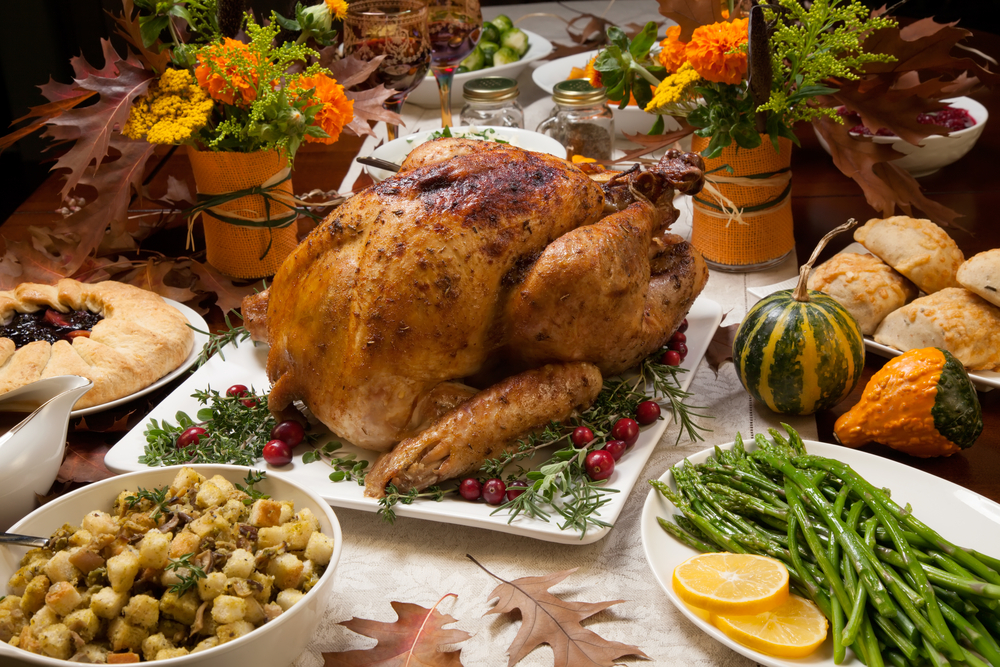
California ranks #8 in turkey production in the United States (2016), and we supply most of the western states from our poultry farms located in several areas in the state.

The famous Mrs. Cubbison’s Stuffing or “Dressing” originated from a ç, born in 1890 in the San Marcos area of San Diego County. In short, Cubbison graduated from California Polytechnical University in May 1920 with a degree in Home Economics having paid her way through school with the money she earned feeding the farm workers.

Cubbison created her popular stuffing in 1948 using broken pieces of the popular Melba toast and various seasonings. The factory in Commerce, California churns it out in mass quantities this time of year.

California farmers produce almonds, raisins, walnuts, prunes, figs, dates, apricots, pistachios, and pomegranates, right on up the food line.

These are all celebrated Thanksgiving foods.

Celery from the Oxnard and Ventura area completes the stuffing mix. Nutrient-dense carrots, lettuce and fresh spinach from Salinas now arrive, pre-washed and bagged, in your local produce department. Your Thanksgiving traditional green beans come from California growers.

An ample supply of freshly harvested oranges and kiwi fruit, table grapes, strawberries, and raspberries are shipped from many areas in the state. Seasonal features include sweet potatoes from the Merced, about an hour north of Fresno, plus all kinds and colors of potatoes and tomatoes, parsley, onions, and garlic—all crops are raised in California.

Nearly all the fruits, vegetables and nuts that are part of America’s Thanksgiving are sourced from California.

Don’t forget about the great varieties of wine grapes grown in the No. 1 agricultural state that are deftly crafted into delectable California wines.

Or the thirst-quenching Martinelli sparkling apple or grape cider from Watsonville California, near the Monterey Bay area. Local growers provide the tree-ripened fruit to the award-winning company that is still family-owned after almost 150 years and is managed by the founder’s grandson and great-grandson. Here’s something to discuss at your Thanksgiving meal:  the company won its first Gold Medal at the 1890 California State Fair in  Sacramento.

How about those heirloom and new apple varieties, plus those small round watermelons that we snack on or toss into a dessert fruit salad, topped with California pomegranate arils?

Of course, we raise poultry, and even California lamb, if you want to go that way. Here is a Did-you-know? challenge for your holiday meal:  What are the most recent Presidental Thanksgiving Turkeys from California pardoned by United States presidents? (Answers are below.)

And by the way, you know that food-safety pop-up turkey timer that indicates when the turkey has reached the correct internal temperature? Public relations genius Leo Pearlstein and a turkey producer in Turlock, a small town north of Fresno in Stanislaus County, invented this Thanksgiving fixture.

Back in the 1960s, they were sitting in a room trying to solve the undercooked poultry challenge, when they looked up and noticed ceiling fire sprinklers. The sprinklers sprayed water when the room temperature became hot enough to melt a tiny piece of metal alloy in the mechanism. This innovative team of two applied the same concept to the pop-up timer!

With the exception of cranberries, our national day of giving thanks for a bountiful harvest is really a California Thanksgiving.


Here are some friendly topics for discussion at your Thanksgiving Table:

  • What is the name of the famous Thanksgiving stuffing that originated in California?
  • What beverage company that is still operating won its first Gold Medal at the 1890 California State Fair?
  • How was the pop-up timer invented and by whom?
  • How does high does California rank in U.S. turkey production?
  • What are the most recent Presidental Thanksgiving Turkeys from California pardoned by United States presidents?

In 2010, President Obama pardoned Apple, a 45-pound turkey from Modesto, California-based Foster Farms; and alternate bird Cider. 

In 2015, President Obama pardoned Apple, a 45-pound turkey and an alternate 43-pound bird named Honest, again from Foster Farms.

The Presidential Turkey flock are Nicholas White turkeys, which originated in California’s Sonoma Valley in 1957. Today, the Nicholas White is the industry standard. (Foster Farms)

2021-05-12T11:17:10-07:00November 20th, 2017|
Go to Top