Biocontrols Conference & Expo

Biocontrols Conference & Expo, March 3-4, 2016, Monterey, California 

Learn everything you need to know about agricultural biocontrols from the experts.  


Join your peers, leading organizations and industry experts at the Biocontrols Conference & Expo for two days of hands-on education devoted solely to the use of biocontrols in agriculture presented by Meister Media Worldwide, a media solutions provider for worldwide specialized agriculture, in cooperation with the Biopesticides Industry Alliance (BPIA), and the California Association of Pest Control Advisers (CAPCA). The Biocontrols Conference offers educational sessions, continuing education credits (CEUs) for pest control advisers (PCAs), certified crop advisers (CCAs) and other state certification programs, and an expansive Expo with top suppliers of biocontrol products and related services.

New for 2016!  

Two optional, concurrent add-ons on the last afternoon of the event (additional fees may apply):

1.Tour of two leading Monterey-area specialty-crop growing operations that use biocontrols as part of their integrated pest management programs:

-Biocontrols USA Tour

-Pacific Plug and Liner,  Watsonville, CA

2.Hands-on workshop on the use of beneficial insects in a greenhouse environment

lineclear

Agenda Sampling:

-8 Tips To Get The Most Out of Your Biocontrols Program

-A look at the most common active ingredients and how to handle them to get the best results, Lance Osborn, UF IFAS

-What’s Next In Biocontrol?

-Regulatory Update, Bob McNally, EPA

-Pipeline Update – what types of new products are coming?

-The Future Isn’t Biocontrol. It’s IPM

-Understand The Value of Biopesticides – Do they Pencil Out for You?

-How To Evaluate/Field Test a New Research Biopesticide

-Biopesticides and Beneficials: Make Them Work Together, Frank Sances, Pacific Ag

-Fruit and Tree Nuts: Hands-on, How-To Topics

-Using Green Lacewings in almond and pistachio, Brad Higbee, The Wonderful Co.

-Vegetables: Hands-on, How-To TopicsMycorrhizae: Why it Makes Sense in Strawberries, Johan Pienaar, Mycorrhizal Applications.

Monterey Bay, the conference location, is in close proximity to the heart of major California specialty-crop production: vegetables, fruits, and ornamentals in Monterey County and the Salinas Valley, and affords you the opportunity to tie-in a long weekend in the Monterey Bay area.

lineclear

Meister Media Worldwide and its leading family of brands including American Vegetable Grower®, Western Fruit Grower® / American Fruit Grower® and Greenhouse Grower®, CropLife®,

lineclear

Having celebrated its 15th anniversary in September 2015, BPIA is dedicated to fostering adoption of biopesticide technology through increased awareness about their effectiveness and full range of benefits to a progressive pest management program.

lineclear

Dedicated to the professional development and enhancement of its members’ education and stewardship, the California Association of Pest Control Advisers (CAPCA) represents more than 75% of the nearly 4,000 California EPA licensed pest control advisers (PCAs) that provide pest management consultation for the production of food, fiber and ornamental industries of this state.

2021-05-12T11:05:58-07:00January 28th, 2016|

Social Media Minute—January 2016

SOCIAL MEDIA MINUTE—January 2016 Edition

Do you have a farm or ag business that’s not engaged on social media yet? We want YOU to be on top of your social media game! We’ll be sharing tips and pointers to help you get started or improve promotion of your ag-related company through social media.

Screen Shot 2015-10-29 at 12.32.07 PM_zpsp95jexpr

Step 1: Create a “Friend” Page or Log In

Today we’ll get you started with Facebook.

Definitions:

  • Friend Page – a personal page for you to make friends of your own and connect with others
  • Fan Page – a public page used to share updates for your farm, ranch, organization or company (these updates can be seen by everyone)

Step 1: Create a “Friend” Page or Log In

(1.1) First things first:  Open your web browser and type facebook.com into the url bar at the top.

Before you can create what is known as a “fan” page for Facebook to post updates and promote your business, you are required to have a Facebook “friend” page.

Already have a “friend” page? Great! Go ahead, log into it and proceed with us. If not, continue with Step 1.2.

(1.2) Enter the required information and click “Sign Up.”

(1.3) Record your information and password in a secure place. Well now, that was easy enough!

Step 2: Creating a "Fan" Page

Step 2: Create a “Fan” Page

Red Left Arrow


Step 2: Create a “Fan” Page

This is the most important part! Once you’ve set up your “friend” page it will be time to develop a “fan” page. We’ll walk you step-by-step through the process.

First and foremost, across the top of your page, in the blue border, you’ll notice:

  • your name
  • a “home” button
  • a few other buttons.
  • a little arrow, all the way to the right.

(2.1) Click the little arrow.

The pop up menu that appears next should read, “Create Page” at the top. Don’t worry if it looks different than the sample page (at left) because this was previously created.

(2.2) Click on “Create Page” to continue creating your “fan” page.


Step 3: Select the Type of “Fan” Page

Step 3: Selecting the Type of "Fan" Page

Step 3: Selecting the Type of “Fan” Page

At this point, you’ll be prompted to select the type of page. You have the following options:

For the purposes of this tutorial we are going to create a “Company, Organization or Institution” page. No matter what you choose, the overall appearance will generally be the same.

Definitions, for our purposes:

  • Local Business or Place – A location or business such as a bar, restaurant or retailer. This page allows you to define your business hours and price range of products sold. Ideal for fruit stands.
  • Company, Organization or Institution – Ideal for companies, businesses or organizations that don’t need to publicize work hours or prices to the public. Examples could include: CDFA, California Ag Today, Fresno County Farm Bureau.
  • Brand or Product – A specific product, service, organization or campaign you want to promote with trademark or distinctive name, aside from your corporate identity. This page could garner a lot of attention for a specific crop, such as Wonderful® Halos® California Mandarins or Cuties Mandarins.
  • Public Figure – A politician, community leader, reporter, or person of note within the community.
  • Entertainment – (not a likely choice) 
  • Cause or Community – A page to rally for someone suffering from health issues, a family needing help after a tragic accident… Aka pages to rally to help those in the community in need of help.

(3.1) Click on the “Company, Organization or Institution” icon (or another category that works best for your business). You will be prompted for information.

In this case. we were asked to (3.2) “Choose a Category” and (3.3) enter the company name. For this tutorial, we selected “Farming/Agriculture” as our category and named our mythical company “Calagtoday’s Social Media Farm.”

(3.4) Select “Get Started.”

Step 4: Setting up your “Fan” Page

Now you will be directed to enter more information. The first page will ask you (4.1) to enter a brief sentence or two about your page. We described our mythical business as, “Calagtoday’s Social Media Farm page is about teaching people how to use social media to promote their ag businesses.”

Step 4: Setting up your "Fan" Page (cont.)

Step 4: Setting up your “Fan” Page (cont.)

(4.2) We connected it to the californiaagtoday.com website in the next field, and (4.3) entered our Facebook web address or link as, “calagtodaySMfarm” for people to find our page.

(4.4) Once you’ve saved that information you’ll move on to selecting a profile picture.

All profile pictures have a 1:1 ratio, which means they are squares. Keep this in mind so you select a picture or logo that fits properly in your profile box. We took our basic graphic square “CalAgToday” logo and added “Social Media Farm” to it for use as our profile picture.

Our picture was on our computer, so (4.5) we selected “Upload From Computer” to get it onto Facebook.

Step 4: Setting up your "Fan" Page (cont.)

Step 4: Setting up your “Fan” Page (cont.)

(4.6) Your next choice is whether or not you’d like to add your page to your “favorites”—making it easier to find your page on your Facebook home page instead of having to scroll. This becomes extremely useful as you join more Facebook groups and administrate more of your own pages.

Once you’ve made the decision on whether or not you want your page to be accessible in your “favorites” menu [Click on “Add to Favorites”] or not [Click “Skip”] you’ll be prompted (4.7) to narrow your audience. You can choose the location of the audience you’d like to target, the age range, gender and interests. We simply chose to our audience to be those who are interested in “agriculture,” but you can select additional audience interests.

(4.8) After you’ve completed all of these steps, click “Save.” 

Step 5: The "Almost" Finished Page

Step 5: The “Almost” Finished Page

Step 5: The “Almost” Finished Page

Congratulations! You’ve completed the basic steps to create a “fan” page for your ag-related business.

For now, though, pause and admire your work. You’re on the way to advocating for agriculture. Facebook is the first step in the social media puzzle, yet it has the largest audience compared to all other social media pages.

We’ll cover the remaining steps required prior to posting content on your page in our next “Social Media Minute.”

Stay tuned . . .

CAT Facebook


Now, please go to our company’s real Facebook page, California Ag Today, and “like” us!

2016-05-31T19:24:15-07:00January 21st, 2016|

Red Scale Challenges Citrus

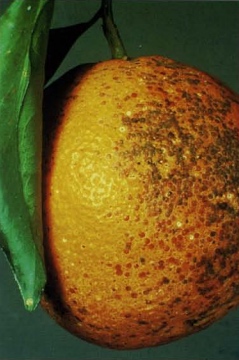
Besides HLB, Red Scale Challenges Citrus

By Charmayne Hefley, Associate Editor

While much of the talk in the citrus industry is about how to fend off Huanglongbing (HLB) disease, one of the most devastating citrus diseases, Dr. Beth Grafton-Cardwell, director of the University of California Agriculture and Natural Resources Lindcove Research and Extension Center, reinforced that HLB isn’t the only pest that can overtake California’s citrus orchards.

Grafton-Cardwell explained how last year’s warm winter led to an increase in the California red scale, Aonidiella aurantii, population. “Normally we have cold conditions that kill off the younger instars of the scales and [basically] restarts the system. But we didn’t really have any low temperatures last year, so the scales didn’t go into their usual hibernating phase. They just kept cranking out crawlers and adding in an extra generation or two of production. So the higher number of scales on the trees made it much more difficult for the growers to control.”

Grafton-Cardwell explained while it is difficult to speculate whether this coming year will yield another large population of the CaSave Our Citruslifornia red scale, “We have already received more moisture as a result of seasonal rainfall, which should help hinder the pest. Hopefully we’ll get some cooler weather conditions too–not freezing because citrus groves don’t like freezing temperatures–but cold enough to knock out some of the scales and get the population back under a manageable level,” she said.

Nevertheless, despite the challenges that California red scale can cause, Grafton-Cardwell said, overall, citrus growers need to keep their focus on the fight against the Asian Citrus Pysllid (ACP), Diaphorina citri, and its ability to spread HLB. “Growers need to start thinking in terms of: California has the [HLB] disease and it’s going to start spreading in southern California soon,” Grafton-Cardwell said. “What do we do to prevent it from spreading up here into the San Joaquin Valley?”

Photo source: “Life Stages of California Red Scale and Its Parasitoids,” UC ANR Publication #21529, by Forster, Lisa D.; Robert F. Luck; and Elizabeth E. Grafton-Cardwell; with photos by L. Forster and M. Badgley)

2021-05-12T11:03:04-07:00January 20th, 2016|

FROM THE EDITOR

From the Editor

California Ag Today would like to issue a formal apology regarding errors in our article, “Korea Refuses Contaminated Citrus,” published yesterday on our website, CaliforniaAgToday.com.

While we strive to accurately report timely, trusted and essential news about California’s comprehensive and complex agricultural industry according to the highest standards in professional journalism, we always appreciate the opportunity to correct any errors we have made.

To be clear, Korea is not refusing citrus imports from California. Korea is concerned about the detected presence of Fuller rose beetles in arriving citrus shipments.

I, personally and sincerely apologize to:

  1. Dr. Elizabeth Grafton-Cardwell for any and all misrepresentations of her message.
  2. The California agricultural industry for any hindrance or concern our article may have caused.
  3. Our readers, the California Ag Today team, and Charmayne Hefley, author of the article, for my editorial errors.

In addition, I thank California Citrus Mutual for informing us about our errors with haste. 

We promptly removed the story from our website, CaliforniaAgToday.com, as soon as we were notified. We will continue to strive to better adhere to our mission of accurately reporting news about California’s agriculture industry.

Here is a more recent article on the issue:

Californian Citrus Rejected by Korea,” published on www.freshplaza.com today and tweeted by Elizabeth Grafton-Cardwell today as well.

Laurie Greene

Editor

1/14/16

2016-05-31T19:26:59-07:00January 15th, 2016|

USDA Pesticide Data Program Report Confirms Food Safety

USDA Pesticide Data Program Report Confirms Food Safety:

More than 99 percent of sampled food tested below allowable pesticide residue levels!

The U.S. Department of Agriculture (USDA) has confirmed again in its annual report that American consumers can focus on the nutritional benefits of conventional and organic produce without concern for pesticide residues. Over 99 percent of fresh and processed food available to consumers tested below allowable pesticide residue levels, as detailed in the 24th Pesticide Data Program (PDP) Annual Report released on January 11, 2016 by the USDA Agricultural Marketing Service (AMS). Only .36 percent [0.36%] of the products sampled through the PDP had residues above the U.S. Environmental Protection Agency (EPA) established tolerances, giving consumers plentiful options to meet their daily nutritional needs.crop life america logo

“Today’s consumers can choose from food produced with a variety of farming methods and necessary crop protection strategies and be confident that it will sustain and enrich their families’ lives,” stated Jay Vroom, president and CEO of CropLife America (CLA). “Across the nation, our growers continue to use the most advanced crop protection technology available to target specific crop threats. From precision agriculture to integrated pest management, farmers in the heartland, the plains, coastal areas and everywhere in between are pushing forward with the best ways to produce food for their communities and for the country.”

PDP researchers tested a total of 10,619 samples of fresh and processed fruit and vegetables (8,582 samples), oats (314 samples), rice (314 samples), infant formula (1,055 samples), and salmon (354 samples). To ensure the samples were representative of the U.S., researchers collected data in a variety of states throughout different times of the year. The findings support the Dietary Guidelines for Americans 2015-2020, recently released by USDA and the U.S. Department of Health, which encourage consumers to eat more fruits and vegetables.ChooseMyPlate.gov

“With rapid advancements in computing technology, the space for developing new ways to fight agricultural threats is increasing exponentially,” stated Dr. Janet E. Collins, senior vice president of science and regulatory affairs at CLA. “Consumers have a number of options at the grocery store, thanks in large part to the work of the scientific community involved in research and development, the companies that are manufacturing products, and America’s farmers and ranchers. The 2014 PDP report demonstrates again that, with the sound science-based regulation of pesticides and commitment from the industry, farmers and other stakeholders, we can reach toward making sure that every American, no matter their wallet size or geographic location, can access healthy food.”

A 2012 report from CLA demonstrates that crop protection has made healthy food more financially accessible to the American consumer, providing a 47.92 percent savings in overall grocery bills for a family of four in the U.S.1 In addition, increased agricultural production, due to advanced pesticides, has created an additional 1,040,661 jobs generating more than $33 billion in wages—all while decreasing the need for tillage operations, thereby reducing fossil fuel use by 558 million gallons per year.

Recent reports from the United Nations also show that an increasing number of people worldwide have gained access to healthy food. Over the past 25 years, the number of people worldwide who are hungry has declined from one billion to about 795 million, or about one person out of nine—which means that 2 billion people have avoided a “likely state of hunger” given the global population increase of 1.9 billion people since 1990-92.2 Multiple factors have contributed to the decrease in global hunger, including the integration of family farmers and small holders in rural areas into well-functioning markets for food, inputs and labor.

The PDP was established in 1991 for the purpose of collecting data on pesticide residues found in food. Information collected by the PDP is sent to the EPA to help the agency conduct important dietary risk assessments. The USDA also uses this data in the development of integrated pest management objectives. Since the PDP program was initiated, 109 different commodities have undergone testing. A complete version of the 2014 Annual Summary is available at www.ams.usda.gov/pdp.


1 CropLife America. The Contributions of Crop Protection Products to the United States Economy.

2 Food and Agriculture Organization of the United Nations, the International Fund for Agricultural Development and the World Food Program. State of Food Insecurity in the World 2015.


Established in 1933, CropLife America (www.croplifeamerica.org) represents the developers, manufacturers, formulators and distributors of plant science solutions for agriculture and pest management in the United States. CropLife America’s member companies produce, sell and distribute virtually all the crop protection and biotechnology products used by American farmers. CLA can be found on Twitter at @CropLifeAmerica. CLA supports CropLife StewardshipFirst.

2021-05-12T11:03:05-07:00January 13th, 2016|

Protecting California Citrus from ACP

Protecting California Citrus from ACP

By Charmayne Hefley, Associate Editor

[embedvideo id=”ZWgOOjpxwE8″ website=”youtube”]


California’s $2.2 billion fresh citrus industry that supplies 85 percent of the nation’s fresh citrus is currently healthy and vibrant despite the background threat of the Asian Citrus Psyllid (ACP), according to Kevin Severns, a citrus grower in Sanger, CA; general manager of the Orange Cove-Sanger Citrus Association, a cooperative citrus packing house in eastern Fresno County; and  chairman of California Citrus Mutual.

“We’re quite concerned about it,” Severns said about the ACPa tiny bug that is a known carrier or vector of “huanglongbing” (HLB), a devastating, incurable disease of citrus trees  that has already demolished the citrus industry in Florida. “We’ve been able to keep the bug at bay to this point,” Severins continued, “at least here in the Central Valley, but we’re very concerned about it. There are a lot of issues to be concerned about with this bug.”

Save Our CitrusCalifornia has taken note of the devastation of Florida’s industry, Severns said, and is taking steps to ensure the safety of California’s citrus. “Having gone to Florida with many of our citrus growers,” Severns explained, “I heard Florida growers tell we must control the bug. So we’re trying to keep this bug at bay and not allow [the infestation] to expand. We’ve had varied success in different areas of California, but so far, we’ve been able to keep the bug’s expansion here in the Central Valley to a minimum. We continue to have finds from time to time, but we haven’t yet had an explosion of the population of the ACP.”

Severns said, “We have a very successful partnership with the California Department of Food and Agriculture (CDFA).” While trapping ACP is critical, he emphasized the importance of enlisting the help of residential folks with citrus in their backyards to get involved in the conversation, to look for this pest, and to join in the fight. “The trap is very limited in its ability to pick up ACP, so it’s very important that we have visual surveys in which growers and homeowners actually go out and look at their trees for the bug.”

Severns said current measures against the spread of the ACP is helping to buy time for researchers to find a cure for HLB. “We realize every place on earth where the ACP has gone, eventually has been followed by HLB,” Severns said, “so we’re trying very hard to buy time and give our researchers and scientists a chance to come up with a solution to this disease—whether it is a resistant type of citrus variety or a cure for the trees.”

Preventing the spread of ACP and HLB, from commercial citrus growers to residential citrus growers, will require that everyone works together. To learn more, go to CaliforniaCitrusThreat.org or contact your local Ag Commissioner.

_________________

Did you know, the historical time period establishing the California citrus industry is known as the “other” California Gold Rush? (Source: California Citrus Mutual)

_________________

2021-05-12T11:05:58-07:00January 12th, 2016|

Farmers Generous to Food Banks

Farmers Generous to Food Banks

By Laurie Greene, Editor

California farmers are stepping up to supply fresh fruits, vegetables and meat products to the state’s network of food banks as part of the Farm to Family program. Jim Bates, chief financial officer of Fowler Packing in Fresno County, said “It’s a program we’ve been supporting for 20 years, starting with donations of peaches, plums and nectarines.”

“Unfortunately, 20 to 50 percent of the product we grow doesn’t make it to the marketplace,” Bates explained, “sometimes because of a very small cosmetic blemish. Bates says farmers like him really want to take advantage of these unmarketable crops and help the working poor in the Valley. “We don’t want to dump this product; we definitely want to donate it. So, we have developed contacts with the food banks and found ways to transport our products in cardboard bins, plastic bins—whatever they can take—and get it to them.”

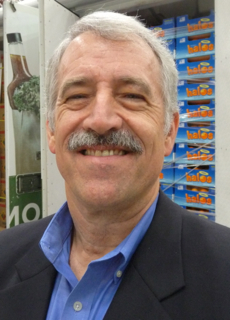
Jim Bates, chief financial officer, Fowler Packing

Bates noted that Fowler Packing, which farms and ships tree fruit, including mandarins, and table grapes, is doing well, and the company would like to pay it back. “We have made big investments over the years; we’ve retooled our packing house, our mandarin and table grape operations are doing well, and we’ve had good times. We want to give back to the local community that has been so good in supporting us year in and year out.”

Andy Souza, president and CEO of the Community Food Bank in Fresno, noted the dramatically increased produce and meat donations from farming companies, “from almost 19 million pounds a year to almost 40 million pounds in the last three years. And yet, in our service area, we are only meeting about two-thirds of the need. We serve all five counties from the southern end of Kern County, including Tulare, Kings, and Fresno Counties, all the way to Madera County, and the need just continues to grow. We have seen the drought; we have seen the effect of changing commodities; and the impact on farm labor is a very natural part of an economy.”

Souza said Community Food Bank’s connection with those in need is critically important. “It is not just doubling the amount of pounds,” he elaborated, “it is the fact that for so many of the families we serve, we are the only source of fresh produce for them. And the result of not getting fresh produce is what we have seen in each of our five counties: childhood obesity rates over 40 percent.”

“It is rewarding for us to be the vehicle that actually touches the lives that these farming families are supporting. Without their support and donations, it would be an empty warehouse. We, in turn, provide the connection to our families in need. Our staff knows, on a very personal basis, the opportunity to hand fresh food, fresh produce, to families knowing it will be on their tables that evening,” Souza noted.

Souza said quite candidly, he has learned over the last five years, all he has to do is ask the farming industry for help. “The farming community, the ranching community—agriculture in general—is very giving if we ask. We have also learned you don’t ask the packing shed in August. By the time August rolls around, first, they are just incredibly busy; and secondly, they made those decisions in February. So we are learning and looking to the industry for great support and great help. We have been able to make an incredible partnership with the agricultural community here in the Valley.”

Souza said cash donations from companies and from the general public also help immensely because “the ability we have to stretch financial donations is incredible. For every dollar that is donated, we can provide seven meals for a family. If folks would love to come alongside us, we can be reached at communityfoodbank.net. There is a “Donate Now” button there, and we would love the opportunity for folks to partner with us. Right now we have just over 8,000 partners each year and we would love to see that number grow to 10-, 12- or even 15,000.”

_____________________

Links

California Association of Food Banks (CAFB)

Community Food Bank

Farm to Family

Fowler Packing

2021-05-12T11:17:15-07:00January 6th, 2016|

CA Grown Campaign Builds Awareness

CA Grown Campaign Builds Awareness of the State’s Agricultural Bounty

By Kyle Buchoff, Assistant Editor


Denise Junqueiro, California Olive Committee director of programs and services and serves and CA Grown Campaign vice-chair, reported California Grown is really about building awareness of California-grown products. One of five Mediterranean climates in the world, California is a rare place where specialty crops that thrive in short, wet winters separated by a sunny and dry spring, summer, and fall, can be grown.

“We know people are curious,” said Junqueiro. “We know people want to know where their food comes from. We have an abundance of crops in our state, and we believe we grow these better than everyone else in the world. So we are trying to increase awareness—not only about our products—but about the farmers who grow them, because our farmers really care. Our efforts are about shining a light on all the bountiful fruits, vegetables and nuts we grow in California,” she noted.

_____________

California Grown, according to their website, gives farmers the platform to share their farm stories and to help consumers understand where their food comes from. Farmers present their food safety measures, choices in crop varieties, sustainable and creative packaging solutions to make serving dinner faster and more convenient, strong ties to the land and to their neighbors, pride in homegrown products and in their work; and support for the economy.

California Grown  is supported by the state and federal governments, hundreds of growers, and all Californians. The group also collaborates with about 20 member partners in California agriculture to remind everyone to seek out and purchase agricultural products grown and produced in California.

ca_grown_campaign_logo_____________________________

Links

CA Grown Campaign

California Olive Committee

2021-05-12T11:06:00-07:00December 30th, 2015|

Henry Gonzales, Ventura County Ag Commissioner

Ventura County Ag Commissioner Henry Gonzales Started as Fieldworker

By Patrick Cavanaugh, Deputy Editor

California Ag Today interviewed Henry Gonzales, Ventura County Ag Commissioner, who has served in that post for 7 years. His unique story begins with his birth in Fresno and his work in the California fields at an early age.

Gonzales: My parents were migrant farmworkers, and back in the day, there was no day care for us, so they took us to the fields with them. I like to think I my career started in agriculture when I was old enough to pick up a plum and put it in their basket. We worked a lot in the Fresno area, but also in the San Jose area and Imperial County, following the crops as most migrant farmers do.

CalAgToday: You started working as a child, and what happened next? Did you and your family continue as a farmworkers?

Gonzales: We continued farm working for many years. We used to live in farm labor camps, whenever they were available. Sometimes we stayed with relatives or anywhere we could find. There were times when the only places we could find were the trees in the orchard, so sometimes we stayed there.

CalAgToday: So, when you were 13, you went off on your own?

Gonzales: Yes, when I was 13, I did what I thought I should do—work under my own social security card. I started working in the fields around Salinas. I was actually in the same lettuce harvesting crew with my grandfather who was 69 at the time.

CalAgToday: Well, Henry, walk me through it. How many years did you work with your grandfather?

Gonzales: I worked every summer and weekends since I was 13 through high school in the fields around Salinas.

This painting was done by Henry Gonzales's mother depicting his early work in the fields

This painting was done by Henry Gonzales’s mother depicting his early work in the fields.


CalAgToday: Tell me about high school.

Gonzales: I felt very strongly about completing high school because I know my parents did not. But you may find it interesting that when I was working in the fields around Salinas, I was a card-carrying member of the United Farm Workers (UFW).

CalAgToday: So the UFW recruited you early, or were you a supporter?

Gonzales: Well, it was a closed-shop situation; if you worked in that company, you were a member. So I believe I am the only ag commissioner who was once a card-carrying member of the UFW.

CalAgToday: And why is that significant to you, Henry?

Gonzales: As you know, in agriculture, farmworkers are, almost literally, the backbone of the industry. They are the ones doing all the heavy lifting. So, having that background really provides me with a broader perspective because I can understand farming from the ground level up. Coupled with my Bachelor of Science degree in agricultural science, my field work experience has given me a well-rounded background for agriculture.

I started working for the Monterey County Ag Commissioner’s office over 30 years ago. All Ag Commissioners start at the bottom of the organization, so I began as an agricultural inspector-biologist and worked my way up to deputy, chief deputy, and then seven years ago, I became Ag Commissioner here in Ventura County.

CalAgToday: So suddenly a job became available in Ventura County?

Gonzales: That was kind of interesting. I was in Monterey County with a great job, a great boss, and I could do pretty much what I wanted. But I got a call from Ventura County inviting me to apply for their ag commissioner position. I checked with my wife, and she said ‘Sure, why not? Try it!’ I did, and as they say, the rest is history.

I applied and got the position. I was reappointed here three years ago, and I am hoping to do at least one more term after my current term is over. I think all my years working for the Monterey County Ag Commissioner’s office, my degree in Ag Science, and my master’s in public administration, coupled with my childhood years working in the field really gives me a broad background in agriculture, especially as it exists in Ventura County and in the state of California.

CalAgToday: How did you have time to get a masters degree in public administration?

Gonzales: Well, while I was working for Monterey County, I spent a lot of sleepless nights and weekends in order to earn that degree from Golden Gate University’s satellite office in Monterey.

CalAgToday: When you look back, you have come so far from your beginnings as a farmworker, and you have seen so much. How do you put all of that together?

Gonzales: My experience has provided me with the broadest perspective, so when I deal with a challenging issue, I can see it from all vantage points, and that is very helpful to me in doing my job.


2021-05-12T11:06:00-07:00December 30th, 2015|

UPDATE! Expanded ACP Quarantine

UPDATE! Expanded ACP Quarantine in Stanislaus and Merced Counties

Two ACPs Found in City of Turlock

Stanislaus County has been placed under quarantine for the Asian citrus psyllid (ACP) following the detection of two ACPs within the City of Turlock.  The expanded ACP quarantine also includes a portion of northern Merced County along its border with Stanislaus County.  The quarantine zone measures 101 square miles, bordered on the north by East Service Road; on the south by August Avenue; on the west by Blaker Road; and on the east by North Hickman Road.  The quarantine map for Stanislaus and Merced is available online at: www.cdfa.ca.gov/go/acp-maps.

The quarantine prohibits the movement of citrus and curry leaf tree nursery stock, including all plant parts except fruit, out of the quarantine area and requires that all citrus fruit be cleaned of leaves and stems prior to moving out of the quarantine area.  An exception may be made for nursery stock and budwood grown in USDA-approved structures which are designed to keep ACP and other insects out.  Residents with backyard citrus trees in the quarantine area are asked not to transport or send citrus fruit or leaves, potted citrus trees, or curry leaves from the quarantine area.

ACP county-wide quarantines are now in place in Imperial, Los Angeles, Orange, Riverside, San Bernardino, San Diego, Santa Barbara, Tulare and Ventura Counties, with portions of Alameda, Fresno, Kern, Madera, Merced, San Benito, San Francisco, San Joaquin, San Luis Obispo, San Mateo, Santa Clara, and Stanislaus counties also under quarantine.

The ACP is an invasive species of grave concern because it can carry the disease huanglongbing (HLB), also known as citrus greening.  All citrus and closely related species, such as curry leaf trees, are susceptible hosts for both the insect and disease.  There is no cure once the tree becomes infected; the diseased tree will decline in health and produce bitter, misshaped fruit until it dies.  In California, HLB has only been detected in 2012 and 2015 on residential properties in Los Angeles County.  This plant disease does not affect human health.

Residents in the area who think they may have seen ACP or symptoms of HLB on their trees are urged to call CDFA’s Pest Hotline at 1-800-491-1899 or your local agricultural commissioner’s office (Stanislaus County (209) 525-4730; Merced County (209) 385-7431).  For more information on the ACP and HLB, please visit: www.cdfa.ca.gov/go/acp.

2021-05-12T11:06:00-07:00December 28th, 2015|
Go to Top