
Dirty Dozen…Really?

Dirty Dozen Does Disservice


Following the April 12, 2016 release of the Environmental Working Group’s (EWG) annual Dirty Dozen list, Teresa Thorne, a spokesperson with the Watsonville-based Alliance For Food and Farming, a non-profit organization which exists to deliver credible information to consumers about the safety of fruits and vegetables, conversed with California Ag Today’s Patrick Cavanaugh, farm news director and deputy editor,

California Ag Today: Let’s talk a little about the Dirty Dozen list that the EWG just published for 2016.

Thorne: They’ve been doing this for 20 years now, and it is concerning to us because they’re putting out misinformation about the safety of conventionally grown produce. We know that the products on this list are among the most popular among families, especially children. EWG targets them, and their efforts really scare moms and consumers away from conventionally grown. It makes no sense to us; I mean, both organic and conventionally grown are very safe. We should all be consuming more every day for better health. That’s really the message for consumers. This list—all it does is serve to confuse people.

California Ag Today: It’s all a big scare tactic to try to get everybody to think that only organic food is safe, right?

Thorne: We strongly believe that organic food is very safe, but we maintain the same for conventional. And it’s interesting also too, because in a recent study that really focused on Manhattan, the researchers found—and we did blog about this—that organic was not as available as they had previously thought. So, what happens to the mom who wants to buy strawberries for her child’s lunch, but only conventional strawberries are available? Now she’s scared because of what EWG has stated in really inflammatory language this year—over the top. Now what is she supposed to do? Her store doesn’t carry organic strawberries. Availability is very much an issue, as well accessibility and affordability. Conventionally grown still is the most accessible and affordable [produce]. So, to scare people away from that really does a disservice to consumers.

California Ag Today: Yes, and food safety experts from the USDA and California Department of Pesticide Regulation (DPR), a department of the California Environmental Protection Agency (EPA), agree that any small risk from the trace [below legal thresholds set by the EPA] levels of pesticides found in fresh produce should not keep you from the health benefits of a diet rich in fruits and vegetables. DPR tracks food for pesticide residues, and they find 99 percent of all the fruits and vegetables grown in California—whether they’re organic or conventional—are safe to eat and we should be eating more of them.

Thorne: Absolutely, and that’s what’s also interesting; EWG—and we’ve called them on this in the past and they still have not changed—does not link, in their report, directly to USDA studies. They state over and over that they base their results on this USDA Agricultural Marketing pesticide data program (USDA PDP), but they don’t link to it. In what world do you not link to a study that, you basically state, you base your entire Dirty Dozen list upon? We find that quite odd.

We think the reason they don’t link is this simple: People will see that the USDA clearly states that residues do not pose a food safety concern. And that is in direct contrast to what [the EWG is] saying.

California Ag Today: Of course, if we wash the fruits and vegetables we eat, it helps. We should always wash produce to get the dirt off and talk about food safety in our own kitchens.

SafeFruitsandVeggies logoThorne: That’s right. Conventional and organic alike, wash them before you eat them. It’s a healthful habit that everybody should follow for various reasons. And the U.S. Food and Drug Administration (FDA) clearly states that you can reduce or eliminate any residues that may be present on fruits and vegetables, simply by washing.

California Ag Today: One last question, Teresa. You’ve been terrific. The EWG has been losing some strength in their message over the years because the media is getting sharper and better at challenging the contradictions in their reports. We’ve got the Alliance for Food and Farming’s new SafeFruitsAndVeggies website now, and you guys are reaching out to the media, saying “Let’s be reasonable; let’s look at this from a scientific point of view, not an emotional point of view.” Do you want to comment on that? While they’re not being picked up as much anymore, they keep trying, now with strawberries at the top of the list, right?Strawberries1

Thorne: Yes, we think they’re using the tactic of putting another kid-popular fruit to re-spark interest. In fact, we predicted it in a blog a few weeks ago, in which we said interest from the media is declining because more reporters and bloggers are actually reading the USDA PDP report, seeing what it says. So, we actually predicted in our blog that they would do something like this. Our number one prediction was they would have a new number one on their list, and it would, of course, be a kid-popular fruit.

So, it will be interesting to see. We’re still early on in the process to see if they have had any success with that, but we believe that that was a tactic [EWG] tried to employ to revive very lagging media coverage on this list. They used to enjoy widespread media coverage back in the day.

__________________________

Resources:

Setting Tolerances for Pesticide Residues in FoodsUnited States EPA

Pesticide info: What You Should Know About Pesticides, “Pesticides and Food: How We Test for Safety,” California Department of Pesticide Regulation

The Pesticide Data Program: Helping Monitor the Safety of America’s Food SupplyUSDA Agricultural Marketing Service (AMS)

Pesticide Residue Calculator, Alliance for Food and Farming

2021-05-12T11:03:02-07:00April 14th, 2016|

Bill Chandler on Farming

Bill Chandler Builds a Legacy

By Patrick Cavanaugh, Deputy Editor


A third-generation farmer in Fresno County, Bill Chandler farms near Parlier, Selma, and Fowler. The family operation has traditionally produced tree fruit such as peaches, plums and nectarines, but they are certainly expanding their crop diversity. “We have gone more into almonds lately because of unavailable labor,” Chandler commented. “We are looking into citrus, which is not as perishable as soft fruit—which, if you don’t harvest it right away, you’ve lost the whole year’s effort.”

Like so many farm families in California, the Chandlers go back a couple of generations farming here. “My grandfather came out here in 1888 from Illinois,” Chandler expounded, “and looked at this area. It was appealing because the land prices were not that bad compared to Illinois. But the big deal was the weather; we don’t have all that snow in the winter time. We also  have relatively level ground and not a lot of rocks in our soil. We, too, have hardpan under the soil, but that can be worked out.”peaches

“My father got out of school in 1921 and started farming in this area,” said Chandler. “I was the only son and I always wanted to farm. I have a sister who was able to inherit some, and I bought my sister out, so that’s what our farm is now.”

Bill Chandler and his wife, Carol, have two sons, Tom and John, who are both back on the farm. “They both majored in ag, which was kind of neat; one in ag econ and the other in food science, and we are very proud that they are both back farming with us now. Tom, the older one, majored in ag econ at UC Davis and was in banking for about 12 years. Now he has come back and has been helping us on that side of the farming, which is very very important. He also did some land appraisal on the side. His brother, John, who majored in in fruit science at Cal Poly, is more into field work, and he does some beekeeping on the side as well.”

Chandler said a lot of success and wonderful things about farming have always been accompanied by a lot of challenges as well. “Yeah, there is always something,” he said. “I don’t care if it’s labor, weather or regulations. We are really fortunate; we stand at a place here, Kearney Field Station*, where the UC has done a great job helping us solve some of these regulations or pests.”

Chandler’s sons, Tom and John, are going to pick up where their dad leaves off, but that may be awhile, “You know,” Chandler philosophized, “a farmer never does retire. Fortunately, I am able to live on the farm. They are doing most of the farmwork, but they do ask me questions.”

This year’s above-average rainfall, along with the snowfall, has been great, but Chandler said,  “There is still going to be a lot of work to dig ourselves out of this four-year drought. I have experience and so do many other people. Not only are our trees suffering from lack of proper irrigation, but we are spending a lot of money putting in new wells or new irrigation systems so that we can handle this drought.”

Chandler doesn’t take nearby UC and USDA researchers for granted. He always attends meetings and takes notes. “We can go to these folks and have these seminars that are really helpful.”

____________________________________________

*Kearney Agricultural Research and Extension (KARE) Center

2016-05-31T19:24:07-07:00April 12th, 2016|

New Citrus PSA Shows Homeowners HLB Threat

New Citrus PSA Shows Homeowners HLB Threat

By Charmayne Hefley, Associate Editor

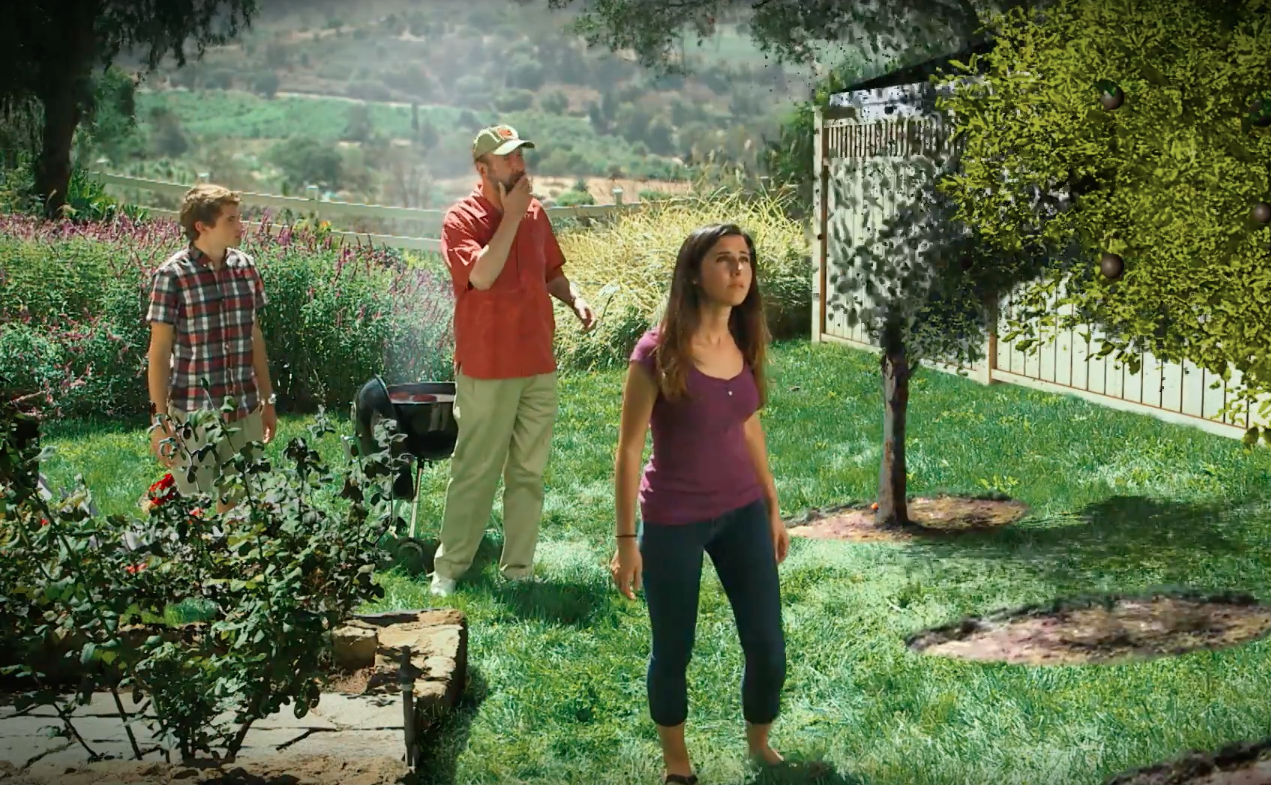
Without the involvement and aid of backyard citrus growers to prevent the spread of the invasive Asian Citrus Psyllid (ACP) and the citrus-deadly Huanglongbing (HLB) disease vectored by the ACP, consumers would no longer have the opportunity to enjoy fresh citrus. Deadly Plant Disease Threatens California Citrus, the newest public service announcement (PSA) from California Citrus Pest Disease and Prevention Program (CCPDPP) conveys this message to residential citrus growers, according to Joel Nelsen, California Citrus Mutual (CCM) president, in order to keep all citrus safe from HLB.

Nelsen said the citrus PSA announcement “shows a family in the backyard barbequing and doing what families do on a weekend.”  They walk over to their row of three citrus trees in the backyard when an orange falls off the tree and disappears, followed by the disappearance of all three trees. Nelsen said the PSA zeros in on the family members’ confusion at the disappearance of the oranges and the trees, all associated with the HLB infection.

CCPDPP’s new PSA is a way for homeowners to understand the importance of keeping citrus safe from HLB, said Nelsen, ”because as much as they’re emotionally tied to their trees, so are the growers in our industry. We don’t want to see anyone’s tree get eliminated because of HLB.”

_________________________________

Prevent HLB; Check Your Citrus Trees for Asian Citrus Psyllid

In a new four-minute video, University of California, Division of Agriculture and Natural Resources (UC ANR) scientists encourage California farmers and home citrus growers to check new growth on their citrus trees for Asian citrus psyllid infestation. As ACPs spread Huanglongbing (HLB) disease, a serious, incurable threat to both the citrus industry and backyard citrus trees, scientists aim to minimize the ACP population until researchers find a cure.

A flush of new leaf growth on citrus trees announces spring in California. The emergence of feathery light green leaves is particularly attractive to Asian citrus psyllids (ACP), signaling a critical time to determine if the trees are infested with ACPs.

“We encourage home citrus growers and farmers to go out with a magnifying glass or hand lens and look closely at the new growth,” said Beth Grafton-Cardwell, UC Agriculture and Natural Resources (UC ANR) citrus entomologist. “Look for the various stages of the psyllid – small yellow eggs, sesame-seed sized yellow ACP young with curly white tubules, or aphid-like adults that perch with their hind quarters angled up.Save Our Citrus

Pictures of the ACP and its life stages are on the UC ANR website. Call the California Food and Agriculture (CDFA) Exotic Pest Hotline at (800) 491-1899 with any findings.

The UC ANR ACP website provides help in finding the pest and taking action.

(Source: UC ANR)

_________________________________

2021-05-12T11:03:03-07:00March 30th, 2016|

Citrus Growers Form ACP Management Areas

Commercial Citrus Growers Form Local ACP Management Areas

By Charmayne Hefley, Associate Editor


Commercial citrus growers are banding together to prevent the spread of the citrus-deadly Huanglongbing (HLB) disease and the pest that spreads it—the Asian Citrus Pysllid (ACP). Beth Grafton-Cardwell, an IPM specialist and research entomologist at UC Riverside and Director of UC ANR Lindcove Research & Extension Center, said growers are forming ACP management areas to prevent ACP from spreading HLB.

Elizabeth E. Grafton-Cardwell

Elizabeth E. Grafton-Cardwell

“ACP management areas are being formed by the citrus industry and community,” Grafton-Cardwell said. “They’re basically saying, ‘Let’s get together. Let’s form these groups of growers—25 to 35 growers in an area. Let’s work together as neighbors to treat across a large area and get more of the psyllids killed than if we each treated individually at different times.’”

HLB is a serious concern to growers, according to Grafton-Cardwell; the disease has already devastated the citrus industry in Florida. “We want to prevent that from happening here,” shel said.

According to the California Department of Food and Agriculture, ACP notices posted thus far in the first quarter of 2016 include the following areas:

            COUNTY                                                                 CITY

   Fresno County    Fresno
   Kern County    Bakersfield, Shafter, Wasco
   Imperial County    Bard, Brawley area, Calipatria, Niland, Winterhaven, Zone 7
   Los Angeles County    La Puente, San Gabriel
   Riverside County    Hemet, Riverside, San Jacinto
   San Bernardino County    Cadiz
   San Diego County    De Luz, Escondido, Fallbrook, Ramona, San Diego
   San Joaquin County    Stockton
   Santa Barbara County    Areawide, Buellton, Casmalia, Garey, Orcutt, Santa Maria, Sisquoc
   Santa Clara County    Milpitas, San Jose
   Stanislaus County    Oakdale
   Tulare County    Porterville, Strathmore
2021-05-12T11:03:03-07:00March 17th, 2016|

Semios Approved for Navel Orangeworm Control

Semios Aerosol Pheromone Approved for Navel Orangeworm Control


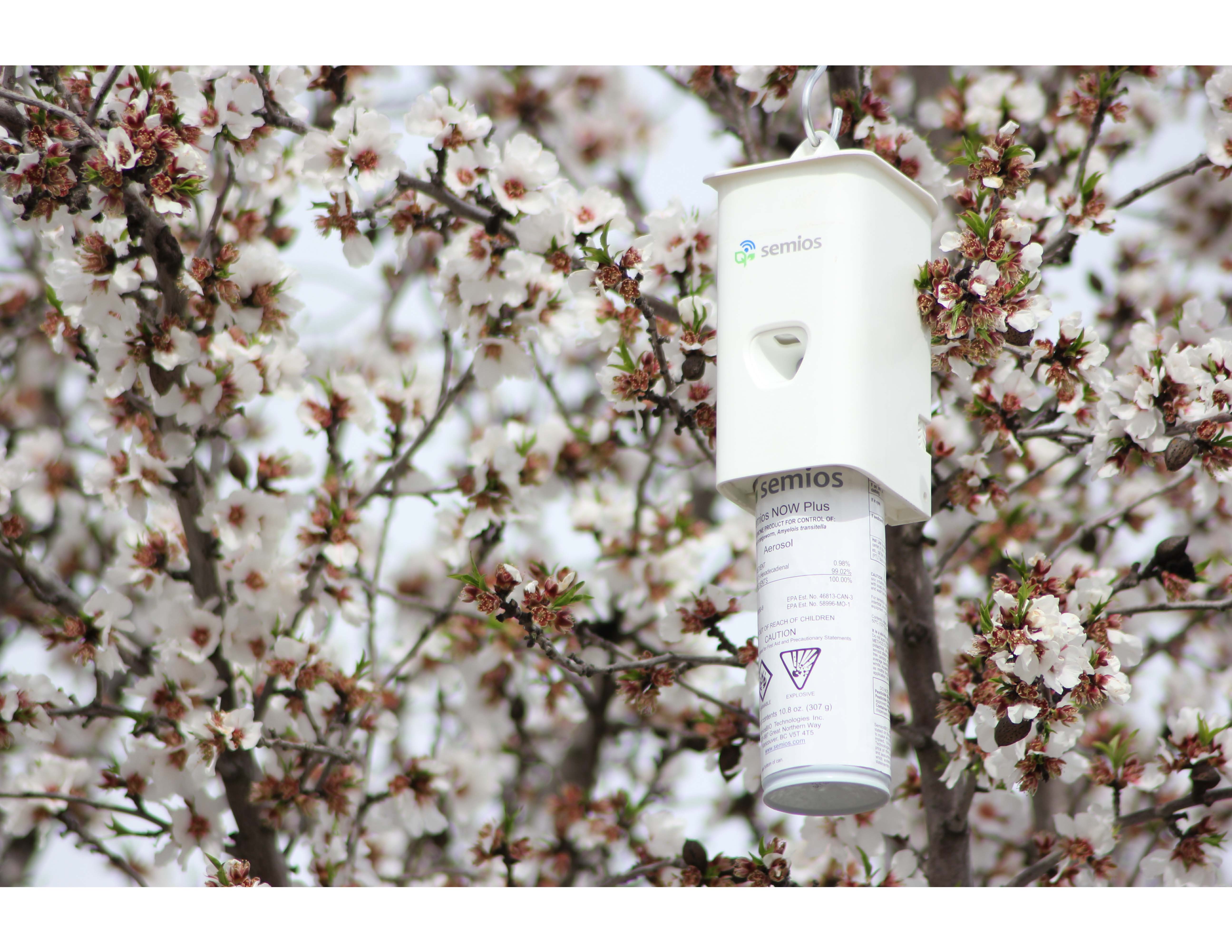
Announced TODAY, Semios, a leading provider of real-time agricultural information and precision pest management tools, has received US Environmental Protection Agency (EPA) approval and California Department of Pest Regulation (DPR) approval for aerosol pheromone biopesticide products that disrupt the mating of the Navel Orangeworm (NOW).  
Michael Gilbert, founder and CEO of Semios said, “The Navel Orangeworm pest causes significant loss of crop and revenue in the California almond and pistachio industries, and it’s getting worse every year.  The Semios NOW pheromone aerosol formulas give farmers the ability to reduce and control pest populations and, as a result, significantly reduce crop damage.  The Semios pheromone aerosol dispenser is part of a custom-designed controller and sensor network that gives farmers decision-making tools and remote access to the field conditions in real-time- all day, every day.”

Remote Control Makes it Highly Effective

The Semios platform includes in-field camera traps that monitor the number of pests and flight strength, which when combined with wind, temperature and other environmental conditions measured and reported by Semios, optimize pheromone deployment.  The combination of traps, pheromone dispensers and other sensors on the same network means farmers can deploy the right amount of pheromones where and when needed through a single interface.

A Destructive Pest for Many Crops

NOW is the most destructive pest of introduced nut crops. Semios NOW Plus and Semios NOW Standard (for organic growers) are available for control of NOW in orchards growing walnuts, pistachios, almonds, dates, figs, citrus, pome and stone fruits.


Sustainable Solution

Pheromones are a naturally occurring part of the communication systems used by insects.  Semios uses pheromones to disrupt the mating cycle of insects, thus diminishing pest populations and reducing crop damage.  Pheromones do not kill or damage the target insects and, as pheromones are species-specific and only target the specific pest, pollinators and other beneficial insect species are not affected.

_______________________________

About Semios

Semios is a leading precision farming platform that provides real-time information and pest management tools for the tree fruit, nut and grape growers.   Semios combines hardware with powerful secure online software that monitors field and weather conditions and allows remote pest monitoring and deployment of mating disruption pheromones. It’s easy to use, reduces labor and allows farmers to make decisions that preserve and increase crop value.
2021-05-12T11:03:03-07:00March 2nd, 2016|

PCA Training At UC Davis

UC Davis Offers Pathway to PCA Training

By Laurie Greene, Editor


Frank Zalom, distinguished professor of entomology, agricultural experiment station entomologist, and extension specialist at UC Davis, teaches a class for students that forms a pathway to becoming a Pest Control Advisor (PCA). “It is the only class that a lot of them had ever taken in entomology,” said Zalom, “so we try to structure it to give them a good, solid background in entomology. Then we lead them through all the different pest management options. We even bring in someone from the California Association of Pest Control Advisors (CAPCA) Pathway to PCA program for the very last lecture.”

Zalom, whose research interests include integrated pest management (IPM), tree crops, small fruits and vegetable crop entomology, wants to provide a valuable education to his students. “Most of the kids taking my classes are interested in taking the PCA exams and there is a huge opportunity for those students out in the future.”

“We teach them about integrated pest management (IPM) and the pests,” Zalom noted. “Then we show them some of the many career opportunities for PCAs,”  he said, adding. “There will always be a big need for professional PCAs to help protect our crops from pests and diseases. They assist growers all over the state.”

________________________

Links:

California Association of Pest Control Advisors (CAPCA)

CAPCA Pathway to PCA

2021-05-12T11:03:03-07:00February 24th, 2016|

Joel Nelsen on New Cases of HLB in San Gabriel

Joel Nelsen on New Cases of HLB in San Gabriel

By Charmayne Hefley, Associate EditorSave Our Citrus

On Wednesday of last week, two more trees, an orange and a kumquat, were found infected with the citrus-deadly Huanglongbing (HLB) disease in the core of San Gabriel. The trees are located on separate properties. One has been removed, and the other is awaiting the owner’s permission for removal. Last summer, 10 diseased trees were confirmed in the San Gabriel area, and a quarantine, already in place since then, will not need to be expanded.

Joel Nelsen, president of California Citrus Mutual, commented on the HLB discovery, “The two trees were found in the core area, pretty adjacent to the others that were found in San Gabriel,” Nelsen said. The finding “is a result of the program and its intensity in continuing to look for positive HLB finds. Unfortunately, these two trees were positive. The Asian Citrus Psyllids (ACP) in the area have been treated. One tree has already been pulled. The other homeowner wasn’t home so we’re hoping for cooperation there. It’s not positive, but again it shows that the program is trying to find HLB before it finds the commercial citrus industry.”

2021-05-12T11:03:04-07:00February 8th, 2016|

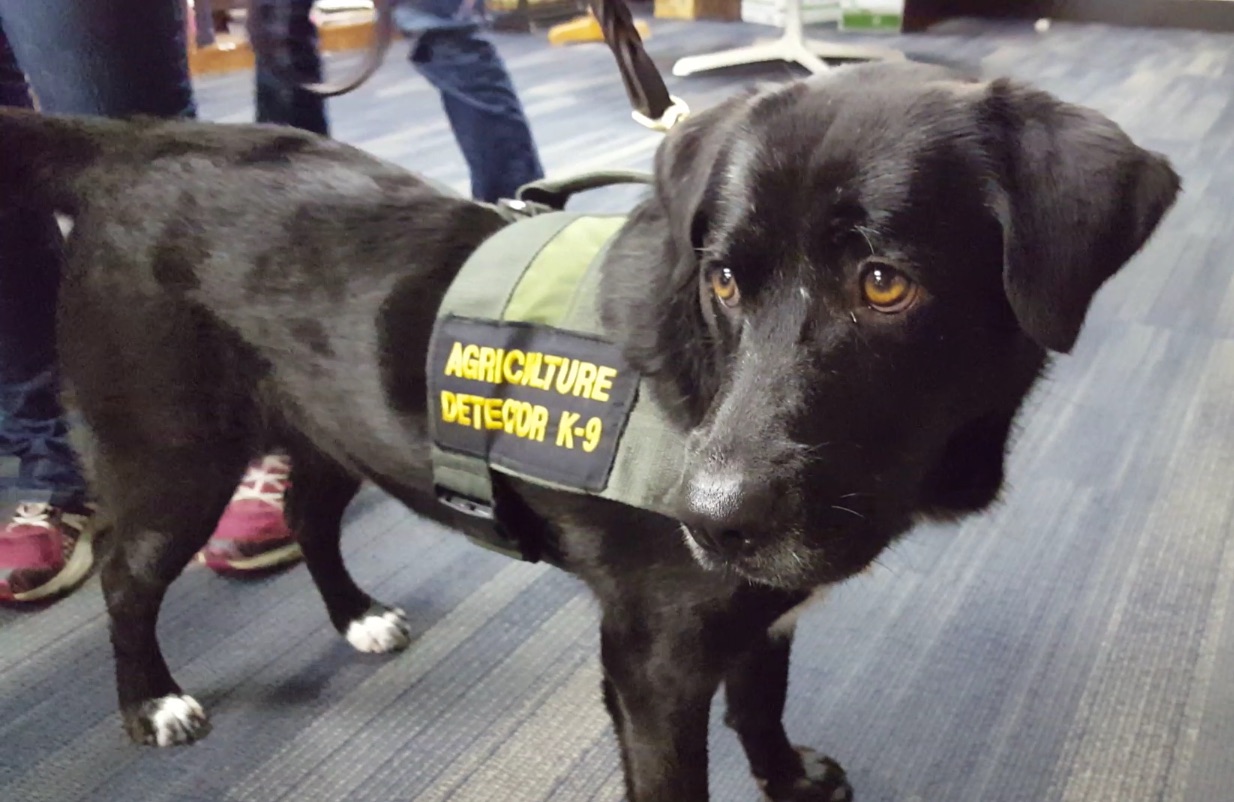
Agriculture Detector K-9 on Duty!

Agriculture Detector K-9 on Duty!

By Charmayne Hefley, Associate Editor

[embedvideo id=”Il2TOH1NvOM” website=”youtube”]

California Ag Today’s associate broadcaster Charmayne Hefley recently asked Soya, a mixed-breed agriculture detector K-9 (canine) with big responsibilities, and Samantha Tomlinson, Soya’s handler with the Fresno County Ag Commissioner’s office, what type of dog Soya is.

ST:      We don’t know exactly what she is for sure, but we’re thinking about getting her DNA-tested someday. We’re thinking she’s a lab-border-collie.

Samantha Tomlinson, Soya and Charmayne Hefley

Samantha Tomlinson, Soya and Charmayne Hefley

CAT:   How long have you and Soya been together?

ST:      We have been matched up since mid-July when we went through the training program in Georgia through the National Detector Dog Training Center.

CAT:   What is Soya able to do for the Ag Commissioner’s office?

ST:      Soya smells out parcels for potential plant material and she alerts us [to suspicious ones] by scratching. We check to see if [the material] has been properly certified and if it’s good to go.

CAT:   What are some of her recent detections?

ST:      She can detect a number of things. She was initially trained on five scents: mango, stone fruit, apple, guava, and citrus. From there, through scent association, she’s been able to find a number of additional agricultural materials, including avocados, blueberries, nuts, soil, cut flowers; anything that is plant material, Soya can find.

CAT:   What region does Soya cover?

ST:      Right now we’ve been covering only Fresno County because we still are in what we call the “acclimation phase,” as she’s still new. We’ve been working at FedEx and UPS, but we’ll broaden our horizons eventually and we’ll be in the post office, GSO, OnTrac, any service that ships parcels.”

CAT:   How important is it for the agricultural industry to have dogs like Soya working for it?

ST:      Well Soya and I are considered a “first line of defense” for California’s multi-billion dollar ag industry. She is in the facilities checking boxes sent from potentially quarantined areas from within the state and from outside the state for materials that may contain any pests or diseases that could prove detrimental to California agriculture.

CAT:   People may not know when they’re shipping certain items—certain plant materials—from one county to the next that the destination county may have a quarantine in place. How do people properly ship plant material?

ST:      Every county is actually different. If you are thinking of shipping some of your backyard fruits to your nephew or grandson, I would contact your local ag commissioner and make sure there are not any quarantines in place for both the county you’re shipping from and the county you’re shipping to. In these facilities, we look for boxes to be properly labeled with the growing origin and we inspect thye contents inside. Depending on what is inside, where it’s grown and where it’s going, we act accordingly.

2016-05-31T19:24:13-07:00February 5th, 2016|

Breaking News: New HLB Infected Tree in San Gabriel

Breaking News

Citrus Insider Reports New HLB Confirmed in San Gabriel

Today, two additional trees in have tested positive for Huanglongbing (HLB). The two trees, an orange and a kumquat, are on separate properties but are both within the core area in San Gabriel where 10 diseased trees were confirmed last summer. Given the close proximity, there will not be a quarantine expansion.

One of the HLB-positive trees has already been removed and California Department of Food and Agriculture (CDFA) officials are in the process of contacting the other homeowner to schedule tree removal. Agriculture officials are working quickly in the area.

Citrus trees in San Gabriel had already been treated for the Asian citrus psyllid (ACP) within the last few weeks as part of CDFA’s routine HLB response. ACP populations are closely monitored in areas where HLB has been detected and treatments occur if there is a noted increase in population size. Since trees have been recently protected, no additional treatments will take place at this time. Instead, CDFA will focus on sampling extensively in the area. Much of the area has already been sampled and CDFA’s lab has identified all samples from San Gabriel as high priority.

The Citrus Pest & Disease Prevention Program is working with the Los Angeles County Agricultural Commissioner’s office and CDFA to develop a multilingual informational flyer to notify residents of the significance of these finds and potential implications to other citrus trees in the area. CDFA staff will distribute this information as they go door-to-door sampling and surveying.

More information will be shared as it is available. In the meantime, the citrus industry is encouraged to keep a critical eye on all plant material moving into or out of your groves and recommends taking the following steps so collectively, as a team, we can all save our citrus trees.

-Remove all leaves and stems

-Shake out picking bags

-Inspect harvesting equipment

-Educate fieldworkers

-Get on board with area-wide treatments

__________________

Additional Links:

Citrus Insider

Save Our Citrus

California Citrus Mutual

2021-05-12T11:03:04-07:00February 3rd, 2016|

Greg Douhan is New Citrus Farm Advisor

UCCE Tulare Welcomes New Citrus Farm Advisor

By Brian German, Associate Director

The UC Cooperative Extension Program has served Tulare County since 1918 and continues to meet the ever-changing needs of the community. UC Cooperative Extension, Tulare County is preparing to welcome their new citrus farm advisor, Greg Douhan, on March 1, 2016. Douhan, who noted his excitement for the opportunity, will be taking the reins from the recently retired Neil O’Connell who gave over 34 years of faithful service advising Tulare County citrus growers.

Douhan shared that his relatives inspired him to focus his career in agriculture. “I had an uncle who was an almond grower when I was a kid. And my grandfather was an avid horticulturalist; he used to graft different trees and I always found that fascinating.”

“As I got older, I decided I was interested in plants, so I went to Humboldt State University. I also got interested in fungi, so I decided to fuse my interests in fungi and in plants and go into plant pathology,” Douhan said.

“I earned my Master’s and Ph.D. at Washington State University, and then completed a post-doc assignment at UC Davis for 3-4 years. I moved to UC Riverside for about 6 years. Now I am here in Tulare County!” 

Cooperative Extension advisors serve as conduits of information from various UC campuses. Subject matter specialists, along with local research centers, collaborate with local advisors to identify and solve local problems through research and educational programs. The mission of the program is to serve California through the creation, development and application of knowledge, in agriculture, natural and human resources. Farm advisors then apply this knowledge to improve our agriculture and food systems along with our natural resources and environment.

“I’ve been working for the UC system basically since I was a post-doc,” Douhan said, “so it has been for many years. I think Cooperative Extension was the best system for working with both the growers and everybody else to better California agriculture,” Douhan said. “This was just an incredible opportunity. I was doing science and looking for another career move, and this was a perfect opportunity to have a next chapter in doing something different.”

_______________________

Link:

Tulare County Cooperative Extension

2016-05-31T19:24:14-07:00February 1st, 2016|
Go to Top