Potatoes

Produce Passes All Residue Testing in 2017

FDA Produce Residue Sampling “Once Again” Verifies Safety

Last week the Federal Food and Drug Administration (FDA) released its 2017 pesticide residue sampling data results. FDA concluded: “The latest set of results demonstrate once again that the majority of the foods we test are well below the federal limits set by the Environmental Protection Agency.”

Note the term “once again” in FDA’s statement. They used it because government residue sampling data year after year reaffirms the safety of our food and the exceptionally high level of compliance among farmers with laws and regulations covering the use of organic and conventional pesticides.

Let’s get a little technical for a moment and focus on how FDA residue sampling is protective of consumers. FDA employs a three-fold strategy to enforce the Environmental Protection Agency’s (EPA) tolerances or safety standards for pesticide residues.
If you haven’t heard – September is National Fruit and Vegetable month. Yes, it is time to celebrate the only food group health experts and nutritionists agree we should all eat more of every day for better health and a longer life.
While decades of studies have shown the nutritional benefits of fruits and vegetables are overwhelming and significant, the safety of both organic and conventional produce is also impressive. Government sampling data shows an over 99% compliance rate among farmers with the laws and regulations required for pesticide applications on organic and conventional fruit and vegetable crops. This led the United States Department of Agriculture to state that: “The U.S. food supply is among the safest in the world.”

Many health organizations are promoting National Fruit and Vegetable month to remind consumers about the importance of increasing consumption – only one in 10 of us eat enough of these nutrient-packed foods each day.

However, studies show a growing barrier to consumption is fear-based messaging which inaccurately calls into question the safety of the more affordable and accessible fruits and veggies. This messaging is predominantly carried by the same activist groups year after year despite studies which show that “prescriptions” for fruits and veggies could reduce health care costs by $40 billion annually. Or that 20,000 cancer cases could be prevented each year.
2019-09-23T15:06:22-07:00September 23rd, 2019|

Pests and Diseases Cause Worldwide Damage to Crops

Pests and Pathogens Place Global Burden on Major Food Crops

By Pam Kan-Rice, UC Agriculture & Natural Resources

Scientists survey crop health experts in 67 countries and find large crop losses caused by pests and diseases

Farmers know they lose crops to pests and plant diseases, but scientists have found that on a global scale, pathogens and pests are reducing crop yields for five major food crops by 10 percent to 40 percent, according to a report by a UC Agriculture and Natural Resources scientist and other members of the International Society for Plant Pathology. Wheat, rice, maize, soybean, and potato yields are reduced by pathogens and animal pests, including insects, scientists found in a global survey of crop health experts.

At a global scale, pathogens and pests are causing wheat losses of 10 percent to 28 percent, rice losses of 25 percent to 41 percent, maize losses of 20 percent to 41 percent, potato losses of 8 percent to 21 percent, and soybean losses of 11 percent to 32 percent, according to the study, published in the journal Nature, Ecology & Evolution.

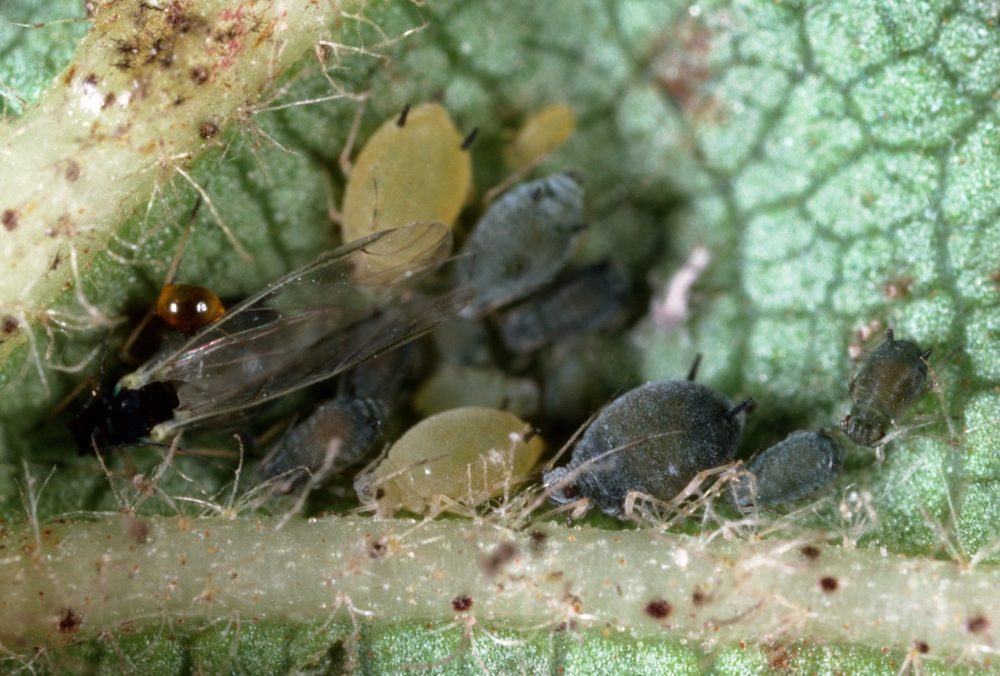
Viruses and viroids, bacteria, fungi and oomycetes, nematodes, arthropods, molluscs, vertebrates, and parasitic plants are among the factors working against farmers.

Food loss

“We are losing a significant amount of food on a global scale to pests and diseases at a time when we must increase food production to feed a growing population,” said co-author Neil McRoberts, co-leader of UC ANR’s Sustainable Food Systems Strategic Initiative and Agricultural Experiment Station researcher and professor in the Department of Plant Pathology at UC Davis.

While plant diseases and pests are widely considered an important cause of crop losses, and sometimes a threat to the food supply, precise figures on these crop losses are difficult to produce.

“One reason is because pathogens and pests have co-evolved with crops over millennia in the human-made agricultural systems,” write the authors on the study’s website, globalcrophealth.org.  “As a result, their effects in agriculture are very hard to disentangle from the complex web of interactions within cropping systems. Also, the sheer number and diversity of plant diseases and pests makes quantification of losses on an individual pathogen or pest basis, for each of the many cultivated crops, a daunting task.”

“We conducted a global survey of crop protection experts on the impacts of pests and plant diseases on the yields of five of the world’s most important carbohydrate staple crops and are reporting the results,” McRoberts said. “This is a major achievement and a real step forward in being able to accurately assess the impact of pests and plant diseases on crop production.”

The researchers surveyed several thousand crop health experts on five major food crops – wheat, rice, maize, soybean, and potato – in 67 countries.

“We chose these five crops since together they provide about 50 percent of the global human calorie intake,” the authors wrote on the website.

The 67 countries grow 84 percent of the global production of wheat, rice, maize, soybean and potato.

Top pests and diseases

The study identified 137 individual pathogens and pests that attack the crops, with very large variation in the amount of crop loss they caused.

For wheat, leaf rust, Fusarium head blight/scab, tritici blotch, stripe rust, spot blotch, tan spot, aphids, and powdery mildew caused losses higher than 1 percent globally.

In rice, sheath blight, stem borers, blast, brown spot, bacterial blight, leaf folder, and brown plant hopper did the most damage.

In maize, Fusarium and Gibberella stalk rots, fall armyworm, northern leaf blight, Fusarium and Gibberella ear rots, anthracnose stalk rot and southern rust caused the most loss globally.

In potatoes, late blight, brown rot, early blight, and cyst nematode did the most harm.

In soybeans, cyst nematode, white mold, soybean rust, Cercospora leaf blight, brown spot, charcoal rot, and root knot nematodes caused global losses higher than 1 percent.

Food-security “hotspots”

The study estimates the losses to individual plant diseases and pests for these crops globally, as well as in several global food-security “hotspots.” These hotspots are critical sources in the global food system: Northwest Europe, the plains of the U.S. Midwest and Southern Canada, Southern Brazil and Argentina, the Indo-Gangetic Plains of South Asia, the plains of China, Southeast Asia, and sub-Saharan Africa.

“Our results highlight differences in impacts among crop pathogens and pests and among food security hotspots,” McRoberts said. “But we also show that the highest losses appear associated with food-deficit regions with fast-growing populations, and frequently with emerging or re-emerging pests and diseases.”

“For chronic pathogens and pests, we need to redouble our efforts to deliver more efficient and sustainable management tools, such as resistant varieties,” McRoberts said. “For emerging or re-emerging pathogens and pests, urgent action is needed to contain them and generate longer term solutions.”

The website globalcrophealth.org features maps showing how many people responded to the survey across different regions of the world.

In addition to McRoberts, the research team included lead author Serge Savary, chair of the ISPP Committee on Crop Loss; epidemiologists Paul Esker at Pennsylvania State University and Sarah Pethybridge at Cornell University; Laetitia Willocquet at the French National Institute for Agricultural Research in Toulouse, France; and Andy Nelson at the University of Twente in The Netherlands. 

UC Agriculture and Natural Resources researchers and educators draw on local expertise to conduct agricultural, environmental, economic, youth development and nutrition research that helps California thrive. Learn more at ucanr.edu.

2021-05-12T11:05:06-07:00February 11th, 2019|

California Supplies Thanksgiving

California Feeds the Nation on Thanksgiving!

By Patrick Cavanaugh, Farm News Director

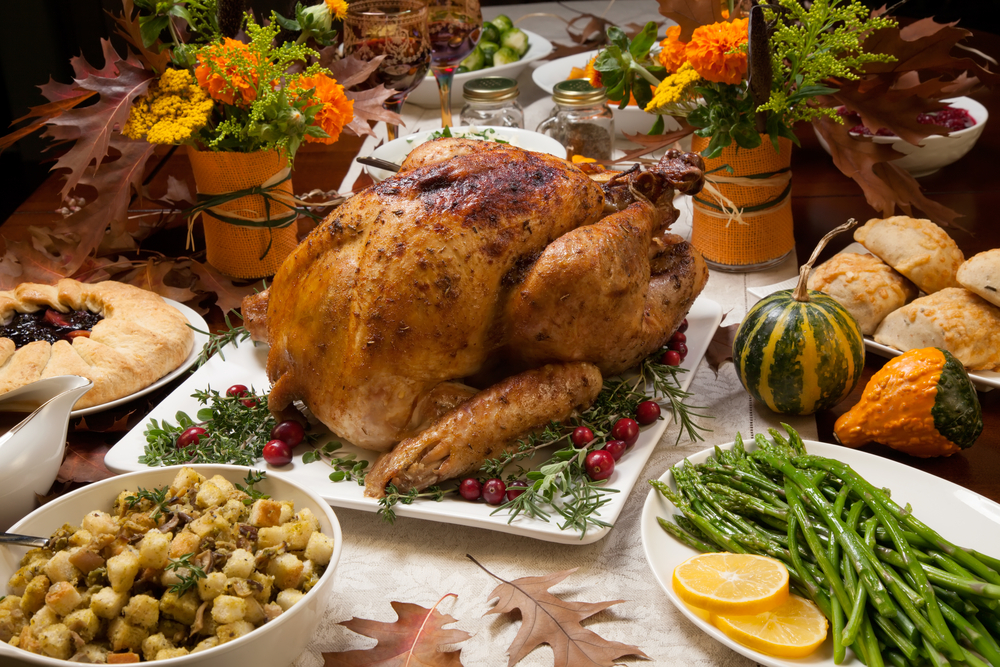
California ranks #8 in turkey production in the United States (2016), and we supply most of the western states from our poultry farms located in several areas in the state.

The famous Mrs. Cubbison’s Stuffing or “Dressing” originated from a ç, born in 1890 in the San Marcos area of San Diego County. In short, Cubbison graduated from California Polytechnical University in May 1920 with a degree in Home Economics having paid her way through school with the money she earned feeding the farm workers.

Cubbison created her popular stuffing in 1948 using broken pieces of the popular Melba toast and various seasonings. The factory in Commerce, California churns it out in mass quantities this time of year.

California farmers produce almonds, raisins, walnuts, prunes, figs, dates, apricots, pistachios, and pomegranates, right on up the food line.

These are all celebrated Thanksgiving foods.

Celery from the Oxnard and Ventura area completes the stuffing mix. Nutrient-dense carrots, lettuce and fresh spinach from Salinas now arrive, pre-washed and bagged, in your local produce department. Your Thanksgiving traditional green beans come from California growers.

An ample supply of freshly harvested oranges and kiwi fruit, table grapes, strawberries, and raspberries are shipped from many areas in the state. Seasonal features include sweet potatoes from the Merced, about an hour north of Fresno, plus all kinds and colors of potatoes and tomatoes, parsley, onions, and garlic—all crops are raised in California.

Nearly all the fruits, vegetables and nuts that are part of America’s Thanksgiving are sourced from California.

Don’t forget about the great varieties of wine grapes grown in the No. 1 agricultural state that are deftly crafted into delectable California wines.

Or the thirst-quenching Martinelli sparkling apple or grape cider from Watsonville California, near the Monterey Bay area. Local growers provide the tree-ripened fruit to the award-winning company that is still family-owned after almost 150 years and is managed by the founder’s grandson and great-grandson. Here’s something to discuss at your Thanksgiving meal:  the company won its first Gold Medal at the 1890 California State Fair in  Sacramento.

How about those heirloom and new apple varieties, plus those small round watermelons that we snack on or toss into a dessert fruit salad, topped with California pomegranate arils?

Of course, we raise poultry, and even California lamb, if you want to go that way. Here is a Did-you-know? challenge for your holiday meal:  What are the most recent Presidental Thanksgiving Turkeys from California pardoned by United States presidents? (Answers are below.)

And by the way, you know that food-safety pop-up turkey timer that indicates when the turkey has reached the correct internal temperature? Public relations genius Leo Pearlstein and a turkey producer in Turlock, a small town north of Fresno in Stanislaus County, invented this Thanksgiving fixture.

Back in the 1960s, they were sitting in a room trying to solve the undercooked poultry challenge, when they looked up and noticed ceiling fire sprinklers. The sprinklers sprayed water when the room temperature became hot enough to melt a tiny piece of metal alloy in the mechanism. This innovative team of two applied the same concept to the pop-up timer!

With the exception of cranberries, our national day of giving thanks for a bountiful harvest is really a California Thanksgiving.


Here are some friendly topics for discussion at your Thanksgiving Table:

  • What is the name of the famous Thanksgiving stuffing that originated in California?
  • What beverage company that is still operating won its first Gold Medal at the 1890 California State Fair?
  • How was the pop-up timer invented and by whom?
  • How does high does California rank in U.S. turkey production?
  • What are the most recent Presidental Thanksgiving Turkeys from California pardoned by United States presidents?

In 2010, President Obama pardoned Apple, a 45-pound turkey from Modesto, California-based Foster Farms; and alternate bird Cider. 

In 2015, President Obama pardoned Apple, a 45-pound turkey and an alternate 43-pound bird named Honest, again from Foster Farms.

The Presidential Turkey flock are Nicholas White turkeys, which originated in California’s Sonoma Valley in 1957. Today, the Nicholas White is the industry standard. (Foster Farms)

2021-05-12T11:17:10-07:00November 20th, 2017|

California Proudly Provides Most of Thanksgiving Feast to America

Enjoy Your Thanksgiving Feast

From California’s Farms to Your Table


By Patrick Cavanaugh, Farm News Director


Turkeys come from several areas of the state, and while California is ranked No. 7 in turkey production, we do supply most of the western United States.

The famous Mrs. Cubbison’s dressing comes from Sophie Cubbison, a California entrepreneur who was born in 1890 in the San Marcos area of San Diego County. A longer fascinating story made short: In May 1920, she graduated from California Polytechnical University with a degree in Home Economics. In 1948, she added seasoning to broken pieces of the popular Melba toast to make stuffing. A factory in Commerce, California churns it out this time of year.

Farmers and farmworkers in California produce almonds, raisins, walnuts, prunes, pistachios, figs and dates, apricots, pumpkins, pecans and pomegranates. . . right on up the food line.

These are all part of the American Thanksgiving feast.

Celery from the Oxnard and Ventura area, and the rest of the ingredients for the stuffing mix, plus carrots, lots of crisp lettuce and fresh spinach from Salinas — all these greens waiting for you, already washed and bagged in the produce department. The green beans in your casserole come from California growers.

You’ve got oranges and kiwi fruit, table grapes, strawberries, raspberries freshly harvested from the Salinas and the San Joaquin Valleys. You’ve got sweet potatoes from Merced County — this is their pinnacle season. You’ve got all kinds, colors and sizes of potatoes and tomatoes, plus parsley, onions and garlic. . .  all grown in California.

Practically all the fruits, vegetables and nuts make America’s Thanksgiving celebrations festive, and nearly all of them come from California.

And don’t forget about the great variety of California winegrapes cultivated by California growers and then crafted with great care into great California vintage.

Wait! We grow firm, juicy apples and those small round watermelons that are a great snack or accent to a flavorful dessert fruit salad. And besides poultry, we even have California lamb, beef, rice or pasta—if you want to go that way.

Of course, you’ve got Martinelli’s sparkling apple or grape cider from Watsonville, near the Monterey Bay area. Local growers provide the tree-ripened fruit to the award-winning company, which is still family-owned and is run by the founder’s grandson and great-grandson.

At more than 140 years old, Martinelli’s is merely one century younger than our nation. In fact, the company received a first place award at the California State Fair in 1890.

By the way, do you know that little pop-up turkey timer that indicates when the turkey has reached the correct internal temperature? Food public relations genius Leo Pearlstein¹, along with a turkey producer from Turlock, invented that gizmo. Pearlstein, who handled the promotions for the California Turkey Advisory Board, was contemplating the enduring Thanksgiving conundrum—how long to cook the turkey and how to figure out when it is done?

Pearlstein said he and the turkey rancher were sitting in Pearlstein’s test kitchen mulling over ways consumers could determine when the turkey was done. They noticed the fire sprinkler system overhead. When the kitchen gets too hot, the fire sprinkler turns on. A metal alloy in the sprinkler is activated or melted when subjected to the high temperature of a fire in the room (185 degrees Fahrenheit). They applied that concept to the pop-up timer.

Officially, the National Turkey Federation advises consumers also use a conventional meat thermometer to verify that the cooked turkey’s internal temperature reaches:

165 degrees F to 170 degrees F in the breast or
175 degrees F to 180 degrees F in the thigh and
165 degrees F in the center of the stuffing
.

Except for cranberries, it is really a California Thanksgiving.


¹Leo Pearlstein is founder and president of Lee & Associates, Inc., a full-service public relations and advertising firm, which he opened in 1950. According to the company website, he currently runs the company with his partners, two of his sons, Howard and Frank Pearlstein. He is also founder and director of Western Research Kitchens, the food and beverage division of his agencyHe is considered a pioneer food consultant and his agency was recently named as one of the top agencies in the country that specializes in food and beverage clients.

For more food safety guidelines, the United States Department of Agriculture (USDA) Food Safety and Inspection Service (FSIS) provides this portal.

2021-05-12T11:17:11-07:00November 23rd, 2016|

Frieda’s Karen Caplan Fears No Fruit

Frieda’s  – A Legacy of Introducing Americans to Exotic Fruits & Vegetables


By Laurie Greene, Editor


Karen Caplan, CEO and president, Frieda’s Inc., the 54 year old family business that first introduced kiwi fruit to America in 1962, recounted, “We’ve probably introduced close to 200 exotic fruits and vegetables to American consumers, mostly through supermarkets, but also through restaurants. We continue to introduce new and exotic fruits and vegetables. You’ve got the kiwi fruit; you’ve got sun-dried tomatoes; you’ve got habanero chilies, spaghetti squash, alfalfa sprouts, hothouse cucumbers, shallots, purple sweet potatoes, and purple potatoes.

PurpleKiwiBook_Karen Caplan


Caplan knows consumers love to try new products and new foods. “We really credit the TV Food Networks,” she explained. “If you’re watching ‘Chopped’ one night or any of the other food shows and you see these exotic fruits and vegetables like our purple snow peas as a secret ingredient, and you watch a couple of chefs cook with them, you say, ‘Wow that’s really exciting. I never would have picked that up at the grocery store.’ Consumers go to their local grocery store and find those products. It works in a synergistic way, but we continue to have new varieties of fruits and vegetables to introduce.”


Caplan continued, “It is wonderful that American supermarkets seem to realize consumers are passionate about trying these new foods. I think they realize that if they don’t offer the exotic fruits and vegetables, like tropical fruits, different varieties of citrus fruits and some of the peppers, consumers are going to go online and either order them as meals through Blue Apron or purchase the products on Amazon Fresh.”

Fear No Fruit, The Frieda Caplan Documentary

Fear No Fruit, The Frieda Caplan Documentary


At Frieda’s, we represent about 1,000 different suppliers, mostly farmers. About half of them are in California; the rest are outside of California and around the world. I think the biggest challenges shared by all our farmers, are first of all—water and how to use it efficiently, and then number two—how do we find the labor to pick our products.


When asked how farmers are doing, Caplan replied, “I in awe of farmers. I heard a peach and plum and grape grower speak this morning about his passion. He said, ‘I love this business. I could stop growing this product right now and make more money by putting in nuts, which I could harvest automatically.’”


Caplan continued, “I think what’s so admirable about farmers is they do have a passion for the land and for their products. We’re seeing resurgence in young people wanting to come into the business because everyone has to eat of course; but they love the lifestyle that goes along with it and the work-life balance.


Frieda Rapoport Caplan, Ph.D., founder & chair of the Board, Frieda’s Inc. established Frieda’s Finest/Produce Specialties Inc. in 1962, in the male-dominated Los Angeles Wholesale Produce Market. One of very few women in the produce industry at the time, and the first to own and operate a U.S. produce business, Frieda debuted with a purple sign, which later became the company’s signature color, and her premier product was fresh brown mushrooms – an unusual specialty at that time. She quickly developed a reputation for buying and selling new and unusual produce specialties.

Frieda’s two daughters, Karen Caplan and Jackie Caplan Wiggins, head up the family company and the third generation, Karen’s eldest daughter Alex Jackson, has linked in too. 


2016-08-25T12:32:20-07:00August 25th, 2016|

Thanks to California Ag!

Thanks to California Ag for Thanksgiving!

By Patrick Cavanaugh, Deputy Editor


As Americans enjoy Thanksgiving dinner, let us recognize that farmers, especially California farmers, have made our bounty possible.

pumpkin free imageCalifornia is a big turkey producing state, always ranking in the top six nationally.

pumpkin free imageIn 1948, Sophie Cubbison, who was born in San Carlos, California and who graduated from California Polytechnical University in 1912, invented the Mrs. Cubbinson’s melba toast or cornbread stuffing most of us serve. (She even paid her way through college with the money she earned feeding farmworkers. Sourcewww.mrscubbisons.com)

pumpkin free imageWhat would Thanksgiving be without wonderful California wines and Martinelli’s (another great California company) great sparkling apple and grape beverages to celebrate our good fortune?

pumpkin free imageAnd all those amazing side dishes . . . the russet and red potatoes from Kern County; the sweet potatoes from Merced County; the many wonderful squash varieties including zucchini, yellow, acorn squash . . . are all produced by farmers and farmworkers in California.

pumpkin free imageGreen beans, lettuce, tomatoes, olives, cucumbers, radishes, and carrots will grace the tables across America, thanks to California producers in ped and other areas of the state.

Don’t forget gapumpkin free imagerlic, onions and mushrooms are all produced primarily in California!

California farmers produce it all, with the exception of cranberries!

Thanks Wisconsin!

(And New Jersey, Massachusetts, Oregon, Washington, and parts of Canada)

pumpkin free imageYou can thank California egg producers for those tasty hardboiled deviled eggs on Grandma’s favorite serving dish.

pumpkin free imagePlus raisins, a great addition to dressings and other dishes, thanks to the raisin producers in Fresno, Madera and Merced Counties.

pumpkin free imageAnd of course walnuts, almonds and pistachios are big part of our savory stuffing recipes and our snacks.

pumpkin free imageApple cider and apple pie? California, among the top five states, produces a wide variety of apples.

pumpkin free imageWait! What about pumpkin pie? California farmers.

pumpkin free imageAnd the wonderful whipped cream? Thanks to the California dairy industry.

pumpkin free imageDid you know the turkey pop-up timer was invented in California? Yes, indeed. Back in the 1950s, the California Turkey Producers Advisory Board brainstormed to figure out how to prevent over-cooked turk