
LA Included in Water Priorities Act

CaWater4All-Proposed Water Priorities Act Includes Los Angeles

By Patrick Cavanaugh, Deputy Editor

The Water Priorities Constitutional Amendment and Bond Act is good for all of California—people, farms and the environment. Should the required 565,880 petition signatures necessary for inclusion on the November 2016 ballot be collected by the April 26, 2016 deadline, and should the Water Priorities Act receive a majority of affirmative votes in November, it will provide big benefits to cities such as Los Angeles.

“The availability of regional water projects is massive for our urban centers,” stated Aubrey Bettencourt, executive director of the California Water Alliance, the ballot initiative’s sponsor. “The ability for urban centers to create water in their own regions and become less dependent on other parts of the water system, actually helps the other regions in the system as well.”
CaliforniaWater4All

The proposed water priorities act creates flexibility all around. Bettencourt explained, “Consider that the Los Angeles (LA) River loses as much water in an average storm event as the water supply for 180,000 homes annually—in one storm! In an average normal water year, Los Angeles loses the equivalent of the Shasta Reservoir in stormwater runoff, and they are under state and federal mandates to capture that water, recycle it and put it back in their water supply. This helps clean up their beaches and ocean water, which would otherwise end up with a lot of pollution through runoff,” she said.

“This ballot measure would increase their regional water supply by capturing and injecting stormwater runoff back into their groundwater supply. That would providing flexibility and reliability to the water supply for Southern California, but also affordability, which is such a key part of this effort,” Bettencourt noted.

“And Governor Brown just extended the drought cut mandates through the end of October of this year, and a lot of communities are conserving and conserving,” she said.”They are conserving so much that they using less; and, now they have to pay more because they are using less. So they are using less water, paying more for it, and still being punished. And that should not have to happen if we have a system big enough to supply all of our diverse water needs: agricultural, urban and environmental.”

Bettencourt noted, “The system hasn’t been updated since the late ’60’s-early ’70’s, in terms of some of our large-scale infrastructure. And you have to remember, our population was half the size it is today, and we didn’t have the same type of demand on that system that we do today,” she emphasized.

“Currently, we allocate 50% of our surface water to environmental protection. That is not wrong; but what is wrong is that we didn’t expand the system enough to take care of that allocation and our people. That is what this water ballot initiative is aiming to provide:  to increase our infrastructure to meet the demands of the 21st century,” said Bettencourt.

_____________________________

Links:

California Water Alliance Initiative Fund

California Water Alliance

2016-05-31T19:24:12-07:00February 18th, 2016|

Lorsban Under Scrutiny

Chlorpyriphos (Lorsban) Must be Used More Carefully

By Patrick Cavanaugh, Deputy Editor

California Department of Pesticide Regulation (DPR) reports an important, broad-spectrum organophosphate insecticide known as Chlorpyriphos, or Lorsban, may be further restricted due to evidence of potential human health and environmental risks, presence (parts per billion) in some California waterways, and pressure from the EPA. Brian Leahy, director of the California Department of Pesticide Regulation, said, “Chlorpyriphos is an important tool and we know there are important times when you have to use it.”

Registered and widely used in agriculture across the nation for more than 40 years, DPR has made it a restricted-use material. Leahy said, “We are trying to work with the grower community to improve how they use it. We are also working with UC IPM to look at essential needs, but we know that as we look at Chlorpyriphos, we are going to have to put additional restrictions on it.”

“We simply need for it to stay on target, and not be getting into the human body. We are seeing that it is, and we are going to continue to make sure that people use it thoughtfully and wisely,” he said.

And Leahy is very confident that growers can use this material and keep it on target, “I have seen farms that use it only when they really need it, and that is what we want. We can’t lose this tool and we are going to keep it only by showing we can greatly reduce off-site movement to the human body and watersheds,” he noted.

___________________________

Resources:

According to the University of California Agriculture and Natural Resources 2014 Chlorpyrifos Report entitled, “Identifying and Managing Critical Uses of Chlorpyrifos Against Key Pests of Alfalfa, Almonds, Citrus and Cotton“:

Chlorpyrifos plays a critical role in many IPM programs for controlling pests that threaten the productivity and economic well-being of California producers and in maintaining the high quality standards required by consumers and international export markets. This active ingredient also allows production of animal feed to support the important dairy industry in California. For some pests, chlorpyrifos is one of the last effective organophosphate insecticides available and may provide an important alternative mode of action for insecticide rotations to prevent the development of resistance to newer insecticide products. For others, this product is one of very few products with international registrations with established maximum residue limits (MRLs) that allow unhampered trade. Chlorpyrifos may also be a key tool for controlling invasive pests as well as endemic pests occasionally found in extremely high population densities. 

The California Department of Pesticide Regulation reports that the combined use of chlorpyrifos in alfalfa, almonds, citrus, and cotton has decreased since 2006. 

Although newer insecticides are also available to manage some pests in these four crops, there is a continued need to preserve the availability of chlorpyrifos for specific situations.

Assessing the Health Risk of Pesticides,” California Department of Pesticide Regulation

2021-05-12T11:03:04-07:00February 16th, 2016|

Valley’s Gold Prepares for Fourth Season

Valley’s Gold Prepares for Fourth Season


By Charmayne Hefley, Associate Editor

Valley's Gold

Currently in the midst of season three, Valley’s Gold, a weekly television series focusing on agriculture in the Central Valley, is scheduled to continue for a fourth season.

Ryan Jacobsen, the series’ host and Fresno County Farm Bureau CEO, is surprised but pleased by the show’s success. “I guess, just by the blessings of being able to do what we do and show this incredible industry, it’s resonating with folks,” Jacobsen said. “They love the show and the opportunities this show has given us to be able to show how our food is produced—not the romanticized viewbut the view of truly how it’s done and the people who come together to make this industry drive. It’s just been a phenomenal opportunity to share Ag’s story.”

Jacobsen said California’s diversity has allowed the show, brought to viewers by Fresno County Farm Bureau and ValleyPBS, to continue with consistent, original content. “You would think after that many seasons we would run out of crops,” Jacobsen said, “but because of this phenomenal Valley and this phenomenal state, we’re finding more and more stories. The more we dig, the more we find and the more we’re able to share the wealth of what we produce here.”

Sponsored by GAR Tootelian, BRANDT and Meyers Water Bank, the show airs on Wednesdays at 7pm PST and is re-broadcasted on the weekends, Saturday at 6:30pm and Sunday at 10:30am.

2016-06-03T09:39:03-07:00February 11th, 2016|

Vertical Integration and Grape Flavors

Vertical Integration and Grape Flavors

By Charmayne Hefley, Associate Editor

Vertical integration, the combination in one company of two or more stages of production normally operated by separate companies, has helped lead to success in many facets of the agriculture industry. Harold McClarty, who founded HMC Farms with Mike Jensen, said without vertical integration, his farm would not be able to survive or have nearly the same level of success.  “We would not be in stone fruit if we were not vertically integrated,” McClarty explained. “There are three profit centers: the growing of it, the packing of it and the selling of it. We have all three of those profit centers. Without them we would not be able to survive the tough years.”

Cotton Candy grape clamshell

Cotton Candy grape clamshell (Photo source: Grapery)

McClarty also said the grape industry has made significant strides in flavor profiles in the marketplace. One popular flavor is Cotton Candy, which is grown and sold by Grapery, a company founded by Jack Pandol in 1996. Grapery also grows and sells Gum Drop grapes, Moon Drop grapes, Flavor Pops grapes and more.

The increase in unique flavors, according to McClarty, has helped grapes become a popular snack. “There’s been a revolution in the varieties of grapes grown just over the last five to seven years,” McClarty said. “These new varieties have revolutionized grapes and enabled us to produce more on less. 

To evaluate a grape, McClarty suggests you “look at a berry’s color, crispness and sweetness; these are the things that make a grape taste delicious. It really is a revolution, and we haven’t seen it in the California marketplace as much as we have in the rest of the United States. The retail chains in California just haven’t embraced it as well as some of the really good supermarkets on the East Coast and in the Southeast,” noted McClarty.

2016-05-31T19:24:13-07:00February 9th, 2016|

Joel Nelsen on New Cases of HLB in San Gabriel

Joel Nelsen on New Cases of HLB in San Gabriel

By Charmayne Hefley, Associate EditorSave Our Citrus

On Wednesday of last week, two more trees, an orange and a kumquat, were found infected with the citrus-deadly Huanglongbing (HLB) disease in the core of San Gabriel. The trees are located on separate properties. One has been removed, and the other is awaiting the owner’s permission for removal. Last summer, 10 diseased trees were confirmed in the San Gabriel area, and a quarantine, already in place since then, will not need to be expanded.

Joel Nelsen, president of California Citrus Mutual, commented on the HLB discovery, “The two trees were found in the core area, pretty adjacent to the others that were found in San Gabriel,” Nelsen said. The finding “is a result of the program and its intensity in continuing to look for positive HLB finds. Unfortunately, these two trees were positive. The Asian Citrus Psyllids (ACP) in the area have been treated. One tree has already been pulled. The other homeowner wasn’t home so we’re hoping for cooperation there. It’s not positive, but again it shows that the program is trying to find HLB before it finds the commercial citrus industry.”

2021-05-12T11:03:04-07:00February 8th, 2016|

California Weed Science Society Meeting

California Weed Science Society Meeting

By Charmayne Hefley, Associate Editor

The California Weed Science Society (CWSS) held their annual meeting in Sacramento from January 13-15, 2016. The meeting fostered collaboration between Pest Control Advisors (PCAs) and farmers as they gathered to learn the newest innovations in weed science.

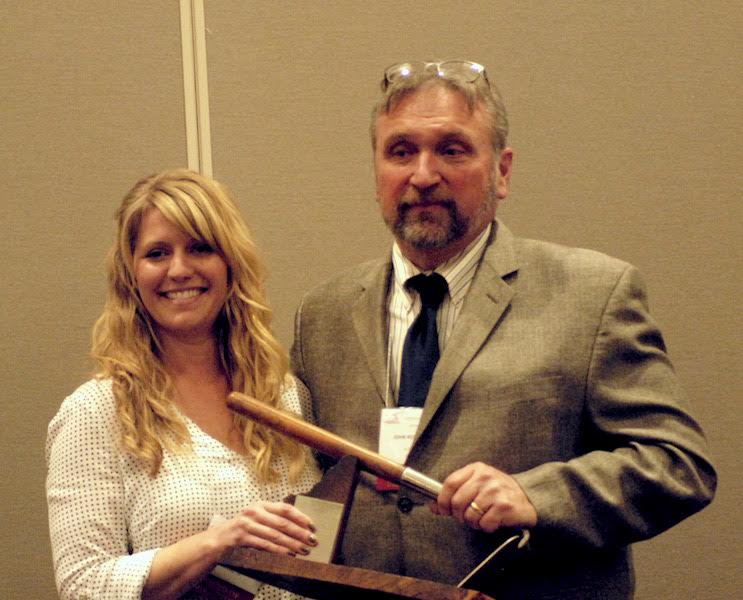
John Roncoroni, weed science farm advisor for the UC Cooperative Extension in Napa County, as well as the outgoing CWSS president, said four Fresno State students gave presentations at the meeting on their research. “We’ve had really great student participation—the amount of student scholarships we’ve given is up this year, the posters, the students and our attendance this year is up,” Roncoroni said. Pre-registration was about 530 people.

CWSS LogoRoncoroni suspects that rain pushed people to attend, “becausewith that rainwe’re looking at more weeds this year. So people are looking for the newest information on weeds. This year’s conference really has done a really good job of putting that information together. Kate Walker, our program chair, has really done a fine job of putting together a great program.”
Kate Walker, technical service representative for BASF Corporation, is also the new, incoming CWSS president.

________________________

Links:

California Weed Science Society (CWSS)

The CWSS recently updated its published textbook, Principles of Weed Control, 4th Edition, that focuses on the applied aspects of weed control.  The purpose of this textbook is to provide access to the fundamental principles and concepts of weed management in California. The book is designed for use at the college level by students who have an interest in pursuing a plant science or associated background of course work. It is also a useful resource for individuals studying to become PCAs and applicators or for consultants who work in weed science. For more information, go to the CWSS website Publications page.

2021-05-12T11:03:04-07:00February 5th, 2016|

REWARD for BEEHIVE THIEF CAPTURE

Reward for Beehive Thief Capture

California State Beekeepers Association, Inc. (CSBA) has reported two new beehive theft alerts and will provide a reward for beehive thief capture:

The CSBA offers up to $10,000 for information that leads to the arrest and conviction of persons responsible for stealing bees and/or beekeepers equipment. We take the issue of hive theft very seriously and are willing to generously reward those who help us stop this growing problem. Don’t hesitate to ask questions and check for brand numbers on frames, boxes, lids and pallets.

Additionally, the CSBA owners of stolen hives have given assurance that if a farmer reports he/she has stolen hives, they will allow the hives to stay for the remainder of the bloom. We do not want to punish farmers for doing the right thing by putting their crop at risk. We want all farmers to feel comfortable to report the hives without worrying about them being taken out from under them during a critical time.

Beehive Theft Alert 1Kern-County-Beehive Theft Alert 1

A beehive theft has occurred near Kern County within sight of I-5. The thieves are getting bolder and we all must be vigilant. The theft occurred around January 26-27th, 2016. The hives are branded with CA0330333H. This theft may or may not be related to the last major theft (see below).

Hive Description: All hives are 10 frames. The hives are made of a deep super with a 6 5/8 shallow on top. The hives are painted silver and have internal feeders and a mixture of wooden and plastic frames. The hives are on pallets with the entrances all facing the same direction. The lids, boxes and most of the frames are branded with CA0330333H. The bees are Italians with cordovan (light-colored and reddish) genetics. Pictures will soon follow.

If you are around any beehives you are unfamiliar with, don’t hesitate to look for brand numbers. Thieves often times switch the frames into different boxes to avoid being caught so be aware that the outside appearance of the hive may not match the description.

If you see any frames with the CA0330333H brand on them, they are from stolen hives and you should contact castatebeekeepers@hotmail.com immediately to report the information.

Beehive Theft Alert 2

stolen-beehives 2

240 hives were stolen near Colusa, CA around January 25-26th, 2016. All boxes, lids, frames and pallets are branded with 42-14. Please take a careful look at the picture and if you see hives that fit the description, don’t hesitate to check for brand numbers and call the Sheriff’s department. You can also email us at castatebeekeepers@hotmail.com and we can pass along the information for you.  These hives could easily be anywhere in California by now. It is very likely that the hives will be destroyed after pollination season to cover up the crime. In the interest of saving these bees, it is critical we all do our part to locate these hives.

Description: All the hives are 10-frame double deeps. The boxes are branded on the top cleats. The pallets have metal on the corners. Some of the feed cans and boxes were taken as well. The feed cans are painted green and slightly rusty. The feed can boxes are branded too and most of them hold 8 cans (some may hold 4). The bees are Italian and have Cordovan genetics (most will appear light colored and/or slightly reddish).

Location: The hives were taken from 2 yards, both located north of Colusa on the east side of the river. One yard was about 2 miles from the river and the other about 3 miles from the river.

Thief Description: Based on the tracks, it looks like a bee forklift was used to move the hives. The trucks appear to have dual tires. It is suspected that either 2 big trucks or 3 smaller trucks were used to move the hives.

Please share this information with your club, almond grower and in your community. Hive theft is a growing problem and we all need to keep an eye out for each other. Thank you for helping in this effort.

(Photo Source: California State Beekeepers Association)

2016-05-31T19:24:13-07:00February 4th, 2016|

EPA on Farming

EPA: Domestic Farming is Critical

Importing All Food from Other Countries is Risky, Part 1


By Laurie Greene, Editor


Editor’s note: California Ag Today was granted an exclusive interview with Ron Carleton, counselor to the U.S. Environmental Protection Agency (EPA) Administrator Gina McCarthy for agricultural policy. While we know that air and water quality are top priorities for the EPA, we asked Carleton to describe the outlook of the EPA on farming.

“The importance of our agricultural sector to our country, to our consumers, to our economy, to our job creation, to our rural communities: Absolutely, we have to preserve that,” said Carleton.

“We used to have discussions in the ’70’s, and the 80’s and the 90’s about energy independence,” he said, “because of the problems caused by importing so much of our energy from abroad, particularly in instances from countries that weren’t necessarily friendly to us.”

Carleton noted the same can be said with food imports. “Imagine we have that same situation for most of our food. I think that poses a serious risk to food safely. I think that poses a serious risk to affordability. I think that poses a serious risk to quality and quantify, and we can’t do that,” Carleton said. “It is incredibly important that we preserve our agricultural productive capability in this country.”

“I believe our country can preserve our agricultural base, and I think we can do that in a way that is also environmentally friendly,” noted Carleton. “So, interesting times; interesting challenges. But I firmly believe the men and women who farm in our country are up to the challenge.”

2016-05-31T19:24:13-07:00February 3rd, 2016|

Breaking News: New HLB Infected Tree in San Gabriel

Breaking News

Citrus Insider Reports New HLB Confirmed in San Gabriel

Today, two additional trees in have tested positive for Huanglongbing (HLB). The two trees, an orange and a kumquat, are on separate properties but are both within the core area in San Gabriel where 10 diseased trees were confirmed last summer. Given the close proximity, there will not be a quarantine expansion.

One of the HLB-positive trees has already been removed and California Department of Food and Agriculture (CDFA) officials are in the process of contacting the other homeowner to schedule tree removal. Agriculture officials are working quickly in the area.

Citrus trees in San Gabriel had already been treated for the Asian citrus psyllid (ACP) within the last few weeks as part of CDFA’s routine HLB response. ACP populations are closely monitored in areas where HLB has been detected and treatments occur if there is a noted increase in population size. Since trees have been recently protected, no additional treatments will take place at this time. Instead, CDFA will focus on sampling extensively in the area. Much of the area has already been sampled and CDFA’s lab has identified all samples from San Gabriel as high priority.

The Citrus Pest & Disease Prevention Program is working with the Los Angeles County Agricultural Commissioner’s office and CDFA to develop a multilingual informational flyer to notify residents of the significance of these finds and potential implications to other citrus trees in the area. CDFA staff will distribute this information as they go door-to-door sampling and surveying.

More information will be shared as it is available. In the meantime, the citrus industry is encouraged to keep a critical eye on all plant material moving into or out of your groves and recommends taking the following steps so collectively, as a team, we can all save our citrus trees.

-Remove all leaves and stems

-Shake out picking bags

-Inspect harvesting equipment

-Educate fieldworkers

-Get on board with area-wide treatments

__________________

Additional Links:

Citrus Insider

Save Our Citrus

California Citrus Mutual

2021-05-12T11:03:04-07:00February 3rd, 2016|

National Association of State Departments of Agriculture Celebrates 100th Anniversary

House Agriculture Committee Chairman Conaway recognizes the National Association of State Departments of Agriculture on its 100th Anniversary

House Agriculture Committee Chairman K. Michael Conaway submitted the following remarks for the Congressional Record recognizing the National Association of State Departments of Agriculture on its 100th Anniversary.

Remarks as prepared:

“Mr. Speaker, I rise today to honor the 100th anniversary of the National Association of State Departments of Agriculture (NASDA). NASDA is a non-profit, non-partisan organization which represents the commissioners, secretaries, and directors of agriculture from all fifty states and four U.S. territories. The State departments of agriculture have served not only the farmers and ranchers of America, but also American consumers for a significant portion of our nation’s history.CDFA LOGO

“NASDA is a highly effective association which serves to grow and enhance agriculture by forging partnerships and creating consensus to achieve sound policy outcomes between state departments of agriculture, the federal government, and stakeholders. These partnerships are apparent in the halls of almost every office building in the District of Columbia. I rely on the hard working men and woman in the Texas Department of Agriculture to provide me with perspectives on how federal policy is impacting boots on the ground agriculture. I’m sure my colleagues rely on their state department of agriculture in similar ways.

“NASDA is an active partner with the United States Department of Agriculture through a longstanding cooperative agreement to employ a nationwide network of enumerators in support of the mission of the National Agricultural Statistics Service (NASS). The data collected through this partnership informs a broad spectrum of legislative and regulatory initiatives, including farm programs under the jurisdiction of the Committee on Agriculture which I have the honor to chair.

“NASDA and its members likewise play a critical role informing Congress and the executive branch regarding the operation of federal and state programs covering everything from animal and plant health, food safety and marketing, nutrition, and literally hundreds of other consumer services.

“NASDA exists to amplify the unique voice of all state departments of agriculture. NASDA Members are able to amplify their national voice by achieving consensus on otherwise contentious issues such as threatened and endangered species, agriculture labor, and water quality.

“Mr. Speaker, I join the members and stakeholders of NASDA in celebrating their 100th year of advocating for American agriculture. I wish NASDA many more years of public service to American agriculture at the critical nexus of state and federal policy.”

2016-05-31T19:24:13-07:00February 2nd, 2016|
Go to Top